Estrogen Receptor Pharmacology, Enclomiphene, and Polypeptide Hormones: A Researcher’s Guide to serm–Peptide Interface
Fewer than 15% of preclinical endocrine studies formally account for estrogen receptor subtype selectivity when co-administering peptide hormones, a gap that routinely distorts biomarker interpretation and undermines reproducibility. For researchers designing assays at the intersection of selective estrogen receptor modulation and polypeptide signaling, that oversight is costly. This guide to Estrogen Receptor Pharmacology, Enclomiphene, and Polypeptide Hormones: A Researcher's Guide to serm, Peptide Interface bridges that gap, walking through receptor biology, enclomiphene's mechanism, and the practical considerations that arise when serms and peptide hormones share the same experimental model.
Key Takeaways
- Estrogen receptors ERα, ERβ, and GPER each produce distinct downstream signals that interact differently with polypeptide hormone pathways.
- Enclomiphene, the trans-isomer of clomiphene, acts as a pure ER antagonist at the hypothalamic, pituitary level without the estrogenic residual activity of its zuclomiphene counterpart.
- serm activity modulates the HPG axis in ways that directly alter LH, FSH, and downstream peptide hormone output, making receptor subtype mapping essential before assay design.
- Next-generation ER-targeted agents, including SERDs, PROTACs, and CERANs, introduce new variables when combined with polypeptide research compounds.
- Rigorous third-party peptide testing and validated biomarker panels are non-negotiable for reliable serm, peptide interface data.
Estrogen Receptor Basics: ERα, ERβ, and GPER
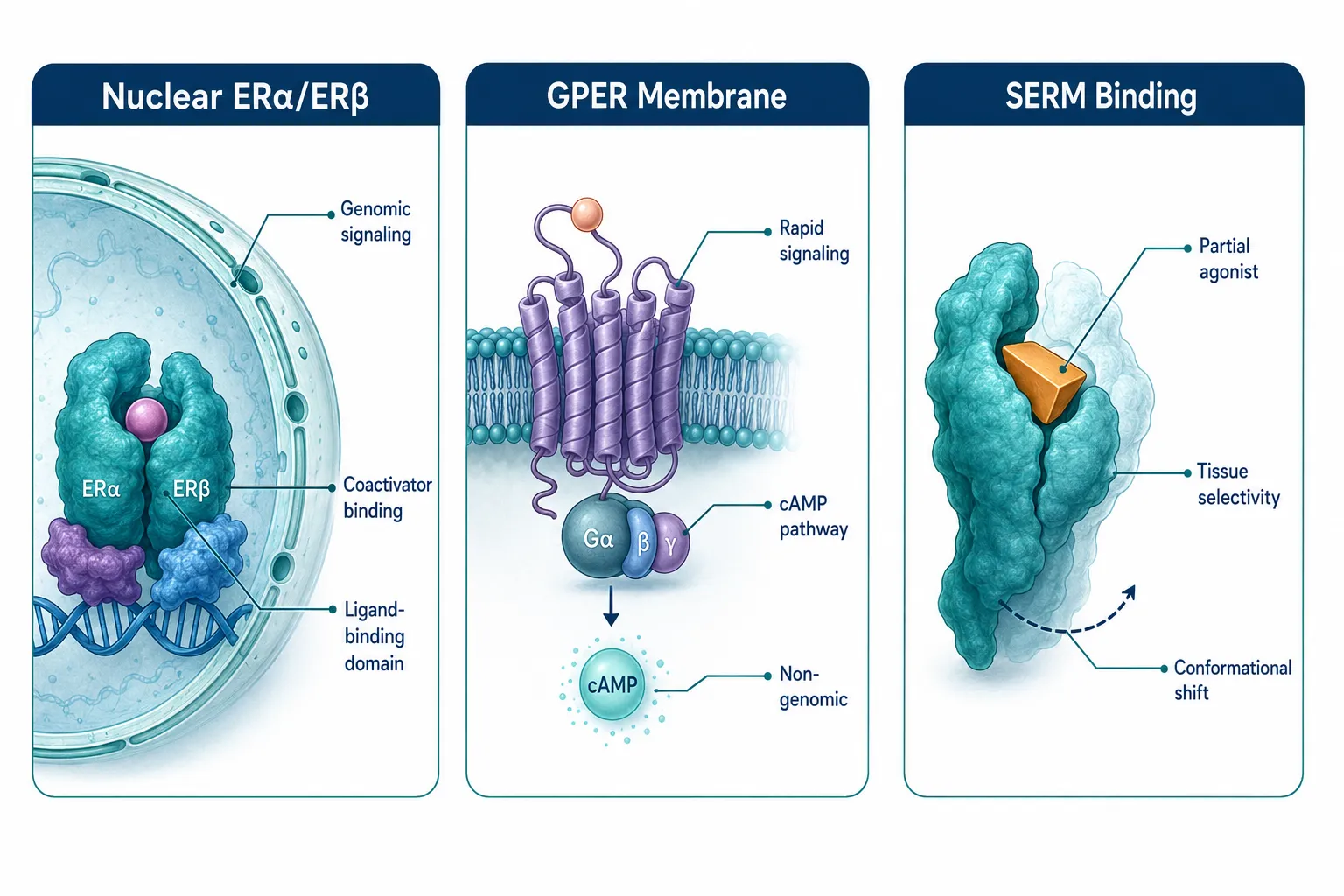
Estrogen receptors are not a single target. Three pharmacologically distinct subtypes govern estrogen signaling across tissues:
| Receptor | Location | Primary Signaling Mode | Key Research Relevance |
|---|---|---|---|
| ERα | Uterus, breast, liver, bone | Genomic (nuclear) | Proliferative responses, HPG feedback |
| ERβ | Brain, ovary, vasculature | Genomic + non-genomic | Neuroprotection, anti-proliferative |
| GPER (GPR30) | Membrane-bound, widespread | Rapid non-genomic (cAMP) | Fast estrogenic responses, peptide cross-talk |
When a serm like enclomiphene binds ERα, it induces a conformational shift in the ligand-binding domain that prevents coactivator recruitment. The result is tissue-selective antagonism, blocking estrogenic negative feedback at the hypothalamus while potentially acting differently at other ERα-expressing sites. ERβ binding profiles vary widely across serm scaffolds, and GPER remains incompletely characterized for most clinical-stage serms as of 2026.
For researchers exploring selective estrogen receptor modulation, understanding which subtype dominates in the target tissue is the first design decision, not an afterthought.
Why this matters for peptide co-administration: Growth hormone (GH), GLP-class peptides, and gonadotropin-releasing hormone (GnRH) analogs all operate within tissues that co-express estrogen receptors. Signal cross-talk is not hypothetical; it is structural.
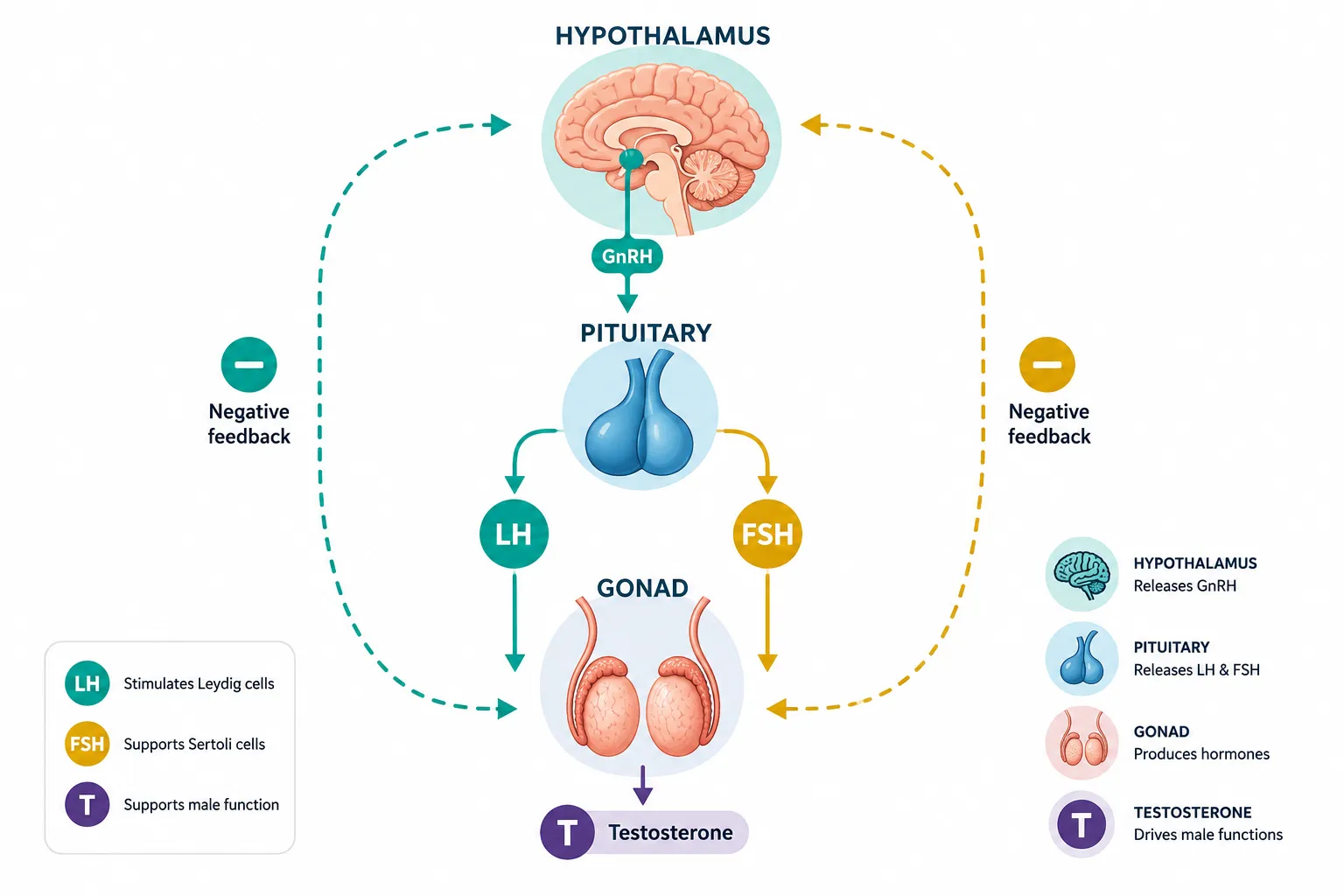
Enclomiphene Pharmacology and the HPG Axis
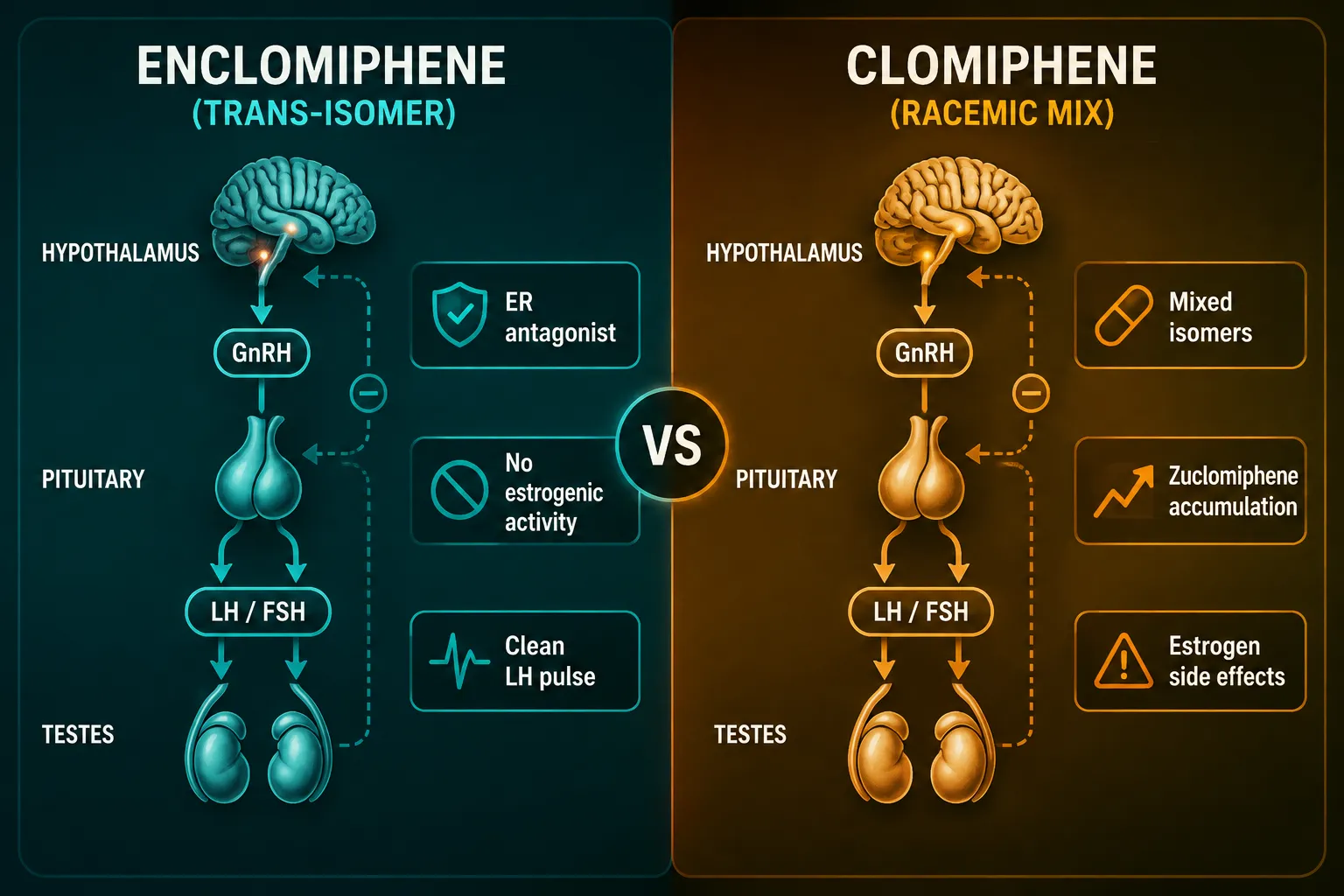
Clomiphene citrate is a racemic mixture of two geometric isomers: zuclomiphene (cis) and enclomiphene (trans). Their pharmacological profiles diverge sharply.
Enclomiphene (trans-isomer):
- Half-life approximately 10 hours, clears rapidly
- Pure ER antagonist at hypothalamic ERα
- Blocks estrogen-mediated suppression of GnRH pulsatility
- Elevates LH and FSH without residual estrogenic activity
Zuclomiphene (cis-isomer):
- Half-life exceeding 30 days, accumulates with repeated dosing
- Partial ER agonist activity
- Responsible for most estrogen-related side effects attributed to clomiphene
"Isolating the trans-isomer eliminates the pharmacological noise introduced by zuclomiphene accumulation, producing a cleaner HPG axis stimulus for research models."
In male hypogonadism research, enclomiphene has demonstrated the ability to restore LH and testosterone levels while preserving spermatogenesis, an outcome that racemic clomiphene compromises through its estrogenic component. This distinction is central to serm pharmacology research and to any serm comparison study evaluating HPG axis stimulation.
Regulatory status as of 2026 remains investigational for enclomiphene as a standalone agent in most jurisdictions, though research use continues under appropriate institutional frameworks.
The serm, Peptide Interface: Assay Design and Biomarker Interpretation
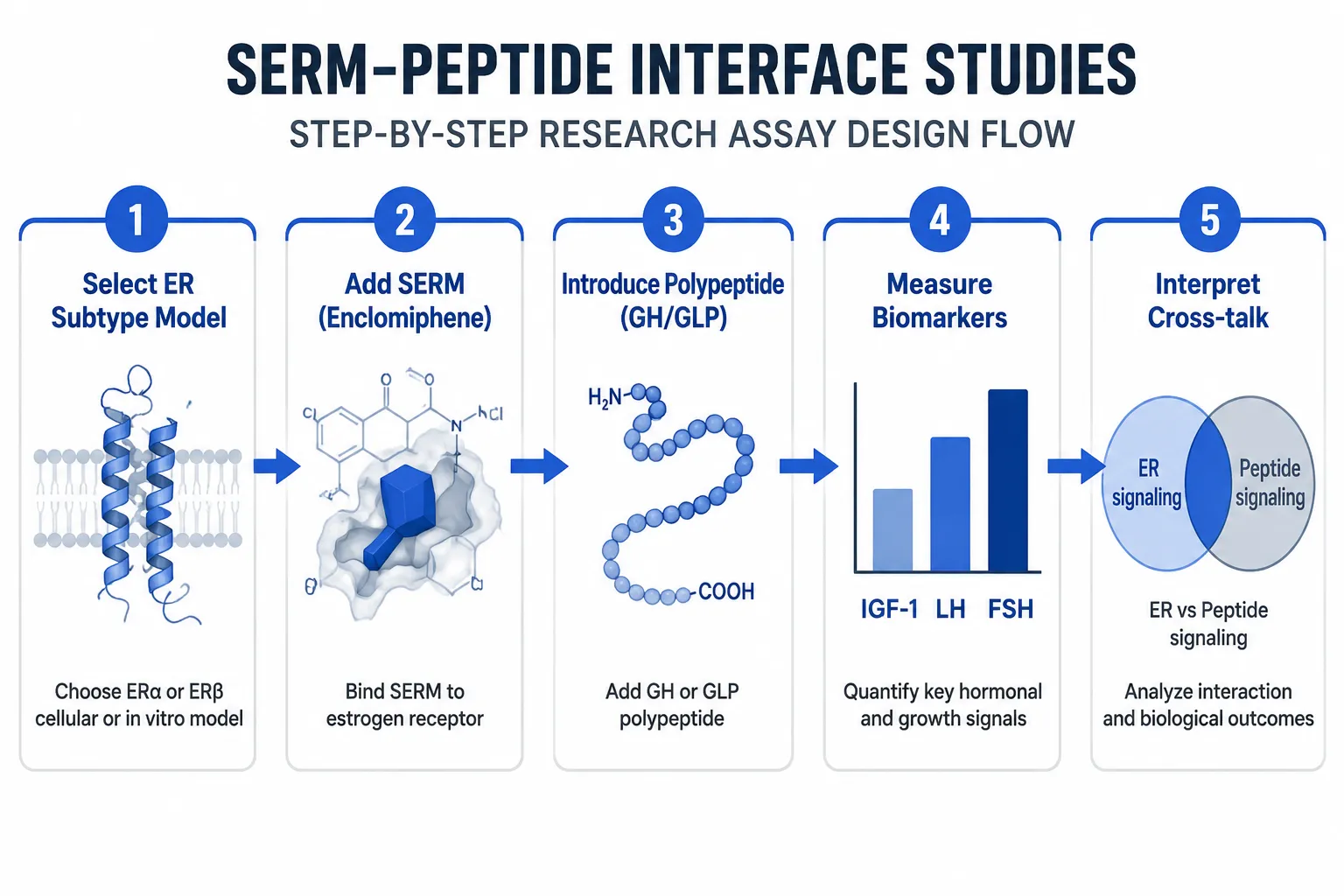
This is where Estrogen Receptor Pharmacology, Enclomiphene, and Polypeptide Hormones: A Researcher's Guide to serm, Peptide Interface becomes most practically demanding. When enclomiphene or any serm is co-administered with polypeptide hormones in a research model, at least three layers of interaction require pre-planned biomarker coverage.
Layer 1, HPG Axis Peptide Output
Enclomiphene's antagonism at hypothalamic ERα increases GnRH pulse frequency. This directly elevates LH and FSH, which in turn stimulate testicular steroidogenesis. Researchers co-administering GH secretagogues or systemic peptide research compounds must account for the fact that elevated LH can alter the hormonal milieu in which GH and IGF-1 are being measured.
Recommended baseline biomarkers before serm, peptide co-administration:
- LH, FSH, total and free testosterone
- Estradiol (E2), confirms ER blockade efficacy
- IGF-1, GH axis baseline
- SHBG, modulates free hormone fractions
Layer 2, Receptor Cross-talk at Target Tissues
Bone, brain, and breast tissue each express combinations of ERα, ERβ, and GPER. GH and GLP-class peptides also act at receptors in these tissues. Overlapping signaling through PI3K/Akt and MAPK pathways means that a serm-induced shift in ER conformation can amplify or attenuate peptide hormone responses at the same downstream node.
For steroidogenesis research models, this cross-talk is especially pronounced in gonadal tissue where both LH-driven steroidogenesis and local ER signaling converge.
Layer 3, Next-Generation ER Agents as Research Variables
SERDs (selective estrogen receptor degraders), PROTACs targeting ER for proteasomal degradation, CERANs (complete estrogen receptor antagonists), and SERCAs (selective ER covalent antagonists) are increasingly present in translational research pipelines as of 2026. Unlike enclomiphene, which modulates receptor conformation, SERDs and PROTACs reduce receptor protein levels entirely. This fundamentally changes baseline ER availability when peptide co-administration begins, requiring separate receptor quantification steps in the assay protocol.
Researchers building multi-compound models should consult translational research design frameworks to pre-specify which ER measurement endpoints will be collected at each timepoint.
Practical Assay Checklist
- Map ER subtype expression in the target tissue before compound introduction
- Establish serm washout periods appropriate to the isomer's half-life
- Use multiplexed immunoassay panels to capture LH, FSH, IGF-1, and E2 simultaneously
- Include vehicle-only and peptide-only control arms to isolate serm contribution
- Validate peptide compound purity through independent analysis, compound quality directly affects signal interpretation
Conclusion
Estrogen Receptor Pharmacology, Enclomiphene, and Polypeptide Hormones: A Researcher's Guide to serm, Peptide Interface converges on one central principle: receptor subtype specificity is not optional when peptide hormones share the experimental environment. Enclomiphene's clean ER antagonism at the HPG axis makes it a valuable research tool precisely because it avoids the estrogenic noise of racemic clomiphene, but that advantage is only realized when assay design accounts for downstream peptide hormone interactions.
Actionable next steps for researchers in 2026:
- Profile ER subtype expression in your target tissue before any co-administration protocol.
- Choose enclomiphene over racemic clomiphene when a pure HPG axis stimulus is required.
- Build multiplexed biomarker panels that capture both ER-mediated and peptide-mediated endpoints simultaneously.
- Account for next-generation ER agents (SERDs, PROTACs) as distinct variables that alter receptor availability, not just conformation.
- Source research compounds with verified purity, impure peptide preparations introduce confounders that no statistical correction can fully remove.
The serm, peptide interface is one of the most mechanistically rich areas in current endocrine research. Rigorous design at this intersection does not just improve data quality, it makes the science translatable.