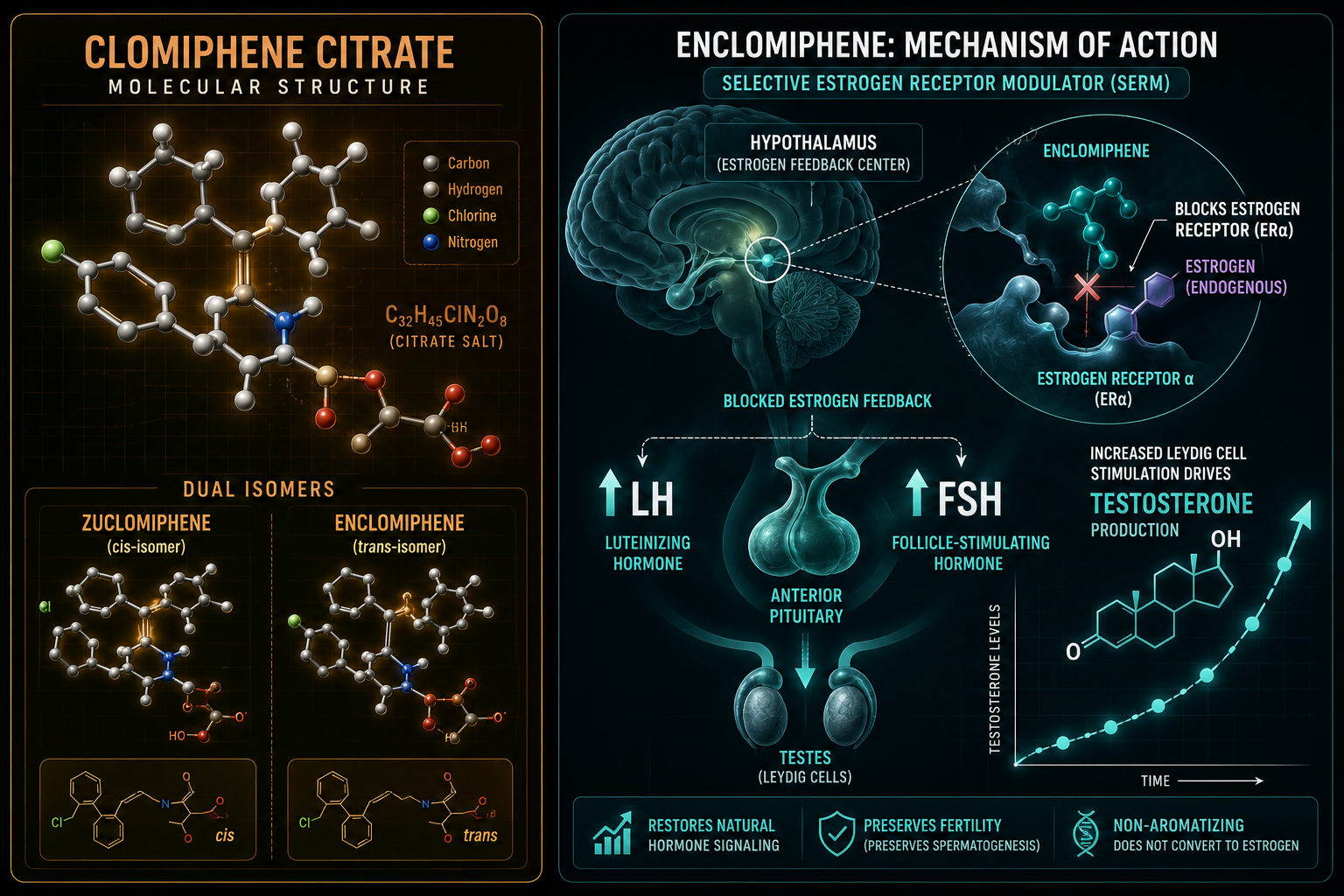
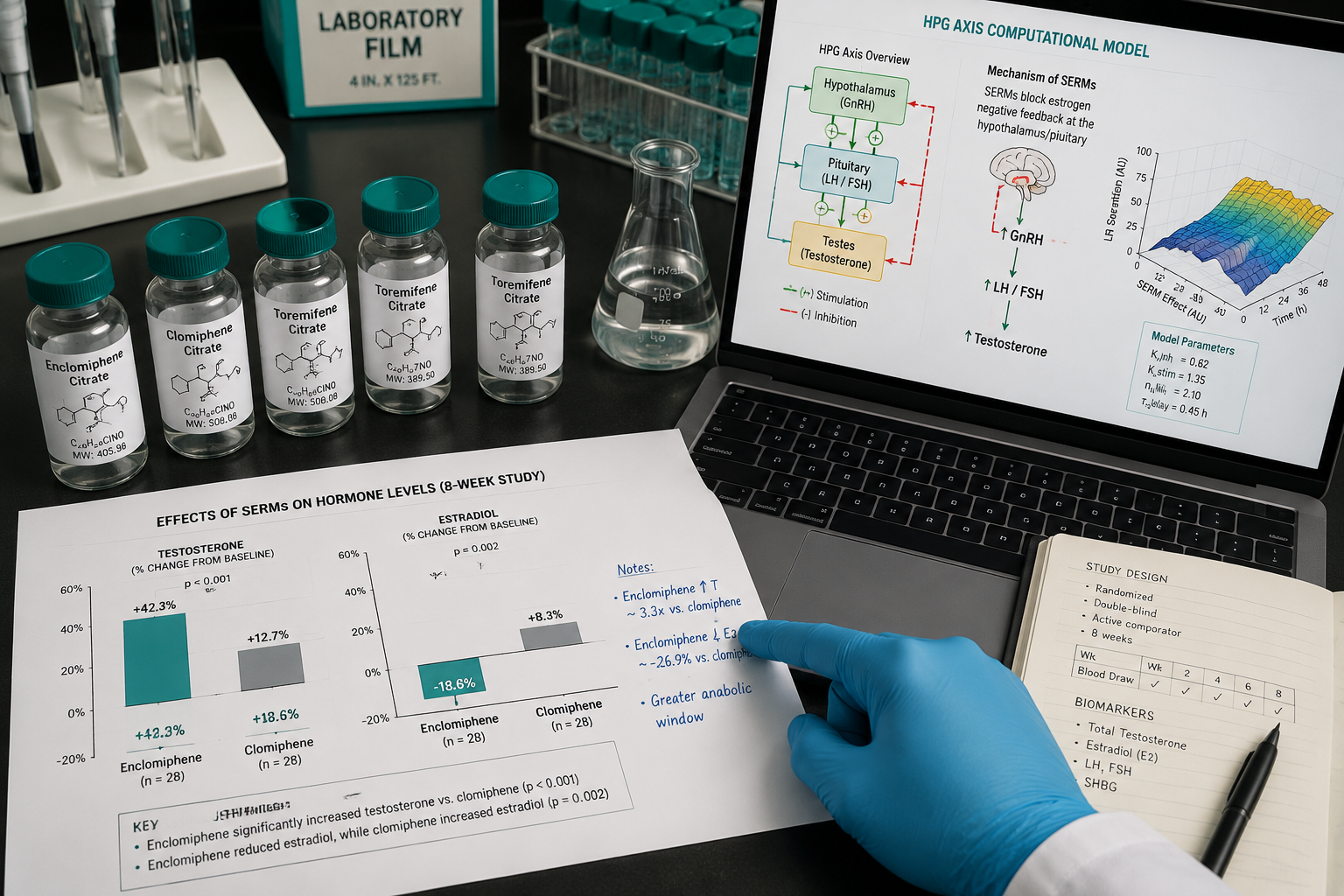
Call or Text 727-513-9780
  • Shopping Cart Shopping Cart
    0Shopping Cart
Pure Tested Peptides | America's most trusted Peptides for sale online
  • Peptides for sale
    • Oral Peptides for sale
      • Peptide Capsules for sale
      • BPC 157 Capsules 1000mcg
      • SLU-PP-332 Capsules | 1000 mcg
      • 5-Amino-1MQ 50mg Capsules
      • Tesofensine 500mcg
    • All Peptides for sale
    • Peptide Sprays
      • BPC 157 Nasal Spray Kit
      • BPC-157 TB500 Nasal Spray Kit
      • Semax Nasal Spray 10mg
      • Selank – Nasal Spray Kit – 10mg
      • Epithalon 50MG Nasal Spray Kit
      • Ipamorelin 10mg Nasal Spray
      • Klow Nasal Spray (BPC-157 + TB-500 + GHK-Cu + KPV) | 80mg
      • Hulk Nasal Spray Tesa / Ipa Blend 6/3 MG
      • Klow Nasal Spray
      • NAD + 500 mg Nasal Spray
      • PT-141 Nasal Spray Kit
    • GHRH Peptides
      • Ipa Peptides
      • CJC-1295 Peptides
        • CJC-1295 with DAC 5 mg
        • CJC-1295 without DAC 5 mg
        • CJC-1295 Ipa 10mg
      • Tesa Peptides
        • Tesa Peptide
        • Tesa 20 mg
    • GHK-Cu Peptides
      • All GHK-Cu Peptides
      • GHK-Cu 100mg
      • KLOW Peptide Blend – Buy KLOW blend online
    • BPC Peptides
      • All BPC Peptides
      • BPC-157
      • BPC-157 TB-500
      • BPC 157 capsules 1000mcg
    • SLU-PP-332 Peptides
      • All SLU-PP-332 Peptides
      • SLU-PP-332 5mg
    • GLP3 Peptides
    • PT-141 Peptides
      • PT-141 Peptides for sale
      • PT-141 10mg
      • PT-141 Nasal Spray
    • CAG Peptides
      • Lipo-C Peptide Blend
      • CAG 5mg
      • CAG 10mg
    • MOTS-C Peptides
      • MOTS-C Peptides for sale
      • MOTS-c peptide
      • MOTS-c 10mg *6 pack*
    • 5 Amino 1MQ Peptides
      • 5 Amino 1MQ Peptides for sale
      • 5-Amino-1MQ 50mg Capsules
      • 5-Amino-1MQ 5mg
    • Epithalon Peptides
      • Epithalon Peptides for sale
      • Epithalon 10mg
      • Epithalon 50mg
  • Shop
    • GLPs
      • 5-Amino-1MQ 50mg Capsules
      • 5-Amino-1MQ 5mg
      • L-Carnitine 500mg/ml
      • Tesofensine 500mcg
      • SLU-PP-332 5mg
      • MOTS-c 10mg *6 pack*
    • Epithalon & BPC Peptides
      • Epithalon 10mg
      • Epithalon 50mg
      • BPC-157
      • BPC 157 capsules 1000mcg
      • BPC-157 TB-500
      • BPC-157 TB500 Nasal Spray Kit
      • BPC 157 Nasal Spray Kit
    • BPC TB-500 & NAD+ Peptides
      • NAD+ 500 mg
      • KLOW Peptide Blend – Buy KLOW blend online
      • GLOW Peptide Blend
      • TB 500 5mg
      • BPC 157 capsules 1000mcg – Supplement
      • BPC 157 Nasal Spray Kit
      • BPC-157
      • BPC-157 TB500 Nasal Spray Kit
      • BPC-157 TB-500
      • BPC 157 capsules 1000mcg
    • LL-37 Peptide
      • LL-37 10 mg
    • MOTS-C & Selank
      • MOTS-c peptide
      • Selank 10mg
    • GHK Peptides
      • GHK-Cu 100mg
      • GLOW Peptide Blend
      • KLOW Peptide Blend – Buy KLOW blend online
  • COAs
  • Wholesale
    • Wholesale Peptides for sale
  • PTP FAQ
  • Affiliates
    • Selank Peptide: Advanced Pharmacological Mechanisms Underlying Its Anxiolytic and Nootropic Effects in Research
      • 5-Amino-1MQ Peptide: Detailed Mechanisms of NNMT Inhibition and Its Impact on Cellular Metabolism Research
        • MOTS-C Peptide: Unraveling Its Role in Mitochondrial Dynamics and Energy Metabolism Research
          • Epithalon Peptide and Telomerase Regulation: Investigating Its Impact on Cellular Senescence and Lifespan Research Models
            • GLP2-T vs GLP2 Tirz Peptide: Understanding the Naming, Mechanistic Nuances, and Research Implications for Gut Health
      • Peptides and Polypeptides in Modern Pharmacology: What Research on Metoprolol, Prednisone, and Amlodipine Reveals
        • Polypeptide Peptides vs NSAIDs: What Naproxen and Diclofenac Teach Tissue-Repair Researchers About BPC‑157 and TB‑500
          • Peptides and Polypeptides in Endocrine Pharmacology: How GLP-1, GLP-2, and GLP-3 Retatrutide Differ From Classic Drugs Like Prednisone and Amlodipine
          • 5‑Amino‑1MQ Peptide and NNMT Inhibition: How It Compares With Statins Like Atorvastatin in Adipose and Lipid Metabolism Research
      • Enclomiphene, Estrogen Receptor Signaling, and Luteinizing Phase Biology: What Hormone Researchers Should Measure
        • Mesenchymal Stem Cells, BPC‑157, and GHK‑Cu: How Tissue Repair Peptides Compare With Classic NSAIDs Like Naproxen in Injury Models
          • Peptide Calculator Use Cases Beyond Growth Hormone: Working Through GLP‑3 Retatrutide, MOTS‑c, and BPC‑157 Research Dosing
        • Polypeptide Peptides in Endocrine and Metabolic Pharmacology: Lessons From Amlodipine, Prednisone, and Metoprolol
        • Peptides Calculator for Advanced Blends: Worked Examples for Tesamorelin, CJC‑1295, and Ipamorelin Stacks
          • Peptides and Polypeptides in Human Physiology: How Molecular Size Shapes Research Applications
            • Selank Peptide: Advanced Pharmacological Mechanisms Underlying Its Anxiolytic and Nootropic Effects in Research
          • 5-Amino-1MQ Peptide: Detailed Mechanisms of NNMT Inhibition and Its Impact on Cellular Metabolism Research
            • MOTS-C Peptide: Unraveling Its Role in Mitochondrial Dynamics and Energy Metabolism Research
              • Epithalon Peptide and Telomerase Regulation: Investigating Its Impact on Cellular Senescence and Lifespan Research Models
                • GLP2-T vs GLP2 Tirz Peptide: Understanding the Naming, Mechanistic Nuances, and Research Implications for Gut Health
                  • Peptides and Polypeptides in Endocrine Pharmacology: How GLP-1, GLP-2, and GLP-3 Retatrutide Differ From Classic Drugs Like Prednisone and Amlodipine
                    • Polypeptide Peptides vs NSAIDs: What Naproxen and Diclofenac Teach Tissue-Repair Researchers About BPC‑157 and TB‑500
                      • Peptides and Polypeptides in Modern Pharmacology: What Research on Metoprolol, Prednisone, and Amlodipine Reveals
                        • 5‑Amino‑1MQ Peptide and NNMT Inhibition: How It Compares With Statins Like Atorvastatin in Adipose and Lipid Metabolism Research
                        • Enclomiphene, Estrogen Receptor Signaling, and Luteinizing Phase Biology: What Hormone Researchers Should Measure
                        • Mesenchymal Stem Cells, BPC‑157, and GHK‑Cu: How Tissue Repair Peptides Compare With Classic NSAIDs Like Naproxen in Injury Models
                        • Peptide Calculator Use Cases Beyond Growth Hormone: Working Through GLP‑3 Retatrutide, MOTS‑c, and BPC‑157 Research Dosing
                        • Polypeptide Peptides in Endocrine and Metabolic Pharmacology: Lessons From Amlodipine, Prednisone, and Metoprolol
                        • Peptides Calculator for Advanced Blends: Worked Examples for Tesamorelin, CJC‑1295, and Ipamorelin Stacks
                        • Peptides and Polypeptides in Human Physiology: How Molecular Size Shapes Research Applications
                        • Selank Peptide: Advanced Pharmacological Mechanisms Underlying Its Anxiolytic and Nootropic Effects in Research
                        • MOTS-C Peptide: Unraveling Its Role in Mitochondrial Dynamics and Energy Metabolism Research
                        • Peptides and Polypeptides in Modern Pharmacology: What Research on Metoprolol, Prednisone, and Amlodipine Reveals
                        • Peptides and Polypeptides in Endocrine Pharmacology: How GLP-1, GLP-2, and GLP-3 Retatrutide Differ From Classic Drugs Like Prednisone and Amlodipine
                        • 5-Amino-1MQ Peptide: Detailed Mechanisms of NNMT Inhibition and Its Impact on Cellular Metabolism Research
                        • Mesenchymal Stem Cells, BPC‑157, and GHK‑Cu: How Tissue Repair Peptides Compare With Classic NSAIDs Like Naproxen in Injury Models
                        • Peptide Calculator Use Cases Beyond Growth Hormone: Working Through GLP‑3 Retatrutide, MOTS‑c, and BPC‑157 Research Dosing
                        • GLP2-T vs GLP2 Tirz Peptide: Understanding the Naming, Mechanistic Nuances, and Research Implications for Gut Health
                        • Polypeptide Peptides in Endocrine and Metabolic Pharmacology: Lessons From Amlodipine, Prednisone, and Metoprolol
                        • Polypeptide Peptides vs NSAIDs: What Naproxen and Diclofenac Teach Tissue-Repair Researchers About BPC‑157 and TB‑500
                        • Peptides and Polypeptides in Human Physiology: How Molecular Size Shapes Research Applications
                        • Peptides Calculator for Advanced Blends: Worked Examples for Tesamorelin, CJC‑1295, and Ipamorelin Stacks
                        • 5‑Amino‑1MQ Peptide and NNMT Inhibition: How It Compares With Statins Like Atorvastatin in Adipose and Lipid Metabolism Research
                        • Enclomiphene, Estrogen Receptor Signaling, and Luteinizing Phase Biology: What Hormone Researchers Should Measure
                        • Epithalon Peptide and Telomerase Regulation: Investigating Its Impact on Cellular Senescence and Lifespan Research Models
                        • Best research protocol Klow blend
                        • best time to take BPC-157
                        • best time to take DSIP (Delta Sleep Inducing Peptide)
                        • best time to take CJC-1295
                        • best time to take AOD-9604
                        • best time to take Follistatin 344
                        • best time to take Ipamorelin
                        • best time to take MK-677 (Ibutamoren)
                        • best time to take Ligandrol (LGD-4033) — research compound
                        • best time to take Ostarine (MK-2866) — research compound
                        • best time to take GHK-CU
                        • best time to take TB-500
                        • best time to take MOTS-c
                        • best time to take Semax
                        • best time to take RAD-140 (Testolone) — research compound
                        • best time to take Thymosin Alpha-1
                        • best time to take PEG-MGF
                        • Biolife Plasma, Octapharma Plasma, and Research Peptides: How Plasma Donation Labs Differ From Peptide Suppliers
                        • best time to take YK-11 — research compound
                        • best time to take PT-141 (Bremelanotide)
                        • Best research protocol Klow blend
                        • 5-Amino-1MQ and MOTS-C Synergy: Metabolic Signaling, Mitochondria, and Research Design
                        • BPC-157 and TB-500: Investigating Their Combined Effects on Angiogenesis and Cellular Migration in Tissue Repair Models
                        • BPC-157 Peptide: Gut Barrier Function, Inflammation, and Tissue-Recovery Research
                        • 5‑Amino‑1MQ and MOTS‑c Synergy in Metabolic Research: Designing NNMT and Mitochondrial Biogenesis Stacks
                        • CJC-1295 with DAC vs. Without DAC: Half-Life, Release Kinetics, and Research Implications
                        • CJC‑1295 with DAC vs. Without DAC: Expanding on Half‑Life Differences Using Tesamorelin and Ipamorelin Blend Case Studies
                        • Collagen Biology and Copper‑Binding Peptides: How GHK‑Cu, Glow Blend, and Klow Blend Interact with Skin and Connective Tissue
                        • Collagen Biology and Regenerative Peptides: How GHK‑Cu, Glow Blend, and Klow Blend Affect Extracellular Matrix Research
                    • DNA, Telomeres, and Longevity Peptides: Positioning Epithalon and MOTS‑c in Genetic Aging Research
                      • Enclomiphene Citrate: serm Mechanism, Testosterone Research, and Stack Compatibility
                        • Enclomiphene vs Enclomiphene Citrate: Formulation, Bioavailability, and Research Distinctions
                        • Epithalon Peptide Research: Telomerase Activation, Aging, and Pineal Gland Function
                        • Estrogen Receptor Signaling and Enclomiphene: How Selective Modulators Compare with Classic Polypeptide Hormones
                        • GHK-Cu Peptide: Advanced Mechanisms in Extracellular Matrix Remodeling and Wound Healing Research
                        • GHK-Cu Peptide: Collagen Synthesis, Wound Repair, and Skin-Barrier Research Models
                        • GLP-1 vs GLP-3 vs GLP-2: Peptide Classification and Research Applications
                        • GLP-2 Peptide Research Guide: Gut Barrier Function, Nutrient Absorption, and Intestinal Recovery Models
                        • GLP-3 Retatrutide vs. GLP-1 Drugs: What Triple-Agonist Biology Changes in Research Models
                        • Ipamorelin and Tesamorelin Combination: Synergistic GH Secretagogue Research and Dosing Protocols
                        • GLP2 Tirz Peptide: What It Is, Why the Name Exists, and How Researchers Should Interpret It
                        • Klow Blend Peptide Nasal Spray: What the Formulation Is Trying to Do in Cognitive Research
                        • Mitochondria, NNMT Inhibition, and Peptide Modulators: Where MOTS‑c and 5‑Amino‑1MQ Fit in Cellular Energy Research
                        • MOTS-c Peptide: Mitochondrial Function, Energy Metabolism, and What Researchers Measure
                        • MOTS-c vs. 5-Amino-1MQ: Which Metabolic Research Questions Each Compound Actually Answers
                        • Nasal Spray Peptides: Bioavailability, Administration, and Semax/Selank Research Applications
                        • PT-141 Peptide Research: Mechanism of Action and Melanocortin Receptor Signaling
                        • Retatrutide for Research: Mechanism, Structure, and GLP-1/GLP-3 Dual Action
                        • Retatrutide for Obesity and Type 2 Diabetes: What the Latest Trial Data Suggest
                        • Tesofensine Peptide Research: Mechanism, Appetite Suppression, and Neuropeptide Y Pathways
  • Contact
    • Contact Customer Service
    • Text Customer Support
  • About US
  • Shop all peptides
  • Affiliate Program
    • Affiliate Signup
  • Login / Register Login / Register Page Link Login / Register Page Link
  • Click to open the search input field Click to open the search input field Search
  • Menu Menu

Tag Archive for: enclomiphene

Enclomiphene vs Enclomiphene Citrate: What Researchers Need to Know Before Choosing a Formulation

Enclomiphene vs Enclomiphene Citrate: What Researchers Need to Know Before Choosing a Formulation

August 19, 2026/0 Comments/in Uncategorized/by

Most product labels in the research supply market list "enclomiphene citrate," yet the majority of published clinical studies report doses simply as "enclomiphene." That single-word difference can quietly distort how researchers interpret dosing data, compare results across studies, and evaluate sourcing options. Understanding the distinction in Enclomiphene vs Enclomiphene Citrate: What Researchers Need to Know Before Choosing a Formulation is not a minor technical footnote, it is a foundational step in designing reproducible research.

Key Takeaways

  • Enclomiphene is the active free-base molecule; enclomiphene citrate is its salt form, which contains a lower percentage of active compound per milligram.
  • Dose conversions are required when comparing studies that report enclomiphene base quantities against formulations supplied as enclomiphene citrate.
  • As of 2026, enclomiphene remains unapproved by the FDA, meaning all research use occurs outside a clinical approval framework.
  • Compounded citrate formulations face additional regulatory scrutiny, including bulk-substance evaluation requirements.
  • Researchers should always verify formulation type through a certificate of analysis (COA) before interpreting or replicating study protocols.

The Chemistry Behind the Naming Difference
The Chemistry Behind the Naming Difference

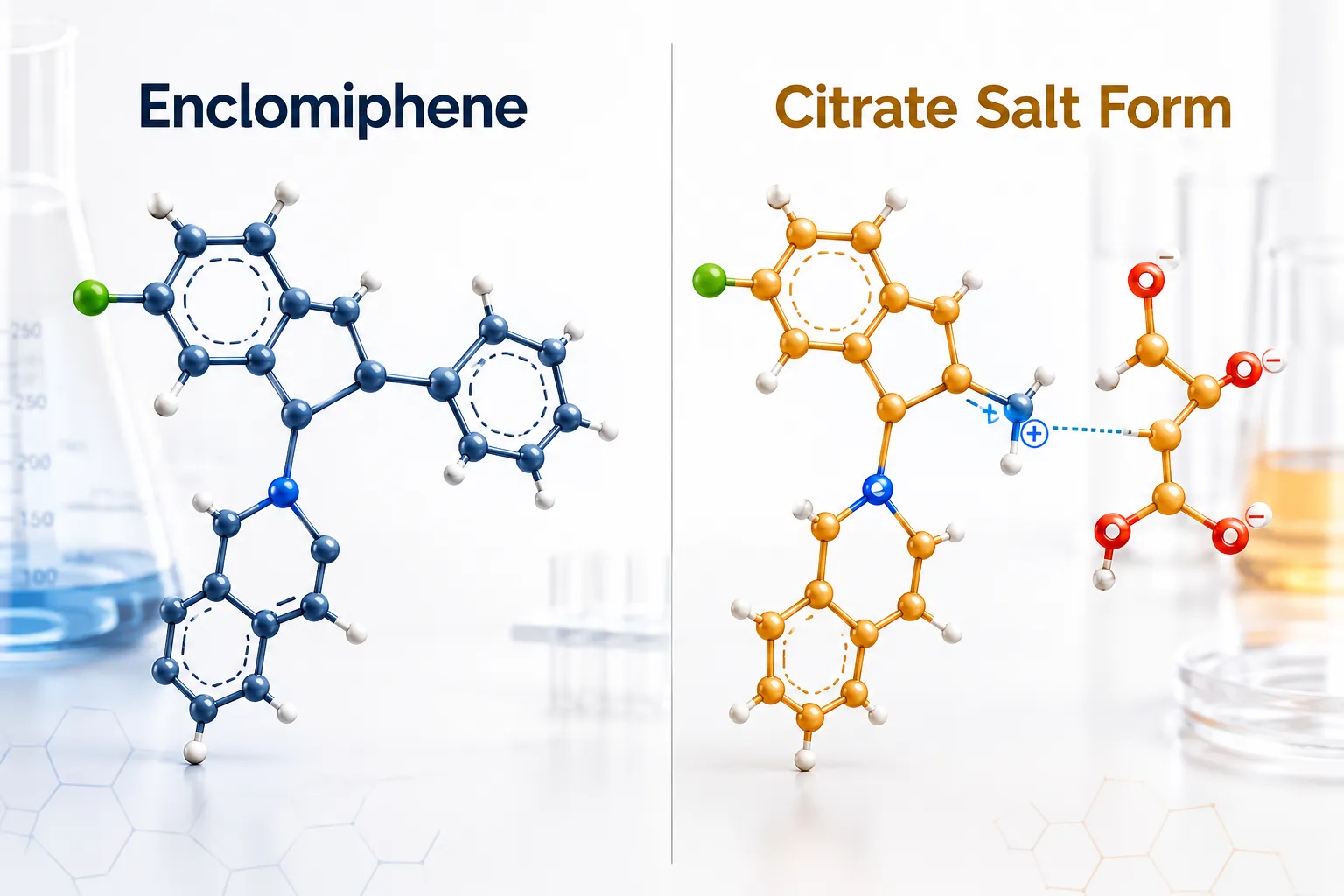
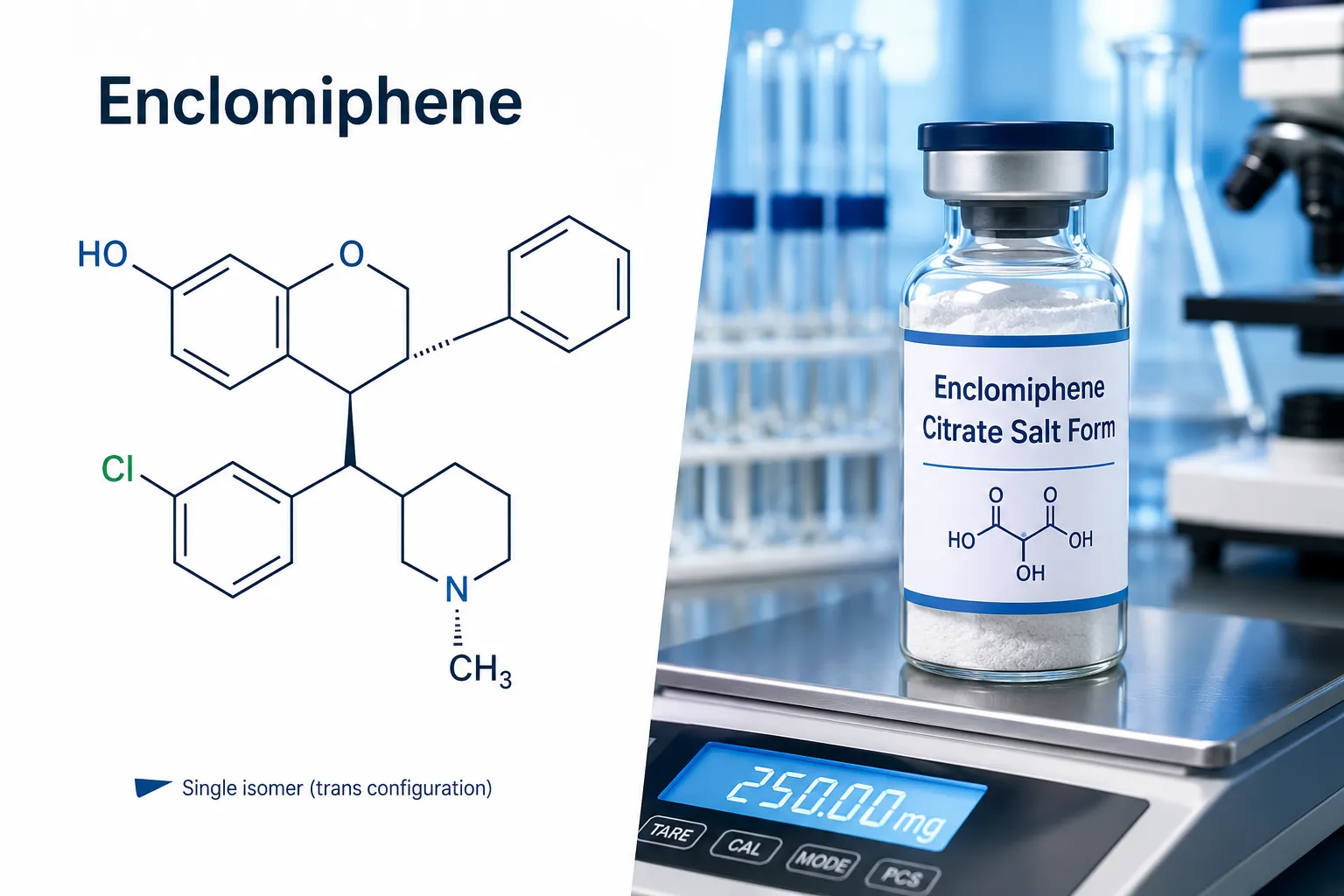
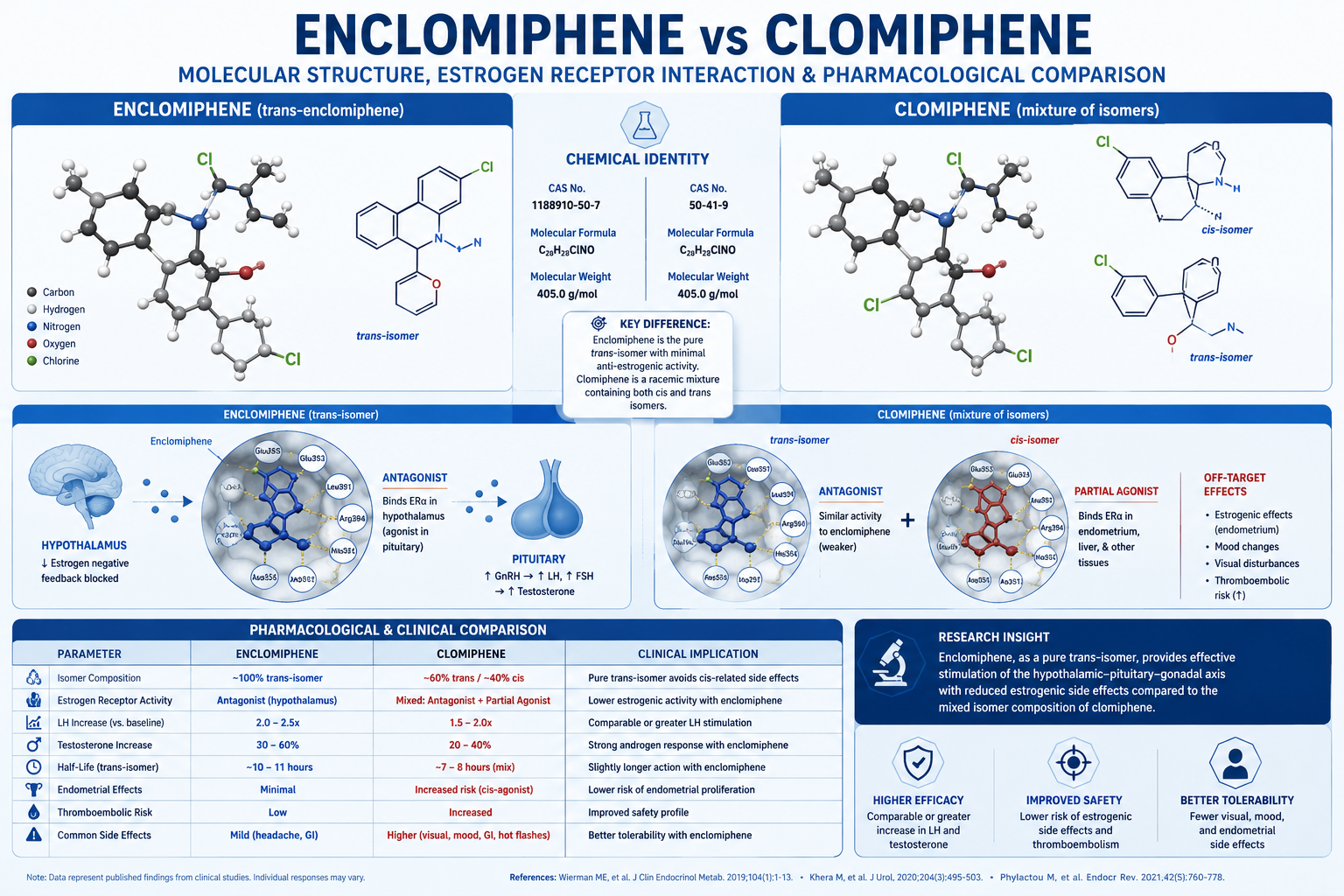
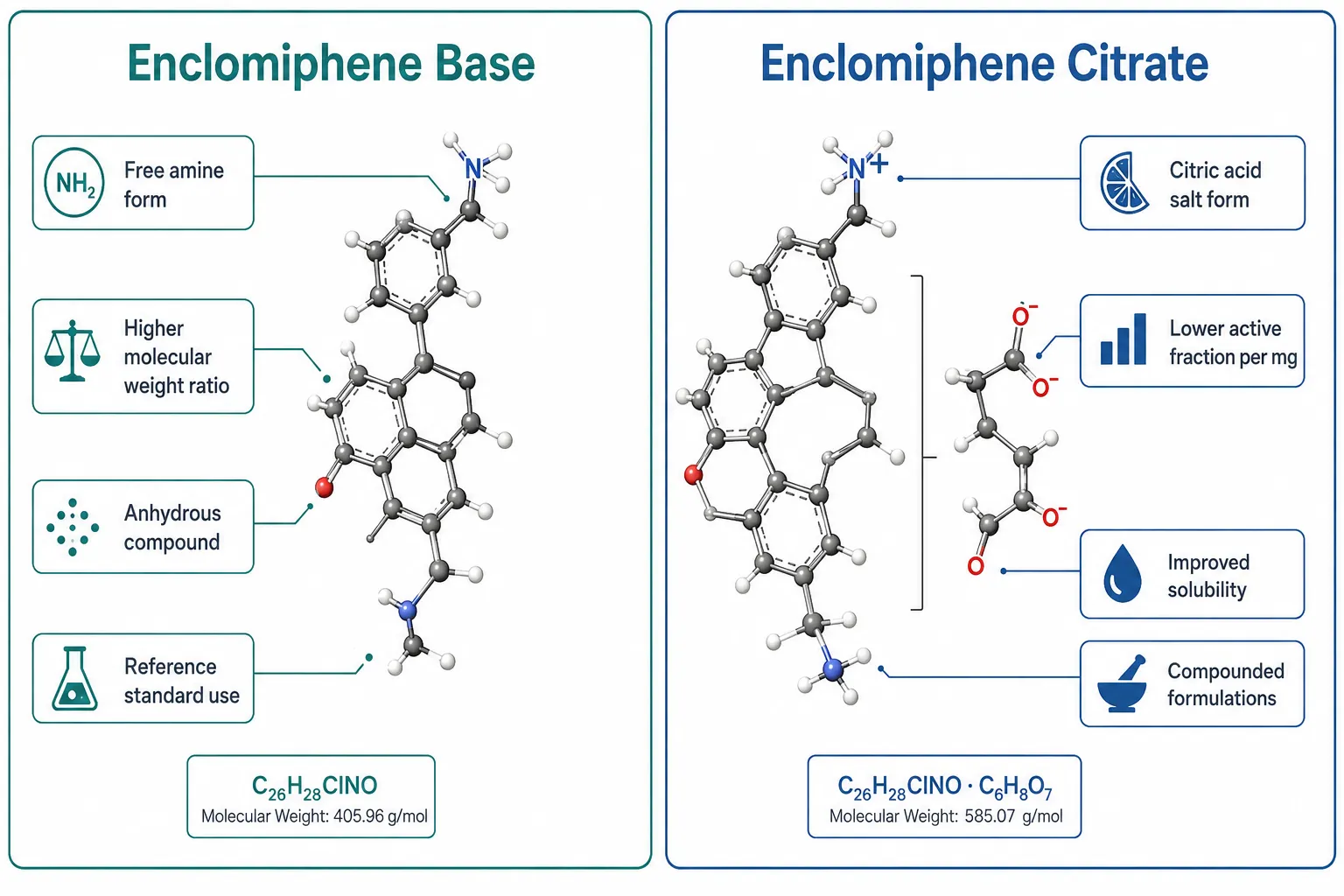
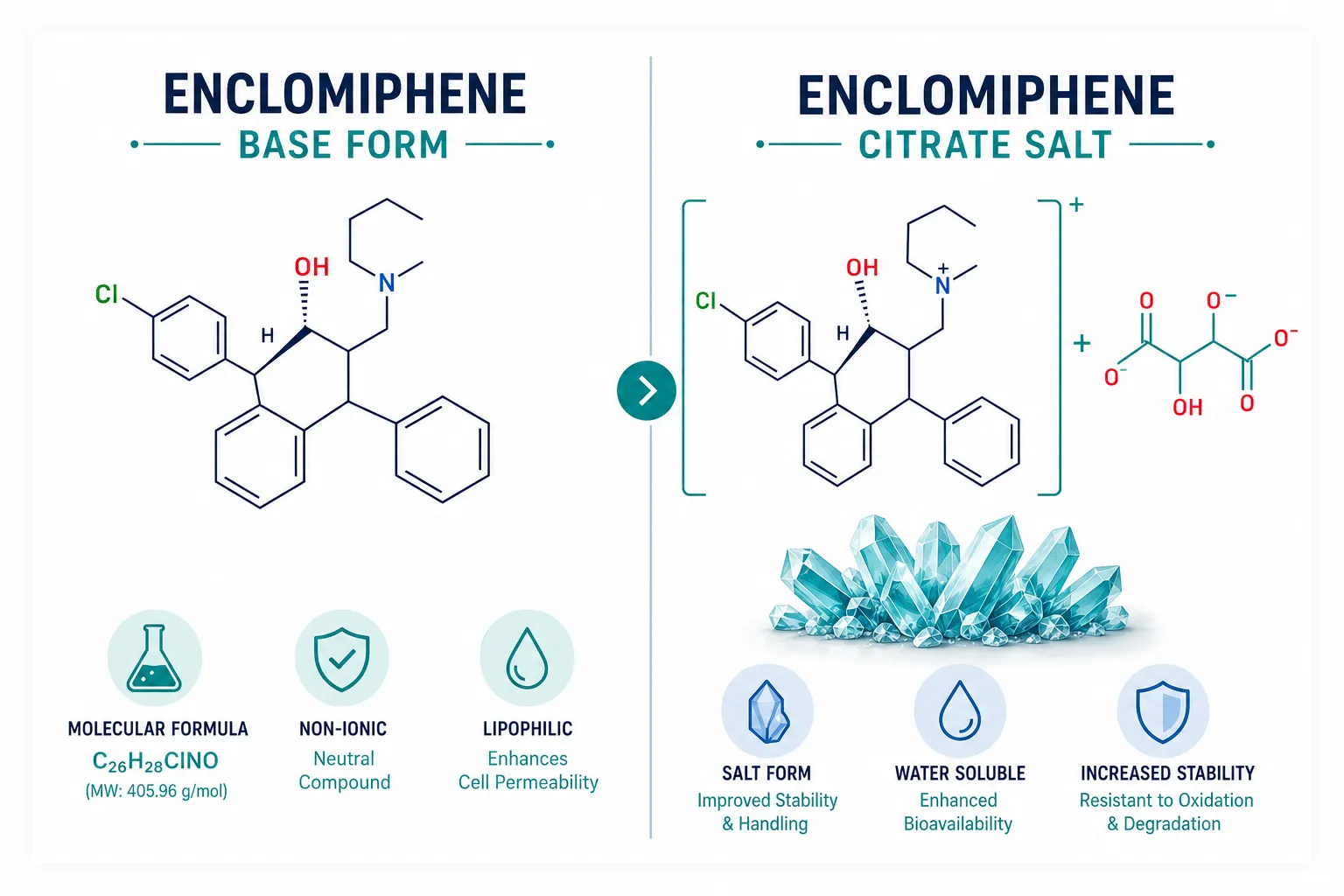
Enclomiphene is the trans-isomer of clomiphene, a selective estrogen receptor modulator (serm). In its pure form, it exists as a free base, a neutral molecule with no counterion attached. Enclomiphene citrate is a pharmaceutical salt created by combining the enclomiphene base with citric acid. This salt form is more stable and typically more water-soluble, which makes it better suited for compounding and oral formulation.

The practical consequence of this chemistry is straightforward but easy to overlook. Because citric acid adds molecular weight to the compound, a given mass of enclomiphene citrate contains less active enclomiphene than the same mass of the free base. The active fraction in enclomiphene citrate is approximately 70-75% by molecular weight, depending on the specific salt stoichiometry. A researcher reading a study that used 12.5 mg of enclomiphene base and then sourcing a citrate-form product needs to account for this difference to maintain equivalent active exposure.

"The naming convention on a product label does not automatically tell you how much active compound is present per milligram. Molecular weight math is always required."

This is one of the most common points of confusion addressed in discussions of Enclomiphene vs Enclomiphene Citrate: What Researchers Need to Know Before Choosing a Formulation, and it affects every stage of research from protocol design to data interpretation.

Regulatory Status and Compounding Considerations in 2026
Regulatory Status and Compounding Considerations in 2026

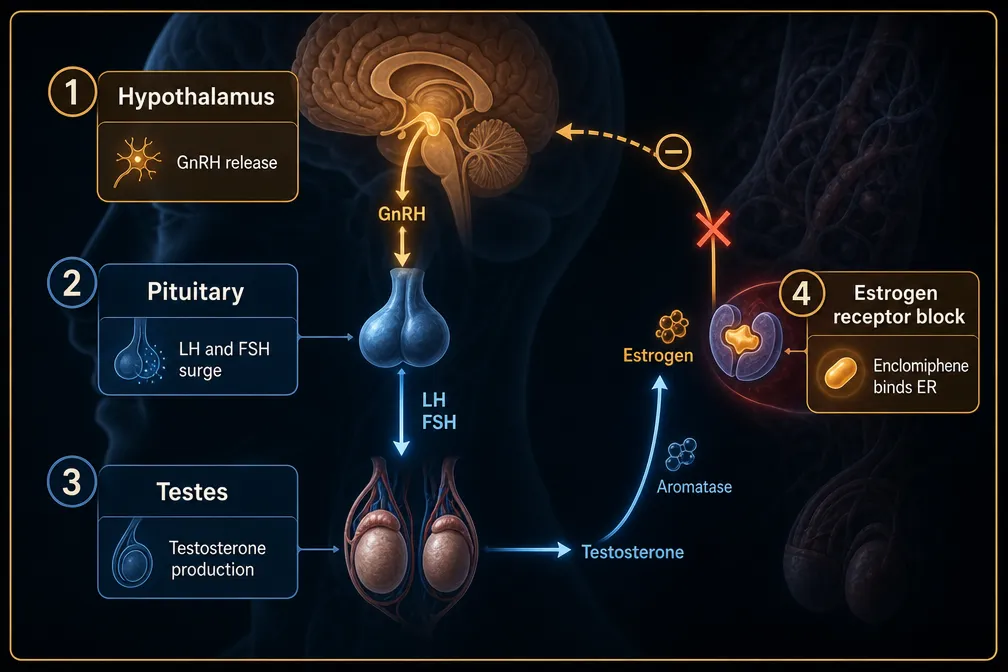
As of mid-2026, enclomiphene has not received FDA approval for any indication. It was studied extensively for male secondary hypogonadism under the investigational name Androxal, reaching Phase 3 trials before the development program was discontinued. Despite this history, the compound remains the subject of active off-label research interest, particularly for applications involving testosterone restoration with fertility preservation.

Because no approved finished-dosage product exists in the United States, researchers and compounding pharmacies working with this molecule rely on bulk active pharmaceutical ingredient (API). This is where the citrate salt form becomes especially relevant. Regulatory frameworks governing compounding, including the FDA's 503A and 503B pathways, require that any bulk substance used in compounding either appear on an approved list or undergo a formal bulk-substance evaluation. Enclomiphene citrate, as the salt form most commonly available as a bulk API, is subject to this scrutiny.

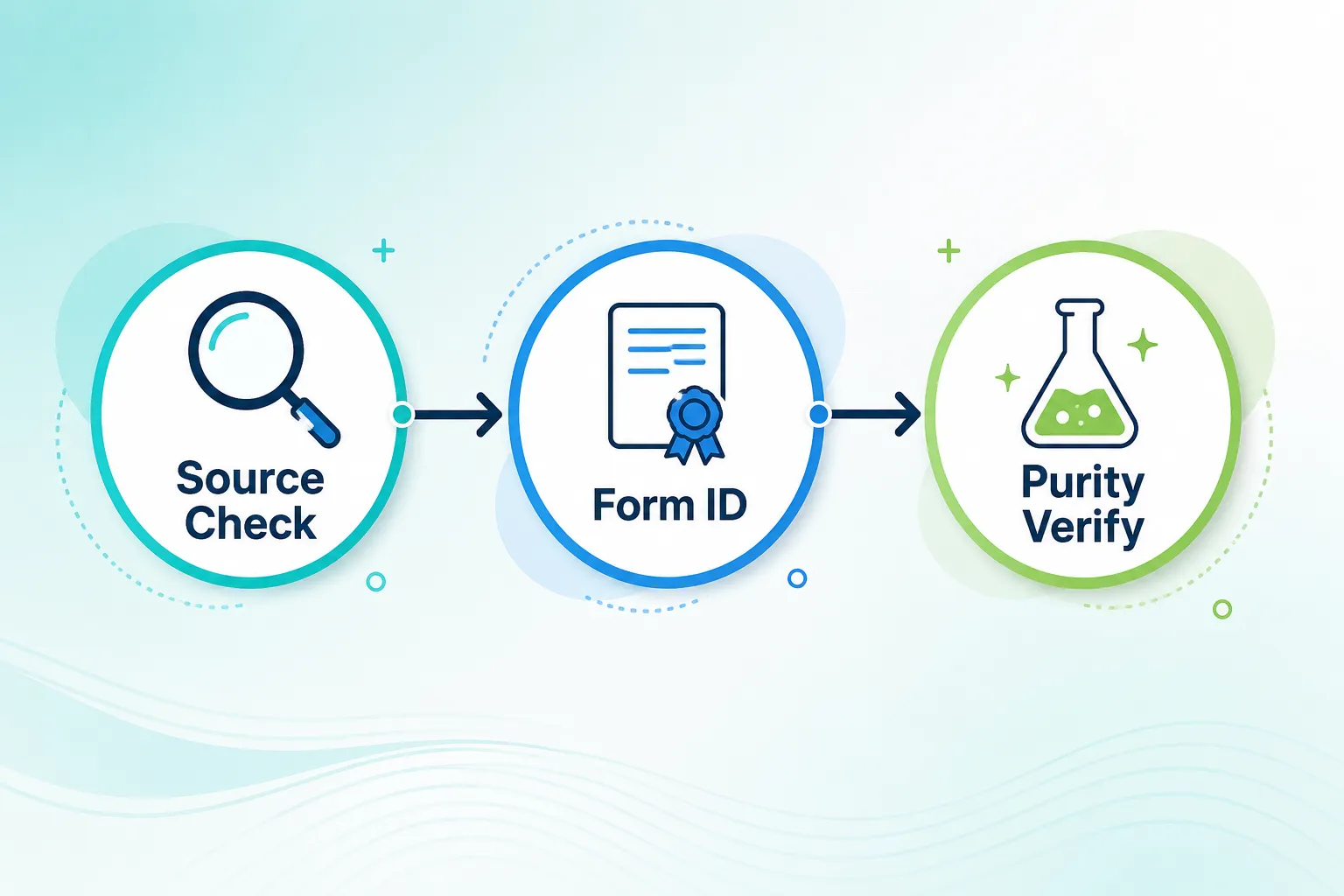
Researchers sourcing material for in vitro or preclinical work should be aware that the regulatory landscape for this compound is still evolving. Conflicting secondary listings across databases and supplier catalogs make primary-source verification essential. Always request documentation that specifies the exact chemical form, free base or citrate salt, along with a third-party COA confirming purity and identity.

For context on how regulatory complexity affects other research peptides and compounds, the discussion around GLP2-T peptide and GLP2 Tirz peptide naming confusion illustrates how labeling inconsistencies can create parallel problems in research interpretation.

Practical Formulation Guidance: Enclomiphene vs Enclomiphene Citrate for Research Use
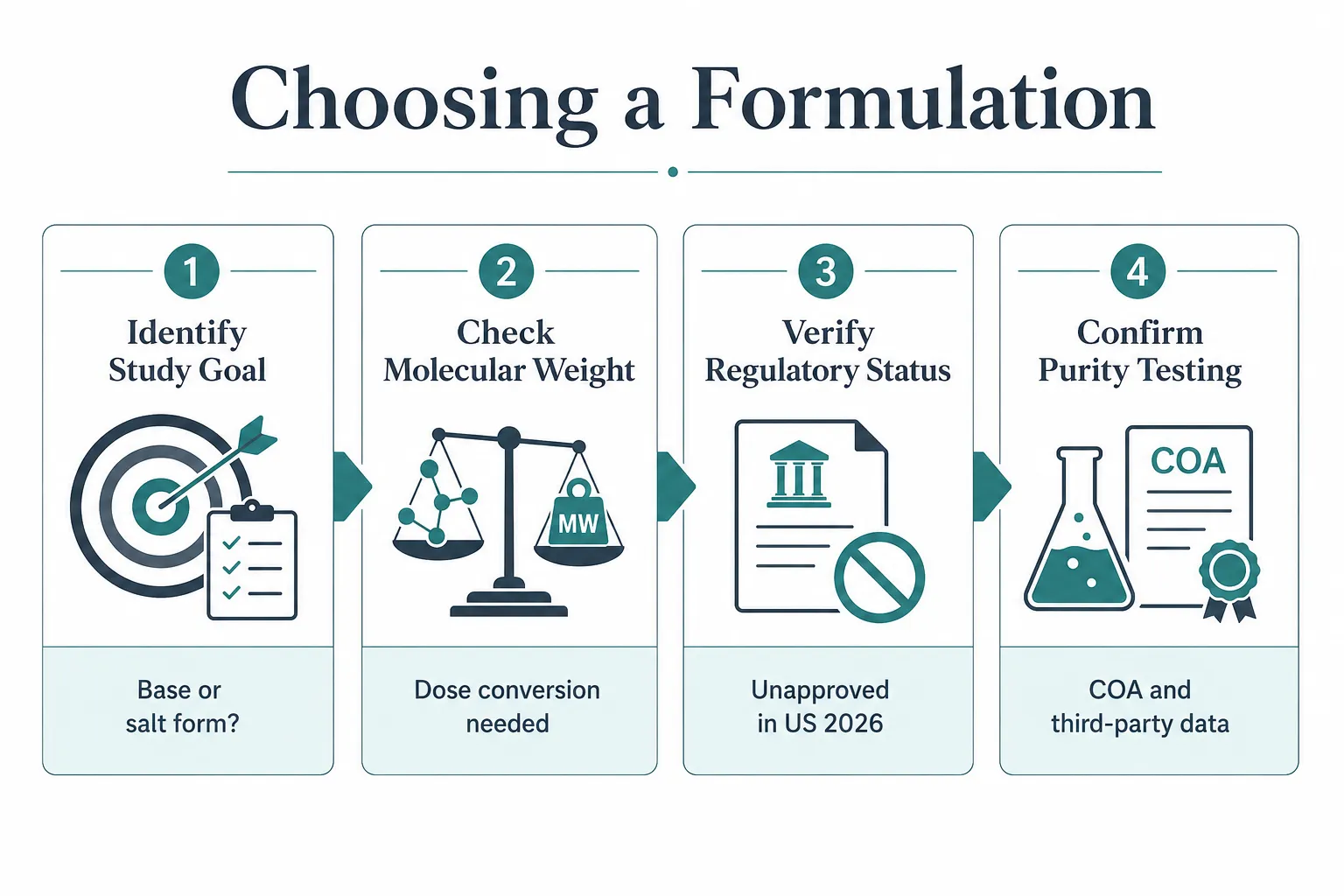
Practical Formulation Guidance: Enclomiphene vs Enclomiphene Citrate for Research Use

When evaluating Enclomiphene vs Enclomiphene Citrate: What Researchers Need to Know Before Choosing a Formulation, the decision framework depends on the research context.

Key comparison points:

Factor Enclomiphene Base Enclomiphene Citrate
Active fraction per mg Higher (~100%) Lower (~70-75%)
Water solubility Lower Higher
Typical use context Reference standards, some research Compounded oral formulations
Dose conversion needed Baseline reference Yes, relative to base
Stability in solution Variable Generally improved

Researchers designing protocols should also consider handling and safety requirements. Enclomiphene citrate, like all serm compounds, requires standard laboratory precautions including appropriate personal protective equipment and proper storage conditions, typically refrigerated and protected from light and moisture.

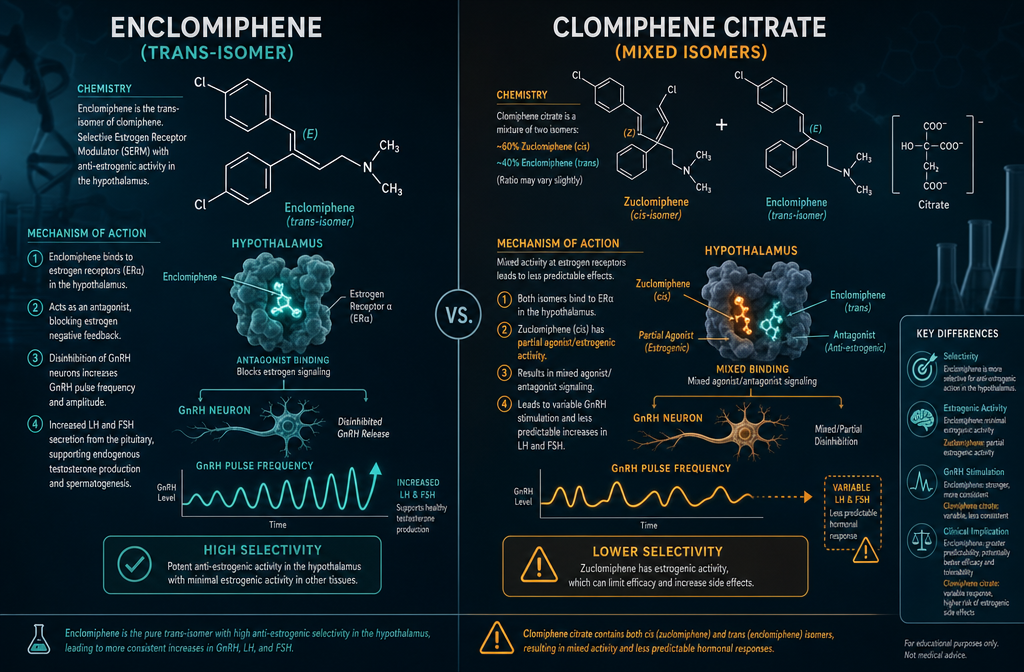
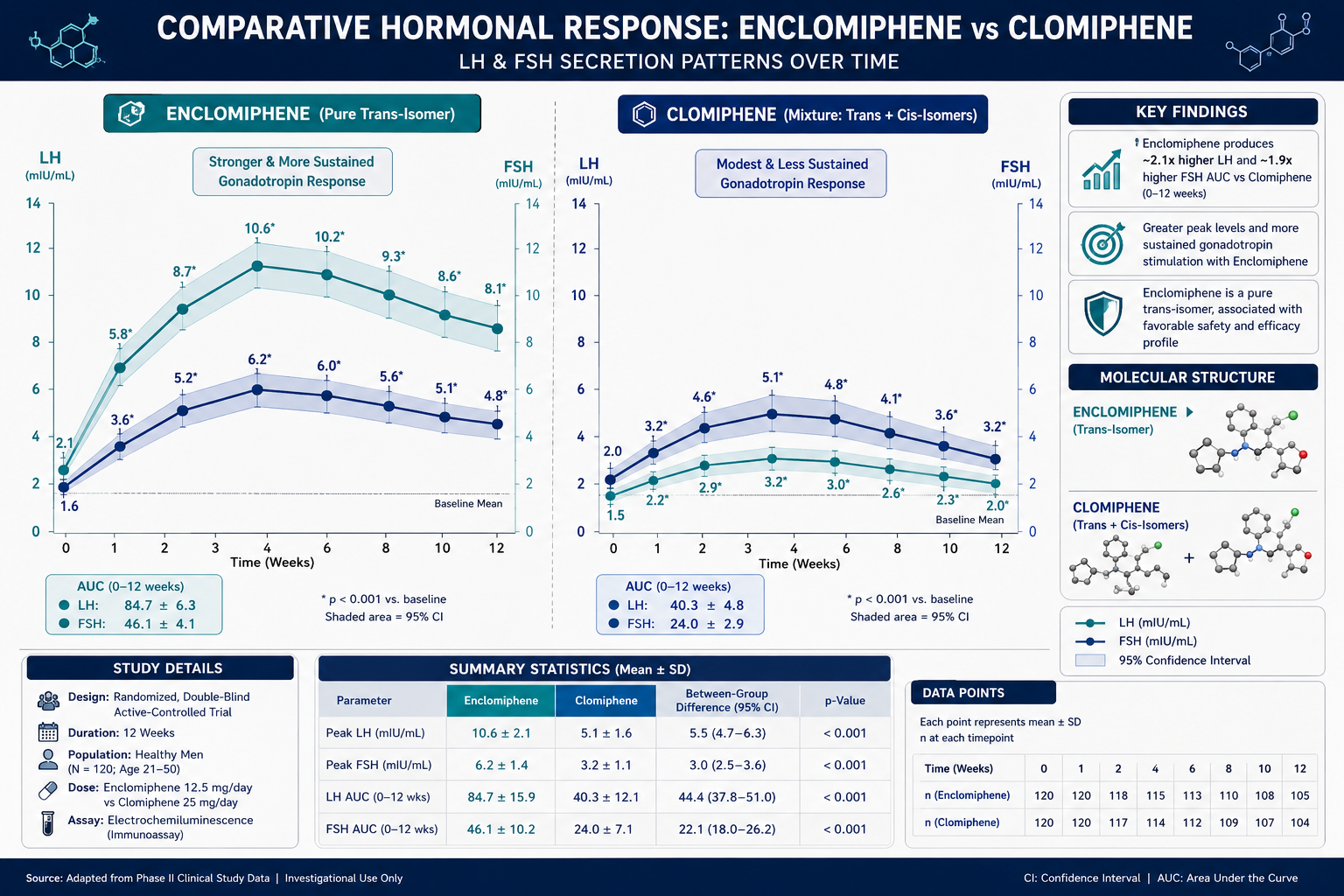
The broader evidence landscape for enclomiphene sits within the larger serm and testosterone research context. Researchers comparing enclomiphene data against clomiphene or other serm studies should note that clomiphene is a racemic mixture containing both the active trans-isomer (enclomiphene) and the less active zuclomiphene. Enclomiphene's selective profile is one reason it attracted clinical development interest. This kind of isomer-level distinction parallels the precision required in other peptide research areas, for example, understanding how SS-31 mitochondrial research themes depend on precise molecular targeting, or how TB-500 research requires accurate compound identification before drawing mechanistic conclusions.

For researchers exploring endocrine signaling more broadly, related work on Tesamorelin science and sourcing and Retatrutide and MASLD triple-agonist research demonstrates how formulation precision consistently shapes the quality of endocrine and metabolic research outcomes.

Conclusion

The distinction between enclomiphene and enclomiphene citrate is not semantic, it has direct consequences for dosing accuracy, study replication, and regulatory compliance. Researchers working with either form in 2026 should take three concrete steps before beginning any protocol.

  1. Confirm the exact chemical form on the COA, free base or citrate salt, and apply the appropriate molecular weight conversion before comparing doses across studies.
  2. Verify regulatory standing for the specific form being used, particularly if the research involves compounded material subject to bulk-substance evaluation requirements.
  3. Source from suppliers who provide third-party purity data and clearly disclose the chemical form on all documentation.

Precision at the formulation level is what separates reproducible research from ambiguous results. In a field where labeling inconsistencies are common, that precision starts with knowing exactly which compound is in the vial.

https://www.puretestedpeptides.com/wp-content/uploads/2026/08/enclomiphene-vs-enclomiphene-citrate-what-researchers-need-to-know-before-choosi.webp 1024 1536 https://www.puretestedpeptides.com/wp-content/uploads/2026/01/buy-peptides-online.jpg 2026-08-19 13:04:512026-08-19 13:04:51Enclomiphene vs Enclomiphene Citrate: What Researchers Need to Know Before Choosing a Formulation
Where Researchers Compare Enclomiphene vs Enclomiphene Citrate in Lab-Use Planning

Where Researchers Compare Enclomiphene vs Enclomiphene Citrate in Lab-Use Planning

August 12, 2026/0 Comments/in Uncategorized/by

Roughly 30% of published peptide and small-molecule research studies report compound identity issues that affect reproducibility, and selective estrogen receptor modulator (serm) research is no exception. When researchers plan experiments around enclomiphene, a naming inconsistency can quietly distort dose calculations, purity expectations, and cross-study comparisons before a single assay runs. Understanding where researchers compare enclomiphene vs enclomiphene citrate in lab-use planning is not a minor administrative detail; it is a foundational step in experimental design.

Split-screen editorial illustration (): left half shows a clean molecular diagram of enclomiphene base compound with short

Key Takeaways

  • Enclomiphene is the active trans-isomer base compound; enclomiphene citrate is a salt form that includes citric acid, affecting molecular weight and effective dose calculations.
  • The two names are sometimes used interchangeably by vendors, which can introduce dosing errors in lab-use planning.
  • Researchers should verify the exact chemical form listed on a Certificate of Analysis (CoA) before designing protocols.
  • Salt correction factors must be applied when converting between base and citrate weights to maintain experimental accuracy.
  • Sourcing from suppliers that clearly distinguish form, purity grade, and CoA documentation reduces inter-study variability.

Understanding the Chemical Distinction Between Enclomiphene and Enclomiphene Citrate

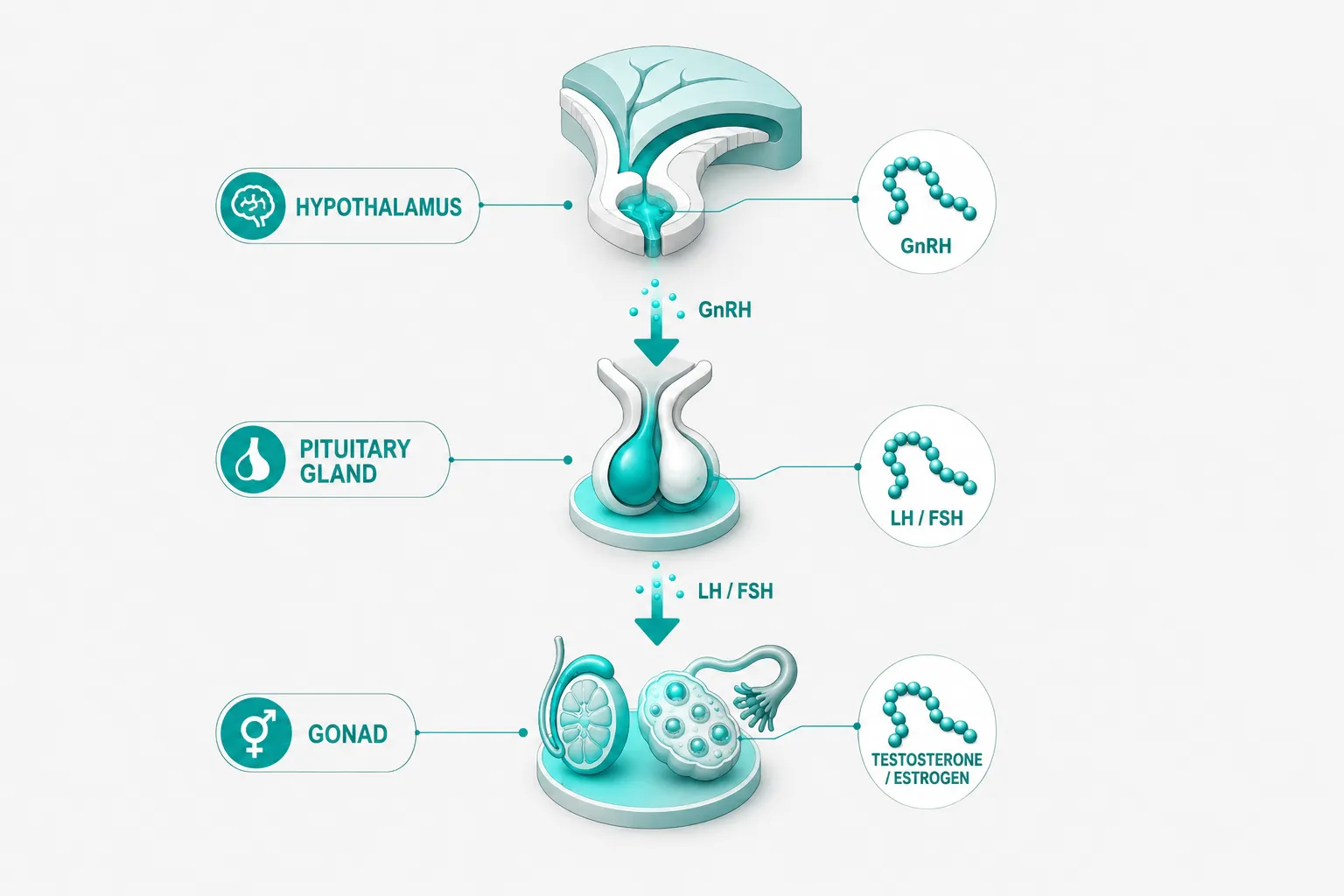
Enclomiphene is the trans-isomer of clomiphene. It acts as a selective estrogen receptor antagonist at the hypothalamic level, which is why it draws interest in research models focused on the hypothalamic-pituitary-gonadal (HPG) axis. For a deeper look at how this compound interfaces with estrogen receptor biology, see Peptides and Polypeptides in Endocrine Pharmacology: How Enclomiphene Interfaces with Estrogen Receptor Biology.

Enclomiphene citrate is the same molecule bound to citric acid as a counter-ion to form a more stable, water-soluble salt. This is a common pharmaceutical formulation strategy. The critical point for researchers: the two forms have different molecular weights.

Form Approximate Molecular Weight
Enclomiphene (free base) ~406 g/mol
Enclomiphene citrate (salt) ~598 g/mol

This difference means that 10 mg of enclomiphene citrate does not deliver 10 mg of active enclomiphene. The free base content is approximately 68% of the citrate salt weight. Ignoring this conversion is one of the most common sources of dosing error in serm-related lab protocols.

Why Vendor Labels Complicate the Comparison

Many research chemical suppliers use the two names without consistent distinction. A product labeled "enclomiphene" may actually be the citrate salt, and vice versa. This is where researchers compare enclomiphene vs enclomiphene citrate in lab-use planning most critically, at the sourcing stage, before any reagent is weighed.

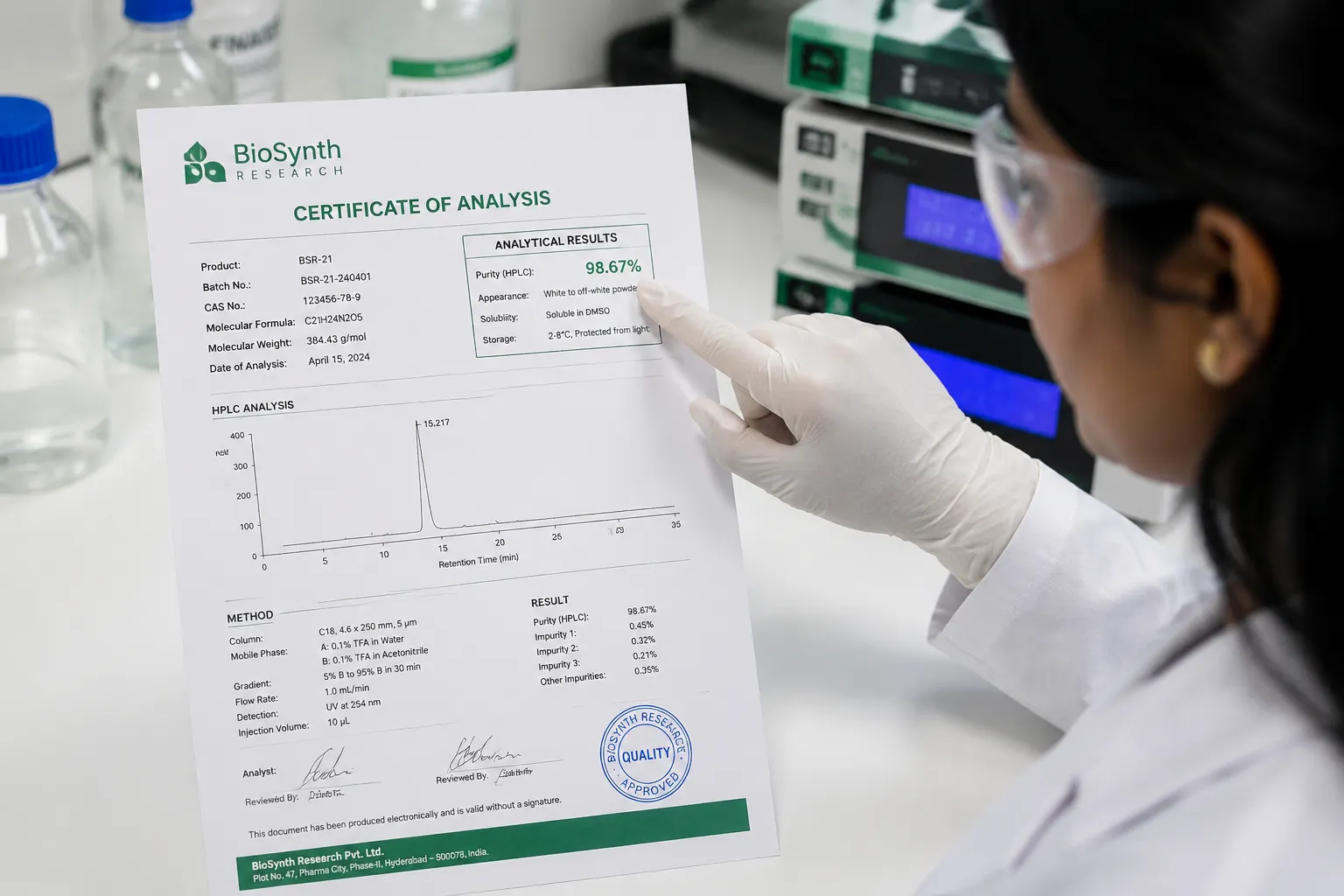
The practical solution is straightforward: always request and review the Certificate of Analysis (CoA) from the supplier. The CoA should state:

  • Exact chemical name (including salt form if applicable)
  • CAS number (enclomiphene free base: 15690-57-0; enclomiphene citrate: 7599-79-3)
  • Purity percentage by HPLC
  • Isomeric ratio confirmation (trans vs. cis content)

For guidance on sourcing compounds with proper purity documentation, Where to Buy Research-Grade Enclomiphene and Enclomiphene Citrate provides a detailed breakdown of what to look for in supplier documentation.

How Form Identification Shapes Lab-Use Planning

How Form Identification Shapes Lab-Use Planning

Once the chemical form is confirmed, researchers can apply the correct salt correction factor to their protocols. This step is not optional, it directly affects:

  • Stock solution concentration calculations
  • In vitro cell culture dosing accuracy
  • Cross-study comparability when referencing published literature

"A compound that is 98% pure as a citrate salt is not the same as 98% pure enclomiphene free base. Both numbers are accurate, but they describe different things."

Most published mechanistic studies on enclomiphene use the free base form or explicitly state the salt form with a correction factor applied. When researchers compare enclomiphene vs enclomiphene citrate in lab-use planning, aligning with the form used in reference literature prevents systematic bias.

Solubility and Stability Considerations

The citrate salt form generally offers better aqueous solubility, which can be advantageous for certain assay formats. The free base may require DMSO or ethanol as a vehicle solvent, which introduces its own set of experimental controls.

Key solubility planning points:

  • Citrate salt: higher aqueous solubility, suitable for buffer-based assays
  • Free base: typically requires organic co-solvents; vehicle controls are essential
  • Both forms: store desiccated, away from light, at -20°C for long-term stability

Researchers working on related endocrine axis compounds may find useful parallel context in Peptides and Polypeptides in Modern Research: How Molecular Size Shapes Function, Stability, and Experimental Design, which covers how molecular form affects experimental outcomes across compound classes.

Practical Sourcing Decisions: Where Researchers Compare Enclomiphene vs Enclomiphene Citrate in Lab-Use Planning

Practical Sourcing Decisions: Where Researchers Compare Enclomiphene vs Enclomiphene Citrate in Lab-Use Planning

The comparison between forms ultimately becomes a sourcing and documentation decision. Researchers should approach supplier evaluation with a structured checklist:

  1. Confirm the exact chemical form listed on the product page and CoA
  2. Verify the CAS number matches the intended compound
  3. Check isomeric purity, enclomiphene should be predominantly the trans-isomer
  4. Review HPLC data for purity confirmation above 98%
  5. Assess the supplier's testing transparency, third-party testing is a strong indicator of reliability

Researchers planning broader endocrine or metabolic research programs may also find value in reviewing how other research-grade compounds are evaluated for purity and sourcing, such as in Where to Buy Research-Grade Glow Blend Peptide: Evaluating Purity, Copper Complexes, and Skin Model Compatibility, which applies similar CoA evaluation principles to a different compound class.

For researchers building multi-compound protocols, understanding how other small molecules and peptides are characterized can strengthen the overall experimental framework. Resources such as GHK-Cu Peptide: Copper Complex Chemistry, Research Stability, and Lab Use Considerations illustrate how compound-specific chemistry affects storage, stability, and assay design, principles that apply equally to serm research.

Conclusion

The distinction between enclomiphene and enclomiphene citrate is not a branding difference, it is a chemistry difference with direct consequences for experimental accuracy. Researchers who take time to confirm the exact form, apply the appropriate salt correction factor, and source from suppliers with transparent CoA documentation will produce more reproducible, comparable data.

Actionable next steps for researchers:

  • Request the full CoA before purchasing any enclomiphene product
  • Cross-reference the CAS number against the intended form
  • Apply the molecular weight correction factor in all dose calculations
  • Document the exact form used in all experimental records and publications
  • Prioritize suppliers who provide third-party HPLC and isomeric purity data

These steps take minutes but protect months of research effort from silent, form-related errors.

References

  • Wiehle, R., Cunningham, G. R., Pitteloud, N., Wike, J., Hsu, K., Fontenot, G. K., Rosner, M., Dwyer, A., & Podolski, J. (2013). Testosterone restoration by enclomiphene citrate in men with secondary hypogonadism: Pharmacodynamics and pharmacokinetics. BJU International, 112(8), 1188-1200.
  • Kim, E. D., McCullough, A., & Kaminetsky, J. (2016). Oral enclomiphene citrate raises testosterone and preserves sperm counts in obese hypogonadal men, unlike topical testosterone: Restoration instead of replacement. BJU International, 117(4), 677-685.
  • Roth, M. Y., & Amory, J. K. (2011). Beyond the condom: Frontiers in male contraception. Seminars in Reproductive Medicine, 29(3), 233-241.
  • Guay, A. T., Jacobson, J., Perez, J. B., Hodge, M. B., & Velasquez, E. (2003). Clomiphene increases free testosterone levels in men with both secondary hypogonadism and erectile dysfunction: Who does and does not benefit? International Journal of Impotence Research, 15(3), 156-165.
https://www.puretestedpeptides.com/wp-content/uploads/2026/08/where-researchers-compare-enclomiphene-vs-enclomiphene-citrate-in-lab-use-planni.webp 1024 1536 https://www.puretestedpeptides.com/wp-content/uploads/2026/01/buy-peptides-online.jpg 2026-08-12 13:03:522026-08-12 13:03:52Where Researchers Compare Enclomiphene vs Enclomiphene Citrate in Lab-Use Planning
Enclomiphene vs Enclomiphene Citrate: Differences, Research Applications, and Dosing Considerations

Enclomiphene vs Enclomiphene Citrate: Differences, Research Applications, and Dosing Considerations

August 7, 2026/0 Comments/in Uncategorized/by

Researchers sourcing selective estrogen receptor modulators (serms) for laboratory work frequently encounter two product listings that appear nearly identical: one labeled "enclomiphene" and another labeled "enclomiphene citrate." The distinction is not merely cosmetic. Understanding enclomiphene vs enclomiphene citrate: differences, research applications, and dosing considerations is essential for accurate protocol design, correct mass calculations, and reliable data interpretation in 2026.

Key Takeaways

  • Enclomiphene is the active free-base compound; enclomiphene citrate is its salt form, which includes additional molecular weight from the citrate ion.
  • The two names refer to the same pharmacologically active molecule, the trans-isomer of clomiphene, but require different dose calculations due to differing molecular weights.
  • Researchers must account for the salt conversion factor (~1.39) when comparing protocols that use one form versus the other.
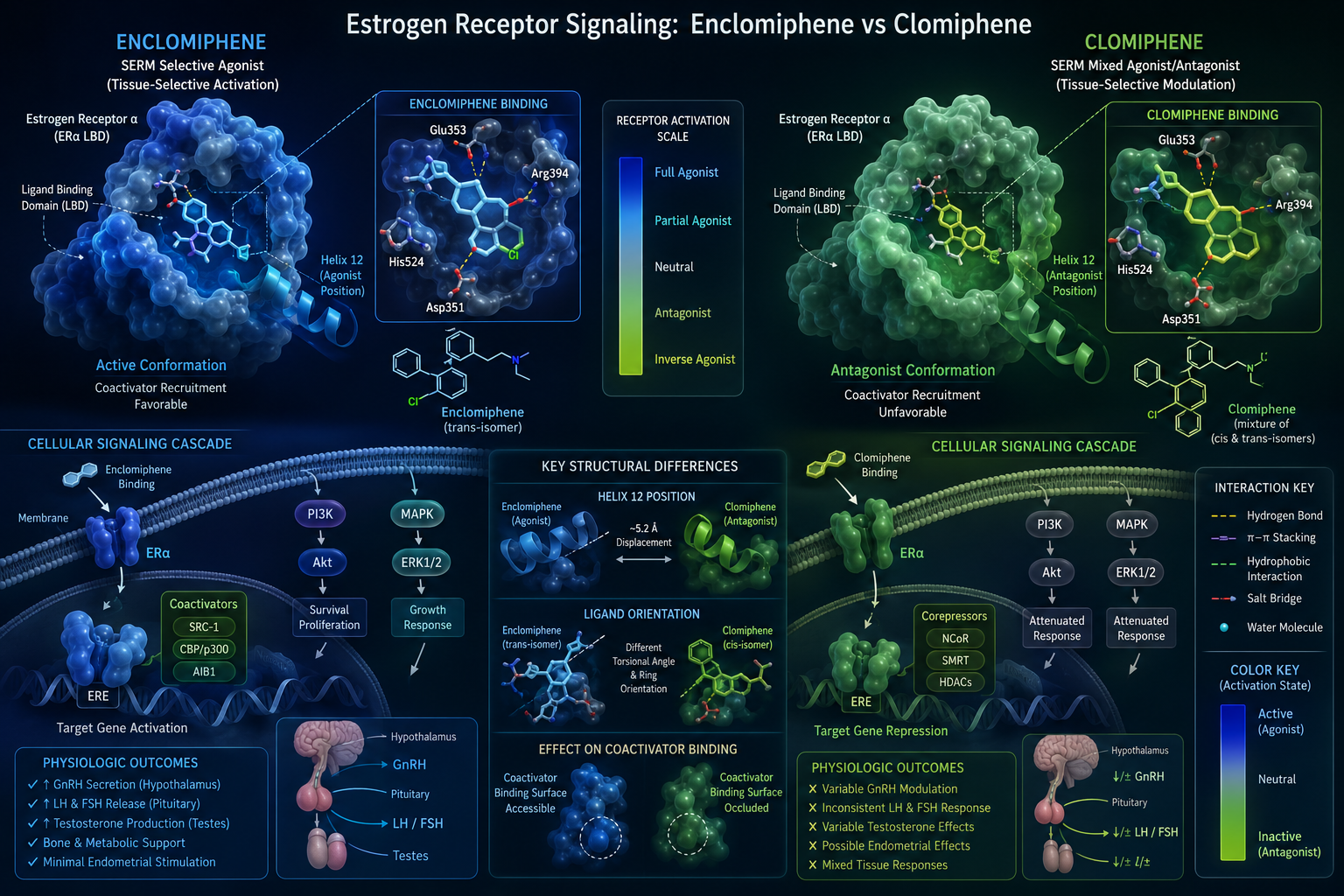
  • Enclomiphene acts as a serm by blocking estrogen receptors in the hypothalamus, stimulating endogenous LH and FSH release.
  • Purity certificates and supplier transparency are critical when selecting either form for in vitro or in vivo research.

What Is Enclomiphene and How Does It Differ from Its Citrate Salt

Clomiphene is a racemic mixture of two geometric isomers: zuclomiphene (cis) and enclomiphene (trans). Enclomiphene is the trans-isomer and is considered the pharmacologically dominant component responsible for stimulating gonadotropin release. When chemists convert enclomiphene into a stable, water-soluble form suitable for formulation and storage, they bind it to citric acid, producing enclomiphene citrate, a salt.

The core pharmacology does not change. Both forms deliver the same active molecule to estrogen receptors. What changes is the molecular weight:

Form Approximate Molecular Weight
Enclomiphene (free base) ~406 g/mol
Enclomiphene citrate (salt) ~566 g/mol

This difference has a direct impact on dosing. A 25 mg dose of enclomiphene citrate does not deliver 25 mg of active enclomiphene. The salt accounts for roughly 28% of the total mass. Researchers who ignore this conversion risk under-dosing or over-dosing their assays.

"The salt form adds molecular weight but not pharmacological activity, every milligram of citrate is inert mass that must be subtracted from the active fraction."

Research Applications: Why the Distinction Matters in Protocol Design

Research Applications: Why the Distinction Matters in Protocol Design

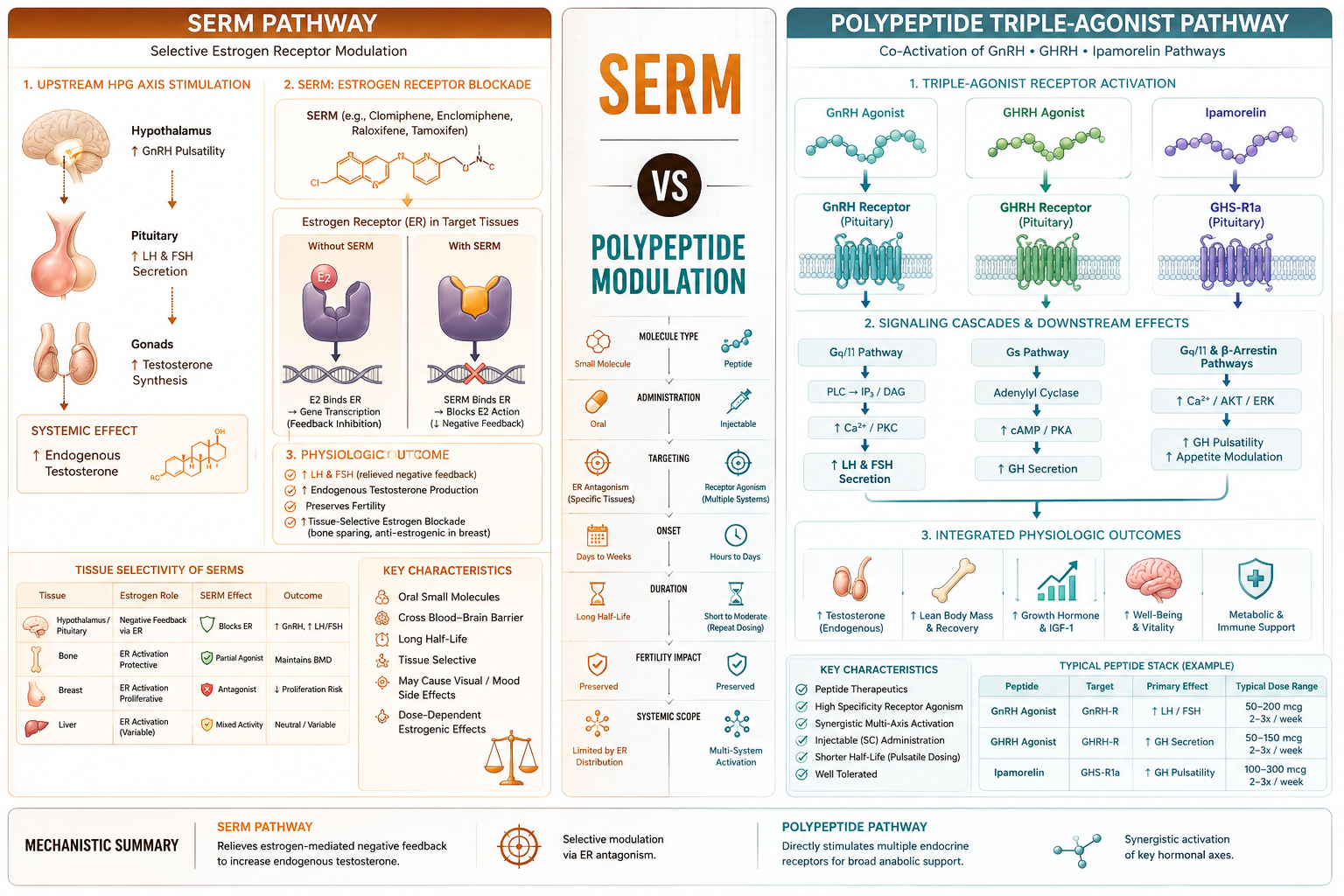
Understanding enclomiphene vs enclomiphene citrate: differences, research applications, and dosing considerations becomes especially important when designing endocrine studies. Enclomiphene's primary mechanism involves competitive antagonism at hypothalamic estrogen receptors. By blocking negative feedback, it prompts the pituitary to release more luteinizing hormone (LH) and follicle-stimulating hormone (FSH), which in turn stimulates testicular testosterone production.

Key research areas where enclomiphene is studied:

  • Male hypogonadism and testosterone restoration models
  • Fertility research focused on spermatogenesis
  • Hypothalamic-pituitary-gonadal (HPG) axis modulation
  • Comparative serm studies alongside agents like clomiphene citrate

For researchers also exploring growth hormone secretagogues, it is worth noting that serm-based protocols are sometimes combined with peptide-based approaches. Resources such as serm Ipamorelin CJC1295 dosage protocols and serm Ipamorelin CJC1295 combination research provide useful context for multi-compound assay planning.

When comparing supplier listings, the product title alone is insufficient. Researchers should always request a Certificate of Analysis (CoA) that specifies:

  1. Whether the compound is free base or salt form
  2. Purity percentage (HPLC-verified, ideally >98%)
  3. Molecular weight confirmation
  4. Batch-specific testing data

For guidance on evaluating supplier documentation, the peptide supplier comparisons guide interpreting PeptideTech and PeptideSC listings offers a practical framework applicable to small-molecule serms as well.

Dosing Considerations: Converting Between Free Base and Citrate Salt

Dosing Considerations: Converting Between Free Base and Citrate Salt

Dosing Considerations: Converting Between Free Base and Citrate Salt

Accurate dosing is where the enclomiphene vs enclomiphene citrate: differences, research applications, and dosing considerations question becomes most practical. The conversion factor between the two forms is approximately 1.39. This means:
  • To deliver an equivalent dose of 25 mg enclomiphene (free base), a researcher using enclomiphene citrate would need approximately 34.75 mg of the salt form.
  • Conversely, a protocol calling for 50 mg of enclomiphene citrate delivers roughly 36 mg of active enclomiphene.

Practical conversion formula:

Enclomiphene citrate dose = Enclomiphene free base dose x 1.39

Researchers should apply this calculation consistently across all protocols and document which form was used in every experimental record. Mixing up forms across study arms introduces a systematic error that can invalidate comparative data.

Common research dose ranges observed in published literature:

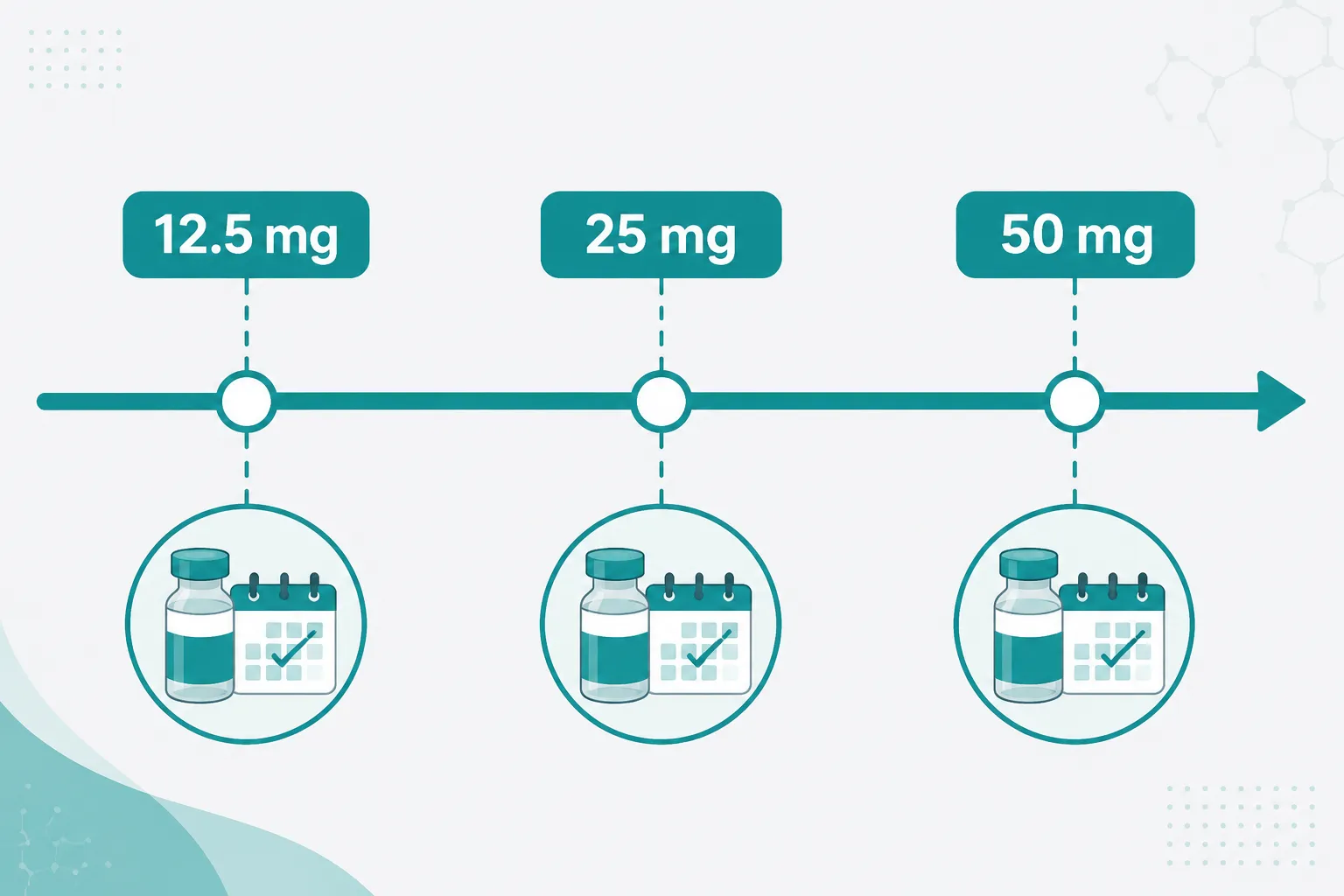
  • Low range: 12.5 mg enclomiphene equivalent per day
  • Mid range: 25 mg enclomiphene equivalent per day
  • Higher range: 50 mg enclomiphene equivalent per day (typically short-duration)

These ranges apply to the active enclomiphene content, not the total salt mass. Always recalculate when switching suppliers or forms.

For researchers also working with peptide-based hormonal modulators, understanding dosing precision is equally important in compounds such as those discussed in Tesamorelin dosage for fat loss and Tesamorelin vs Sermorelin comparisons, where small dose differences produce measurable outcome variations.

Purity also interacts with dosing accuracy. A compound listed at 95% purity versus 99% purity requires adjustment in weighed quantities to achieve the same effective dose. This is why sourcing from suppliers who provide third-party verified CoAs is non-negotiable for reproducible research. The CJC-1295 Ipamorelin assay planning and sourcing checklist outlines a sourcing verification process that translates well to serm procurement.

Conclusion

The distinction between enclomiphene and enclomiphene citrate is a matter of chemistry, not pharmacology, but that chemistry has direct consequences for every milligram weighed on a laboratory scale. Researchers comparing listings or adapting published protocols should take the following steps:

  1. Confirm the exact form (free base vs. citrate salt) on every CoA before ordering.
  2. Apply the 1.39 conversion factor whenever switching between forms within or across studies.
  3. Document the form used in all experimental records to ensure reproducibility and accurate cross-study comparisons.
  4. Request HPLC purity data and adjust weighed quantities accordingly.
  5. Cross-reference supplier documentation using established evaluation frameworks to verify compound identity.

Resolving this compound-name ambiguity upfront prevents systematic dosing errors and strengthens the integrity of any HPG-axis or serm-focused research program in 2026.

https://www.puretestedpeptides.com/wp-content/uploads/2026/08/enclomiphene-vs-enclomiphene-citrate-differences-research-applications-and-dosin.webp 1024 1536 https://www.puretestedpeptides.com/wp-content/uploads/2026/01/buy-peptides-online.jpg 2026-08-07 13:06:042026-08-07 13:06:04Enclomiphene vs Enclomiphene Citrate: Differences, Research Applications, and Dosing Considerations
Tesofensine, Enclomiphene, and Peptide-Based Approaches: How Small Molecules Fit Alongside GLP-3 and GH Secretagogues in Metabolic Research

Tesofensine, Enclomiphene, and Peptide-Based Approaches: How Small Molecules Fit Alongside GLP-3 and GH Secretagogues in Metabolic Research

August 6, 2026/0 Comments/in Uncategorized/by

"

Professional () hero image with (≤42 chars): 'Small Molecules & Metabolic Research' in crisp white on a deep navy

More than 650 million adults worldwide live with obesity, yet fewer than 5% of available investigational compounds target the full metabolic axis, appetite regulation, hormonal balance, and cellular energy production simultaneously. That gap is precisely where tesofensine, enclomiphene, and peptide-based approaches have drawn sustained research attention, each addressing a distinct but overlapping node in metabolic dysfunction.

This article maps how these small molecules and peptides compare mechanistically, what study endpoints researchers track, and where combination strategies may lead next.

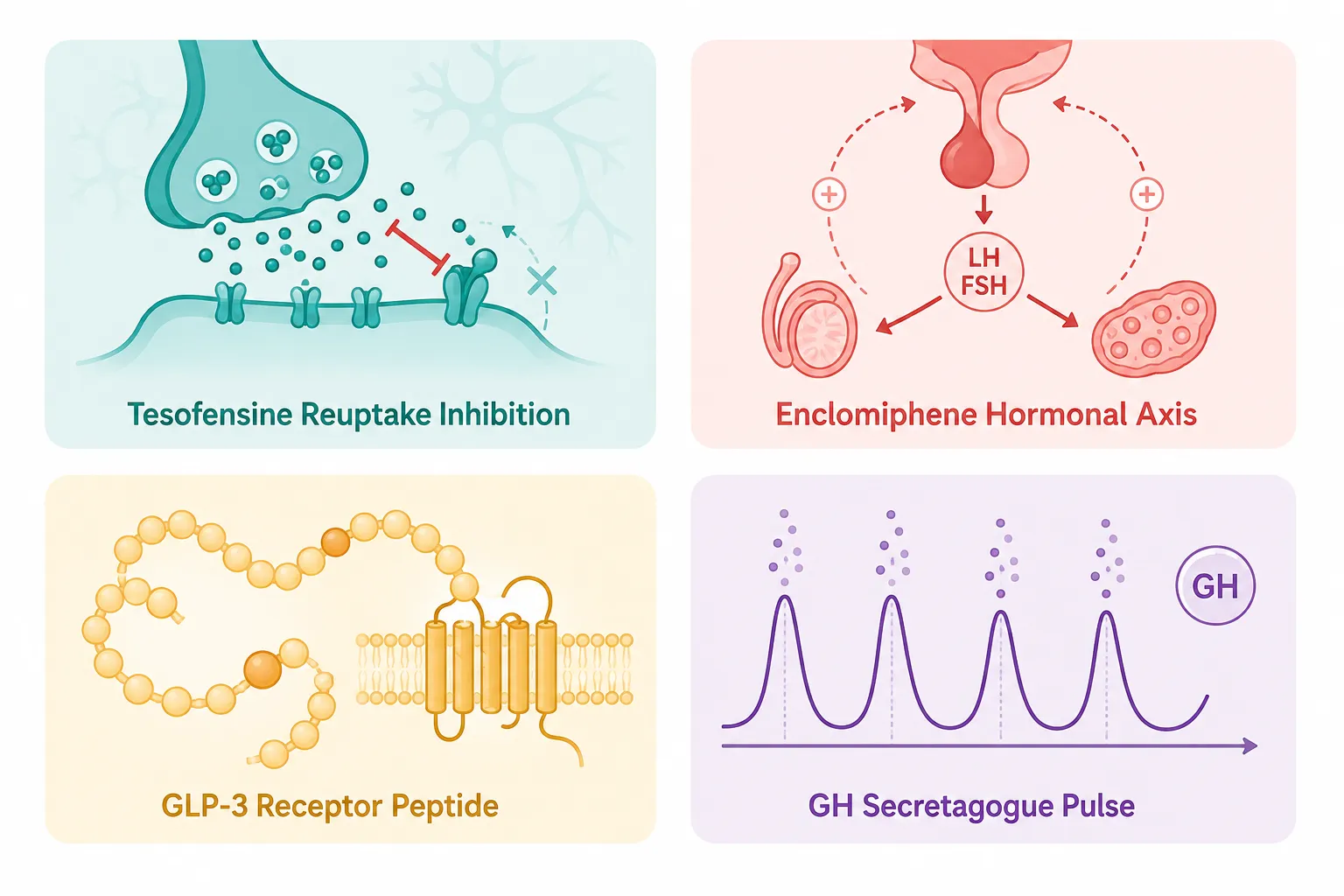
Editorial flat-vector infographic landscape () showing four distinct molecular pathway icons arranged in a 2x2 grid:

Key Takeaways

  • Tesofensine acts as a triple monoamine reuptake inhibitor; enclomiphene restores the hypothalamic-pituitary-gonadal axis, both target metabolic dysfunction through non-peptide mechanisms.
  • GLP-3 and GH secretagogue peptides operate through receptor-mediated signaling, offering complementary rather than redundant pathways.
  • Combining small molecules with peptide-based tools is an active area of preclinical inquiry, with multi-axis targeting as the central hypothesis.
  • Endpoint selection, body composition, insulin sensitivity, hormonal panels, differs meaningfully across compound classes.
  • Sourcing purity and documentation standards remain critical variables in any research protocol involving these agents.

Mechanisms Behind Tesofensine, Enclomiphene, and Peptide-Based Approaches in Metabolic Research

Tesofensine: Triple Reuptake Inhibition

Tesofensine blocks the reuptake of serotonin, dopamine, and norepinephrine. This triple monoamine inhibition reduces appetite signaling in the hypothalamus while increasing energy expenditure through sympathomimetic activity. Phase II clinical data published in The Lancet demonstrated mean weight reductions of 10.6% over 24 weeks at the 1.0 mg dose, a result that positioned tesofensine among the most potent investigational anti-obesity small molecules at the time.

Key research endpoints for tesofensine include:

  • Body weight and BMI reduction
  • Resting metabolic rate changes
  • Appetite hormone panels (ghrelin, leptin)
  • Cardiovascular safety markers (heart rate, blood pressure)

Enclomiphene: Restoring the HPG Axis

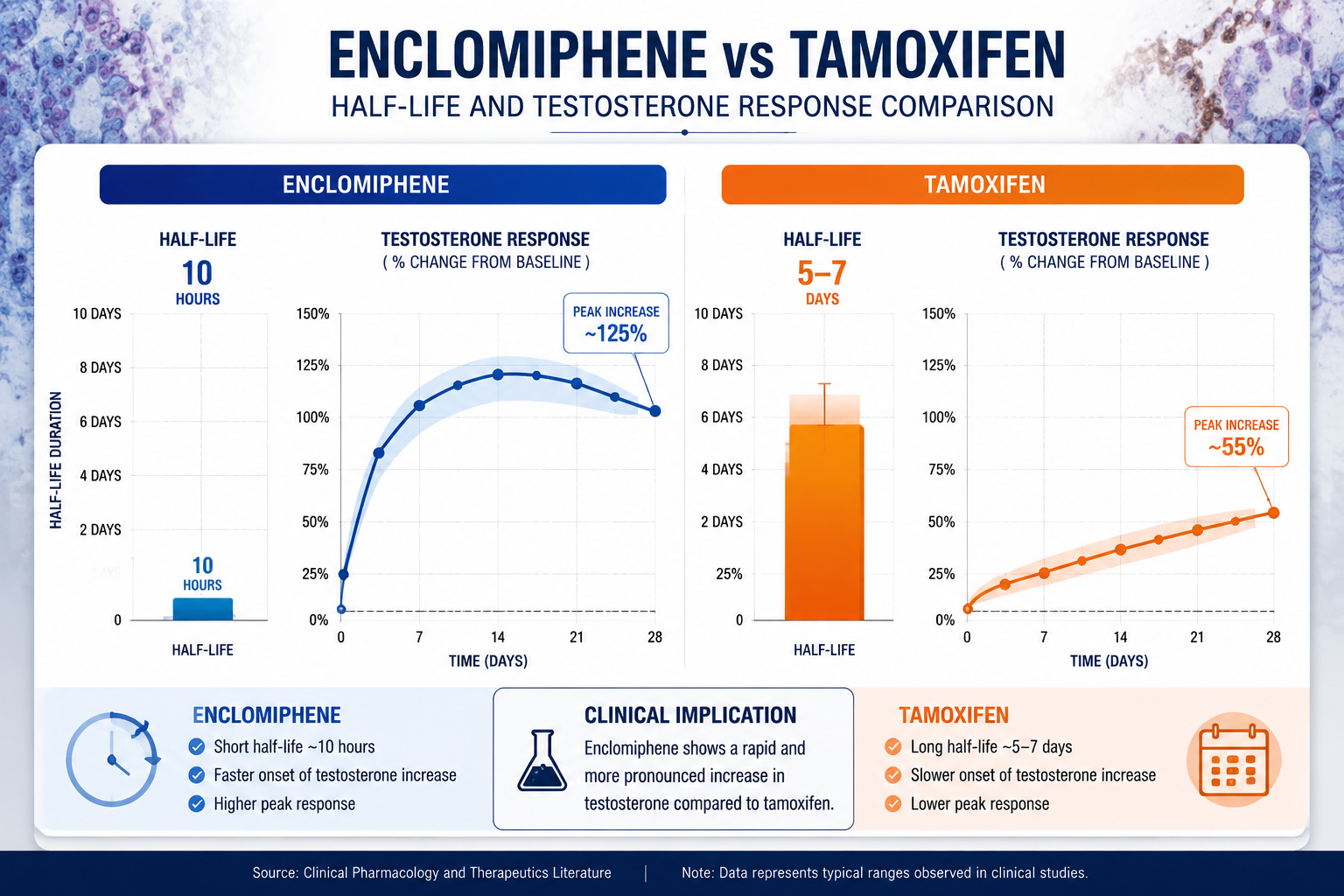
Enclomiphene is the trans-isomer of clomiphene citrate. Unlike its cis-counterpart zuclomiphene, enclomiphene has a short half-life and selectively blocks estrogen receptors in the hypothalamus, prompting increased LH and FSH secretion. The downstream result is restored endogenous testosterone production, a mechanism relevant to male hypogonadism and its associated metabolic consequences, including insulin resistance and adiposity.

"Hormonal optimization is not a peripheral concern in metabolic research, testosterone deficiency independently predicts visceral fat accumulation and reduced insulin sensitivity."

Enclomiphene research endpoints typically include:

  • Serum testosterone, LH, and FSH levels
  • Sperm count and morphology (fertility endpoints)
  • Fasting insulin and HOMA-IR scores
  • Body composition via DEXA scan

How GLP-3 and GH Secretagogues Extend the Peptide-Based Landscape

GLP-3 Peptides and Gut-Derived Signaling

GLP-3 (glucagon-like peptide 3) is a lesser-studied member of the proglucagon-derived peptide family. Research into GLP-3 RETA peptide has explored its potential roles in gut motility, nutrient absorption modulation, and metabolic signaling distinct from GLP-1. While GLP-1 agonists dominate clinical pipelines, GLP-3 represents an investigational frontier with a different receptor profile and potentially complementary metabolic effects.

Researchers sourcing GLP-1 peptides for metabolic studies frequently benchmark GLP-3 data against GLP-1 receptor activity to define mechanistic boundaries.

GH Secretagogues: Tesamorelin and the GHRH Axis

Growth hormone secretagogues stimulate endogenous GH release through GHRH receptor agonism or ghrelin receptor activation. Tesamorelin, a stabilized GHRH analog, has FDA approval for HIV-associated lipodystrophy and has been studied for visceral fat reduction in non-HIV populations. Research on tesa side effects and dosing is essential reading for any investigator designing GH secretagogue protocols.

GH secretagogue endpoints differ from small-molecule endpoints in important ways:

Compound Class Primary Endpoint Secondary Endpoints
Tesofensine Body weight reduction Heart rate, appetite hormones
Enclomiphene Serum testosterone HOMA-IR, body composition
GLP-3 peptides Gut metabolic signaling Nutrient absorption markers
GH secretagogues IGF-1 levels, visceral fat Lean mass, lipid panels

Combination Research Possibilities: Where Small Molecules Fit Alongside GLP-3 and GH Secretagogues

Combination Research Possibilities: Where Small Molecules Fit Alongside GLP-3 and GH Secretagogues

The central hypothesis driving combination research is multi-axis targeting: no single compound addresses appetite, hormonal balance, cellular energy, and body composition simultaneously. Small molecules like tesofensine and enclomiphene offer oral bioavailability and defined pharmacokinetic profiles, while peptides provide receptor specificity and physiological signaling patterns.

Preclinical models have begun exploring stacked protocols. For example:

  • Tesofensine + GH secretagogue: appetite suppression paired with lean mass preservation
  • Enclomiphene + GLP-1/GLP-3 peptides: hormonal axis restoration alongside gut-mediated glucose regulation
  • BPC-157 as a recovery adjunct: researchers reviewing BPC-157 core peptides documentation note its cytoprotective properties, which may support tissue integrity during aggressive metabolic interventions

Mitochondrial health is another emerging intersection point. SS-31 mitochondrial research themes suggest that cardiolipin-targeting peptides like SS-31 could support cellular energy efficiency in subjects undergoing metabolic recomposition protocols, a mechanistically distinct but synergistic contribution.

Researchers working with BPC-157 and TB-500 peptide combinations have also documented multi-peptide stacking approaches that inform how combination metabolic protocols might be structured.

Documentation and Sourcing Standards

Regardless of compound class, purity verification and third-party testing are non-negotiable in legitimate research. Certificate of Analysis (CoA) documentation, HPLC purity data, and mass spectrometry confirmation should accompany any research-grade compound. Investigators exploring peptides for research purposes should prioritize suppliers with transparent testing protocols.

Documentation and Sourcing Standards

Conclusion

The integration of tesofensine, enclomiphene, and peptide-based approaches alongside GLP-3 and GH secretagogues represents one of the most mechanistically rich areas in 2026 metabolic research. Each compound class addresses a distinct regulatory axis, neurotransmitter-mediated appetite control, HPG hormonal restoration, gut-derived peptide signaling, and GH-driven body composition, creating a logical framework for combination investigation.

Actionable next steps for researchers:

  1. Map the specific metabolic axis each compound targets before designing multi-agent protocols.
  2. Establish baseline biomarkers, testosterone, IGF-1, fasting insulin, body composition, to measure outcomes across compound classes.
  3. Review published safety and endpoint data for each agent independently before combining.
  4. Source compounds exclusively from suppliers providing verified CoA and third-party purity documentation.
  5. Monitor emerging GLP-3 and mitochondrial peptide literature, as these areas are generating rapid preclinical data in 2026.

The future of metabolic research is integrative. Understanding where small molecules end and peptide-based tools begin, and how they might work together, is the defining question for the next phase of investigation.

https://www.puretestedpeptides.com/wp-content/uploads/2026/08/tesofensine-enclomiphene-and-peptide-based-approaches-how-small-molecules-fit-al.webp 1024 1536 https://www.puretestedpeptides.com/wp-content/uploads/2026/01/buy-peptides-online.jpg 2026-08-06 13:03:502026-08-06 13:03:50Tesofensine, Enclomiphene, and Peptide-Based Approaches: How Small Molecules Fit Alongside GLP-3 and GH Secretagogues in Metabolic Research
Estrogen Receptor Biology for Peptide Researchers: How Enclomiphene and Related serms Interface With Endocrine Pathways

Estrogen Receptor Biology for Peptide Researchers: How Enclomiphene and Related serms Interface With Endocrine Pathways

August 5, 2026/0 Comments/in Uncategorized/by

Testosterone levels in men have declined by roughly 1% per year since the 1980s, a trend that has pushed hormone optimization research, including the study of selective estrogen receptor modulators, squarely into the mainstream of endocrine science. For researchers working with peptides and growth hormone secretagogues, understanding estrogen receptor biology for peptide researchers: how enclomiphene and related serms interface with endocrine pathways is no longer optional. Estrogen receptors sit at the crossroads of the hypothalamic-pituitary-gonadal (HPG) axis, directly influencing the same feedback loops that peptide protocols are designed to modulate.
Flat-vector infographic illustration in bright clinical white and teal palette showing a stylized cross-section of a cell

Key Takeaways

  • Estrogen receptors exist in at least three functionally distinct forms, ERalpha, ERbeta, and GPER, each producing different downstream effects depending on tissue type.
  • serms like enclomiphene act as tissue-selective modulators, blocking estrogen's negative feedback at the hypothalamus to elevate LH, FSH, and endogenous testosterone.
  • Coregulator proteins determine whether a serm behaves as an agonist or antagonist in a given tissue, explaining the drug's differential effects across organ systems.
  • Peptide researchers combining growth hormone secretagogues with serm protocols should understand how these pathways intersect to avoid redundant or counterproductive signaling.
  • Purity and characterization of research compounds remain critical variables when studying serm-peptide interactions.

The Architecture of Estrogen Receptor Signaling

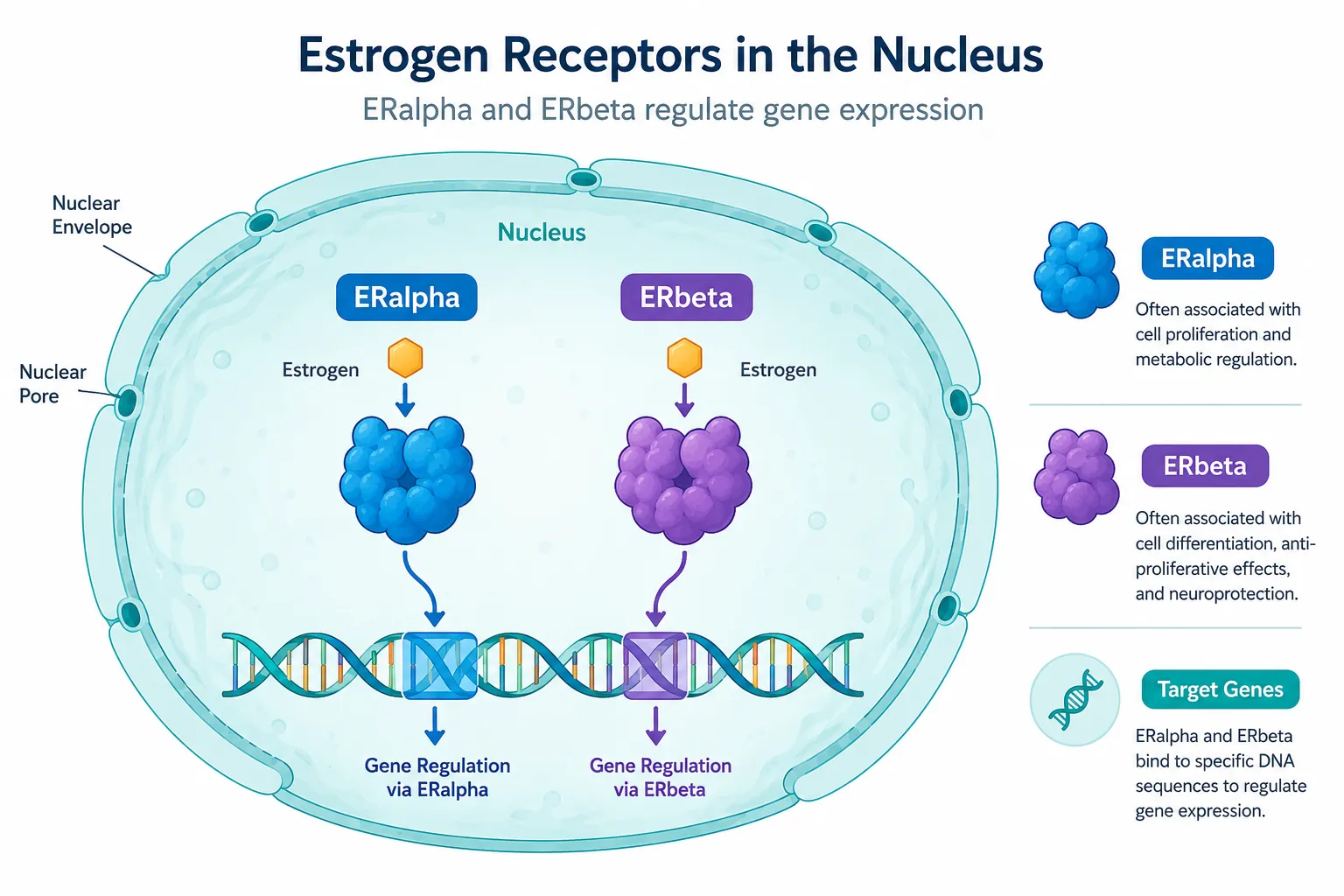
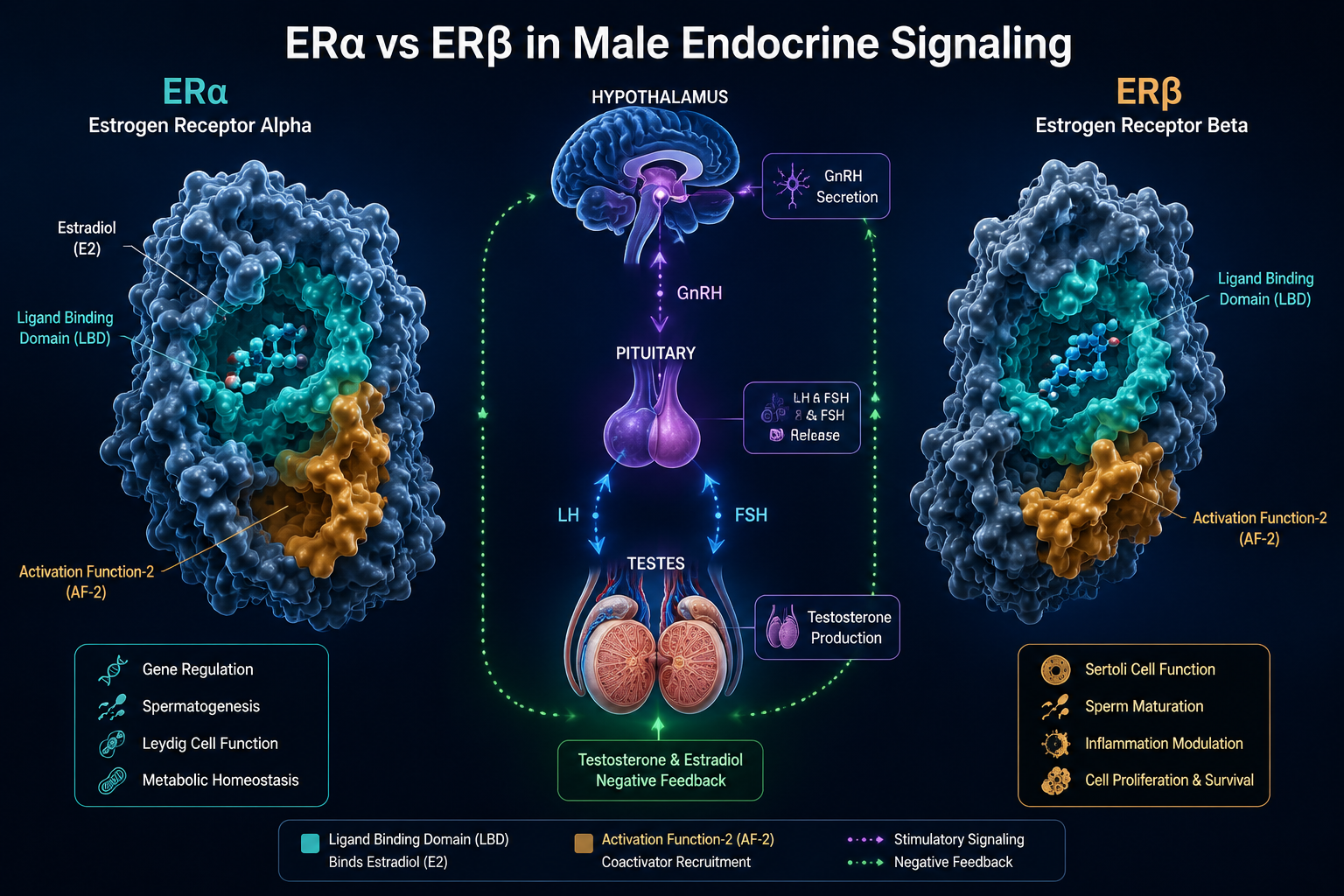
Estrogen does not act through a single receptor. Three receptor types carry its signal into cells: ERalpha (ERa), ERbeta (ERb), and the membrane-bound G protein-coupled estrogen receptor (GPER). Each has a distinct tissue distribution and a distinct set of coregulator proteins that shape its final biological output.

ERalpha dominates in the uterus, liver, bone, and the hypothalamus. ERbeta is more prominent in the ovaries, lungs, and central nervous system. GPER, a newer focus in endocrine and vascular biology, mediates rapid non-genomic estrogen responses, including vasodilation and insulin secretion, that occur too quickly to involve gene transcription.

Genomic vs. non-genomic signaling is a critical distinction:

Pathway Receptor Involved Time to Effect Mechanism
Classical genomic ERalpha / ERbeta Hours DNA binding, gene transcription
Non-genomic GPER, membrane ERs Seconds to minutes Second messengers (cAMP, MAPK)
Tethered genomic ERalpha / ERbeta Hours AP-1 or Sp1 transcription factors

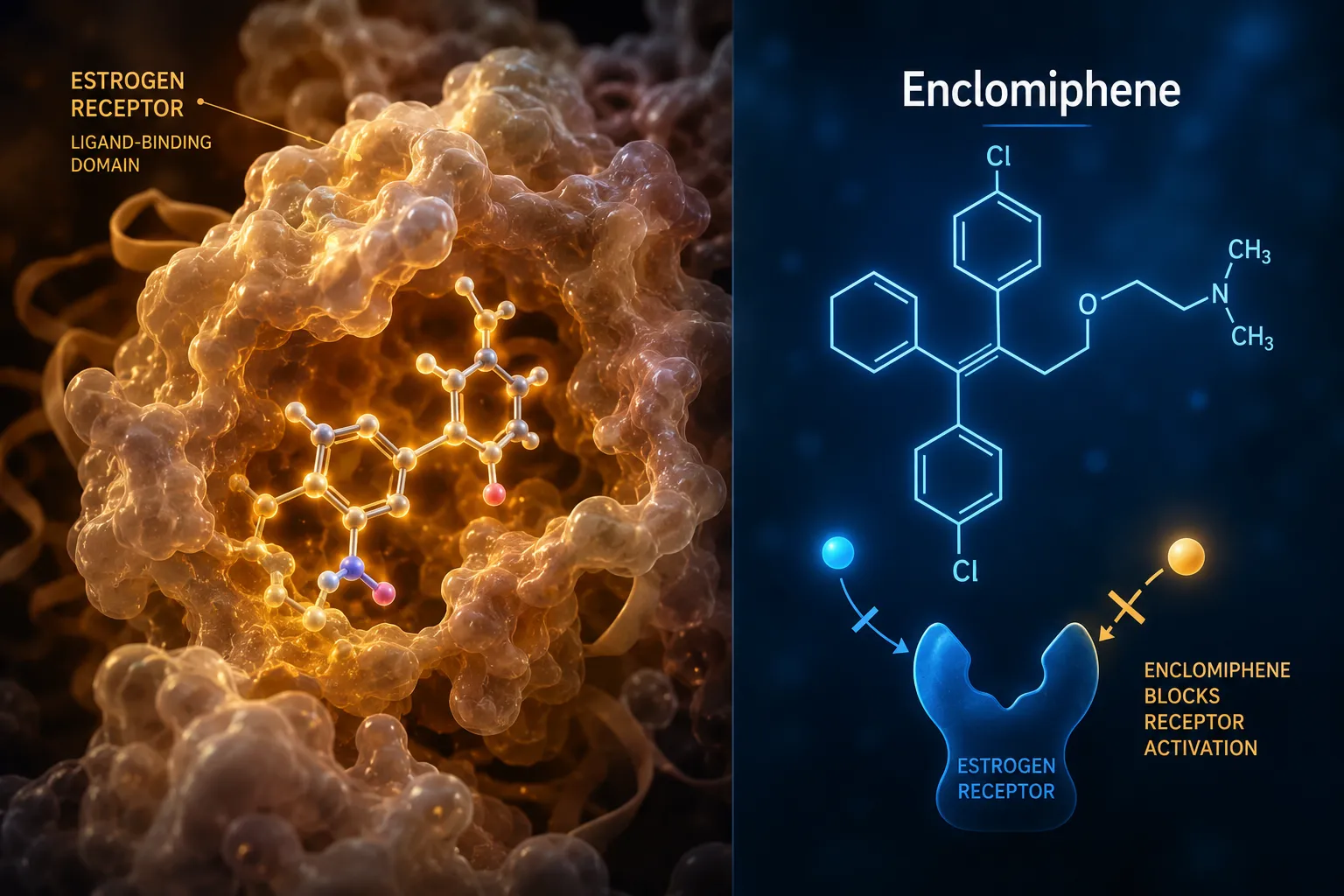
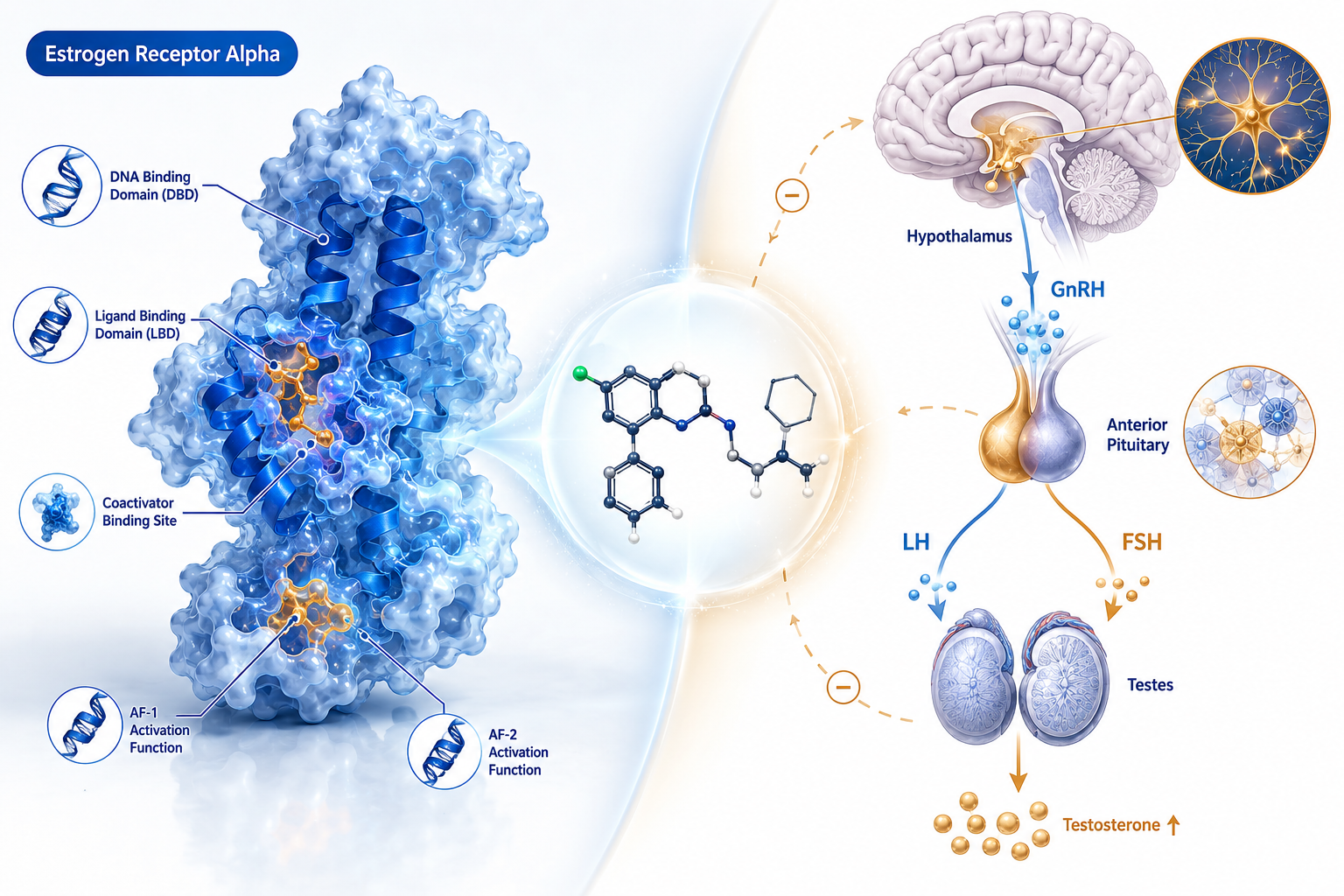
When a serm binds to ERalpha or ERbeta, it induces a specific three-dimensional shape change in the receptor's ligand-binding domain. That shape change determines which coregulator proteins are recruited. Coactivators amplify gene transcription; corepressors suppress it. The ratio of these proteins in any given tissue is what makes tamoxifen estrogenic in bone but anti-estrogenic in breast tissue, and it is the same principle that governs enclomiphene's selectivity.

How Enclomiphene and Related serms Interface With Endocrine Pathways

Clomiphene citrate has been used in fertility medicine for decades, but it is a racemic mixture of two isomers with opposing properties. Enclomiphene is the trans-isomer, the component responsible for the majority of the HPG axis stimulation. Zuclomiphene, the cis-isomer, is weakly estrogenic and has a much longer half-life, contributing to side effects in the original mixture.

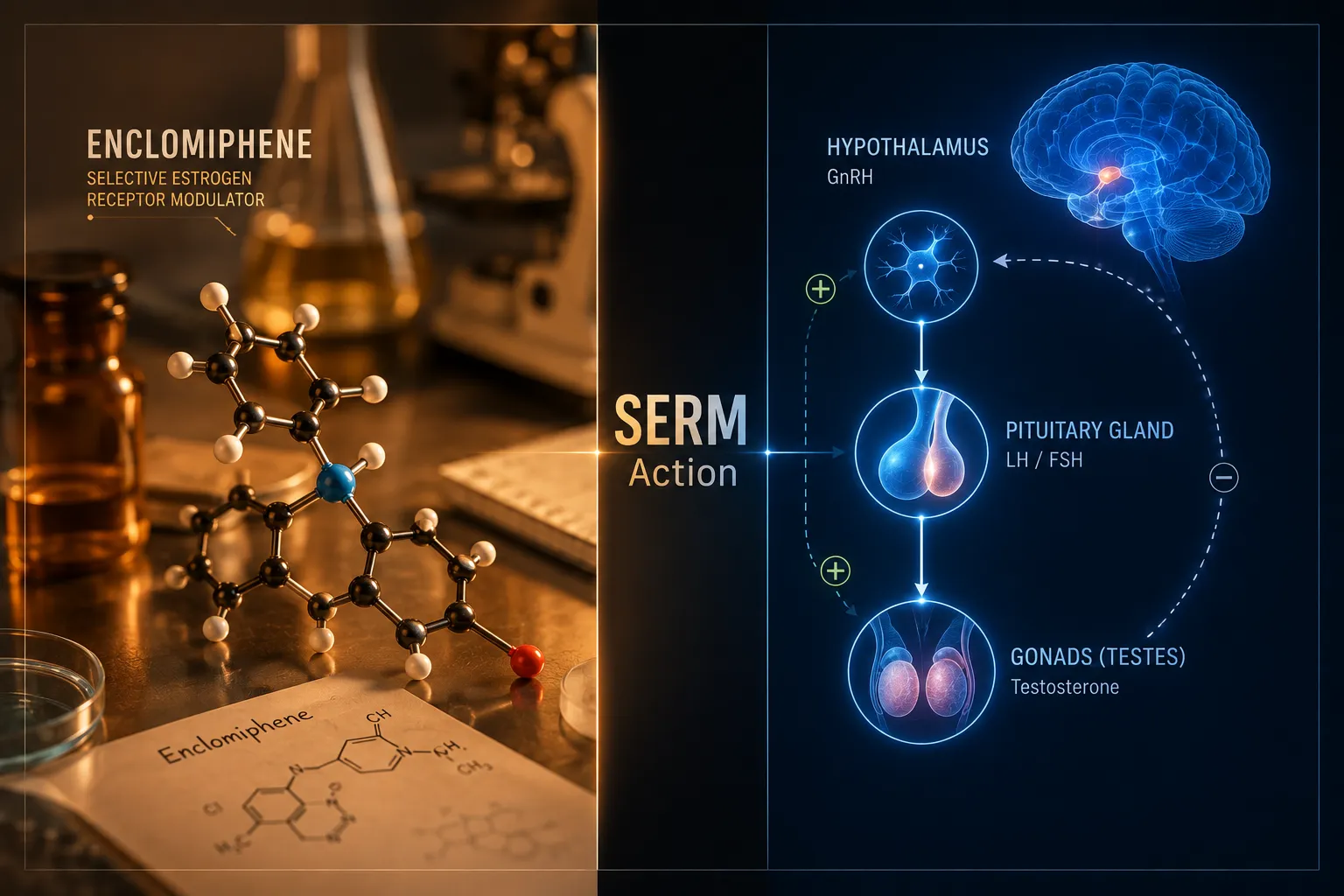
Enclomiphene's primary mechanism is competitive antagonism at hypothalamic ERalpha receptors. Estrogen normally suppresses GnRH pulse frequency through negative feedback. By blocking that feedback signal, enclomiphene allows GnRH pulses to increase, which drives greater pituitary release of LH and FSH, which in turn stimulates testicular testosterone production.

"The HPG axis is a finely tuned feedback loop. serms like enclomiphene do not add hormones, they remove a brake."

This mechanism is directly relevant to researchers studying peptide stacks that include growth hormone secretagogues. Resources like the serm, Ipamorelin, and CJC-1295 research overview explore how these pathways can be studied together. Similarly, the serm, Ipamorelin, and CJC-1295 dosage considerations outline how researchers have approached combined protocols.

Other serms in current research include:

  • Tamoxifen, strong ERalpha antagonist in breast, partial agonist in bone and uterus
  • Raloxifene, bone-protective, neutral to antagonistic in breast, no uterine stimulation
  • Toremifene, structural analog of tamoxifen with a slightly different coregulator recruitment profile
  • Ospemifene, agonist in vaginal tissue, used in genitourinary research

Each of these compounds recruits a different coregulator constellation, reinforcing the coregulator-centric model of serm action that has replaced older simple agonist/antagonist frameworks.

How Enclomiphene and Related serms Interface With Endocrine Pathways

Practical Implications for Peptide Research Protocols

Understanding estrogen receptor biology for peptide researchers: how enclomiphene and related serms interface with endocrine pathways becomes especially actionable when designing multi-compound research protocols. Growth hormone secretagogues such as tesa, ipamorelin, and CJC-1295 operate on the GHRH/somatostatin axis, a system that intersects with sex hormone signaling in several ways.

Estrogen modulates IGF-1 sensitivity and GH pulse amplitude. Blocking estrogenic feedback at the hypothalamus with a serm can therefore alter the baseline hormonal environment in which GH secretagogues operate. Researchers studying tesa peptide benefits or reviewing tesa dosage protocols should factor in this cross-axis interaction.

Peptide researchers sourcing compounds for endocrine studies should also consider purity standards. Exploring all peptides available for research from verified suppliers reduces confounding variables. Those investigating where to source serms for laboratory use can review where to buy a serm for research purposes for guidance on compound availability and quality standards.

Key research design considerations:

  • Establish baseline LH, FSH, and total testosterone before introducing any serm
  • Account for GPER-mediated non-genomic effects, which may not appear in standard genomic assays
  • Recognize that zuclomiphene contamination in impure enclomiphene preparations will confound results
  • Monitor coregulator expression patterns if tissue-specific agonism/antagonism is a study endpoint

Researchers working with aging-related endocrine models may also find value in the aging support peptide category, where serm-adjacent compounds are increasingly studied alongside secretagogues for their complementary effects on the HPG and GH axes.

Practical Implications for Peptide Research Protocols

Conclusion

Estrogen receptor biology for peptide researchers: how enclomiphene and related serms interface with endocrine pathways is a foundational topic for anyone designing serious hormone or peptide research protocols in 2026. The key actionable steps are clear: distinguish between ERalpha, ERbeta, and GPER when interpreting study outcomes; apply the coregulator-centric model to predict tissue-specific serm behavior; and account for HPG axis cross-talk when combining serms with growth hormone secretagogues like ipamorelin or tesa.

Researchers should prioritize high-purity, well-characterized compounds to minimize experimental noise. Reviewing the IPA and Sermorelin stack research alongside serm mechanism data provides a more complete picture of how these endocrine pathways interact. As the coregulator-centric model continues to mature, researchers who understand receptor-level selectivity will be best positioned to design protocols that yield reproducible, meaningful data.

https://www.puretestedpeptides.com/wp-content/uploads/2026/08/estrogen-receptor-biology-for-peptide-researchers-how-enclomiphene-and-related-s.webp 1024 1536 https://www.puretestedpeptides.com/wp-content/uploads/2026/01/buy-peptides-online.jpg 2026-08-05 13:04:362026-08-05 13:04:36Estrogen Receptor Biology for Peptide Researchers: How Enclomiphene and Related serms Interface With Endocrine Pathways
Where to Buy Research-Grade Enclomiphene and Enclomiphene Citrate: Purity, Certificates of Analysis, and Lab-Use Considerations

Where to Buy Research-Grade Enclomiphene and Enclomiphene Citrate: Purity, Certificates of Analysis, and Lab-Use Considerations

August 2, 2026/0 Comments/in Uncategorized/by

Fewer than 40% of research chemical suppliers tested in independent audits between 2022 and 2024 delivered compounds at or above their advertised purity thresholds, a sobering figure for any serious hormone researcher. Knowing where to buy research-grade enclomiphene and enclomiphene citrate: purity, certificates of analysis, and lab-use considerations is not a minor detail. It is the foundation of reproducible, trustworthy research outcomes.

Key Takeaways

  • Enclomiphene and enclomiphene citrate are chemically related but not identical; the distinction matters for dosing accuracy and experimental design.
  • Research-grade purity should be 98% or higher, verified by HPLC or mass spectrometry, not just vendor claims.
  • A valid Certificate of Analysis (CoA) must come from an independent, third-party laboratory, not an in-house document.
  • Supplier red flags include missing CoAs, vague sourcing, no batch traceability, and no return or retest policies.
  • This compound is sold strictly for laboratory and in-vitro research use; regulatory compliance is the researcher's responsibility.

Key Takeaways

Enclomiphene vs. Enclomiphene Citrate: Understanding the Difference

Before deciding where to buy research-grade enclomiphene and enclomiphene citrate, researchers must understand what they are actually ordering.

Clomiphene is a racemic mixture of two geometric isomers: zuclomiphene (the cis-isomer) and enclomiphene (the trans-isomer). Enclomiphene is the pharmacologically active isomer responsible for selective estrogen receptor modulation at the hypothalamic-pituitary axis.

Enclomiphene citrate is simply the citrate salt form of enclomiphene. The citrate counterion improves aqueous solubility, which is relevant for certain in-vitro assay formats and reconstitution protocols.

Form Molecular Weight Solubility Common Research Use
Enclomiphene (free base) 405.96 g/mol Lipophilic; ethanol or DMSO Cell-based receptor binding assays
Enclomiphene Citrate 598.08 g/mol Higher aqueous solubility In-vitro hormonal pathway studies

Ordering the wrong form can skew molar calculations and invalidate results. Always confirm the exact chemical form before purchase.

Researchers sourcing other selective modulators and peptide compounds, such as those exploring where to buy peptides for adjacent hormonal pathway studies, face the same form-specificity challenge.

Enclomiphene vs. Enclomiphene Citrate: Understanding the Difference

Purity Benchmarks and Certificates of Analysis: What Serious Researchers Require

Minimum Acceptable Purity Standards

For any compound used in controlled research, purity below 98% introduces confounding variables that can compromise data integrity. The gold standard for research-grade enclomiphene and enclomiphene citrate is:

  • HPLC purity: 98% or greater
  • Residual solvent levels within ICH Q3C guidelines
  • Heavy metal screening (lead, arsenic, mercury, cadmium) below pharmacopeial limits
  • Endotoxin testing if the compound will be used in any cell culture or biological assay

What a Valid CoA Must Include

A Certificate of Analysis is only as credible as the laboratory that issued it. An in-house CoA from the vendor itself carries limited weight. Researchers should require:

  1. Third-party laboratory name and accreditation number (ISO 17025 preferred)
  2. Batch or lot number matching the product label
  3. Test date, CoAs older than 12 months for a current batch are a warning sign
  4. HPLC chromatogram with integration data, not just a summary percentage
  5. Identity confirmation via NMR or mass spectrometry

"A CoA without an independent lab signature is a marketing document, not an analytical report."

Researchers who have navigated similar documentation requirements for compounds like Sermorelin or Tesamorelin will recognize this standard as non-negotiable across the research peptide and small-molecule space.

What a Valid CoA Must Include

Where to Buy Research-Grade Enclomiphene and Enclomiphene Citrate: Evaluating Suppliers

Green Flags in a Reputable Supplier

When evaluating where to buy research-grade enclomiphene and enclomiphene citrate, the following supplier characteristics indicate reliability:

  • Publicly accessible, batch-specific CoAs linked directly to product pages
  • Independent third-party testing from named, verifiable laboratories
  • Clear chemical specifications listing exact form (free base vs. citrate salt), CAS number, and molecular weight
  • Transparent sourcing and synthesis information
  • Responsive technical support capable of answering purity and formulation questions
  • Retest or return policy for purity disputes

Suppliers who demonstrate this rigor across their catalog, including well-documented compounds like TB-500 and Ipamorelin/CJC-1295 blends, typically apply the same standards to their serm-category compounds.

Red Flags to Avoid

  • Generic CoAs with no batch number or lab name
  • Purity listed as "99%+" with no supporting chromatogram
  • No CAS number or conflicting molecular weight data
  • Pricing dramatically below market average (often signals diluted or mislabeled product)
  • No physical address or verifiable business registration

Researchers comparing multiple vendors should also consult peptide supplier comparison resources to benchmark documentation standards across the industry.

Lab-Use Considerations and Regulatory Compliance

Intended Use and Legal Status

Research-grade enclomiphene and enclomiphene citrate are sold strictly for in-vitro laboratory research and non-clinical investigational use. These compounds are not approved for human consumption or veterinary use in most jurisdictions without appropriate licensure.

Researchers must:

  • Verify local and institutional regulations before purchase
  • Store compounds according to supplier specifications (typically -20°C, desiccated, protected from light)
  • Maintain chain-of-custody records and batch documentation for audit purposes
  • Never use research-grade material in any clinical or human-subject context

Reconstitution and Handling Notes

Enclomiphene free base dissolves most effectively in ethanol or DMSO at concentrations up to 10 mg/mL. Enclomiphene citrate offers better aqueous solubility but may still require a small percentage of organic co-solvent for complete dissolution. Researchers working with related peptide compounds, such as those studying SS-31 for mitochondrial research, will be familiar with these reconstitution protocols.

Always filter-sterilize solutions intended for cell culture using a 0.22 micron membrane filter.

Conclusion

The decision of where to buy research-grade enclomiphene and enclomiphene citrate ultimately comes down to documentation, transparency, and third-party verification. No amount of competitive pricing justifies working with a compound whose purity cannot be independently confirmed.

Actionable next steps for researchers:

  1. Identify the exact chemical form needed (free base vs. citrate salt) before contacting any supplier.
  2. Request a batch-specific, third-party CoA before placing any order, not after.
  3. Cross-reference the supplier's CoA laboratory against publicly verifiable accreditation databases.
  4. Review the supplier's broader catalog and documentation standards as a proxy for overall quality control.
  5. Maintain complete batch records from purchase through experimental use for institutional compliance.

Rigorous sourcing is not bureaucratic overhead, it is the first experimental variable a researcher controls.

https://www.puretestedpeptides.com/wp-content/uploads/2026/08/where-to-buy-research-grade-enclomiphene-and-enclomiphene-citrate-purity-certifi.webp 672 1008 https://www.puretestedpeptides.com/wp-content/uploads/2026/01/buy-peptides-online.jpg 2026-08-02 13:04:242026-08-02 13:04:24Where to Buy Research-Grade Enclomiphene and Enclomiphene Citrate: Purity, Certificates of Analysis, and Lab-Use Considerations
Peptides and Polypeptides in Endocrine Pharmacology: How Enclomiphene Interfaces With Estrogen Receptor Biology

Peptides and Polypeptides in Endocrine Pharmacology: How Enclomiphene Interfaces With Estrogen Receptor Biology

August 1, 2026/0 Comments/in Uncategorized/by

Fewer than 10% of clinicians who prescribe selective estrogen receptor modulators can accurately define the structural difference between a peptide hormone and a small-molecule serm, yet that distinction determines how each drug class reshapes the endocrine axis. Peptides and polypeptides in endocrine pharmacology represent one of the most mechanistically rich areas of modern pharmacology, and understanding where non-peptide agents like enclomiphene fit within that landscape is essential for anyone conducting or interpreting research in this field.

Key Takeaways

  • Peptide and polypeptide hormones act on cell-surface receptors through second-messenger cascades, while enclomiphene binds directly inside the nucleus at estrogen receptors.
  • Enclomiphene works as an estrogen receptor antagonist at the hypothalamus, disrupting negative feedback and increasing endogenous LH and FSH secretion.
  • The hypothalamic-pituitary-gonadal (HPG) axis is the shared regulatory highway for both peptide-based and small-molecule endocrine modulators.
  • Purity and characterization of research compounds, whether peptide or small molecule, directly affect the reliability of mechanistic data.
  • Combining knowledge of peptide receptor biology with serm pharmacology produces a more complete picture of hormonal signaling networks.

The Structural Divide: Peptide Hormones Versus Small-Molecule Modulators

To appreciate how enclomiphene interfaces with estrogen receptor biology, it helps to first anchor the broader category of peptides and polypeptides in endocrine pharmacology.

Peptide hormones are chains of amino acids. Short chains of 2-50 residues are typically called peptides; longer chains become polypeptides and, eventually, proteins. Examples include gonadotropin-releasing hormone (GnRH), luteinizing hormone (LH), follicle-stimulating hormone (FSH), and growth hormone-releasing hormone (GHRH). These molecules are too large and too hydrophilic to cross the cell membrane, so they bind to surface receptors and trigger intracellular signaling cascades, most commonly through cyclic AMP or phospholipase C pathways.

Research into peptide modulators spans a wide range of targets. For instance, BPC-157 and TB-500 peptide research explores tissue-signaling mechanisms that share conceptual overlap with endocrine feedback loops. Similarly, GLP-1 peptide sourcing and research illustrates how incretin-class peptides modulate metabolic signaling through surface-receptor mechanisms, a useful structural contrast to nuclear receptor pharmacology.

Small-molecule agents like enclomiphene are chemically synthesized, low-molecular-weight compounds. They are lipophilic enough to diffuse across cell membranes and interact directly with intracellular receptors, in this case, the estrogen receptor (ER), a nuclear receptor superfamily member.

"The key pharmacological divide is not potency, it is receptor location. Peptide hormones knock on the cell's front door; small-molecule serms walk straight into the nucleus."

The Structural Divide: Peptide Hormones Versus Small-Molecule Modulators

How Enclomiphene Interfaces With Estrogen Receptor Biology Within the HPG Axis

The hypothalamic-pituitary-gonadal (HPG) axis is the shared regulatory highway where both peptide hormones and small-molecule modulators exert their effects.

Under normal physiology, circulating estradiol binds to estrogen receptors in hypothalamic neurons and pituitary gonadotrophs. This binding suppresses GnRH pulse frequency and reduces LH and FSH secretion, a classic negative-feedback loop mediated by a steroid hormone acting on nuclear receptors.

Enclomiphene, the trans-isomer of clomiphene citrate, competitively occupies estrogen receptors at these same hypothalamic and pituitary sites. Because it acts as a selective estrogen receptor antagonist in these tissues, it blocks estradiol's inhibitory signal. The hypothalamus interprets this blockade as low circulating estrogen, responds by increasing GnRH pulse amplitude, and the pituitary responds with elevated LH and FSH output.

The downstream result is stimulation of endogenous gonadal steroidogenesis, a fundamentally different mechanism from direct peptide hormone replacement. Compare this to tesa, a synthetic GHRH analog that binds surface receptors on pituitary somatotrophs to stimulate growth hormone release. Both agents ultimately raise a downstream hormone, but through entirely different receptor classes and cellular compartments.

Tissue-Selective Receptor Modulation

Enclomiphene's selectivity is tissue-dependent. In the hypothalamus and pituitary, it behaves as an antagonist. In other tissues, such as bone, estrogenic agonist activity may be partially preserved. This tissue selectivity is what defines the broader serm class and distinguishes these agents from pure estrogen blockers.

Feature Peptide Hormones Enclomiphene (serm)
Receptor location Cell surface Nuclear (intracellular)
Mechanism Second-messenger cascade Direct DNA transcription modulation
Tissue selectivity Determined by receptor subtype Determined by co-activator expression
Route of action Extracellular binding Intracellular ligand-binding domain

Peptides and Polypeptides in Endocrine Pharmacology: Research Sourcing and Compound Integrity

Peptides and Polypeptides in Endocrine Pharmacology: Research Sourcing and Compound Integrity

Peptides and Polypeptides in Endocrine Pharmacology: Research Sourcing and Compound Integrity

For researchers working across both peptide and small-molecule endocrine pharmacology, compound purity is a non-negotiable variable. Mechanistic studies that use impure or mischaracterized compounds produce data that cannot be replicated or translated.

This principle applies equally to peptide-based endocrine research tools. The GHK-Cu copper peptide research and sourcing guide addresses quality benchmarks relevant to any peptide used in signaling research. Likewise, the BPC-157 core documentation and first research guide outlines documentation standards that set a useful precedent for characterizing any endocrine research compound.

When sourcing peptides for studies that sit adjacent to serm pharmacology research, for example, examining GnRH analog interactions or LH pulse dynamics, researchers benefit from working with lab-tested peptides that carry third-party certificates of analysis. The same rigor should be applied to any small-molecule comparator used in parallel assays.

Three sourcing standards that apply across compound classes:

  1. Certificate of Analysis (CoA), confirms identity and purity by HPLC and mass spectrometry
  2. Sterility testing, essential for any in vivo research application
  3. Stability data, particularly relevant for peptides, which degrade faster than most small molecules under improper storage conditions

For researchers exploring the growth hormone-releasing axis alongside HPG axis modulators, resources on GHRP-2 versus sermorelin provide useful mechanistic context on how peptide secretagogues differ from receptor-level modulators like enclomiphene.

Conclusion

Peptides and polypeptides in endocrine pharmacology and small-molecule agents like enclomiphene occupy different receptor compartments, but they converge on the same hormonal axes. Enclomiphene's antagonism at hypothalamic and pituitary estrogen receptors reshapes the HPG axis through nuclear receptor biology, a mechanism that is structurally and functionally distinct from the surface-receptor signaling used by GnRH, LH, FSH, and synthetic peptide analogs.

Actionable next steps for researchers:

  • Map the receptor class (surface vs. nuclear) of every agent used in an endocrine study before designing assays.
  • Source all peptide and small-molecule research compounds with documented CoA, sterility, and stability data.
  • When studying HPG axis dynamics, consider how serm-mediated changes in gonadotropin output interact with any co-administered peptide modulators.
  • Review mechanistic literature on tissue-selective ER modulation to contextualize enclomiphene's differential effects across target tissues.

Understanding the structural and mechanistic divide between peptide hormones and nuclear receptor modulators is not academic trivia, it is the foundation of reproducible, translatable endocrine pharmacology research.

https://www.puretestedpeptides.com/wp-content/uploads/2026/08/peptides-and-polypeptides-in-endocrine-pharmacology-how-enclomiphene-interfaces.webp 1024 1536 https://www.puretestedpeptides.com/wp-content/uploads/2026/01/buy-peptides-online.jpg 2026-08-01 13:04:512026-08-01 13:04:51Peptides and Polypeptides in Endocrine Pharmacology: How Enclomiphene Interfaces With Estrogen Receptor Biology
Page 2 of 212

Tag Archive for: enclomiphene

Enclomiphene in Hormone Research: LH, FSH, and Estrogen Receptor Signaling Explained

June 24, 2026/0 Comments/by Pure Tested

Cover Image

Fewer than 5% of men with secondary hypogonadism are offered a treatment that simultaneously restores testosterone and preserves fertility — yet that is precisely the receptor-level mechanism that makes enclomiphene a compelling tool in endocrine research. Understanding enclomiphene in hormone research: LH, FSH, and estrogen receptor signaling explained at the pathway level is essential for any researcher working with the hypothalamic-pituitary-gonadal (HPG) axis.

Key Takeaways

  • Enclomiphene blocks estrogen receptors in the hypothalamus, disrupting negative feedback and driving upstream gonadotropin release.
  • The resulting surge in LH and FSH stimulates endogenous testosterone production without suppressing spermatogenesis.
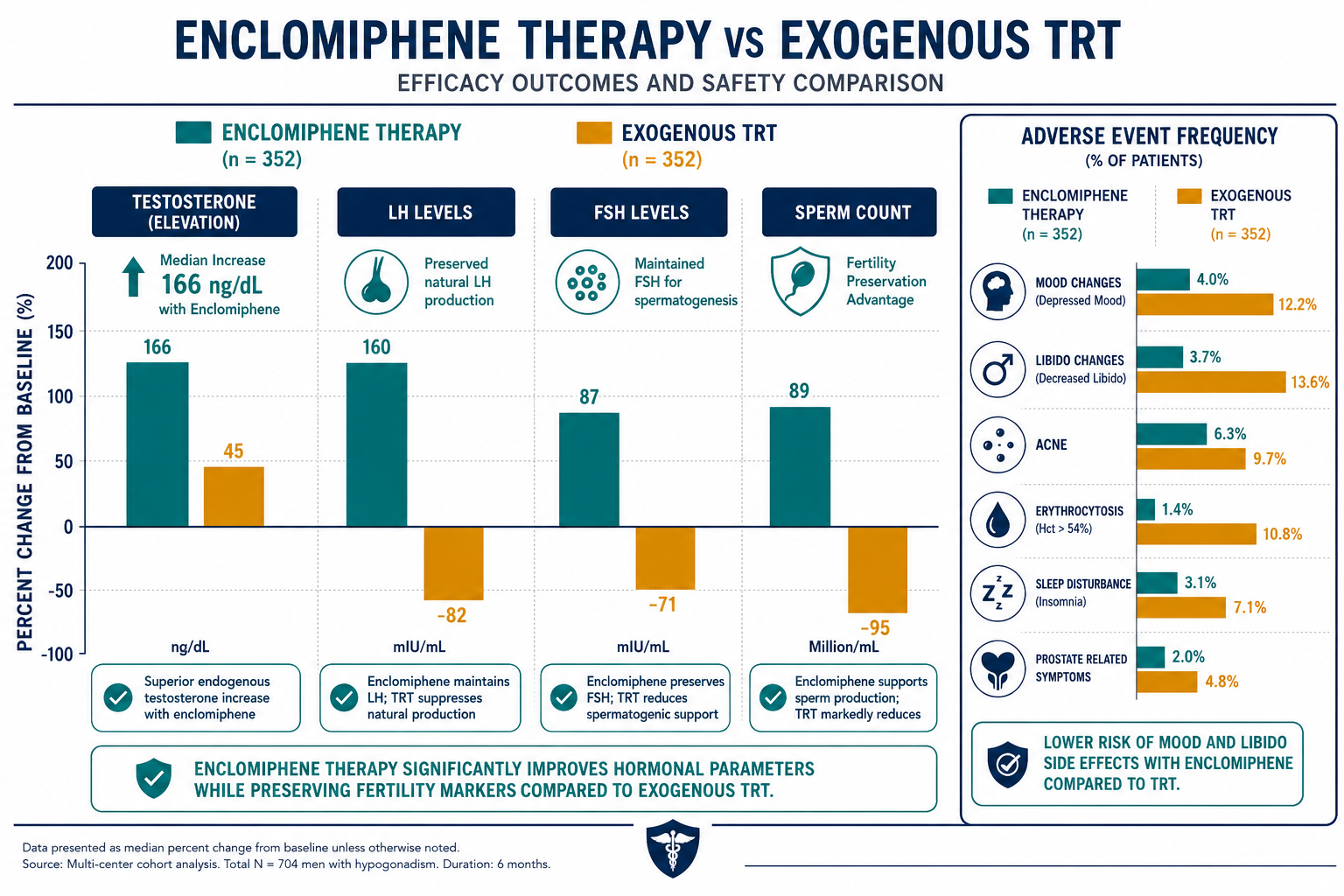
  • Unlike traditional testosterone replacement therapy (TRT), enclomiphene preserves the integrity of the HPG axis.
  • Research comparisons with clomiphene show similar hormonal responses, but enclomiphene avoids the estrogenic effects of its isomer zuclomiphene.
  • Standard research dosing ranges from 12.5 to 25 mg per day, with observable hormonal changes typically appearing within 2 to 4 weeks.

The Receptor-Level Pathway: How Enclomiphene Signals the HPG Axis

HPG axis diagram showing GnRH, LH, FSH hormone signaling

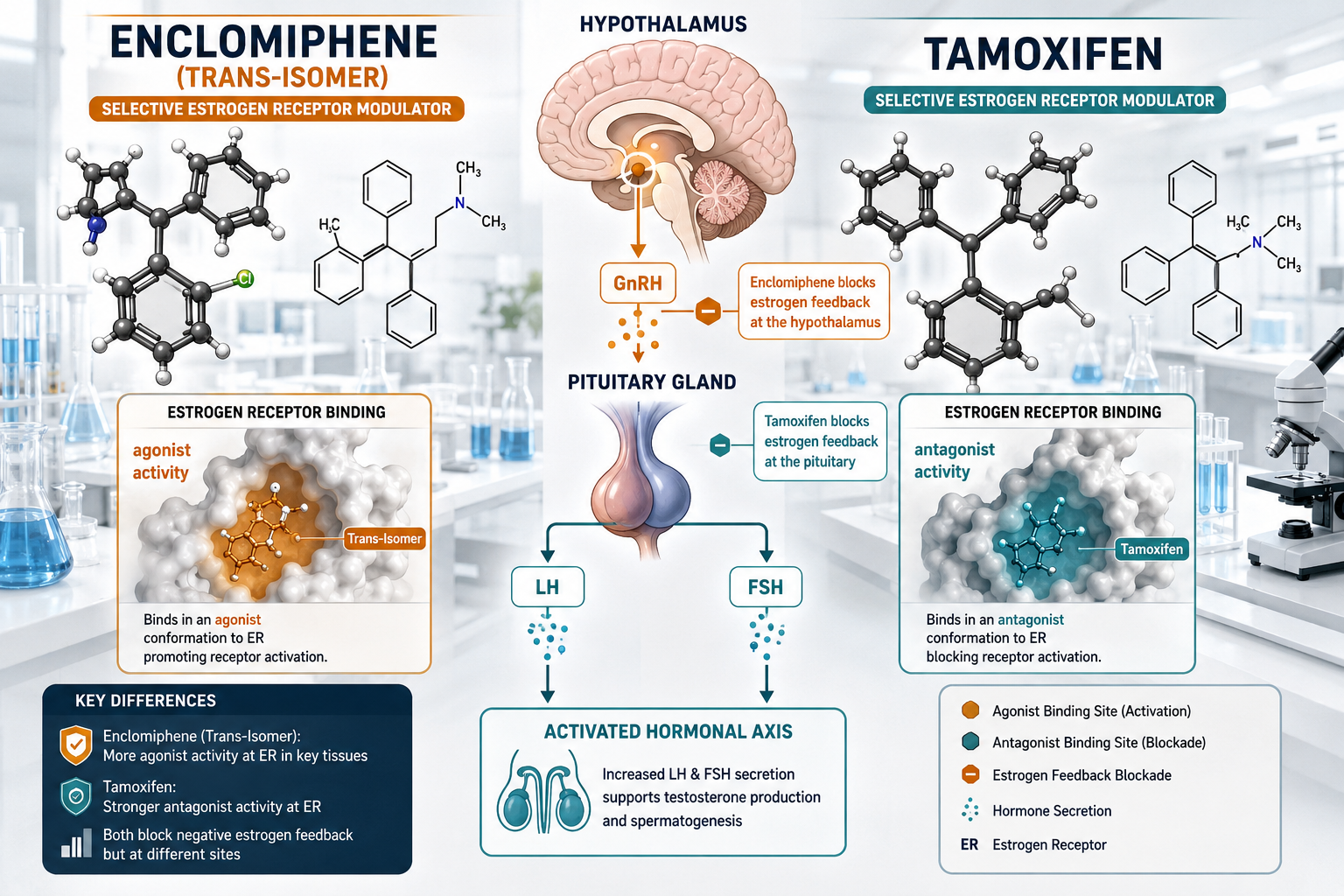
Enclomiphene is the trans-isomer of clomiphene citrate, a selective estrogen receptor modulator (serm). Its primary research value lies in its targeted antagonism at hypothalamic estrogen receptors.

Here is how the pathway works, step by step:

Step Location Event
1 Hypothalamus Enclomiphene binds estrogen receptors, blocking negative feedback
2 Hypothalamus GnRH secretion increases in response
3 Anterior pituitary Elevated GnRH stimulates LH and FSH release
4 Testes LH drives Leydig cells to produce testosterone; FSH supports Sertoli cells and spermatogenesis

Under normal physiology, circulating estradiol signals the hypothalamus to reduce GnRH output — a classic negative feedback loop. Enclomiphene occupies those estrogen receptors without activating them, effectively silencing the "slow down" signal. The hypothalamus interprets this as an estrogen-deficient state and increases GnRH pulse frequency.

"The compound does not add testosterone from an external source — it instructs the body's own axis to produce more."

This distinction is critical for researchers studying fertility preservation. Unlike exogenous TRT, which suppresses LH and FSH and can halt spermatogenesis, enclomiphene amplifies the upstream signals that drive both testosterone synthesis and sperm production simultaneously.

Researchers exploring related peptide-based endocrine tools may also find value in reviewing GLP-1 peptide research concepts and sourcing notes for comparative hormonal pathway context.


Enclomiphene vs. Clomiphene: What the Signaling Data Shows

Enclomiphene and clomiphene vials with hormone comparison bar graph

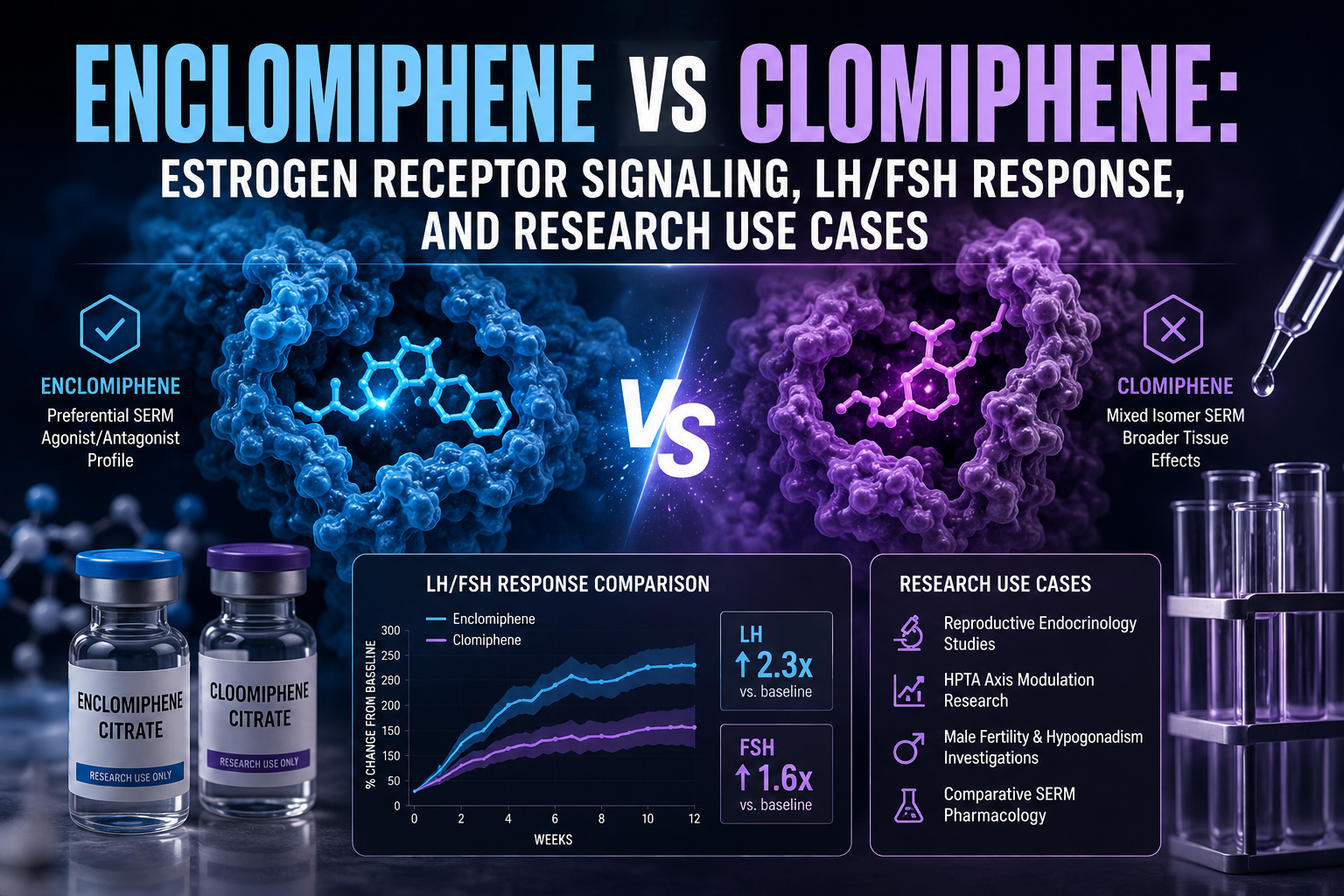
A key question in enclomiphene in hormone research: LH, FSH, and estrogen receptor signaling studies is how the compound compares to its racemic parent, clomiphene citrate.

Clomiphene contains two isomers: enclomiphene (trans) and zuclomiphene (cis). Zuclomiphene carries estrogenic activity, meaning it can partially activate the same receptors it occupies. This creates a mixed signal that complicates hormonal interpretation in research settings.

Enclomiphene's advantages in research protocols:

  • Purely antiestrogenic at the hypothalamus — no partial agonist activity
  • Cleaner LH and FSH response curves
  • Reduced risk of estrogen-related confounders in study data

Research published in endocrinology literature confirms that enclomiphene and clomiphene produce statistically similar increases in testosterone, estradiol, FSH, and LH from baseline in men with hypogonadism. However, enclomiphene's cleaner receptor profile makes it a more precise tool for isolating HPG axis responses.

Metabolism occurs primarily in the liver. Biological half-life is approximately 5 to 7 days, though the active compound has a shorter plasma half-life of roughly 10 to 15 hours. Approximately 42% is excreted via feces and 8% through urine — relevant data for researchers designing washout periods.

For researchers also studying growth hormone secretagogues alongside serm-based protocols, the tesa peptide benefits overview provides useful comparative endocrine context.


Research Applications, Dosing Parameters, and Safety Profile

Molecular fertility research illustration with testosterone structure

Understanding enclomiphene in hormone research: LH, FSH, and estrogen receptor signaling explained requires attention to both dosing parameters and the compound's tolerability profile.

Standard research dosing parameters:

  • Dose range: 12.5 to 25 mg per day (oral)
  • Onset of hormonal response: 2 to 4 weeks
  • Half-life (plasma): approximately 10 to 15 hours
  • Primary route of elimination: hepatic metabolism, fecal excretion

Enclomiphene is generally well-tolerated in research subjects. Reported adverse observations include headaches, nausea, and occasional visual disturbances — consistent with the broader serm class profile.

Ongoing clinical investigations are examining enclomiphene's utility in obesity-related hypogonadism, where adipose tissue aromatization creates elevated estrogen levels that suppress the HPG axis. Early data from studies dating back to foundational 1983 research on gonadotropin secretion have shaped the current understanding of how enclomiphene and zuclomiphene diverge in their receptor-level behavior.

As of 2026, enclomiphene is not FDA-approved as a standalone agent in the United States but remains accessible through compounding pharmacies for research and clinical use.

Researchers sourcing verified compounds for parallel studies may also find relevant quality benchmarks in this reference standards and peptide benchmarking resource, as well as the PT-141 peptide research context and controls guide for receptor-targeted compound comparisons. For mitochondrial pathway research running alongside HPG axis studies, SS-31 peptide research considerations offer complementary cellular-level data.


Conclusion

Enclomiphene occupies a precise and well-defined position in endocrine research: it blocks hypothalamic estrogen receptors, removes negative feedback, and triggers a coordinated upstream release of GnRH, LH, and FSH. The result is endogenous testosterone production and preserved spermatogenesis — without the HPG axis suppression associated with exogenous TRT.

Actionable next steps for researchers:

  1. Map the full HPG axis response curve using standardized LH, FSH, and testosterone assays at 2-week intervals.
  2. Design washout periods based on the 5 to 7-day biological half-life to avoid carryover effects.
  3. Use enclomiphene's pure antiestrogenic profile to isolate receptor-level signaling data without zuclomiphene confounders.
  4. Cross-reference findings with growth hormone and metabolic peptide data for a complete endocrine picture.

For researchers building rigorous, reproducible protocols, sourcing verified compounds with documented purity is non-negotiable. Explore the full peptides for sale catalog and review available certificates of analysis to ensure traceability at every stage of the research process.

https://www.puretestedpeptides.com/wp-content/uploads/2026/01/buy-peptides-online.jpg 0 0 Pure Tested https://www.puretestedpeptides.com/wp-content/uploads/2026/01/buy-peptides-online.jpg Pure Tested2026-06-24 13:20:132026-07-20 15:02:18Enclomiphene in Hormone Research: LH, FSH, and Estrogen Receptor Signaling Explained
Peptides and Polypeptides in Endocrine Research: Linking Estrogen Receptor Signaling to Enclomiphene and GLP-3 Retatrutide Models

Peptides and Polypeptides in Endocrine Research: Linking Estrogen Receptor Signaling to Enclomiphene and GLP-3 Retatrutide Models

June 23, 2026/0 Comments/by Pure Tested

Fewer than three decades ago, the estrogen receptor was considered a single, well-understood target. Today, researchers recognize at least three distinct receptor subtypes — ERalpha, ERbeta, and the G protein-coupled estrogen receptor (GPER) — each capable of driving separate downstream cascades. That complexity is precisely why the field of peptides and polypeptides in endocrine research: linking estrogen receptor signaling to enclomiphene and GLP-3 retatrutide models has become one of the most active areas of translational biology in 2026.

Detailed () scientific illustration showing a split-panel composition: left side features a 3D molecular model of an

Key Takeaways

  • Estrogen receptors are not monolithic; GPER mediates rapid non-genomic signaling distinct from classical nuclear ER pathways.
  • Enclomiphene acts as a selective estrogen receptor modulator (serm) at the hypothalamus, restoring endogenous testosterone without suppressing the HPG axis.
  • Retatrutide is a synthetic 39-amino-acid polypeptide that simultaneously activates GLP-1R, GIPR, and GCGR — a triple-agonist profile unmatched by earlier metabolic peptides.
  • Cross-talk between peptide growth factors and estrogen receptor systems creates layered regulatory complexity relevant to drug design.
  • Both enclomiphene and retatrutide illustrate how modern endocrine research moves beyond single-target pharmacology toward systems-level modulation.

Estrogen Receptor Biology: The Foundation for Peptide Cross-Talk

Classical endocrinology framed estrogen signaling as a nuclear event: ligand binds receptor, receptor binds DNA, gene transcription changes. GPER challenged that model by demonstrating that estrogens also trigger acute, non-genomic responses through G protein-coupled pathways — activating cAMP, mobilizing intracellular calcium, and phosphorylating kinase cascades within minutes rather than hours.

This dual-mode signaling matters for peptide researchers because peptide growth factors and estrogen receptors actively cross-talk. Insulin-like growth factors, epidermal growth factor, and related polypeptides can transactivate ERalpha without a classical estrogen ligand. Conversely, estrogen receptor activity can sensitize cells to peptide growth factor signals. Understanding this bidirectional regulation is foundational to interpreting how newer research compounds interact with hormonal physiology.

"Estrogen receptor cross-talk with peptide signaling systems is not a side effect — it is a core feature of endocrine architecture."

For researchers exploring metabolic and longevity-related peptides, resources such as the MOTS-C metabolic flexibility research overview and the GIP receptor importance guide provide useful context on how peptide signals intersect with broader hormonal networks.


Enclomiphene as a Case Study in Receptor-Selective Endocrine Modulation

Enclomiphene is the trans-isomer of clomiphene and functions as a selective estrogen receptor modulator (serm). Its primary site of action is the hypothalamus and pituitary, where it blocks estrogen receptors and removes the negative-feedback brake on gonadotropin-releasing hormone (GnRH) pulsatility. The result is a cascade: GnRH rises, LH and FSH secretion increases, and the testes respond with elevated testosterone production.

What makes enclomiphene scientifically notable is what it preserves. Unlike exogenous testosterone, enclomiphene leaves the entire hypothalamic-pituitary-gonadal (HPG) axis intact, including its own feedback loops. This distinguishes it sharply from peptide-class HPG stimulators such as gonadorelin or kisspeptin-10, which act at different nodes in the same axis.

Pharmacokinetic profile comparison:

Compound Clearance Axis Preservation
Enclomiphene Days Full HPG axis intact
Zuclomiphene (isomer) Weeks Partial, prolonged suppression risk
Gonadorelin (peptide) Minutes Pulsatile, receptor-dependent

Enclomiphene's rapid clearance — measured in days rather than the weeks seen with its isomer zuclomiphene — makes it a cleaner pharmacological tool for research into upstream estrogen receptor blockade. For comparison, researchers studying GH-axis peptides may find the CJC-1295 and ipamorelin GH axis research a useful parallel for understanding how upstream modulation shapes downstream hormonal output.


GLP-3 Retatrutide Models and the Polypeptide Approach to Metabolic Signaling

GLP-3 Retatrutide Models and the Polypeptide Approach to Metabolic Signaling

Retatrutide (LY3437943) represents a different philosophy entirely. Rather than blocking a receptor to release a suppressed axis, this synthetic 39-amino-acid polypeptide simultaneously activates three receptors: GLP-1R, GIPR, and GCGR. Cryo-EM structural studies show that retatrutide adopts a single continuous alpha-helix conformation when binding, with receptor-specific amino acid differences accounting for its differential potency at each target.

The coordinated activation of all three receptors produces layered metabolic effects:

  • GLP-1R activation: Reduces food intake, slows gastric emptying, enhances insulin secretion
  • GIPR activation: Amplifies insulin response, modulates adipose tissue signaling
  • GCGR activation: Increases energy expenditure, improves hepatic lipid metabolism

Phase 2 clinical trial data published in 2023 demonstrated significant weight loss and glycemic improvement in participants with obesity and type 2 diabetes. As of 2026, retatrutide has not received regulatory approval for human use and remains within the scope of clinical investigation and preclinical research.

For researchers building context around incretin-based peptide models, the GLP-3 Retatrutide incretin research themes page and the companion GLP-1 incretin research overview offer structured background. The cagrilintide synergy with GLP-1 research further illustrates how dual and triple agonist combinations are reshaping metabolic peptide research.


Bridging the Two Models: What Peptides and Polypeptides in Endocrine Research Reveal

Bridging the Two Models: What Peptides and Polypeptides in Endocrine Research Reveal

The deeper insight from studying peptides and polypeptides in endocrine research: linking estrogen receptor signaling to enclomiphene and GLP-3 retatrutide models together is architectural. Enclomiphene works by subtracting a signal — removing estrogenic feedback — to let a natural axis reassert itself. Retatrutide works by adding multiple signals simultaneously, forcing coordinated receptor activation across organ systems.

Both strategies reflect a move away from single-target pharmacology. Both also interact, directly or indirectly, with estrogen receptor biology. GPER, for instance, has been implicated in metabolic regulation, and GLP-1 receptor signaling has documented interactions with sex hormone pathways in adipose and hepatic tissue.

Key distinctions between serm-based and polypeptide-based endocrine modulation:

  • Mechanism: Receptor blockade (serm) vs. receptor co-activation (polypeptide agonist)
  • Axis impact: Preserves negative feedback (enclomiphene) vs. bypasses feedback (retatrutide)
  • Structural class: Small molecule (enclomiphene) vs. synthetic peptide chain (retatrutide)
  • Research maturity: Enclomiphene has longer clinical history; retatrutide is in active Phase 2/3 investigation

Researchers interested in how peptide structural biology shapes receptor selectivity may also find value in reviewing tesa research themes and the IPA muscle and fat research overview, both of which demonstrate how peptide sequence modifications alter tissue-level outcomes.


Conclusion

The convergence of estrogen receptor biology, serm pharmacology, and synthetic polypeptide design represents one of the most productive frontiers in endocrine research today. Enclomiphene demonstrates that precise receptor-site selectivity can restore entire hormonal axes with minimal disruption. Retatrutide demonstrates that a single engineered polypeptide can coordinate metabolic signaling across three receptor families simultaneously.

Actionable next steps for researchers:

  1. Review GPER-specific literature to understand non-genomic estrogen signaling before designing peptide interaction studies.
  2. Use enclomiphene's HPG axis preservation model as a benchmark when evaluating upstream versus downstream peptide interventions.
  3. Consult Phase 2 retatrutide data for structural insights into multi-receptor polypeptide engineering.
  4. Explore the comprehensive peptide catalog to identify research compounds relevant to metabolic and hormonal pathway studies.
  5. Prioritize compounds with published quality testing data — see quality testing protocols — when designing rigorous endocrine research protocols.

The field is moving fast. Researchers who understand both the receptor-level architecture and the structural biology of the peptides involved will be best positioned to interpret emerging data as it arrives.

https://www.puretestedpeptides.com/wp-content/uploads/2026/06/Peptides-and-Polypeptides-in-Endocrine-Research-Linking-Estrogen-Receptor-Signaling-to-Enclomiphene-and-GLP-3-Retatrutide-Models.png 1024 1536 Pure Tested https://www.puretestedpeptides.com/wp-content/uploads/2026/01/buy-peptides-online.jpg Pure Tested2026-06-23 13:05:442026-07-20 15:02:33Peptides and Polypeptides in Endocrine Research: Linking Estrogen Receptor Signaling to Enclomiphene and GLP-3 Retatrutide Models
Enclomiphene vs. Tamoxifen: Comparative Research on serm Peptide Receptor Modulation

Enclomiphene vs. Tamoxifen: Comparative Research on serm Peptide Receptor Modulation

June 22, 2026/0 Comments/by Pure Tested

Only one of these two compounds preserves male fertility while raising testosterone — and the distinction comes down to how each molecule interacts with estrogen receptors at the cellular level. The field of Enclomiphene vs. Tamoxifen: Comparative Research on serm Peptide Receptor Modulation has grown substantially as researchers seek more targeted hormonal interventions that avoid the reproductive suppression caused by conventional testosterone replacement therapy.

Both enclomiphene and tamoxifen belong to the Selective Estrogen Receptor Modulator (serm) class, yet their pharmacological profiles, half-lives, and clinical applications differ in ways that matter deeply for research design and therapeutic strategy.


Key Takeaways

  • Enclomiphene is the trans-isomer of clomiphene citrate and acts as a pure estrogen receptor antagonist in the hypothalamus and pituitary, stimulating endogenous testosterone production.
  • Tamoxifen has a significantly longer half-life (5-7 days) compared to enclomiphene (approximately 10 hours), affecting how quickly dosing adjustments take effect.
  • Enclomiphene shows a cleaner side-effect profile than clomiphene citrate because it lacks the zuclomiphene (cis-isomer) component associated with visual disturbances and mood changes.
  • Tamoxifen remains the preferred serm for gynecomastia management due to its potent antagonism at breast tissue estrogen receptors.
  • Neither compound has received FDA approval as a standalone male hypogonadism treatment as of 2026, though both are used off-label in clinical and research contexts.

Key Takeaways

Mechanisms of Action: How Each serm Engages Estrogen Receptors

Understanding Enclomiphene vs. Tamoxifen: Comparative Research on serm Peptide Receptor Modulation begins at the receptor level. Both compounds bind estrogen receptors but do so in different tissues with different downstream effects.

Enclomiphene is the trans-isomer of clomiphene citrate. It acts as an estrogen receptor antagonist specifically in the hypothalamus and pituitary gland. By blocking estrogen's negative feedback signal at these sites, enclomiphene triggers increased secretion of:

  • Gonadotropin-releasing hormone (GnRH)
  • Luteinizing hormone (LH)
  • Follicle-stimulating hormone (FSH)

This cascade stimulates the testes to produce testosterone endogenously, preserving the hypothalamic-pituitary-testicular (HPT) axis rather than bypassing it.

Tamoxifen operates through a similar upstream mechanism but was originally developed for breast cancer treatment. It competitively blocks estrogen receptors in breast tissue and, when used in male health contexts, also reduces pituitary estrogen feedback — raising LH and FSH levels and, consequently, testosterone output.

"The key distinction is tissue selectivity: enclomiphene's activity is concentrated at the hypothalamic-pituitary axis, while tamoxifen's receptor modulation extends to peripheral tissues including breast, bone, and liver."

For researchers exploring broader receptor modulation frameworks, metabolic modulation research lines provide useful context on how peptide-receptor interactions extend beyond hormonal axes.


Mechanisms of Action: How Each serm Engages Estrogen Receptors

Pharmacokinetics and Clinical Profiles Compared

The pharmacokinetic differences between these two serms are significant for research protocol design.

Parameter Enclomiphene Tamoxifen
Half-life ~10 hours 5-7 days
Active metabolites Minimal Yes (endoxifen)
Dosing frequency Daily (12.5-25 mg) Daily or less frequent
FDA approval (male use) Not approved (2026) Not approved (male use)
Primary research use Secondary hypogonadism Gynecomastia, hypogonadism

Enclomiphene's shorter half-life allows researchers and clinicians to make faster dosing adjustments. Tamoxifen's longer half-life and active metabolite (endoxifen) mean that steady-state concentrations take longer to establish and dissipate.

Side-effect profiles also diverge meaningfully:

  • Enclomiphene: transient headaches, hot flashes; notably absent are the visual disturbances linked to zuclomiphene in standard clomiphene citrate
  • Tamoxifen: risk of thromboembolic events, mood changes, and potential hepatotoxicity with long-term use

Both compounds maintain or enhance spermatogenesis, which gives them a clear advantage over exogenous testosterone therapy for fertility-conscious research subjects. For comparison with other peptide compounds studied in neuroendocrine contexts, neuroendocrine and innate immunity research offers relevant background.

Those researching serm compounds for laboratory use can review the serm 10mg research product for sourcing reference.


Pharmacokinetics and Clinical Profiles Compared

Research Applications and Comparative Utility in 2026

The comparative analysis of Enclomiphene vs. Tamoxifen: Comparative Research on serm Peptide Receptor Modulation reveals distinct niches for each compound in active research programs.

Enclomiphene has completed Phase III clinical trials demonstrating statistically significant increases in testosterone levels alongside preserved spermatogenesis. Researchers studying secondary hypogonadism in younger males favor enclomiphene because it stimulates the natural HPT axis without suppressing it. Its cleaner isomer profile reduces confounding variables in study design.

Tamoxifen remains the more established compound for gynecomastia management research, given its potent and well-documented antagonism at breast tissue estrogen receptors. Its longer half-life also makes it useful in protocols where less frequent dosing is preferred.

Both serms are being examined alongside peptide-based interventions. Researchers comparing hormonal optimization strategies often cross-reference findings with growth hormone secretagogue research, such as ipamorelin vs. tesa comparisons and tesa mechanism and application data, since both categories affect body composition and metabolic signaling.

For researchers interested in longevity and cellular signaling intersections, the Glow Blend longevity research themes and Epithalon vs. NAD evidence pages provide complementary reading on receptor-level interventions.


Conclusion

The comparative research on Enclomiphene vs. Tamoxifen: Comparative Research on serm Peptide Receptor Modulation makes clear that these are not interchangeable compounds. Enclomiphene offers a more targeted hypothalamic-pituitary mechanism, a shorter half-life for flexible dosing, and a favorable side-effect profile — making it the stronger candidate for secondary hypogonadism and fertility-preservation research. Tamoxifen retains its edge in gynecomastia management and longer-duration protocols.

Actionable next steps for researchers:

  1. Define the target tissue and hormonal axis before selecting a serm for a given protocol.
  2. Account for half-life differences when designing washout periods and dosing schedules.
  3. Cross-reference serm data with peptide-based hormonal research to build a more complete picture of receptor modulation strategies.
  4. Monitor regulatory updates, as neither compound holds FDA approval for male hypogonadism treatment as of 2026.
https://www.puretestedpeptides.com/wp-content/uploads/2026/06/Enclomiphene-vs.-Tamoxifen-Comparative-Research-on-serm-Peptide-Receptor-Modulation.png 1024 1536 Pure Tested https://www.puretestedpeptides.com/wp-content/uploads/2026/01/buy-peptides-online.jpg Pure Tested2026-06-22 13:03:462026-07-20 15:02:34Enclomiphene vs. Tamoxifen: Comparative Research on serm Peptide Receptor Modulation
Enclomiphene vs Clomiphene: Estrogen Receptor Signaling, LH/FSH Response, and Research Use Cases

Enclomiphene vs Clomiphene: Estrogen Receptor Signaling, LH/FSH Response, and Research Use Cases

June 17, 2026/0 Comments/by Pure Tested

{"cover":"Professional landscape format (1536×1024) hero image with bold text overlay: 'Enclomiphene vs Clomiphene' in extra large 72pt white sans-serif font with dark semi-transparent overlay box, centered upper third. Background shows a split-panel scientific illustration: left side depicts molecular estrogen receptor binding diagram in deep teal, right side shows a stylized pituitary-hypothalamus axis with LH/FSH hormone cascade arrows in amber. Color scheme: deep navy, clinical white, amber accents. Magazine cover aesthetic, editorial quality, high contrast.","content":["Detailed landscape format (1536×1024) scientific infographic showing a side-by-side molecular comparison of enclomiphene trans-isomer and zuclomiphene cis-isomer chemical structures rendered in 3D ball-and-stick models against a dark navy background. Arrows indicate estrogen receptor binding sites on hypothalamic tissue cross-section. Color-coded labels highlight serm activity zones. Clean clinical aesthetic with white annotation text, teal and amber color accents, editorial research illustration style.","Landscape format (1536×1024) data visualization showing dual bar charts comparing LH and FSH hormone response levels between enclomiphene and clomiphene treatment groups. Chart includes testosterone ng/dL increase annotations (166 vs 98 ng/dL), estradiol pg/mL delta markers, and a timeline axis showing 2-4 week onset. Background is a soft gradient from white to light blue suggesting a clinical research environment. Bold sans-serif axis labels, color-coded bars in teal versus amber, clean medical data aesthetic.","Landscape format (1536×1024) editorial research scene showing a laboratory bench with open scientific journals, molecular model kits, and a digital tablet displaying a fertility preservation diagram with sperm viability graphs. A gloved researcher hand points to a hypothalamic-pituitary-gonadal axis flowchart pinned to a corkboard. Warm lab lighting, shallow depth of field, teal and amber accent colors, professional research environment aesthetic with subtle text overlay reading 'Research Use Cases: Secondary Hypogonadism'."]

Professional landscape hero image () with : "Enclomiphene vs Clomiphene: Estrogen Receptor Signaling, LH/FSH Response, and

Only 38% of clomiphene citrate is the isomer actually responsible for driving testosterone production. That single pharmacological fact is at the center of the growing scientific conversation around enclomiphene vs clomiphene: estrogen receptor signaling, LH/FSH response, and research use cases — and it explains why researchers and clinicians are increasingly treating these two compounds as distinct tools rather than interchangeable options.

Scientific infographic visualizing key differences between Enclomiphene and Clomiphene, featuring side-by-side molecular

Key Takeaways

  • Clomiphene is a mixture of two isomers; enclomiphene is the isolated trans-isomer responsible for anti-estrogenic, testosterone-stimulating activity.
  • Both compounds block estrogen receptors in the hypothalamus, triggering GnRH release and downstream LH/FSH stimulation.
  • Enclomiphene produces a greater median testosterone increase (166 ng/dL vs. 98 ng/dL) with a more favorable side effect profile.
  • Unlike exogenous testosterone therapy, both compounds preserve the hypothalamic-pituitary-gonadal (HPG) axis and support fertility.
  • Enclomiphene is not FDA-approved as a standalone agent but is available through compounding pharmacies and is actively studied for secondary hypogonadism.

How Estrogen Receptor Signaling Differs Between the Two Compounds

Clomiphene citrate is not a single molecule. It is a racemic mixture composed of approximately 62% zuclomiphene (the cis-isomer) and 38% enclomiphene (the trans-isomer). These two isomers behave very differently at the estrogen receptor level.

Enclomiphene acts as a pure estrogen receptor antagonist in the hypothalamus. By occupying estrogen receptors without activating them, it removes the negative feedback signal that estrogen normally sends to the brain. The hypothalamus responds by increasing gonadotropin-releasing hormone (GnRH) pulse frequency.

Zuclomiphene, in contrast, carries weak estrogenic activity and has a significantly longer half-life. It can linger in circulation for weeks, contributing to the mood changes, visual disturbances, and libido complaints that some users associate with clomiphene therapy.

"Isolating the active isomer removes the pharmacological noise introduced by zuclomiphene, giving researchers a cleaner signal at the receptor level."

This distinction is central to understanding the enclomiphene vs clomiphene estrogen receptor signaling debate. When the two isomers are separated, the mechanism becomes more predictable and the side effect profile narrows considerably.


LH/FSH Response and Hormonal Outcomes: What the Data Show

LH/FSH Response and Hormonal Outcomes: What the Data Show

Both compounds stimulate the pituitary gland through the same upstream pathway: hypothalamic GnRH release drives luteinizing hormone (LH) and follicle-stimulating hormone (FSH) secretion, which in turn signals the testes to produce testosterone. The difference lies in the magnitude and cleanliness of that signal.

A retrospective study comparing 66 patients found that enclomiphene produced a median testosterone increase of 166 ng/dL, compared to 98 ng/dL with clomiphene. Enclomiphene also resulted in a statistically lower rise in estradiol and fewer adverse effects including reduced libido, low energy, and mood disturbances.

A separate analysis of 72 patients on enclomiphene and 861 on clomiphene over 12 months found both groups achieved significant increases in testosterone, estradiol, FSH, and LH — with no statistically significant difference between the two therapies at the population level. This suggests enclomiphene is a clinically viable alternative, not merely a theoretical upgrade.

Enclomiphene vs Clomiphene: Key Hormonal Comparison

Parameter Clomiphene Enclomiphene
Median testosterone increase ~98 ng/dL ~166 ng/dL
Estradiol increase Higher Lower
LH/FSH stimulation Yes Yes
Visual disturbance risk Present (zuclomiphene) Minimal
Oral bioavailability Yes Yes
Half-life concern Zuclomiphene accumulates Short, clean clearance

Phase III clinical trials for enclomiphene (marketed as Androxal) showed a mean testosterone increase from 232 to 525 ng/dL at a 12.5 mg/day dosage, supporting its potency as a standalone HPG axis stimulator.

For researchers exploring the GH axis alongside gonadotropin signaling, resources like the CJC-IPA GH axis research overview provide useful context on how different endocrine axes interact in research models.


Research Use Cases: Secondary Hypogonadism, Fertility, and Beyond

Research Use Cases: Secondary Hypogonadism, Fertility, and Beyond

The primary research application for both compounds centers on secondary hypogonadism — a condition where the testes are functional but the HPG axis fails to send adequate stimulation. Unlike primary hypogonadism, this form responds well to upstream signaling interventions.

Fertility Preservation

Exogenous testosterone therapy suppresses spermatogenesis by shutting down endogenous LH and FSH. Both enclomiphene and clomiphene avoid this problem by stimulating natural production rather than replacing it. Enclomiphene is increasingly studied as a preferred option for men with secondary hypogonadism who wish to preserve sperm production.

Comparison with hCG in Research Protocols

Human chorionic gonadotropin (hCG) is another compound used to support fertility during testosterone replacement. The key differences in research context:

  • Enclomiphene acts at the pituitary level, stimulates both LH and FSH, is taken orally, and has minimal estradiol impact.
  • hCG acts directly on testicular Leydig cells, requires injection, and can elevate estradiol.

This distinction matters when designing protocols that target specific nodes of the HPG axis.

Metabolic and Body Composition Research Intersections

Testosterone levels intersect with body composition, metabolic rate, and mitochondrial function. Researchers studying these connections may find value in reviewing related work on MOTS-c and mitochondrial longevity research or TESA body composition research themes, which explore adjacent endocrine and metabolic pathways.

For those examining peptide-based approaches to recovery and tissue biology, the recovery and tissue biology overview provides relevant mechanistic context. Similarly, researchers interested in multi-pathway signaling models may find the KLOW blend multipathway research a useful reference point for understanding how compounds interact across systems.

Enclomiphene vs clomiphene: estrogen receptor signaling, LH/FSH response, and research use cases is a topic that also connects to broader questions about how serms interact with metabolic peptides — a growing area of interest in 2026 research literature. Those exploring peptide synergies in endocrine research can also reference the SLU-PP-332 metabolic research overview for complementary data on receptor-level signaling.


Conclusion

The comparison between enclomiphene and clomiphene is fundamentally a story about pharmacological precision. Clomiphene delivers its effects through a mixture of isomers with competing receptor activities. Enclomiphene isolates the trans-isomer responsible for clean hypothalamic estrogen receptor blockade, producing stronger LH/FSH stimulation, a larger testosterone increase, and a narrower side effect profile.

Actionable next steps for researchers and clinicians:

  • When reviewing HPG axis studies, distinguish whether the protocol used racemic clomiphene or isolated enclomiphene — the distinction changes interpretation of receptor-level data.
  • For fertility-preserving protocols, enclomiphene's dual LH/FSH stimulation makes it a mechanistically superior candidate compared to hCG in oral-administration models.
  • Cross-reference enclomiphene data with adjacent endocrine research, including metabolic peptide work, to build a more complete picture of hormonal axis interactions.
  • Consult compounding pharmacy resources and current regulatory guidance, as enclomiphene's legal status as a non-FDA-approved standalone agent affects study design and sourcing decisions.

The science is clear: understanding the isomer distinction is not a minor detail — it is the foundation of accurate hormone-axis research language.

https://www.puretestedpeptides.com/wp-content/uploads/2026/06/Enclomiphene-vs-Clomiphene-Estrogen-Receptor-Signaling-LHFSH-Response-and-Research-Use-Cases.png 1024 1536 Pure Tested https://www.puretestedpeptides.com/wp-content/uploads/2026/01/buy-peptides-online.jpg Pure Tested2026-06-17 13:04:312026-07-20 15:02:55Enclomiphene vs Clomiphene: Estrogen Receptor Signaling, LH/FSH Response, and Research Use Cases
Enclomiphene in Male Endocrine Research: Mechanism vs Clomiphene and Overlaps With Luteinizing Phase Physiology

Enclomiphene in Male Endocrine Research: Mechanism vs Clomiphene and Overlaps With Luteinizing Phase Physiology

June 9, 2026/0 Comments/by Pure Tested

Only one isomer inside a decades-old fertility drug is responsible for raising testosterone in men — and isolating it may change how researchers approach male hypogonadism entirely. That single compound is enclomiphene, and its growing presence in male endocrine research is reshaping how scientists think about the hypothalamic-pituitary-gonadal (HPG) axis.

Research into enclomiphene in male endocrine research: mechanism vs clomiphene and overlaps with luteinizing phase physiology has accelerated in 2026, driven by demand for testosterone-raising strategies that do not suppress fertility. Understanding why enclomiphene works — and how it differs from its parent compound — requires a close look at receptor pharmacology and the fundamental biology of luteinizing hormone (LH) signaling.

Key Takeaways

  • Enclomiphene is the trans-isomer of clomiphene citrate and is solely responsible for its anti-estrogenic, testosterone-stimulating effects in men.
  • It blocks hypothalamic estrogen receptors, increasing GnRH pulsatility and driving LH and FSH release — mirroring the natural luteinizing phase feedback loop.
  • Unlike exogenous testosterone replacement therapy (TRT), enclomiphene preserves sperm production and endogenous hormone signaling.
  • Zuclomiphene, the other isomer in clomiphene, carries weak estrogenic activity and a longer half-life, contributing to mood and visual side effects.
  • Clinical data show enclomiphene produces meaningful testosterone increases with a lower adverse-event profile than mixed clomiphene.

Key Takeaways

How Enclomiphene Works: Selective Estrogen Receptor Modulation

Enclomiphene is classified as a selective estrogen receptor modulator (serm). Its primary action occurs at estrogen receptors in the hypothalamus and pituitary gland. Under normal physiology, circulating estradiol binds to these receptors and signals the hypothalamus to reduce gonadotropin-releasing hormone (GnRH) output — a classic negative feedback loop.

Enclomiphene competitively blocks those receptors. With estradiol unable to deliver its suppressive signal, GnRH pulsatility increases. The pituitary responds by secreting more LH and FSH. Elevated LH then stimulates Leydig cells in the testes to synthesize testosterone, while FSH supports spermatogenesis.

Key pharmacokinetic facts:

Parameter Value
Half-life ~10 hours
Time to peak serum concentration 2-3 hours post-ingestion
Steady-state dose 25 mg/day

This rapid clearance is clinically significant. Because enclomiphene leaves the body quickly, its receptor blockade is time-limited and controllable — a meaningful advantage in research settings.


Enclomiphene in Male Endocrine Research: Mechanism vs Clomiphene and Overlaps With Luteinizing Phase Physiology

Enclomiphene in Male Endocrine Research: Mechanism vs Clomiphene and Overlaps With Luteinizing Phase Physiology

The Isomer Problem With Clomiphene Citrate

Clomiphene citrate is not a single compound. It is a 50:50 mixture of two geometric isomers:

  • Enclomiphene (trans-isomer): Blocks estrogen receptors, drives GnRH and LH release, raises testosterone.
  • Zuclomiphene (cis-isomer): Carries weak estrogenic activity, has a much longer half-life, and accumulates in tissue over time.

Zuclomiphene's estrogenic activity and slow elimination are linked to side effects reported with clomiphene use, including mood disturbances, reduced libido, and visual changes. By isolating enclomiphene, researchers remove this confounding variable entirely.

Connection to Luteinizing Phase Physiology

The luteinizing phase in reproductive biology refers to the period surrounding the LH surge — a sharp spike in LH that triggers ovulation in females and, in males, governs tonic testosterone production. In men, LH is released in pulses from the pituitary throughout the day, each pulse prompting Leydig cell testosterone output.

Enclomiphene essentially amplifies this pulsatile system. By lifting estradiol's brake on the hypothalamus, it restores or enhances the natural LH-driven testosterone cascade. This overlap with luteinizing phase physiology is why enclomiphene is particularly relevant for men with secondary hypogonadism — a condition where the testes are functional but the upstream HPG signaling is insufficient.

Researchers studying neuroendocrine and innate immunity interactions will recognize this HPG axis modulation as part of a broader hormonal communication network that extends well beyond reproductive function.


Clinical Evidence and Safety Profile

Clinical Evidence and Safety Profile

A retrospective study of 66 patients found that enclomiphene produced a median testosterone increase of 166 ng/dL with a statistically lower rise in estradiol compared to clomiphene. Adverse effects — including decreased libido, reduced energy, and mood changes — were significantly less frequent with enclomiphene.

Unlike exogenous TRT, which suppresses LH, FSH, and sperm production through negative feedback, enclomiphene maintains or improves sperm counts. This makes it a distinct research focus for hypogonadal men who may wish to preserve fertility.

Researchers exploring metabolic modulation research lines may find enclomiphene's downstream effects on body composition and energy metabolism worth examining alongside testosterone normalization data.

Compounds that modulate the HPG axis often intersect with broader metabolic pathways. For context on related peptide-based research tools, MOTS-c and metabolic flexibility research offers a parallel lens on mitochondrial and hormonal crosstalk.

Enclomiphene vs Clomiphene: Quick Comparison

Feature Enclomiphene Clomiphene Citrate
Isomer composition Trans only Trans + cis (50:50)
Estrogenic activity None Mild (via zuclomiphene)
Half-life ~10 hours Longer (zuclomiphene accumulates)
LH/FSH stimulation Strong Moderate
Fertility preservation Yes Partial
Mood/visual side effects Lower frequency Higher frequency

Researchers also studying neural and arousal pathways may find relevant context in PT-141 neural and metabolic research themes, as central neuroendocrine signaling connects testosterone regulation with broader behavioral physiology.

For those examining body composition outcomes alongside hormonal normalization, TESA body composition research themes and IPA muscle and fat research themes provide complementary data on how hormonal environments shape tissue-level outcomes.


Conclusion

The study of enclomiphene in male endocrine research: mechanism vs clomiphene and overlaps with luteinizing phase physiology clarifies a critical point: not all serms are equal, and isomer composition matters enormously. Enclomiphene's clean receptor blockade at the hypothalamus restores the natural LH-driven testosterone pathway without the estrogenic noise introduced by zuclomiphene.

Actionable next steps for researchers in 2026:

  • Prioritize enclomiphene over mixed clomiphene in male HPG axis models to reduce confounding estrogenic variables.
  • Examine LH pulsatility data alongside testosterone outcomes to map the full luteinizing phase overlap.
  • Investigate enclomiphene's role in secondary hypogonadism models where upstream signaling — not testicular function — is the limiting factor.
  • Cross-reference testosterone normalization data with metabolic and body composition endpoints for a more complete hormonal profile.

As regulatory and clinical interest in enclomiphene grows, its mechanistic clarity makes it a valuable tool for researchers who need precise, reproducible HPG axis modulation without the side-effect profile of its predecessor.

https://www.puretestedpeptides.com/wp-content/uploads/2026/06/Enclomiphene-in-Male-Endocrine-Research-Mechanism-vs-Clomiphene-and-Overlaps-With-Luteinizing-Phase-Physiology.png 672 1024 Pure Tested https://www.puretestedpeptides.com/wp-content/uploads/2026/01/buy-peptides-online.jpg Pure Tested2026-06-09 13:07:172026-07-20 15:03:34Enclomiphene in Male Endocrine Research: Mechanism vs Clomiphene and Overlaps With Luteinizing Phase Physiology
Estrogen Receptor Signaling and Enclomiphene: How ER and LH Pathways Inform Male Endocrine Research

Estrogen Receptor Signaling and Enclomiphene: How ER and LH Pathways Inform Male Endocrine Research

June 8, 2026/0 Comments/by Pure Tested

Male testosterone levels have declined measurably across populations over the past several decades, yet the molecular machinery governing male hormone regulation remains underappreciated outside specialist circles. At the center of this biology sits a counterintuitive truth: estrogen receptors are not just a female concern. Estrogen receptor signaling and enclomiphene — and how ER and LH pathways inform male endocrine research — represent one of the most productive intersections in modern reproductive endocrinology.

Key Takeaways

  • Estrogen receptors ERα and ERβ both play active roles in male hormonal regulation, particularly within the hypothalamic-pituitary-gonadal (HPG) axis.
  • Enclomiphene is the trans-isomer of clomiphene citrate and functions as a selective estrogen receptor modulator (serm) that blocks hypothalamic ERα to stimulate LH and FSH release.
  • Clinical data show enclomiphene raises testosterone comparably to clomiphene while producing significantly lower estradiol increases and fewer side effects.
  • Membrane-localized estrogen receptor 1 (mESR1) has a distinct, nongenomic role in male fertility that is separate from classical nuclear ER signaling.
  • Research on enclomiphene provides a practical model for studying selective ER modulation without suppressing the HPG axis.

Key Takeaways

ERα and ERβ: The Two Receptors Driving Male Hormonal Balance

Estrogen actions in males are mediated by two primary receptor subtypes: ERα (encoded by the ESR1 gene) and ERβ (encoded by ESR2). These receptors differ in ligand binding affinity, tissue distribution, and transcriptional output.

Receptor Primary Male Tissue Sites Key Function
ERα Hypothalamus, bone, liver Negative feedback on GnRH/LH release
ERβ Testis, epididymis, prostate Local spermatogenesis support

In the hypothalamus, ERα is the dominant subtype mediating estradiol's negative feedback on gonadotropin-releasing hormone (GnRH) pulsatility. When circulating estradiol binds ERα, it suppresses GnRH release, which in turn reduces pituitary output of luteinizing hormone (LH) and follicle-stimulating hormone (FSH). Less LH means less Leydig cell stimulation and lower endogenous testosterone production.

Beyond classical nuclear signaling, research published in 2024 identified membrane-localized estrogen receptor 1 (mESR1) as a separate and critical player. Male mice lacking mESR1 developed progressive infertility due to testicular and reproductive tract abnormalities, even when nuclear ERα signaling remained intact. This finding points to a nongenomic signaling layer that standard receptor models do not fully capture.

Researchers exploring broader endocrine signaling networks — including those studying GLP-1 and dual receptor agonism — recognize that receptor subtype specificity has major implications for how compounds are designed and interpreted.

Enclomiphene Mechanism: Selective ER Blockade and the LH Pathway

Enclomiphene Mechanism: Selective ER Blockade and the LH Pathway

Enclomiphene is the trans-isomer of clomiphene citrate. Its counterpart, zuclomiphene (the cis-isomer), has estrogenic properties and a much longer half-life. By isolating the trans-isomer, researchers gain a cleaner pharmacological tool for studying selective ER modulation in male subjects.

How enclomiphene works:

  1. Binds competitively to ERα in the hypothalamus
  2. Blocks estradiol from suppressing GnRH pulsatility
  3. GnRH pulses increase, driving pituitary LH and FSH secretion
  4. Elevated LH stimulates Leydig cells to produce testosterone
  5. The HPG axis remains intact and functional throughout

This mechanism preserves the body's own hormonal feedback loop — a meaningful distinction from exogenous testosterone replacement, which suppresses the HPG axis and reduces endogenous production.

Enclomiphene has a half-life of approximately 10 to 15 hours and is typically studied at oral doses ranging from 12.5 to 25 mg per day. One study demonstrated measurable testosterone increases within just 14 days of administration, underscoring the speed of HPG axis responsiveness when hypothalamic ER blockade is applied.

This targeted approach to endocrine modulation parallels research on other selective compounds. For example, serm stack research explores how combining receptor-selective agents can produce synergistic hormonal outcomes. Similarly, researchers working with ipamorelin as a GHRH secretagogue are familiar with the principle of stimulating endogenous hormone release rather than replacing it directly.

Clinical Research Findings: What the Data Show in 2026

Clinical Research Findings: What the Data Show in 2026

The clinical picture for enclomiphene in male hypogonadism research has sharpened considerably. A retrospective cohort study found that both enclomiphene and clomiphene significantly increased testosterone, with a mean rise of approximately 210 ng/dL across groups. The two compounds showed no statistically significant difference in testosterone outcomes.

Where enclomiphene diverges from clomiphene:

  • Estradiol increase: Enclomiphene produced a significantly lower estradiol rise (approximately -5.92 pg/mL vs. +17.50 pg/mL for clomiphene, P=0.001)
  • Side effect profile: Fewer reports of decreased libido, reduced energy, and mood changes with enclomiphene
  • Median testosterone gain: Approximately 166 ng/dL in comparative studies

The lower estradiol elevation seen with enclomiphene is directly attributable to the absence of zuclomiphene, which carries estrogenic activity. This makes enclomiphene a more precise research instrument when the goal is to study LH-driven testosterone stimulation without confounding estrogenic effects.

A 2025 systematic review and meta-analysis further evaluated serms against testosterone gel, human chorionic gonadotropin (hCG), anastrozole, and placebo in men with baseline testosterone at or below 300 ng/dL. As of 2026, enclomiphene has accumulated over 190 indexed citations including clinical trials, randomized controlled trials, and meta-analyses — a growing evidence base for a compound that was once considered a secondary isomer.

Researchers interested in how metabolic and hormonal pathways intersect may also find value in reviewing muscle and fat research themes related to ipamorelin and AOD9604 metabolic research, both of which touch on endocrine-metabolic crosstalk. Computational modeling advances have also improved understanding of pituitary gonadotropin signaling dynamics within the HPG axis, offering new tools for interpreting serm research data.

For those tracking broader developments in the field, the latest peptide research updates provide relevant context on how receptor-targeted compounds continue to evolve.

Conclusion

Estrogen receptor signaling and enclomiphene — and how ER and LH pathways inform male endocrine research — offer a precise window into the HPG axis that few other research tools match. The distinction between ERα and ERβ, the newly recognized role of mESR1 in nongenomic male fertility signaling, and enclomiphene's clean pharmacological profile collectively make this an area of high research value.

Actionable next steps for researchers:

  • Prioritize ERα-specific assays when studying hypothalamic feedback in male subjects
  • Use enclomiphene as a mechanistic comparator to isolate LH-driven testosterone responses from estrogenic confounders
  • Track estradiol alongside testosterone in any serm-related endocrine study to capture the full hormonal picture
  • Consult the growing meta-analytic literature to benchmark expected testosterone and estradiol response ranges
  • Consider how nongenomic ER signaling (mESR1) may require separate experimental models beyond standard nuclear receptor assays
https://www.puretestedpeptides.com/wp-content/uploads/2026/06/Estrogen-Receptor-Signaling-and-Enclomiphene-How-ER-and-LH-Pathways-Inform-Male-Endocrine-Research.png 1024 1536 Pure Tested https://www.puretestedpeptides.com/wp-content/uploads/2026/01/buy-peptides-online.jpg Pure Tested2026-06-08 13:03:182026-07-20 15:03:47Estrogen Receptor Signaling and Enclomiphene: How ER and LH Pathways Inform Male Endocrine Research
Page 2 of 212
×

Helpful Links

  • My account
  • Cart
  • Checkout
  • Refund and Returns Policy
  • Privacy Policy
  • SMS Privacy Policy
  • Login
  • My Account
  • Logout

USA Made Lab Tested Peptides

All products are sold for research, laboratory, or analytical purposes only, and are not for human consumption


Pure Tested Peptides is a chemical supplier. Pure Tested Peptides is not a compounding / chemical compounding facility as defined under 503A of the Federal Food, Drug, and Cosmetic act. Pure Tested Peptides is not an outsourcing facility as defined under 503B of the Federal Food, Drug, and Cosmetic act.

The statements made within this website have not been evaluated by the US Food and Drug Administration. The products we offer are not intended to diagnose, treat, cure or prevent any disease.

Human/Animal Consumption Prohibited. Laboratory/In-Vitro Experimental Use Only

Scroll to top Scroll to top Scroll to top