Call or Text 727-513-9780
  • Shopping Cart Shopping Cart
    0Shopping Cart
Pure Tested Peptides | America's most trusted Peptides for sale online
  • Peptides for sale
    • Oral Peptides for sale
      • Peptide Capsules for sale
      • BPC 157 Capsules 1000mcg
      • SLU-PP-332 Capsules | 1000 mcg
      • 5-Amino-1MQ 50mg Capsules
      • Tesofensine 500mcg
    • All Peptides for sale
    • Peptide Sprays
      • BPC 157 Nasal Spray Kit
      • BPC-157 TB500 Nasal Spray Kit
      • Semax Nasal Spray 10mg
      • Selank – Nasal Spray Kit – 10mg
      • Epithalon 50MG Nasal Spray Kit
      • Ipamorelin 10mg Nasal Spray
      • Klow Nasal Spray (BPC-157 + TB-500 + GHK-Cu + KPV) | 80mg
      • Hulk Nasal Spray Tesa / Ipa Blend 6/3 MG
      • Klow Nasal Spray
      • NAD + 500 mg Nasal Spray
      • PT-141 Nasal Spray Kit
    • GHRH Peptides
      • Ipa Peptides
      • CJC-1295 Peptides
        • CJC-1295 with DAC 5 mg
        • CJC-1295 without DAC 5 mg
        • CJC-1295 Ipa 10mg
      • Tesa Peptides
        • Tesa Peptide
        • Tesa 20 mg
    • GHK-Cu Peptides
      • All GHK-Cu Peptides
      • GHK-Cu 100mg
      • KLOW Peptide Blend – Buy KLOW blend online
    • BPC Peptides
      • All BPC Peptides
      • BPC-157
      • BPC-157 TB-500
      • BPC 157 capsules 1000mcg
    • SLU-PP-332 Peptides
      • All SLU-PP-332 Peptides
      • SLU-PP-332 5mg
    • GLP3 Peptides
      • GLP3-R
      • GLP3-R CAG 10mg
      • GLP3-R 20mg
    • PT-141 Peptides
      • PT-141 Peptides for sale
      • PT-141 10mg
      • PT-141 Nasal Spray
    • CAG Peptides
      • Lipo-C Peptide Blend
      • CAG 5mg
      • CAG 10mg
    • MOTS-C Peptides
      • MOTS-C Peptides for sale
      • MOTS-c peptide
      • MOTS-c 10mg *6 pack*
    • 5 Amino 1MQ Peptides
      • 5 Amino 1MQ Peptides for sale
      • 5-Amino-1MQ 50mg Capsules
      • 5-Amino-1MQ 5mg
    • Epithalon Peptides
      • Epithalon Peptides for sale
      • Epithalon 10mg
      • Epithalon 50mg
  • Shop
    • GLPs
      • 5-Amino-1MQ 50mg Capsules
      • 5-Amino-1MQ 5mg
      • GLP3-Reta
      • L-Carnitine 500mg/ml
      • Tesofensine 500mcg
      • SLU-PP-332 5mg
      • MOTS-c 10mg *6 pack*
    • Epithalon & BPC Peptides
      • Epithalon 10mg
      • Epithalon 50mg
      • BPC-157
      • BPC 157 capsules 1000mcg
      • BPC-157 TB-500
      • BPC-157 TB500 Nasal Spray Kit
      • BPC 157 Nasal Spray Kit
    • BPC TB-500 & NAD+ Peptides
      • NAD+ 500 mg
      • KLOW Peptide Blend – Buy KLOW blend online
      • GLOW Peptide Blend
      • TB 500 5mg
      • BPC 157 capsules 1000mcg – Supplement
      • BPC 157 Nasal Spray Kit
      • BPC-157
      • BPC-157 TB500 Nasal Spray Kit
      • BPC-157 TB-500
      • BPC 157 capsules 1000mcg
    • LL-37 Peptide
      • LL-37 10 mg
    • MOTS-C & Selank
      • MOTS-c peptide
      • Selank 10mg
    • GHK Peptides
      • GHK-Cu 100mg
      • GLOW Peptide Blend
      • KLOW Peptide Blend – Buy KLOW blend online
  • COAs
  • Wholesale
    • Wholesale Peptides for sale
  • PTP FAQ
  • Affiliates
    • Selank Peptide: Advanced Pharmacological Mechanisms Underlying Its Anxiolytic and Nootropic Effects in Research
      • 5-Amino-1MQ Peptide: Detailed Mechanisms of NNMT Inhibition and Its Impact on Cellular Metabolism Research
        • MOTS-C Peptide: Unraveling Its Role in Mitochondrial Dynamics and Energy Metabolism Research
          • Epithalon Peptide and Telomerase Regulation: Investigating Its Impact on Cellular Senescence and Lifespan Research Models
            • GLP2-T vs GLP2 Tirz Peptide: Understanding the Naming, Mechanistic Nuances, and Research Implications for Gut Health
      • Peptides and Polypeptides in Modern Pharmacology: What Research on Metoprolol, Prednisone, and Amlodipine Reveals
        • Polypeptide Peptides vs NSAIDs: What Naproxen and Diclofenac Teach Tissue-Repair Researchers About BPC‑157 and TB‑500
          • Peptides and Polypeptides in Endocrine Pharmacology: How GLP-1, GLP-2, and GLP-3 Retatrutide Differ From Classic Drugs Like Prednisone and Amlodipine
          • 5‑Amino‑1MQ Peptide and NNMT Inhibition: How It Compares With Statins Like Atorvastatin in Adipose and Lipid Metabolism Research
      • Enclomiphene, Estrogen Receptor Signaling, and Luteinizing Phase Biology: What Hormone Researchers Should Measure
        • Mesenchymal Stem Cells, BPC‑157, and GHK‑Cu: How Tissue Repair Peptides Compare With Classic NSAIDs Like Naproxen in Injury Models
          • Peptide Calculator Use Cases Beyond Growth Hormone: Working Through GLP‑3 Retatrutide, MOTS‑c, and BPC‑157 Research Dosing
        • Polypeptide Peptides in Endocrine and Metabolic Pharmacology: Lessons From Amlodipine, Prednisone, and Metoprolol
        • Peptides Calculator for Advanced Blends: Worked Examples for Tesamorelin, CJC‑1295, and Ipamorelin Stacks
          • Peptides and Polypeptides in Human Physiology: How Molecular Size Shapes Research Applications
            • Selank Peptide: Advanced Pharmacological Mechanisms Underlying Its Anxiolytic and Nootropic Effects in Research
          • 5-Amino-1MQ Peptide: Detailed Mechanisms of NNMT Inhibition and Its Impact on Cellular Metabolism Research
            • MOTS-C Peptide: Unraveling Its Role in Mitochondrial Dynamics and Energy Metabolism Research
              • Epithalon Peptide and Telomerase Regulation: Investigating Its Impact on Cellular Senescence and Lifespan Research Models
                • GLP2-T vs GLP2 Tirz Peptide: Understanding the Naming, Mechanistic Nuances, and Research Implications for Gut Health
                  • Peptides and Polypeptides in Endocrine Pharmacology: How GLP-1, GLP-2, and GLP-3 Retatrutide Differ From Classic Drugs Like Prednisone and Amlodipine
                    • Polypeptide Peptides vs NSAIDs: What Naproxen and Diclofenac Teach Tissue-Repair Researchers About BPC‑157 and TB‑500
                      • Peptides and Polypeptides in Modern Pharmacology: What Research on Metoprolol, Prednisone, and Amlodipine Reveals
                        • 5‑Amino‑1MQ Peptide and NNMT Inhibition: How It Compares With Statins Like Atorvastatin in Adipose and Lipid Metabolism Research
                        • Enclomiphene, Estrogen Receptor Signaling, and Luteinizing Phase Biology: What Hormone Researchers Should Measure
                        • Mesenchymal Stem Cells, BPC‑157, and GHK‑Cu: How Tissue Repair Peptides Compare With Classic NSAIDs Like Naproxen in Injury Models
                        • Peptide Calculator Use Cases Beyond Growth Hormone: Working Through GLP‑3 Retatrutide, MOTS‑c, and BPC‑157 Research Dosing
                        • Polypeptide Peptides in Endocrine and Metabolic Pharmacology: Lessons From Amlodipine, Prednisone, and Metoprolol
                        • Peptides Calculator for Advanced Blends: Worked Examples for Tesamorelin, CJC‑1295, and Ipamorelin Stacks
                        • Peptides and Polypeptides in Human Physiology: How Molecular Size Shapes Research Applications
                        • Selank Peptide: Advanced Pharmacological Mechanisms Underlying Its Anxiolytic and Nootropic Effects in Research
                        • MOTS-C Peptide: Unraveling Its Role in Mitochondrial Dynamics and Energy Metabolism Research
                        • Peptides and Polypeptides in Modern Pharmacology: What Research on Metoprolol, Prednisone, and Amlodipine Reveals
                        • Peptides and Polypeptides in Endocrine Pharmacology: How GLP-1, GLP-2, and GLP-3 Retatrutide Differ From Classic Drugs Like Prednisone and Amlodipine
                        • 5-Amino-1MQ Peptide: Detailed Mechanisms of NNMT Inhibition and Its Impact on Cellular Metabolism Research
                        • Mesenchymal Stem Cells, BPC‑157, and GHK‑Cu: How Tissue Repair Peptides Compare With Classic NSAIDs Like Naproxen in Injury Models
                        • Peptide Calculator Use Cases Beyond Growth Hormone: Working Through GLP‑3 Retatrutide, MOTS‑c, and BPC‑157 Research Dosing
                        • GLP2-T vs GLP2 Tirz Peptide: Understanding the Naming, Mechanistic Nuances, and Research Implications for Gut Health
                        • Polypeptide Peptides in Endocrine and Metabolic Pharmacology: Lessons From Amlodipine, Prednisone, and Metoprolol
                        • Polypeptide Peptides vs NSAIDs: What Naproxen and Diclofenac Teach Tissue-Repair Researchers About BPC‑157 and TB‑500
                        • Peptides and Polypeptides in Human Physiology: How Molecular Size Shapes Research Applications
                        • Peptides Calculator for Advanced Blends: Worked Examples for Tesamorelin, CJC‑1295, and Ipamorelin Stacks
                        • 5‑Amino‑1MQ Peptide and NNMT Inhibition: How It Compares With Statins Like Atorvastatin in Adipose and Lipid Metabolism Research
                        • Enclomiphene, Estrogen Receptor Signaling, and Luteinizing Phase Biology: What Hormone Researchers Should Measure
                        • Epithalon Peptide and Telomerase Regulation: Investigating Its Impact on Cellular Senescence and Lifespan Research Models
                        • Best research protocol Klow blend
                        • best time to take BPC-157
                        • best time to take DSIP (Delta Sleep Inducing Peptide)
                        • best time to take CJC-1295
                        • best time to take AOD-9604
                        • best time to take Follistatin 344
                        • best time to take Ipamorelin
                        • best time to take MK-677 (Ibutamoren)
                        • best time to take Ligandrol (LGD-4033) — research compound
                        • best time to take Ostarine (MK-2866) — research compound
                        • best time to take GHK-CU
                        • best time to take TB-500
                        • best time to take MOTS-c
                        • best time to take Semax
                        • best time to take RAD-140 (Testolone) — research compound
                        • best time to take Thymosin Alpha-1
                        • best time to take PEG-MGF
                        • Biolife Plasma, Octapharma Plasma, and Research Peptides: How Plasma Donation Labs Differ From Peptide Suppliers
                        • best time to take YK-11 — research compound
                        • best time to take PT-141 (Bremelanotide)
                        • Best research protocol Klow blend
                        • 5-Amino-1MQ and MOTS-C Synergy: Metabolic Signaling, Mitochondria, and Research Design
                        • BPC-157 and TB-500: Investigating Their Combined Effects on Angiogenesis and Cellular Migration in Tissue Repair Models
                        • BPC-157 Peptide: Gut Barrier Function, Inflammation, and Tissue-Recovery Research
                        • 5‑Amino‑1MQ and MOTS‑c Synergy in Metabolic Research: Designing NNMT and Mitochondrial Biogenesis Stacks
                        • CJC-1295 with DAC vs. Without DAC: Half-Life, Release Kinetics, and Research Implications
                        • CJC‑1295 with DAC vs. Without DAC: Expanding on Half‑Life Differences Using Tesamorelin and Ipamorelin Blend Case Studies
                        • Collagen Biology and Copper‑Binding Peptides: How GHK‑Cu, Glow Blend, and Klow Blend Interact with Skin and Connective Tissue
                        • Collagen Biology and Regenerative Peptides: How GHK‑Cu, Glow Blend, and Klow Blend Affect Extracellular Matrix Research
                    • DNA, Telomeres, and Longevity Peptides: Positioning Epithalon and MOTS‑c in Genetic Aging Research
                      • Enclomiphene Citrate: serm Mechanism, Testosterone Research, and Stack Compatibility
                        • Enclomiphene vs Enclomiphene Citrate: Formulation, Bioavailability, and Research Distinctions
                        • Epithalon Peptide Research: Telomerase Activation, Aging, and Pineal Gland Function
                        • Estrogen Receptor Signaling and Enclomiphene: How Selective Modulators Compare with Classic Polypeptide Hormones
                        • GHK-Cu Peptide: Advanced Mechanisms in Extracellular Matrix Remodeling and Wound Healing Research
                        • GHK-Cu Peptide: Collagen Synthesis, Wound Repair, and Skin-Barrier Research Models
                        • GLP-1 vs GLP-3 vs GLP-2: Peptide Classification and Research Applications
                        • GLP-2 Peptide Research Guide: Gut Barrier Function, Nutrient Absorption, and Intestinal Recovery Models
                        • GLP-3 Retatrutide vs. GLP-1 Drugs: What Triple-Agonist Biology Changes in Research Models
                        • Ipamorelin and Tesamorelin Combination: Synergistic GH Secretagogue Research and Dosing Protocols
                        • GLP2 Tirz Peptide: What It Is, Why the Name Exists, and How Researchers Should Interpret It
                        • Klow Blend Peptide Nasal Spray: What the Formulation Is Trying to Do in Cognitive Research
                        • Mitochondria, NNMT Inhibition, and Peptide Modulators: Where MOTS‑c and 5‑Amino‑1MQ Fit in Cellular Energy Research
                        • MOTS-c Peptide: Mitochondrial Function, Energy Metabolism, and What Researchers Measure
                        • MOTS-c vs. 5-Amino-1MQ: Which Metabolic Research Questions Each Compound Actually Answers
                        • Nasal Spray Peptides: Bioavailability, Administration, and Semax/Selank Research Applications
                        • PT-141 Peptide Research: Mechanism of Action and Melanocortin Receptor Signaling
                        • Retatrutide for Research: Mechanism, Structure, and GLP-1/GLP-3 Dual Action
                        • Retatrutide for Obesity and Type 2 Diabetes: What the Latest Trial Data Suggest
                        • Tesofensine Peptide Research: Mechanism, Appetite Suppression, and Neuropeptide Y Pathways
  • Contact
    • Contact Customer Service
    • Text Customer Support
  • About US
  • Shop all peptides
  • Affiliate Program
    • Affiliate Signup
  • Login / Register Login / Register Page Link Login / Register Page Link
  • Click to open the search input field Click to open the search input field Search
  • Menu Menu
Prostate Specific Antigen, Enclomiphene, and Peptide Hormones: How Labs Design serm and GLP-Class Hormone Studies

Prostate Specific Antigen, Enclomiphene, and Peptide Hormones: How Labs Design serm and GLP-Class Hormone Studies

September 5, 2026/0 Comments/in Uncategorized/by

More than 40 million PSA tests are ordered in the United States each year, making prostate-specific antigen one of the most tracked biomarkers in modern medicine. Yet PSA does not exist in isolation. Increasingly, research programs studying Prostate Specific Antigen, Enclomiphene, and Peptide Hormones are weaving this marker into broader hormone study frameworks, frameworks that now include selective estrogen receptor modulators (serms) like enclomiphene and peptide-based agents in the GLP class. Understanding how labs design these studies reveals why PSA belongs in the same safety panel as testosterone, LH, FSH, and pharmacokinetic peptide data.

Key Takeaways

  • PSA serves as a critical safety biomarker in male hormone studies, including serm trials involving enclomiphene citrate.
  • Enclomiphene raises testosterone while preserving sperm production, distinguishing it from testosterone replacement therapy.
  • GLP-1 receptor agonist trials use ascending-dose, randomized, double-blind designs with composite endpoints.
  • Labs increasingly combine PSA monitoring with peptide pharmacokinetic data to build complete hormonal safety profiles.
  • Regulatory complexity, such as enclomiphene's relationship to clomiphene, directly shapes how study protocols are written.

PSA as a Biomarker in Hormone Research
PSA as a Biomarker in Hormone Research

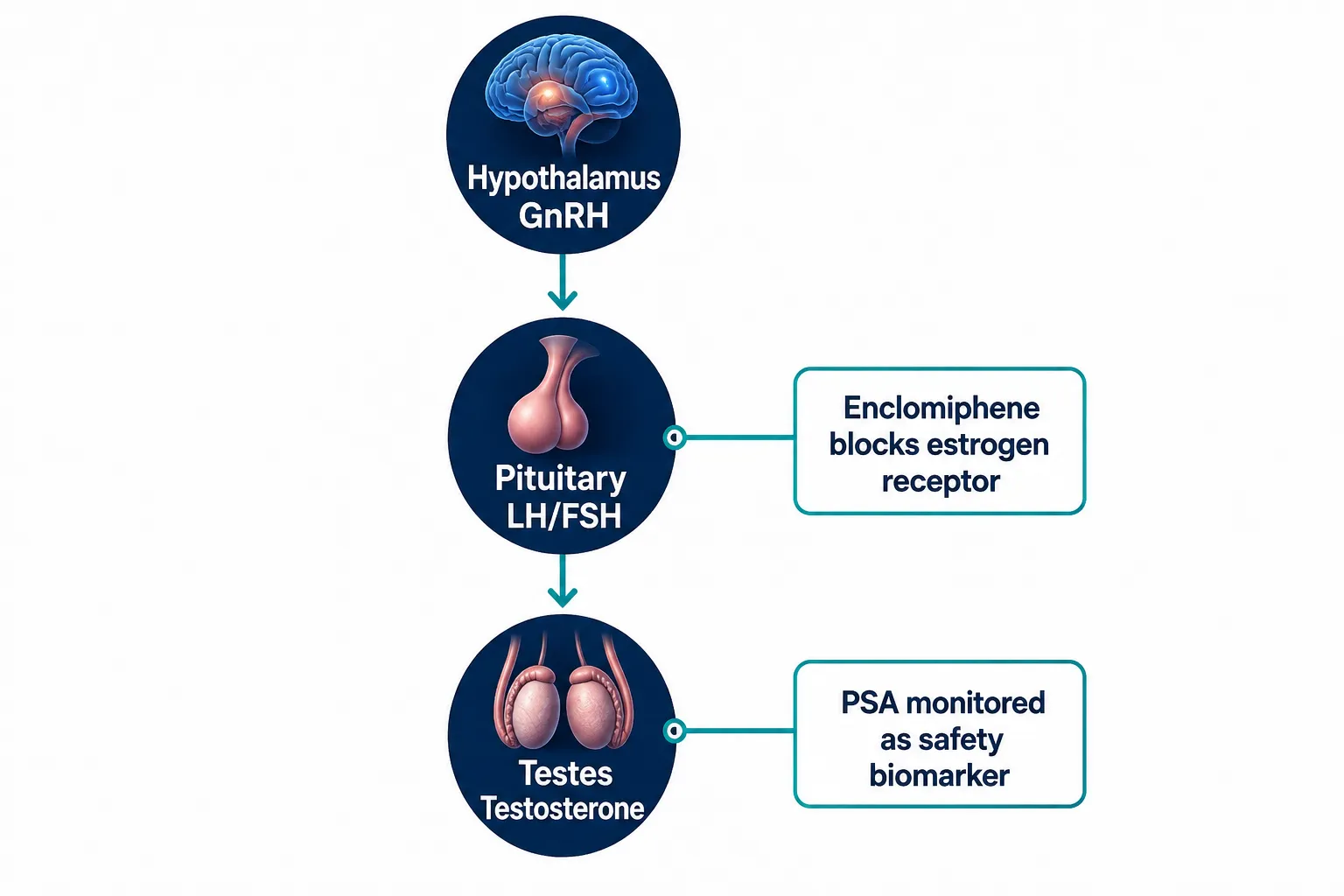
PSA is a glycoprotein produced by prostate epithelial cells, and its serum level rises when androgen signaling increases. That biological fact makes it indispensable in any study that deliberately elevates testosterone. When a lab designs a serm trial for secondary hypogonadism, the protocol must account for the downstream androgenic effect on prostate tissue, and PSA is the most practical, non-invasive way to do that.

In enclomiphene phase III safety work, clinical laboratory tests form a core safety endpoint alongside physical exams, visual acuity checks, and slit-lamp eye examinations. Although published summaries do not always headline PSA explicitly, practitioners running off-label hormone protocols consistently include it in serial safety panels. The reasoning is straightforward: if enclomiphene successfully raises morning total testosterone from below 300 ng/dL into the normal range, prostate tissue will experience that androgen signal. Monitoring PSA at baseline, mid-study, and endpoint catches any clinically meaningful rise before it becomes a safety event.

Why PSA matters beyond prostate cancer screening:

  • It quantifies androgenic stimulation of prostate tissue in real time.
  • It provides a continuous safety variable rather than a binary pass/fail outcome.
  • It allows dose-adjustment decisions during titration phases.
  • It satisfies FDA expectations for safety data in androgen-modulating drug applications.

For researchers exploring therapeutic peptides alongside serms, PSA anchors the hormone safety panel to a well-validated clinical standard.

How Enclomiphene serm Studies Are Structured

The design of enclomiphene trials illustrates how Prostate Specific Antigen, Enclomiphene, and Peptide Hormones research frameworks are built from the ground up. Enclomiphene citrate is the trans-isomer of clomiphene, and its regulatory path has been complicated precisely because the FDA must decide how to treat the relationship between an isomer and an already-marketed parent compound. As of 2026, an NDA remains in progress with outstanding FDA questions on that relationship.

Phase III enclomiphene trials enrolled men aged 18-65 with secondary hypogonadism, defined as morning total testosterone below 300 ng/dL on two separate occasions with non-elevated LH. The open-label, escalating-dose design started participants at 12.5 mg with titration to 25 mg if needed over six months. The key clinical finding: enclomiphene raises total testosterone into the normal range while preserving LH, FSH, and sperm production, a meaningful advantage over exogenous testosterone replacement, which suppresses the hypothalamic-pituitary-gonadal axis.

"Enclomiphene's ability to maintain spermatogenesis while restoring testosterone makes it a structurally different intervention than TRT, and that difference demands a different safety monitoring strategy."

For more on how serm compounds are categorized and studied, researchers can explore current literature on receptor-selective mechanisms.

Standard safety panel in enclomiphene studies:

Endpoint Category Specific Measures
Androgenic safety PSA, hematocrit, lipid panel
Reproductive hormones Total testosterone, LH, FSH
Ocular safety Visual acuity, slit-lamp exam
General clinical labs CMP, CBC, adverse event log

GLP-Class Peptide Hormone Study Design
GLP-Class Peptide Hormone Study Design

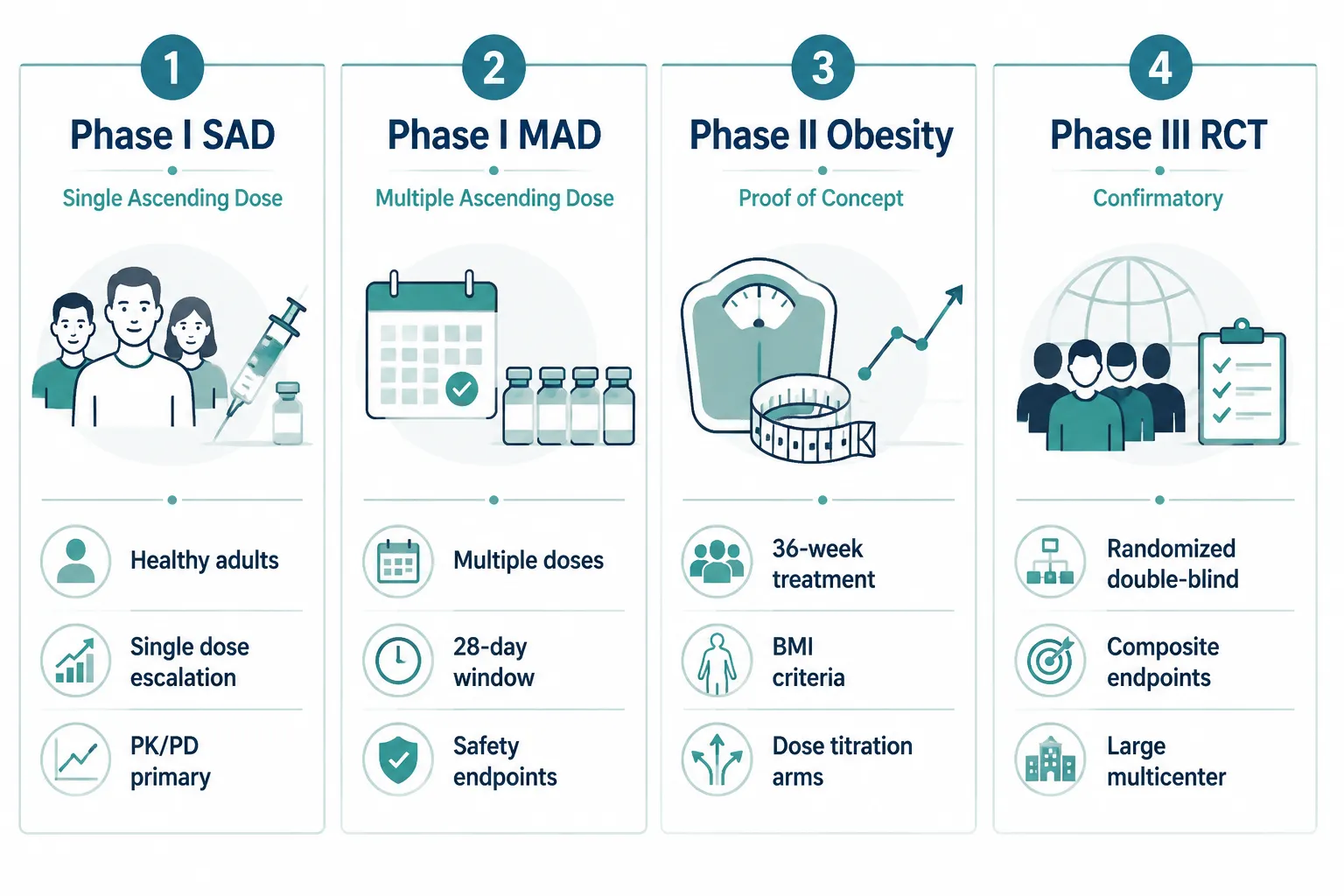
The design logic for GLP-1 receptor agonist studies shares structural DNA with serm trials but diverges sharply in endpoint architecture. A first-in-human phase I study of a novel oral small-molecule GLP-1 receptor agonist illustrates the current template: three sequential parts covering single ascending dose (2.5-50 mg in healthy adults), a 28-day multiple ascending dose in healthy adults, and a 28-day weekly-titration multiple ascending dose in overweight or obese adults. All three parts are randomized, double-blind, and placebo-controlled, with safety and tolerability as primary endpoints and pharmacokinetics and pharmacodynamics as key secondary measures.

When labs repurpose existing GLP-1 agents for new indications, such as substance use disorders or neurodegenerative disease, a common design strategy emerges: keep established metabolic dosing (for example, semaglutide up to 1.0 mg once weekly) and concentrate design innovation on endpoints and patient populations. This approach reduces regulatory uncertainty because pharmacokinetic data already exists.

Researchers interested in signaling peptides and their receptor interactions will recognize that GLP-1 receptor agonists operate through similar second-messenger cascades as other peptide classes, making cross-class study design comparisons genuinely useful.

Key GLP-1 trial design principles in 2026:

  • Integrated cardiometabolic endpoints (cardiovascular events, kidney disease, weight)
  • "Low and slow" titration strategies to balance tolerability with efficacy
  • Real-world data sets used to power sample sizes and set event rate assumptions
  • Bridging studies that connect known pharmacology to new therapeutic uses

For context on how stacking or combining peptide agents affects study design, the discussion of single peptide vs stack approaches is directly relevant to multi-arm GLP-1 trial architectures.

Integrating PSA, serm, and Peptide Data Into a Unified Safety Framework
Integrating PSA, serm, and Peptide Data Into a Unified Safety Framework

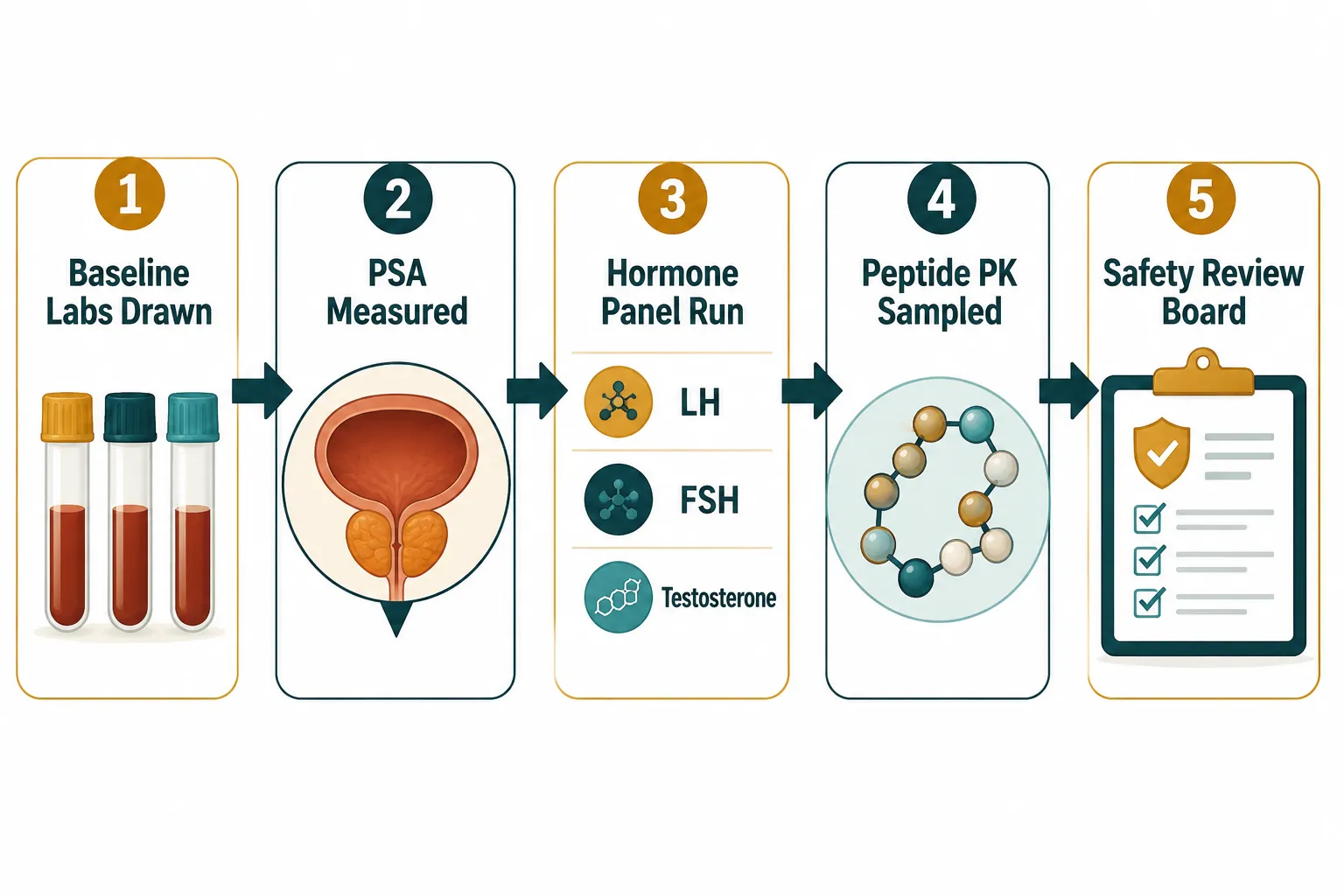
The convergence of Prostate Specific Antigen, Enclomiphene, and Peptide Hormones research into unified safety frameworks reflects a broader shift in how hormone studies are powered and monitored. Labs running combination protocols, for instance, pairing a serm with a growth hormone-releasing peptide, must build safety panels that capture both androgenic effects (PSA, hematocrit) and peptide-specific effects (IGF-1, fasting glucose, injection-site reactions).

Research on Sermorelin, Ipamorelin, and CJC-1295 dosage demonstrates how multi-peptide protocols require layered monitoring, just as multi-arm GLP-1 trials require composite endpoint tracking. Similarly, Tesamorelin vs Sermorelin comparisons highlight how small structural differences between peptide agents can produce meaningfully different safety profiles, a lesson directly applicable to enclomiphene's isomeric relationship to clomiphene.

Labs designing these studies in 2026 are also increasingly using next-generation cardio-kidney-metabolic outcome frameworks, which propose explicit design principles emphasizing integrated endpoints, careful patient selection, and robust trial architectures. When PSA is included as a continuous safety variable rather than a binary screening test, it fits naturally within these multi-domain outcome structures.

Practical checklist for integrated hormone study design:

  • Define androgen exposure with testosterone, LH, FSH at baseline and each visit
  • Include PSA at minimum at baseline, 3 months, and endpoint
  • Add peptide-specific PK sampling windows aligned with dosing intervals
  • Pre-specify PSA thresholds that trigger dose hold or discontinuation
  • Align FDA engagement strategy (pre-IND, Type C, pre-NDA meetings) with study design milestones

For labs sourcing research-grade compounds, ensuring purity is non-negotiable. Lab tested peptides with verified certificates of analysis are the baseline standard for any protocol that will generate safety data intended for regulatory review.

Conclusion

The intersection of Prostate Specific Antigen, Enclomiphene, and Peptide Hormones in modern hormone study design is not accidental, it reflects the biological reality that androgen modulation, receptor selectivity, and peptide signaling all converge on shared safety endpoints. PSA is not simply a prostate cancer screening tool; it is a dynamic androgenic biomarker that belongs in every male hormone study protocol.

Actionable next steps for researchers and clinicians:

  1. Include PSA as a continuous safety variable in any serm or androgen-modulating protocol, with pre-specified thresholds for dose adjustment.
  2. Apply GLP-1 trial design principles, ascending dose, randomized, double-blind, composite endpoints, to novel peptide programs wherever regulatory precedent is limited.
  3. Use real-world prescribing data and existing pharmacokinetic datasets to power sample sizes and reduce phase II risk.
  4. Engage FDA early through pre-IND meetings when an investigational compound has a structural relationship to an approved drug, as enclomiphene's path illustrates.
  5. Source only verified, lab tested peptides for any study generating data intended for regulatory submission.

Rigorous study design, comprehensive biomarker panels, and early regulatory alignment are the pillars that turn promising hormone research into actionable clinical evidence.

Tags: enclomiphene, enclomiphene citrate, glp-1 receptor agonist, hormone study design, peptide hormones, prostate-specific antigen, secondary hypogonadism, serm research
https://www.puretestedpeptides.com/wp-content/uploads/2026/09/prostate-specific-antigen-enclomiphene-and-peptide-hormones-how-labs-design-serm.webp 1024 1536 https://www.puretestedpeptides.com/wp-content/uploads/2026/01/buy-peptides-online.jpg 2026-09-05 13:05:452026-09-05 13:05:45Prostate Specific Antigen, Enclomiphene, and Peptide Hormones: How Labs Design serm and GLP-Class Hormone Studies
You might also like
Polypeptide Peptides in Cardiometabolic Research: How GLP-2-T and GLP-3 Fit With Classic Drug Pathways Polypeptide Peptides in Cardiometabolic Research: How GLP-2-T and GLP-3 Fit With Classic Drug Pathways
Enclomiphene Citrate: Understanding Its Selective Estrogen Receptor Modulation (serm) and Research Uses Enclomiphene Citrate: Understanding Its Selective Estrogen Receptor Modulation (serm) and Research Uses
Peptides and Polypeptides in Endocrine Pharmacology: How Enclomiphene Interfaces With Estrogen Receptor Biology Peptides and Polypeptides in Endocrine Pharmacology: How Enclomiphene Interfaces With Estrogen Receptor Biology
Enclomiphene vs Enclomiphene Citrate: How Labs Choose Between Research Formulations and Vendors Enclomiphene vs Enclomiphene Citrate: How Labs Choose Between Research Formulations and Vendors
What Is GLP3 Peptide? How Researchers Distinguish It From Retatrutide in Search Intent and Lab Context What Is GLP3 Peptide? How Researchers Distinguish It From Retatrutide in Search Intent and Lab Context
Where Researchers Compare Enclomiphene vs Enclomiphene Citrate in Lab-Use Planning Where Researchers Compare Enclomiphene vs Enclomiphene Citrate in Lab-Use Planning
GLP Peptides vs Traditional Small‑Molecule Metabolic Drugs: Where GLP‑3 Retatrutide, GLP‑2‑T, and Tesofensine Fit in Cardiometabolic Research GLP Peptides vs Traditional Small‑Molecule Metabolic Drugs: Where GLP‑3 Retatrutide, GLP‑2‑T, and Tesofensine Fit in Cardiometabolic Research
Estrogen Receptors and Enclomiphene: How serm Research Interfaces With Polypeptide Hormones and GLP‑Class Peptides Estrogen Receptors and Enclomiphene: How serm Research Interfaces With Polypeptide Hormones and GLP‑Class Peptides
0 replies

Leave a Reply

Want to join the discussion?
Feel free to contribute!

Leave a Reply Cancel reply

Your email address will not be published. Required fields are marked *

×

Helpful Links

  • My account
  • Cart
  • Checkout
  • Refund and Returns Policy
  • Privacy Policy
  • SMS Privacy Policy
  • Login
  • My Account
  • Logout

USA Made Lab Tested Peptides

All products are sold for research, laboratory, or analytical purposes only, and are not for human consumption


Pure Tested Peptides is a chemical supplier. Pure Tested Peptides is not a compounding / chemical compounding facility as defined under 503A of the Federal Food, Drug, and Cosmetic act. Pure Tested Peptides is not an outsourcing facility as defined under 503B of the Federal Food, Drug, and Cosmetic act.

The statements made within this website have not been evaluated by the US Food and Drug Administration. The products we offer are not intended to diagnose, treat, cure or prevent any disease.

Human/Animal Consumption Prohibited. Laboratory/In-Vitro Experimental Use Only

Link to: Peptides and Polypeptides in Gastrointestinal Research: How GLP-2 and GLP-2-T Peptides Interface With Omeprazole and Famotidine Models Link to: Peptides and Polypeptides in Gastrointestinal Research: How GLP-2 and GLP-2-T Peptides Interface With Omeprazole and Famotidine Models Peptides and Polypeptides in Gastrointestinal Research: How GLP-2 and GLP-2-T...Peptides and Polypeptides in Gastrointestinal Research: How GLP-2 and GLP-2-T Peptides Interface With Omeprazole and Famotidine Models Link to: Mesenchymal Stem Cells and Mitochondrial Peptides: Where MOTS-c and 5-Amino-1MQ Fit in Regenerative Cell Models Link to: Mesenchymal Stem Cells and Mitochondrial Peptides: Where MOTS-c and 5-Amino-1MQ Fit in Regenerative Cell Models Mesenchymal Stem Cells and Mitochondrial Peptides: Where MOTS-c and 5-Amino-1MQ Fit in Regenerative Cell ModelsMesenchymal Stem Cells and Mitochondrial Peptides: Where MOTS-c and 5-Amino-1MQ...
Scroll to top Scroll to top Scroll to top