Call or Text 727-513-9780
  • Shopping Cart Shopping Cart
    0Shopping Cart
Pure Tested Peptides | America's most trusted Peptides for sale online
  • Peptides for sale
    • Oral Peptides for sale
      • Peptide Capsules for sale
      • BPC 157 Capsules 1000mcg
      • SLU-PP-332 Capsules | 1000 mcg
      • 5-Amino-1MQ 50mg Capsules
      • Tesofensine 500mcg
    • All Peptides for sale
    • Peptide Sprays
      • BPC 157 Nasal Spray Kit
      • BPC-157 TB500 Nasal Spray Kit
      • Semax Nasal Spray 10mg
      • Selank – Nasal Spray Kit – 10mg
      • Epithalon 50MG Nasal Spray Kit
      • Ipamorelin 10mg Nasal Spray
      • Klow Nasal Spray (BPC-157 + TB-500 + GHK-Cu + KPV) | 80mg
      • Hulk Nasal Spray Tesa / Ipa Blend 6/3 MG
      • Klow Nasal Spray
      • NAD + 500 mg Nasal Spray
      • PT-141 Nasal Spray Kit
    • GHRH Peptides
      • Ipa Peptides
      • CJC-1295 Peptides
        • CJC-1295 with DAC 5 mg
        • CJC-1295 without DAC 5 mg
        • CJC-1295 Ipa 10mg
      • Tesa Peptides
        • Tesa Peptide
        • Tesa 20 mg
    • GHK-Cu Peptides
      • All GHK-Cu Peptides
      • GHK-Cu 100mg
      • KLOW Peptide Blend – Buy KLOW blend online
    • BPC Peptides
      • All BPC Peptides
      • BPC-157
      • BPC-157 TB-500
      • BPC 157 capsules 1000mcg
    • SLU-PP-332 Peptides
      • All SLU-PP-332 Peptides
      • SLU-PP-332 5mg
    • GLP3 Peptides
      • GLP3-R
      • GLP3-R CAG 10mg
      • GLP3-R 20mg
    • PT-141 Peptides
      • PT-141 Peptides for sale
      • PT-141 10mg
      • PT-141 Nasal Spray
    • CAG Peptides
      • Lipo-C Peptide Blend
      • CAG 5mg
      • CAG 10mg
    • MOTS-C Peptides
      • MOTS-C Peptides for sale
      • MOTS-c peptide
      • MOTS-c 10mg *6 pack*
    • 5 Amino 1MQ Peptides
      • 5 Amino 1MQ Peptides for sale
      • 5-Amino-1MQ 50mg Capsules
      • 5-Amino-1MQ 5mg
    • Epithalon Peptides
      • Epithalon Peptides for sale
      • Epithalon 10mg
      • Epithalon 50mg
  • Shop
    • GLPs
      • 5-Amino-1MQ 50mg Capsules
      • 5-Amino-1MQ 5mg
      • GLP3-Reta
      • L-Carnitine 500mg/ml
      • Tesofensine 500mcg
      • SLU-PP-332 5mg
      • MOTS-c 10mg *6 pack*
    • Epithalon & BPC Peptides
      • Epithalon 10mg
      • Epithalon 50mg
      • BPC-157
      • BPC 157 capsules 1000mcg
      • BPC-157 TB-500
      • BPC-157 TB500 Nasal Spray Kit
      • BPC 157 Nasal Spray Kit
    • BPC TB-500 & NAD+ Peptides
      • NAD+ 500 mg
      • KLOW Peptide Blend – Buy KLOW blend online
      • GLOW Peptide Blend
      • TB 500 5mg
      • BPC 157 capsules 1000mcg – Supplement
      • BPC 157 Nasal Spray Kit
      • BPC-157
      • BPC-157 TB500 Nasal Spray Kit
      • BPC-157 TB-500
      • BPC 157 capsules 1000mcg
    • LL-37 Peptide
      • LL-37 10 mg
    • MOTS-C & Selank
      • MOTS-c peptide
      • Selank 10mg
    • GHK Peptides
      • GHK-Cu 100mg
      • GLOW Peptide Blend
      • KLOW Peptide Blend – Buy KLOW blend online
  • COAs
  • Wholesale
    • Wholesale Peptides for sale
  • PTP FAQ
  • Affiliates
    • Selank Peptide: Advanced Pharmacological Mechanisms Underlying Its Anxiolytic and Nootropic Effects in Research
      • 5-Amino-1MQ Peptide: Detailed Mechanisms of NNMT Inhibition and Its Impact on Cellular Metabolism Research
        • MOTS-C Peptide: Unraveling Its Role in Mitochondrial Dynamics and Energy Metabolism Research
          • Epithalon Peptide and Telomerase Regulation: Investigating Its Impact on Cellular Senescence and Lifespan Research Models
            • GLP2-T vs GLP2 Tirz Peptide: Understanding the Naming, Mechanistic Nuances, and Research Implications for Gut Health
      • Peptides and Polypeptides in Modern Pharmacology: What Research on Metoprolol, Prednisone, and Amlodipine Reveals
        • Polypeptide Peptides vs NSAIDs: What Naproxen and Diclofenac Teach Tissue-Repair Researchers About BPC‑157 and TB‑500
          • Peptides and Polypeptides in Endocrine Pharmacology: How GLP-1, GLP-2, and GLP-3 Retatrutide Differ From Classic Drugs Like Prednisone and Amlodipine
          • 5‑Amino‑1MQ Peptide and NNMT Inhibition: How It Compares With Statins Like Atorvastatin in Adipose and Lipid Metabolism Research
      • Enclomiphene, Estrogen Receptor Signaling, and Luteinizing Phase Biology: What Hormone Researchers Should Measure
        • Mesenchymal Stem Cells, BPC‑157, and GHK‑Cu: How Tissue Repair Peptides Compare With Classic NSAIDs Like Naproxen in Injury Models
          • Peptide Calculator Use Cases Beyond Growth Hormone: Working Through GLP‑3 Retatrutide, MOTS‑c, and BPC‑157 Research Dosing
        • Polypeptide Peptides in Endocrine and Metabolic Pharmacology: Lessons From Amlodipine, Prednisone, and Metoprolol
        • Peptides Calculator for Advanced Blends: Worked Examples for Tesamorelin, CJC‑1295, and Ipamorelin Stacks
          • Peptides and Polypeptides in Human Physiology: How Molecular Size Shapes Research Applications
            • Selank Peptide: Advanced Pharmacological Mechanisms Underlying Its Anxiolytic and Nootropic Effects in Research
          • 5-Amino-1MQ Peptide: Detailed Mechanisms of NNMT Inhibition and Its Impact on Cellular Metabolism Research
            • MOTS-C Peptide: Unraveling Its Role in Mitochondrial Dynamics and Energy Metabolism Research
              • Epithalon Peptide and Telomerase Regulation: Investigating Its Impact on Cellular Senescence and Lifespan Research Models
                • GLP2-T vs GLP2 Tirz Peptide: Understanding the Naming, Mechanistic Nuances, and Research Implications for Gut Health
                  • Peptides and Polypeptides in Endocrine Pharmacology: How GLP-1, GLP-2, and GLP-3 Retatrutide Differ From Classic Drugs Like Prednisone and Amlodipine
                    • Polypeptide Peptides vs NSAIDs: What Naproxen and Diclofenac Teach Tissue-Repair Researchers About BPC‑157 and TB‑500
                      • Peptides and Polypeptides in Modern Pharmacology: What Research on Metoprolol, Prednisone, and Amlodipine Reveals
                        • 5‑Amino‑1MQ Peptide and NNMT Inhibition: How It Compares With Statins Like Atorvastatin in Adipose and Lipid Metabolism Research
                        • Enclomiphene, Estrogen Receptor Signaling, and Luteinizing Phase Biology: What Hormone Researchers Should Measure
                        • Mesenchymal Stem Cells, BPC‑157, and GHK‑Cu: How Tissue Repair Peptides Compare With Classic NSAIDs Like Naproxen in Injury Models
                        • Peptide Calculator Use Cases Beyond Growth Hormone: Working Through GLP‑3 Retatrutide, MOTS‑c, and BPC‑157 Research Dosing
                        • Polypeptide Peptides in Endocrine and Metabolic Pharmacology: Lessons From Amlodipine, Prednisone, and Metoprolol
                        • Peptides Calculator for Advanced Blends: Worked Examples for Tesamorelin, CJC‑1295, and Ipamorelin Stacks
                        • Peptides and Polypeptides in Human Physiology: How Molecular Size Shapes Research Applications
                        • Selank Peptide: Advanced Pharmacological Mechanisms Underlying Its Anxiolytic and Nootropic Effects in Research
                        • MOTS-C Peptide: Unraveling Its Role in Mitochondrial Dynamics and Energy Metabolism Research
                        • Peptides and Polypeptides in Modern Pharmacology: What Research on Metoprolol, Prednisone, and Amlodipine Reveals
                        • Peptides and Polypeptides in Endocrine Pharmacology: How GLP-1, GLP-2, and GLP-3 Retatrutide Differ From Classic Drugs Like Prednisone and Amlodipine
                        • 5-Amino-1MQ Peptide: Detailed Mechanisms of NNMT Inhibition and Its Impact on Cellular Metabolism Research
                        • Mesenchymal Stem Cells, BPC‑157, and GHK‑Cu: How Tissue Repair Peptides Compare With Classic NSAIDs Like Naproxen in Injury Models
                        • Peptide Calculator Use Cases Beyond Growth Hormone: Working Through GLP‑3 Retatrutide, MOTS‑c, and BPC‑157 Research Dosing
                        • GLP2-T vs GLP2 Tirz Peptide: Understanding the Naming, Mechanistic Nuances, and Research Implications for Gut Health
                        • Polypeptide Peptides in Endocrine and Metabolic Pharmacology: Lessons From Amlodipine, Prednisone, and Metoprolol
                        • Polypeptide Peptides vs NSAIDs: What Naproxen and Diclofenac Teach Tissue-Repair Researchers About BPC‑157 and TB‑500
                        • Peptides and Polypeptides in Human Physiology: How Molecular Size Shapes Research Applications
                        • Peptides Calculator for Advanced Blends: Worked Examples for Tesamorelin, CJC‑1295, and Ipamorelin Stacks
                        • 5‑Amino‑1MQ Peptide and NNMT Inhibition: How It Compares With Statins Like Atorvastatin in Adipose and Lipid Metabolism Research
                        • Enclomiphene, Estrogen Receptor Signaling, and Luteinizing Phase Biology: What Hormone Researchers Should Measure
                        • Epithalon Peptide and Telomerase Regulation: Investigating Its Impact on Cellular Senescence and Lifespan Research Models
                        • Best research protocol Klow blend
                        • best time to take BPC-157
                        • best time to take DSIP (Delta Sleep Inducing Peptide)
                        • best time to take CJC-1295
                        • best time to take AOD-9604
                        • best time to take Follistatin 344
                        • best time to take Ipamorelin
                        • best time to take MK-677 (Ibutamoren)
                        • best time to take Ligandrol (LGD-4033) — research compound
                        • best time to take Ostarine (MK-2866) — research compound
                        • best time to take GHK-CU
                        • best time to take TB-500
                        • best time to take MOTS-c
                        • best time to take Semax
                        • best time to take RAD-140 (Testolone) — research compound
                        • best time to take Thymosin Alpha-1
                        • best time to take PEG-MGF
                        • Biolife Plasma, Octapharma Plasma, and Research Peptides: How Plasma Donation Labs Differ From Peptide Suppliers
                        • best time to take YK-11 — research compound
                        • best time to take PT-141 (Bremelanotide)
                        • Best research protocol Klow blend
                        • 5-Amino-1MQ and MOTS-C Synergy: Metabolic Signaling, Mitochondria, and Research Design
                        • BPC-157 and TB-500: Investigating Their Combined Effects on Angiogenesis and Cellular Migration in Tissue Repair Models
                        • BPC-157 Peptide: Gut Barrier Function, Inflammation, and Tissue-Recovery Research
                        • 5‑Amino‑1MQ and MOTS‑c Synergy in Metabolic Research: Designing NNMT and Mitochondrial Biogenesis Stacks
                        • CJC-1295 with DAC vs. Without DAC: Half-Life, Release Kinetics, and Research Implications
                        • CJC‑1295 with DAC vs. Without DAC: Expanding on Half‑Life Differences Using Tesamorelin and Ipamorelin Blend Case Studies
                        • Collagen Biology and Copper‑Binding Peptides: How GHK‑Cu, Glow Blend, and Klow Blend Interact with Skin and Connective Tissue
                        • Collagen Biology and Regenerative Peptides: How GHK‑Cu, Glow Blend, and Klow Blend Affect Extracellular Matrix Research
                    • DNA, Telomeres, and Longevity Peptides: Positioning Epithalon and MOTS‑c in Genetic Aging Research
                      • Enclomiphene Citrate: serm Mechanism, Testosterone Research, and Stack Compatibility
                        • Enclomiphene vs Enclomiphene Citrate: Formulation, Bioavailability, and Research Distinctions
                        • Epithalon Peptide Research: Telomerase Activation, Aging, and Pineal Gland Function
                        • Estrogen Receptor Signaling and Enclomiphene: How Selective Modulators Compare with Classic Polypeptide Hormones
                        • GHK-Cu Peptide: Advanced Mechanisms in Extracellular Matrix Remodeling and Wound Healing Research
                        • GHK-Cu Peptide: Collagen Synthesis, Wound Repair, and Skin-Barrier Research Models
                        • GLP-1 vs GLP-3 vs GLP-2: Peptide Classification and Research Applications
                        • GLP-2 Peptide Research Guide: Gut Barrier Function, Nutrient Absorption, and Intestinal Recovery Models
                        • GLP-3 Retatrutide vs. GLP-1 Drugs: What Triple-Agonist Biology Changes in Research Models
                        • Ipamorelin and Tesamorelin Combination: Synergistic GH Secretagogue Research and Dosing Protocols
                        • GLP2 Tirz Peptide: What It Is, Why the Name Exists, and How Researchers Should Interpret It
                        • Klow Blend Peptide Nasal Spray: What the Formulation Is Trying to Do in Cognitive Research
                        • Mitochondria, NNMT Inhibition, and Peptide Modulators: Where MOTS‑c and 5‑Amino‑1MQ Fit in Cellular Energy Research
                        • MOTS-c Peptide: Mitochondrial Function, Energy Metabolism, and What Researchers Measure
                        • MOTS-c vs. 5-Amino-1MQ: Which Metabolic Research Questions Each Compound Actually Answers
                        • Nasal Spray Peptides: Bioavailability, Administration, and Semax/Selank Research Applications
                        • PT-141 Peptide Research: Mechanism of Action and Melanocortin Receptor Signaling
                        • Retatrutide for Research: Mechanism, Structure, and GLP-1/GLP-3 Dual Action
                        • Retatrutide for Obesity and Type 2 Diabetes: What the Latest Trial Data Suggest
                        • Tesofensine Peptide Research: Mechanism, Appetite Suppression, and Neuropeptide Y Pathways
  • Contact
    • Contact Customer Service
    • Text Customer Support
  • About US
  • Shop all peptides
  • Affiliate Program
    • Affiliate Signup
  • Login / Register Login / Register Page Link Login / Register Page Link
  • Click to open the search input field Click to open the search input field Search
  • Menu Menu
Peptides and Polypeptides in Gastrointestinal Research: How GLP-2 and GLP-2-T Peptides Interface With Omeprazole and Famotidine Models

Peptides and Polypeptides in Gastrointestinal Research: How GLP-2 and GLP-2-T Peptides Interface With Omeprazole and Famotidine Models

September 4, 2026/0 Comments/in Uncategorized/by

Roughly 40% of adults worldwide use acid-suppressing drugs like omeprazole or famotidine at some point each year, yet the gut's own peptide signaling network, particularly glucagon-like peptide-2 (GLP-2), plays an equally powerful role in maintaining the intestinal barrier. As researchers push deeper into peptides and polypeptides in gastrointestinal research, a compelling question has emerged: how do GLP-2 and its therapeutic analog GLP-2-T (teduglutide) interact with the same mucosal and barrier endpoints that omeprazole and famotidine models are designed to measure? Understanding that interface is now central to designing smarter, more complete gut health research protocols.

Key Takeaways

  • GLP-2 and GLP-2-T (teduglutide) promote intestinal mucosal growth and barrier integrity through distinct receptor-mediated pathways.
  • Omeprazole (a proton pump inhibitor) and famotidine (an H2-blocker) reduce gastric acid but also influence gut peptide homeostasis and microbiota composition.
  • Research models comparing acid-suppression endpoints with GLP-2 peptide endpoints reveal overlapping effects on mucus barrier thickness and tight-junction integrity.
  • Long-acting GLP-2 analogs such as glepaglutide and apraglutide represent the next generation of therapeutic peptides under active investigation.
  • Combining acid-suppression and peptide-based models offers a richer picture of gastrointestinal mucosal health than either approach alone.

GLP-2 and GLP-2-T: Core Physiology in Gastrointestinal Research
GLP-2 and GLP-2-T: Core Physiology in Gastrointestinal Research

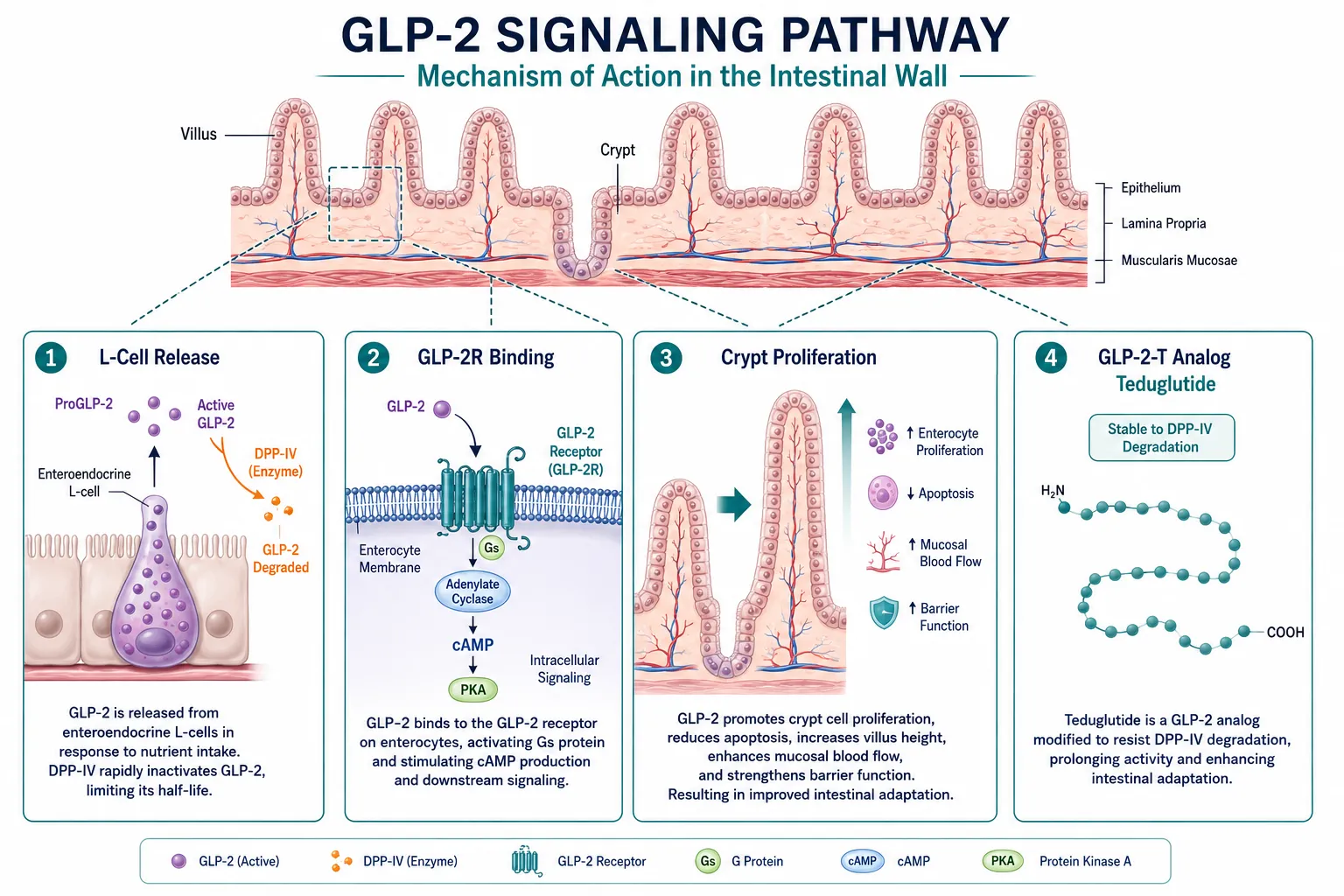
GLP-2 is a 33-amino-acid peptide secreted by enteroendocrine L-cells in the distal small intestine and colon in response to nutrient ingestion. Its primary roles include stimulating crypt cell proliferation, increasing villus height, strengthening tight junctions between enterocytes, and reducing intestinal permeability. These actions make it one of the most studied molecules in systemic peptide research targeting the gut.

The native GLP-2 peptide has a short half-life, typically under 10 minutes, because the enzyme dipeptidyl peptidase-IV (DPP-IV) rapidly cleaves it. This limitation drove the development of GLP-2-T, or teduglutide, a DPP-IV-resistant analog that substitutes glycine for alanine at position 2. Teduglutide remains active far longer, enabling once-daily dosing and sustained mucosal support. Researchers exploring teduglutide research have documented its approval for short bowel syndrome and its expanding role in broader intestinal failure models.

Beyond teduglutide, newer long-acting analogs, glepaglutide and apraglutide, entered advanced clinical evaluation in 2025 and 2026. These compounds extend the half-life further through fatty acid conjugation or other structural modifications, offering researchers new pharmacokinetic (PK) variables to test against established mucosal endpoints.

Key mechanism: GLP-2 binds the GLP-2 receptor (GLP-2R) expressed on enteric neurons, subepithelial myofibroblasts, and enteroendocrine cells, not directly on enterocytes, triggering downstream growth factor release that drives crypt-villus expansion.

Omeprazole and Famotidine Models: Acid Suppression and Gut Peptide Homeostasis
Omeprazole and Famotidine Models: Acid Suppression and Gut Peptide Homeostasis

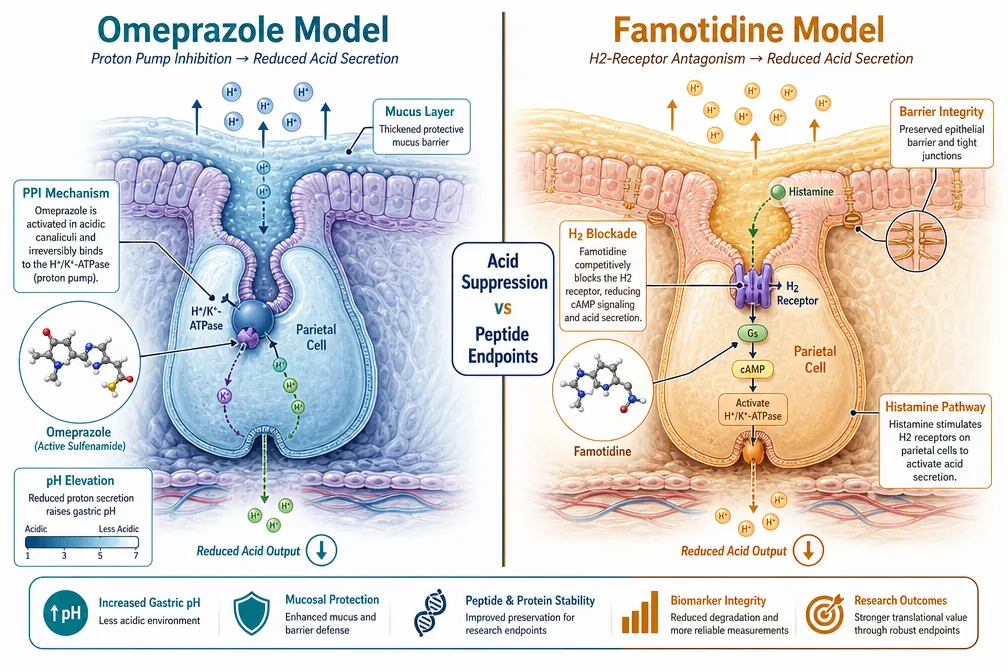
Omeprazole belongs to the proton pump inhibitor (PPI) class, irreversibly blocking H+/K+-ATPase pumps on parietal cells to reduce gastric acid output. Famotidine is an H2-receptor antagonist that competitively blocks histamine-driven acid secretion. Both are foundational tools in gastrointestinal pharmacology, and both are routinely used as reference comparators when building mucosal integrity models.

What makes these models relevant to peptides and polypeptides in gastrointestinal research is their secondary influence on gut biology beyond simple pH control:

  • Altered microbiota composition: Chronic PPI use shifts the gut microbiome toward less acidophilic species, which can modulate L-cell activity and, consequently, endogenous GLP-2 secretion.
  • Changes in gastrin levels: Both PPIs and H2-blockers affect gastrin, a hormone that cross-talks with enteroendocrine signaling cascades overlapping with GLP-2 pathways.
  • Mucus layer dynamics: Acid suppression changes the biochemical environment of the gastric and proximal intestinal mucus layer, altering the same barrier endpoints that GLP-2 analogs are designed to improve.

Combination regimens pairing famotidine with omeprazole have been studied for breakthrough acid control, and pharmacodynamic data from these studies show additive but not always synergistic effects on pH elevation. Importantly, these combination models create a useful baseline for comparing how a peptide-based intervention like GLP-2-T changes mucosal outcomes on top of acid suppression.

How GLP-2 and GLP-2-T Peptides Interface With Omeprazole and Famotidine Models
How GLP-2 and GLP-2-T Peptides Interface With Omeprazole and Famotidine Models

The intersection of peptides and polypeptides in gastrointestinal research with acid-suppression pharmacology centers on three shared endpoints: mucus barrier thickness, tight-junction protein expression, and intestinal permeability (measured by lactulose-mannitol ratio or similar assays).

Shared Mucosal Endpoints

Endpoint Omeprazole/Famotidine Effect GLP-2 / GLP-2-T Effect
Mucus layer thickness Modest increase via pH normalization Direct stimulation of goblet cell output
Tight-junction integrity Indirect improvement via reduced acid damage Direct upregulation of claudin and occludin proteins
Villus height Minimal direct effect Significant crypt-villus expansion
Microbiota diversity Decreased with long-term PPI use Improved in 2025 longitudinal data

Researchers using single peptide model frameworks have begun incorporating omeprazole or famotidine as a background condition rather than a comparator, essentially asking: does GLP-2-T add measurable mucosal benefit above and beyond what acid suppression already provides?

Evidence from semaglutide co-administration studies, used as a proxy given semaglutide's structural kinship with GLP-2 as a proglucagon-derived peptide, suggests that GLP-peptide drugs retain their mucosal effects even when gastric pH is already elevated by PPIs. This implies that GLP-2-T's mechanism is sufficiently downstream of acid secretion to remain active in omeprazole or famotidine backgrounds.

Microbiota and Immune Remodeling

Longitudinal data from 2025 highlighted a nuanced finding: GLP-2 analog therapy partially reverses the microbiota dysbiosis associated with long-term PPI use. This positions GLP-2-T not merely as a mucosal growth factor but as a potential corrective agent in patients who are already on chronic acid suppression. Stimuli responsive peptides research frameworks are beginning to incorporate this microbiota-immune axis as a measurable output.

Designing Dual-Model Research Protocols

For researchers building protocols, a practical approach involves:

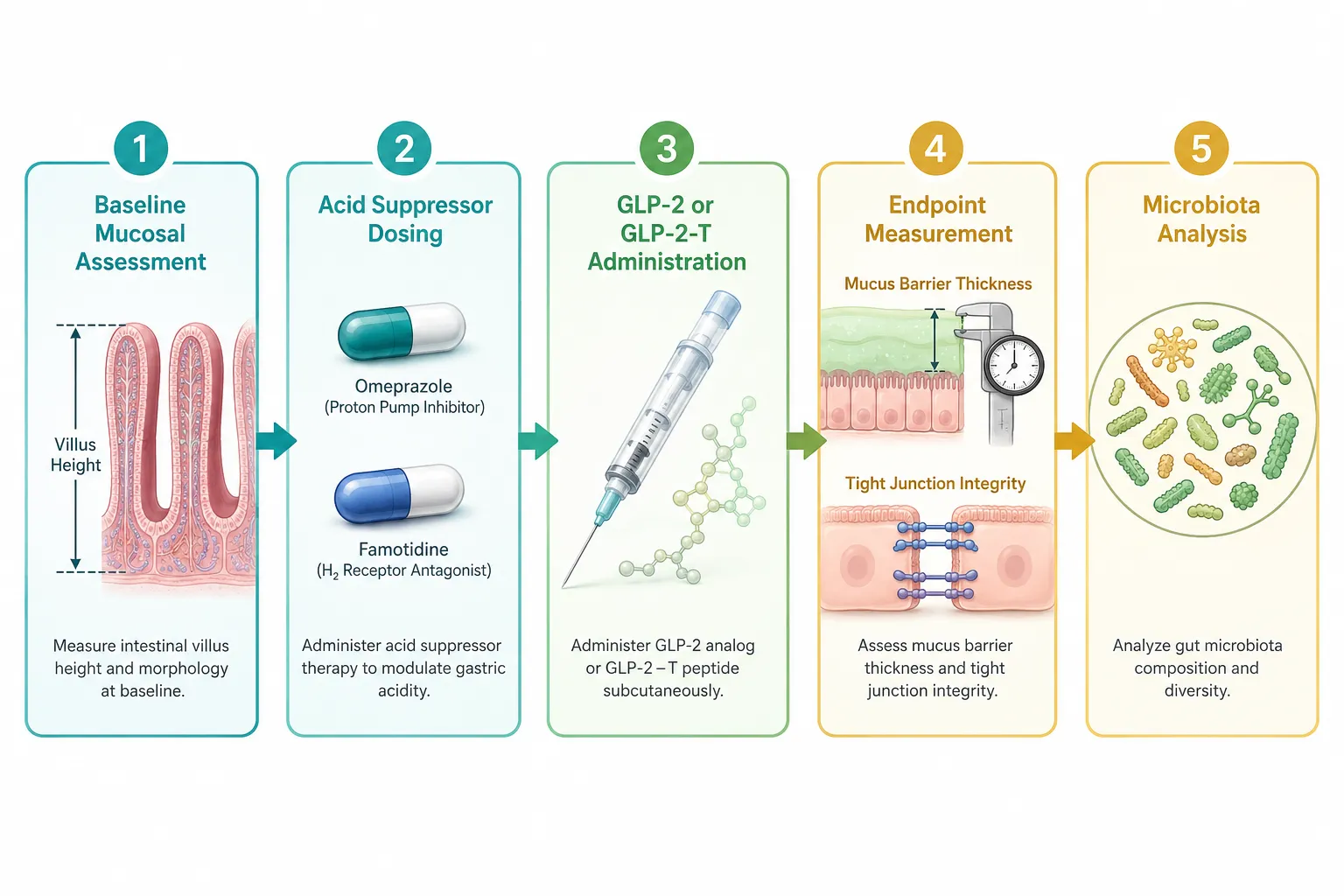
  1. Establishing acid-suppression baseline with omeprazole or famotidine dosing for a defined run-in period.
  2. Introducing GLP-2 or GLP-2-T at a standardized dose while maintaining acid suppression.
  3. Measuring mucosal endpoints at intervals, using histomorphometry, permeability assays, and microbiome sequencing.
  4. Comparing outcomes against a peptide-only arm and an acid-suppressor-only arm.

This design, increasingly referenced in current enteroendocrine targeting trials, aligns with single peptide protocols best practices while adding the pharmacodynamic complexity of a co-treatment background.

Conclusion

The convergence of GLP-2 peptide biology with omeprazole and famotidine pharmacology represents one of the most productive frontiers in gastrointestinal research in 2026. Researchers who frame GLP-2 and GLP-2-T studies against acid-suppression models gain access to richer endpoint comparisons, more clinically relevant baselines, and a clearer picture of how peptide-based interventions add value beyond conventional acid control.

Actionable next steps for research teams:

  • Incorporate famotidine or omeprazole background dosing into GLP-2 analog protocols to test additive mucosal effects.
  • Include microbiota diversity as a primary or secondary endpoint alongside classical barrier integrity measures.
  • Monitor emerging PK data on glepaglutide and apraglutide as longer-acting alternatives to teduglutide in multi-drug models.
  • Consult current enteroendocrine targeting trial registries to align endpoint selection with evolving regulatory standards.

As the field of therapeutic peptides continues to expand, integrating GLP-2 analog research with established acid-suppression frameworks will sharpen both mechanistic understanding and translational relevance.

Tags: famotidine pharmacology, gastrointestinal peptides, glp-2 peptides, intestinal barrier research, omeprazole models, polypeptides gi research, teduglutide research, therapeutic peptides
https://www.puretestedpeptides.com/wp-content/uploads/2026/09/peptides-and-polypeptides-in-gastrointestinal-research-how-glp-2-and-glp-2-t-pep.webp 1024 1536 https://www.puretestedpeptides.com/wp-content/uploads/2026/01/buy-peptides-online.jpg 2026-09-04 13:06:002026-09-04 13:06:00Peptides and Polypeptides in Gastrointestinal Research: How GLP-2 and GLP-2-T Peptides Interface With Omeprazole and Famotidine Models
You might also like
Collagen and GHK-Cu Peptides: How Copper-Dependent Collagen Signaling Differs From Classic Collagen Supplements in Research Collagen and GHK-Cu Peptides: How Copper-Dependent Collagen Signaling Differs From Classic Collagen Supplements in Research
Peptides and Polypeptides: Complete Research Guide for GLP-1, GLP-2, GLP-3, and Growth Hormone Peptides Peptides and Polypeptides: Complete Research Guide for GLP-1, GLP-2, GLP-3, and Growth Hormone Peptides
Peptides: How Researchers Classify Chains, Polypeptides, and Hormone Analogues in Lab Use Peptides: How Researchers Classify Chains, Polypeptides, and Hormone Analogues in Lab Use
GLP-2 and GLP-2 Tirz Peptides: Intestinal Barrier Function and Research Applications GLP-2 and GLP-2 Tirz Peptides: Intestinal Barrier Function and Research Applications
0 replies

Leave a Reply

Want to join the discussion?
Feel free to contribute!

Leave a Reply Cancel reply

Your email address will not be published. Required fields are marked *

×

Helpful Links

  • My account
  • Cart
  • Checkout
  • Refund and Returns Policy
  • Privacy Policy
  • SMS Privacy Policy
  • Login
  • My Account
  • Logout

USA Made Lab Tested Peptides

All products are sold for research, laboratory, or analytical purposes only, and are not for human consumption


Pure Tested Peptides is a chemical supplier. Pure Tested Peptides is not a compounding / chemical compounding facility as defined under 503A of the Federal Food, Drug, and Cosmetic act. Pure Tested Peptides is not an outsourcing facility as defined under 503B of the Federal Food, Drug, and Cosmetic act.

The statements made within this website have not been evaluated by the US Food and Drug Administration. The products we offer are not intended to diagnose, treat, cure or prevent any disease.

Human/Animal Consumption Prohibited. Laboratory/In-Vitro Experimental Use Only

Link to: Semax vs Classic Anxiolytics: How Semax Nasal Spray Research Differs From Buspirone and Benzodiazepine Models Link to: Semax vs Classic Anxiolytics: How Semax Nasal Spray Research Differs From Buspirone and Benzodiazepine Models Semax vs Classic Anxiolytics: How Semax Nasal Spray Research Differs From Buspirone...Semax vs Classic Anxiolytics: How Semax Nasal Spray Research Differs From Buspirone and Benzodiazepine Models Link to: Prostate Specific Antigen, Enclomiphene, and Peptide Hormones: How Labs Design serm and GLP-Class Hormone Studies Link to: Prostate Specific Antigen, Enclomiphene, and Peptide Hormones: How Labs Design serm and GLP-Class Hormone Studies Prostate Specific Antigen, Enclomiphene, and Peptide Hormones: How Labs Design serm and GLP-Class Hormone StudiesProstate Specific Antigen, Enclomiphene, and Peptide Hormones: How Labs Design...
Scroll to top Scroll to top Scroll to top