Call or Text 727-513-9780
  • Shopping Cart Shopping Cart
    0Shopping Cart
Pure Tested Peptides | America's most trusted Peptides for sale online
  • Peptides for sale
    • Oral Peptides for sale
      • Peptide Capsules for sale
      • BPC 157 Capsules 1000mcg
      • SLU-PP-332 Capsules | 1000 mcg
      • 5-Amino-1MQ 50mg Capsules
      • Tesofensine 500mcg
    • All Peptides for sale
    • Peptide Sprays
      • BPC 157 Nasal Spray Kit
      • BPC-157 TB500 Nasal Spray Kit
      • Semax Nasal Spray 10mg
      • Selank – Nasal Spray Kit – 10mg
      • Epithalon 50MG Nasal Spray Kit
      • Ipamorelin 10mg Nasal Spray
      • Klow Nasal Spray (BPC-157 + TB-500 + GHK-Cu + KPV) | 80mg
      • Hulk Nasal Spray Tesa / Ipa Blend 6/3 MG
      • Klow Nasal Spray
      • NAD + 500 mg Nasal Spray
      • PT-141 Nasal Spray Kit
    • GHRH Peptides
      • Ipa Peptides
      • CJC-1295 Peptides
        • CJC-1295 with DAC 5 mg
        • CJC-1295 without DAC 5 mg
        • CJC-1295 Ipa 10mg
      • Tesa Peptides
        • Tesa Peptide
        • Tesa 20 mg
    • GHK-Cu Peptides
      • All GHK-Cu Peptides
      • GHK-Cu 100mg
      • KLOW Peptide Blend – Buy KLOW blend online
    • BPC Peptides
      • All BPC Peptides
      • BPC-157
      • BPC-157 TB-500
      • BPC 157 capsules 1000mcg
    • SLU-PP-332 Peptides
      • All SLU-PP-332 Peptides
      • SLU-PP-332 5mg
    • GLP3 Peptides
      • GLP3-R
      • GLP3-R CAG 10mg
      • GLP3-R 20mg
    • PT-141 Peptides
      • PT-141 Peptides for sale
      • PT-141 10mg
      • PT-141 Nasal Spray
    • CAG Peptides
      • Lipo-C Peptide Blend
      • CAG 5mg
      • CAG 10mg
    • MOTS-C Peptides
      • MOTS-C Peptides for sale
      • MOTS-c peptide
      • MOTS-c 10mg *6 pack*
    • 5 Amino 1MQ Peptides
      • 5 Amino 1MQ Peptides for sale
      • 5-Amino-1MQ 50mg Capsules
      • 5-Amino-1MQ 5mg
    • Epithalon Peptides
      • Epithalon Peptides for sale
      • Epithalon 10mg
      • Epithalon 50mg
  • Shop
    • GLPs
      • 5-Amino-1MQ 50mg Capsules
      • 5-Amino-1MQ 5mg
      • GLP3-Reta
      • L-Carnitine 500mg/ml
      • Tesofensine 500mcg
      • SLU-PP-332 5mg
      • MOTS-c 10mg *6 pack*
    • Epithalon & BPC Peptides
      • Epithalon 10mg
      • Epithalon 50mg
      • BPC-157
      • BPC 157 capsules 1000mcg
      • BPC-157 TB-500
      • BPC-157 TB500 Nasal Spray Kit
      • BPC 157 Nasal Spray Kit
    • BPC TB-500 & NAD+ Peptides
      • NAD+ 500 mg
      • KLOW Peptide Blend – Buy KLOW blend online
      • GLOW Peptide Blend
      • TB 500 5mg
      • BPC 157 capsules 1000mcg – Supplement
      • BPC 157 Nasal Spray Kit
      • BPC-157
      • BPC-157 TB500 Nasal Spray Kit
      • BPC-157 TB-500
      • BPC 157 capsules 1000mcg
    • LL-37 Peptide
      • LL-37 10 mg
    • MOTS-C & Selank
      • MOTS-c peptide
      • Selank 10mg
    • GHK Peptides
      • GHK-Cu 100mg
      • GLOW Peptide Blend
      • KLOW Peptide Blend – Buy KLOW blend online
  • COAs
  • Wholesale
    • Wholesale Peptides for sale
  • PTP FAQ
  • Affiliates
    • Affiliate Program
    • Affiliate Signup
  • Contact
    • Contact Customer Service
    • Text Customer Support
  • About US
  • Shop all peptides
  • Login / Register Login / Register Page Link Login / Register Page Link
  • Click to open the search input field Click to open the search input field Search
  • Menu Menu

Tag Archive for: enclomiphene research

Enclomiphene for Research: Understanding its Mechanism in Hormone Regulation Studies

Enclomiphene for Research: Understanding its Mechanism in Hormone Regulation Studies

June 13, 2026/0 Comments/in Uncategorized/by

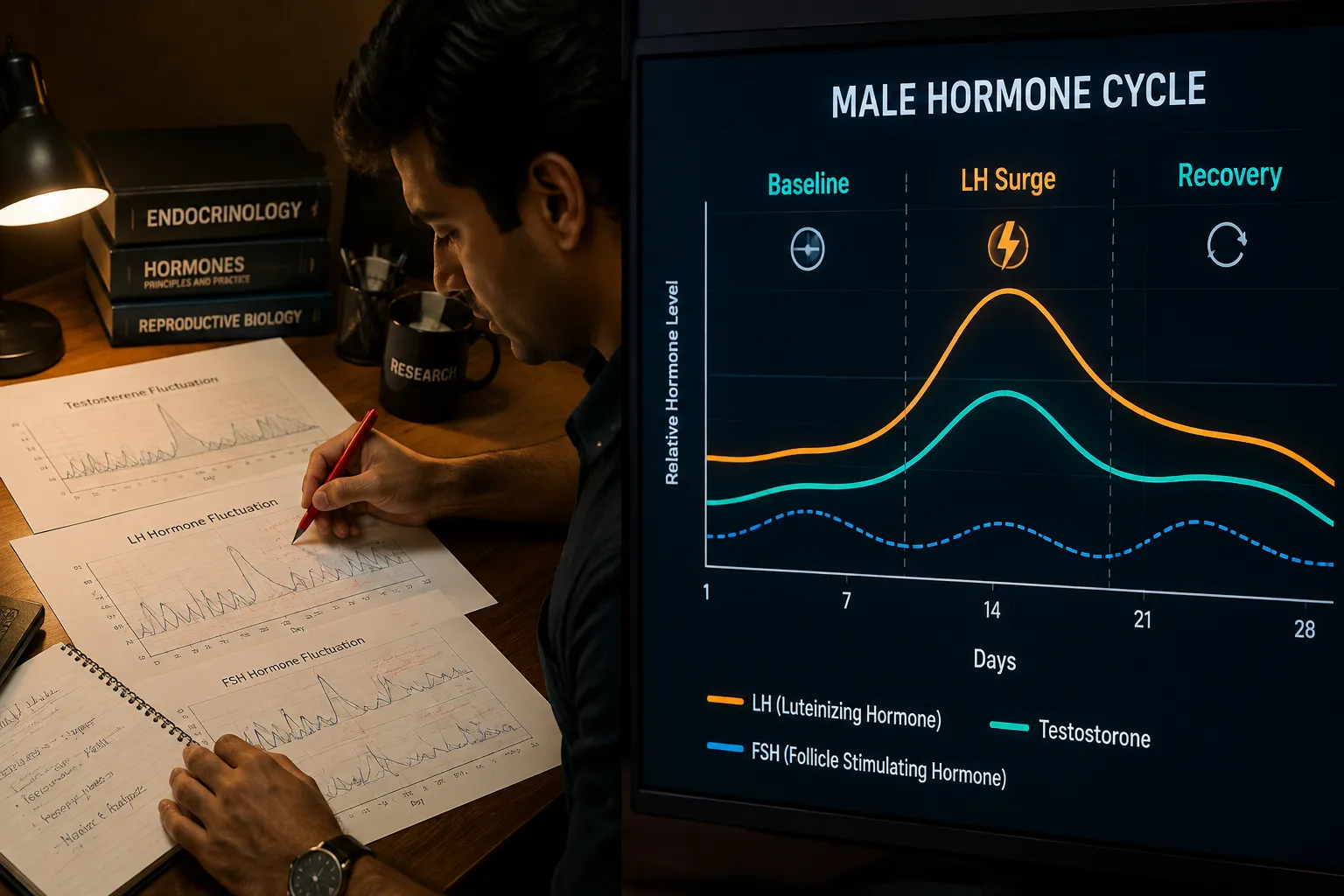
Fewer than 15% of men diagnosed with secondary hypogonadism have access to treatments that raise testosterone without shutting down sperm production — a gap that makes enclomiphene for research: understanding its mechanism in hormone regulation studies one of the most actively pursued topics in endocrinology today. As a selective estrogen receptor modulator (serm) with a uniquely targeted action on the hypothalamic-pituitary-gonadal (HPG) axis, enclomiphene has drawn significant scientific attention for its ability to restore hormonal balance through the body's own signaling pathways.

Key Takeaways

  • Enclomiphene blocks hypothalamic estrogen receptors, triggering a natural cascade of LH, FSH, and testosterone production.
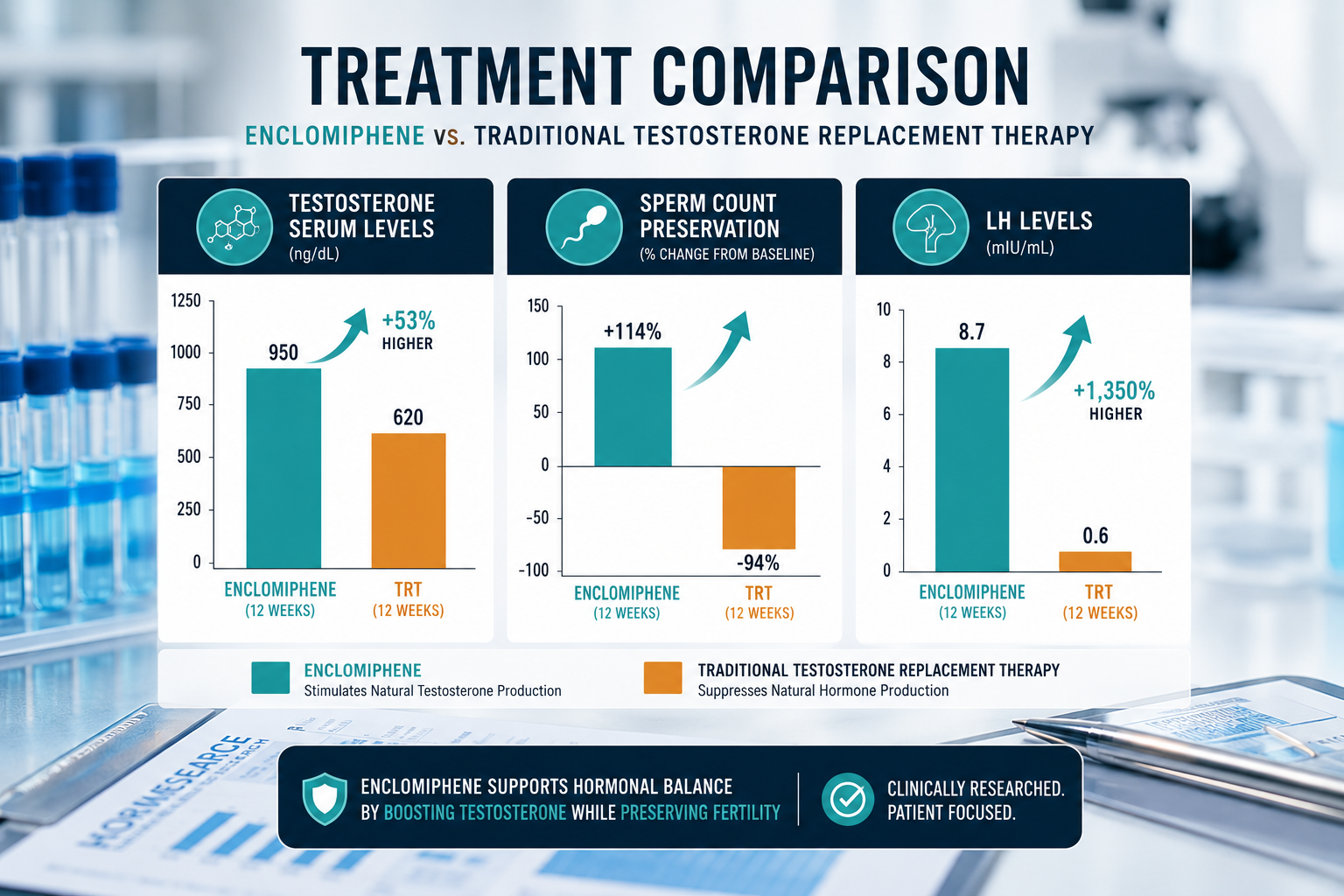
  • Unlike testosterone replacement therapy (TRT), enclomiphene preserves spermatogenesis, making it valuable in fertility-focused research.
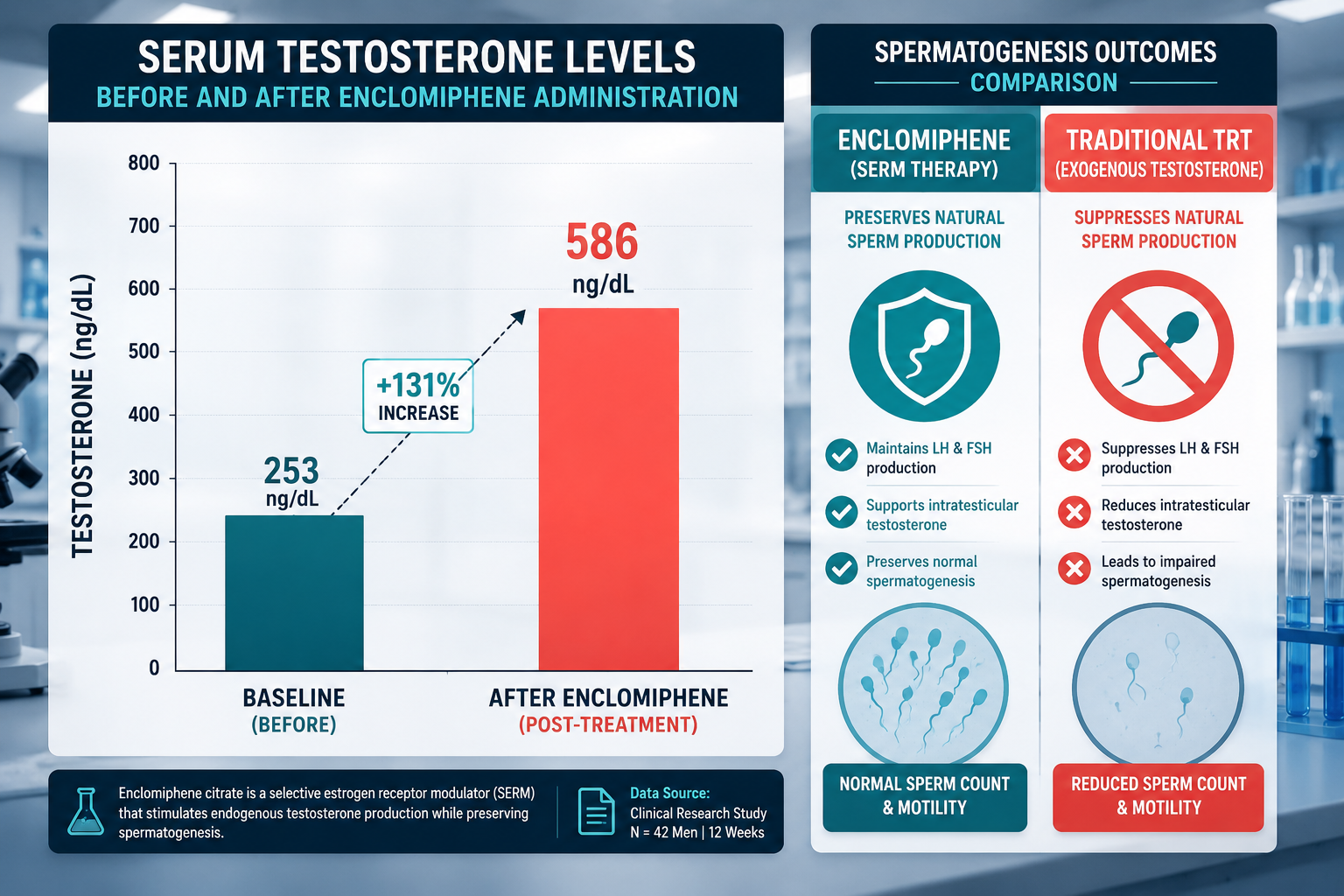
  • Clinical data show testosterone levels rising from roughly 253 ng/dL to 586 ng/dL after six weeks at higher doses.
  • Enclomiphene is the isolated trans-isomer of clomiphene, offering a cleaner serm profile with fewer estrogenic side effects.
  • As of 2026, enclomiphene has not received FDA approval, and long-term safety data remain limited.

Key Takeaways

How Enclomiphene Works: The HPG Axis Mechanism

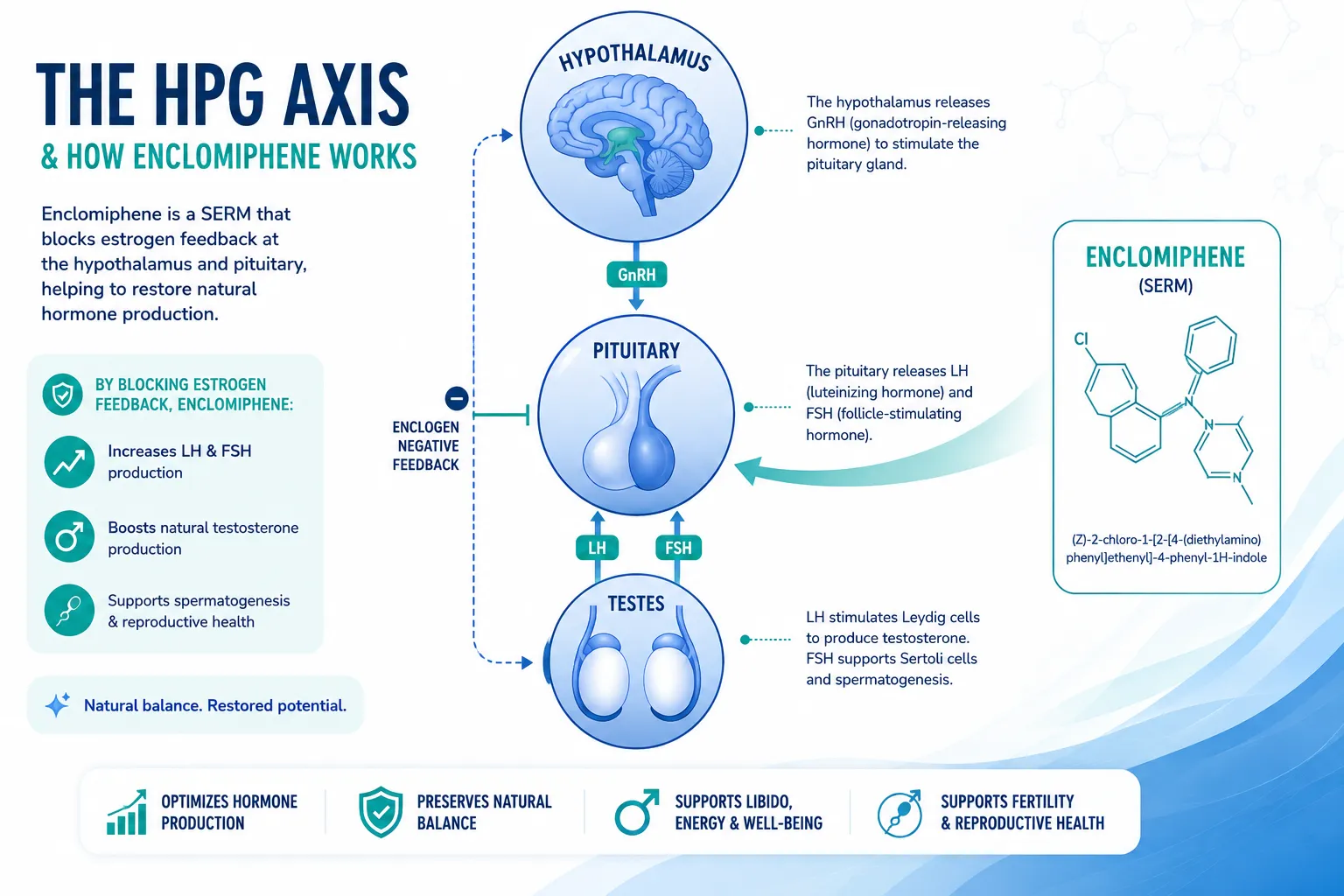
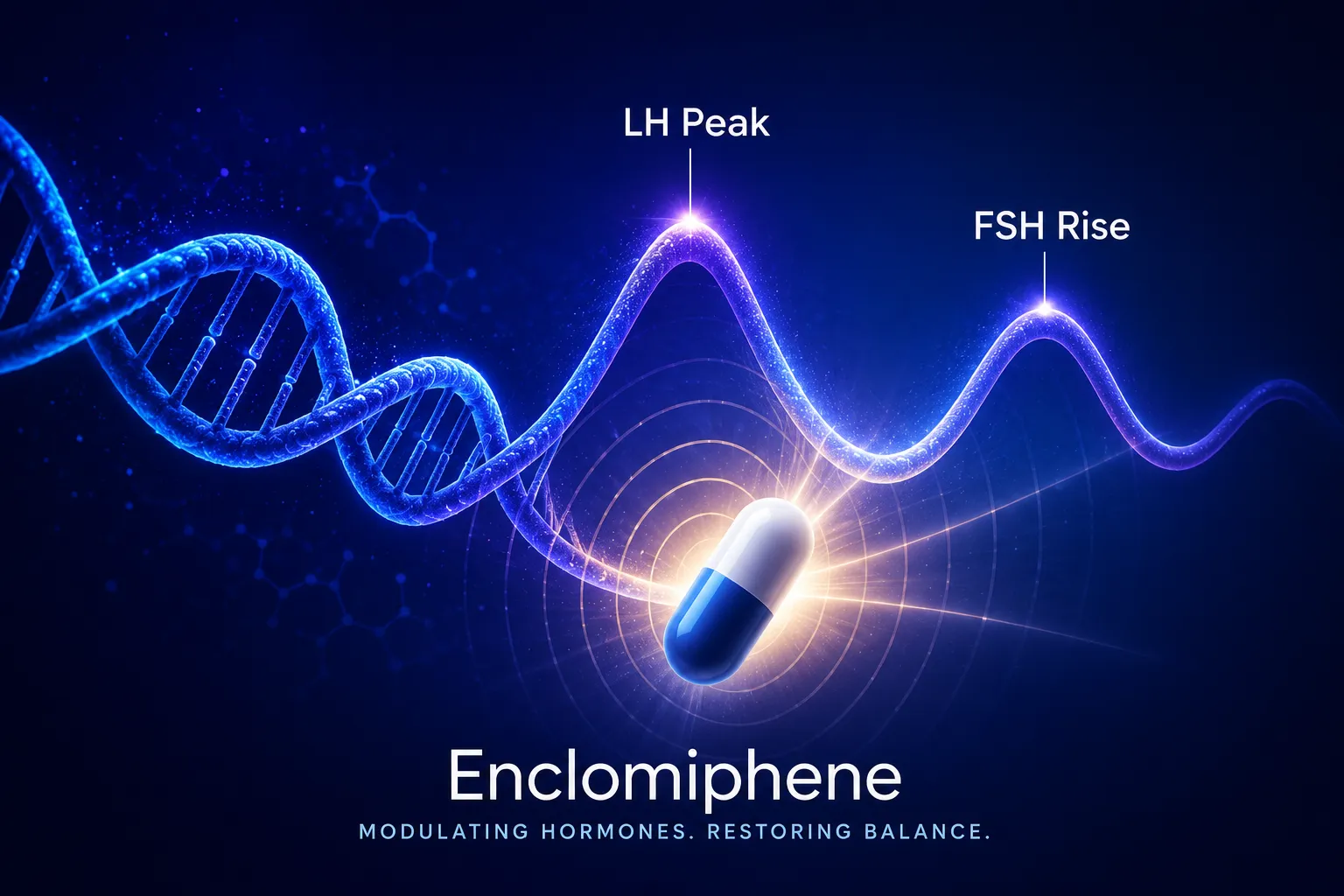
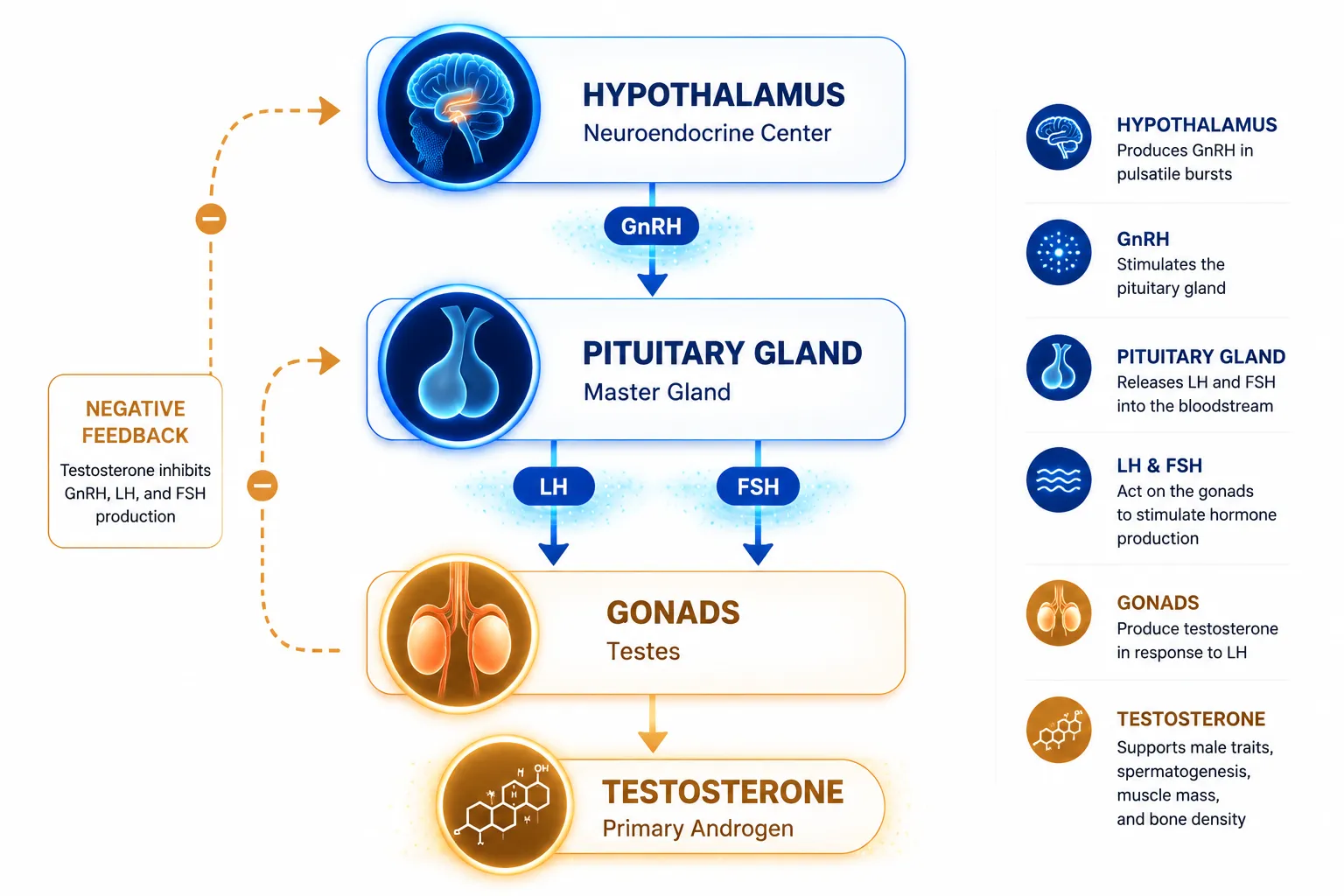
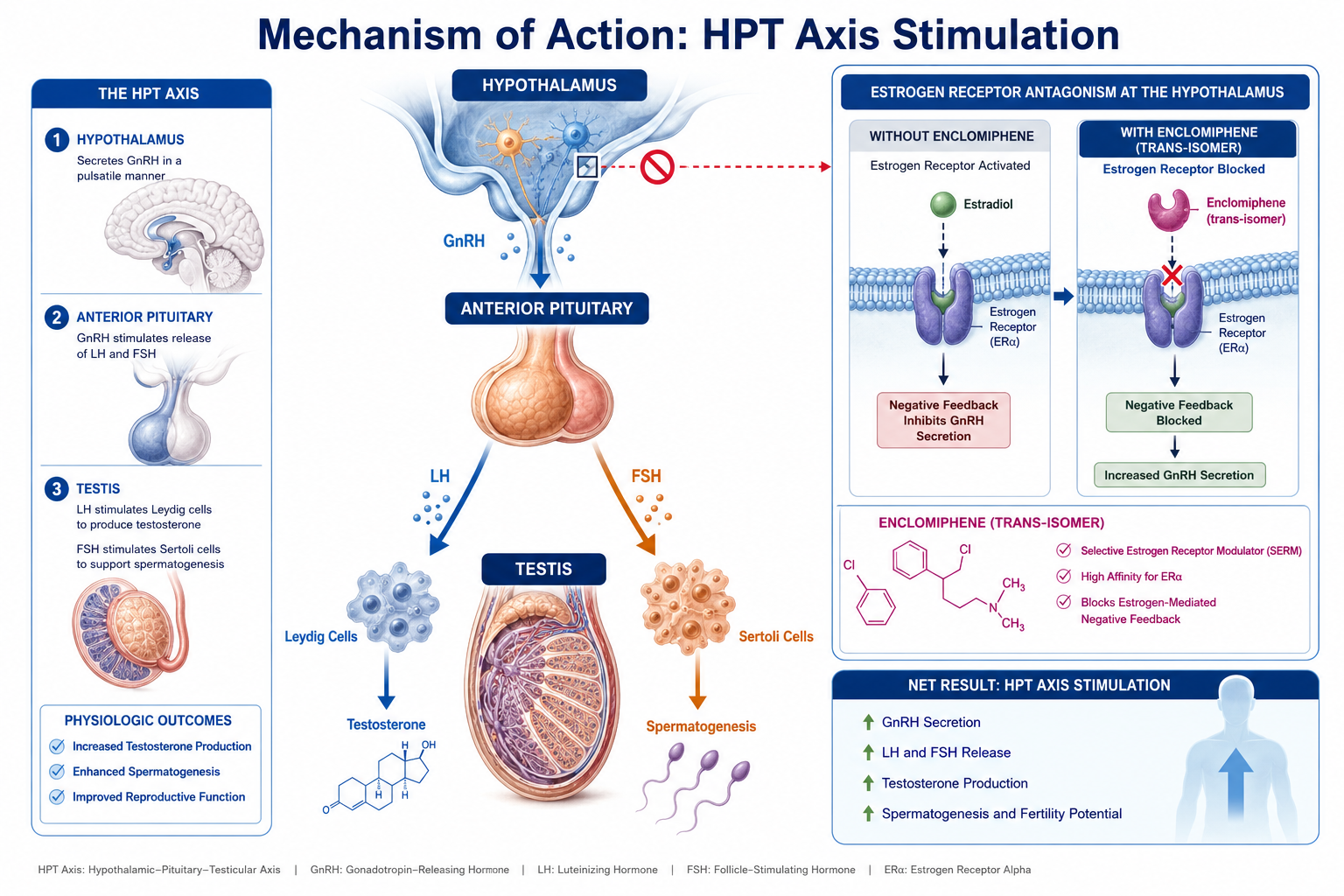
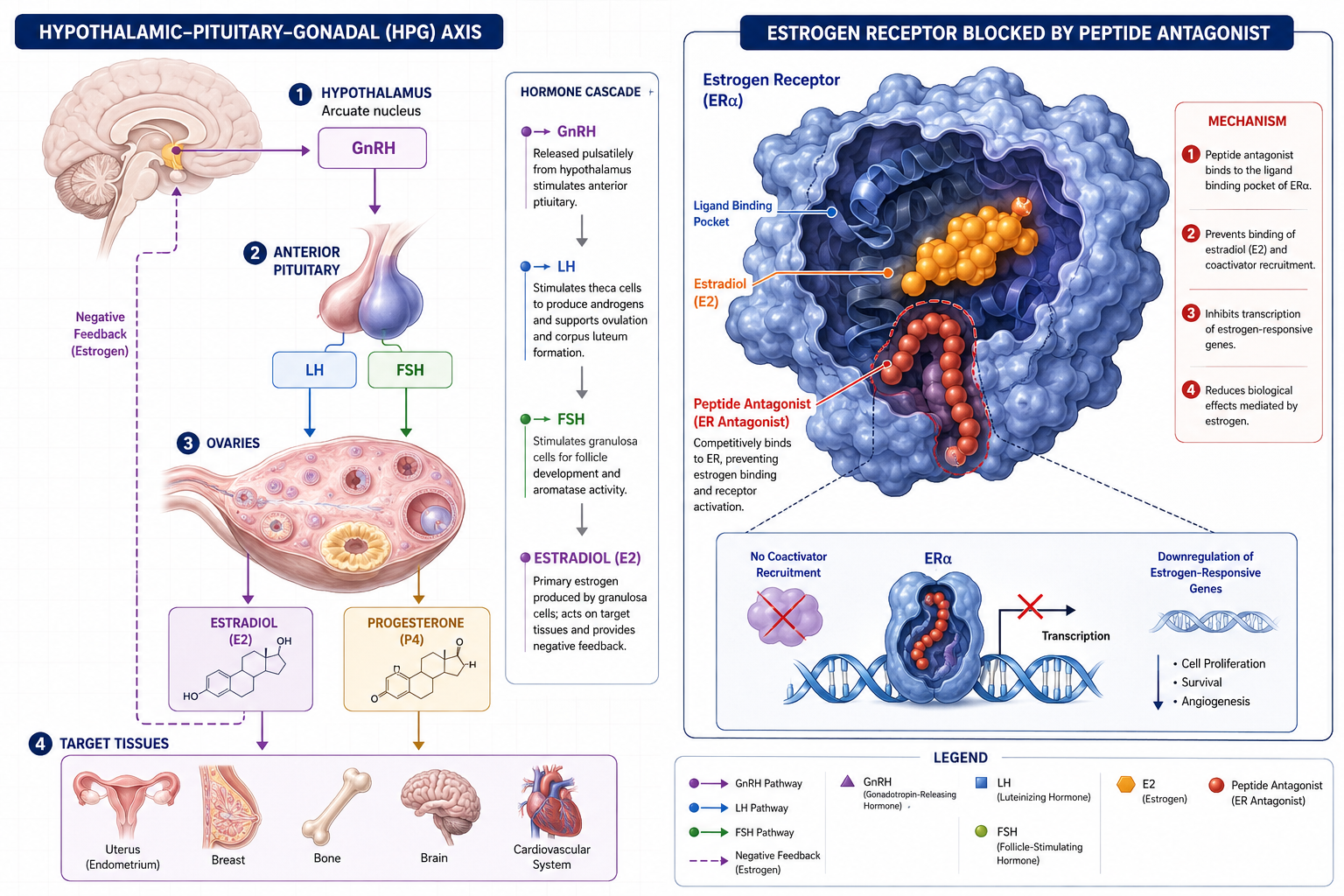
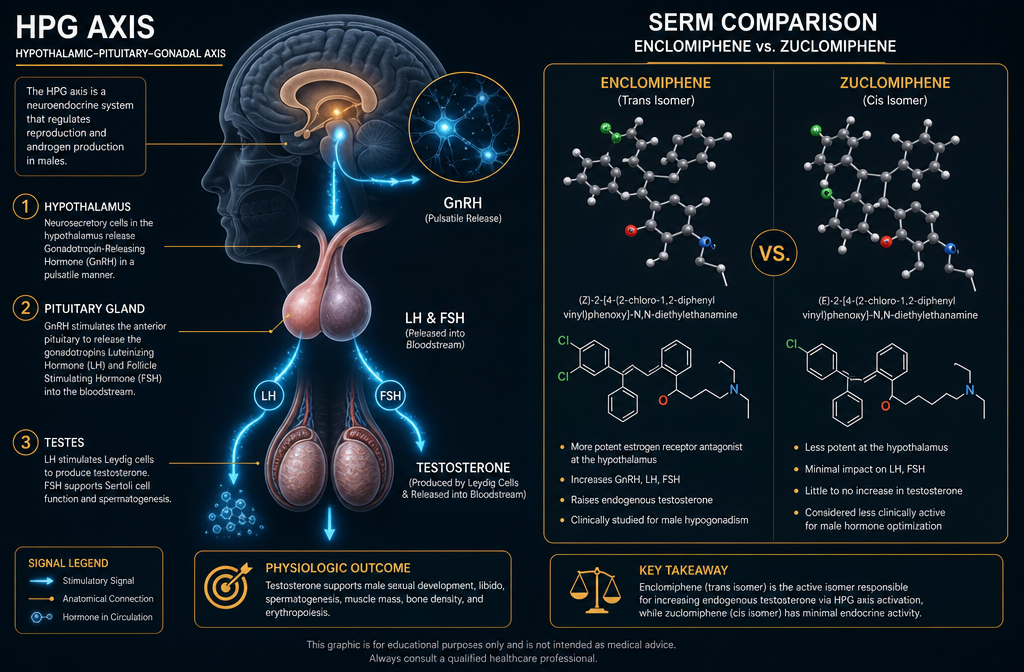
At the core of enclomiphene for research: understanding its mechanism in hormone regulation studies is its precise action on the HPG axis. Enclomiphene functions as a serm by competitively binding to estrogen receptors in the hypothalamus. Under normal conditions, circulating estradiol binds to these receptors and signals the hypothalamus to reduce gonadotropin-releasing hormone (GnRH) secretion — a classic negative feedback loop.

By blocking this feedback, enclomiphene removes the "brake" on GnRH pulsatility. The result is a downstream surge in both luteinizing hormone (LH) and follicle-stimulating hormone (FSH) from the anterior pituitary, which in turn stimulates Leydig cells in the testes to produce endogenous testosterone.

"Enclomiphene essentially resets the hormonal thermostat by working upstream rather than adding exogenous hormone."

This mechanism stands in sharp contrast to traditional TRT, which suppresses the HPG axis entirely. Researchers studying gonadorelin and GnRH pulsatility will find enclomiphene's upstream action particularly relevant, as both compounds engage the same signaling architecture.

Key receptor interactions in enclomiphene's mechanism:

Site Action Downstream Effect
Hypothalamus Blocks estrogen receptor Increases GnRH pulsatility
Anterior pituitary Elevated GnRH input Raises LH and FSH output
Testes (Leydig cells) LH stimulation Boosts endogenous testosterone
Testes (Sertoli cells) FSH stimulation Preserves spermatogenesis

How Enclomiphene Works: The HPG Axis Mechanism

Clinical Research Findings and Fertility Preservation

The practical value of enclomiphene for research: understanding its mechanism in hormone regulation studies becomes clearest when examining clinical trial data. In one well-cited trial, men with secondary hypogonadism who had baseline testosterone levels averaging 253 ng/dL reached an average of 586 ng/dL after six weeks on the highest tested dose. This restoration to normal physiological range without exogenous hormone administration is a significant research milestone.

What makes this especially notable for researchers:

  • Sperm counts remained stable or improved, unlike outcomes seen with TRT
  • LH and FSH levels rose proportionally, confirming HPG axis engagement
  • Some participants showed improvements in fasting plasma glucose, suggesting potential metabolic benefits worth investigating further

This fertility-preserving profile makes enclomiphene a subject of interest in studies that also examine IPA serm stack research, where multiple compounds are evaluated for their combined effects on the endocrine system.

Enclomiphene vs. Clomiphene: A Cleaner Research Tool

Enclomiphene is the trans-isomer of clomiphene citrate. Standard clomiphene contains both the enclomiphene (trans) and zuclomiphene (cis) isomers. The zuclomiphene isomer carries weak estrogenic activity that can contribute to unwanted side effects. By isolating enclomiphene, researchers work with a compound that delivers a more targeted serm effect, reducing confounding variables in hormone regulation studies.

For labs exploring broader endocrine research, this specificity pairs well with investigations into longevity peptide research and metabolic hormone modulation.


Enclomiphene vs. Clomiphene: A Cleaner Research Tool

Research Applications, Dosing Context, and Regulatory Landscape

Standard dosing protocols in research settings typically range from 12.5 mg to 25 mg orally once daily, with adjustments guided by serum testosterone and gonadotropin measurements. Short-term safety data have been satisfactory and broadly comparable to testosterone gels and placebo in controlled settings. However, long-term safety data remain limited — a critical gap that researchers are actively working to address.

As of 2026, enclomiphene has not received FDA approval. Regulatory reviewers have indicated that raising testosterone levels alone may not constitute sufficient clinical benefit without demonstrated symptomatic improvement. This regulatory context shapes how enclomiphene is sourced and studied; it is currently available through compounding pharmacies, which means quality and dosing consistency can vary.

Researchers investigating related hormonal compounds may find useful context in NAD research and metabolic regulation and thymosin alpha-1 mechanism studies, both of which intersect with endocrine health pathways. For those reviewing the latest developments across the field, the peptide research blog provides ongoing updates relevant to serm and hormone regulation research.

Expert consensus points toward placebo-controlled, randomized trials as the next necessary step — particularly for populations with obesity, metabolic syndrome, and infertility-related hypogonadism.


Conclusion

Enclomiphene occupies a distinctive position in hormone regulation research because it works with the body's own feedback architecture rather than bypassing it. Its ability to elevate endogenous testosterone while preserving spermatogenesis addresses a genuine gap in the endocrinology research toolkit. For investigators studying the HPG axis, serm pharmacology, or fertility-adjacent hormone therapies, the compound offers a well-characterized mechanism and a growing clinical evidence base.

Actionable next steps for researchers:

  1. Review existing clinical trial data on HPG axis modulation to establish baseline comparisons.
  2. Prioritize sourcing from suppliers with verified testing protocols to ensure compound purity.
  3. Design studies that measure symptomatic outcomes alongside biomarker changes to address the FDA's stated evidentiary concerns.
  4. Consider pairing enclomiphene studies with metabolic markers, given preliminary data on fasting glucose improvements.
  5. Monitor regulatory developments in 2026, as the approval landscape for serms in hypogonadism continues to evolve.
https://www.puretestedpeptides.com/wp-content/uploads/2026/06/Enclomiphene-for-Research-Understanding-its-Mechanism-in-Hormone-Regulation-Studies.png 1024 1536 https://www.puretestedpeptides.com/wp-content/uploads/2026/01/buy-peptides-online.jpg 2026-06-13 13:04:362026-06-13 13:04:36Enclomiphene for Research: Understanding its Mechanism in Hormone Regulation Studies
Enclomiphene Research for Male Hormone Optimization: LH, FSH, and Testosterone Signaling Without the Clomiphene Noise

Enclomiphene Research for Male Hormone Optimization: LH, FSH, and Testosterone Signaling Without the Clomiphene Noise

June 7, 2026/0 Comments/in Uncategorized/by

Men with secondary hypogonadism who start standard clomiphene citrate often see testosterone numbers improve — but they also report mood swings, visual disturbances, and erratic estrogen readings that are hard to explain from the testosterone signal alone. The culprit is not the therapy concept; it is a single unwanted isomer. Enclomiphene research for male hormone optimization: LH, FSH, and testosterone signaling without the clomiphene noise is now a serious clinical conversation, and the lab data behind it deserves a clear-eyed look.

Key Takeaways

  • Enclomiphene is the active trans-isomer of clomiphene citrate; isolating it removes the estrogenic "noise" caused by zuclomiphene.
  • It stimulates LH and FSH release through the HPG axis, raising endogenous testosterone without suppressing spermatogenesis.
  • Phase II and III trials confirm meaningful increases in total and free testosterone in men with secondary hypogonadism.
  • Standard oral dosing ranges from 12.5 to 25 mg per day, with estradiol monitoring required at higher doses.
  • It is not suitable for primary hypogonadism or cases requiring highly predictable testosterone levels from injectable TRT.

Key Takeaways

The Isomer Problem: Why Clomiphene Carries Unwanted Signals

Clomiphene citrate is a 50/50 mixture of two geometric isomers: enclomiphene (trans) and zuclomiphene (cis). They behave very differently inside the body.

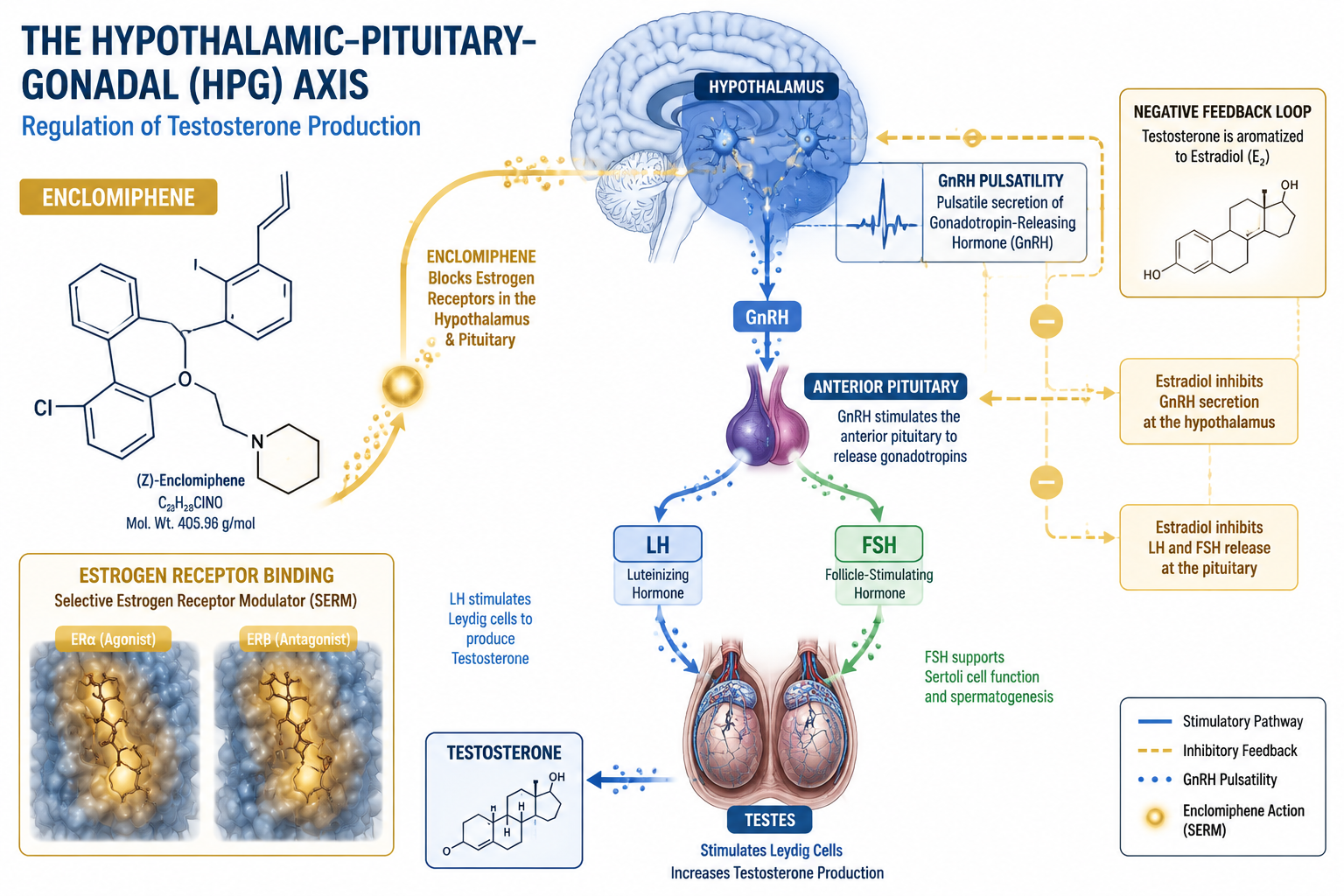
Enclomiphene blocks estrogen receptors in the hypothalamus. That blockade triggers increased gonadotropin-releasing hormone (GnRH) output, which tells the pituitary to release more LH and FSH. Higher LH drives Leydig cells in the testes to produce testosterone. Higher FSH supports Sertoli cell function and sperm production. The entire HPG axis stays intact and active.

Zuclomiphene, by contrast, is a weak estrogen receptor agonist with a notably long half-life. It accumulates over weeks of dosing, activating rather than blocking estrogen receptors. That activation contributes to mood disturbances, visual side effects, and confusing estradiol readings that complicate lab interpretation.

"The clinical noise attributed to clomiphene therapy in men is largely a zuclomiphene problem, not an enclomiphene problem."

Isolating enclomiphene removes that competing signal entirely, leaving a cleaner pharmacological profile for male hormone optimization.

Researchers studying multi-pathway peptide compounds face similar signal-isolation challenges. For context on how compound purity affects research outcomes, the discussion on multi-pathway research blends offers useful framing.

Reading the Lab Panel: LH, FSH, and Testosterone Under Enclomiphene

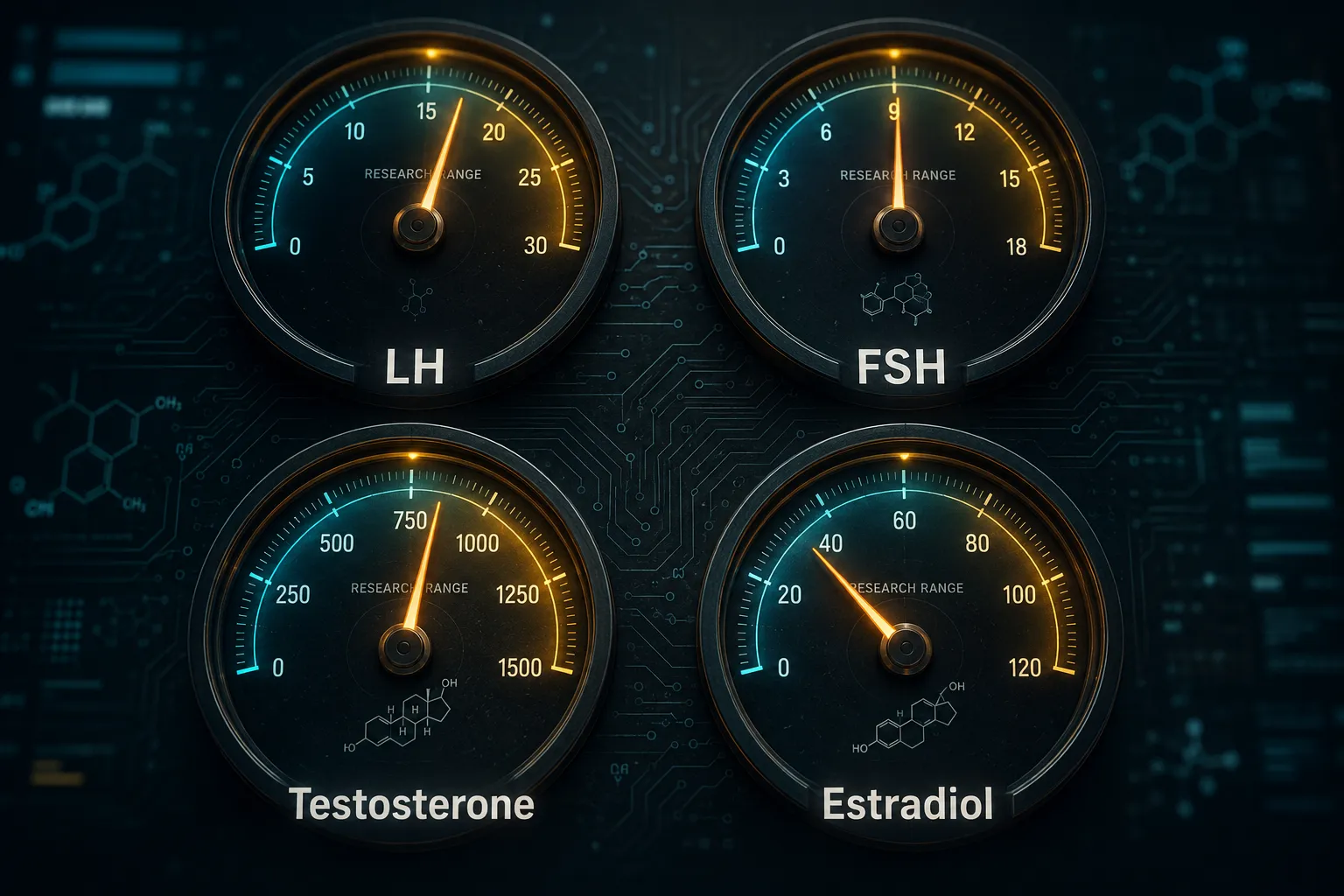
Understanding enclomiphene research for male hormone optimization: LH, FSH, and testosterone signaling without the clomiphene noise requires knowing what to look for on a hormone panel — and in what order.

Reading the Lab Panel: LH, FSH, and Testosterone Under Enclomiphene

Baseline Labs Before Starting

Before initiating enclomiphene, a complete baseline panel should include:

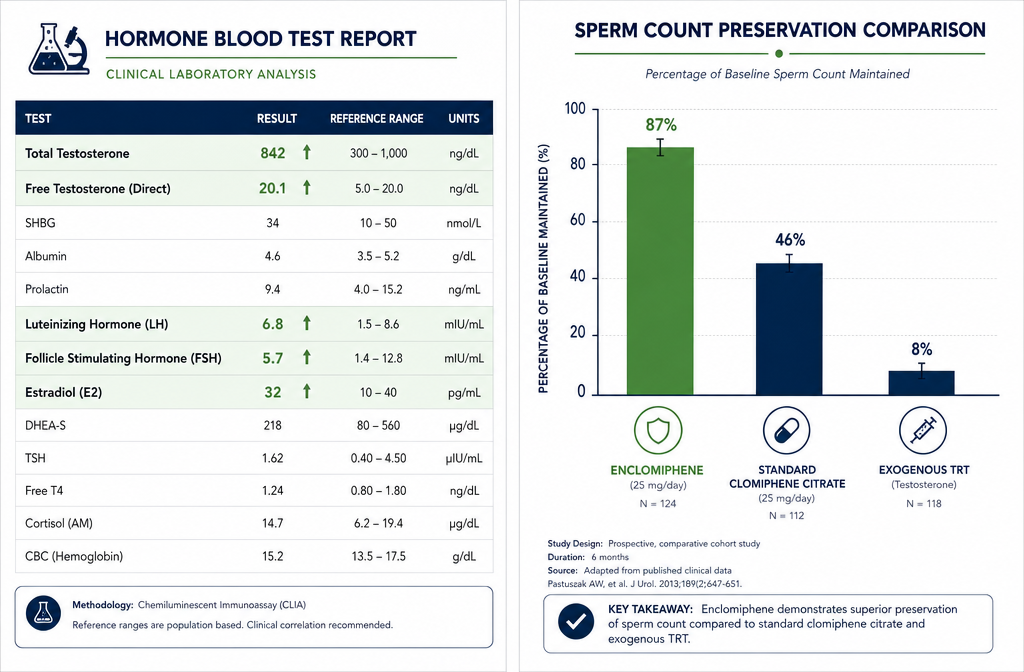
Lab Marker Why It Matters
Total Testosterone Establishes starting point
Free Testosterone Reflects bioavailable fraction
LH and FSH Confirms secondary (not primary) hypogonadism
Estradiol (E2) Monitors aromatization risk
Complete Metabolic Panel Assesses liver and kidney function
Lipid Panel Cardiovascular baseline
Complete Blood Count Rules out hematologic issues

What Changes at 4 to 6 Weeks

Phase II and III clinical trials show that enclomiphene produces statistically significant increases in both total and free testosterone in men with secondary hypogonadism. Crucially, LH and FSH rise alongside testosterone — the opposite of what happens with exogenous TRT, which suppresses both gonadotropins through negative feedback.

Sperm counts are maintained or improved, a finding that distinguishes enclomiphene sharply from injectable testosterone, which reliably reduces sperm production.

Estradiol should be rechecked at the 4-to-6-week follow-up. At doses above 25 mg daily, increased aromatization to estradiol has been observed, which may require dose adjustment or monitoring strategy changes.

For researchers exploring peptide-based growth hormone secretagogues alongside hormonal optimization protocols, the CJC-1295 with DAC deeper dive provides relevant background on pituitary-axis signaling. Similarly, those examining body composition endpoints may find the IPA muscle and fat research themes useful for comparative context.

Practical Research Considerations: Dosing, Patient Selection, and Monitoring

Enclomiphene research for male hormone optimization: LH, FSH, and testosterone signaling without the clomiphene noise is most productive when patient selection criteria are applied carefully.

Who Is a Strong Research Candidate

  • Men with confirmed secondary hypogonadism (low testosterone with low or normal LH/FSH)
  • Men who want to raise testosterone while preserving fertility
  • Younger men who may plan to have children
  • Men who prefer oral administration over injectable protocols

Who Is Not

  • Men with primary hypogonadism (testicular failure) — the testes cannot respond to LH stimulation
  • Men requiring highly predictable, high-level testosterone that only injectable TRT reliably delivers

Standard Dosing Protocol

The most studied oral dosing range is 12.5 to 25 mg per day. Lower doses reduce aromatization risk while still producing meaningful gonadotropin stimulation. Higher doses should be paired with closer estradiol monitoring.

As of 2026, enclomiphene is available via prescription under the brand name Androxal and is also accessible as a research compound. Any clinical application requires physician oversight and proper lab monitoring.

For researchers interested in related peptide compounds that intersect with metabolic and hormonal research, the tesa benefits overview and the PT-141 research context provide relevant comparative reading on endocrine-adjacent signaling pathways.

Ongoing research in 2026 continues to examine enclomiphene's long-term effects on bone density, cardiovascular markers, and broader applications in testosterone-deficiency conditions beyond secondary hypogonadism.

Conclusion

Enclomiphene research for male hormone optimization: LH, FSH, and testosterone signaling without the clomiphene noise represents one of the more clinically precise tools available for secondary hypogonadism management. By removing zuclomiphene from the equation, researchers and clinicians gain a cleaner signal — rising LH, rising FSH, rising testosterone, and preserved spermatogenesis — without the estrogenic interference that has historically complicated clomiphene therapy interpretation.

Actionable next steps for researchers and clinicians:

  1. Confirm secondary hypogonadism with a full baseline panel before initiating any protocol.
  2. Start at 12.5 mg daily and recheck total testosterone, free testosterone, LH, FSH, and estradiol at 4 to 6 weeks.
  3. Adjust dosing based on estradiol response, not testosterone alone.
  4. Exclude primary hypogonadism candidates early to avoid non-response.
  5. Track sperm parameters if fertility preservation is a stated research or clinical goal.

The endocrine signal is only as clean as the compound producing it. Enclomiphene's isomer isolation is precisely why its lab results are finally readable.

https://www.puretestedpeptides.com/wp-content/uploads/2026/06/Enclomiphene-Research-for-Male-Hormone-Optimization-LH-FSH-and-Testosterone-Signaling-Without-the-Clomiphene-Noise.png 672 1024 https://www.puretestedpeptides.com/wp-content/uploads/2026/01/buy-peptides-online.jpg 2026-06-07 13:04:162026-06-07 13:04:16Enclomiphene Research for Male Hormone Optimization: LH, FSH, and Testosterone Signaling Without the Clomiphene Noise
×

Helpful Links

  • My account
  • Cart
  • Checkout
  • Refund and Returns Policy
  • Privacy Policy
  • SMS Privacy Policy
  • Login
  • My Account
  • Logout

USA Made Lab Tested Peptides

All products are sold for research, laboratory, or analytical purposes only, and are not for human consumption


Pure Tested Peptides is a chemical supplier. Pure Tested Peptides is not a compounding / chemical compounding facility as defined under 503A of the Federal Food, Drug, and Cosmetic act. Pure Tested Peptides is not an outsourcing facility as defined under 503B of the Federal Food, Drug, and Cosmetic act.

The statements made within this website have not been evaluated by the US Food and Drug Administration. The products we offer are not intended to diagnose, treat, cure or prevent any disease.

Human/Animal Consumption Prohibited. Laboratory/In-Vitro Experimental Use Only

Scroll to top Scroll to top Scroll to top