

Every cell in the human body runs on a molecule so fundamental that without it, life stops within seconds. Adenosine triphosphate (ATP) powers nearly every biological process, yet researchers are only beginning to understand how peptides actively shape its production, regulation, and distribution at the cellular level. The role of adenosine triphosphate (ATP) in peptide-mediated cellular energy research has emerged as one of the most productive areas in modern biochemistry, connecting mitochondrial biology to therapeutic peptide science in ways that were not fully appreciated even a decade ago.
Key Takeaways
- ATP is the primary energy currency of the cell, produced mainly within mitochondria through oxidative phosphorylation.
- Specific peptides, including MOTS-c, directly influence ATP synthesis by interacting with mitochondrial pathways.
- ATP also acts as a signaling molecule, not just a fuel source, affecting peptide behavior and cellular communication.
- Research into peptide-ATP interactions is opening new directions in longevity, metabolic health, and tissue repair science.
- Understanding this relationship helps researchers design more targeted peptide protocols for cellular energy optimization.
ATP as the Foundation of Cellular Energy Metabolism
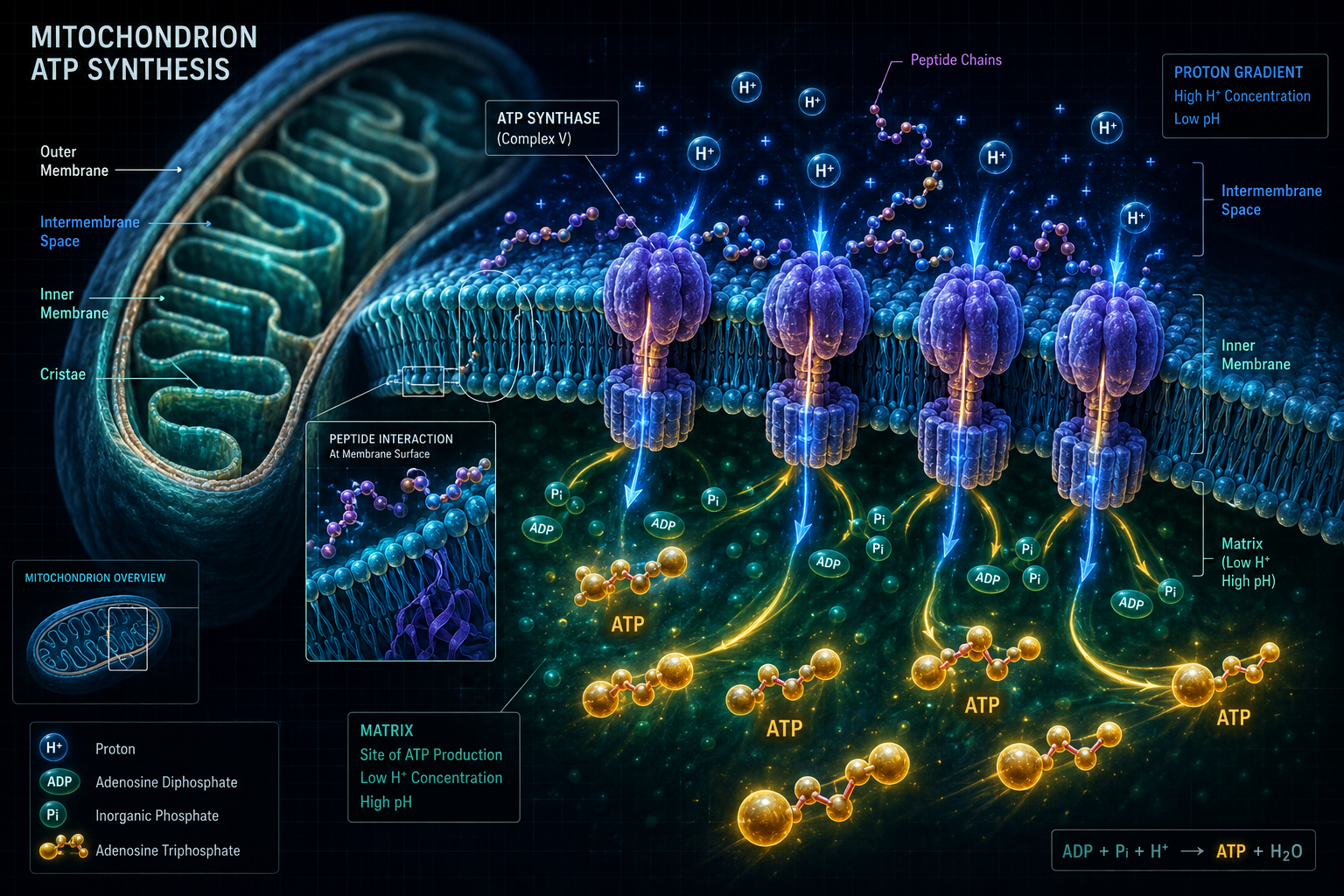
ATP is produced primarily inside the mitochondria through a process called oxidative phosphorylation. The inner mitochondrial membrane houses ATP synthase complexes that harness the energy from a proton gradient to convert ADP into ATP. This continuous cycle of synthesis and hydrolysis drives muscle contraction, protein synthesis, ion transport, and virtually every other energy-demanding cellular event.
What makes ATP especially relevant to peptide research is its dual role. It functions both as a fuel molecule and as an extracellular signaling agent. When released from cells, ATP activates purinergic receptors, particularly P2 receptors, which regulate tissue responses including inflammation, wound healing, and mechanosensation. Research into mechanosensitive channels such as Piezo1 has shown that ATP release triggered by physical stimuli plays a key role in how tissues adapt to mechanical stress.
Beyond energy transfer, ATP has been shown to suppress the fibrillation of amyloid peptides associated with neurodegenerative conditions such as Alzheimer's disease. This finding positions ATP not merely as a passive fuel but as an active modulator of peptide behavior in biological systems.
Key ATP functions at a glance:
| Function | Mechanism |
|---|---|
| Energy transfer | Phosphate bond hydrolysis |
| Cell signaling | Purinergic receptor activation |
| Peptide modulation | Amyloid fibrillation suppression |
| Skin cell regulation | Calcium mobilization in keratinocytes |
How Peptides Influence the Role of Adenosine Triphosphate (ATP) in Cellular Energy Research
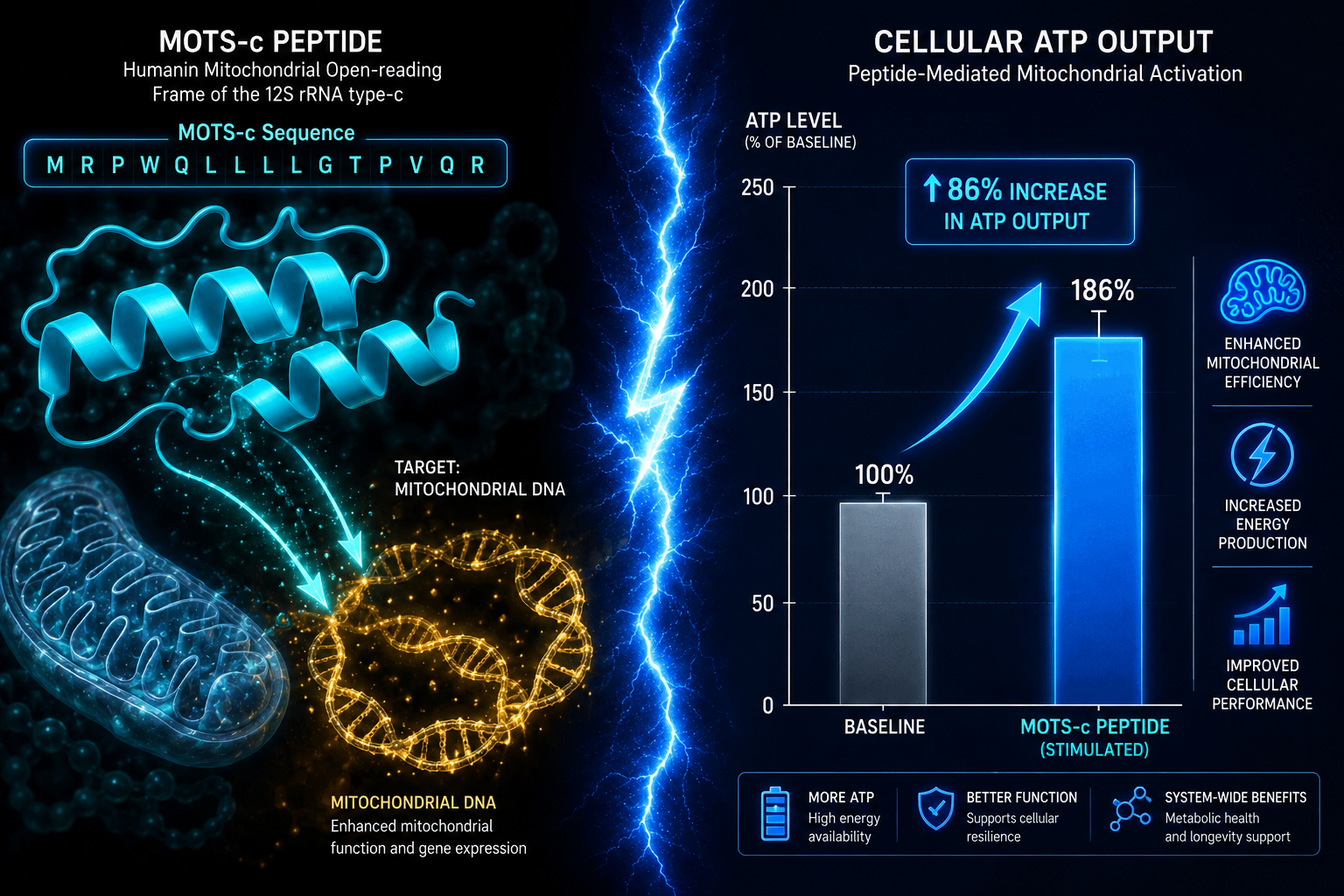
Peptides are not passive bystanders in energy metabolism. Several research-grade peptides interact directly with mitochondrial function and ATP output. Among the most studied is MOTS-c, a mitochondria-derived peptide encoded within mitochondrial DNA. Research on MOTS-c and mitochondrial dynamics shows that this peptide translocates to the nucleus under metabolic stress, where it activates pathways that restore ATP production efficiency.
MOTS-c is particularly notable because it appears to act as a retrograde signal from the mitochondria to the nucleus, coordinating the cell's response to energy deficits. This places it at the center of the peptide-ATP relationship. Research on MOTS-c and metabolic stress responses further supports its role in maintaining mitochondrial homeostasis during oxidative challenge.
Another well-researched peptide in this context is SS-31 (elamipretide). This tetrapeptide targets cardiolipin on the inner mitochondrial membrane, stabilizing the architecture needed for efficient ATP synthase function. Detailed SS-31 mitochondrial research themes document how this peptide reduces mitochondrial membrane potential loss and preserves ATP output under conditions of oxidative stress. Related work on SS-31 mitochondrial dynamics reinforces these findings across multiple tissue models.
GHK-Cu also appears in this research landscape. Studies reviewed in GHK-Cu longevity research themes suggest this copper-binding tripeptide supports mitochondrial gene expression, indirectly supporting ATP production capacity in aging tissue models.
Research Applications and the Broader Significance of ATP-Peptide Interactions

The role of adenosine triphosphate (ATP) in peptide-mediated cellular energy research extends well beyond basic science. Oral ATP supplementation studies have demonstrated measurable improvements in strength, power output, fatigue reduction, and cardiovascular efficiency, suggesting that systemic ATP availability is a modifiable variable in performance and recovery research.
Bioelectronic applications have also emerged. ATPases, the enzymes that hydrolyze ATP, have been integrated into hybrid biological-electronic devices capable of converting chemical energy into electrical signals. Tandem mass spectrometry has advanced understanding of ATPase catalytic mechanisms at the molecular level, enabling more precise research into how peptides modulate these enzymes.
For researchers exploring the intersection of longevity and mitochondrial health, the connection between NAD+ metabolism and ATP synthesis is equally important. Reviewing NAD+ scientific evidence provides context for how upstream cofactors feed into ATP production pathways, and how peptides may amplify those effects.
Additionally, mitochondrial longevity focus research highlights the growing interest in peptides that target mitochondrial biogenesis as a strategy for extending cellular healthspan.
Conclusion
The relationship between ATP and peptide signaling is one of the most consequential areas in current cellular energy research. ATP is not simply a fuel molecule. It is a dynamic regulator of peptide behavior, mitochondrial function, and intercellular communication. Peptides such as MOTS-c and SS-31 demonstrate that targeted molecular interventions can meaningfully influence ATP production, opening research pathways relevant to aging, metabolic disease, and tissue repair.
Actionable next steps for researchers:
- Review published data on SS-31 and MOTS-c mechanisms before designing mitochondrial energy studies.
- Consider the interplay between NAD+ pathways and ATP synthesis when evaluating peptide protocols.
- Examine mechanosensitive ATP release pathways when studying tissue-level peptide effects.
- Source research-grade peptides from verified suppliers to ensure assay reliability and reproducibility.
Understanding the full scope of ATP's role in peptide-mediated cellular energy research is not optional for serious investigators. It is the foundation upon which meaningful experimental design is built.
Leave a Reply
Want to join the discussion?Feel free to contribute!