

A 28% average body weight reduction over 18 months, that figure, emerging from Phase 3 clinical data on retatrutide, rivals outcomes typically seen only with bariatric surgery. For researchers tracking the evolution of metabolic peptide science, this GLP-3 Retatrutide vs. GLP-1 Receptor Agonists: A Comprehensive Research Review examines what sets retatrutide apart from established GLP-1 therapies, how their mechanisms diverge, and what the latest trial data reveals about their comparative potential.
Key Takeaways
- Retatrutide is a triple agonist targeting GIP, GLP-1, and glucagon receptors, a fundamentally different mechanism from single GLP-1 receptor agonists.
- Phase 3 data shows retatrutide achieving approximately 28% body weight reduction, surpassing current GLP-1 benchmarks.
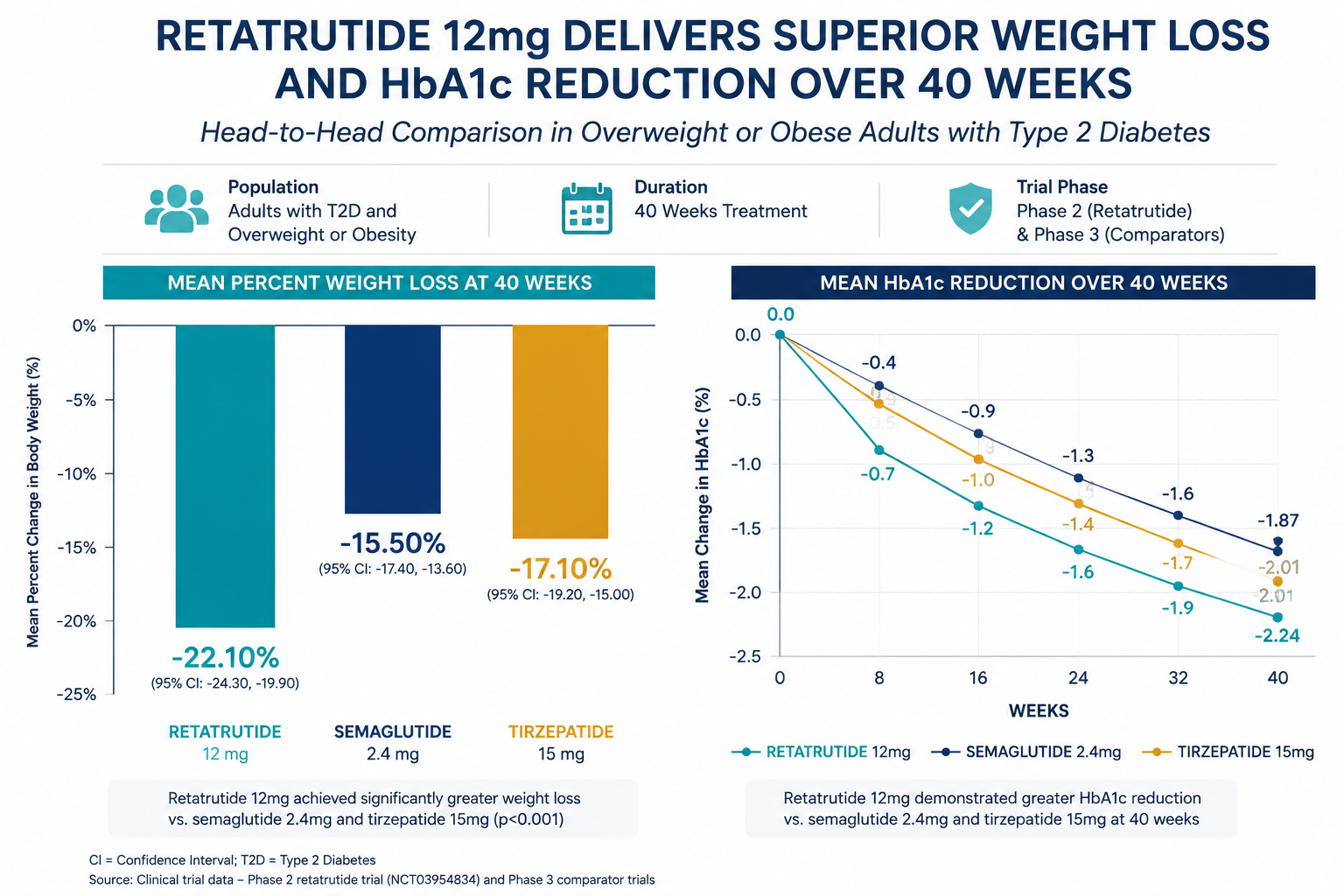
- A network meta-analysis found retatrutide 12 mg produced a 22.10% body weight reduction, outperforming all compared GLP-1 receptor agonists.
- Phase 2 trials reported HbA1c reductions of up to 1.94% and body weight reductions up to 15.3% over 40 weeks in type 2 diabetes subjects.
- Gastrointestinal side effects were mild to moderate and diminished over time, with no severe hypoglycemia reported.
Mechanism of Action: How Retatrutide Differs from GLP-1 Receptor Agonists
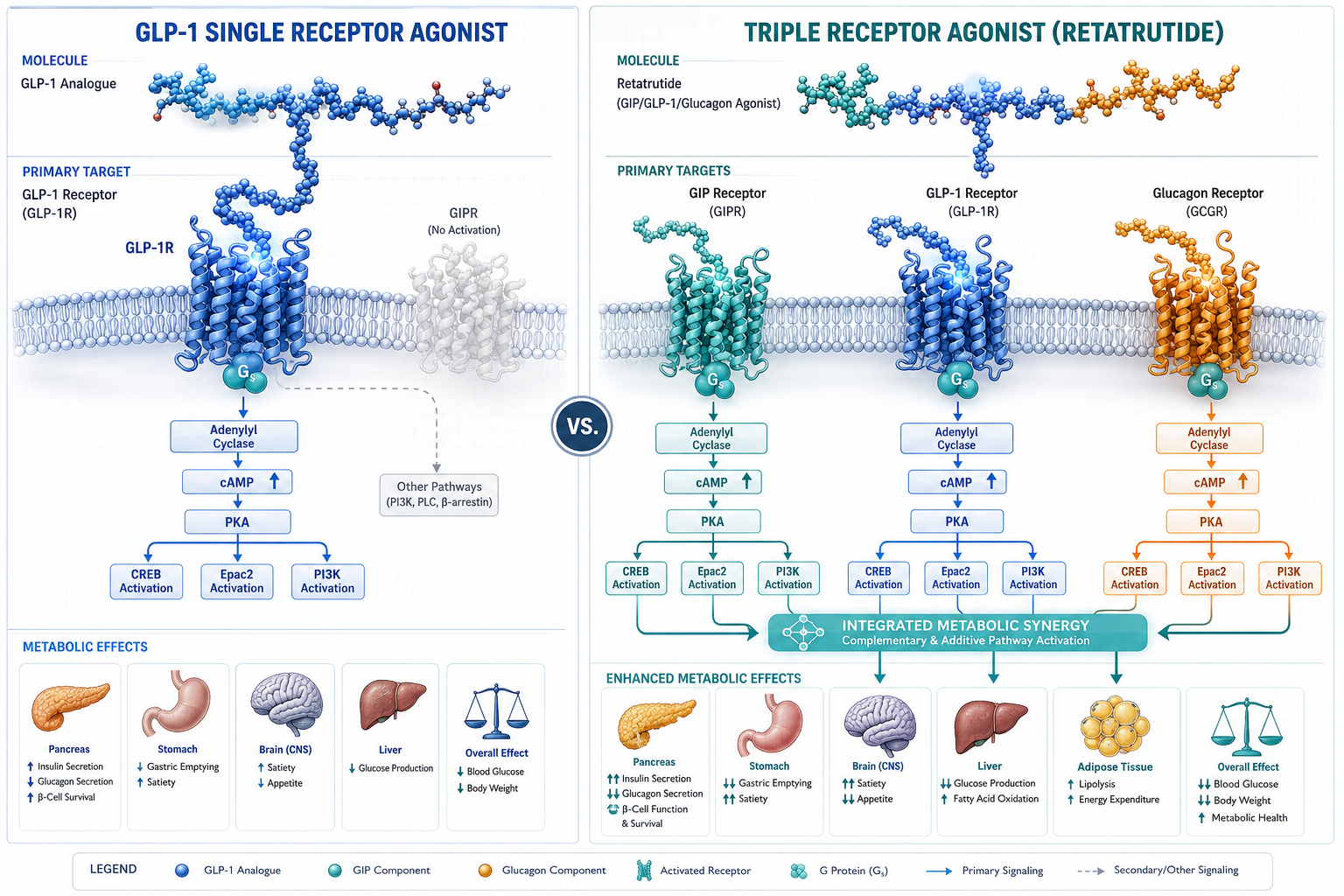
Understanding the GLP-3 Retatrutide vs. GLP-1 Receptor Agonists: A Comprehensive Research Review begins at the receptor level. Standard GLP-1 receptor agonists, such as semaglutide and liraglutide, work by binding exclusively to glucagon-like peptide-1 receptors. This drives insulin secretion, suppresses glucagon release, and slows gastric emptying, producing meaningful but bounded metabolic effects.
Retatrutide operates on an entirely different scale. It is a 39-amino acid peptide engineered as a triple agonist, simultaneously activating three receptor types:
- GIP (Glucose-dependent Insulinotropic Polypeptide) receptors, enhancing insulin sensitivity and fat metabolism
- GLP-1 receptors, regulating appetite, glucose, and gastric motility
- Glucagon receptors, increasing energy expenditure and promoting hepatic fat oxidation
"The inclusion of glucagon receptor agonism is considered a significant advancement, it adds a thermogenic and lipolytic dimension that single-target GLP-1 agents simply cannot replicate."
This multi-receptor engagement is why researchers exploring GLP-3 retatrutide research are paying close attention. The glucagon component, in particular, drives enhanced energy expenditure, which may explain retatrutide's outsized weight loss results compared to dual or single agonists. Researchers interested in related metabolic peptide mechanisms may also find value in reviewing AOD9604 metabolic research themes for comparative context on fat-targeted peptide signaling.
Clinical Trial Data: What the Research Shows
The clinical evidence in this GLP-3 Retatrutide vs. GLP-1 Receptor Agonists: A Comprehensive Research Review paints a compelling picture across multiple trial phases.
Phase 2 Findings
In a Phase 2 trial focused on individuals with type 2 diabetes, retatrutide demonstrated:
| Outcome Measure | Result |
|---|---|
| Mean HbA1c reduction | Up to 1.94% |
| Mean body weight reduction | Up to 15.3% |
| Trial duration | 40 weeks |
| Severe hypoglycemia events | None reported |
These results were notable not only for their magnitude but for the absence of serious glycemic complications, a key safety consideration in diabetic populations.
Phase 3 Findings
The Phase 3 trial expanded the scope to a broader population with obesity or overweight conditions. The headline result, approximately 28% average weight loss over 18 months, placed retatrutide in a category previously occupied only by surgical interventions.
A separate systematic review and network meta-analysis reinforced these findings, reporting that retatrutide 12 mg produced a 22.10% reduction in body weight and a 17.00 cm decrease in waist circumference, outperforming all other GLP-1 receptor agonists and polyagonists included in the analysis.
For researchers also studying body composition peptides, the TESA body composition research themes and IPA muscle and fat research themes offer relevant comparative frameworks.
Safety Profile
The most frequently reported adverse events were mild to moderate gastrointestinal symptoms, nausea, vomiting, and diarrhea, consistent with the GLP-1 class profile. Importantly, these effects tended to subside as the trial progressed. No severe hypoglycemia was observed across the trials reviewed.

Comparative Efficacy and Research Implications
When mapping the landscape of incretin-based therapies, the data consistently positions retatrutide above current GLP-1 benchmarks. The table below summarizes the key comparative differences:
| Feature | GLP-1 Agonists | Retatrutide (Triple Agonist) |
|---|---|---|
| Receptor targets | GLP-1 only | GIP + GLP-1 + Glucagon |
| Average weight loss | 10-15% | Up to 28% |
| Thermogenic effect | Minimal | Enhanced via glucagon axis |
| Regulatory status (2026) | FDA approved (various) | Late-stage trials; FDA submission anticipated |
As of 2026, Eli Lilly continues late-stage trials with an anticipated FDA submission by year-end. Analysts project that approval could position retatrutide as a leading therapy across obesity, type 2 diabetes, and metabolic liver disease.
Researchers exploring the broader peptide landscape may find useful context in what is new in peptide research and the GLP-1 Retatrutide research product page. Those interested in metabolic synergy combinations may also review CJC and IPA synergy research themes for adjacent growth hormone axis considerations.
For researchers sourcing verified research-grade material, the GLP-3 Retatrutide 10mg product listing provides specification details relevant to preclinical study design.
Conclusion
The evidence reviewed here makes a clear case: retatrutide represents a meaningful step beyond conventional GLP-1 receptor agonist therapy. Its triple-receptor mechanism, particularly the addition of glucagon receptor agonism, produces weight loss outcomes that current single-target agents cannot match. Phase 2 and Phase 3 data both support its superior efficacy in reducing body weight and improving glycemic control, with a manageable safety profile.
Actionable next steps for researchers:
- Review the full Phase 2 and Phase 3 trial datasets to assess applicability to specific research populations.
- Compare retatrutide's glucagon receptor activity against established metabolic peptides to identify potential synergy or overlap.
- Monitor FDA submission timelines closely, as approval would significantly expand the translational research landscape.
- Explore innovative peptide delivery systems to understand how formulation advances may affect retatrutide's future clinical utility.
The gap between GLP-1 agonists and triple agonists like retatrutide is not incremental, it is structural. Researchers who map that gap now will be best positioned when the regulatory landscape shifts.
Leave a Reply
Want to join the discussion?Feel free to contribute!