Call or Text 727-513-9780
  • Shopping Cart Shopping Cart
    0Shopping Cart
Pure Tested Peptides | America's most trusted Peptides for sale online
  • Peptides for sale
    • Oral Peptides for sale
      • Peptide Capsules for sale
      • BPC 157 Capsules 1000mcg
      • SLU-PP-332 Capsules | 1000 mcg
      • 5-Amino-1MQ 50mg Capsules
      • Tesofensine 500mcg
    • All Peptides for sale
    • Peptide Sprays
      • BPC 157 Nasal Spray Kit
      • BPC-157 TB500 Nasal Spray Kit
      • Semax Nasal Spray 10mg
      • Selank – Nasal Spray Kit – 10mg
      • Epithalon 50MG Nasal Spray Kit
      • Ipamorelin 10mg Nasal Spray
      • Klow Nasal Spray (BPC-157 + TB-500 + GHK-Cu + KPV) | 80mg
      • Hulk Nasal Spray Tesa / Ipa Blend 6/3 MG
      • Klow Nasal Spray
      • NAD + 500 mg Nasal Spray
      • PT-141 Nasal Spray Kit
    • GHRH Peptides
      • Ipa Peptides
      • CJC-1295 Peptides
        • CJC-1295 with DAC 5 mg
        • CJC-1295 without DAC 5 mg
        • CJC-1295 Ipa 10mg
      • Tesa Peptides
        • Tesa Peptide
        • Tesa 20 mg
    • GHK-Cu Peptides
      • All GHK-Cu Peptides
      • GHK-Cu 100mg
      • KLOW Peptide Blend – Buy KLOW blend online
    • BPC Peptides
      • All BPC Peptides
      • BPC-157
      • BPC-157 TB-500
      • BPC 157 capsules 1000mcg
    • SLU-PP-332 Peptides
      • All SLU-PP-332 Peptides
      • SLU-PP-332 5mg
    • GLP3 Peptides
      • GLP3-R
      • GLP3-R CAG 10mg
      • GLP3-R 20mg
    • PT-141 Peptides
      • PT-141 Peptides for sale
      • PT-141 10mg
      • PT-141 Nasal Spray
    • CAG Peptides
      • Lipo-C Peptide Blend
      • CAG 5mg
      • CAG 10mg
    • MOTS-C Peptides
      • MOTS-C Peptides for sale
      • MOTS-c peptide
      • MOTS-c 10mg *6 pack*
    • 5 Amino 1MQ Peptides
      • 5 Amino 1MQ Peptides for sale
      • 5-Amino-1MQ 50mg Capsules
      • 5-Amino-1MQ 5mg
    • Epithalon Peptides
      • Epithalon Peptides for sale
      • Epithalon 10mg
      • Epithalon 50mg
  • Shop
    • GLPs
      • 5-Amino-1MQ 50mg Capsules
      • 5-Amino-1MQ 5mg
      • GLP3-Reta
      • L-Carnitine 500mg/ml
      • Tesofensine 500mcg
      • SLU-PP-332 5mg
      • MOTS-c 10mg *6 pack*
    • Epithalon & BPC Peptides
      • Epithalon 10mg
      • Epithalon 50mg
      • BPC-157
      • BPC 157 capsules 1000mcg
      • BPC-157 TB-500
      • BPC-157 TB500 Nasal Spray Kit
      • BPC 157 Nasal Spray Kit
    • BPC TB-500 & NAD+ Peptides
      • NAD+ 500 mg
      • KLOW Peptide Blend – Buy KLOW blend online
      • GLOW Peptide Blend
      • TB 500 5mg
      • BPC 157 capsules 1000mcg – Supplement
      • BPC 157 Nasal Spray Kit
      • BPC-157
      • BPC-157 TB500 Nasal Spray Kit
      • BPC-157 TB-500
      • BPC 157 capsules 1000mcg
    • LL-37 Peptide
      • LL-37 10 mg
    • MOTS-C & Selank
      • MOTS-c peptide
      • Selank 10mg
    • GHK Peptides
      • GHK-Cu 100mg
      • GLOW Peptide Blend
      • KLOW Peptide Blend – Buy KLOW blend online
  • COAs
  • Wholesale
    • Wholesale Peptides for sale
  • PTP FAQ
  • Affiliates
    • Selank Peptide: Advanced Pharmacological Mechanisms Underlying Its Anxiolytic and Nootropic Effects in Research
      • 5-Amino-1MQ Peptide: Detailed Mechanisms of NNMT Inhibition and Its Impact on Cellular Metabolism Research
        • MOTS-C Peptide: Unraveling Its Role in Mitochondrial Dynamics and Energy Metabolism Research
          • Epithalon Peptide and Telomerase Regulation: Investigating Its Impact on Cellular Senescence and Lifespan Research Models
            • GLP2-T vs GLP2 Tirz Peptide: Understanding the Naming, Mechanistic Nuances, and Research Implications for Gut Health
      • Peptides and Polypeptides in Modern Pharmacology: What Research on Metoprolol, Prednisone, and Amlodipine Reveals
        • Polypeptide Peptides vs NSAIDs: What Naproxen and Diclofenac Teach Tissue-Repair Researchers About BPC‑157 and TB‑500
          • Peptides and Polypeptides in Endocrine Pharmacology: How GLP-1, GLP-2, and GLP-3 Retatrutide Differ From Classic Drugs Like Prednisone and Amlodipine
          • 5‑Amino‑1MQ Peptide and NNMT Inhibition: How It Compares With Statins Like Atorvastatin in Adipose and Lipid Metabolism Research
      • Enclomiphene, Estrogen Receptor Signaling, and Luteinizing Phase Biology: What Hormone Researchers Should Measure
        • Mesenchymal Stem Cells, BPC‑157, and GHK‑Cu: How Tissue Repair Peptides Compare With Classic NSAIDs Like Naproxen in Injury Models
          • Peptide Calculator Use Cases Beyond Growth Hormone: Working Through GLP‑3 Retatrutide, MOTS‑c, and BPC‑157 Research Dosing
        • Polypeptide Peptides in Endocrine and Metabolic Pharmacology: Lessons From Amlodipine, Prednisone, and Metoprolol
        • Peptides Calculator for Advanced Blends: Worked Examples for Tesamorelin, CJC‑1295, and Ipamorelin Stacks
          • Peptides and Polypeptides in Human Physiology: How Molecular Size Shapes Research Applications
            • Selank Peptide: Advanced Pharmacological Mechanisms Underlying Its Anxiolytic and Nootropic Effects in Research
          • 5-Amino-1MQ Peptide: Detailed Mechanisms of NNMT Inhibition and Its Impact on Cellular Metabolism Research
            • MOTS-C Peptide: Unraveling Its Role in Mitochondrial Dynamics and Energy Metabolism Research
              • Epithalon Peptide and Telomerase Regulation: Investigating Its Impact on Cellular Senescence and Lifespan Research Models
                • GLP2-T vs GLP2 Tirz Peptide: Understanding the Naming, Mechanistic Nuances, and Research Implications for Gut Health
                  • Peptides and Polypeptides in Endocrine Pharmacology: How GLP-1, GLP-2, and GLP-3 Retatrutide Differ From Classic Drugs Like Prednisone and Amlodipine
                    • Polypeptide Peptides vs NSAIDs: What Naproxen and Diclofenac Teach Tissue-Repair Researchers About BPC‑157 and TB‑500
                      • Peptides and Polypeptides in Modern Pharmacology: What Research on Metoprolol, Prednisone, and Amlodipine Reveals
                        • 5‑Amino‑1MQ Peptide and NNMT Inhibition: How It Compares With Statins Like Atorvastatin in Adipose and Lipid Metabolism Research
                        • Enclomiphene, Estrogen Receptor Signaling, and Luteinizing Phase Biology: What Hormone Researchers Should Measure
                        • Mesenchymal Stem Cells, BPC‑157, and GHK‑Cu: How Tissue Repair Peptides Compare With Classic NSAIDs Like Naproxen in Injury Models
                        • Peptide Calculator Use Cases Beyond Growth Hormone: Working Through GLP‑3 Retatrutide, MOTS‑c, and BPC‑157 Research Dosing
                        • Polypeptide Peptides in Endocrine and Metabolic Pharmacology: Lessons From Amlodipine, Prednisone, and Metoprolol
                        • Peptides Calculator for Advanced Blends: Worked Examples for Tesamorelin, CJC‑1295, and Ipamorelin Stacks
                        • Peptides and Polypeptides in Human Physiology: How Molecular Size Shapes Research Applications
                        • Selank Peptide: Advanced Pharmacological Mechanisms Underlying Its Anxiolytic and Nootropic Effects in Research
                        • MOTS-C Peptide: Unraveling Its Role in Mitochondrial Dynamics and Energy Metabolism Research
                        • Peptides and Polypeptides in Modern Pharmacology: What Research on Metoprolol, Prednisone, and Amlodipine Reveals
                        • Peptides and Polypeptides in Endocrine Pharmacology: How GLP-1, GLP-2, and GLP-3 Retatrutide Differ From Classic Drugs Like Prednisone and Amlodipine
                        • 5-Amino-1MQ Peptide: Detailed Mechanisms of NNMT Inhibition and Its Impact on Cellular Metabolism Research
                        • Mesenchymal Stem Cells, BPC‑157, and GHK‑Cu: How Tissue Repair Peptides Compare With Classic NSAIDs Like Naproxen in Injury Models
                        • Peptide Calculator Use Cases Beyond Growth Hormone: Working Through GLP‑3 Retatrutide, MOTS‑c, and BPC‑157 Research Dosing
                        • GLP2-T vs GLP2 Tirz Peptide: Understanding the Naming, Mechanistic Nuances, and Research Implications for Gut Health
                        • Polypeptide Peptides in Endocrine and Metabolic Pharmacology: Lessons From Amlodipine, Prednisone, and Metoprolol
                        • Polypeptide Peptides vs NSAIDs: What Naproxen and Diclofenac Teach Tissue-Repair Researchers About BPC‑157 and TB‑500
                        • Peptides and Polypeptides in Human Physiology: How Molecular Size Shapes Research Applications
                        • Peptides Calculator for Advanced Blends: Worked Examples for Tesamorelin, CJC‑1295, and Ipamorelin Stacks
                        • 5‑Amino‑1MQ Peptide and NNMT Inhibition: How It Compares With Statins Like Atorvastatin in Adipose and Lipid Metabolism Research
                        • Enclomiphene, Estrogen Receptor Signaling, and Luteinizing Phase Biology: What Hormone Researchers Should Measure
                        • Epithalon Peptide and Telomerase Regulation: Investigating Its Impact on Cellular Senescence and Lifespan Research Models
                        • Best research protocol Klow blend
                        • best time to take BPC-157
                        • best time to take DSIP (Delta Sleep Inducing Peptide)
                        • best time to take CJC-1295
                        • best time to take AOD-9604
                        • best time to take Follistatin 344
                        • best time to take Ipamorelin
                        • best time to take MK-677 (Ibutamoren)
                        • best time to take Ligandrol (LGD-4033) — research compound
                        • best time to take Ostarine (MK-2866) — research compound
                        • best time to take GHK-CU
                        • best time to take TB-500
                        • best time to take MOTS-c
                        • best time to take Semax
                        • best time to take RAD-140 (Testolone) — research compound
                        • best time to take Thymosin Alpha-1
                        • best time to take PEG-MGF
                        • Biolife Plasma, Octapharma Plasma, and Research Peptides: How Plasma Donation Labs Differ From Peptide Suppliers
                        • best time to take YK-11 — research compound
                        • best time to take PT-141 (Bremelanotide)
                        • Best research protocol Klow blend
  • Contact
    • Contact Customer Service
    • Text Customer Support
  • About US
  • Shop all peptides
  • Affiliate Program
    • Affiliate Signup
  • Login / Register Login / Register Page Link Login / Register Page Link
  • Click to open the search input field Click to open the search input field Search
  • Menu Menu

Tag Archive for: metabolic peptide research

Retatrutide for Research: Mechanism, Structure, and GLP-1/GLP-3 Dual Action

Retatrutide for Research: Mechanism, Structure, and GLP-1/GLP-3 Dual Action

July 23, 2026/0 Comments/in Uncategorized/by

A single investigational peptide producing near-bariatric levels of weight loss in a Phase 2 trial stopped the metabolic research community in its tracks. That peptide was retatrutide, and understanding Retatrutide for Research: Mechanism, Structure, and GLP-1/GLP-3 Dual Action has become one of the most urgent priorities in 2026 for scientists studying multi-receptor metabolic biology.

Key Takeaways

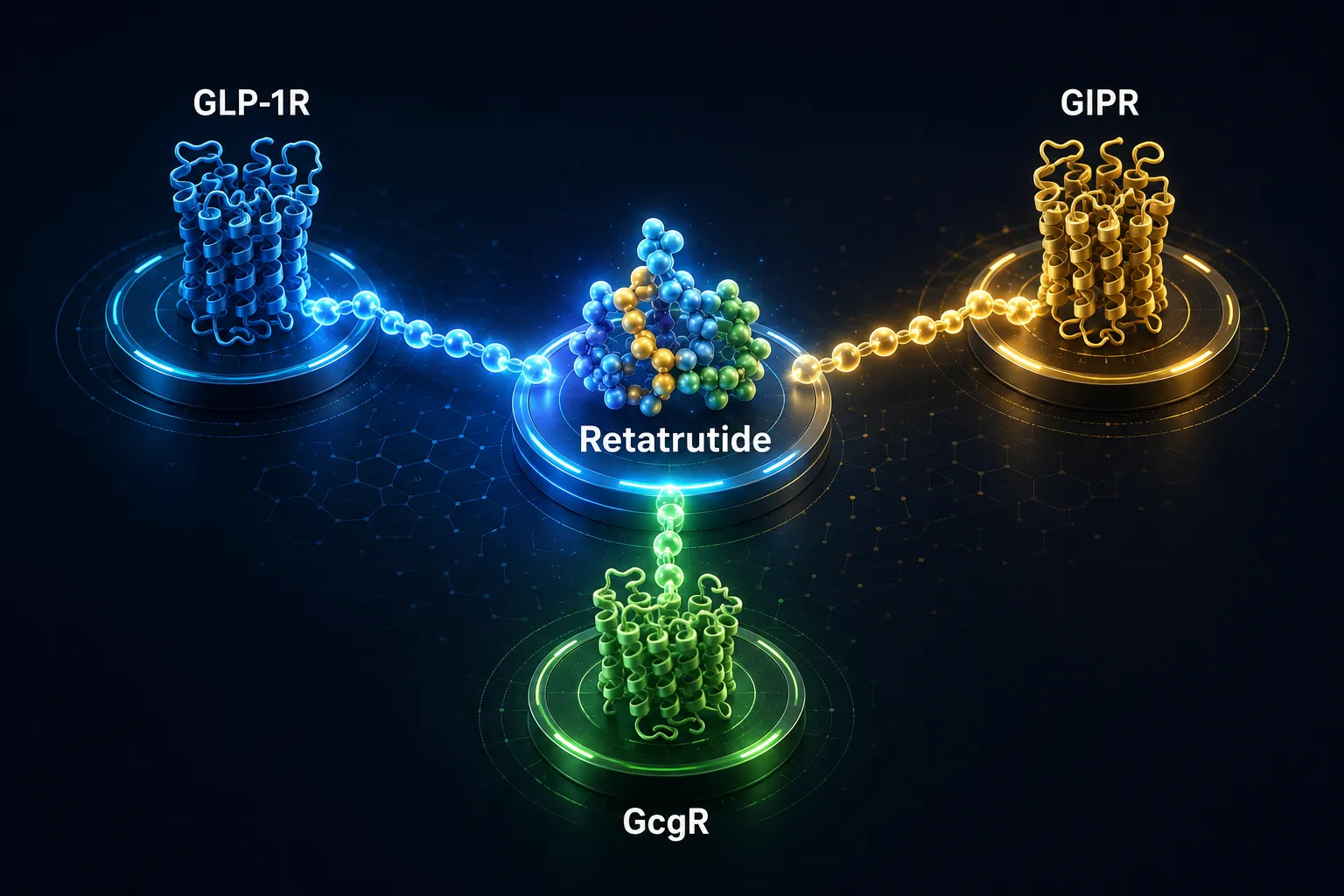
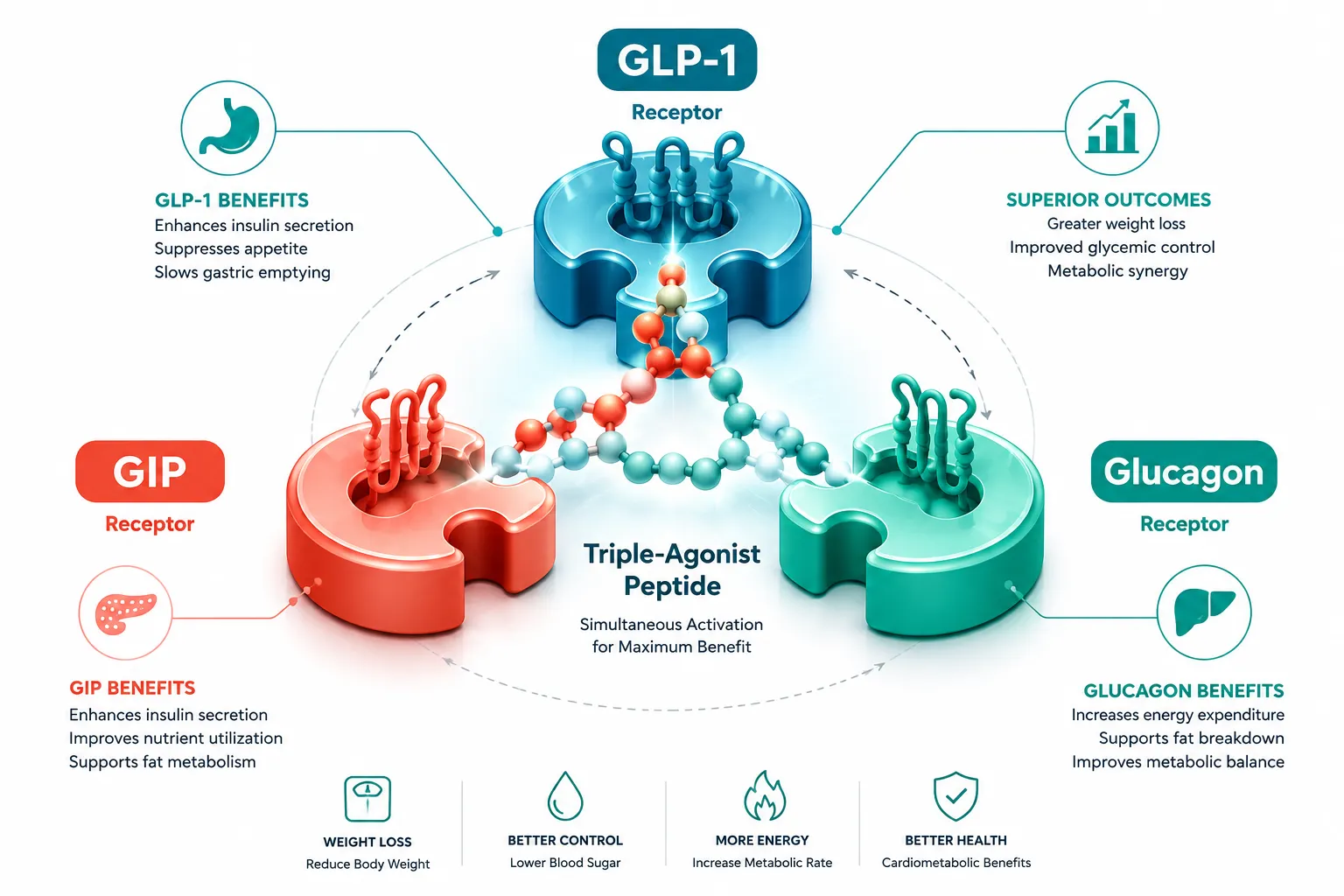
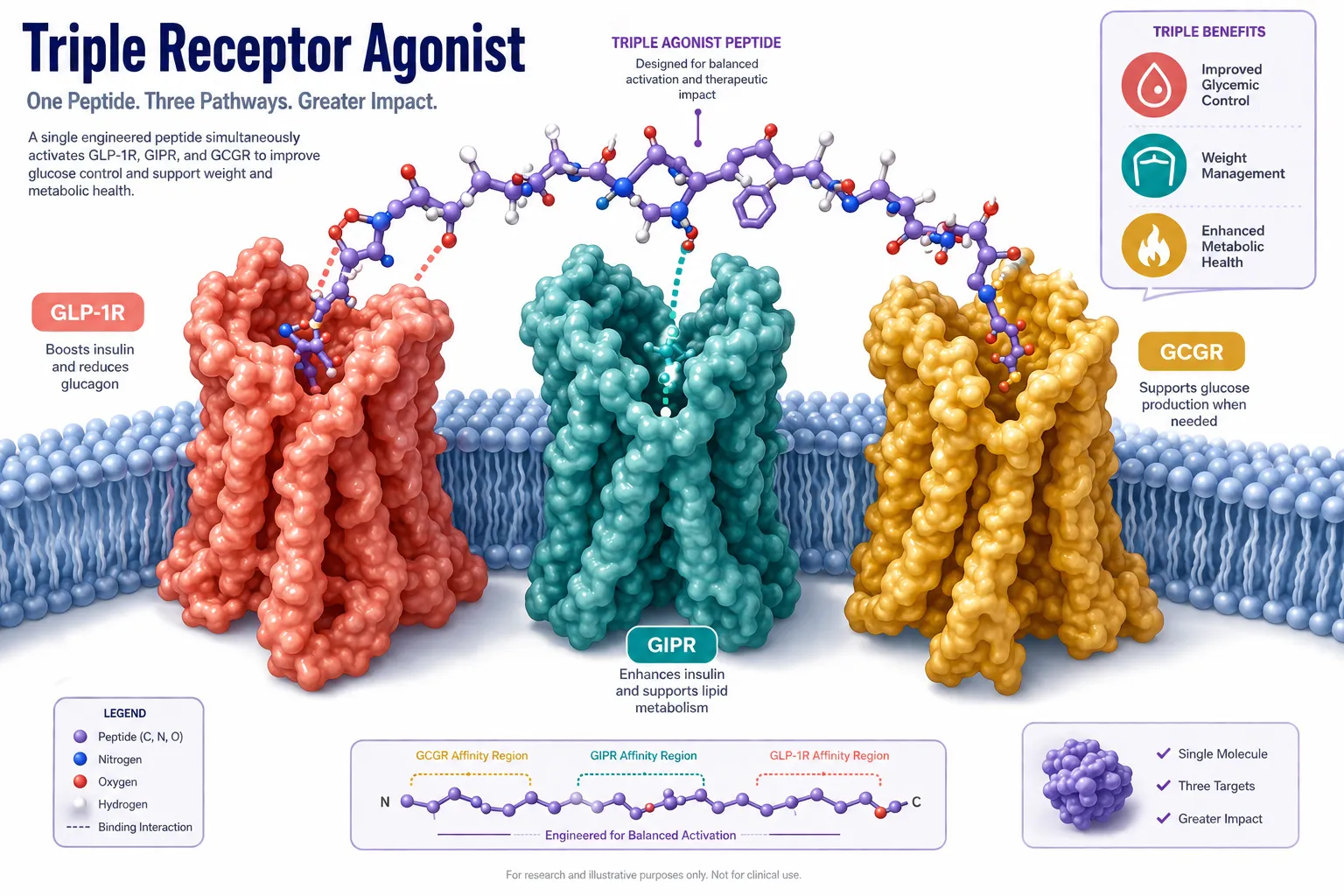
  • Retatrutide is a triple receptor agonist targeting GLP-1R, GIPR, and GCGR simultaneously, not a simple dual GLP-1/GLP-3 agent.
  • Its fatty-acid-modified structure enables a long half-life suitable for once-weekly dosing in research models.
  • Receptor co-activation drives additive and potentially synergistic effects on energy balance, glucose regulation, and lipid metabolism.
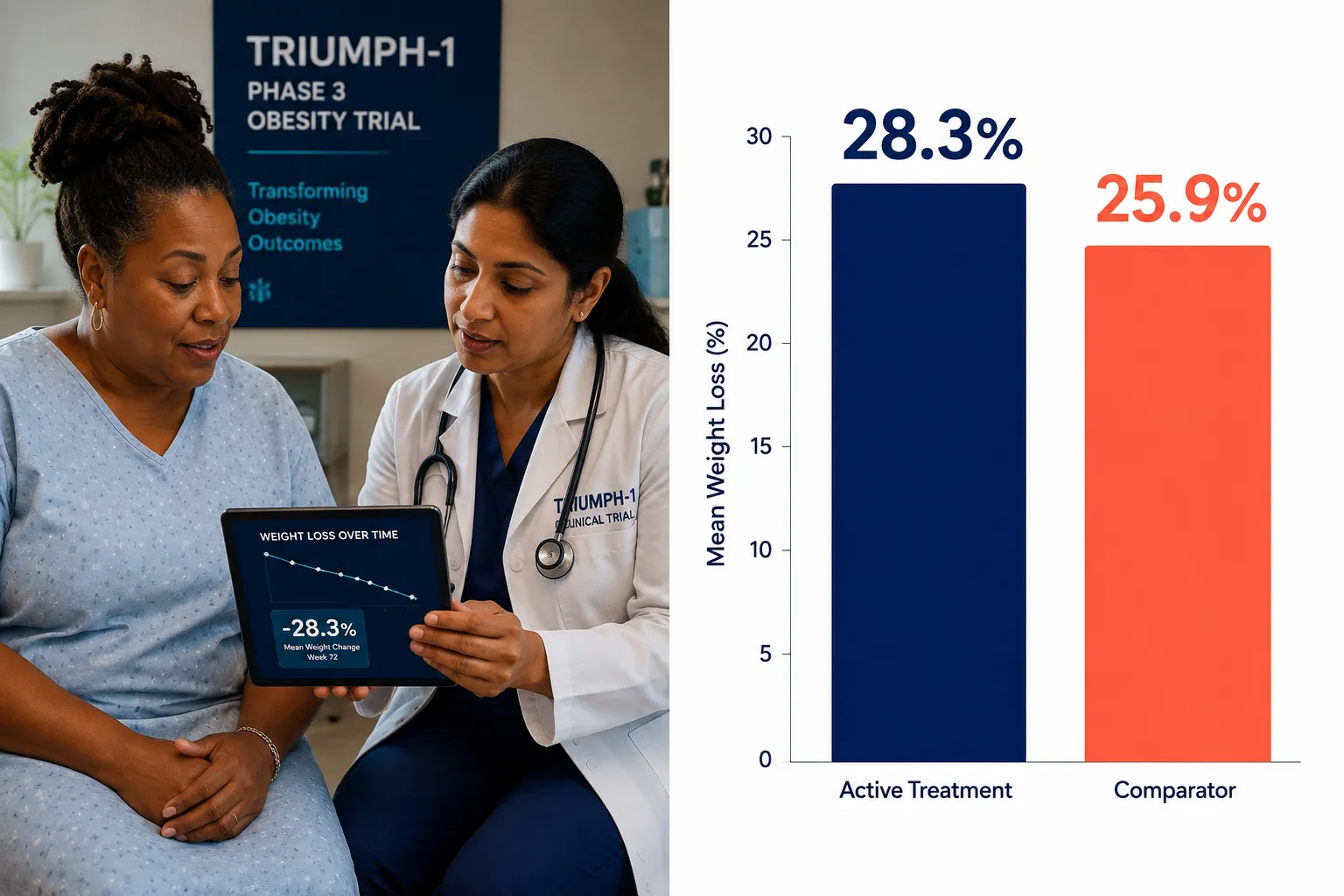
  • Phase 2 data showed up to 24% body weight reduction; Phase 3 trials confirmed late-stage success in obesity and osteoarthritis pain endpoints in December 2025.
  • Researchers tracking multi-agonist peptide science should understand both the structural basis and the downstream cAMP/PKA/EPAC signaling logic.

Key Takeaways

Molecular Structure: What Makes Retatrutide Unique

Retatrutide (LY3437943) is a 39-amino-acid synthetic peptide built on a modified glucagon backbone. Its design incorporates several deliberate structural features that set it apart from earlier incretin-based compounds.

Key structural elements include:

  • A C18 fatty diacid chain attached via a linker to lysine at position 17, enabling albumin binding and extending plasma half-life to approximately 6 days.
  • Strategic amino acid substitutions at positions 2 and 16 that confer resistance to dipeptidyl peptidase-4 (DPP-4) degradation.
  • A C-terminal amide that stabilizes the peptide against exopeptidase activity.
  • Balanced potency across all three target receptors rather than overwhelming selectivity for any single one.

This architecture is what allows researchers studying Retatrutide for Research: Mechanism, Structure, and GLP-1/GLP-3 Dual Action (and full triple agonism) to observe effects that neither a pure GLP-1 agonist nor a pure glucagon agonist could produce alone. For context on how earlier GLP-1 receptor agonists were structured, the GLP-1 incretin research overview provides useful background.

Receptor Potency Profile

Receptor Target Primary Research Role
GLP-1R Incretin axis Insulin secretion, appetite suppression
GIPR Glucose-dependent insulinotropic peptide Insulin potentiation, fat cell signaling
GCGR Glucagon receptor Energy expenditure, hepatic lipid mobilization

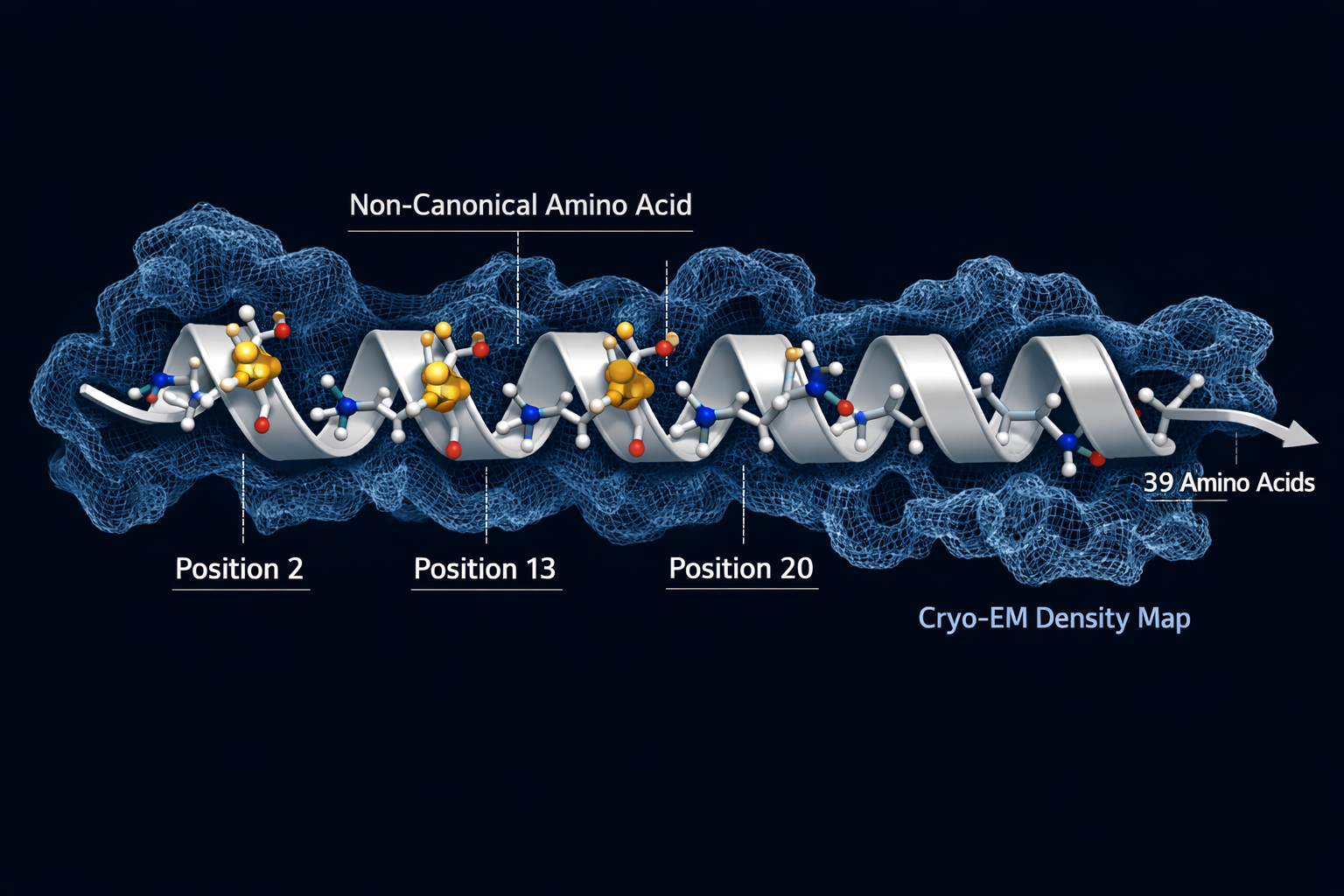
Cryo-EM structural studies have confirmed that retatrutide can engage all three receptor types, with the peptide adopting slightly different helical conformations depending on which receptor it occupies. This structural flexibility is central to its multi-target profile.

Cellular Signaling: cAMP, PKA, and EPAC Pathways

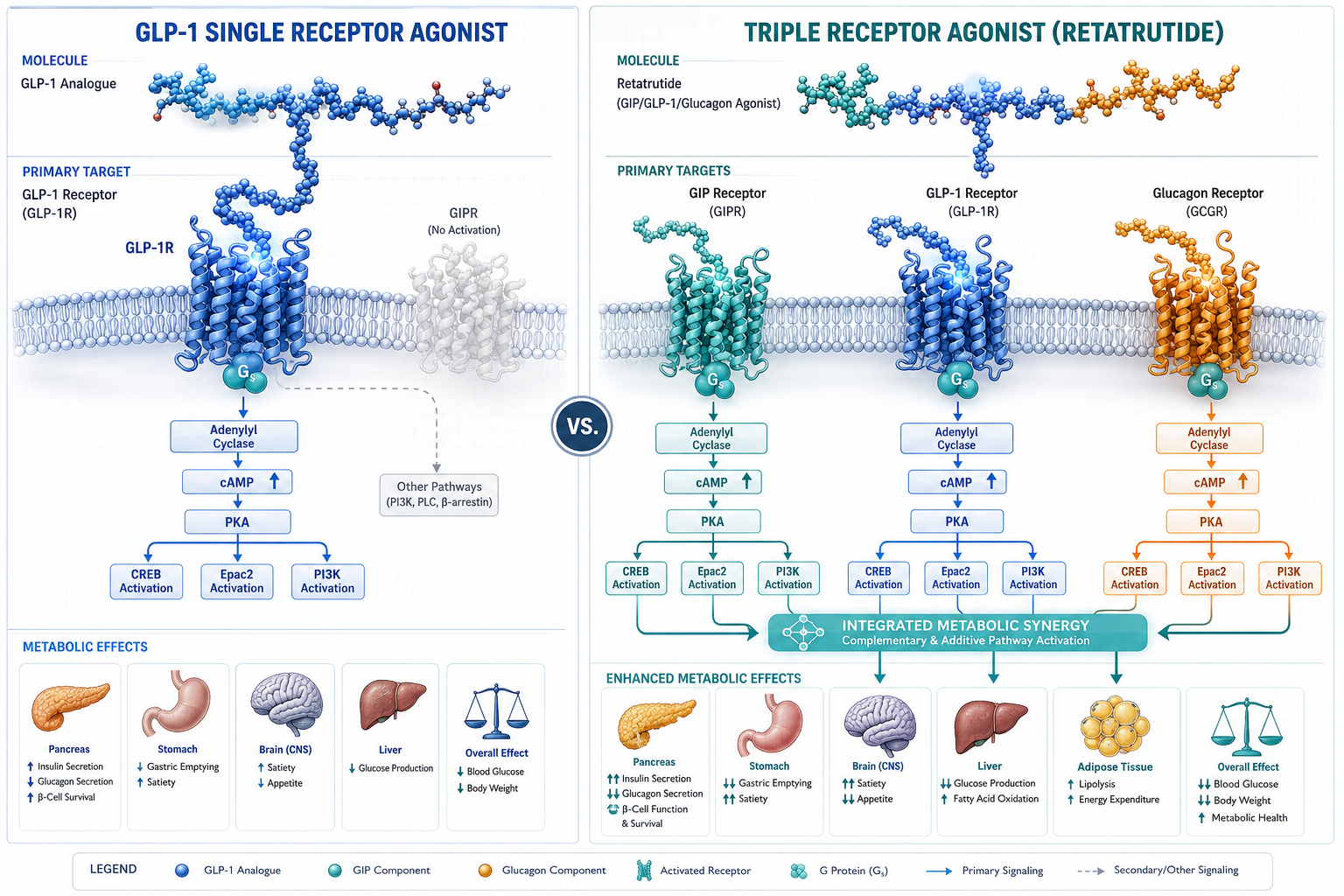
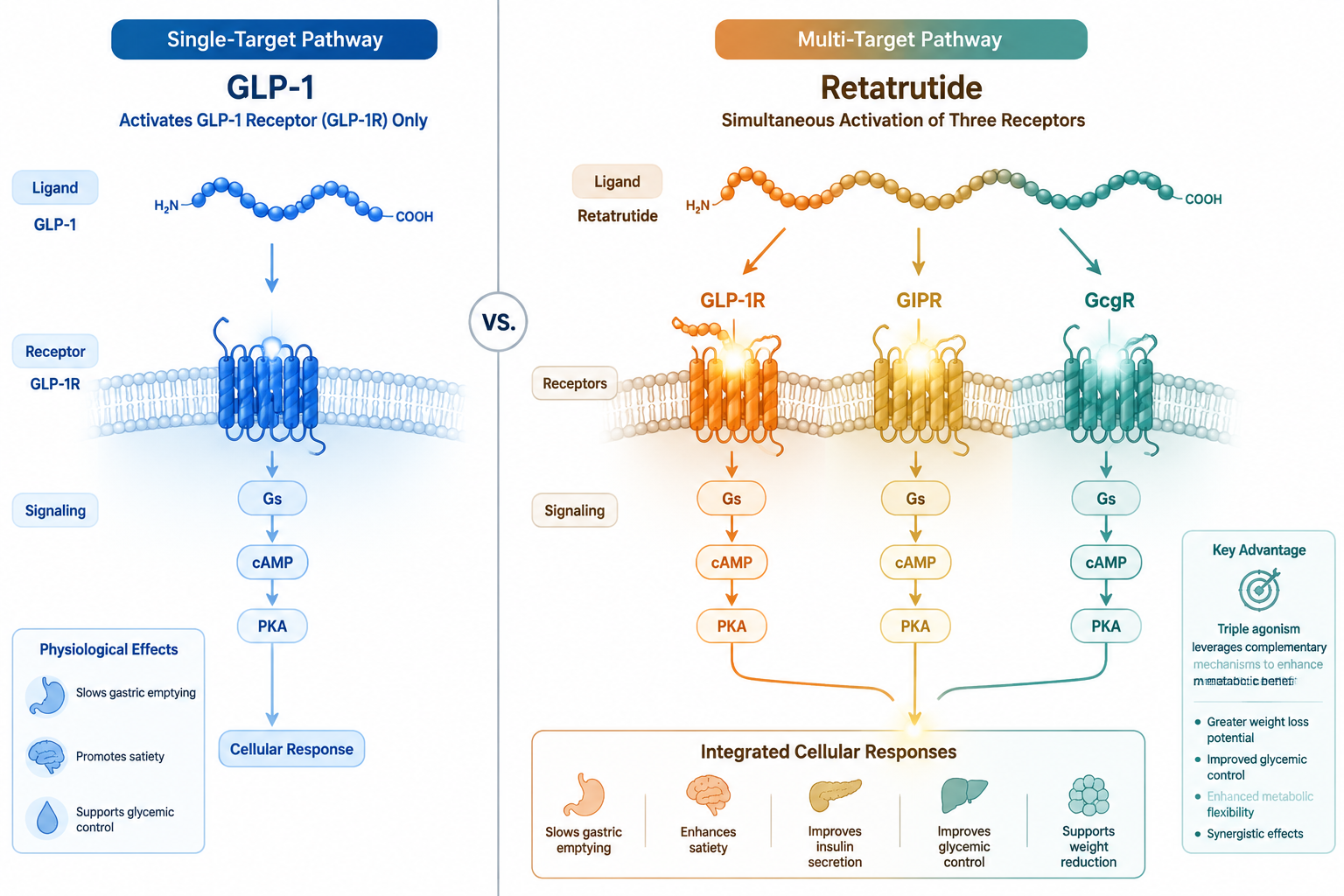
All three receptors targeted by retatrutide are G-protein-coupled receptors (GPCRs) that primarily signal through Gs proteins. When retatrutide binds, the shared downstream logic follows a defined cascade:

  1. Gs protein activation triggers adenylyl cyclase.
  2. Cyclic AMP (cAMP) accumulates intracellularly.
  3. cAMP activates two major effectors: protein kinase A (PKA) and exchange protein directly activated by cAMP (EPAC).
  4. PKA phosphorylates transcription factors and ion channels that regulate insulin gene expression and beta-cell survival.
  5. EPAC modulates vesicle exocytosis and cell adhesion signaling independently of PKA.

Cellular Signaling: cAMP, PKA, and EPAC Pathways

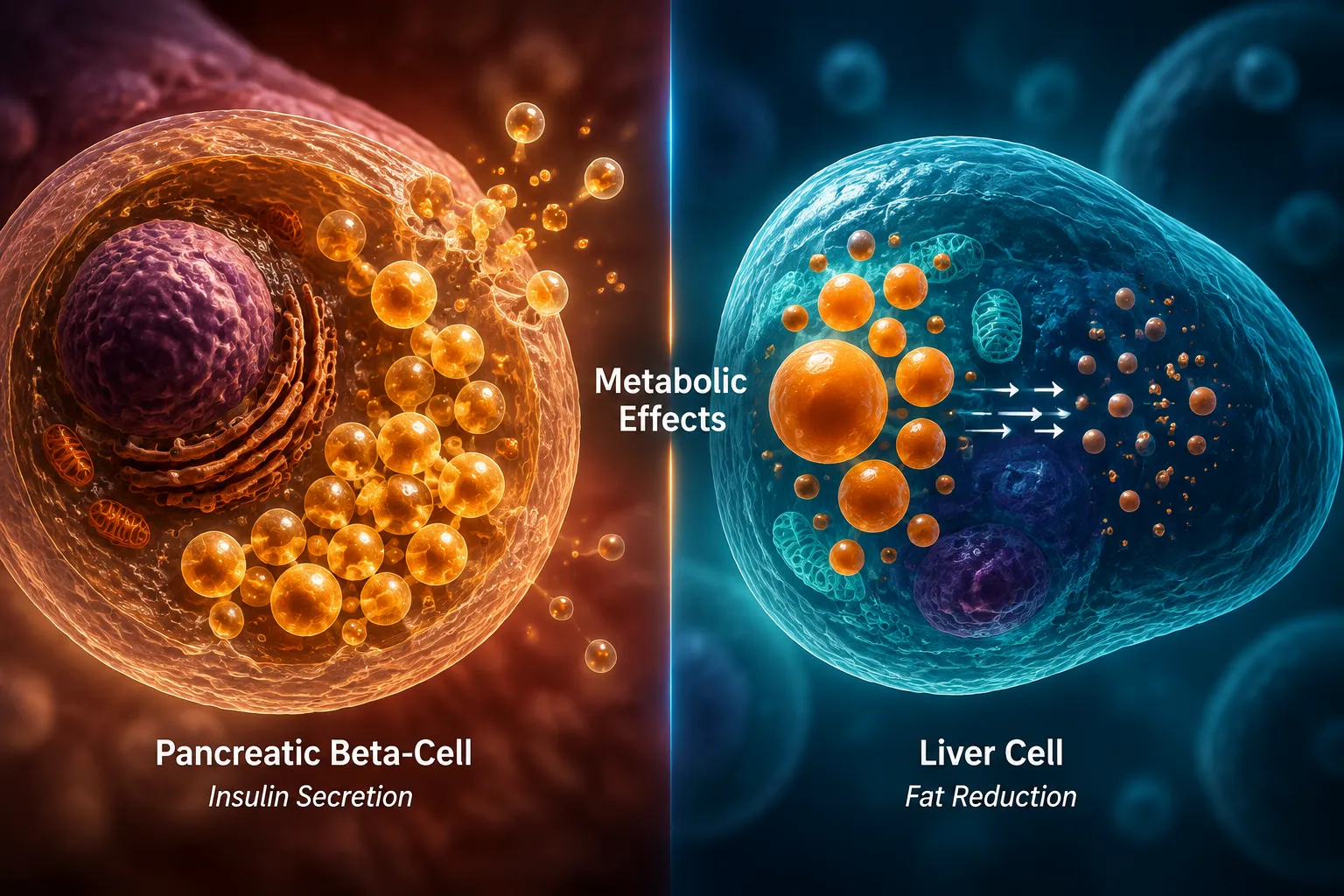
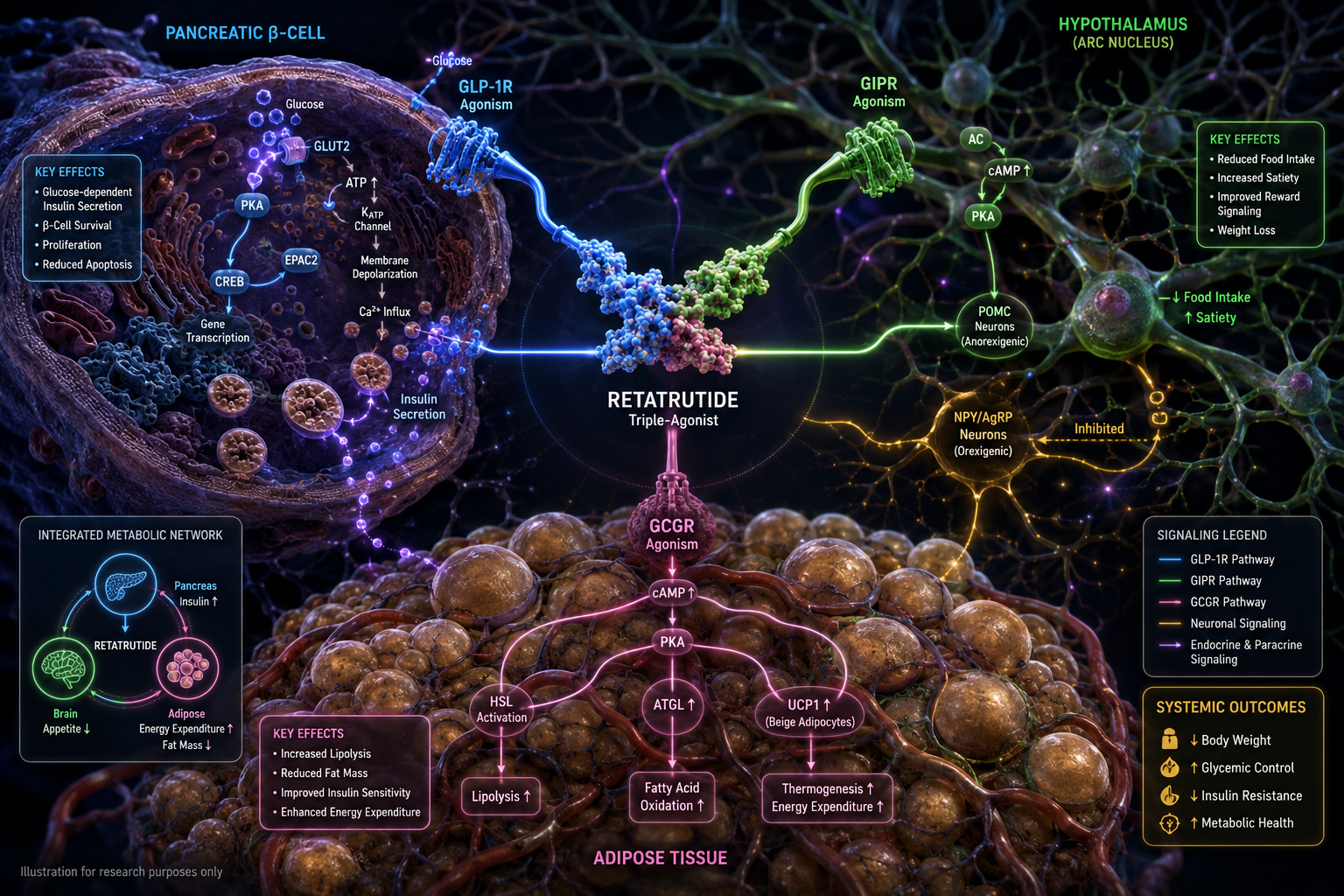
The simultaneous activation of GLP-1R, GIPR, and GCGR creates overlapping but non-identical cAMP pools in different tissue compartments. In pancreatic beta cells, GLP-1R and GIPR signals amplify insulin secretion. In adipose tissue, GIPR signaling modulates lipid storage. In the liver and brown adipose tissue, GCGR activation increases thermogenesis and fatty acid oxidation.

"The convergence of three receptor signals onto a shared cAMP axis, yet with tissue-specific outcomes, is what makes retatrutide a structurally elegant research tool for dissecting metabolic crosstalk."

This signaling architecture also explains why researchers interested in GLP-3 and retatrutide mechanisms find the compound particularly valuable: the interplay between incretin and glucagon arms of the pathway reveals metabolic biology that single-receptor tools cannot access.

For researchers also studying growth hormone secretagogues alongside metabolic peptides, the CJC-1295 with DAC research findings offer a complementary perspective on peptide half-life engineering.

Clinical Research Outcomes and Translational Significance

Understanding Retatrutide for Research: Mechanism, Structure, and GLP-1/GLP-3 Dual Action is inseparable from interpreting the clinical data that has validated the triple-agonist hypothesis.

Phase 2 obesity trial (2023): Participants receiving the highest dose achieved approximately 24% mean body weight reduction over 48 weeks, a figure that approaches outcomes typically associated with bariatric surgery. This was substantially greater than what GLP-1 monotherapy had produced in comparable populations.

Phase 3 outcomes (December 2025): Late-stage trials confirmed statistically significant success across obesity endpoints and, notably, demonstrated meaningful reductions in osteoarthritis-related pain, an effect likely mediated through both weight-dependent joint offloading and direct anti-inflammatory receptor signaling.

Metabolic dysfunction-associated steatotic liver disease (MASLD): Preliminary data suggest retatrutide reduces hepatic fat fraction, consistent with the GCGR component driving hepatic lipid oxidation. This positions the compound as a research tool for liver biology as well as obesity science.

Clinical Research Outcomes and Translational Significance

Researchers tracking the broader landscape of GLP-1 receptor agonist generations will recognize retatrutide as a structural and pharmacological leap beyond second-generation agents like semaglutide. Similarly, those following longevity peptide research may find the compound's metabolic and potentially cytoprotective signaling relevant to aging biology.

For researchers sourcing materials, the GLP-3 retatrutide 10mg research product is available for qualified laboratory use, and the Reta 10mg product tag provides additional sourcing information.

Conclusion

Retatrutide represents a structural and mechanistic milestone in peptide pharmacology. Its engineered triple-receptor profile, long half-life architecture, and convergent cAMP signaling logic make it one of the most information-rich research tools available for studying metabolic biology in 2026.

Actionable next steps for researchers:

  • Review cryo-EM binding data to understand receptor-specific conformational differences before designing assay protocols.
  • Map tissue-specific cAMP responses (beta cell vs. hepatocyte vs. adipocyte) to isolate receptor-arm contributions.
  • Monitor ongoing Phase 3 data releases for MASLD and cardiovascular endpoints, which will clarify the full translational scope.
  • Consider pairing retatrutide studies with complementary peptide tools, such as those covered in the cagrilintide and GLP-1 synergy research, to build multi-pathway metabolic models.

The structural nuances of retatrutide are not academic footnotes, they are the mechanistic foundation on which the next generation of metabolic therapeutics will be built.

https://www.puretestedpeptides.com/wp-content/uploads/2026/07/retatrutide-for-research-mechanism-structure-and-glp-1-glp-3-dual-action.webp 1024 1536 https://www.puretestedpeptides.com/wp-content/uploads/2026/01/buy-peptides-online.jpg 2026-07-23 13:08:222026-07-23 13:08:22Retatrutide for Research: Mechanism, Structure, and GLP-1/GLP-3 Dual Action

Tag Archive for: metabolic peptide research

Retatrutide, GLP-3, and the Triple-Agonist Pipeline: How Researchers Should Interpret the Naming, Target Biology, and Development Status

July 14, 2026/0 Comments/by Pure Tested

Cover Image

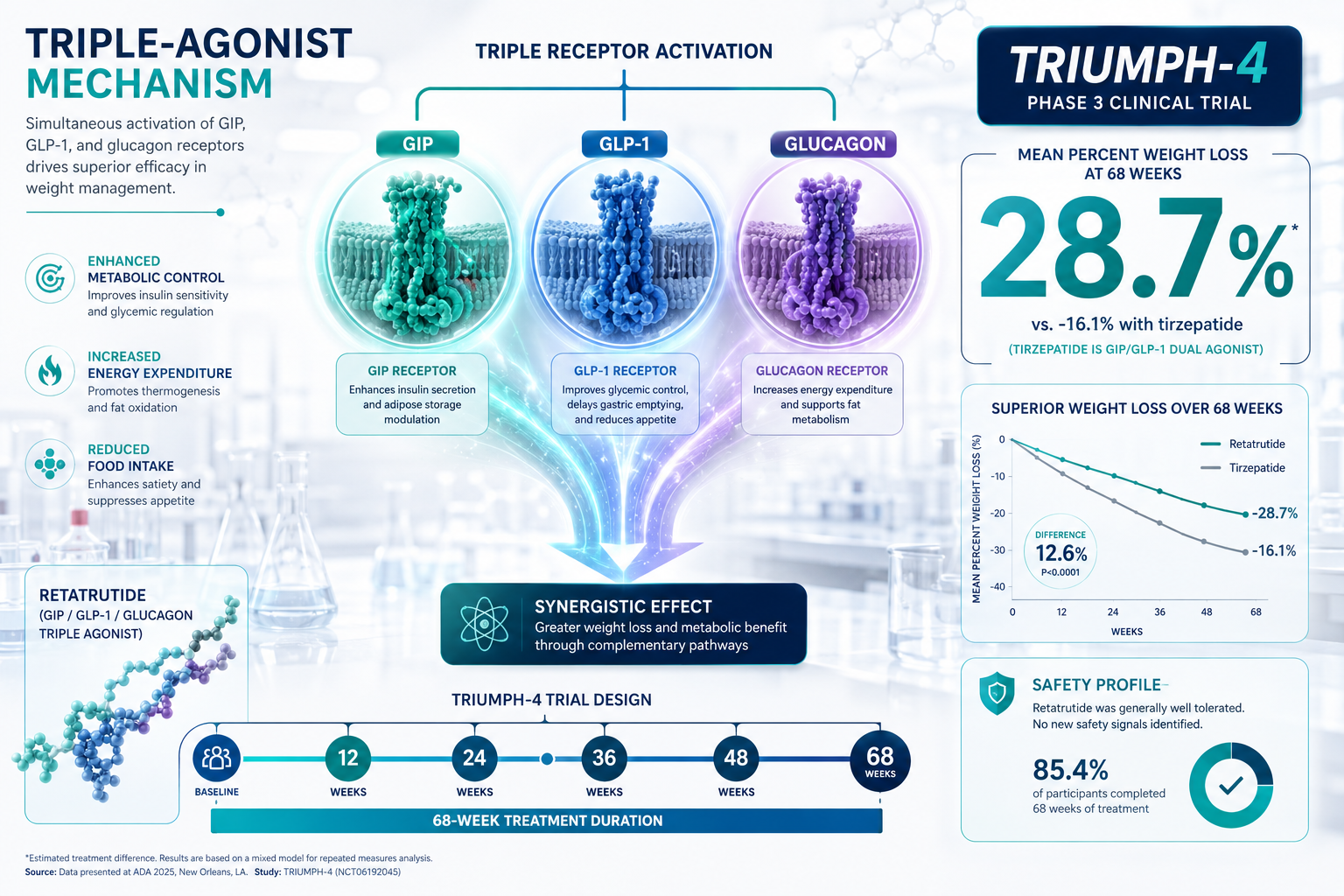
A single molecule is quietly rewriting expectations in metabolic research. In Phase 3 trials, retatrutide produced an average weight loss of 28.7% over 68 weeks, a figure that exceeds anything seen with currently approved therapies. Yet the compound is still widely misnamed, misunderstood, and misrepresented in online discussions. Understanding Retatrutide, GLP-3, and the Triple-Agonist Pipeline: How Researchers Should Interpret the Naming, Target Biology, and Development Status is essential for anyone approaching this molecule from a scientific perspective rather than a marketing one.

Key Takeaways

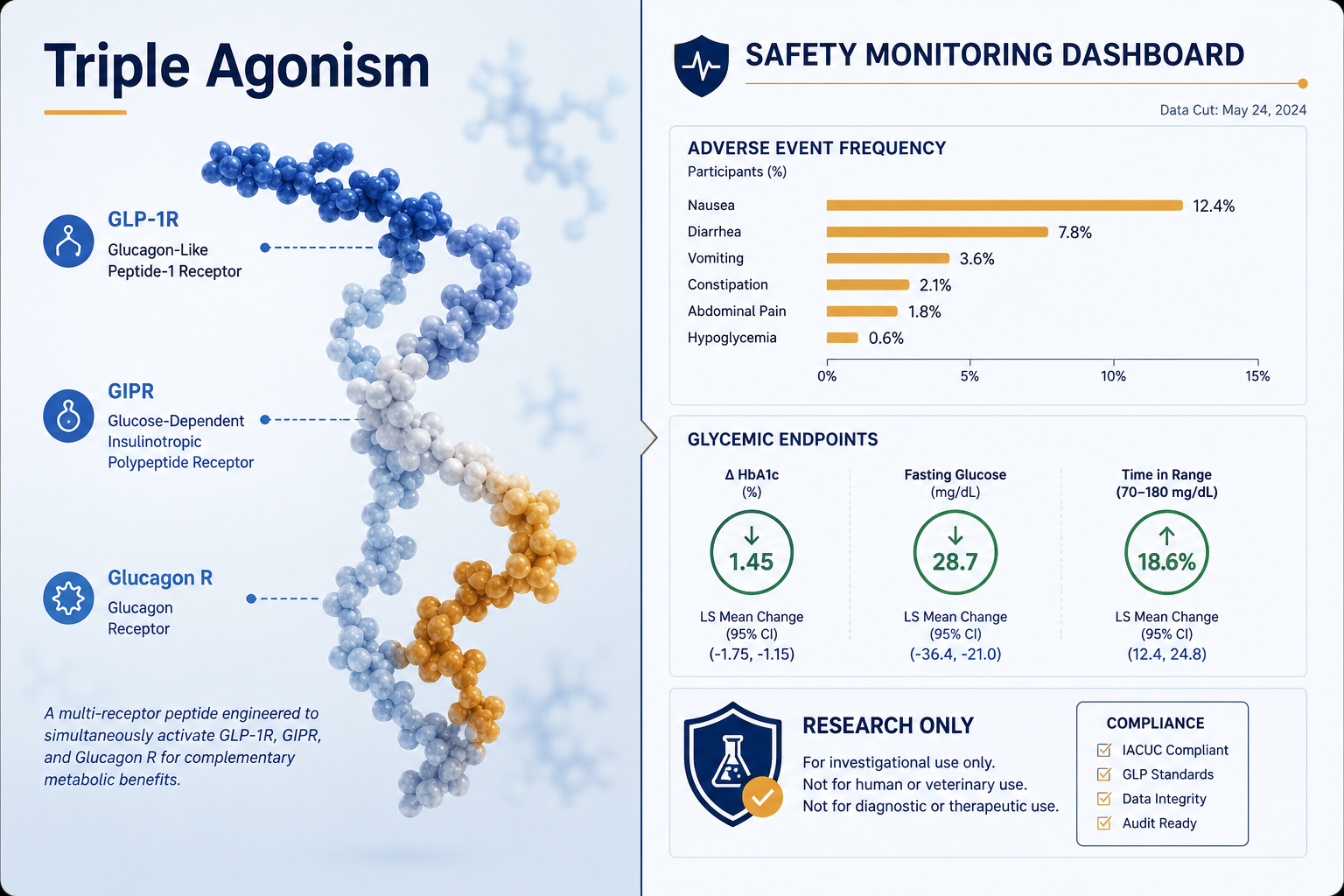
  • Retatrutide (LY3437943) is a triple-agonist that simultaneously activates GLP-1, GIP, and glucagon receptors.
  • The popular nickname "GLP-3" is scientifically inaccurate, no such hormone exists in human physiology.
  • Phase 3 TRIUMPH program data shows up to 28.7% average weight loss at 68 weeks.
  • As of mid-2026, retatrutide remains investigational and has not received FDA approval.
  • Researchers should distinguish between informal consumer terminology and verified receptor biology.

Retatrutide triple-receptor agonist mechanism diagram

Why "GLP-3" Is a Misnomer Researchers Must Recognize

The label "GLP-3" has spread rapidly in consumer health communities and even in some research-adjacent publications. The problem is straightforward: there is no GLP-3 hormone. The glucagon-like peptide family includes GLP-1 and GLP-2, both derived from the proglucagon gene, but the sequence ends there. No third peptide in this family has been identified or characterized.

The nickname likely emerged as shorthand to suggest retatrutide is a "step beyond" GLP-1 agonists like semaglutide and dual agonists like tirzepatide. While that framing captures the escalating potency narrative, it introduces a biological error that can mislead literature searches, confuse receptor pharmacology discussions, and create false expectations about mechanism.

For researchers consulting the GLP-3 and retatrutide research overview, the correct framing is a GLP-1/GIP/glucagon receptor tri-agonist, not a member of an extended GLP peptide family.

"Precision in nomenclature is not pedantry, it is the foundation of reproducible science."


Target Biology: How the Triple-Agonist Mechanism Works

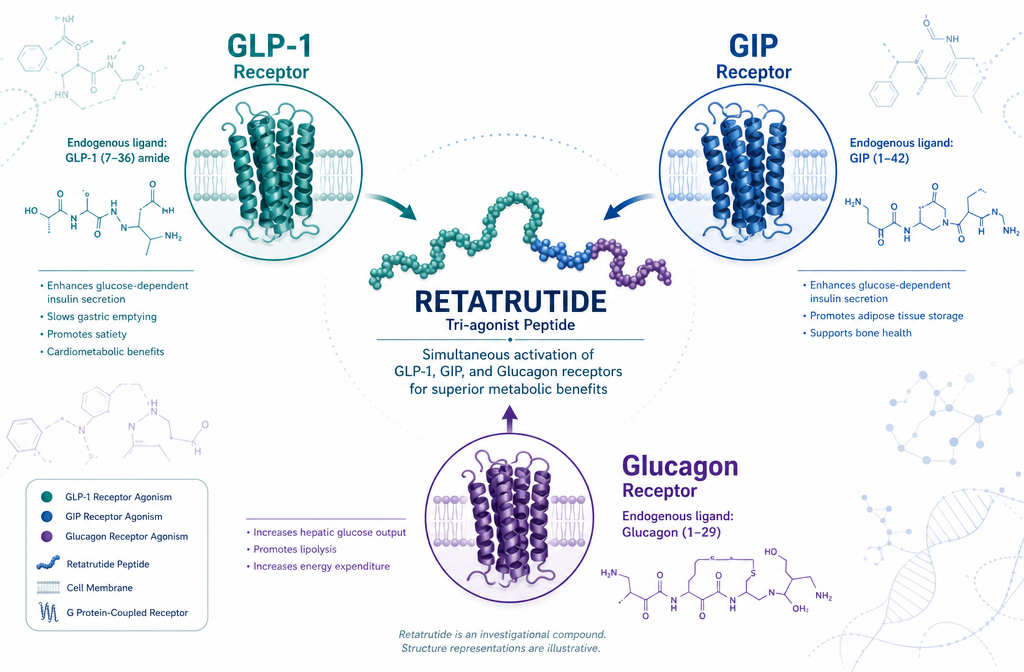
Retatrutide's development code is LY3437943, and it was developed by Eli Lilly. Its defining feature is simultaneous activation of three hormone receptors:

Receptor Primary Role
GLP-1R Insulin secretion, appetite suppression, gastric slowing
GIPR Insulin potentiation, fat tissue regulation
Glucagon R Hepatic glucose output, thermogenesis, energy expenditure

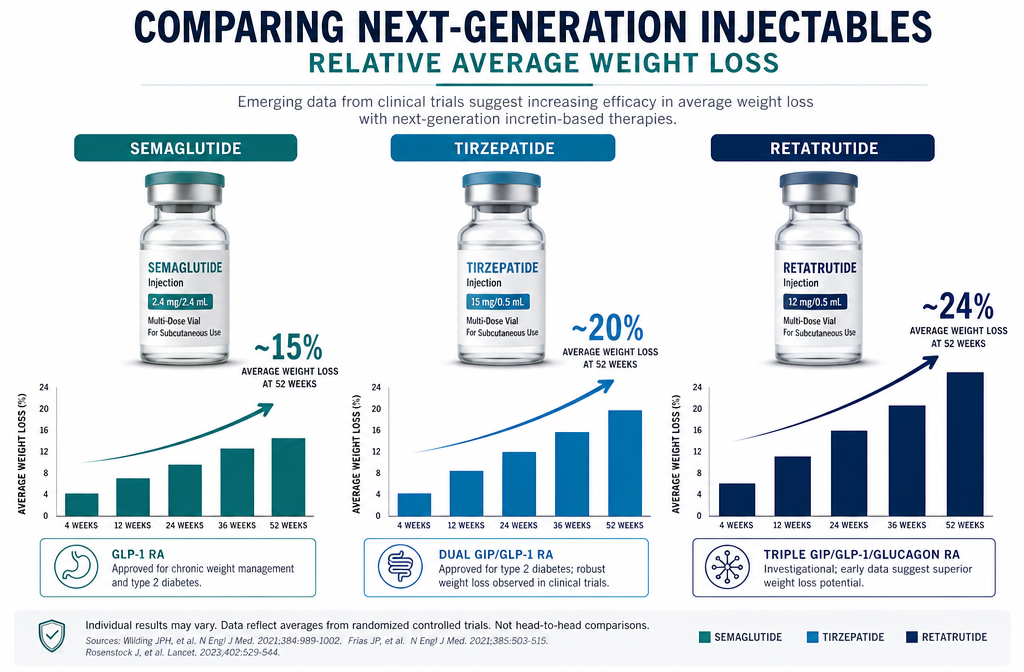
This combination is what separates retatrutide from predecessors. Semaglutide targets GLP-1R alone. Tirzepatide adds GIPR co-agonism. Retatrutide adds glucagon receptor activation on top of both, a mechanism that increases energy expenditure rather than simply reducing intake.

The glucagon component is particularly notable. Glucagon receptor activation drives thermogenesis and hepatic fat metabolism, which may explain why retatrutide's weight-loss outcomes exceed those of dual-agonist therapies in head-to-head trial comparisons. Researchers interested in how peptide biology intersects with fat metabolism may also find value in reviewing adipotide and fat-targeted peptide research for comparative context.

For those studying broader metabolic and longevity-focused peptide research, the glucagon receptor axis represents an underexplored pathway with significant implications beyond weight management.


Female researcher reviewing Phase 3 clinical trial results

Clinical Trial Data and Development Status

The TRIUMPH Phase 3 program is the current centerpiece of retatrutide's development. Key data points as of 2026:

  • Phase 2 (48 weeks, 12 mg dose): Average weight loss of 24.2%
  • Phase 3 TRIUMPH-4 (68 weeks): Average weight loss of 28.7%
  • Dosing: Once-weekly subcutaneous injection; highest trial dose is 12 mg
  • Common adverse events: Nausea, vomiting, consistent with the GLP-1 receptor agonist class

The TRIUMPH program spans multiple studies targeting obesity, type 2 diabetes, and related metabolic conditions. This broad indication strategy reflects the compound's multifaceted mechanism.

FDA status: As of mid-2026, retatrutide remains investigational. Eli Lilly has indicated a New Drug Application (NDA) submission is planned for late 2026 or early 2027, with potential approval projected for late 2027 to early 2028. The compound is not approved for prescription or public sale.

Researchers tracking the broader incretin and growth hormone axis landscape may also find relevant context in GH axis peptide research themes and IPA muscle and fat research themes, both of which touch on overlapping metabolic pathways.


Retatrutide FDA approval timeline roadmap illustration

Interpreting the Triple-Agonist Pipeline for Research Purposes

Understanding Retatrutide, GLP-3, and the Triple-Agonist Pipeline: How Researchers Should Interpret the Naming, Target Biology, and Development Status requires separating three distinct layers of information:

  1. Nomenclature layer, "GLP-3" is informal and inaccurate; use "GLP-1/GIP/glucagon tri-agonist" in formal contexts.
  2. Biology layer, The glucagon receptor component is the key differentiator from existing approved therapies.
  3. Regulatory layer, Phase 3 data is promising, but no approval exists as of 2026; all research use remains investigational.

Analysts broadly expect that, if approved, retatrutide could establish a new efficacy benchmark in weight management pharmacotherapy. That expectation is grounded in the trial data, but researchers should avoid conflating projected outcomes with confirmed regulatory status.

For those exploring related recovery and tissue biology research, the recovery and tissue biology overview and BPC-157 core peptides documentation guide offer useful parallel reading on how peptide mechanisms are documented and interpreted.


Conclusion

Retatrutide represents a genuine step forward in triple-agonist pharmacology, but only if researchers approach it with accurate terminology and realistic expectations. The "GLP-3" label should be retired from scientific discourse, it describes no known hormone and obscures the actual receptor biology. The TRIUMPH Phase 3 data is compelling, and the NDA timeline suggests a potential approval window in 2027 to 2028.

Actionable next steps for researchers:

  • Replace "GLP-3" with "GLP-1/GIP/glucagon tri-agonist" in all formal documentation.
  • Monitor the TRIUMPH program publications for updated efficacy and safety endpoints.
  • Distinguish between investigational data and approved-use status when designing research protocols.
  • Review the GLP-3 and retatrutide research page for updated sourcing and documentation standards.

Precision in naming and mechanism is not optional, it is the baseline for credible metabolic research in 2026 and beyond.

https://www.puretestedpeptides.com/wp-content/uploads/2026/01/buy-peptides-online.jpg 0 0 Pure Tested https://www.puretestedpeptides.com/wp-content/uploads/2026/01/buy-peptides-online.jpg Pure Tested2026-07-14 13:19:082026-07-20 15:00:09Retatrutide, GLP-3, and the Triple-Agonist Pipeline: How Researchers Should Interpret the Naming, Target Biology, and Development Status
Retatrutide Structural Mechanism: What Cryo-EM Reveals About Triple-Receptor Agonism

Retatrutide Structural Mechanism: What Cryo-EM Reveals About Triple-Receptor Agonism

July 10, 2026/0 Comments/by Pure Tested

A single peptide that fits three different receptor locks simultaneously, that is the central engineering feat behind retatrutide. Understanding the Retatrutide Structural Mechanism: What Cryo-EM Reveals About Triple-Receptor Agonism requires stepping inside the molecular architecture of a 39-amino acid chain and asking a precise question: how does one molecule activate the GLP-1 receptor, the GIP receptor, and the glucagon receptor at the same time without losing potency at any of them? Cryo-electron microscopy (cryo-EM) has now provided detailed answers, and those answers explain why retatrutide behaves so differently from earlier incretin-based therapies.

Key Takeaways

  • Retatrutide adopts a single continuous alpha-helix conformation when binding to all three target receptors, a structural uniformity confirmed by cryo-EM.
  • Non-canonical amino acids at specific positions protect the peptide from enzymatic degradation and fine-tune receptor selectivity.
  • The N-terminal segment drives receptor activation by penetrating the transmembrane core, while the C-terminal segment governs selectivity through extracellular interactions.
  • Retatrutide is roughly 8.9 times more potent at the GIP receptor than native GIP, while its glucagon receptor activity is intentionally moderated to limit hyperglycemia risk.
  • A fatty acid side chain enables albumin binding, extending the half-life to approximately six days and supporting once-weekly dosing.

Key Takeaways

The Alpha-Helix Architecture Behind Triple-Receptor Binding

The most striking finding from cryo-EM studies is structural simplicity at the core. Despite engaging three pharmacologically distinct receptors, GLP-1R, GIPR, and GCGR, retatrutide maintains a single continuous alpha-helix conformation across all three binding events. This is not a trivial achievement. Most peptide ligands adopt slightly different conformations depending on the receptor environment they encounter. Retatrutide's rigid helical backbone allows it to slot into each receptor's binding pocket without requiring a structural reset.

This conformational consistency is not accidental. The peptide's sequence was engineered to include non-canonical amino acids that lock the helix in place:

  • Alpha-aminoisobutyric acid (Aib) at positions 2 and 20, resists degradation by dipeptidyl peptidase-4 (DPP-4), the enzyme that rapidly breaks down native GLP-1.
  • Alpha-methyl-L-leucine at position 13, supports GIP receptor activity and contributes to helical stability.

These modifications are part of what separates retatrutide from earlier GLP-1 peptide generations that lacked this level of structural engineering.

"The rigid alpha-helical backbone of retatrutide is not a byproduct of its design, it is the design."

The peptide also carries a fatty acid side chain that binds albumin in circulation, extending its half-life to roughly six days. This pharmacokinetic feature, combined with its enzymatic resistance, supports a once-weekly dosing schedule, a significant practical advantage over shorter-acting compounds.


The Alpha-Helix Architecture Behind Triple-Receptor Binding

How Cryo-EM Maps the Retatrutide Structural Mechanism Across Three Receptors

Cryo-EM resolved the bound structures of retatrutide at each of its three target receptors, revealing a consistent two-part binding strategy:

Segment Residues Primary Interaction
N-terminal 1 to 13 Penetrates transmembrane domain core
C-terminal 14 to 30 Engages extracellular regions

The N-terminal segment is the activation trigger. It inserts into the hydrophobic core of each receptor's transmembrane bundle, initiating the conformational change that signals downstream G-protein coupling. The C-terminal segment is the selectivity filter, making contact with extracellular loops that differ between receptor subtypes.

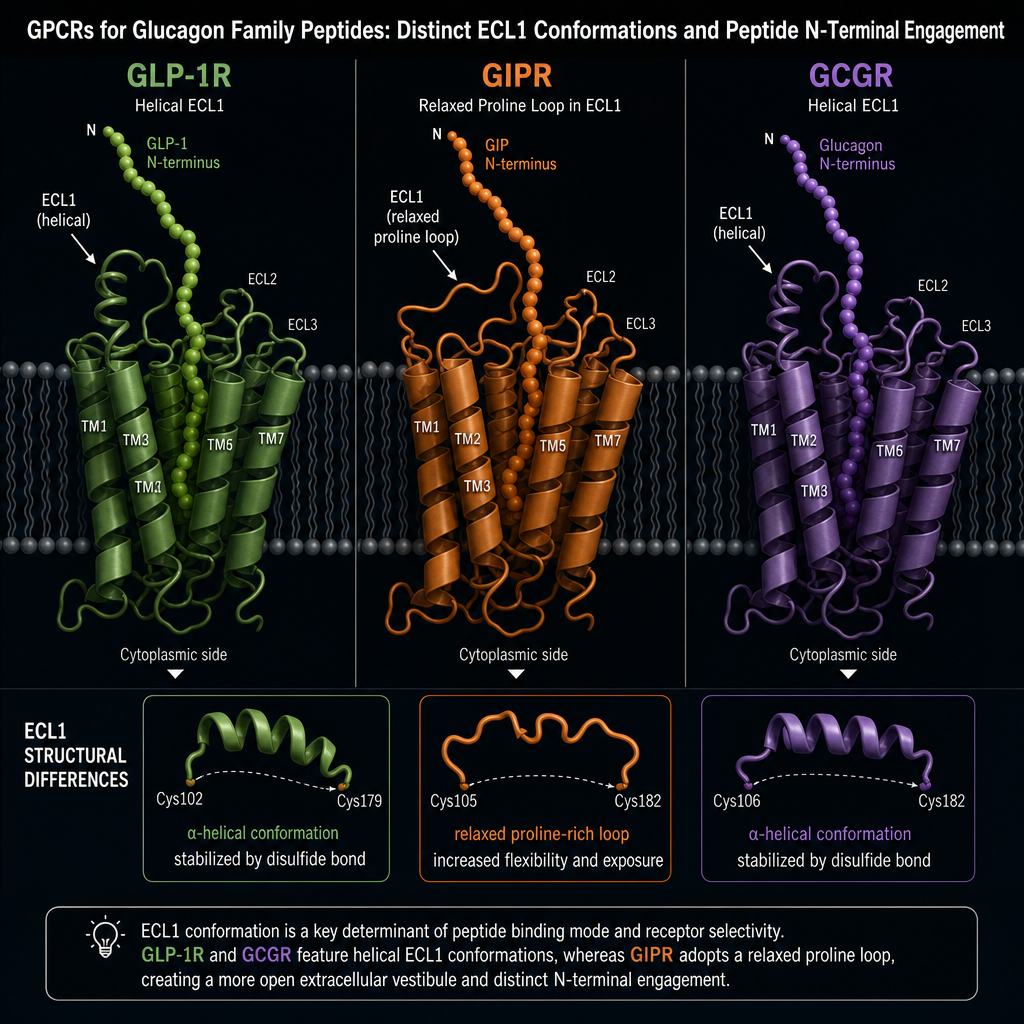
One notable receptor-specific difference involves extracellular loop 1 (ECL1). In GLP-1R and GCGR, ECL1 adopts a helical structure. In GIPR, ECL1 takes a relaxed loop conformation because of proline residues in that region. Retatrutide accommodates this difference without altering its core helical shape, a testament to the design flexibility built into its sequence.

For researchers exploring dual receptor agonism mechanisms, this structural data illustrates precisely why adding a third receptor target requires more than simply extending a peptide chain.


Potency Profile and Metabolic Consequences of Triple-Receptor Agonism

Understanding the Retatrutide Structural Mechanism: What Cryo-EM Reveals About Triple-Receptor Agonism is incomplete without examining what each receptor activation actually does metabolically:

  • GLP-1R activation, suppresses appetite and slows gastric emptying, reducing caloric intake.
  • GIPR activation, enhances glucose-dependent insulin secretion and influences adipose tissue metabolism.
  • GCGR activation, increases energy expenditure through hepatic lipid oxidation and thermogenesis.

Retatrutide's potency is deliberately asymmetric. It is approximately 8.9 times more potent at GIPR than native GIP, amplifying the insulin-sensitizing and fat-mobilizing effects of that receptor. At GCGR and GLP-1R, it operates at roughly 0.3 to 0.4 times the potency of endogenous glucagon and GLP-1, respectively. This deliberate moderation at GCGR limits the hyperglycemia risk that full glucagon activation would otherwise carry.

This potency calibration helps explain why clinical data show retatrutide producing 4 to 8 percent more weight loss than dual GLP-1/GIP agonists at comparable doses. The added glucagon receptor contribution raises resting energy expenditure in ways that appetite suppression alone cannot achieve.

Researchers interested in how incretin-based peptides compare across generations can explore GLP-1 incretin research themes for broader context. Those examining metabolic peptide research may also find value in reviewing body composition research themes related to tesa, which targets a different but metabolically relevant pathway. For a direct look at the compound itself, the GLP-3 retatrutide research product page provides additional sourcing context. Researchers comparing peptide purity standards should also consult resources on Bachem reference standards and peptide benchmarks when evaluating research-grade materials.


Conclusion

The Retatrutide Structural Mechanism: What Cryo-EM Reveals About Triple-Receptor Agonism comes down to a single engineered alpha-helix that speaks three receptor languages simultaneously. Cryo-EM has made it possible to see exactly how the peptide's N-terminal segment activates each receptor's transmembrane core while its C-terminal end navigates receptor-specific extracellular differences. Non-canonical amino acids provide enzymatic stability and receptor selectivity, while the fatty acid side chain extends circulating half-life to a clinically practical range.

For researchers working in this space, the actionable steps are clear: examine the structural data to understand why potency ratios were calibrated the way they were, compare retatrutide's binding architecture against earlier single and dual agonists, and track Phase 3 trial outcomes that will test whether structural advantages translate into durable clinical benefit. The cryo-EM data already provides a compelling molecular rationale for the efficacy signals observed so far.

https://www.puretestedpeptides.com/wp-content/uploads/2026/07/Retatrutide-Structural-Mechanism-What-Cryo-EM-Reveals-About-Triple-Receptor-Agonism.webp 1024 1536 Pure Tested https://www.puretestedpeptides.com/wp-content/uploads/2026/01/buy-peptides-online.jpg Pure Tested2026-07-10 13:18:392026-07-20 15:00:29Retatrutide Structural Mechanism: What Cryo-EM Reveals About Triple-Receptor Agonism
Retatrutide Phase 2 Data Review: What the Weight-Loss, Liver, and Glycemic Findings Mean for Researchers

Retatrutide Phase 2 Data Review: What the Weight-Loss, Liver, and Glycemic Findings Mean for Researchers

July 10, 2026/0 Comments/by Pure Tested

{"cover":"Professional landscape format (1536×1024) hero image with bold text overlay: 'Retatrutide Phase 2 Data Review: Weight-Loss, Liver & Glycemic Findings' in extra large 70pt white bold sans-serif font with dark semi-transparent overlay box, centered upper-third composition. Background shows a high-resolution clinical research laboratory scene with molecular structure visualizations, glowing blue data charts on screens, and a researcher reviewing trial data on a tablet. Color palette: deep navy blue, crisp white, teal accents. Magazine cover aesthetic, editorial quality, high contrast, photorealistic.","content":["Landscape format (1536×1024) detailed scientific infographic illustration showing a triple-receptor agonist mechanism diagram for GLP-1, GIP, and glucagon pathways. Three interconnected glowing nodes labeled with receptor names, arrows showing downstream metabolic effects on adipose tissue and liver cells. Clean white background with teal and navy color scheme, molecular pathway lines, annotated with percentage weight-loss data points. Research-grade visual, editorial quality, no people, data-driven aesthetic.","Landscape format (1536×1024) close-up medical imaging scene showing a cross-sectional liver MRI scan displayed on a lightbox monitor in a clinical setting, with a researcher's gloved hand pointing to highlighted liver fat reduction zones. Side panel bar graph showing 82.4% liver fat reduction data at 24 weeks with color-coded bars in teal and orange. Dramatic clinical lighting, sharp focus on the scan, blurred lab background, editorial photorealistic quality.","Landscape format (1536×1024) overhead flat-lay composition of a research desk with HbA1c glucose monitoring data printouts, a blood glucose meter, clinical trial result charts showing 2.0% HbA1c reduction annotations, and a researcher's notebook with handwritten analysis notes. Warm neutral tones with teal data highlights, clean organized layout, no faces visible, top-down angle, editorial quality, professional research context."]

Cover Image

An 82.4% reduction in liver fat content at 24 weeks is not a number that appears often in metabolic research. Yet that is precisely what Phase 2 data for retatrutide produced — and it is only one of several findings that have made this compound one of the most closely watched agents in obesity and metabolic liver disease science as of 2026.

This article packages the major published outcomes into a practical summary for researchers tracking developments across obesity pharmacology, MASLD, and glycemic control.

Key Takeaways

  • Retatrutide is a first-in-class triple agonist targeting GLP-1, GIP, and glucagon receptors simultaneously.
  • Phase 3 data showed approximately 28% average body weight reduction over 18 months — comparable to bariatric surgery outcomes.
  • Phase 2a liver data recorded an 82.4% reduction in liver fat content at the highest dose after 24 weeks.
  • HbA1c reductions of up to 2.0% were observed in people with type 2 diabetes over 24 to 36 weeks.
  • The gastrointestinal side-effect profile was consistent with other incretin-based therapies and generally mild to moderate.

Retatrutide triple-receptor mechanism diagram with metabolic pathway data


Understanding the Mechanism Behind the Retatrutide Phase 2 Data Review

Retatrutide's design sets it apart from earlier incretin therapies. Where agents like semaglutide target only GLP-1 receptors, retatrutide simultaneously activates three distinct pathways: GLP-1, GIP, and glucagon receptors. This triple-agonist architecture is the foundation for its amplified metabolic effects.

  • GLP-1 receptor activation suppresses appetite, slows gastric emptying, and improves insulin secretion.
  • GIP receptor activation enhances insulin sensitivity and may reduce GLP-1-related nausea.
  • Glucagon receptor activation increases energy expenditure and drives hepatic fat mobilization.

The combination produces a synergistic effect that neither dual nor single agonists can fully replicate. Researchers exploring the broader GLP-1 generations overview will recognize this as a meaningful step forward in receptor pharmacology.

For context on how growth-hormone-related peptides have historically approached body composition, the research on tesa and body composition offers a useful comparison point — particularly regarding visceral fat as a target tissue.


Weight-Loss Findings: What the Phase 2 and Phase 3 Numbers Show

The weight-loss data across retatrutide trials is the headline story. In Phase 3 results announced in May 2026, participants achieved an average body weight reduction of approximately 28% over 18 months. That figure places pharmacological treatment within the range historically associated with bariatric surgery.

Phase 2 data, published in the New England Journal of Medicine, established the dose-response curve and confirmed that higher doses produced proportionally greater weight loss, with the 12 mg dose group achieving the most substantial reductions.

Trial Phase Duration Average Weight Loss
Phase 2 (highest dose) 48 weeks ~24%
Phase 3 18 months ~28%
Bariatric surgery (historical) 12-18 months 25-35%

Key implication for researchers: The convergence of pharmacological and surgical outcomes signals that the ceiling for drug-based obesity treatment has not yet been reached. This matters for study design, endpoint selection, and comparator choice in future trials.


Liver and Glycemic Findings: A Closer Look at the Retatrutide Phase 2 Data Review

Clinical liver MRI scan showing retatrutide liver fat reduction data

Liver Fat Reduction in MASLD Research

The hepatic data from the Phase 2a trial is particularly relevant for researchers focused on metabolic dysfunction-associated steatotic liver disease (MASLD). At the highest dose, retatrutide produced an 82.4% reduction in liver fat content at 24 weeks, as measured by MRI-PDFF. Lower doses also produced statistically significant reductions, reinforcing the dose-response relationship.

This level of hepatic fat clearance is clinically meaningful. MASLD affects a large proportion of people with obesity and type 2 diabetes, and current pharmacological options remain limited. Retatrutide's glucagon receptor activity is thought to be the primary driver of hepatic fat mobilization — a mechanism distinct from GLP-1-only agents.

Researchers studying metabolic peptides such as SLU-PP-332 for metabolic research will find the hepatic fat data particularly relevant, as both pathways intersect at mitochondrial and lipid metabolism.

Glycemic Control in Type 2 Diabetes

HbA1c reduction data charts from retatrutide glycemic control research

In participants with type 2 diabetes, retatrutide produced HbA1c reductions of up to 2.0% over 24 to 36 weeks. That magnitude of glycemic improvement is clinically significant and comparable to the most effective approved agents in the class.

Fasting glucose reductions were also observed across dose groups, with higher doses producing greater improvements. The combined weight-loss and glycemic effects make retatrutide particularly relevant for researchers studying cardiometabolic risk reduction.

For comparison, the tesa dosage research for fat loss context illustrates how dose optimization remains central to metabolic peptide research — a principle that applies equally here.


Safety Profile and Research Considerations

The adverse event profile observed in Phase 2 trials was consistent with other incretin-based therapies. Gastrointestinal events — nausea, vomiting, diarrhea — were the most commonly reported and were generally mild to moderate in severity. Discontinuation rates due to adverse events were low.

Researchers should note:

  • Dose titration protocols appear to reduce GI event frequency.
  • No new safety signals were identified beyond those expected for the class.
  • Cardiovascular and renal endpoints remain under evaluation in ongoing trials.

Those tracking broader longevity peptide research themes will recognize that metabolic improvement at this scale — reduced visceral fat, improved insulin sensitivity, lower liver fat — carries implications well beyond weight management alone.

Eli Lilly has indicated plans to seek FDA approval pending the successful completion of ongoing late-stage trials, with a potential submission timeline by end of 2026.


Conclusion

The retatrutide Phase 2 data review presents a compelling case for why this compound is reshaping discussions across obesity pharmacology, MASLD research, and type 2 diabetes management. Three findings stand out: surgery-comparable weight loss, an 82.4% reduction in liver fat at 24 weeks, and HbA1c reductions of up to 2.0% in diabetic populations.

Actionable next steps for researchers:

  • Review the full Phase 2 NEJM publication for dose-response methodology and endpoint definitions.
  • Evaluate retatrutide's hepatic fat data against current MASLD trial benchmarks.
  • Monitor Phase 3 cardiovascular and renal outcome data as it becomes available.
  • Consider how triple-receptor agonism compares to GLP-1/GIP dual agonists in your specific research context.
  • Track FDA submission timelines, which may affect research access and regulatory landscape planning.

For researchers building a broader understanding of metabolic peptide science, the GLP-1 generations overview and SLU-PP-332 metabolic research resources provide useful adjacent context as the field continues to evolve rapidly in 2026.

https://www.puretestedpeptides.com/wp-content/uploads/2026/07/Retatrutide-Phase-2-Data-Review-What-the-Weight-Loss-Liver-and-Glycemic-Findings-Mean-for-Researchers-1.png 1024 1536 Pure Tested https://www.puretestedpeptides.com/wp-content/uploads/2026/01/buy-peptides-online.jpg Pure Tested2026-07-10 13:17:132026-07-20 15:00:30Retatrutide Phase 2 Data Review: What the Weight-Loss, Liver, and Glycemic Findings Mean for Researchers
Retatrutide Phase 2 Data Review: What the Weight-Loss, Liver, and Glycemic Findings Mean for Researchers

Retatrutide Phase 2 Data Review: What the Weight-Loss, Liver, and Glycemic Findings Mean for Researchers

July 10, 2026/0 Comments/by Pure Tested

{"cover":"Professional landscape format (1536×1024) hero image with bold text overlay: 'Retatrutide Phase 2 Data Review: Weight-Loss, Liver & Glycemic Findings' in extra large 70pt white bold sans-serif font with dark semi-transparent overlay box, centered upper-third composition. Background shows a high-resolution clinical research laboratory scene with molecular structure visualizations, glowing blue data charts on screens, and a researcher reviewing trial data on a tablet. Color palette: deep navy blue, crisp white, teal accents. Magazine cover aesthetic, editorial quality, high contrast, photorealistic.","content":["Landscape format (1536×1024) detailed scientific infographic illustration showing a triple-receptor agonist mechanism diagram for GLP-1, GIP, and glucagon pathways. Three interconnected glowing nodes labeled with receptor names, arrows showing downstream metabolic effects on adipose tissue and liver cells. Clean white background with teal and navy color scheme, molecular pathway lines, annotated with percentage weight-loss data points. Research-grade visual, editorial quality, no people, data-driven aesthetic.","Landscape format (1536×1024) close-up medical imaging scene showing a cross-sectional liver MRI scan displayed on a lightbox monitor in a clinical setting, with a researcher's gloved hand pointing to highlighted liver fat reduction zones. Side panel bar graph showing 82.4% liver fat reduction data at 24 weeks with color-coded bars in teal and orange. Dramatic clinical lighting, sharp focus on the scan, blurred lab background, editorial photorealistic quality.","Landscape format (1536×1024) overhead flat-lay composition of a research desk with HbA1c glucose monitoring data printouts, a blood glucose meter, clinical trial result charts showing 2.0% HbA1c reduction annotations, and a researcher's notebook with handwritten analysis notes. Warm neutral tones with teal data highlights, clean organized layout, no faces visible, top-down angle, editorial quality, professional research context."]

Cover Image

An 82.4% reduction in liver fat content at 24 weeks is not a number that appears often in metabolic research. Yet that is precisely what Phase 2 data for retatrutide produced — and it is only one of several findings that have made this compound one of the most closely watched agents in obesity and metabolic liver disease science as of 2026.

This article packages the major published outcomes into a practical summary for researchers tracking developments across obesity pharmacology, MASLD, and glycemic control.

Key Takeaways

  • Retatrutide is a first-in-class triple agonist targeting GLP-1, GIP, and glucagon receptors simultaneously.
  • Phase 3 data showed approximately 28% average body weight reduction over 18 months — comparable to bariatric surgery outcomes.
  • Phase 2a liver data recorded an 82.4% reduction in liver fat content at the highest dose after 24 weeks.
  • HbA1c reductions of up to 2.0% were observed in people with type 2 diabetes over 24 to 36 weeks.
  • The gastrointestinal side-effect profile was consistent with other incretin-based therapies and generally mild to moderate.

Retatrutide triple-receptor mechanism diagram with metabolic pathway data


Understanding the Mechanism Behind the Retatrutide Phase 2 Data Review

Retatrutide's design sets it apart from earlier incretin therapies. Where agents like semaglutide target only GLP-1 receptors, retatrutide simultaneously activates three distinct pathways: GLP-1, GIP, and glucagon receptors. This triple-agonist architecture is the foundation for its amplified metabolic effects.

  • GLP-1 receptor activation suppresses appetite, slows gastric emptying, and improves insulin secretion.
  • GIP receptor activation enhances insulin sensitivity and may reduce GLP-1-related nausea.
  • Glucagon receptor activation increases energy expenditure and drives hepatic fat mobilization.

The combination produces a synergistic effect that neither dual nor single agonists can fully replicate. Researchers exploring the broader GLP-1 generations overview will recognize this as a meaningful step forward in receptor pharmacology.

For context on how growth-hormone-related peptides have historically approached body composition, the research on tesa and body composition offers a useful comparison point — particularly regarding visceral fat as a target tissue.


Weight-Loss Findings: What the Phase 2 and Phase 3 Numbers Show

The weight-loss data across retatrutide trials is the headline story. In Phase 3 results announced in May 2026, participants achieved an average body weight reduction of approximately 28% over 18 months. That figure places pharmacological treatment within the range historically associated with bariatric surgery.

Phase 2 data, published in the New England Journal of Medicine, established the dose-response curve and confirmed that higher doses produced proportionally greater weight loss, with the 12 mg dose group achieving the most substantial reductions.

Trial Phase Duration Average Weight Loss
Phase 2 (highest dose) 48 weeks ~24%
Phase 3 18 months ~28%
Bariatric surgery (historical) 12-18 months 25-35%

Key implication for researchers: The convergence of pharmacological and surgical outcomes signals that the ceiling for drug-based obesity treatment has not yet been reached. This matters for study design, endpoint selection, and comparator choice in future trials.


Liver and Glycemic Findings: A Closer Look at the Retatrutide Phase 2 Data Review

Clinical liver MRI scan showing retatrutide liver fat reduction data

Liver Fat Reduction in MASLD Research

The hepatic data from the Phase 2a trial is particularly relevant for researchers focused on metabolic dysfunction-associated steatotic liver disease (MASLD). At the highest dose, retatrutide produced an 82.4% reduction in liver fat content at 24 weeks, as measured by MRI-PDFF. Lower doses also produced statistically significant reductions, reinforcing the dose-response relationship.

This level of hepatic fat clearance is clinically meaningful. MASLD affects a large proportion of people with obesity and type 2 diabetes, and current pharmacological options remain limited. Retatrutide's glucagon receptor activity is thought to be the primary driver of hepatic fat mobilization — a mechanism distinct from GLP-1-only agents.

Researchers studying metabolic peptides such as SLU-PP-332 for metabolic research will find the hepatic fat data particularly relevant, as both pathways intersect at mitochondrial and lipid metabolism.

Glycemic Control in Type 2 Diabetes

HbA1c reduction data charts from retatrutide glycemic control research

In participants with type 2 diabetes, retatrutide produced HbA1c reductions of up to 2.0% over 24 to 36 weeks. That magnitude of glycemic improvement is clinically significant and comparable to the most effective approved agents in the class.

Fasting glucose reductions were also observed across dose groups, with higher doses producing greater improvements. The combined weight-loss and glycemic effects make retatrutide particularly relevant for researchers studying cardiometabolic risk reduction.

For comparison, the tesa dosage research for fat loss context illustrates how dose optimization remains central to metabolic peptide research — a principle that applies equally here.


Safety Profile and Research Considerations

The adverse event profile observed in Phase 2 trials was consistent with other incretin-based therapies. Gastrointestinal events — nausea, vomiting, diarrhea — were the most commonly reported and were generally mild to moderate in severity. Discontinuation rates due to adverse events were low.

Researchers should note:

  • Dose titration protocols appear to reduce GI event frequency.
  • No new safety signals were identified beyond those expected for the class.
  • Cardiovascular and renal endpoints remain under evaluation in ongoing trials.

Those tracking broader longevity peptide research themes will recognize that metabolic improvement at this scale — reduced visceral fat, improved insulin sensitivity, lower liver fat — carries implications well beyond weight management alone.

Eli Lilly has indicated plans to seek FDA approval pending the successful completion of ongoing late-stage trials, with a potential submission timeline by end of 2026.


Conclusion

The retatrutide Phase 2 data review presents a compelling case for why this compound is reshaping discussions across obesity pharmacology, MASLD research, and type 2 diabetes management. Three findings stand out: surgery-comparable weight loss, an 82.4% reduction in liver fat at 24 weeks, and HbA1c reductions of up to 2.0% in diabetic populations.

Actionable next steps for researchers:

  • Review the full Phase 2 NEJM publication for dose-response methodology and endpoint definitions.
  • Evaluate retatrutide's hepatic fat data against current MASLD trial benchmarks.
  • Monitor Phase 3 cardiovascular and renal outcome data as it becomes available.
  • Consider how triple-receptor agonism compares to GLP-1/GIP dual agonists in your specific research context.
  • Track FDA submission timelines, which may affect research access and regulatory landscape planning.

For researchers building a broader understanding of metabolic peptide science, the GLP-1 generations overview and SLU-PP-332 metabolic research resources provide useful adjacent context as the field continues to evolve rapidly in 2026.

https://www.puretestedpeptides.com/wp-content/uploads/2026/07/Retatrutide-Phase-2-Data-Review-What-the-Weight-Loss-Liver-and-Glycemic-Findings-Mean-for-Researchers-2.png 1024 1536 Pure Tested https://www.puretestedpeptides.com/wp-content/uploads/2026/01/buy-peptides-online.jpg Pure Tested2026-07-10 13:17:132026-07-20 15:00:30Retatrutide Phase 2 Data Review: What the Weight-Loss, Liver, and Glycemic Findings Mean for Researchers
Retatrutide Phase 2 Data Review: What the Weight-Loss, Liver, and Glycemic Findings Mean for Researchers

Retatrutide Phase 2 Data Review: What the Weight-Loss, Liver, and Glycemic Findings Mean for Researchers

July 10, 2026/0 Comments/by Pure Tested

{"cover":"Professional landscape format (1536×1024) hero image with bold text overlay: 'Retatrutide Phase 2 Data Review: Weight-Loss, Liver & Glycemic Findings' in extra large 70pt white bold sans-serif font with dark semi-transparent overlay box, centered upper-third composition. Background shows a high-resolution clinical research laboratory scene with molecular structure visualizations, glowing blue data charts on screens, and a researcher reviewing trial data on a tablet. Color palette: deep navy blue, crisp white, teal accents. Magazine cover aesthetic, editorial quality, high contrast, photorealistic.","content":["Landscape format (1536×1024) detailed scientific infographic illustration showing a triple-receptor agonist mechanism diagram for GLP-1, GIP, and glucagon pathways. Three interconnected glowing nodes labeled with receptor names, arrows showing downstream metabolic effects on adipose tissue and liver cells. Clean white background with teal and navy color scheme, molecular pathway lines, annotated with percentage weight-loss data points. Research-grade visual, editorial quality, no people, data-driven aesthetic.","Landscape format (1536×1024) close-up medical imaging scene showing a cross-sectional liver MRI scan displayed on a lightbox monitor in a clinical setting, with a researcher's gloved hand pointing to highlighted liver fat reduction zones. Side panel bar graph showing 82.4% liver fat reduction data at 24 weeks with color-coded bars in teal and orange. Dramatic clinical lighting, sharp focus on the scan, blurred lab background, editorial photorealistic quality.","Landscape format (1536×1024) overhead flat-lay composition of a research desk with HbA1c glucose monitoring data printouts, a blood glucose meter, clinical trial result charts showing 2.0% HbA1c reduction annotations, and a researcher's notebook with handwritten analysis notes. Warm neutral tones with teal data highlights, clean organized layout, no faces visible, top-down angle, editorial quality, professional research context."]

Cover Image

An 82.4% reduction in liver fat content at 24 weeks is not a number that appears often in metabolic research. Yet that is precisely what Phase 2 data for retatrutide produced — and it is only one of several findings that have made this compound one of the most closely watched agents in obesity and metabolic liver disease science as of 2026.

This article packages the major published outcomes into a practical summary for researchers tracking developments across obesity pharmacology, MASLD, and glycemic control.

Key Takeaways

  • Retatrutide is a first-in-class triple agonist targeting GLP-1, GIP, and glucagon receptors simultaneously.
  • Phase 3 data showed approximately 28% average body weight reduction over 18 months — comparable to bariatric surgery outcomes.
  • Phase 2a liver data recorded an 82.4% reduction in liver fat content at the highest dose after 24 weeks.
  • HbA1c reductions of up to 2.0% were observed in people with type 2 diabetes over 24 to 36 weeks.
  • The gastrointestinal side-effect profile was consistent with other incretin-based therapies and generally mild to moderate.

Retatrutide triple-receptor mechanism diagram with metabolic pathway data


Understanding the Mechanism Behind the Retatrutide Phase 2 Data Review

Retatrutide's design sets it apart from earlier incretin therapies. Where agents like semaglutide target only GLP-1 receptors, retatrutide simultaneously activates three distinct pathways: GLP-1, GIP, and glucagon receptors. This triple-agonist architecture is the foundation for its amplified metabolic effects.

  • GLP-1 receptor activation suppresses appetite, slows gastric emptying, and improves insulin secretion.
  • GIP receptor activation enhances insulin sensitivity and may reduce GLP-1-related nausea.
  • Glucagon receptor activation increases energy expenditure and drives hepatic fat mobilization.

The combination produces a synergistic effect that neither dual nor single agonists can fully replicate. Researchers exploring the broader GLP-1 generations overview will recognize this as a meaningful step forward in receptor pharmacology.

For context on how growth-hormone-related peptides have historically approached body composition, the research on tesa and body composition offers a useful comparison point — particularly regarding visceral fat as a target tissue.


Weight-Loss Findings: What the Phase 2 and Phase 3 Numbers Show

The weight-loss data across retatrutide trials is the headline story. In Phase 3 results announced in May 2026, participants achieved an average body weight reduction of approximately 28% over 18 months. That figure places pharmacological treatment within the range historically associated with bariatric surgery.

Phase 2 data, published in the New England Journal of Medicine, established the dose-response curve and confirmed that higher doses produced proportionally greater weight loss, with the 12 mg dose group achieving the most substantial reductions.

Trial Phase Duration Average Weight Loss
Phase 2 (highest dose) 48 weeks ~24%
Phase 3 18 months ~28%
Bariatric surgery (historical) 12-18 months 25-35%

Key implication for researchers: The convergence of pharmacological and surgical outcomes signals that the ceiling for drug-based obesity treatment has not yet been reached. This matters for study design, endpoint selection, and comparator choice in future trials.


Liver and Glycemic Findings: A Closer Look at the Retatrutide Phase 2 Data Review

Clinical liver MRI scan showing retatrutide liver fat reduction data

Liver Fat Reduction in MASLD Research

The hepatic data from the Phase 2a trial is particularly relevant for researchers focused on metabolic dysfunction-associated steatotic liver disease (MASLD). At the highest dose, retatrutide produced an 82.4% reduction in liver fat content at 24 weeks, as measured by MRI-PDFF. Lower doses also produced statistically significant reductions, reinforcing the dose-response relationship.

This level of hepatic fat clearance is clinically meaningful. MASLD affects a large proportion of people with obesity and type 2 diabetes, and current pharmacological options remain limited. Retatrutide's glucagon receptor activity is thought to be the primary driver of hepatic fat mobilization — a mechanism distinct from GLP-1-only agents.

Researchers studying metabolic peptides such as SLU-PP-332 for metabolic research will find the hepatic fat data particularly relevant, as both pathways intersect at mitochondrial and lipid metabolism.

Glycemic Control in Type 2 Diabetes

HbA1c reduction data charts from retatrutide glycemic control research

In participants with type 2 diabetes, retatrutide produced HbA1c reductions of up to 2.0% over 24 to 36 weeks. That magnitude of glycemic improvement is clinically significant and comparable to the most effective approved agents in the class.

Fasting glucose reductions were also observed across dose groups, with higher doses producing greater improvements. The combined weight-loss and glycemic effects make retatrutide particularly relevant for researchers studying cardiometabolic risk reduction.

For comparison, the tesa dosage research for fat loss context illustrates how dose optimization remains central to metabolic peptide research — a principle that applies equally here.


Safety Profile and Research Considerations

The adverse event profile observed in Phase 2 trials was consistent with other incretin-based therapies. Gastrointestinal events — nausea, vomiting, diarrhea — were the most commonly reported and were generally mild to moderate in severity. Discontinuation rates due to adverse events were low.

Researchers should note:

  • Dose titration protocols appear to reduce GI event frequency.
  • No new safety signals were identified beyond those expected for the class.
  • Cardiovascular and renal endpoints remain under evaluation in ongoing trials.

Those tracking broader longevity peptide research themes will recognize that metabolic improvement at this scale — reduced visceral fat, improved insulin sensitivity, lower liver fat — carries implications well beyond weight management alone.

Eli Lilly has indicated plans to seek FDA approval pending the successful completion of ongoing late-stage trials, with a potential submission timeline by end of 2026.


Conclusion

The retatrutide Phase 2 data review presents a compelling case for why this compound is reshaping discussions across obesity pharmacology, MASLD research, and type 2 diabetes management. Three findings stand out: surgery-comparable weight loss, an 82.4% reduction in liver fat at 24 weeks, and HbA1c reductions of up to 2.0% in diabetic populations.

Actionable next steps for researchers:

  • Review the full Phase 2 NEJM publication for dose-response methodology and endpoint definitions.
  • Evaluate retatrutide's hepatic fat data against current MASLD trial benchmarks.
  • Monitor Phase 3 cardiovascular and renal outcome data as it becomes available.
  • Consider how triple-receptor agonism compares to GLP-1/GIP dual agonists in your specific research context.
  • Track FDA submission timelines, which may affect research access and regulatory landscape planning.

For researchers building a broader understanding of metabolic peptide science, the GLP-1 generations overview and SLU-PP-332 metabolic research resources provide useful adjacent context as the field continues to evolve rapidly in 2026.

https://www.puretestedpeptides.com/wp-content/uploads/2026/07/Retatrutide-Phase-2-Data-Review-What-the-Weight-Loss-Liver-and-Glycemic-Findings-Mean-for-Researchers.png 1024 1536 Pure Tested https://www.puretestedpeptides.com/wp-content/uploads/2026/01/buy-peptides-online.jpg Pure Tested2026-07-10 13:17:112026-07-20 15:00:31Retatrutide Phase 2 Data Review: What the Weight-Loss, Liver, and Glycemic Findings Mean for Researchers
GLP-3 Retatrutide vs. GLP-1 Receptor Agonists: A Comprehensive Research Review

GLP-3 Retatrutide vs. GLP-1 Receptor Agonists: A Comprehensive Research Review

July 5, 2026/0 Comments/by Pure Tested

A 28% average body weight reduction over 18 months, that figure, emerging from Phase 3 clinical data on retatrutide, rivals outcomes typically seen only with bariatric surgery. For researchers tracking the evolution of metabolic peptide science, this GLP-3 Retatrutide vs. GLP-1 Receptor Agonists: A Comprehensive Research Review examines what sets retatrutide apart from established GLP-1 therapies, how their mechanisms diverge, and what the latest trial data reveals about their comparative potential.

Key Takeaways

  • Retatrutide is a triple agonist targeting GIP, GLP-1, and glucagon receptors, a fundamentally different mechanism from single GLP-1 receptor agonists.
  • Phase 3 data shows retatrutide achieving approximately 28% body weight reduction, surpassing current GLP-1 benchmarks.
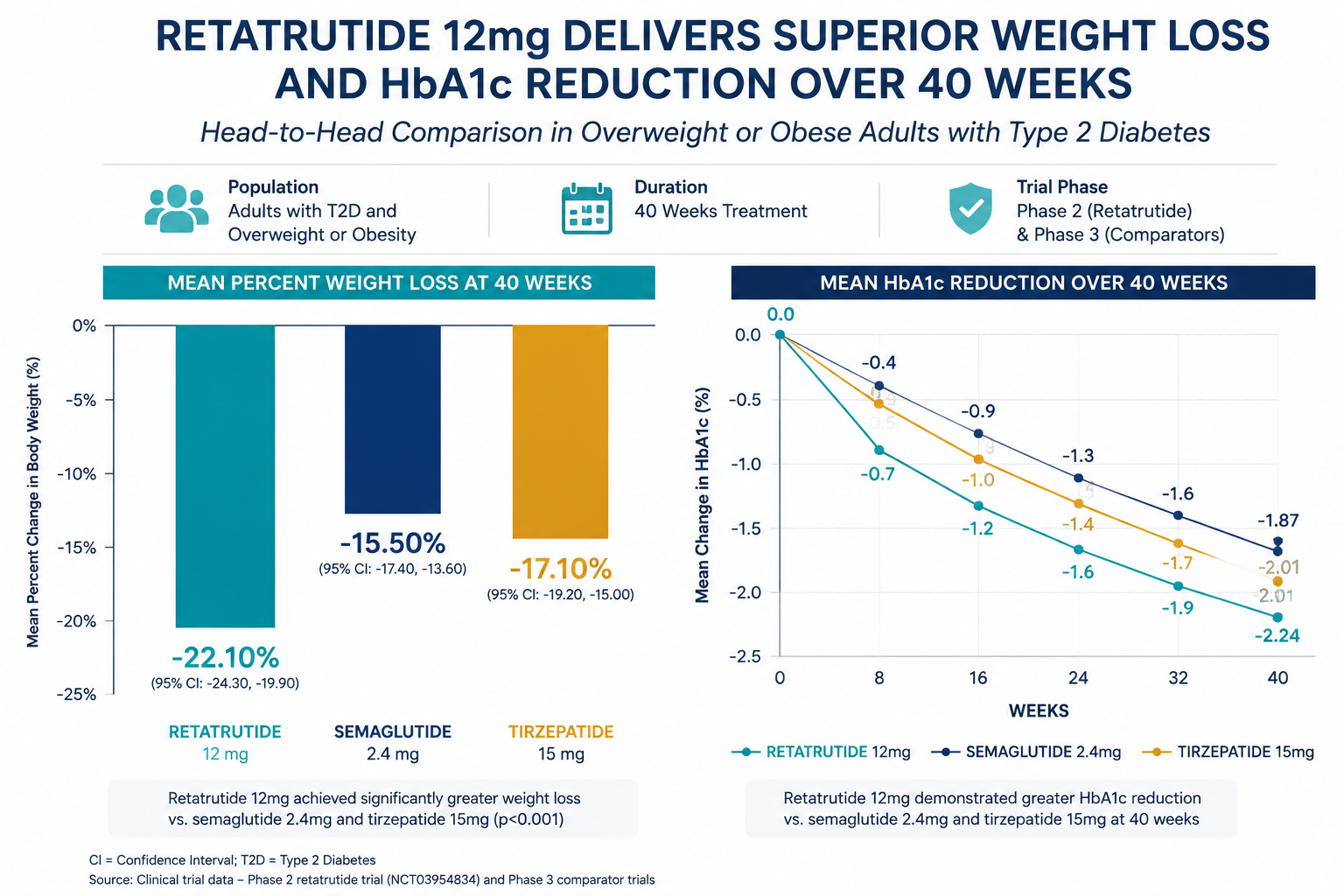
  • A network meta-analysis found retatrutide 12 mg produced a 22.10% body weight reduction, outperforming all compared GLP-1 receptor agonists.
  • Phase 2 trials reported HbA1c reductions of up to 1.94% and body weight reductions up to 15.3% over 40 weeks in type 2 diabetes subjects.
  • Gastrointestinal side effects were mild to moderate and diminished over time, with no severe hypoglycemia reported.

Key Takeaways

Mechanism of Action: How Retatrutide Differs from GLP-1 Receptor Agonists

Understanding the GLP-3 Retatrutide vs. GLP-1 Receptor Agonists: A Comprehensive Research Review begins at the receptor level. Standard GLP-1 receptor agonists, such as semaglutide and liraglutide, work by binding exclusively to glucagon-like peptide-1 receptors. This drives insulin secretion, suppresses glucagon release, and slows gastric emptying, producing meaningful but bounded metabolic effects.

Retatrutide operates on an entirely different scale. It is a 39-amino acid peptide engineered as a triple agonist, simultaneously activating three receptor types:

  • GIP (Glucose-dependent Insulinotropic Polypeptide) receptors, enhancing insulin sensitivity and fat metabolism
  • GLP-1 receptors, regulating appetite, glucose, and gastric motility
  • Glucagon receptors, increasing energy expenditure and promoting hepatic fat oxidation

"The inclusion of glucagon receptor agonism is considered a significant advancement, it adds a thermogenic and lipolytic dimension that single-target GLP-1 agents simply cannot replicate."

This multi-receptor engagement is why researchers exploring GLP-3 retatrutide research are paying close attention. The glucagon component, in particular, drives enhanced energy expenditure, which may explain retatrutide's outsized weight loss results compared to dual or single agonists. Researchers interested in related metabolic peptide mechanisms may also find value in reviewing AOD9604 metabolic research themes for comparative context on fat-targeted peptide signaling.


Mechanism of Action: How Retatrutide Differs from GLP-1 Receptor Agonists

Clinical Trial Data: What the Research Shows

The clinical evidence in this GLP-3 Retatrutide vs. GLP-1 Receptor Agonists: A Comprehensive Research Review paints a compelling picture across multiple trial phases.

Phase 2 Findings

In a Phase 2 trial focused on individuals with type 2 diabetes, retatrutide demonstrated:

Outcome Measure Result
Mean HbA1c reduction Up to 1.94%
Mean body weight reduction Up to 15.3%
Trial duration 40 weeks
Severe hypoglycemia events None reported

These results were notable not only for their magnitude but for the absence of serious glycemic complications, a key safety consideration in diabetic populations.

Phase 3 Findings

The Phase 3 trial expanded the scope to a broader population with obesity or overweight conditions. The headline result, approximately 28% average weight loss over 18 months, placed retatrutide in a category previously occupied only by surgical interventions.

A separate systematic review and network meta-analysis reinforced these findings, reporting that retatrutide 12 mg produced a 22.10% reduction in body weight and a 17.00 cm decrease in waist circumference, outperforming all other GLP-1 receptor agonists and polyagonists included in the analysis.

For researchers also studying body composition peptides, the TESA body composition research themes and IPA muscle and fat research themes offer relevant comparative frameworks.

Safety Profile

The most frequently reported adverse events were mild to moderate gastrointestinal symptoms, nausea, vomiting, and diarrhea, consistent with the GLP-1 class profile. Importantly, these effects tended to subside as the trial progressed. No severe hypoglycemia was observed across the trials reviewed.


Safety Profile

Comparative Efficacy and Research Implications

When mapping the landscape of incretin-based therapies, the data consistently positions retatrutide above current GLP-1 benchmarks. The table below summarizes the key comparative differences:

Feature GLP-1 Agonists Retatrutide (Triple Agonist)
Receptor targets GLP-1 only GIP + GLP-1 + Glucagon
Average weight loss 10-15% Up to 28%
Thermogenic effect Minimal Enhanced via glucagon axis
Regulatory status (2026) FDA approved (various) Late-stage trials; FDA submission anticipated

As of 2026, Eli Lilly continues late-stage trials with an anticipated FDA submission by year-end. Analysts project that approval could position retatrutide as a leading therapy across obesity, type 2 diabetes, and metabolic liver disease.

Researchers exploring the broader peptide landscape may find useful context in what is new in peptide research and the GLP-1 Retatrutide research product page. Those interested in metabolic synergy combinations may also review CJC and IPA synergy research themes for adjacent growth hormone axis considerations.

For researchers sourcing verified research-grade material, the GLP-3 Retatrutide 10mg product listing provides specification details relevant to preclinical study design.


Conclusion

The evidence reviewed here makes a clear case: retatrutide represents a meaningful step beyond conventional GLP-1 receptor agonist therapy. Its triple-receptor mechanism, particularly the addition of glucagon receptor agonism, produces weight loss outcomes that current single-target agents cannot match. Phase 2 and Phase 3 data both support its superior efficacy in reducing body weight and improving glycemic control, with a manageable safety profile.

Actionable next steps for researchers:

  • Review the full Phase 2 and Phase 3 trial datasets to assess applicability to specific research populations.
  • Compare retatrutide's glucagon receptor activity against established metabolic peptides to identify potential synergy or overlap.
  • Monitor FDA submission timelines closely, as approval would significantly expand the translational research landscape.
  • Explore innovative peptide delivery systems to understand how formulation advances may affect retatrutide's future clinical utility.

The gap between GLP-1 agonists and triple agonists like retatrutide is not incremental, it is structural. Researchers who map that gap now will be best positioned when the regulatory landscape shifts.

https://www.puretestedpeptides.com/wp-content/uploads/2026/07/GLP-3-Retatrutide-vs.-GLP-1-Receptor-Agonists-A-Comprehensive-Research-Review.png 1024 1536 Pure Tested https://www.puretestedpeptides.com/wp-content/uploads/2026/01/buy-peptides-online.jpg Pure Tested2026-07-05 13:07:052026-07-20 15:00:56GLP-3 Retatrutide vs. GLP-1 Receptor Agonists: A Comprehensive Research Review
Retatrutide Clinical Trials: What Phase 3 Data Mean for Research-Only Readers

Retatrutide Clinical Trials: What Phase 3 Data Mean for Research-Only Readers

June 27, 2026/0 Comments/by Pure Tested

A single Phase 3 trial readout in December 2025 shifted the entire conversation around triple agonism: 28.7% mean weight loss at 68 weeks. That number, from the TRIUMPH-4 study of retatrutide, is not a projection or a preclinical estimate. It is human trial data, and it demands careful reading by anyone tracking metabolic research.

This article breaks down what those results mean, how the trial was designed, and why the data carry weight for researchers studying GIP/GLP-1/glucagon receptor pathways — while making clear that retatrutide remains strictly investigational in 2026.

Key Takeaways

  • Retatrutide (LY3437943) is a once-weekly triple agonist targeting GIP, GLP-1, and glucagon receptors, currently in Phase 3 trials with no regulatory approval anywhere as of 2026.
  • TRIUMPH-4 reported 26.4% mean weight loss at 9 mg and 28.7% at 12 mg over 68 weeks, versus 2.1% on placebo.
  • Secondary endpoints included a 75.8% reduction in WOMAC knee pain scores and a ~72% reversal rate from prediabetes to normoglycemia.
  • Glucagon receptor activity appears to drive a lipid benefit, with roughly 20% reductions in LDL-cholesterol linked to PCSK9 degradation.
  • All access to retatrutide remains confined to clinical trials and preclinical research settings — it cannot be legally prescribed or compounded.

Key Takeaways


Understanding the TRIUMPH-4 Trial Design

Before interpreting any efficacy number, trial design matters. TRIUMPH-4 enrolled adults with obesity and knee osteoarthritis — a population chosen because weight reduction intersects directly with joint load and pain outcomes. Participants received once-weekly subcutaneous injections of retatrutide at either 9 mg or 12 mg, or placebo, over 68 weeks.

The dual primary endpoints were percent change in body weight and change in WOMAC pain score (a validated knee pain scale). This design is notable because it moved beyond simple weight loss to ask whether the weight loss translated into a clinically meaningful functional outcome.

Why this matters for researchers: The trial architecture reflects a broader trend in metabolic peptide research — moving from single-endpoint obesity studies toward multi-system outcome models. For those exploring metabolic modulation research lines, this multi-endpoint framing is increasingly the standard.


Retatrutide Clinical Trials: What Phase 3 Data Mean for Research-Only Readers — Efficacy Signals

The headline numbers from TRIUMPH-4 are striking by any standard in the obesity pharmacology literature.

Arm Mean Weight Loss WOMAC Pain Reduction
Retatrutide 9 mg 26.4% Significant
Retatrutide 12 mg 28.7% ~75.8% (4.5-point)
Placebo 2.1% Minimal

Beyond weight, three secondary signals deserve attention:

  • Glycemic reversal: Approximately 72% of participants with prediabetes at baseline returned to normoglycemia. This is consistent with GLP-1 receptor-mediated insulin secretion enhancement.
  • LDL reduction: Roughly 20% decreases in LDL-cholesterol were observed, a finding researchers attribute to glucagon receptor activity promoting PCSK9 degradation — a mechanism distinct from GLP-1 pathways alone.
  • Joint pain: The 75.8% reduction in WOMAC pain scores suggests that weight loss magnitude at this level produces measurable musculoskeletal benefit, independent of any direct anti-inflammatory peptide effect.

For context on how triple agonism compares to dual-agonist approaches, the GLP-3 triple agonist research planning overview provides useful background on receptor targeting rationale.

Researchers studying adjacent metabolic compounds such as MOTS-c and metabolic flexibility or SLU-PP-332 metabolic research will recognize the overlapping interest in multi-pathway energy regulation.

Retatrutide Clinical Trials: What Phase 3 Data Mean for Research-Only Readers — Efficacy Signals


Retatrutide Clinical Trials: What Phase 3 Data Mean for Research-Only Readers — Safety Reporting and Regulatory Status

No Phase 3 data set is complete without its safety profile. Retatrutide's adverse event pattern in TRIUMPH-4 followed the class-typical GI profile: nausea, vomiting, and diarrhea were the most commonly reported events, predominantly mild-to-moderate and dose-dependent. Discontinuation rates due to adverse events were consistent with other incretin-based therapies in Phase 3.

Critical regulatory note: As of June 2026, retatrutide holds no approval from the FDA, EMA, or any other major regulatory body. It cannot be legally prescribed, dispensed, or compounded as a medicine. All legitimate access is through enrolled clinical trials or preclinical laboratory research settings.

This distinction is not a formality. Researchers sourcing investigational compounds must verify purity and documentation rigorously. Reviewing quality testing protocols and understanding NAD and GLP-3 research sourcing considerations are practical steps for maintaining research integrity.

For those building broader metabolic research programs, longevity peptide research frameworks and the 5-Amino-1MQ research overview offer complementary context on energy metabolism targets.

Retatrutide Clinical Trials: What Phase 3 Data Mean for Research-Only Readers — Safety Reporting and Regulatory Status


Conclusion

The TRIUMPH-4 readout established retatrutide as the highest-performing weight-loss compound yet reported in a Phase 3 human trial, with multi-system benefits across glycemic, lipid, and musculoskeletal endpoints. For research-only readers, the data offer a clear signal: triple agonism at GIP, GLP-1, and glucagon receptors produces effects that exceed dual-agonist benchmarks in both magnitude and breadth.

Actionable next steps for researchers in 2026:

  1. Review the full TRIUMPH-4 trial protocol and supplementary data for endpoint methodology before drawing mechanistic conclusions.
  2. Map retatrutide's glucagon receptor contribution against your existing research on lipid and energy metabolism pathways.
  3. Ensure any investigational compound sourcing follows documented purity and chain-of-custody standards.
  4. Monitor the ongoing Phase 3 program for cardiovascular outcome data, which will be the next major inflection point in this research area.

The conversation around triple agonism has changed. The data say so.

https://www.puretestedpeptides.com/wp-content/uploads/2026/06/Retatrutide-Clinical-Trials-What-Phase-3-Data-Mean-for-Research-Only-Readers.png 1024 1536 Pure Tested https://www.puretestedpeptides.com/wp-content/uploads/2026/01/buy-peptides-online.jpg Pure Tested2026-06-27 13:04:232026-07-20 15:02:13Retatrutide Clinical Trials: What Phase 3 Data Mean for Research-Only Readers
GLP-3 Retatrutide vs. Polypeptide Peptides: A Comparative Research Guide to Metabolic Signaling Pathways

GLP-3 Retatrutide vs. Polypeptide Peptides: A Comparative Research Guide to Metabolic Signaling Pathways

June 19, 2026/0 Comments/by Pure Tested

Metabolic peptide research has shifted dramatically — where single-receptor agents once dominated laboratory inquiry, a new class of multi-target molecules is redefining what researchers expect from incretin-based signaling. This guide to GLP-3 Retatrutide vs. Polypeptide Peptides: A Comparative Research Guide to Metabolic Signaling Pathways examines how retatrutide's triple-receptor mechanism compares to conventional polypeptide agents, giving researchers a clear framework for understanding the underlying biology.

Key Takeaways

  • Retatrutide simultaneously activates three metabolic receptors: GLP-1R, GIPR, and the glucagon receptor (GcgR).
  • Conventional polypeptide peptides typically act on one or two receptor targets, producing narrower metabolic effects.
  • Triple agonism reshapes energy balance through complementary, overlapping signaling pathways.
  • Understanding receptor-level distinctions helps researchers design more targeted metabolic studies.
  • The term "GLP-3" is an informal research label — retatrutide's formal classification reflects its triple-agonist pharmacology.

Key Takeaways

Understanding the GLP-3 Label and Retatrutide's Classification

The label "GLP-3" circulates in research communities as shorthand for retatrutide, but it requires clarification. Retatrutide is not a third member of the glucagon-like peptide family in the classical sense. It is a synthetic triple agonist engineered to activate three distinct G-protein-coupled receptors simultaneously.

Conventional polypeptide peptides — including native GLP-1, GIP, and glucagon analogs — are typically single-receptor or, at most, dual-receptor agents. Their signaling is more contained. Retatrutide's design deliberately crosses those boundaries, which is why researchers studying GLP-3 Retatrutide incretin research themes often need a broader mechanistic framework than standard incretin models provide.

For context on how incretin generations have evolved, the overview of GLP-1 generations and their differences provides useful background on the progression from first-generation GLP-1 analogs to today's multi-agonist compounds.


Receptor-Level Mechanisms: How Retatrutide Differs from Conventional Polypeptide Peptides

This section of the GLP-3 Retatrutide vs. Polypeptide Peptides: A Comparative Research Guide to Metabolic Signaling Pathways focuses on what happens at the receptor level — the core distinction between retatrutide and standard polypeptide agents.

Receptor-Level Mechanisms: How Retatrutide Differs from Conventional Polypeptide Peptides

GLP-1 Receptor Activation

GLP-1R activation is shared by both retatrutide and conventional GLP-1 analogs. This pathway drives glucose-dependent insulin secretion, slows gastric emptying, and reduces appetite through both central nervous system and vagal nerve signaling. Single-agonist GLP-1 peptides operate primarily through this mechanism alone.

GIP Receptor Activation

GIPR activation adds a second layer. GIP further potentiates insulin release and modulates adipose tissue metabolism. Emerging research also suggests GIPR signaling may influence reward-related feeding behavior. Most traditional polypeptide peptides do not engage this receptor.

Glucagon Receptor Activation

GcgR activation is where retatrutide most clearly separates itself. Glucagon receptor signaling increases hepatic glucose output and, critically for metabolic research, raises resting energy expenditure. This thermogenic component is largely absent from conventional incretin peptides.

Receptor Retatrutide GLP-1 Analogs GIP Analogs
GLP-1R Yes Yes No
GIPR Yes No Yes
GcgR Yes No No
Thermogenic effect Yes Minimal Minimal

Researchers exploring complementary metabolic peptides such as MOTS-C, the mitochondrial peptide, will recognize that energy expenditure modulation is a recurring theme across multiple research-stage compounds — though the mechanisms differ significantly.


Metabolic Signaling Pathways: Triple Agonism vs. Conventional Peptide Approaches

The practical research value of the GLP-3 Retatrutide vs. Polypeptide Peptides: A Comparative Research Guide to Metabolic Signaling Pathways comparison lies in understanding how these mechanisms interact at the systems level.

Metabolic Signaling Pathways: Triple Agonism vs. Conventional Peptide Approaches

Triple agonism creates overlapping, reinforcing signals across three metabolic axes:

  • Insulin axis — amplified through both GLP-1R and GIPR co-activation
  • Appetite axis — suppressed via central GLP-1R pathways and potentially GIPR reward modulation
  • Energy expenditure axis — elevated through GcgR-driven thermogenesis

Conventional polypeptide peptides typically address one or two of these axes. Researchers studying body composition agents like Tesamorelin and its metabolic effects or AOD-9604 research methodology will note that each compound targets a narrower physiological window.

"Multi-receptor engagement is not simply additive — the convergence of three distinct signaling pathways creates metabolic effects that single-agonist models cannot fully replicate."

For researchers building broader metabolic panels, understanding cagrilintide's synergy with GLP-1 pathways also illustrates how combination approaches are increasingly central to advanced metabolic research design.

Those sourcing research-grade material can review GLP-3 Retatrutide product details for specification and traceability information.


Conclusion

The distinction between retatrutide and conventional polypeptide peptides is not merely a matter of degree — it reflects a fundamentally different approach to metabolic receptor engagement. Where single or dual-agonist peptides offer focused, well-characterized signaling, retatrutide's triple-agonist profile introduces a more complex, multi-axis mechanism that researchers must account for in study design.

Actionable next steps for researchers:

  1. Map which receptor pathways are relevant to your specific metabolic research question before selecting a peptide agent.
  2. Review the GLP-1 generations overview to contextualize retatrutide within the broader incretin research landscape.
  3. Cross-reference thermogenic and energy expenditure data when comparing triple-agonist results against single-receptor peptide benchmarks.
  4. Consult available innovative peptide delivery systems research to ensure study protocols reflect current best practices.

Understanding these mechanistic foundations is the starting point for rigorous, reproducible metabolic peptide research in 2026.

https://www.puretestedpeptides.com/wp-content/uploads/2026/06/GLP-3-Retatrutide-vs.-Polypeptide-Peptides-A-Comparative-Research-Guide-to-Metabolic-Signaling-Pathways.png 1024 1024 Pure Tested https://www.puretestedpeptides.com/wp-content/uploads/2026/01/buy-peptides-online.jpg Pure Tested2026-06-19 13:42:052026-07-20 15:02:42GLP-3 Retatrutide vs. Polypeptide Peptides: A Comparative Research Guide to Metabolic Signaling Pathways
What Is the GLP3 Peptide? Research Distinctions, Naming Confusion, and How It Relates to Retatrutide

What Is the GLP3 Peptide? Research Distinctions, Naming Confusion, and How It Relates to Retatrutide

June 10, 2026/0 Comments/by Pure Tested

A single informal label is causing genuine confusion across research communities, patient forums, and peptide catalogs in 2026: "GLP-3." Researchers searching for this term are often looking for something very different from what the name implies. Understanding what the GLP-3 peptide actually refers to — and why that label is scientifically inaccurate — matters for anyone tracking the latest developments in metabolic research.

Key Takeaways

  • There is no hormone called "GLP-3." The term is an informal nickname, not a recognized scientific designation.
  • "GLP-3" almost always refers to retatrutide (LY3437943), a triple-agonist investigational compound developed by Eli Lilly.
  • Retatrutide simultaneously targets three receptors: GLP-1, GIP, and glucagon.
  • Phase 3 trial data shows approximately 28% average weight loss over 18 months — results comparable to bariatric surgery.
  • As of 2026, retatrutide is not FDA-approved and remains under active clinical investigation.

Key Takeaways

Understanding the Naming Confusion Around "GLP-3"

The phrase "GLP-3 peptide" does not correspond to any recognized hormone in human physiology. The glucagon-like peptide family includes GLP-1 and GLP-2, both derived from the proglucagon gene. GLP-1 is well-established for its role in insulin secretion and appetite regulation. GLP-2 supports intestinal growth. No GLP-3 exists in the official scientific literature.

So where does the term come from? It appears to have emerged organically from online communities and informal research discussions as shorthand for retatrutide — a compound that acts on three separate receptor pathways. The logic is loose: "triple action" became "GLP-3" in casual usage. The label stuck, even though it misrepresents the compound's actual mechanism.

This kind of naming drift is not unusual in peptide research. For a broader look at how terminology evolves in this field, the ultimate guide to peptide therapy provides useful context on how compounds are classified and discussed.


What Is the GLP3 Peptide? Research Distinctions, Naming Confusion, and How It Relates to Retatrutide — The Core Answer

Retatrutide (development code LY3437943) is the compound most commonly referenced when someone asks about the "GLP-3 peptide." It is an investigational drug developed by Eli Lilly that activates three distinct hormone receptors simultaneously:

Receptor Primary Research Function
GLP-1 Reduces appetite, slows gastric emptying
GIP Improves insulin sensitivity, supports fat distribution
Glucagon Increases energy expenditure, promotes fat breakdown via thermogenesis

This triple-agonist profile is what separates retatrutide from earlier-generation compounds. Semaglutide targets GLP-1 alone. Tirzepatide targets GLP-1 and GIP. Retatrutide adds glucagon receptor activation on top of both, creating a broader metabolic effect.

For researchers already familiar with the GLP-1 peptide research landscape, retatrutide represents a meaningful step forward in receptor-targeting strategy. Those planning research with this compound should also review GLP-3 triple agonist research planning resources before sourcing.


What Is the GLP3 Peptide? Research Distinctions, Naming Confusion, and How It Relates to Retatrutide — The Core Answer

Phase 3 Data and Regulatory Status in 2026

The clinical results for retatrutide are among the most discussed in metabolic medicine this year. In Phase 3 trials, participants achieved an average weight loss of approximately 28% over 18 months — a figure that rivals outcomes typically seen with bariatric surgery. No other injectable medication has produced comparable numbers in trial data to date.

"Retatrutide's Phase 3 results represent the highest weight loss figures recorded for any injectable medication in clinical trials."

Despite these results, retatrutide is not FDA-approved as of 2026. Eli Lilly anticipates filing for FDA approval in 2026–2027, with potential commercial availability projected for late 2027 or 2028, contingent on successful trial completion and regulatory review.

Beyond weight loss, researchers are examining retatrutide's potential influence on type 2 diabetes, cardiovascular risk factors, and metabolic liver disease. The GIP receptor and its importance in metabolic signaling provides additional background on one of the three pathways retatrutide engages.


What Is the GLP3 Peptide? Research Distinctions, Naming Confusion, and How It Relates to Retatrutide — Practical Implications for Researchers

For researchers navigating this space, the terminology distinction has real consequences. Searching for "GLP-3 peptide" may return inconsistent results across databases, catalogs, and literature because the label is not standardized. Using the correct terminology — triple agonist, GLP-1/GIP/glucagon receptor agonist, or retatrutide/LY3437943 — will yield more reliable and reproducible search results.

Retatrutide is administered as a once-weekly subcutaneous injection, a delivery format consistent with other compounds in the GLP-1 class. Researchers interested in innovative peptide delivery systems will find the subcutaneous format familiar, though the triple-receptor profile introduces unique considerations for study design.

Those tracking the broader metabolic peptide landscape may also find value in reviewing AOD-9604 metabolic research and SLU-PP-332 metabolic research themes for comparative context on fat metabolism pathways.


What Is the GLP3 Peptide? Research Distinctions, Naming Confusion, and How It Relates to Retatrutide — Practical Implications

Conclusion

The "GLP-3 peptide" is not a real hormone — it is a widely circulated misnomer for retatrutide, a triple-agonist compound targeting GLP-1, GIP, and glucagon receptors. Clarifying this distinction is essential for accurate research planning, catalog navigation, and literature review.

Actionable next steps for researchers:

  • Use "retatrutide," "LY3437943," or "triple agonist" in database and catalog searches instead of "GLP-3."
  • Review the GIP receptor pathway alongside GLP-1 mechanisms before designing studies.
  • Monitor FDA filing updates from Eli Lilly, expected in the 2026–2027 window.
  • Consult what is new in peptide research for ongoing developments in this fast-moving field.

Precise terminology is not a minor detail in peptide research — it directly affects sourcing accuracy, study reproducibility, and regulatory compliance awareness.

https://www.puretestedpeptides.com/wp-content/uploads/2026/06/What-Is-the-GLP3-Peptide-Research-Distinctions-Naming-Confusion-and-How-It-Relates-to-Retatrutide.png 672 1024 Pure Tested https://www.puretestedpeptides.com/wp-content/uploads/2026/01/buy-peptides-online.jpg Pure Tested2026-06-10 13:06:532026-07-20 15:03:32What Is the GLP3 Peptide? Research Distinctions, Naming Confusion, and How It Relates to Retatrutide
PT-141 Peptide and Melanocortin Signaling: What Researchers Should Know Beyond Erectile-Function Headlines

PT-141 Peptide and Melanocortin Signaling: What Researchers Should Know Beyond Erectile-Function Headlines

June 2, 2026/0 Comments/by Pure Tested

Fewer than 5% of published peptide research articles on bremelanotide address its role outside of sexual function — yet the melanocortin system it targets governs appetite, inflammation, energy balance, and kidney filtration. Understanding PT-141 peptide and melanocortin signaling means looking past the headlines and into the receptor biology that makes this compound a serious subject of multi-system investigation in 2026.

Close-up overhead view of a laboratory bench with multiple glass vials containing clear peptide solutions arranged beside a

Key Takeaways

  • PT-141 is a synthetic cyclic heptapeptide that selectively activates MC3R and MC4R in the central nervous system, bypassing vascular mechanisms entirely.
  • Its pharmacological reach extends well beyond sexual function into appetite regulation, kidney disease, and metabolic research.
  • Purity thresholds matter: batches below 97% purity show an 18-24% variance in receptor binding affinity.
  • Recent hypothalamic mapping has identified previously uncharted MC4R-dense regions, expanding the research scope of this peptide.
  • Researchers sourcing PT-141 for preclinical work should prioritize verified, high-purity material to ensure reproducible results.

The Melanocortin Receptor System: A Framework Researchers Must Understand

Before examining PT-141 peptide and melanocortin signaling in applied contexts, researchers need a firm grasp of the receptor architecture involved.

The melanocortin system comprises five G-protein-coupled receptors (MC1R through MC5R). PT-141 — derived from Melanotan II — acts with high selectivity at MC3R and MC4R, bypassing MC1R and MC2R almost entirely. This selectivity is not trivial. MC4R is densely expressed in the hypothalamus, including the paraventricular nucleus (PVN) and the lateral hypothalamic area (LHA), regions recently mapped in a multi-institutional study published in Nature Communications. These areas regulate feeding behavior, energy expenditure, and autonomic tone — not just reproductive signaling.

Why this matters for research design: Any experimental model using PT-141 that treats it purely as a pro-erectile agent is missing the broader neuroendocrine canvas. The same receptor activation that modulates sexual arousal also intersects with satiety signaling and stress-axis responses.

Researchers exploring adjacent peptide systems — such as MOTS-c mitochondrial research themes or GLP-1 and incretin pathway investigations — will find meaningful mechanistic overlap with the MC4R axis, particularly in metabolic regulation models.


Beyond Sexual Function: Emerging Research Domains

Beyond Sexual Function: Emerging Research Domains

The clinical approval of bremelanotide (Vyleesi) in 2019 for hypoactive sexual desire disorder (HSDD) in premenopausal women established PT-141's regulatory legitimacy. Open-label extension data confirm that improvements in sexual desire and reductions in distress are maintained over 52 weeks of on-demand use with no new safety signals. In male erectile dysfunction research, a randomized controlled trial showed positive clinical responses in 33.5% of bremelanotide-treated patients versus 8.5% on placebo — and co-administration with sildenafil produced significantly enhanced responses in non-responders.

But the more compelling frontier lies elsewhere.

Metabolic and Appetite Research

Palatin Technologies completed a Phase 2 trial pairing bremelanotide with tirzepatide, a dual GLP-1/GIP agonist. The combination group achieved a 4.4% weight reduction compared to 1.6% in the placebo group. The mechanistic logic is straightforward: MC4R activation suppresses appetite through central pathways, and stacking it with incretin-based agents may amplify energy balance effects. This is preliminary data, not an approved application — but it signals why researchers studying metabolic peptide synergy should monitor the MC4R literature closely.

Kidney Disease Models

The BREAKOUT Phase 2b study in type 2 diabetic kidney disease found that 71% of patients achieved more than a 30% reduction in urine protein/creatinine ratio with bremelanotide treatment. MC receptors expressed in renal tissue appear to modulate podocyte function and inflammatory signaling. These findings require further validation but represent a significant expansion of the peptide's research profile.


Purity, Pharmacokinetics, and Research Protocol Considerations

Purity, Pharmacokinetics, and Research Protocol Considerations

Reproducibility in peptide research starts with material quality. Research published in the Journal of Peptide Science demonstrated that PT-141 batches below 97% purity show an 18-24% variance in receptor binding affinity compared to pharmaceutical-grade material — a variance large enough to invalidate dose-response conclusions.

Following subcutaneous administration, PT-141 reaches peak plasma concentration within 30-60 minutes, with maximal effects observed between 1-4 hours. Despite a plasma half-life of approximately 2.7 hours, biological effects persist for 6-8 hours, likely due to receptor residence time and downstream neurochemical changes.

Common adverse events in clinical trials include:

  • Nausea (approximately 40% of participants)
  • Flushing (approximately 20%)
  • Injection site reactions
  • Transient blood pressure increases, typically resolving within 12 hours

Researchers sourcing material for preclinical work should consult detailed PT-141 research context documentation and review reference standard benchmarking practices before designing assays. For those ready to source verified material, PT-141 peptide for research use is available with documented purity specifications.

"Receptor selectivity is only as meaningful as the purity of the compound activating it."

Researchers comparing neuroendocrine peptides may also find value in reviewing BPC-157 core documentation for parallel methodology frameworks in CNS-adjacent peptide studies.


Conclusion

PT-141 peptide and melanocortin signaling represent a research area far broader than the erectile-function narrative that dominates popular coverage. The MC3R/MC4R axis connects appetite regulation, kidney filtration, metabolic balance, and neuroendocrine function — all active areas of investigation in 2026. Researchers entering this space should prioritize three immediate steps: verify that sourced material meets or exceeds 97% purity, design protocols that account for the peptide's extended biological half-life relative to plasma clearance, and monitor emerging Phase 2 data in metabolic and renal disease models. The mechanism is the message — and the mechanism here is considerably richer than the headlines suggest.


https://www.puretestedpeptides.com/wp-content/uploads/2026/06/PT-141-Peptide-and-Melanocortin-Signaling-What-Researchers-Should-Know-Beyond-Erectile-Function-Headlines.png 1024 1536 Pure Tested https://www.puretestedpeptides.com/wp-content/uploads/2026/01/buy-peptides-online.jpg Pure Tested2026-06-02 22:09:512026-07-20 15:04:15PT-141 Peptide and Melanocortin Signaling: What Researchers Should Know Beyond Erectile-Function Headlines
×

Helpful Links

  • My account
  • Cart
  • Checkout
  • Refund and Returns Policy
  • Privacy Policy
  • SMS Privacy Policy
  • Login
  • My Account
  • Logout

USA Made Lab Tested Peptides

All products are sold for research, laboratory, or analytical purposes only, and are not for human consumption


Pure Tested Peptides is a chemical supplier. Pure Tested Peptides is not a compounding / chemical compounding facility as defined under 503A of the Federal Food, Drug, and Cosmetic act. Pure Tested Peptides is not an outsourcing facility as defined under 503B of the Federal Food, Drug, and Cosmetic act.

The statements made within this website have not been evaluated by the US Food and Drug Administration. The products we offer are not intended to diagnose, treat, cure or prevent any disease.

Human/Animal Consumption Prohibited. Laboratory/In-Vitro Experimental Use Only

Scroll to top Scroll to top Scroll to top