

Fewer than 5% of peptide research protocols test compounds in combination — yet preclinical data consistently show that multi-peptide stacking can produce outcomes no single agent achieves alone. The study of BPC-157 and TB-500 Synergy: Optimizing Tissue Regeneration Protocols in Research Models sits at exactly that frontier, drawing growing attention from researchers exploring accelerated connective tissue repair, angiogenesis, and cellular recovery in animal models.
Key Takeaways
- BPC-157 and TB-500 target distinct but complementary biological pathways, making their combination mechanistically rational.
- Preclinical models suggest the pairing may accelerate tendon, muscle, and ligament repair beyond what either peptide achieves independently.
- Dosing timing, route of administration, and peptide purity are critical variables in well-controlled research protocols.
- Neither peptide is approved for human use; all applications remain within research and investigational contexts.
- Sourcing lab-tested peptides is a non-negotiable quality control step for reproducible results.
Understanding the Two Peptides and Why Combination Research Makes Sense
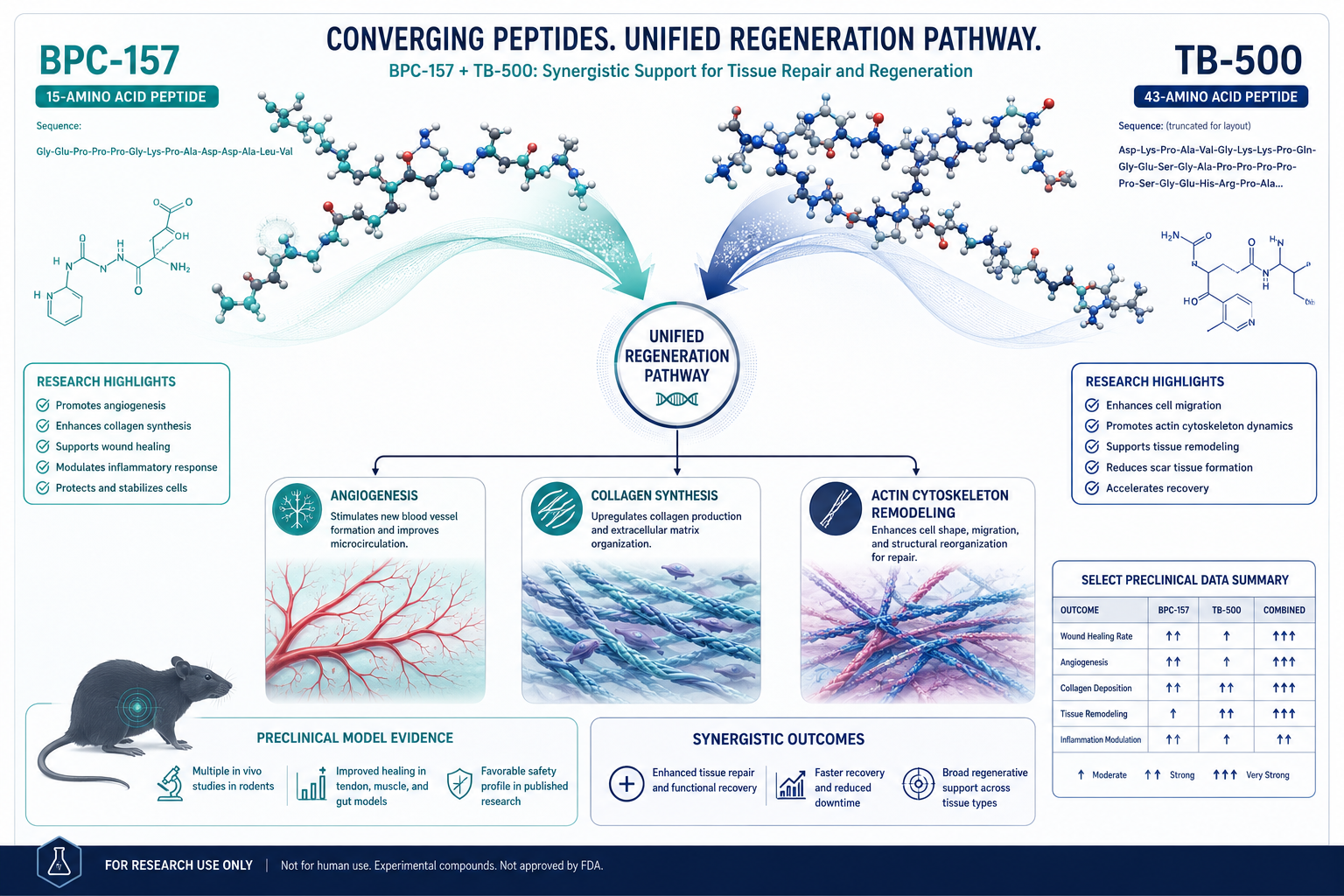
BPC-157 (Body Protection Compound-157) is a synthetic pentadecapeptide derived from a protein found in gastric juice. In rodent models, it has demonstrated consistent activity in tendon-to-bone healing, gut mucosal repair, and neurological recovery. Its primary mechanisms include upregulation of growth hormone receptors, promotion of angiogenesis via VEGF pathways, and modulation of nitric oxide synthesis.
TB-500 is a synthetic analogue of Thymosin Beta-4, a naturally occurring peptide present in virtually all human and animal cells. It promotes actin polymerization, supports endothelial cell migration, and reduces local inflammation. Critically, TB-500 facilitates the formation of new blood vessels and supports the migration of stem cells to injury sites.
"The mechanistic complementarity between BPC-157 and TB-500 is not incidental — one primes the vascular scaffold while the other drives structural repair."
When researchers evaluate BPC-157 and TB-500 synergy, the rationale becomes clear:
| Feature | BPC-157 | TB-500 |
|---|---|---|
| Primary pathway | VEGF / GH receptor | Actin / Thymosin Beta-4 |
| Key tissue targets | Tendon, gut, nerve | Muscle, cardiac, connective |
| Anti-inflammatory | Moderate | Strong |
| Angiogenic effect | High | Moderate-High |
| Stem cell mobilization | Indirect | Direct |
This complementary profile is why combined protocols have become a focus in tissue regeneration research. Researchers can also explore how similar synergy principles apply in other peptide pairings, such as the synergy of LL-37 and SS-31, which demonstrates comparable multi-pathway logic.
Optimizing Tissue Regeneration Protocols in Research Models: Dosing and Design
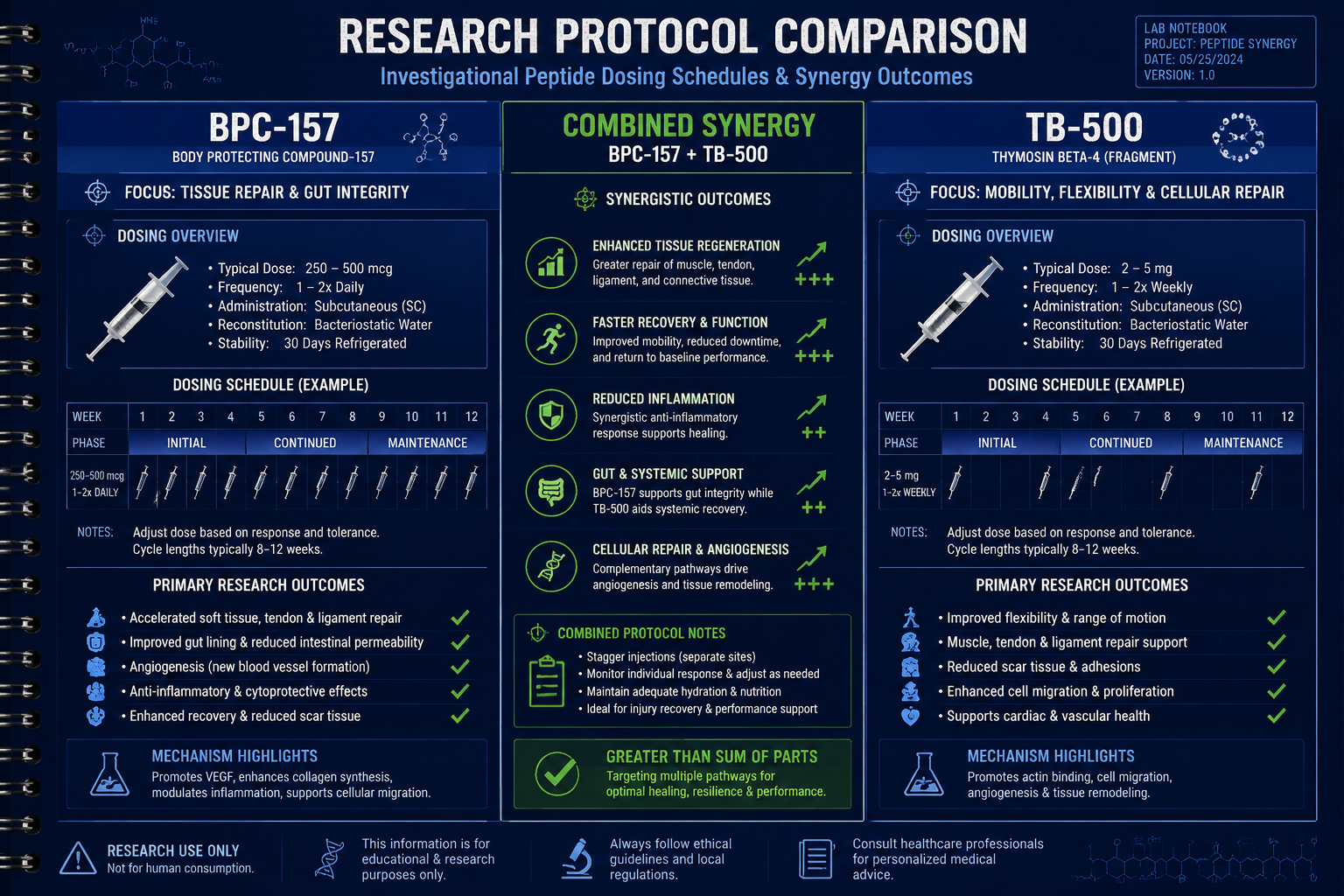
Designing a rigorous protocol for optimizing tissue regeneration protocols in research models requires attention to four core variables: dose, frequency, route, and timing relative to the injury event.
Typical Preclinical Dosing Ranges
Research in rodent models has used the following approximate ranges:
- BPC-157: 1–10 mcg/kg body weight, administered intraperitoneally or subcutaneously, once daily
- TB-500: 2.0–7.5 mg/kg body weight, administered subcutaneously, two to three times per week
When used in combination, some protocols apply a loading phase (higher frequency in weeks 1–2) followed by a maintenance phase (reduced frequency in weeks 3–6). This mirrors the approach used in other multi-peptide blends, such as the Klow Blend multi-pathway research framework, which also employs phased administration strategies.
Route of Administration Considerations
Subcutaneous injection remains the most common route in preclinical models for both peptides. Intraperitoneal delivery is also documented for BPC-157. Oral administration of BPC-157 has shown activity in gut-related endpoints but is generally considered less reliable for systemic musculoskeletal targets.
Key Protocol Design Checkpoints
- Randomize subject assignment to control and treatment groups
- Standardize injury induction method (e.g., Achilles tendon transection, muscle crush)
- Use blinded outcome assessment (histology, tensile strength testing, immunohistochemistry)
- Log reconstitution conditions and storage temperature for each peptide lot
- Verify peptide identity and purity via third-party certificate of analysis
Researchers interested in related regenerative peptides may also find value in reviewing GHK-Cu longevity research themes, as copper peptide activity intersects with collagen synthesis pathways relevant to tissue repair models.
Practical Sourcing and Quality Control for BPC-157 and TB-500 Research
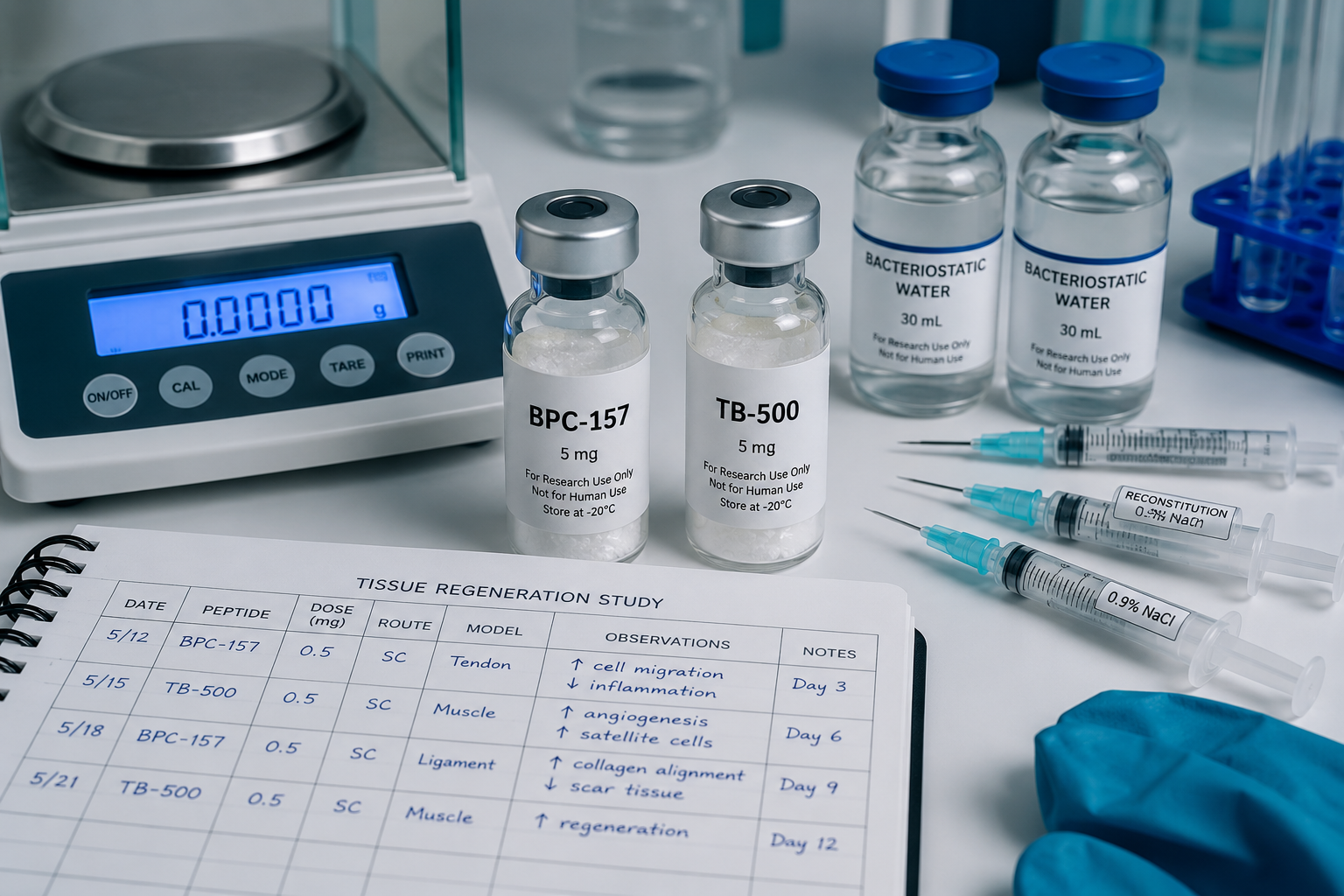
The reproducibility of any BPC-157 and TB-500 synergy study depends directly on peptide quality. Impure or misidentified compounds introduce confounding variables that invalidate results. Researchers should prioritize suppliers who provide:
- HPLC purity certificates (minimum 98% purity recommended)
- Mass spectrometry confirmation of molecular identity
- Sterility testing documentation
- Clearly labeled lot numbers for traceability
For reference, the BPC-157 and TB-500 combined research page and the dedicated TB-500 research resource provide sourcing context and compound-specific notes useful for protocol planning.
Researchers should also note that peptide stability varies. BPC-157 is generally stable at 4°C for short-term storage and at -20°C for longer periods. TB-500 follows similar cold-chain requirements. Both should be reconstituted with bacteriostatic water immediately before use and protected from repeated freeze-thaw cycles.
For those building broader regenerative research programs, exploring complementary compounds such as LL-37 innate research themes or IPA muscle and fat research themes can help contextualize where BPC-157/TB-500 protocols fit within a wider investigational framework.
Conclusion
The investigation of BPC-157 and TB-500 Synergy: Optimizing Tissue Regeneration Protocols in Research Models represents one of the most mechanistically grounded areas of current peptide science. The two compounds address distinct but interlocking repair pathways, making their combined study both logical and productive for preclinical researchers.
Actionable next steps for researchers:
- Review existing rodent tendon and muscle repair literature to benchmark expected outcomes before designing new protocols.
- Establish purity verification as a non-negotiable pre-study step — source only from suppliers with documented third-party testing.
- Apply phased dosing designs (loading plus maintenance) to better mirror physiological repair timelines.
- Include histological and biomechanical endpoints alongside functional assessments for multi-dimensional data.
- Document all reconstitution, storage, and administration variables in a standardized research log to support reproducibility.
As 2026 brings increased scrutiny to peptide research standards, well-designed combination protocols will be essential for generating data that withstands peer review and advances the field.
Leave a Reply
Want to join the discussion?Feel free to contribute!