BPC-157 and TB-500 Synergy: Advanced Tissue Repair and Regeneration Protocols
Musculoskeletal injuries account for nearly 1.71 billion cases of chronic pain worldwide, yet the pipeline for peptide-based repair agents has remained largely stalled at the preclinical stage. Two peptides, BPC-157 and TB-500, have attracted serious attention from researchers precisely because their mechanisms appear to complement each other in ways that neither compound achieves alone. Understanding the science behind BPC-157 and TB-500 synergy: advanced tissue repair and regeneration protocols requires a clear-eyed look at what the evidence actually shows, where the gaps remain, and how responsible research models are structured in 2026.
Key Takeaways
- BPC-157 and TB-500 operate through distinct but complementary molecular pathways, creating a mechanistic rationale for combined use in tissue regeneration research.
- The combined stack, often called the "Wolverine Stack", lacks controlled human trial data as of mid-2026; all efficacy evidence remains preclinical.
- Researchers should use separate syringes for each peptide due to contradictory guidance on co-formulation stability.
- Regulatory status classifies both compounds as research chemicals, not approved therapeutic drugs.
- Advanced protocols must include defined outcome markers, injury models, and safety monitoring checkpoints.
How BPC-157 and TB-500 Work at the Molecular Level
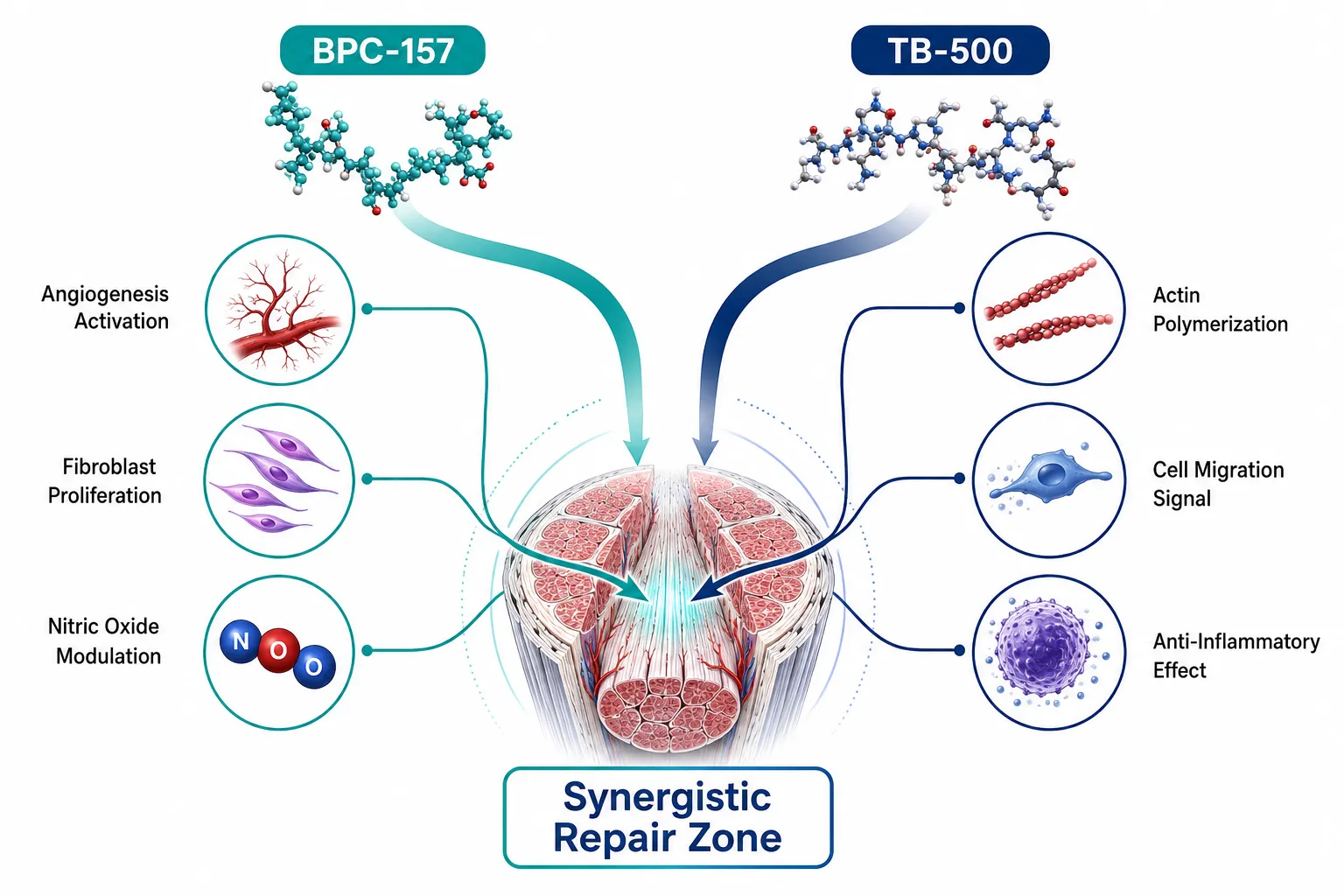
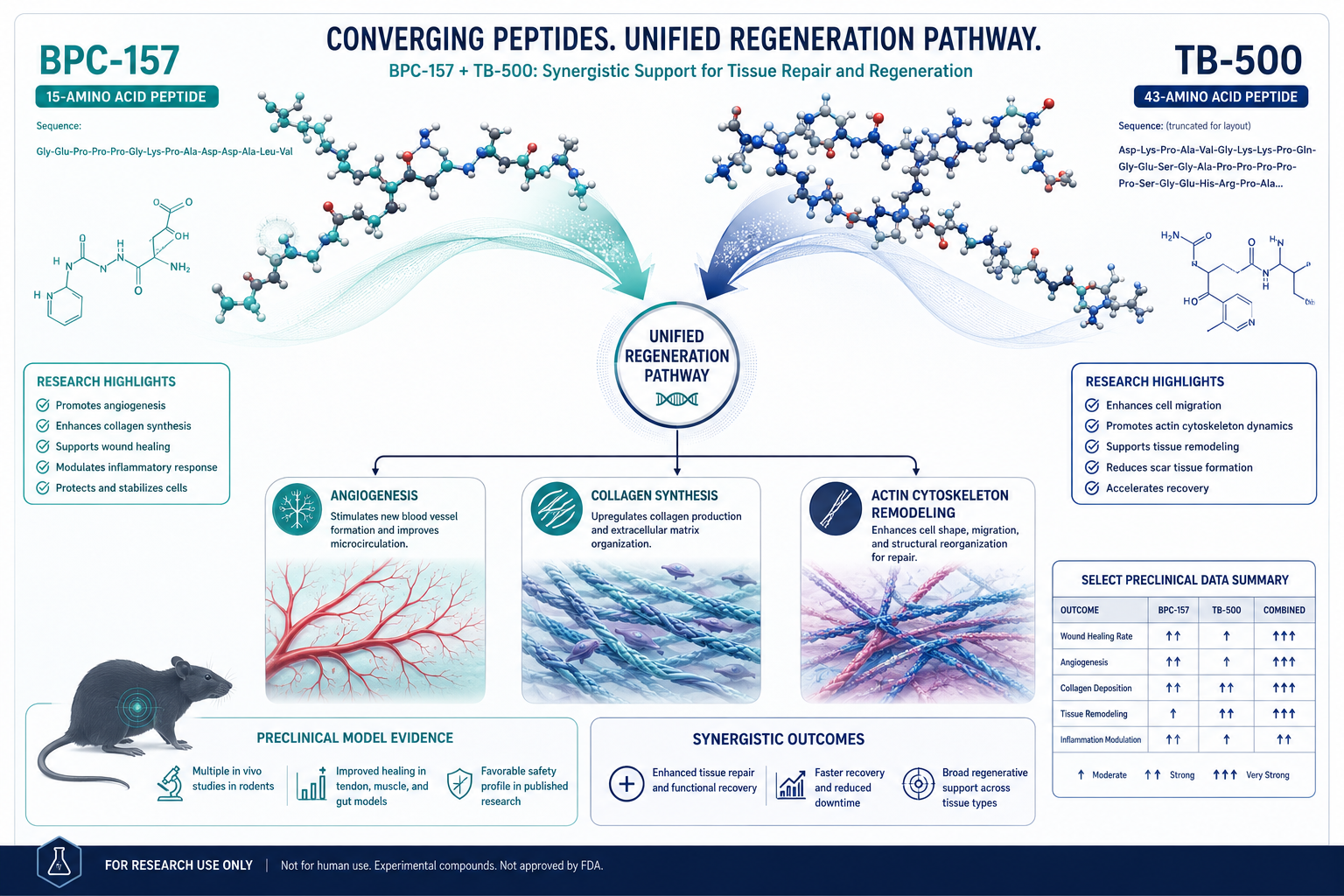
BPC-157 is a synthetic pentadecapeptide derived from a protective gastric protein. Its primary actions center on local tissue protection: it promotes angiogenesis, stimulates fibroblast proliferation, and modulates nitric oxide signaling. These effects make it particularly relevant to tissue repair research involving tendons, ligaments, and mucosal structures.
TB-500, a fragment of the naturally occurring thymosin beta-4 protein, operates through a different but complementary mechanism. It promotes actin polymerization, which is essential for cell motility. This systemic effect enables progenitor cells and immune cells to migrate efficiently to injury sites, a function BPC-157 does not directly perform.
The mechanistic convergence is the core argument for synergy: BPC-157 prepares and protects the local repair environment, while TB-500 mobilizes the cellular workforce needed to populate that environment.
Together, they target two distinct bottlenecks in the healing cascade:
| Peptide | Primary Mechanism | Primary Target |
|---|---|---|
| BPC-157 | Angiogenesis, fibroblast activation, nitric oxide modulation | Local tissue environment |
| TB-500 | Actin polymerization, cell migration, anti-inflammatory signaling | Systemic cell mobilization |
| Combined | Dual-pathway convergence at injury site | Accelerated structural repair |
This mechanistic overlap is the scientific foundation driving interest in systemic peptide research involving both compounds.
Advanced Research Protocols for the Combined Stack
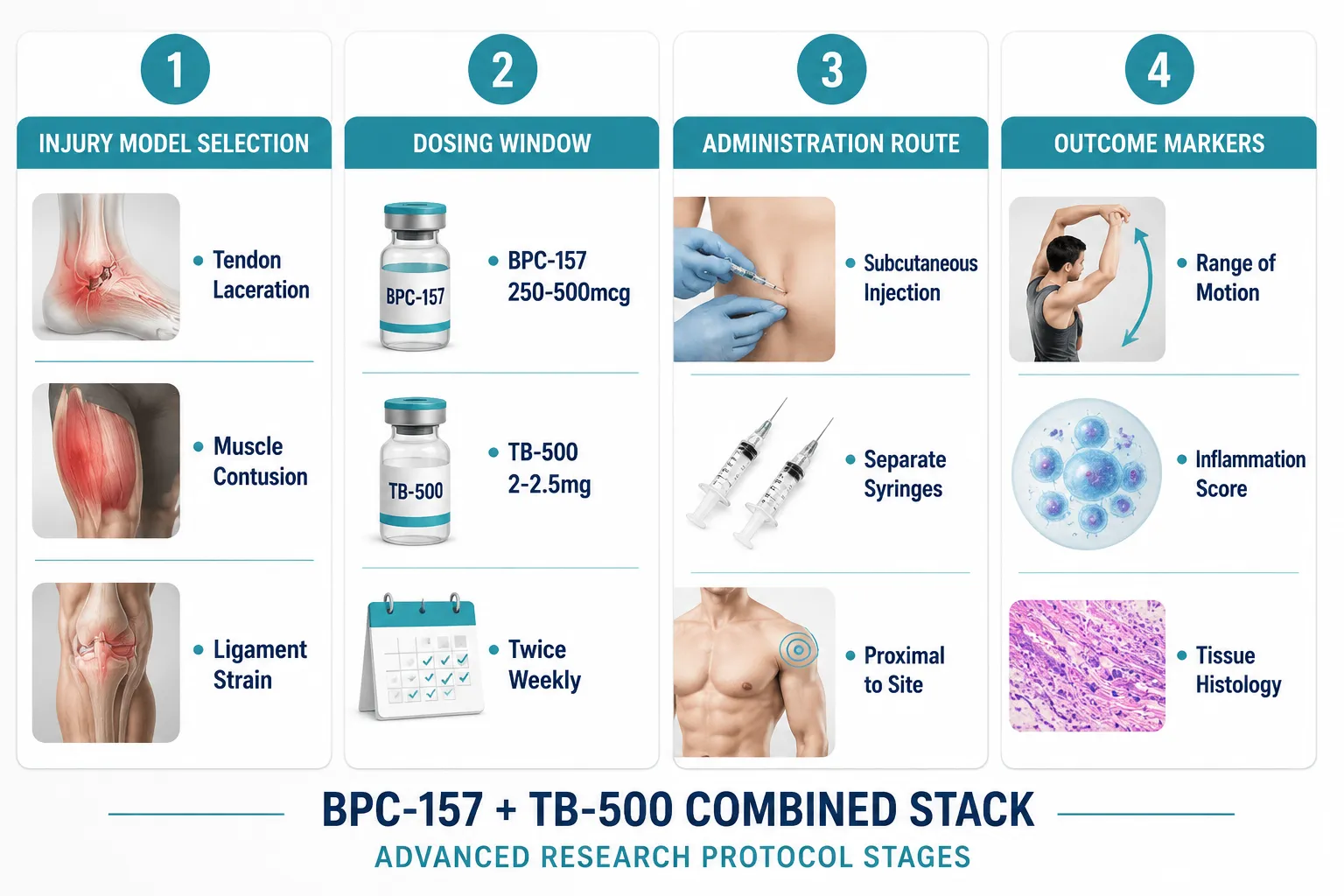
Designing a rigorous protocol for studying BPC-157 and TB-500 synergy: advanced tissue repair and regeneration protocols requires careful attention to injury model selection, dosing parameters, administration method, and measurable outcomes. The following framework reflects current best practices in preclinical research design as of 2026.
Injury Model Selection
Researchers typically select from three primary models:
- Tendon laceration models, most common for evaluating structural repair speed and collagen organization
- Muscle contusion models, useful for assessing inflammation reduction and satellite cell activation
- Ligament strain models, relevant for joint stability and range-of-motion endpoints
Dosing Parameters
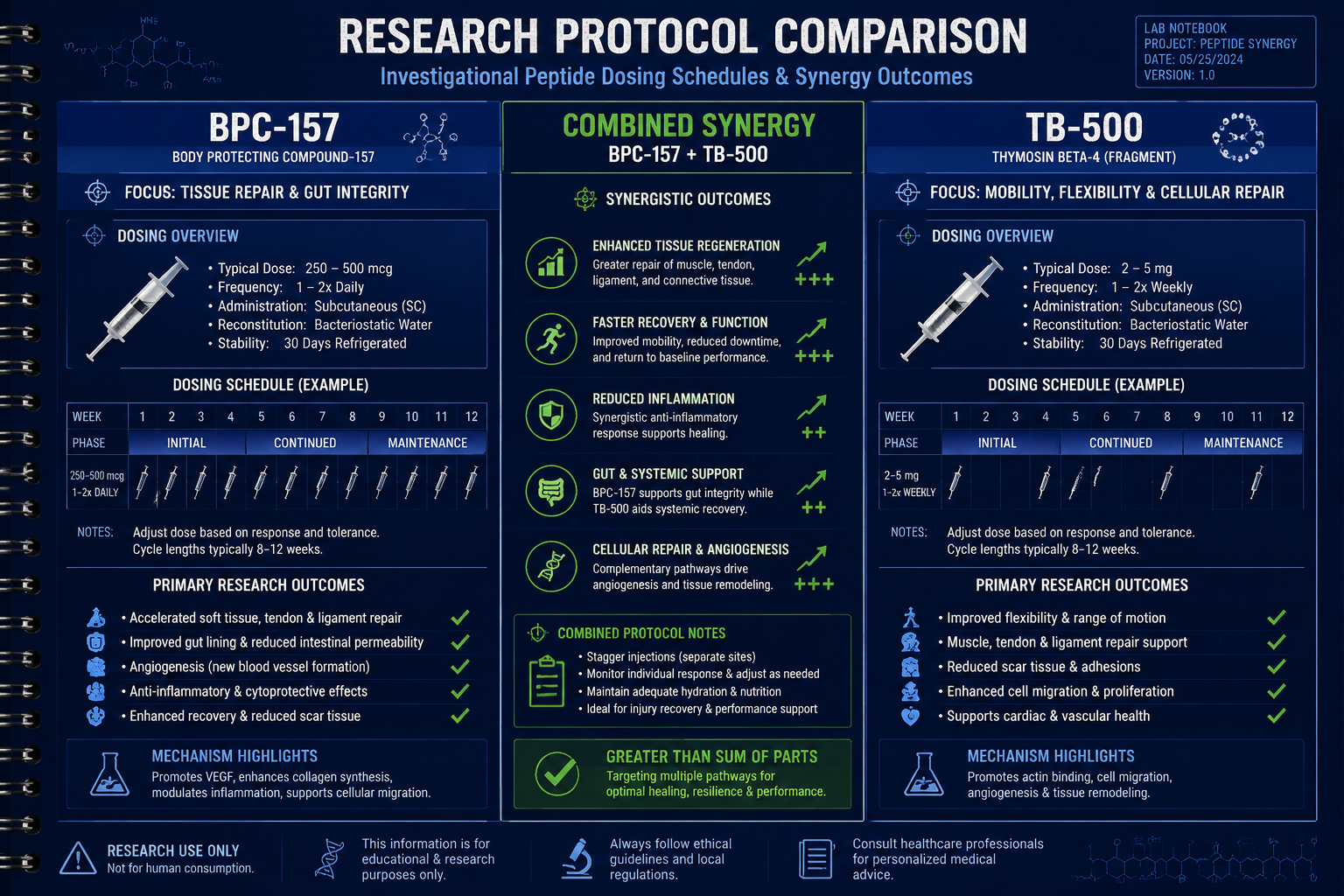
The standard protocol used in current research guides, sometimes referenced as the "Wolverine Stack," generally employs:
- BPC-157: 250-500 mcg per administration
- TB-500: 2-2.5 mg per administration
- Frequency: Twice weekly during the active repair phase
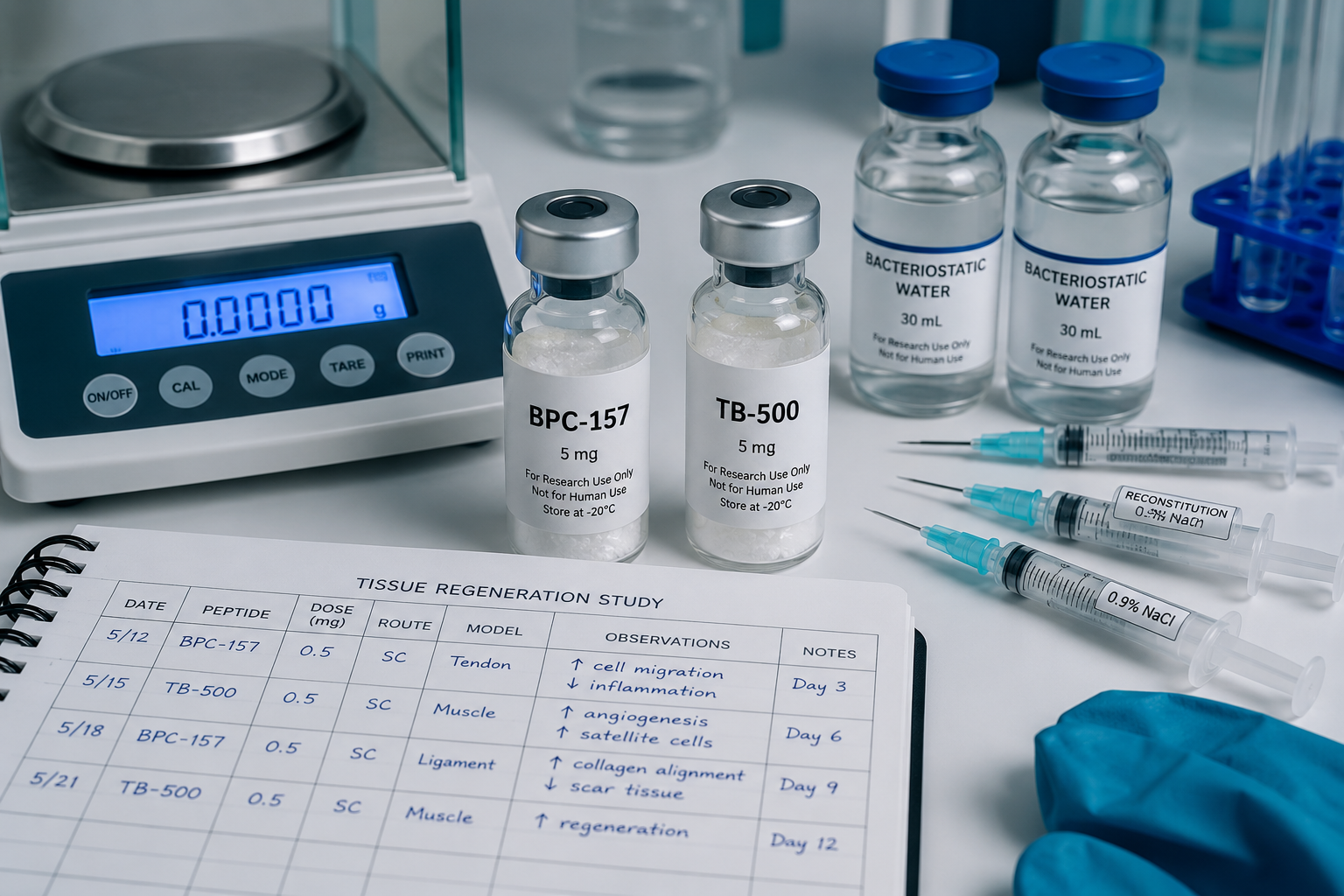
Critical note on mixing: Contradictory guidance exists in the research community regarding whether BPC-157 and TB-500 can be combined in a single syringe. Given unresolved questions about co-formulation stability, most current protocols recommend administering each peptide in a separate syringe to preserve compound integrity.
Administration and Monitoring
Subcutaneous injection proximal to the injury site is the most common administration route in animal models. Protocols should include defined monitoring checkpoints for:
- Range of motion measurements
- Inflammatory biomarker panels
- Histological tissue analysis at defined endpoints
This level of rigor is essential for any tissue recovery research that aims to produce publishable or reproducible results.
Evidence Landscape, Regulatory Status, and Safety Considerations
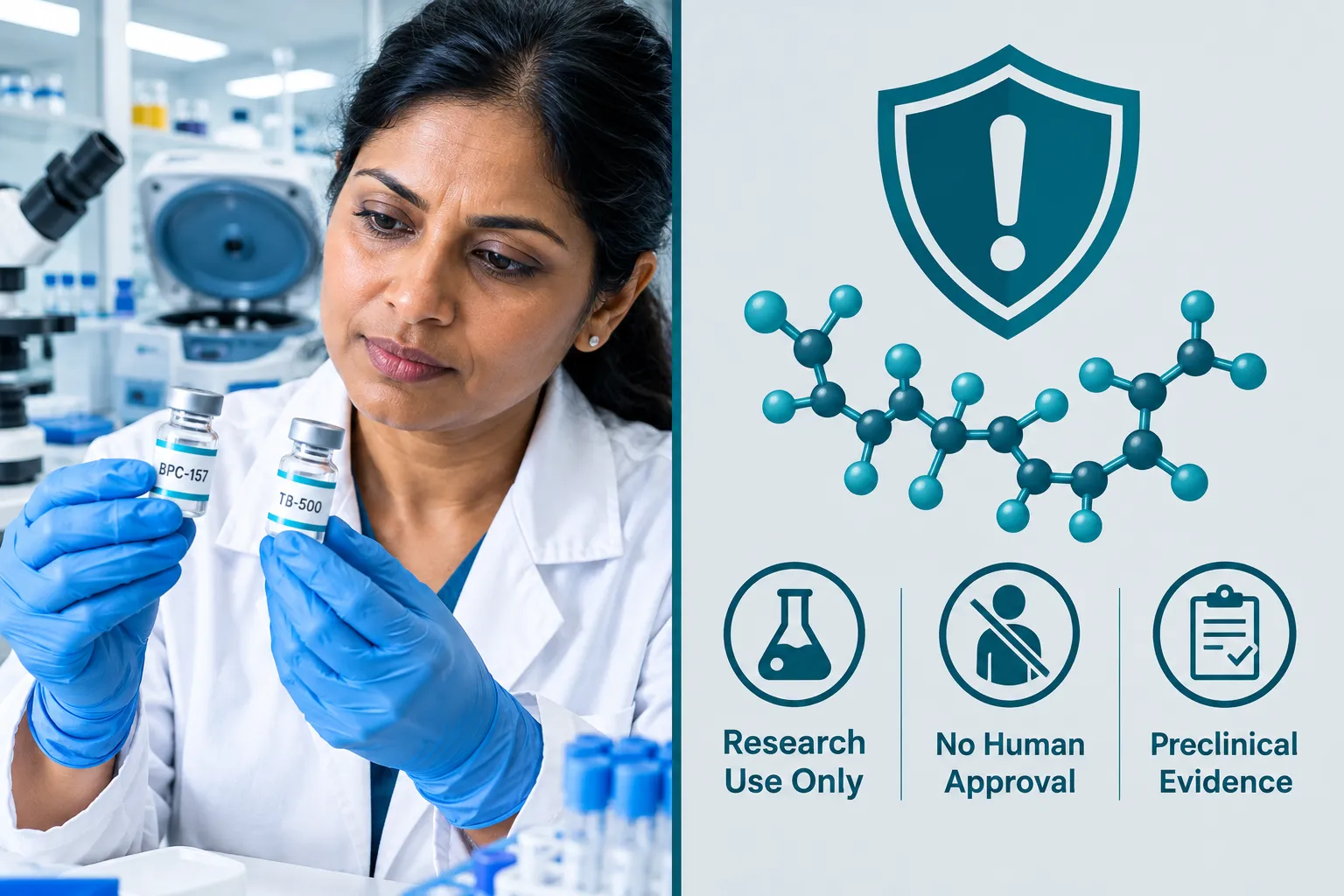
The evidence base for BPC-157 and TB-500 synergy: advanced tissue repair and regeneration protocols must be understood honestly. As of mid-2026, no published randomized controlled trials in humans exist for BPC-157 as a standalone compound, and the human clinical trial landscape remains in early stages. TB-500 similarly lacks published human tendon or soft-tissue efficacy trials. The combined stack has no controlled human data whatsoever.
What the evidence does support:
- Robust preclinical (animal model) data for BPC-157 across multiple injury types
- Mechanistic plausibility for TB-500 based on thymosin beta-4 biology
- Convergent pathway analysis supporting the rationale for combination use
What remains unproven:
- Human efficacy for either compound individually
- Additive or synergistic effects in human subjects
- Long-term safety profile for either compound in humans
Both BPC-157 and TB-500 are classified as research chemicals in most jurisdictions. They are not approved drugs, and their use outside of formal research settings carries regulatory and safety implications. Researchers evaluating these compounds as part of broader aging support or recovery investigations should consult applicable institutional and regulatory frameworks before proceeding.
Expert caution is warranted. The absence of human data does not mean the compounds are ineffective, it means the evidence gap is real and should be disclosed transparently in any research communication.
Conclusion
The scientific rationale behind BPC-157 and TB-500 synergy: advanced tissue repair and regeneration protocols is genuinely compelling. Two mechanistically distinct peptides converging on the same biological problem, inadequate or slow tissue repair, represent a logical research hypothesis worth rigorous investigation. However, compelling mechanism does not equal proven efficacy.
Actionable next steps for researchers in 2026:
- Define your injury model clearly before selecting dosing parameters, protocol specificity improves reproducibility.
- Use separate syringes for BPC-157 and TB-500 until co-formulation stability data becomes available.
- Establish baseline outcome markers (range of motion, inflammatory panels, histology) before administration begins.
- Document evidence limitations explicitly in any research reporting, the absence of human trial data is a material fact.
- Monitor regulatory developments closely, as the classification of these compounds may shift as the clinical trial landscape evolves.
The gap between preclinical promise and clinical proof remains the defining challenge for this field. Responsible research design, transparent reporting, and realistic expectations are the most valuable tools available to anyone working in this space today.