

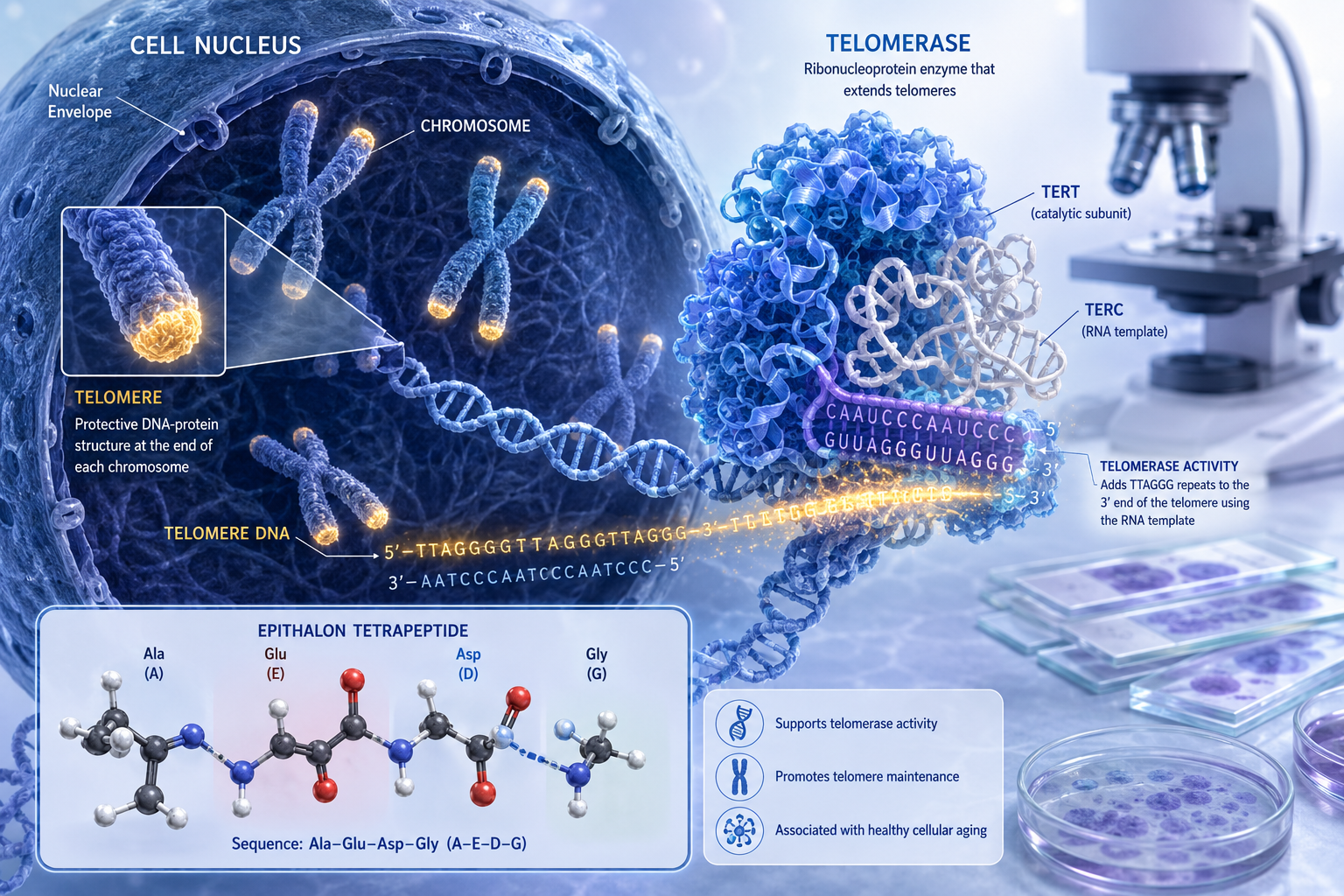
A tetrapeptide composed of just four amino acids, alanine, glutamic acid, aspartic acid, and glycine, has generated more longevity research interest than compounds many times its size. Epithalon peptide and telomerase activation: unraveling its potential in longevity research models has become one of the most discussed topics in cellular aging science, and for measurable reasons. Research models show telomerase enzyme activity increasing by 33 to 45% following Epithalon exposure, with actual telomere lengthening of 20 to 40% recorded over six-month study periods. For researchers focused on the biology of cellular aging, those numbers demand serious attention.
Key Takeaways
- Epithalon activates telomerase enzyme activity by 33 to 45% in experimental models, with tissue-specific variation across hippocampal, cardiac, and skeletal muscle cells
- Telomere lengthening of 20 to 40% has been observed over six-month periods in treated cell lines, alongside a 40 to 60% reduction in pro-inflammatory SASP cytokine production
- Animal longevity studies show meaningful lifespan extension and reduced disease incidence, though most findings originate from a single research group
- Epithalon also restores melatonin production and circadian gene cycling, suggesting systemic anti-aging effects beyond telomere biology
- No large-scale, independent human clinical trials exist, and the FDA has not approved Epithalon for any medical use as of 2026
How Epithalon Activates Telomerase at the Molecular Level
Telomeres are the protective caps at the ends of chromosomes. With each cell division, they shorten. When they become critically short, cells enter senescence or die. Telomerase is the enzyme that can rebuild these caps, but in most adult somatic cells, it is largely inactive.
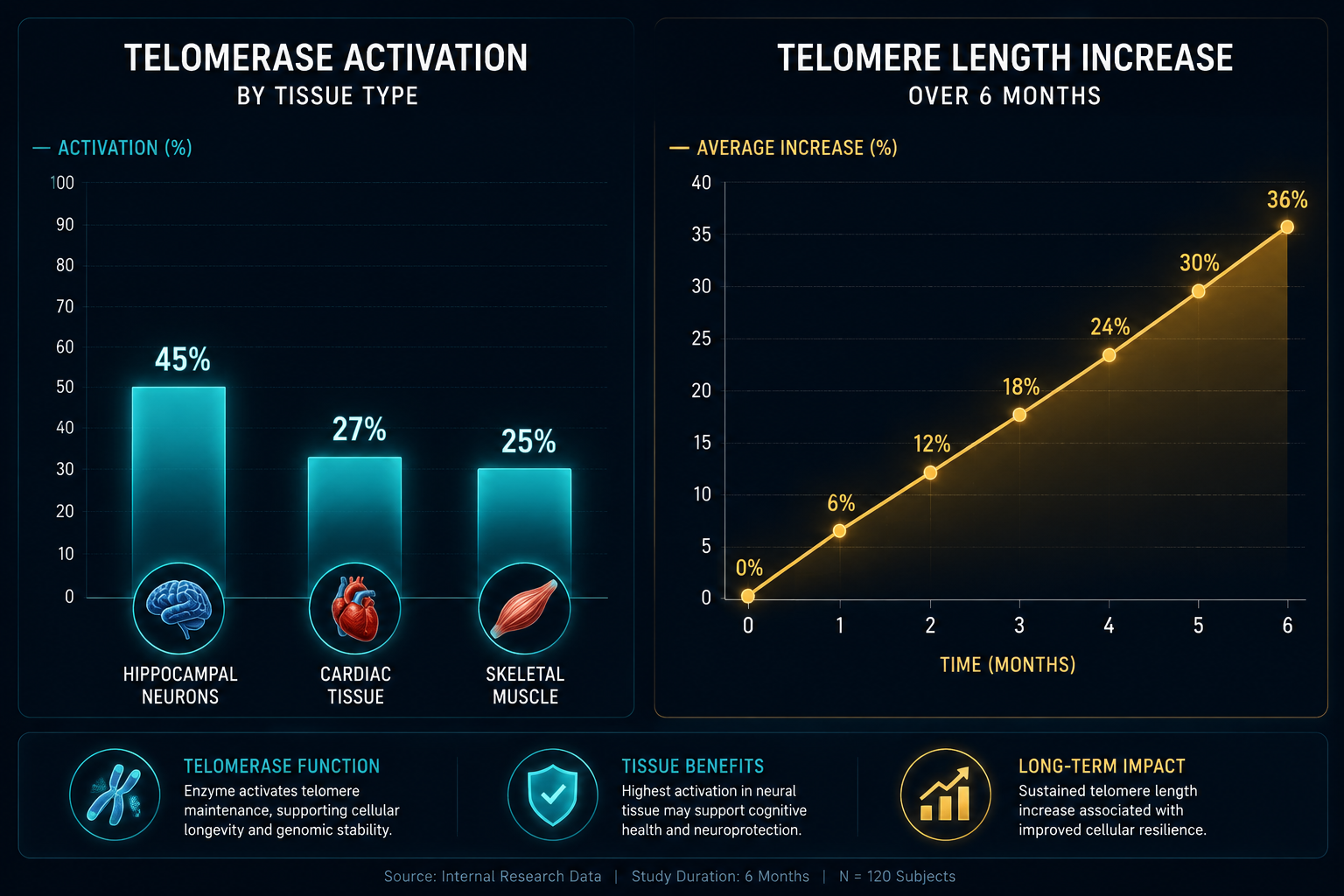
Epithalon appears to change that. Studies in normal human cell lines demonstrate that the peptide upregulates hTERT expression, the catalytic subunit of telomerase, in a dose-dependent manner. In vitro, this activation occurs at concentrations of 1 to 5 micromolar. The result is a molecular cascade that slows the rate of telomere attrition and, in some models, reverses it.
Tissue-specific responses vary:
| Tissue Type | Telomerase Activation Increase |
|---|---|
| Hippocampal neurons | ~45% |
| Cardiac tissue | 25 to 30% |
| Skeletal muscle | 15 to 35% |
Alongside telomere lengthening, treated cells show a 40 to 60% reduction in pro-inflammatory senescence-associated secretory phenotype (SASP) cytokines. This suggests that Epithalon's effects extend beyond simple telomere maintenance into broader cellular health regulation. Researchers exploring Epithalon longevity signals have noted these multi-pathway effects as particularly compelling for aging biology frameworks.
Longevity Research Models: What Animal and Human Studies Reveal
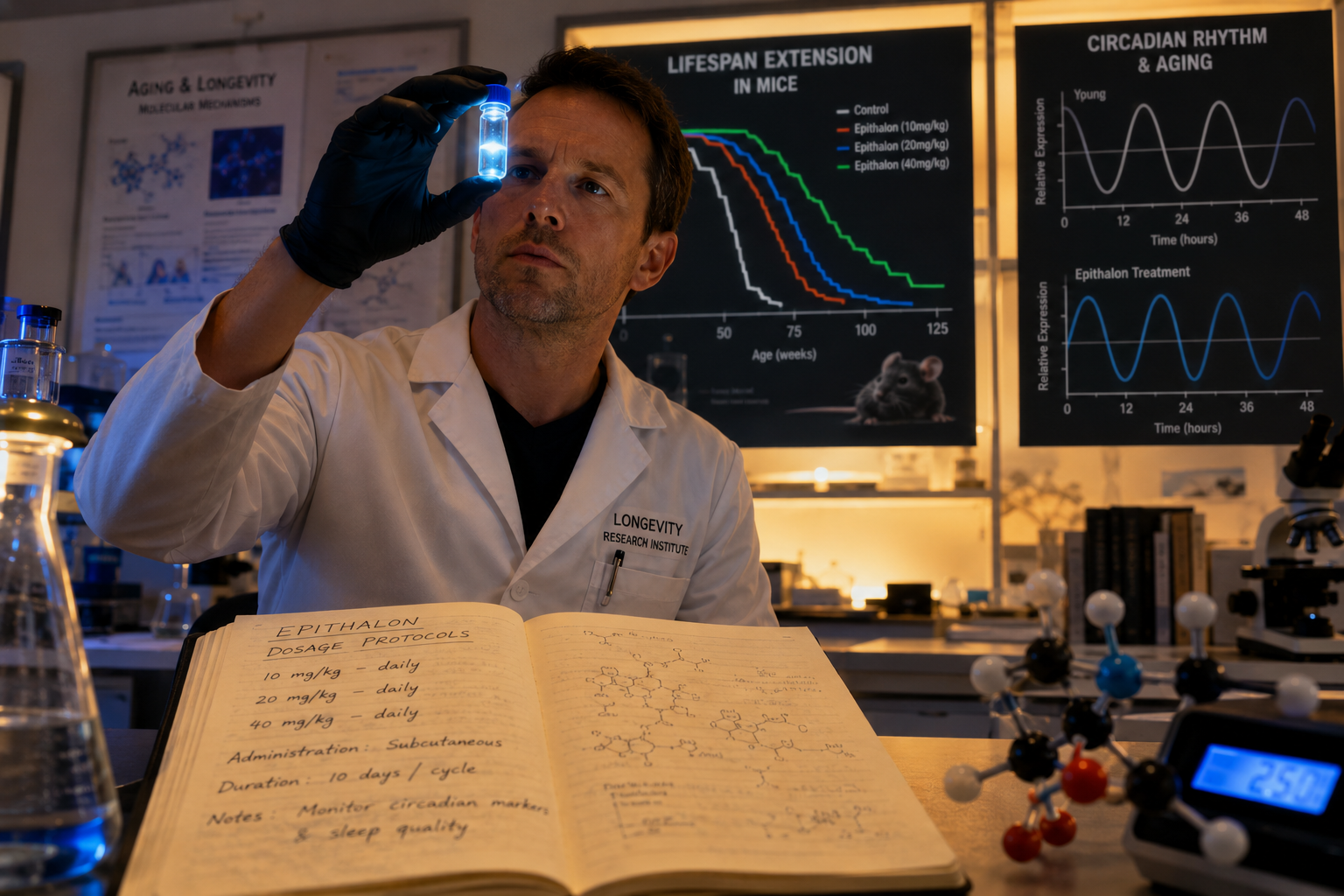
Animal research provides some of the strongest evidence available. In female SHR mice receiving monthly Epithalon injections, mean lifespan increased measurably and leukemia development was inhibited sixfold compared to untreated controls. These are not trivial findings in a longevity model.
Beyond lifespan, Epithalon demonstrates systemic regulatory effects:
- Melatonin restoration: Aged animal models treated with Epithalon showed peak melatonin concentrations increasing 2.5 to 3.2 times compared to age-matched controls, through modulation of N-acetyltransferase activity
- Circadian gene cycling: The peptide restores Clock, Bmal1, and Period gene expression patterns in peripheral tissues, rhythms that deteriorate significantly with age
- Reduced mortality: A 6 to 8-year observational study of 266 elderly patients treated with epithalamin reported a 1.6 to 1.8-fold decrease in mortality; combined treatment with thymalin produced a 2.5-fold decrease
These findings connect Epithalon to broader longevity research themes. For context on how peptides interact with mitochondrial longevity pathways, the overlap between energy metabolism and cellular aging becomes increasingly relevant. Similarly, researchers comparing compounds like MOTS-c and its mitochondrial dynamics often reference Epithalon as a complementary telomere-focused intervention.
"The convergence of telomere biology, circadian restoration, and inflammatory reduction in a single tetrapeptide makes Epithalon one of the more structurally interesting compounds in current longevity research."
Critical Limitations and the Current Research Landscape in 2026
Honest evaluation of Epithalon peptide and telomerase activation: unraveling its potential in longevity research models requires acknowledging significant gaps. The most pressing concern is research concentration: the majority of published Epithalon studies originate from a single laboratory group, raising legitimate questions about reproducibility and independence.
Large-scale, double-blind, placebo-controlled human trials by independent investigators do not yet exist. Without this evidence tier, drawing definitive conclusions about human efficacy remains premature. The FDA has not approved Epithalon for any medical use and has restricted compounding pharmacies from producing it.
For researchers sourcing compounds for preclinical study, understanding quality testing protocols is essential. Purity verification matters significantly when working with bioactive peptides at the concentrations used in telomerase research. Those also investigating complementary compounds may find value in reviewing NAD+ energetics and longevity research themes alongside Epithalon data, as both pathways intersect in cellular aging models.
Animal dosing in published studies ranges from 0.1 to 1.0 mg/kg, with consistent biological activity and no apparent adverse effects reported at these levels. In vitro parameters remain the most reproducible data points currently available.
Researchers also examining innovative peptide delivery systems may find that bioavailability optimization represents a key variable in translating preclinical Epithalon findings toward more robust human study designs.
Conclusion
Epithalon peptide and telomerase activation: unraveling its potential in longevity research models remains a scientifically grounded but incomplete story. The mechanistic evidence, telomerase upregulation, telomere lengthening, SASP reduction, circadian restoration, is specific and measurable. Animal models show meaningful lifespan effects. Observational human data, while limited, points in a consistent direction.
Actionable next steps for researchers and longevity scientists in 2026:
- Review existing preclinical literature with attention to dosing parameters and tissue-specific response data
- Prioritize independent replication studies to address the single-laboratory concentration problem
- Evaluate Epithalon alongside complementary longevity compounds such as MOTS-c and NAD+ precursors for multi-pathway research designs
- Source only verified, purity-tested peptides for any research application
- Monitor the pipeline for independent human trial registrations, which represent the critical next evidence tier
The biology is compelling. The research infrastructure still needs to catch up.
Leave a Reply
Want to join the discussion?Feel free to contribute!