

Fewer than 12% of multi-peptide research blends on the market today publish full ingredient transparency alongside third-party purity data — a gap that makes direct formulation comparisons both rare and critically important. This Glow Blend Peptide vs. Klow Blend Peptide: A Research Formulation Analysis examines both formulations side by side, breaking down their constituent peptides, proposed mechanisms of action, and the distinct research territories each blend is designed to explore.
Key Takeaways
- The Glow Blend is primarily oriented toward skin-related and regenerative research pathways, anchored by peptides with documented roles in collagen synthesis and oxidative defense.
- The Klow Blend targets cellular energy and mitochondrial function, drawing on peptides associated with metabolic regulation and antioxidant activity at the organelle level.
- Ingredient overlap between the two blends is minimal, making them complementary rather than interchangeable for research planning.
- Purity verification and sourcing standards are decisive factors when evaluating either formulation for controlled study use.
- Researchers should align blend selection with specific biological endpoints rather than treating either formulation as a general-purpose option.
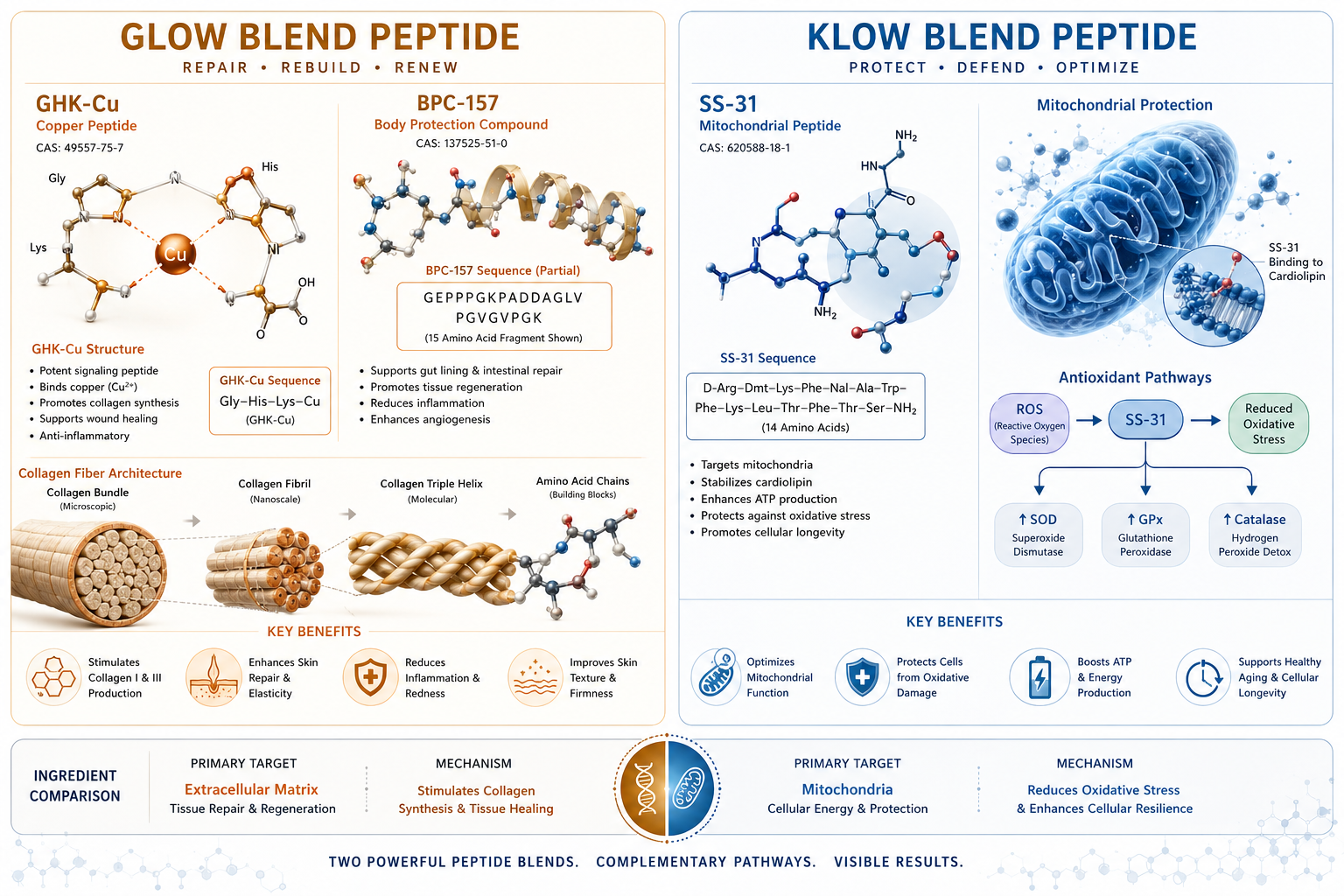
Formulation Breakdown: Ingredients and Proposed Mechanisms
Glow Blend Peptide: Core Components
The Glow Blend is structured around peptides with established research interest in dermal and connective tissue biology. Its anchor ingredients typically include:
- GHK-Cu (Copper Tripeptide-1): Studied for its role in fibroblast activation and collagen remodeling. Researchers exploring wound healing and skin matrix repair frequently reference this compound. A detailed GHK-Cu sourcing and research guide outlines purity benchmarks relevant to controlled studies.
- BPC-157: A pentadecapeptide with a broad literature base covering tissue repair, angiogenesis, and cytoprotective signaling. For foundational documentation, the BPC-157 research guide provides a structured starting point.
- Epithalon (Epitalon): A tetrapeptide investigated in the context of telomere biology and cellular longevity markers.
The proposed mechanism across these components centers on upregulating growth factor expression, reducing local oxidative stress, and supporting extracellular matrix integrity. For a broader overview of documented benefits, the Glow Peptide Blend benefits page provides additional context.
Klow Blend Peptide: Core Components
The Klow Blend takes a fundamentally different approach, targeting intracellular and mitochondrial research pathways. Its formulation typically features:
- SS-31 (Elamipretide): A mitochondria-targeted antioxidant peptide with a robust preclinical literature base. Research themes around SS-31 mitochondrial dynamics highlight its role in reducing reactive oxygen species at the inner mitochondrial membrane.
- MOTS-c: A mitochondrial-derived peptide studied for metabolic regulation and insulin sensitivity pathways. Researchers interested in combined mitochondrial approaches often reference MOTS-c and Elamipretide synergy.
- LL-37: An antimicrobial and immunomodulatory peptide with emerging research interest in cellular defense signaling.
The Klow Blend's mechanism centers on bioenergetic support, mitochondrial membrane stabilization, and systemic antioxidant capacity — areas distinct from the dermal focus of the Glow formulation.
Comparative Research Formulation Analysis: Target Areas and Study Design Implications
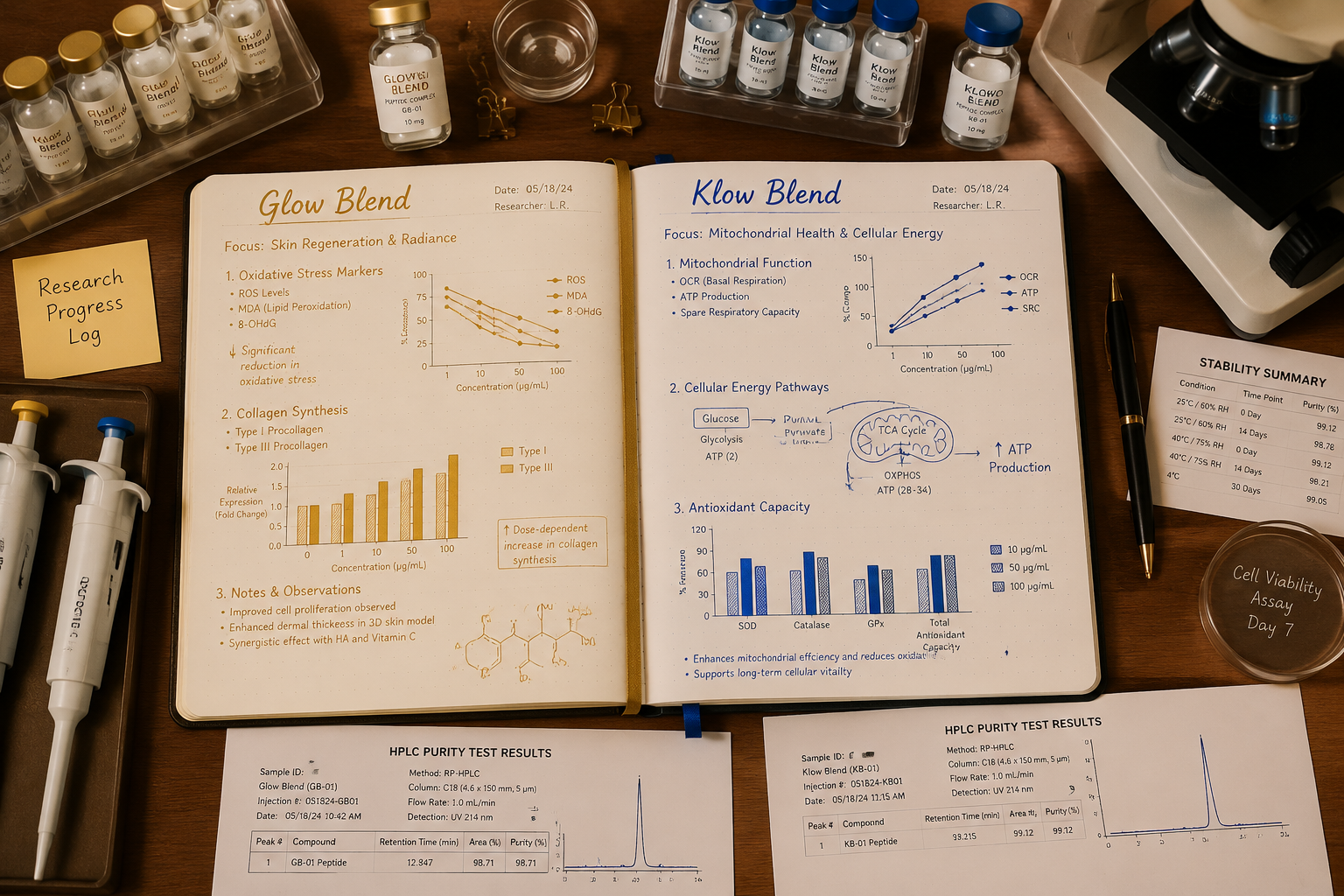
A structured comparison reveals clear divergence in research utility:
| Feature | Glow Blend | Klow Blend |
|---|---|---|
| Primary target | Dermal and connective tissue | Mitochondrial and metabolic function |
| Key mechanism | Collagen synthesis, angiogenesis | Antioxidant, bioenergetic support |
| Oxidative stress role | Extracellular/local | Intracellular/organelle-level |
| Typical research model | Skin, wound healing, aging | Cellular energy, metabolic disease |
| Ingredient overlap | Minimal | Minimal |
"Selecting a peptide blend without aligning its mechanism to a defined biological endpoint introduces confounding variables that undermine study validity."
For researchers designing multi-arm studies, understanding how individual peptides within each blend interact is essential. The LL-37 versus SS-31 comparison offers a useful reference for parsing overlapping antioxidant claims between the two formulations.
Quality Standards and Sourcing Considerations
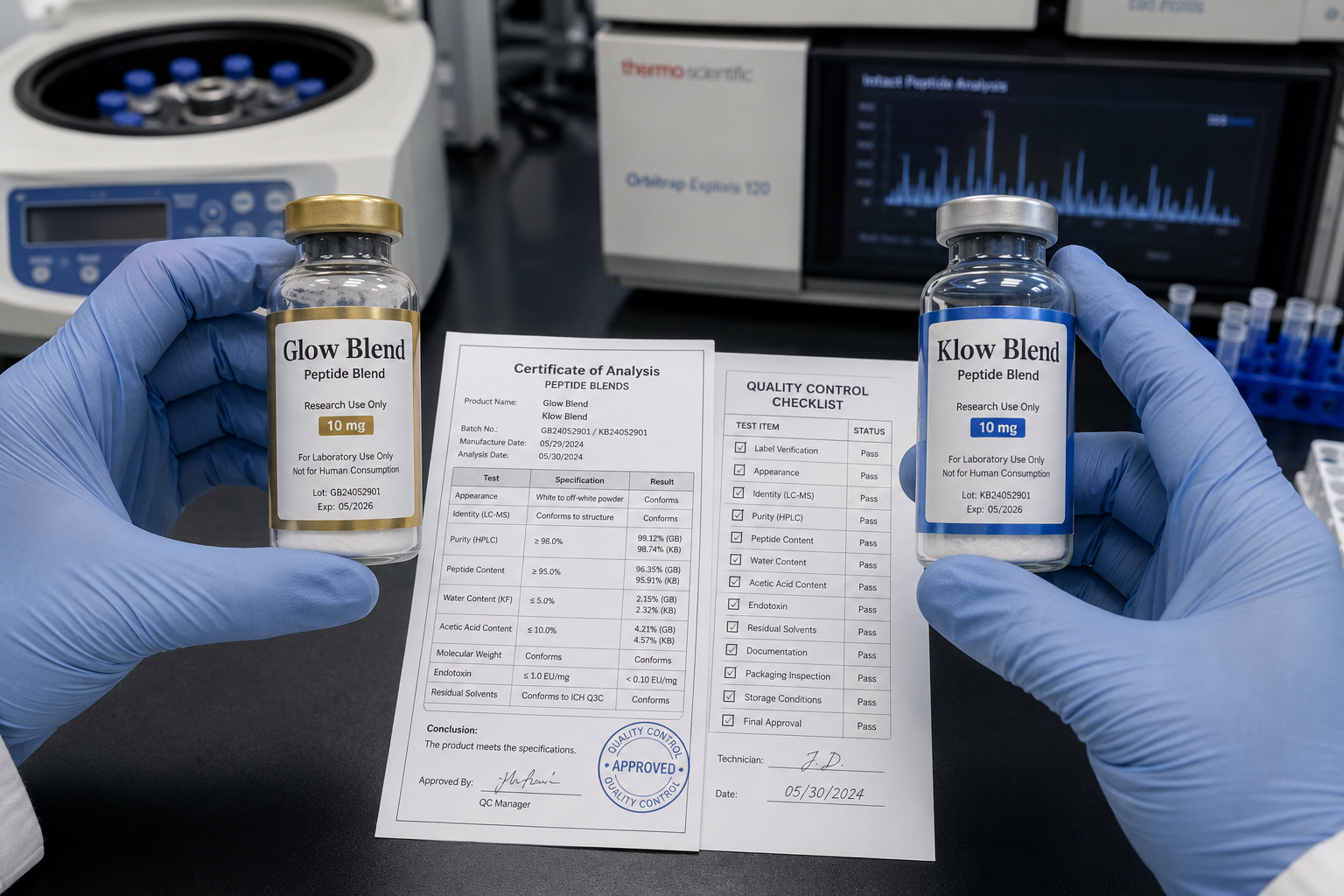
Regardless of which blend a research program selects, quality control benchmarks are non-negotiable. Key standards include:
- HPLC purity: Minimum 98% is the accepted threshold for research-grade peptides.
- Mass spectrometry confirmation: Verifies molecular identity, not just purity percentage.
- Sterility and endotoxin testing: Critical for any in vitro or in vivo application.
- Reference standard alignment: Comparing formulations against established benchmarks, as outlined in the Bachem and reference standards guide, strengthens data reliability.
Researchers sourcing either blend should also review the aging support peptide category to identify complementary compounds that may enhance study design without introducing mechanistic overlap.
Conclusion
The Glow Blend Peptide vs. Klow Blend Peptide: A Research Formulation Analysis confirms that these two formulations serve distinct and largely non-overlapping research purposes. The Glow Blend is the stronger candidate for studies focused on skin regeneration, collagen biology, and extracellular repair. The Klow Blend is better suited to investigations of mitochondrial function, cellular energy metabolism, and systemic antioxidant pathways.
Actionable next steps for researchers in 2026:
- Define the primary biological endpoint before selecting either blend.
- Request full certificate of analysis documentation, including HPLC and mass spectrometry data, from any supplier.
- Cross-reference individual peptide mechanisms against your study's control variables to avoid confounding outcomes.
- Consider whether a sequential or parallel study design better captures the distinct pathways each blend targets.
Leave a Reply
Want to join the discussion?Feel free to contribute!