

}
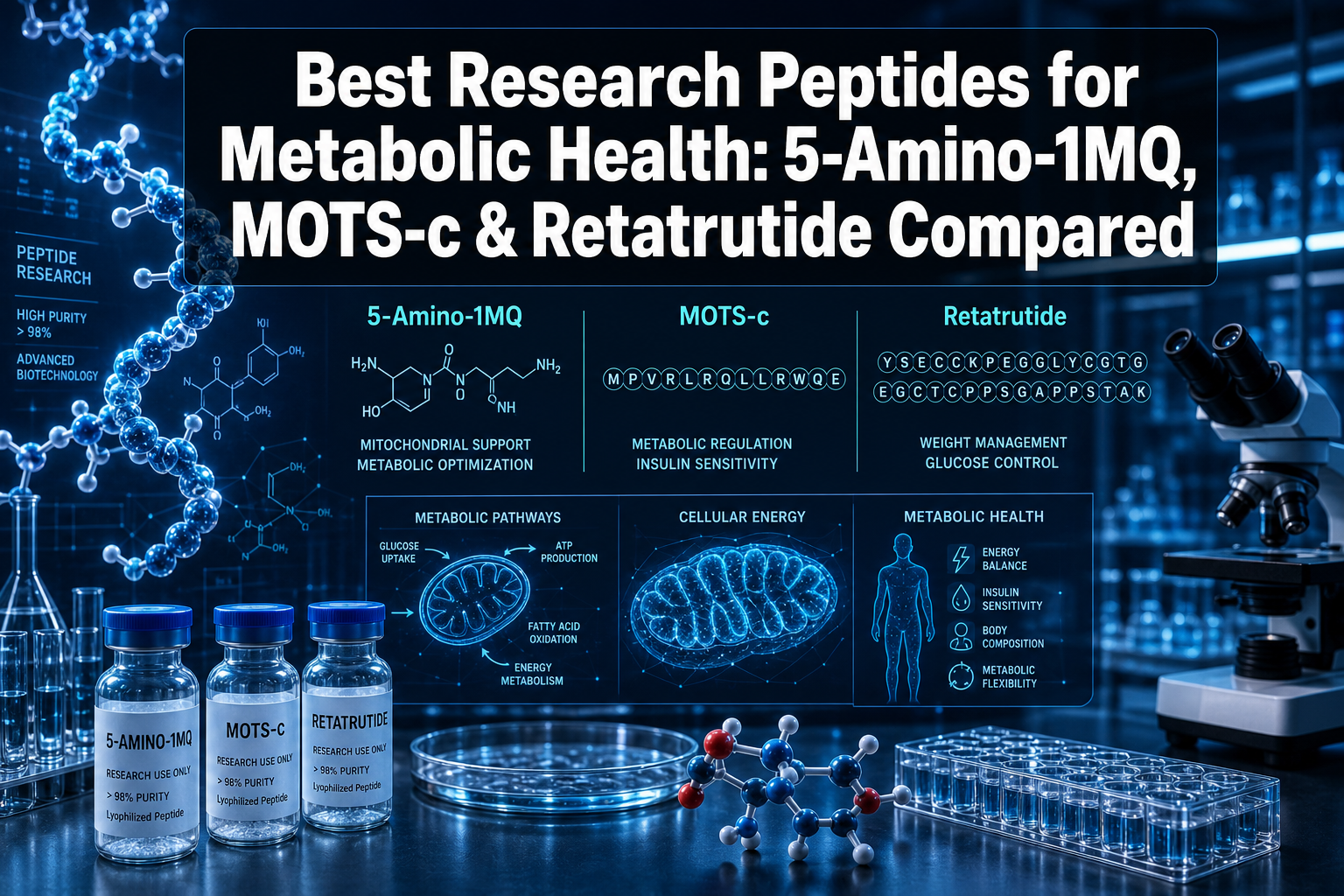
Participants receiving the highest dose of Retatrutide in a Phase 2 clinical trial lost an average of 24.2% of their body weight over 48 weeks, a result that has reshaped how researchers think about metabolic intervention. Yet Retatrutide is only one of several compounds drawing serious attention in 2026. This comparative guide to the best research peptides for metabolic health covers 5-Amino-1MQ, MOTS-c, and GLP-3 Retatrutide, helping researchers understand where each compound stands, what mechanisms drive it, and how to select the most appropriate tool for a given study design.
Key Takeaways
- Retatrutide is a triple receptor agonist (GIP, GLP-1, glucagon) with robust Phase 2 human clinical data supporting significant weight and visceral fat reduction.
- MOTS-c is a mitochondrial-derived peptide that activates AMPK; human evidence is emerging but limited to observational data.
- 5-Amino-1MQ inhibits NNMT and may raise NAD+ levels, but all current evidence is preclinical, no human trials exist.
- Evidence strength varies dramatically across the three compounds, which should directly inform research protocol design.
- Combination approaches are being explored but lack human safety and efficacy data.
Understanding the Mechanisms: A Comparative Guide to 5-Amino-1MQ, MOTS-c, and GLP-3 Retatrutide
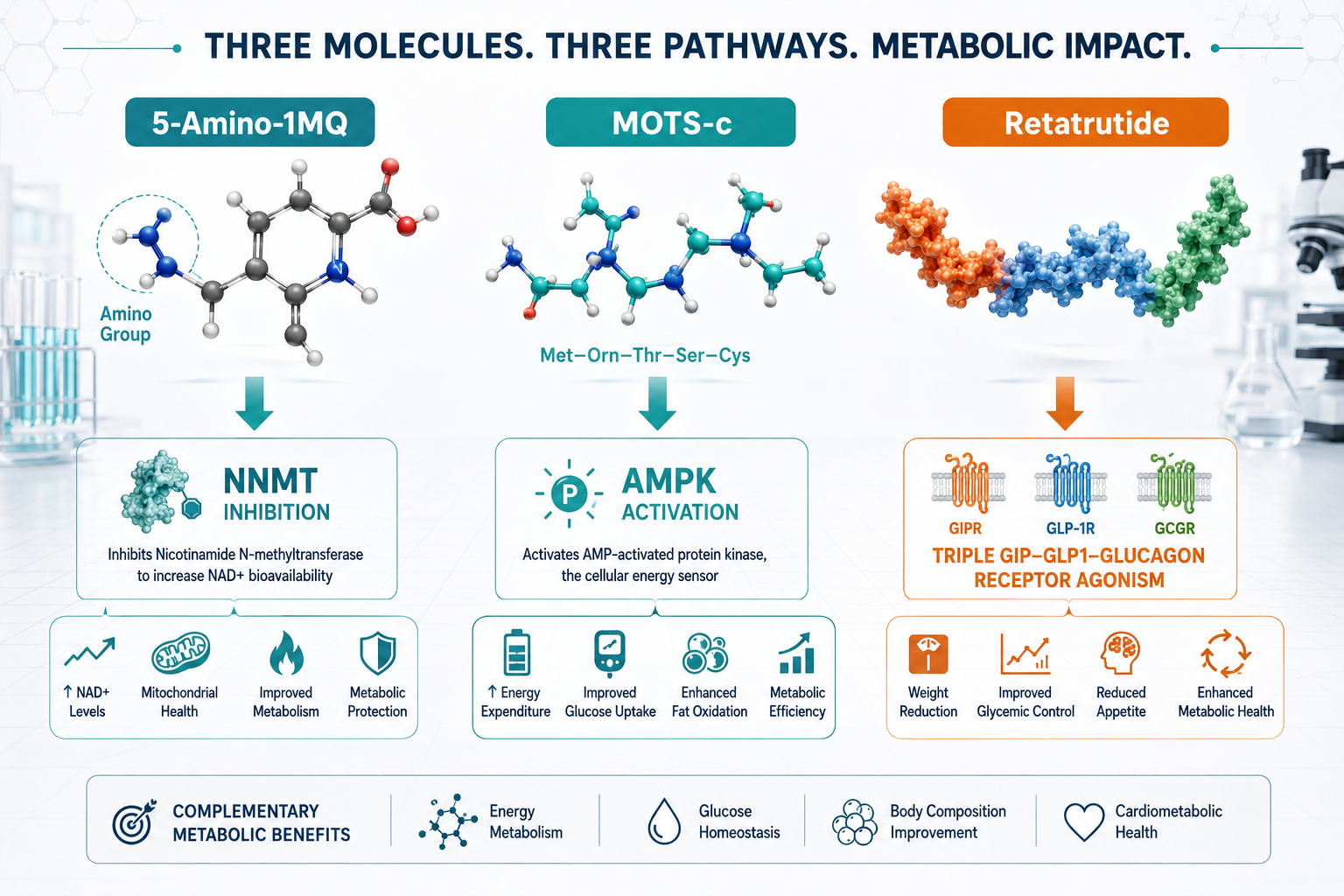
Each compound operates through a distinct biological pathway, which is why comparing them side by side is so valuable for research planning.
Retatrutide (GLP-3) is a triple agonist targeting GIP, GLP-1, and glucagon receptors simultaneously. This triple activation drives enhanced insulin secretion, increased energy expenditure, and lipolysis. Preclinical evidence also suggests Retatrutide may prevent metabolic adaptation during weight loss by promoting thermogenesis through mitochondrial uncoupling, though direct human confirmation of this mechanism is still pending. For researchers interested in the broader GLP-1 receptor agonist landscape, the GLP-1 peptide research and sourcing overview provides useful context.
MOTS-c is a mitochondrial-derived peptide encoded in mitochondrial DNA. It activates AMPK in muscle tissue, promoting metabolic homeostasis and reducing insulin resistance in preclinical models. Researchers studying its synergistic potential with other compounds may find the MOTS-c and SLU-PP-332 combination research and the LL-37 and MOTS-c synergy overview particularly relevant.
5-Amino-1MQ inhibits nicotinamide N-methyltransferase (NNMT), an enzyme involved in fat storage regulation. By blocking NNMT, the compound may increase NAD+ levels and activate SIRT1 in adipose tissue. Its oral route of administration is a practical advantage. However, all evidence remains preclinical. Its effects are subtle, and it should not be treated as a substitute for validated metabolic therapies.
Comparing Evidence Levels Across the Three Compounds
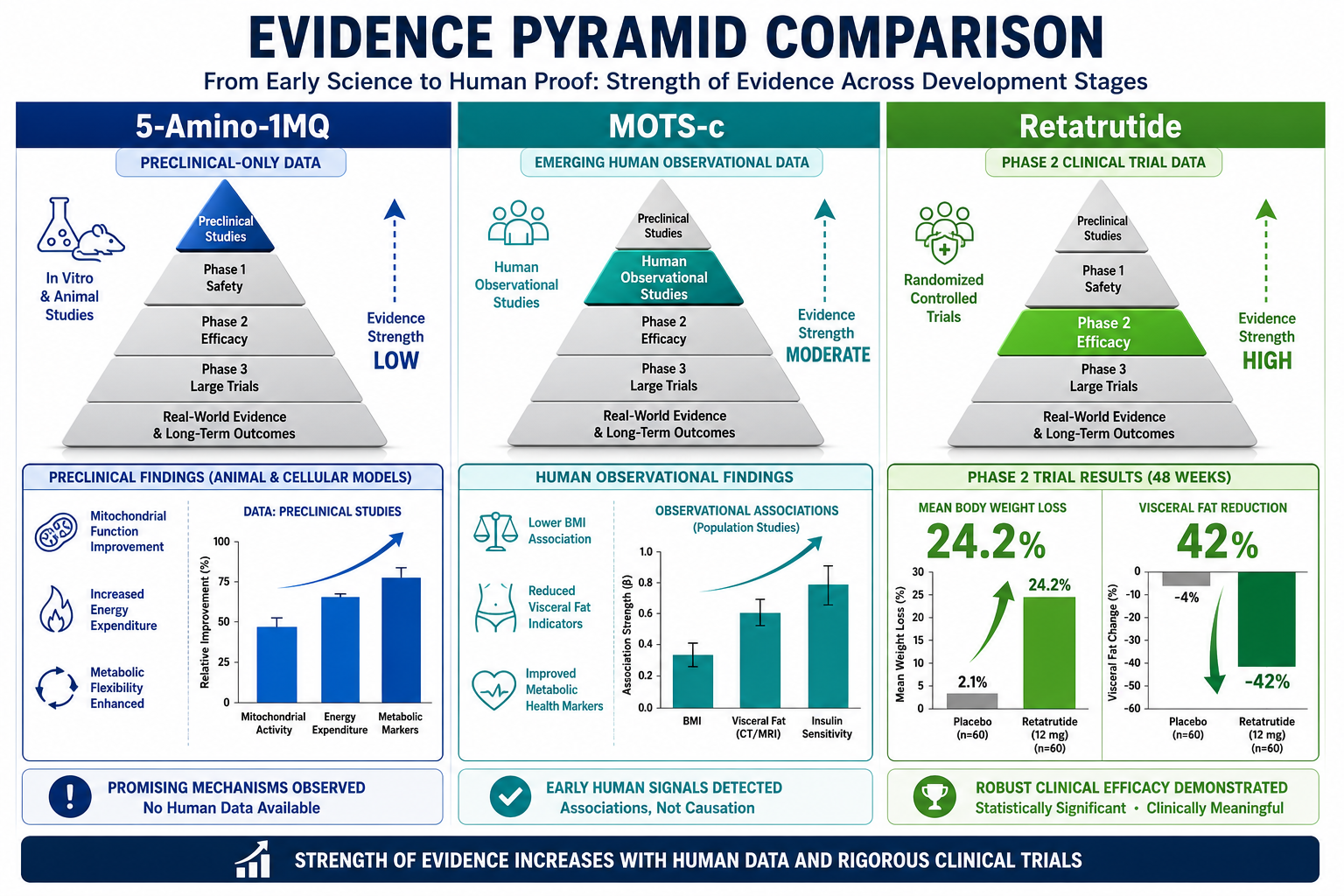
The most important variable separating these compounds is not mechanism, it is the quality and depth of supporting evidence.
| Compound | Evidence Stage | Key Metabolic Target | Human Data? |
|---|---|---|---|
| Retatrutide | Phase 2/3 Clinical Trials | GIP, GLP-1, Glucagon Receptors | Yes, robust |
| MOTS-c | Preclinical + Observational | AMPK / Mitochondria | Limited |
| 5-Amino-1MQ | Preclinical Only | NNMT / NAD+ / SIRT1 | None |
Retatrutide's Phase 2 data also showed a 42% reduction in visceral fat and approximately a 50% decrease in liver fat at the 12 mg weekly dose over 48 weeks, figures that place it well ahead of the other two compounds in terms of demonstrated metabolic impact. Retatrutide is currently in Phase 3 trials and is projected for FDA approval no earlier than late 2027.
Key distinction: Researchers designing human-applicable protocols should weight Retatrutide's evidence base far above the preclinical profiles of MOTS-c and 5-Amino-1MQ.
For a deeper look at Retatrutide's triple agonist profile, the GLP-3 triple agonist research and catalog guide and the GLP-3 newest triple agonist overview are strong starting points.
Selecting the Right Compound: Practical Guidance for Metabolic Research
Choosing among the best research peptides for metabolic health requires aligning compound selection with research objectives, available evidence, and safety considerations.
For studies targeting measurable fat loss and insulin sensitivity with human-applicable endpoints, Retatrutide is the strongest candidate. Common side effects mirror those of GLP-1 receptor agonists, primarily gastrointestinal, and protocols should include monitoring of protein intake, resistance training variables, and heart rate.
For mitochondrial and cellular energy research, MOTS-c offers a compelling mechanistic angle. Researchers interested in its standalone profile can review the dedicated MOTS-c mitochondrial research themes resource.
For exploratory NAD+ pathway and adipose tissue studies, 5-Amino-1MQ remains experimental. Its oral bioavailability makes it logistically convenient, but researchers must design protocols with full acknowledgment of its preclinical-only status.
Some researchers are exploring combinations, for example, pairing Retatrutide's appetite suppression and fat loss effects with MOTS-c's potential to enhance cellular glucose handling. No human studies have evaluated this stack, and safety data is absent. Any combination protocol should be treated as highly exploratory.
For researchers building broader longevity and metabolic panels, the longevity peptide research overview and the NAD+ energetics and longevity research themes provide useful complementary context.

Conclusion
The best research peptides for metabolic health, 5-Amino-1MQ, MOTS-c, and GLP-3 Retatrutide, each occupy a different position on the evidence spectrum. Retatrutide leads with Phase 2 clinical data showing dramatic reductions in body weight, visceral fat, and liver fat. MOTS-c presents a biologically compelling mitochondrial mechanism with early human signals. 5-Amino-1MQ offers an accessible oral option for NAD+ pathway research, but remains entirely preclinical.
Actionable next steps for researchers in 2026:
- Match compound selection to evidence tier, do not apply preclinical compounds to human-outcome research designs without appropriate controls.
- Review Retatrutide's GIP receptor contribution through the GIP receptor importance overview before finalizing triple agonist protocols.
- Treat any combination stacking as exploratory and document safety monitoring rigorously.
- Consult quality and purity documentation before sourcing any compound for research use.
Understanding where each compound stands today is the foundation of responsible, productive metabolic research.
Leave a Reply
Want to join the discussion?Feel free to contribute!