

A synthetic heptapeptide derived from tuftsin, a naturally occurring immunomodulatory compound, Selank has quietly accumulated a body of research suggesting it can reduce anxiety and sharpen cognition without the sedation or dependency risks tied to conventional treatments. That combination is rare enough to merit serious scientific attention.
Selank peptide: uncovering its nootropic potential and anxiolytic pathways in cognitive research has become an increasingly relevant pursuit as researchers seek safer alternatives to benzodiazepines and more targeted tools for cognitive enhancement.

Key Takeaways
- Selank modulates GABA-A receptors, boosts BDNF expression, and influences enkephalin and monoamine systems to produce anxiolytic and nootropic effects.
- In a clinical study of 62 patients with generalized anxiety disorder, Selank matched the efficacy of the benzodiazepine medazepam while avoiding sedation and dependence.
- 40% of patients in one study experienced measurable anxiety reduction within just 1 to 3 days of administration.
- Selank demonstrates immunomodulatory activity by influencing IL-6 expression and T helper cell cytokine balance.
- It is approved as a nasal spray in Russia but remains unapproved by the FDA as of 2026.
Mechanism of Action: How Selank Works in the Brain
Understanding Selank peptide: uncovering its nootropic potential and anxiolytic pathways in cognitive research begins at the molecular level. Selank operates through several overlapping biological pathways that distinguish it from single-target compounds.
Key mechanisms include:
- GABA-A receptor modulation: Selank acts on allosteric sites of the GABA-A receptor, producing calming effects similar to benzodiazepines but without triggering the same dependency pathways.
- BDNF upregulation: It increases brain-derived neurotrophic factor expression, a protein critical for neuroplasticity, learning, and long-term memory formation.
- Enkephalin and monoamine balance: Selank influences the metabolism of enkephalins and modulates serotonin, dopamine, and norepinephrine signaling, contributing to mood stabilization and alertness.
- Immune gene expression: The peptide affects IL-6 production and alters expression of genes tied to neuroplasticity and immune regulation.
"Selank's multi-target profile, touching GABA, BDNF, monoamines, and immune signaling simultaneously, positions it as a genuinely novel compound in neuropharmacology research."
This multi-pathway activity is what separates Selank from narrower anxiolytics and makes it a compelling subject for researchers exploring metabolic modulation and neuropeptide research themes.
Clinical Findings: Anxiolytic Efficacy Without the Drawbacks
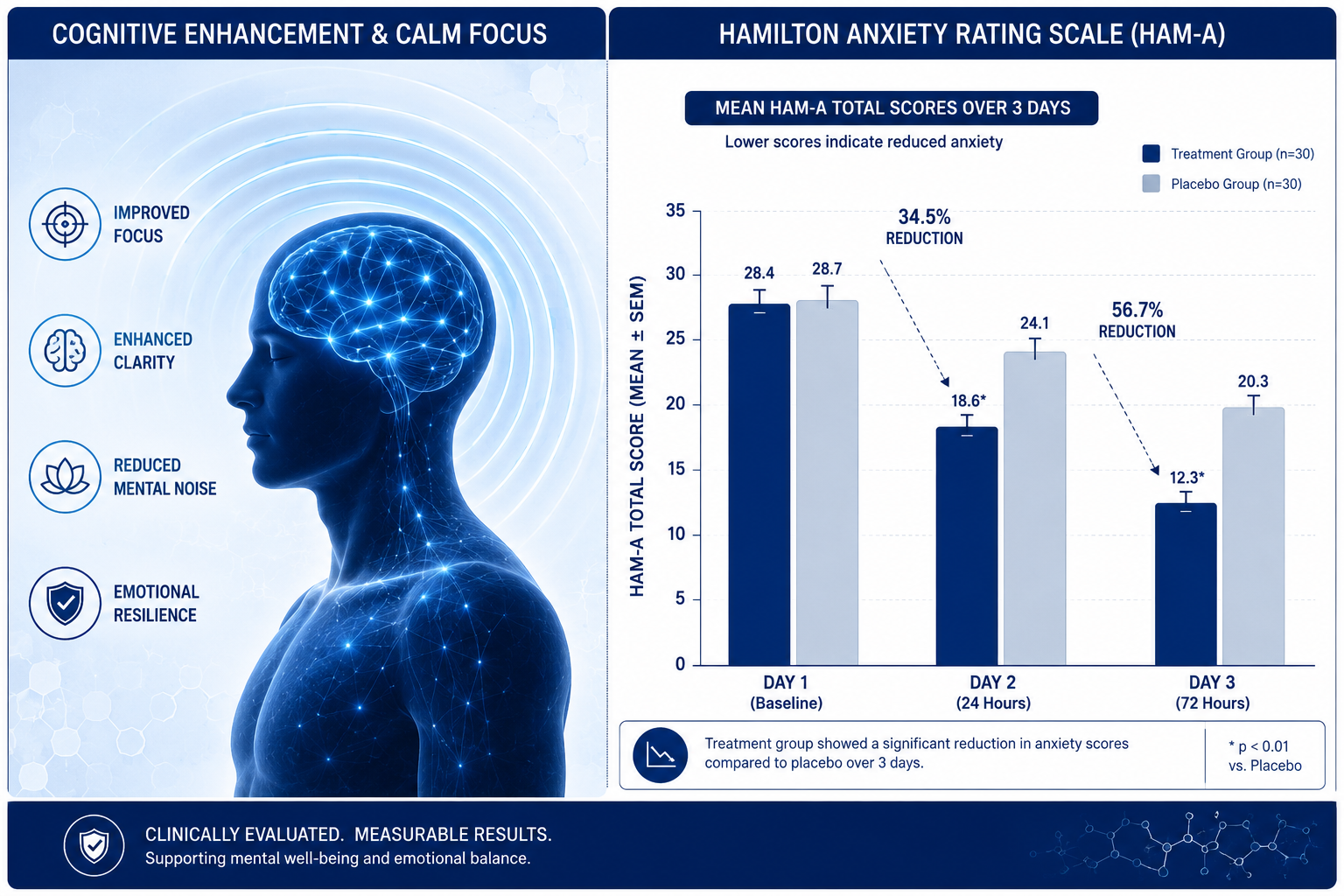
The clinical data on Selank is more robust than many researchers expect. In a controlled study involving 62 patients diagnosed with generalized anxiety disorder, Selank produced anxiolytic effects comparable to medazepam, a standard benzodiazepine. Critically, it also demonstrated antiasthenic and psychostimulant properties, meaning patients felt more energized and mentally clear, not sedated.
A separate study found that 40% of participants experienced a rapid reduction in anxiety symptoms within just 1 to 3 days, as measured by significant decreases in Hamilton Anxiety Rating Scale scores.
Selank vs. Traditional Benzodiazepines, Key Differences:
| Feature | Selank | Benzodiazepines |
|---|---|---|
| Sedation | None reported | Common |
| Dependence risk | Not observed | Significant |
| Cognitive effects | Enhancing | Impairing |
| Onset of action | 1-3 days (in some patients) | Hours |
Researchers interested in comparing Selank's profile with related neuropeptides may also find value in reviewing Selank and Semax research comparisons and documented Selank side effects data.
Nootropic Properties, Pharmacokinetics, and Research Limitations
Selank peptide: uncovering its nootropic potential and anxiolytic pathways in cognitive research extends beyond anxiety relief into measurable cognitive enhancement. In rodent passive avoidance models, Selank-treated subjects showed significantly longer retention latencies, indicating improved memory consolidation and retrieval.
Pharmacokinetic profile at a glance:
- Half-life in serum: 2 to 10 minutes
- Duration of effects: Several hours despite short serum half-life
- Primary route: Intranasal administration
- Bioavailability: Sufficient for therapeutic application via nasal spray
The short serum half-life but prolonged effect window suggests Selank triggers downstream biological cascades, particularly BDNF upregulation, that outlast its direct presence in circulation.
Immunomodulatory potential adds another dimension. Selank influences IL-6 expression and shifts T helper cell cytokine balance, suggesting possible applications in conditions involving immune dysregulation. This overlaps with research on other immunomodulatory peptides such as Thymosin Alpha-1 mechanism studies and LL-37 peptide research.
Regulatory status as of 2026:
Selank is approved in Russia as a nasal spray for anxiolytic and nootropic use. It has not received FDA approval and remains outside mainstream clinical use in Western countries.
Research limitations to note:
- Most clinical data originates from Russian research settings
- Large-scale, placebo-controlled Western trials are lacking
- Generalizability to broader global populations is not yet established
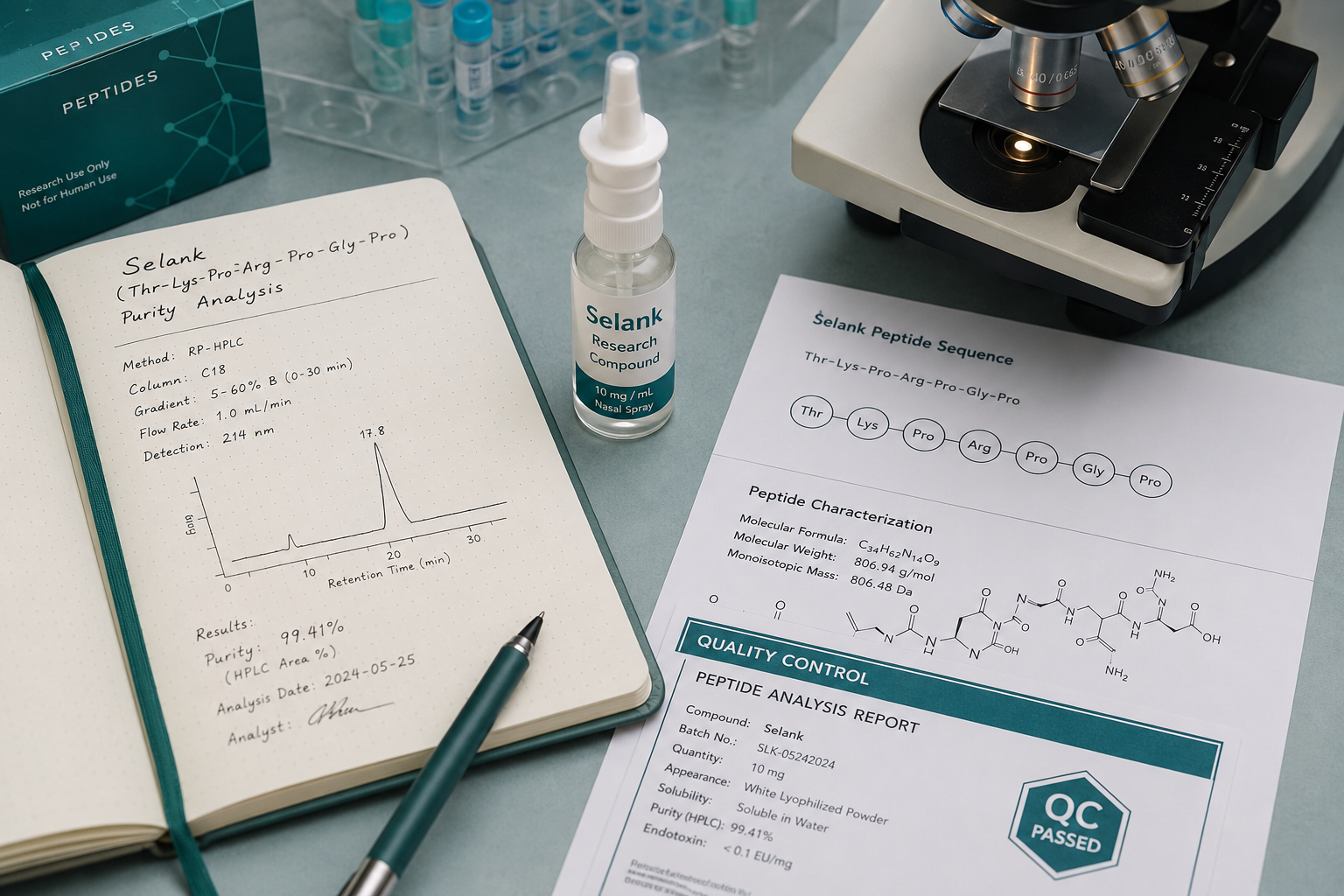
For researchers evaluating compound purity and sourcing standards, understanding quality testing protocols for peptides and reference standards in peptide benchmarking is essential before drawing conclusions from any preclinical or clinical data.
Conclusion
Selank stands out in the peptide research landscape because it addresses two goals simultaneously, reducing anxiety and enhancing cognitive function, without the liabilities of conventional anxiolytics. Its multi-target mechanism, favorable safety profile, and rapid onset in a meaningful subset of patients make it a compound worth continued investigation.
Actionable next steps for researchers:
- Review existing clinical data with attention to study design and population specifics before extrapolating findings.
- Compare Selank's BDNF-modulating properties alongside other neuropeptides to identify potential synergies.
- Prioritize sourcing compounds that meet verified purity standards, as research-grade quality directly affects data reliability.
- Monitor emerging Western trials that may close the current gap in large-scale placebo-controlled evidence.
The intersection of anxiolytic and nootropic activity in a single peptide compound remains one of the more compelling frontiers in 2026 neuroscience research, and Selank sits squarely at its center.
Leave a Reply
Want to join the discussion?Feel free to contribute!