5-Amino-1MQ Peptide: Mechanism, Metabolic Research, and How It Differs From Mitochondrial Peptides
}
Only about 15% of ingested NAD+ precursors reach intracellular compartments where they can actually drive energy metabolism, a bottleneck that has pushed researchers toward upstream enzyme inhibitors as a more direct intervention point. That upstream target is NNMT, and the compound drawing the most research attention in 2026 is 5-Amino-1MQ. This article breaks down the 5-Amino-1MQ peptide: mechanism, metabolic research, and how it differs from mitochondrial peptides, answering the mechanism questions that efficacy summaries typically skip.
Key Takeaways
- 5-Amino-1MQ is technically a small-molecule NNMT inhibitor, not a peptide, though it is frequently grouped with metabolic peptide stacks in research literature.
- Its primary mechanism involves blocking NNMT-driven NAD+ consumption, which raises intracellular NAD+ availability and activates SIRT1 signaling.
- Preclinical models show significant effects on adipocyte differentiation, lipid accumulation, and energy expenditure.
- Mitochondrial peptides such as MOTS-c and SS-31 work through distinct receptor-level and membrane-targeting pathways that do not overlap with NNMT inhibition.
- Understanding these mechanistic differences matters for designing multi-compound research protocols.
What Is 5-Amino-1MQ and Why the "Peptide" Label Persists
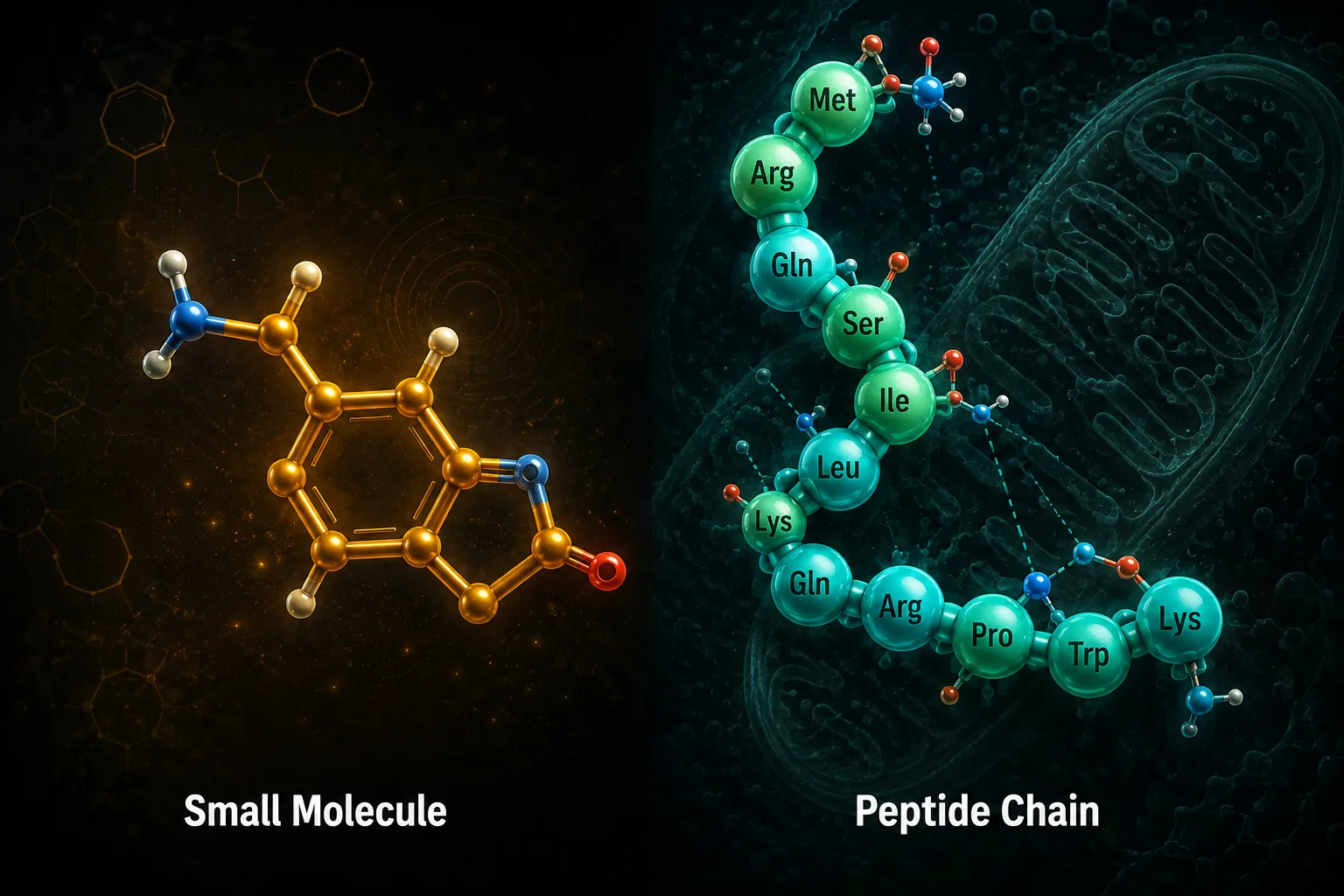
Before diving into mechanism, a classification note is worth making. 5-Amino-1MQ, full name 5-amino-1-methylquinolinium, is a small-molecule inhibitor, not a peptide. It has no amino acid chain, no peptide bond, and no receptor-binding motif typical of endogenous peptides. The "peptide" label persists because researchers and suppliers frequently group it with metabolic peptide stacks, and because its functional territory overlaps with compounds like MOTS-c.
This distinction matters for protocol design. For a broader look at how different compound classes interact at the cellular level, the overview of peptides mechanism from GLP-3 retatrutide to CJC-1295 and MOTS-c provides useful framing.
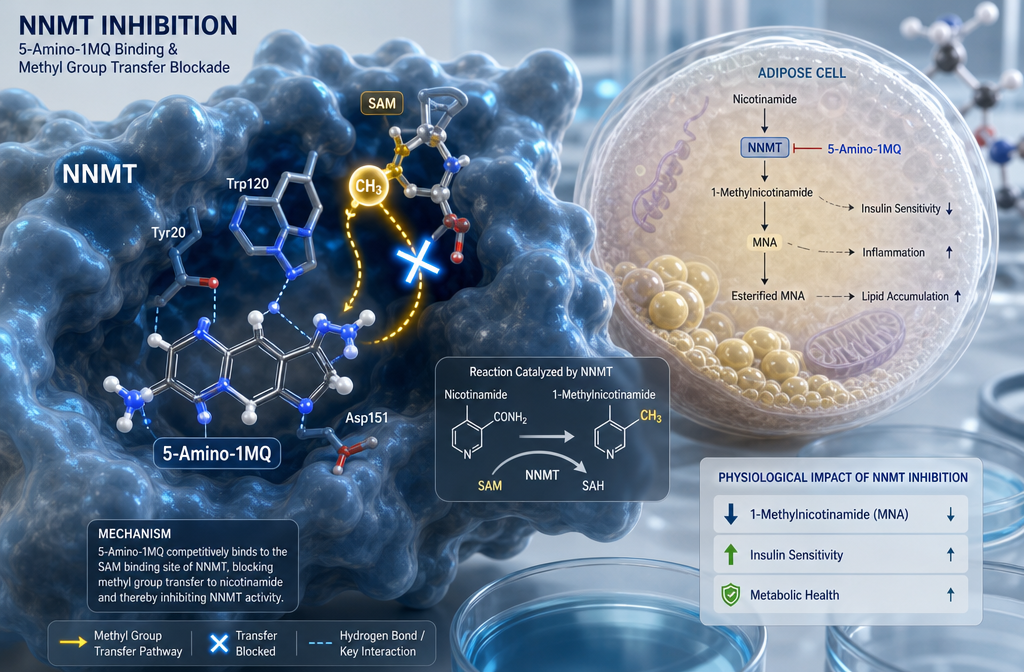
5-Amino-1MQ's molecular target is nicotinamide N-methyltransferase (NNMT), an enzyme highly expressed in adipose tissue that consumes S-adenosylmethionine (SAM) and NAD+ precursors during methylation reactions. When NNMT is overactive, it depletes both SAM and the NAD+ pool, suppressing SIRT1 activity and impairing mitochondrial function.
The Core Mechanism: NNMT Inhibition and NAD+ Restoration
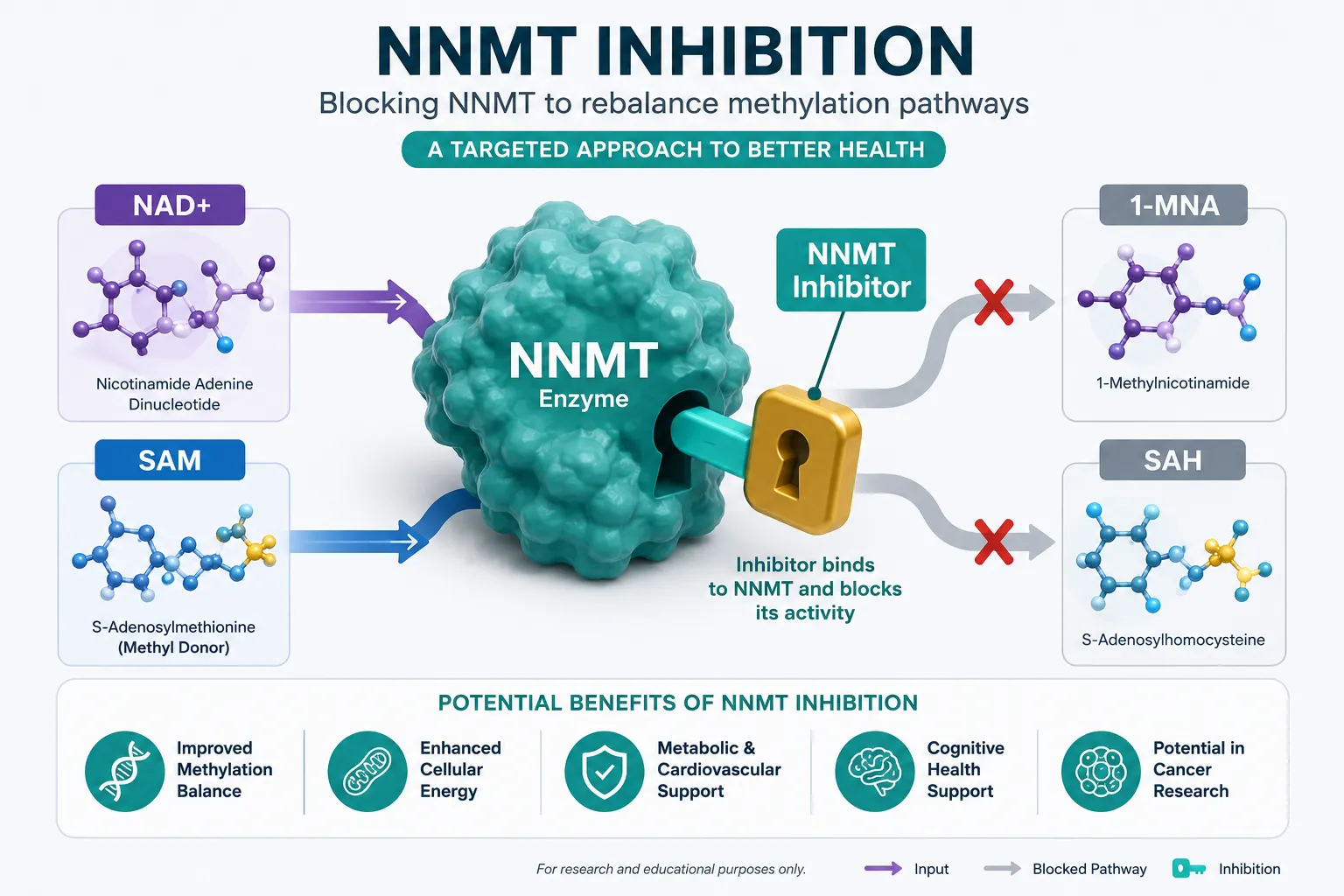
The mechanistic chain is straightforward once broken into steps:
- NNMT inhibition, 5-Amino-1MQ binds competitively to the NNMT active site, reducing the enzyme's ability to methylate nicotinamide.
- NAD+ precursor conservation, With less nicotinamide consumed by NNMT, more substrate feeds into the NAD+ biosynthesis pathway via NAMPT.
- SIRT1 activation, Elevated intracellular NAD+ activates SIRT1, a deacetylase that regulates metabolic gene expression, mitochondrial biogenesis, and fat oxidation.
- SAM preservation, Reduced NNMT activity also conserves SAM, supporting methylation reactions involved in epigenetic regulation and one-carbon metabolism.
"The compound does not donate NAD+ directly, it removes the enzymatic drain that prevents NAD+ from accumulating in the first place."
This indirect restoration model is mechanistically different from NAD+ precursor supplementation (NMN, NR), which adds substrate without addressing the enzymatic drain. For a deeper look at how NAD+ interacts with mitochondrial peptide research, the article on adenosine triphosphate and mitochondrial peptides including MOTS-c and 5-Amino-1MQ covers ATP production endpoints in detail.
Key Molecular Effects Observed in Preclinical Models
| Effect | Observed Outcome |
|---|---|
| NNMT inhibition | Reduced nicotinamide methylation in adipocytes |
| Intracellular NAD+ | Elevated in treated cell lines |
| SIRT1 activity | Upregulated downstream of NAD+ increase |
| Adipocyte lipid accumulation | Reduced in differentiation assays |
| Energy expenditure markers | Increased in diet-induced obesity models |
Metabolic Research Findings: Adipose Tissue and Energy Balance
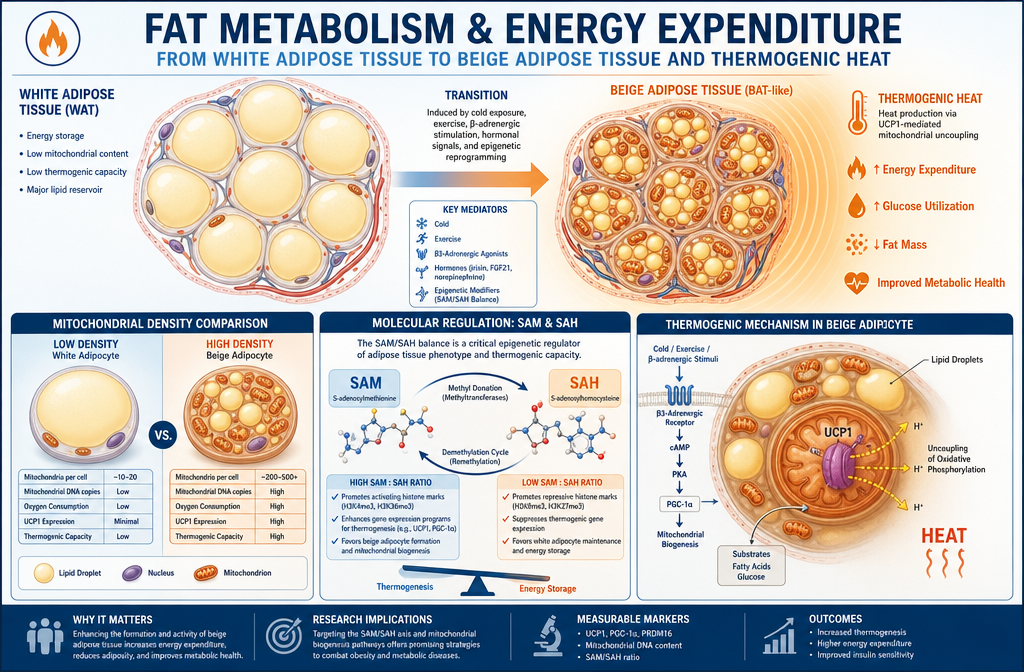
Preclinical research on 5-Amino-1MQ has concentrated on white adipose tissue (WAT), where NNMT expression is highest. In rodent models of diet-induced obesity, NNMT inhibition with 5-Amino-1MQ has been associated with:
- Reduced fat mass without significant lean mass changes
- Increased expression of thermogenic markers in adipose depots
- Improved insulin sensitivity in metabolically compromised models
- Upregulation of mitochondrial biogenesis genes
These findings position 5-Amino-1MQ within a broader class of metabolic research tools that target energy balance from the cellular level upward. Researchers comparing it against appetite-modulating compounds should note that its mechanism is entirely peripheral, there is no central nervous system component in current models. For contrast, the article on tesofensine and metabolic research comparing noradrenergic appetite modulators with GLP-3 peptides illustrates how centrally acting compounds differ in study design.
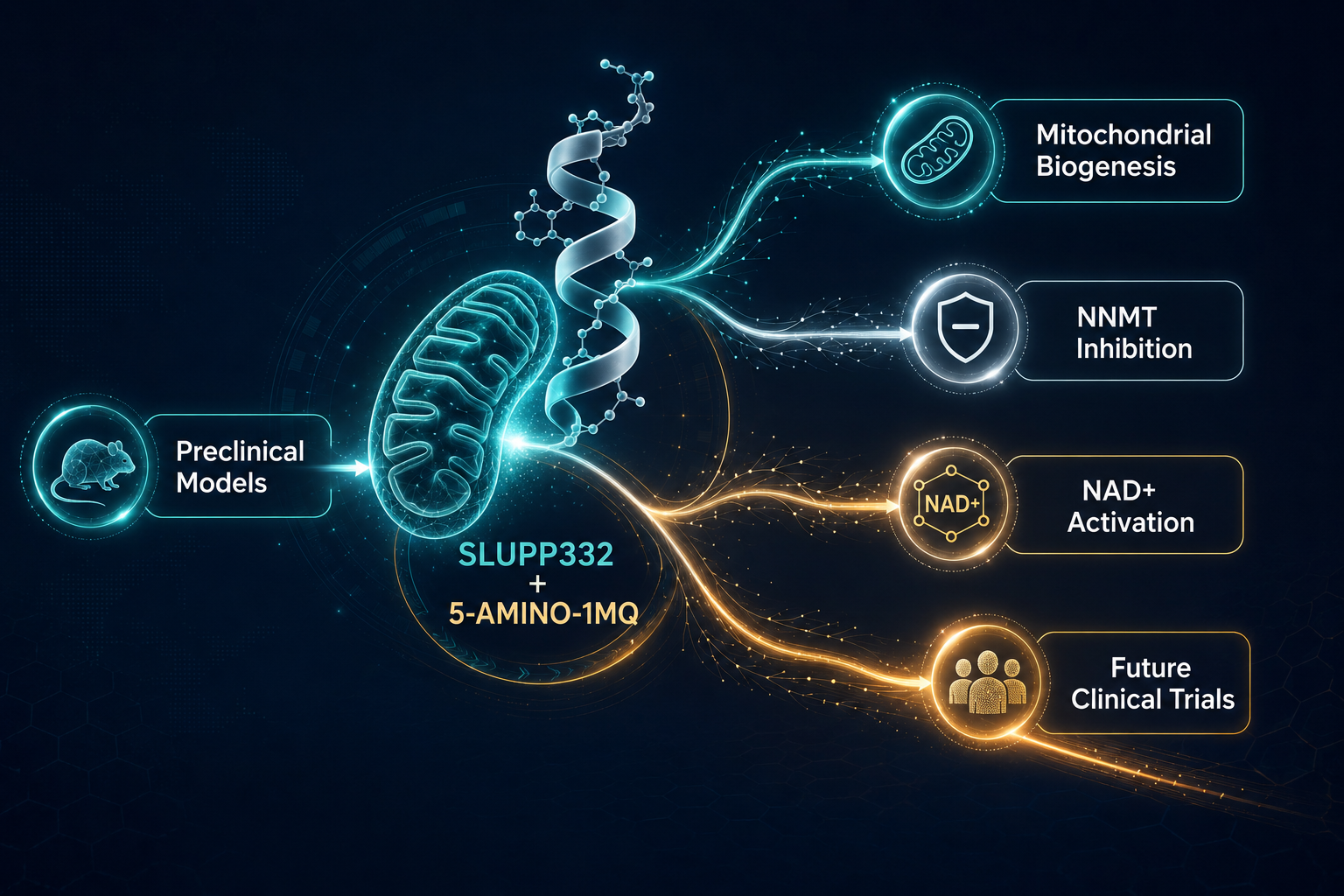
The peptides and polypeptides overview connecting DNA, mitochondria, and research compounds like MOTS-c and 5-Amino-1MQ also contextualizes where NNMT inhibitors fit within the broader mitochondrial research landscape.
How 5-Amino-1MQ Differs From Mitochondrial Peptides

This is where the 5-Amino-1MQ peptide: mechanism, metabolic research, and how it differs from mitochondrial peptides question becomes most practically relevant for researchers designing stacks or comparative studies.
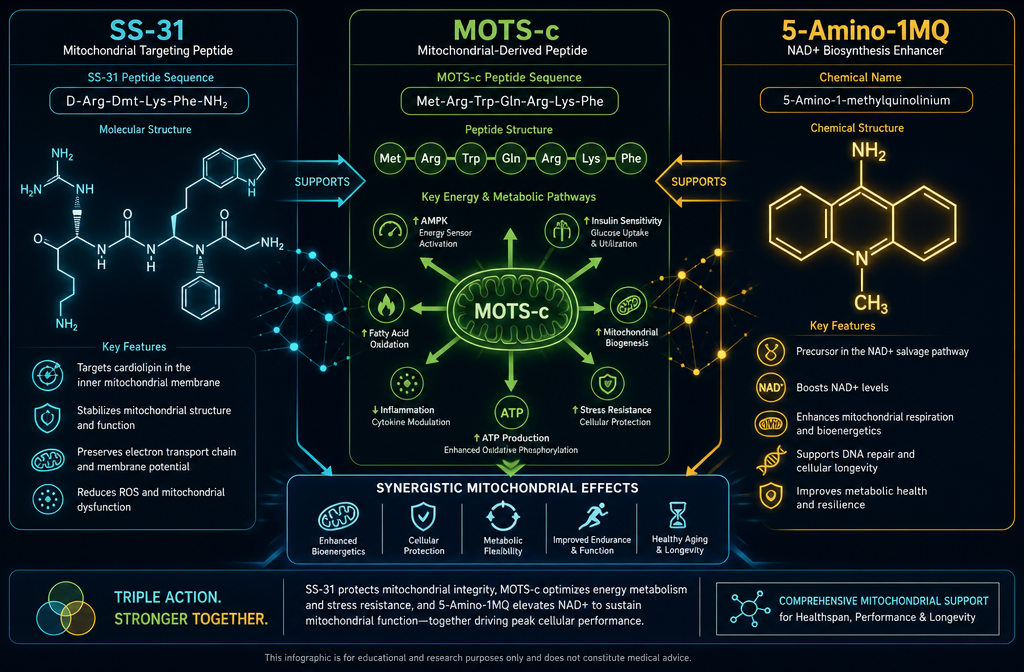
Mitochondrial peptides, including MOTS-c, Humanin, and SS-31, are short amino acid sequences encoded in mitochondrial DNA or designed to target mitochondrial membranes. Their mechanisms include:
- MOTS-c: Translocates to the nucleus under metabolic stress, activating AMPK and regulating folate and methionine metabolism
- SS-31 (Elamipretide): Targets cardiolipin on the inner mitochondrial membrane, reducing oxidative stress and improving electron transport chain efficiency
- Humanin: Binds cell-surface receptors and acts as a cytoprotective signaling molecule
5-Amino-1MQ, by contrast:
- Has no amino acid structure
- Does not interact with mitochondrial membranes directly
- Does not bind peptide receptors
- Works entirely through enzyme inhibition in the cytoplasm
This means the two compound classes are mechanistically complementary rather than redundant. A protocol pairing 5-Amino-1MQ with MOTS-c, for example, could theoretically address both the NAD+ depletion problem (via NNMT inhibition) and the downstream mitochondrial signaling deficit (via MOTS-c's AMPK activation). Researchers interested in SS-31's distinct membrane-targeting mechanism can explore SS-31 peptide research resources for comparison data.
For researchers sourcing compounds for metabolic studies, lab-tested peptides with verified purity documentation are essential for reproducible results.
Conclusion
5-Amino-1MQ occupies a unique position in the 2026 metabolic research landscape: it is not a peptide, but it operates in the same functional territory as mitochondrial peptides by restoring the NAD+ environment that those peptides depend on. Its mechanism, competitive NNMT inhibition leading to NAD+ conservation, SIRT1 activation, and improved adipose tissue metabolism, is well-defined at the preclinical level and mechanistically distinct from compounds like MOTS-c or SS-31.
Actionable next steps for researchers:
- Review NNMT expression data in your specific tissue model before including 5-Amino-1MQ in a protocol
- Consider pairing with a mitochondrial peptide to address both upstream NAD+ availability and downstream membrane-level function
- Verify compound purity through third-party COA documentation before initiating any in vitro or in vivo work
- Design controls that isolate NNMT inhibition from NAD+ precursor supplementation to avoid confounded endpoints
Understanding the mechanistic boundaries of each compound class, not just their reported outcomes, is what separates rigorous research design from assumption-driven stacking.