

More than 80% of participants with fatty liver disease who received retatrutide in a phase 2 trial had their liver fat completely normalized by week 48, a result researchers described as among the largest liver-fat reductions ever reported in an obesity or MASLD trial. That single data point has reshaped how the research community thinks about triple receptor agonists and metabolic liver disease.
This article examines what the most current evidence says about GLP-3 Retatrutide: Latest Research on Its Impact on Liver Fat Reduction and MASLD Management, who may benefit most, and what questions still need answering.
Key Takeaways
- Retatrutide is a triple agonist targeting GLP-1, GIP, and glucagon receptors simultaneously.
- Phase 2 data show mean relative liver fat reductions exceeding 80% at 48 weeks.
- More than 90% of participants on the 12 mg dose achieved liver fat normalization below the 5% MRI threshold.
- Weight loss of nearly 24-26% accompanied the liver fat improvements, suggesting dual metabolic benefit.
- The safety profile mirrors other incretin-based therapies, with no new hepatotoxicity signal identified.
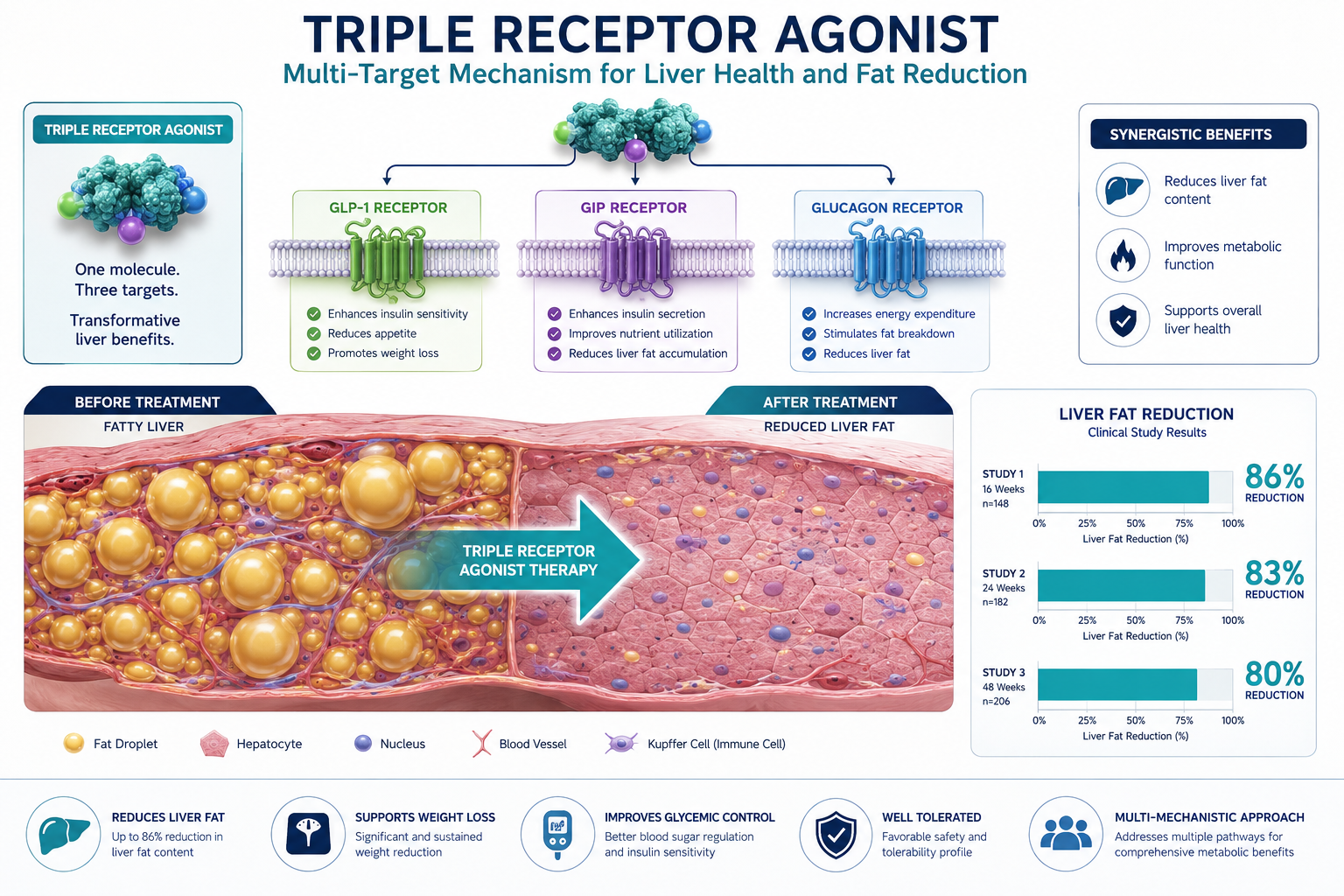
What Is Retatrutide and Why Does It Matter for MASLD
Metabolic Dysfunction-Associated Steatotic Liver Disease (MASLD), formerly called NAFLD, affects an estimated 25% of the global adult population. It ranges from simple fat accumulation in liver cells to progressive inflammation, fibrosis, and cirrhosis. Until recently, no pharmacological agent had demonstrated the ability to reliably normalize liver fat across a broad patient population.
Retatrutide changes that conversation. Unlike semaglutide or tirzepatide, which act on one or two receptors, retatrutide simultaneously activates three receptors:
| Receptor | Primary Role |
|---|---|
| GLP-1 | Appetite suppression, insulin secretion |
| GIP | Energy metabolism, fat storage regulation |
| Glucagon | Hepatic fat oxidation, energy expenditure |
The glucagon component is particularly relevant for liver fat. Glucagon receptor activation directly stimulates hepatic fat burning, meaning retatrutide works on the liver through a mechanism that single or dual agonists do not fully replicate. Researchers interested in the broader landscape of GLP-1 peptide research will recognize this as a meaningful mechanistic step forward.
Phase 2 Trial Data: Retatrutide and Liver Fat Reduction
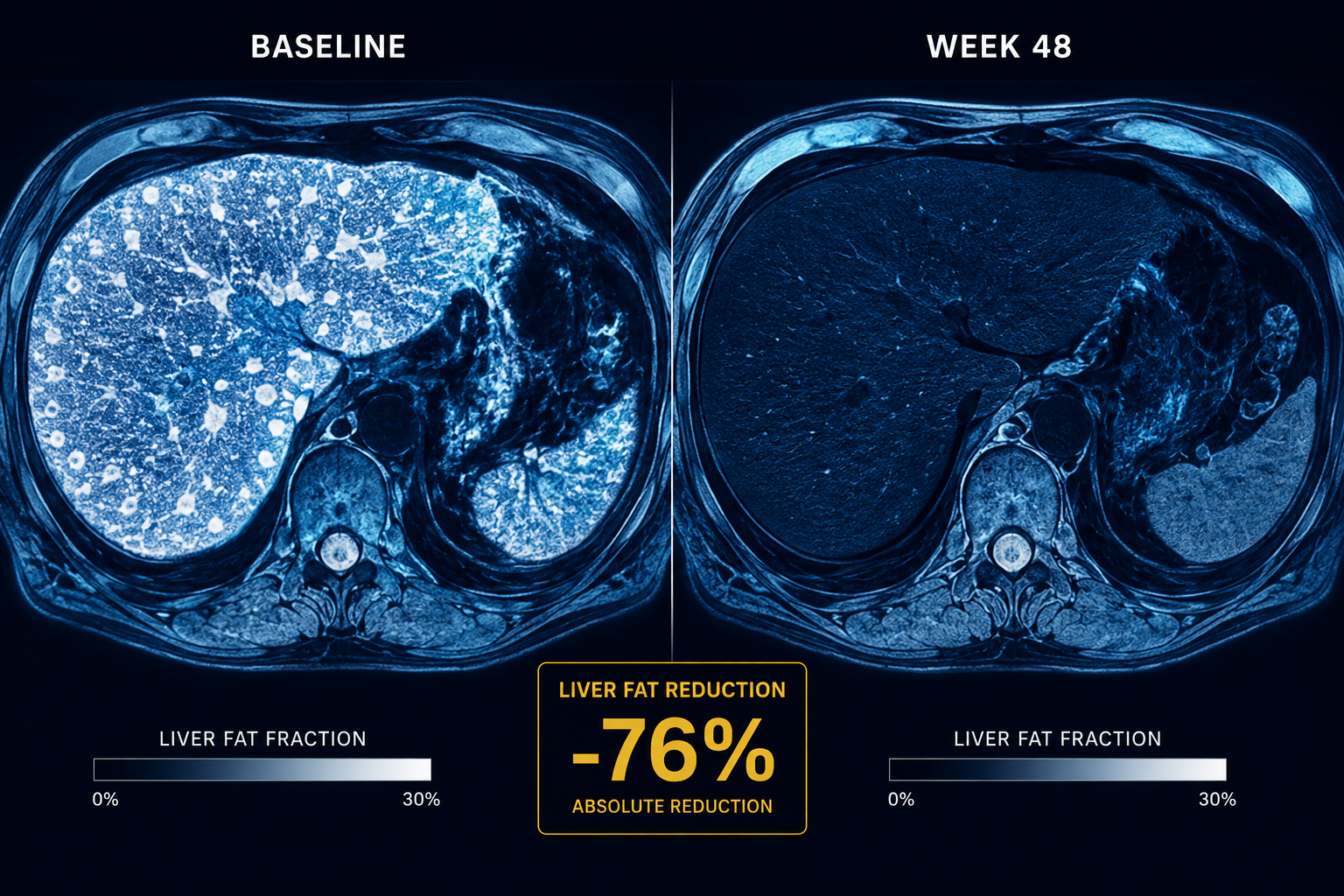
The most compelling evidence comes from a pre-specified MASLD sub-study within the obesity phase 2 trial. Participants with confirmed hepatic steatosis received weekly injections of either 8 mg or 12 mg retatrutide for 48 weeks, with liver fat measured by MRI-PDFF, the gold-standard imaging method.
The headline results:
- Mean relative liver fat reduction exceeded 80% in both dose groups
- More than 80% of participants on either dose achieved at least a 70% relative reduction in liver fat
- Hepatic steatosis resolved in over 85% of participants on 8 mg
- Over 90% achieved liver fat normalization (below the 5% MRI threshold) on 12 mg
A Virginia Commonwealth University-led analysis of the same sub-study reported that 81.7% relative liver fat reduction occurred with 8 mg and 86% with 12 mg. Average body weight fell by 23.8% and 25.9% respectively, underscoring that retatrutide delivers simultaneous, substantial benefits to both body weight and liver health.
"These are not incremental improvements. Resolving fatty liver in more than 9 out of 10 participants represents a potential paradigm shift in MASLD pharmacotherapy."
For context on how peptide-based approaches compare in metabolic research, the MOTS-c metabolic flexibility research page offers useful background on mitochondrial and metabolic mechanisms.
2026 Research Updates and Remaining Questions
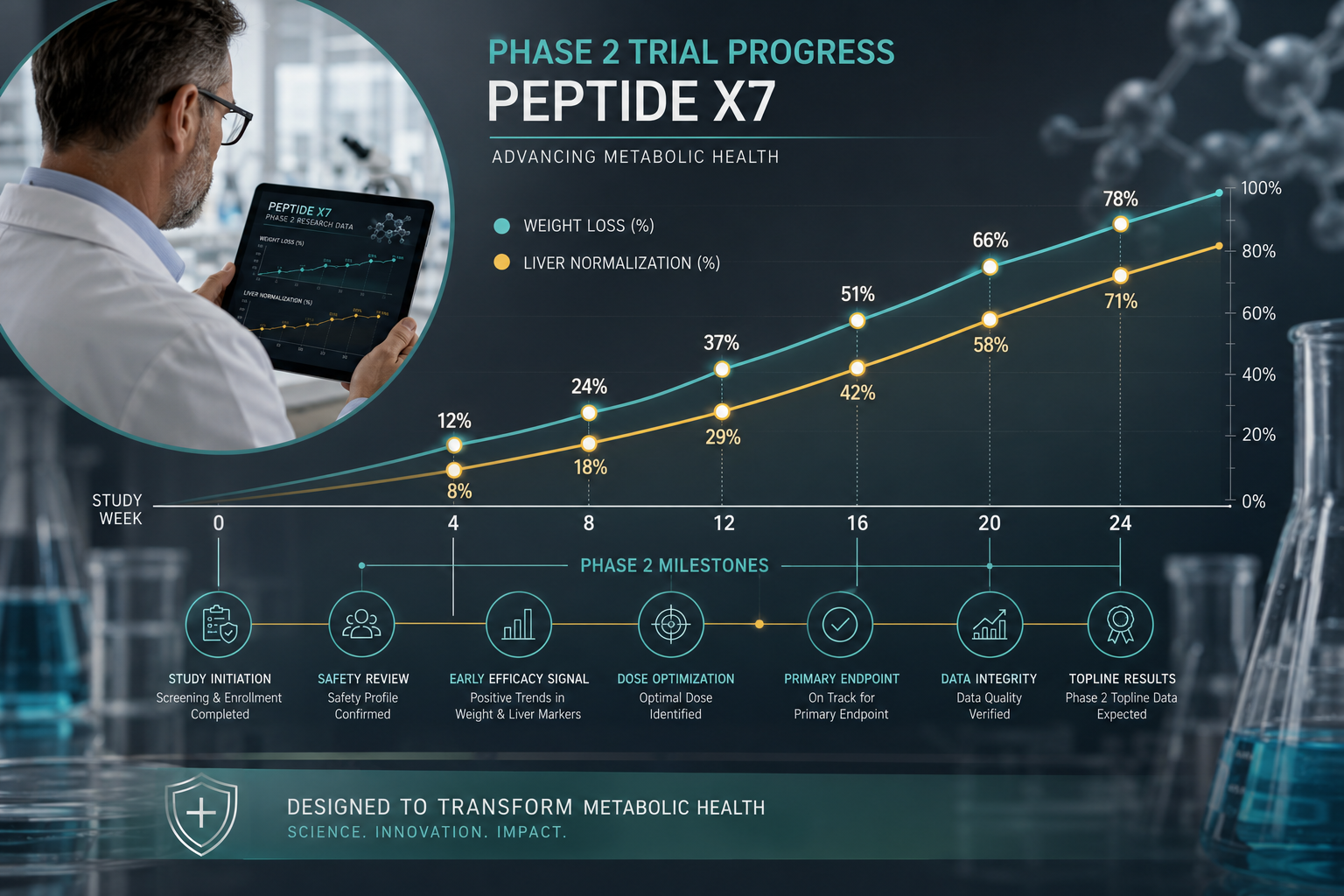
A 2026 ENDO meeting presentation reviewing phase 2 data confirmed weight reductions up to 24.2%, HbA1c reductions up to 2.16%, and liver fat normalization in up to 86% of MASLD participants. The safety profile remained consistent with other incretin-based therapies, primarily dose-dependent gastrointestinal side effects, with no new hepatotoxicity signal.
However, critical gaps remain:
- No liver biopsy data, histological confirmation of fibrosis regression is still pending from phase 3
- Long-term durability beyond 48 weeks has not been established
- Head-to-head comparisons with tirzepatide or semaglutide in MASLD-specific populations are lacking
Phase 3 trials are underway in 2026, and the field is watching closely for histological endpoints that would confirm whether the dramatic MRI improvements translate to reduced fibrosis and cirrhosis risk.
Those following the evolution of retatrutide peptide research will find the upcoming phase 3 data particularly significant. Related metabolic research on compounds like tesa for fat loss and AOD-9604 provides additional context for how peptide science is advancing metabolic health broadly. Researchers also tracking longevity peptide research themes may find retatrutide's hepatic effects relevant to long-term metabolic aging.
Conclusion
The evidence on GLP-3 Retatrutide: Latest Research on Its Impact on Liver Fat Reduction and MASLD Management is, by any measure, striking. Phase 2 data consistently show liver fat normalization rates above 85-90%, weight loss approaching 25%, and a safety profile that does not introduce new hepatic risk. The triple-receptor mechanism, particularly glucagon receptor activation, appears to be the key driver of effects that surpass what single or dual agonists have achieved.
Actionable next steps for researchers and clinicians:
- Monitor phase 3 trial readouts for histological fibrosis data, which will determine whether MRI improvements predict long-term liver health outcomes.
- Review the GLP-1 Retatrutide product research page for the latest compound specifications and purity standards relevant to preclinical study design.
- Consider how retatrutide's metabolic profile compares to other peptides in your research stack by exploring the full peptide catalog.
- Stay current with ENDO and EASL 2026 conference updates, where phase 3 interim data are expected to be presented.
The next 12-18 months will determine whether retatrutide becomes the first agent to achieve broad regulatory approval specifically for MASLD, a milestone the field has been working toward for decades.
Leave a Reply
Want to join the discussion?Feel free to contribute!