

Flow cytometry panels routinely detect shifts in CD4-to-CD8 ratios within hours of peptide exposure in murine models — a detail that reveals just how precisely researchers can now track immune responses to compounds like Selank, Epithalon, and BPC-157. Understanding cluster of differentiation markers and experimental peptides is central to mapping immune pathways for Selank, Epithalon, and BPC-157 in a rigorous lab setting.
Key Takeaways
- CD markers are surface proteins used to identify and quantify specific immune cell populations via flow cytometry.
- Selank, Epithalon, and BPC-157 each interact with immune pathways through distinct mechanisms, including cytokine modulation and inflammatory regulation.
- Flow cytometry is the gold-standard tool for measuring peptide-driven shifts in CD marker expression.
- Human clinical data for all three peptides remains limited; most evidence comes from animal and in vitro models.
- Thoughtful panel design — selecting the right CD markers for each peptide's mechanism — is critical for meaningful experimental results.
What Are CD Markers and Why Do They Matter in Peptide Research
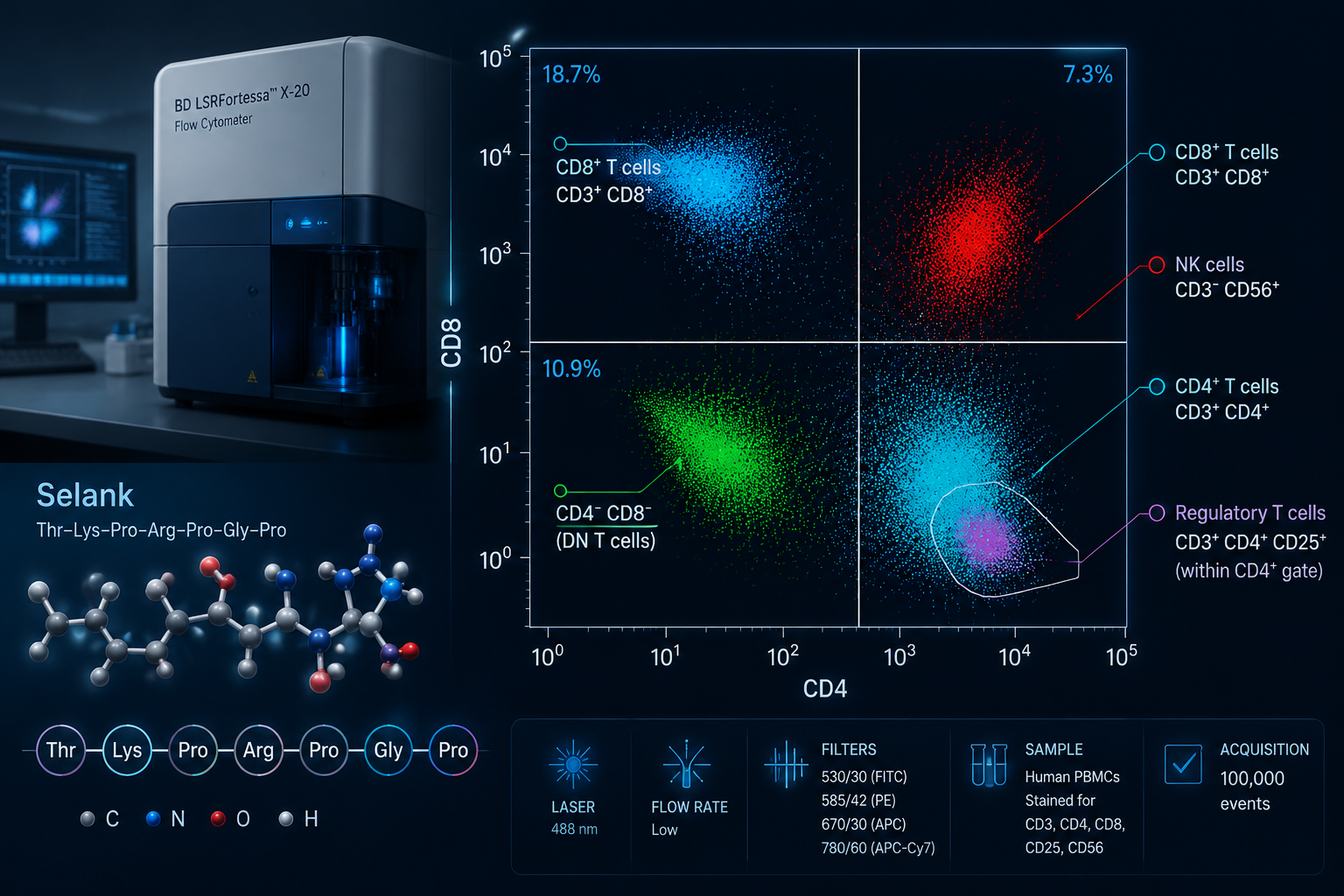
Cluster of differentiation (CD) markers are glycoproteins expressed on the surface of immune cells. They act as molecular identity tags, allowing researchers to distinguish T cells, B cells, natural killer cells, macrophages, and regulatory populations from one another. Common markers include:
| CD Marker | Cell Type | Function |
|---|---|---|
| CD3 | T cells | T-cell receptor complex |
| CD4 | Helper T cells | MHC class II interaction |
| CD8 | Cytotoxic T cells | MHC class I interaction |
| CD25 | Regulatory T cells (Tregs) | IL-2 receptor alpha chain |
| CD56 | Natural killer cells | Cell adhesion and activation |
| CD68 | Macrophages | Phagocytic activity marker |
When an experimental peptide is introduced, shifts in these populations — measured by flow cytometry — provide quantitative evidence of immunomodulatory activity. This approach is far more precise than measuring cytokine levels alone, because it identifies which cell types are being affected and in what proportion.
For researchers designing panels, the choice of fluorochrome combinations and gating strategies directly determines the quality of the data. A poorly designed panel can miss a meaningful CD4-to-CD8 ratio shift entirely.
Mapping Immune Pathways for Selank, Epithalon, and BPC-157 Using CD Markers
Each peptide engages immune biology differently, which means the optimal CD marker panel differs by compound.
Selank
Selank is a synthetic heptapeptide originally derived from the immunomodulatory peptide tuftsin. Its primary research interest lies in anxiety modulation and cognitive support, but its immune relevance is significant. Selank has been shown in preclinical models to influence IL-6 and interferon-gamma expression, both of which are linked to T-cell activation states. Researchers tracking Selank's immune effects typically include CD3, CD4, CD8, and CD25 in their panels to capture T-cell subset dynamics and regulatory T-cell expansion.
Reviewing Selank's known side effects and biological activity can help researchers anticipate which immune compartments may show the most change during an experiment.
Epithalon
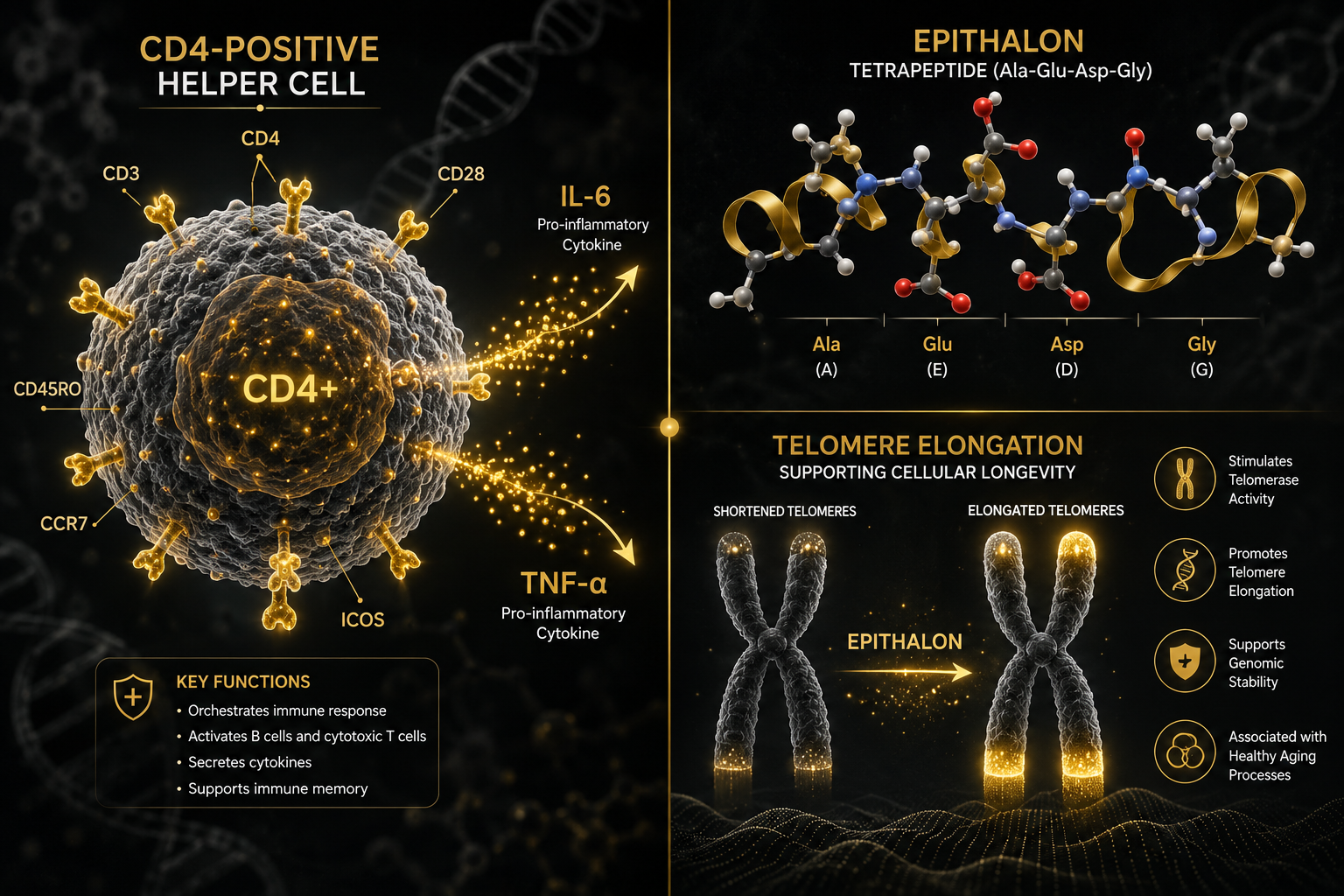
Epithalon (Ala-Glu-Asp-Gly) is a tetrapeptide studied primarily for its telomerase-activating and potential anti-aging properties. Its immune relevance connects to thymic function — the organ responsible for T-cell maturation. Preclinical data suggests Epithalon may support thymic peptide activity, which could influence naive T-cell output. A targeted flow cytometry panel for Epithalon research might include CD45RA (naive T cells), CD45RO (memory T cells), and CD56 to monitor NK cell activity. For a broader comparison of Epithalon's molecular targets, the Epithalon vs NAD evidence review provides useful context on its longevity-related mechanisms.
BPC-157
BPC-157 is a 15-amino-acid peptide (GEPPPGKPADDAGLV) derived from human gastric juice, with a molecular weight of approximately 1,419 Da and a half-life under 30 minutes. Its immune-relevant actions include promoting angiogenesis via VEGFR2 upregulation, modulating nitric oxide signaling, and regulating inflammatory cytokine cascades. Unlike classical immunosuppressants, BPC-157 appears to rebalance immune function rather than broadly suppress it.
For CD marker mapping, researchers commonly target CD68 (macrophage polarization), CD31 (endothelial and angiogenic activity), and CD4/CD8 ratios to assess systemic inflammatory tone. Oral BPC-157 research formats have also introduced questions about how route of administration affects peripheral immune marker profiles.
"The most informative experiments pair CD marker flow cytometry with cytokine multiplex assays — neither method alone tells the full story."
Designing a Flow Cytometry Model for Cluster of Differentiation Markers and Experimental Peptides
A well-structured experimental model for cluster of differentiation markers and experimental peptides should follow a logical sequence:
- Define the research question — Is the goal to detect immunosuppression, immune activation, or specific cell subset expansion?
- Select the peptide dose and route — BPC-157 typical research doses range from 250 to 500 mcg once or twice daily in animal models; Selank and Epithalon protocols vary.
- Choose the CD panel — Match markers to the peptide's known mechanism (see table above).
- Set time points — Acute (24-48 hours), subacute (1-2 weeks), and chronic (4-8 weeks) time points capture different phases of immune modulation.
- Include controls — Vehicle controls, positive immunomodulatory controls (e.g., LPS stimulation), and unstained samples are essential.
- Validate with secondary assays — CBC and comprehensive metabolic panel assessments at baseline and week 8 add clinical-translational value.
Researchers interested in how other peptides interact with immune and metabolic pathways may find the Thymosin Alpha-1 mechanism overview useful for comparative panel design, given Thymosin Alpha-1's well-characterized CD4 and CD8 effects.
It is worth noting that human clinical data for BPC-157 remains sparse — only three small pilot studies with a combined enrollment of 30 subjects have been published, all from a single clinic, and no randomized controlled trials exist. Selank and Epithalon face similar evidentiary gaps in human immune research. As of 2026, BPC-157's regulatory status in the United States is also in transition, with a Pharmacy Compounding Advisory Committee vote scheduled for later this year.
For researchers exploring adjacent peptide categories, IPA peptide research resources and the LL-37 innate immunity research themes page offer complementary perspectives on innate and adaptive immune pathway mapping.

Conclusion
Mapping immune pathways for Selank, Epithalon, and BPC-157 through cluster of differentiation markers and experimental peptides requires deliberate panel design, appropriate model selection, and honest acknowledgment of current data limitations. The actionable steps for researchers in 2026 are clear:
- Anchor every experiment to a specific CD marker rationale tied to the peptide's known mechanism.
- Use flow cytometry as the primary quantification tool, supported by cytokine multiplex and standard blood panels.
- Prioritize multi-time-point designs to distinguish acute immune shifts from sustained modulation.
- Track regulatory developments for BPC-157 in particular, as its compounding status may affect research access.
The science of peptide immunomodulation is advancing rapidly. Researchers who build rigorous CD marker frameworks now will be best positioned to generate translatable, reproducible data as clinical trials eventually expand.
Leave a Reply
Want to join the discussion?Feel free to contribute!