

Fewer than a dozen peptides developed outside Western regulatory systems have attracted as much sustained research attention as Semax — a synthetic heptapeptide that Russian scientists have studied for over three decades. Semax Peptide Nasal Spray Research: Cognitive Performance, Neuroprotection, and Delivery Considerations sits at the crossroads of neuroscience, pharmacology, and delivery science, raising questions that matter well beyond Russia's borders.
Key Takeaways
- Semax is a synthetic peptide derived from an ACTH(4-10) fragment, approved in Russia for stroke and neuroprotection but not approved by the FDA or EMA.
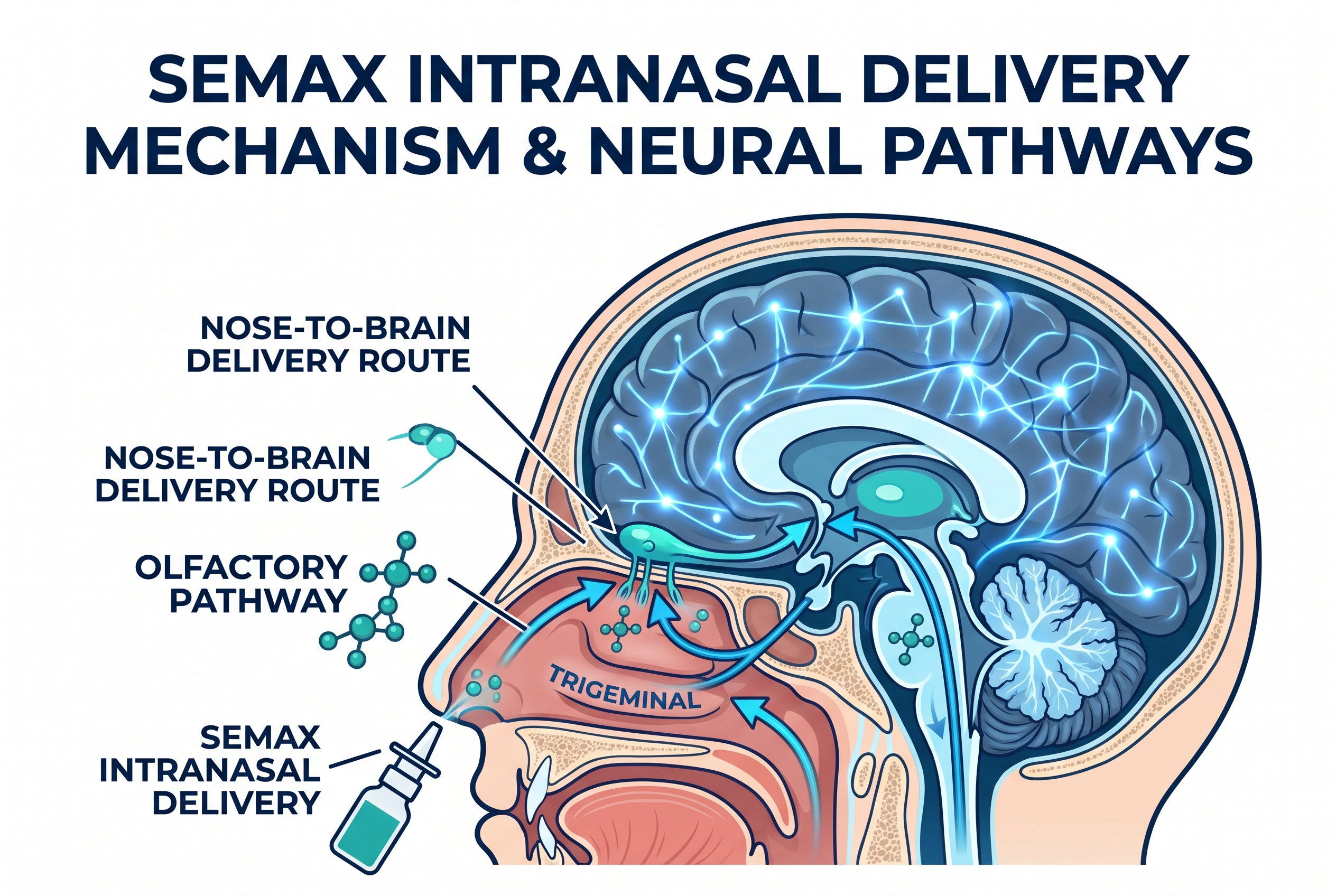
- Intranasal delivery is the dominant route in both clinical and research settings, with direct nose-to-brain transport hypothesized via olfactory and trigeminal pathways.
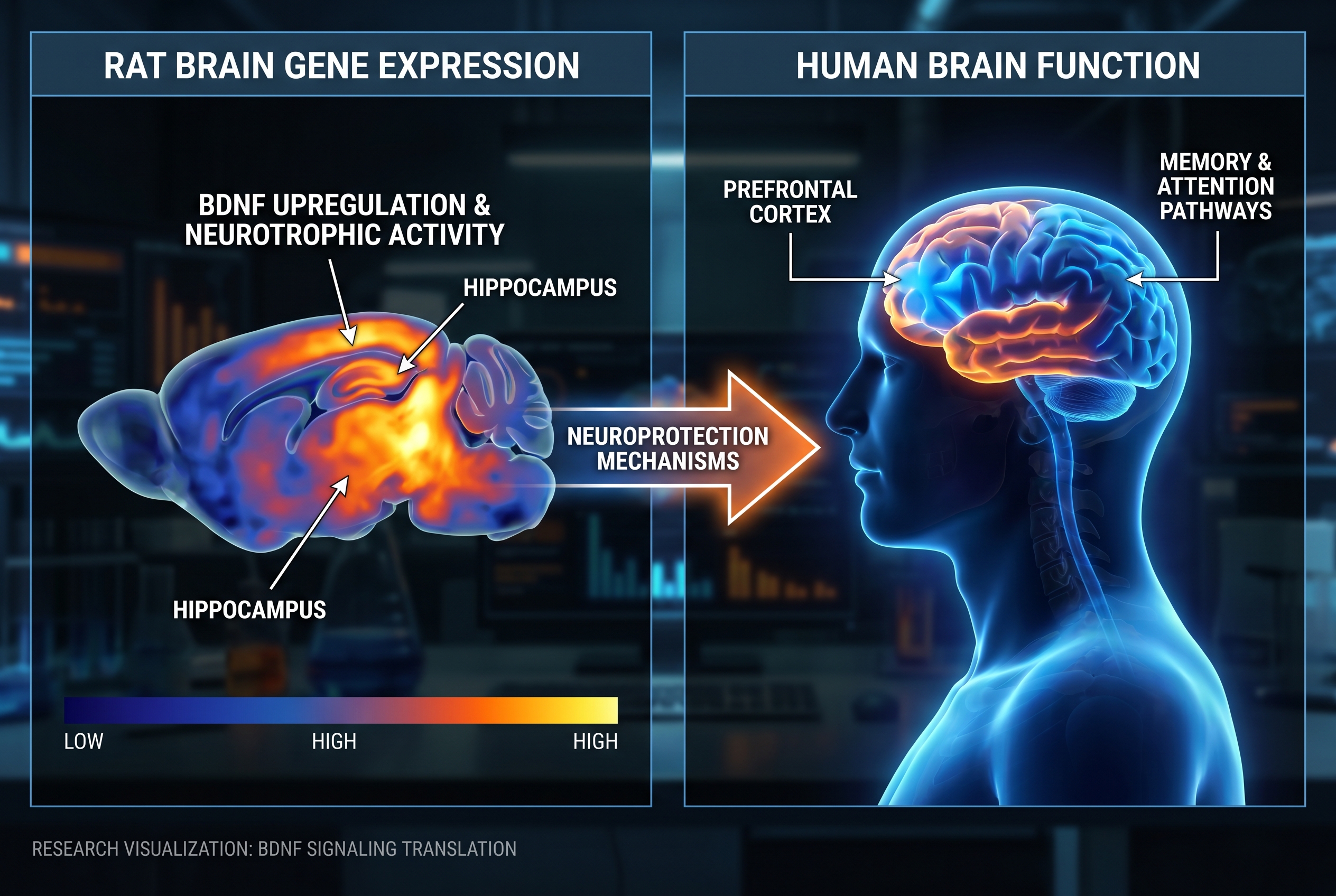
- Preclinical data shows Semax modulates BDNF expression and neuroinflammatory gene activity; human cognitive data exists but comes largely from small Russian studies.
- No large randomized controlled trials in healthy Western populations have been published as of 2026.
- Researchers and clinicians should weigh the mechanistic plausibility against the current evidence gaps before drawing conclusions.
What Is Semax and Why Does the Delivery Route Matter
Semax is a heptapeptide built from a fragment of adrenocorticotropic hormone (ACTH), specifically the 4-10 sequence, with a proline-glycine-proline extension that increases its stability. Developed at the Russian Academy of Sciences in the late 1980s, it earned regulatory approval in Russia for conditions including ischemic stroke, discirculatory encephalopathy, optic nerve atrophy, and neonatal neurological deficits.
The delivery route is not a minor detail — it is central to the entire research profile. Unlike many peptides that require injection to reach systemic circulation, Semax is most commonly administered as a nasal spray or nasal drops. This matters because the nasal mucosa offers a relatively direct pathway to the central nervous system through the olfactory epithelium and trigeminal nerve branches, bypassing the blood-brain barrier to a meaningful degree.
Standard intranasal dosing protocols referenced in the literature include:
| Indication | Concentration | Typical Dosing |
|---|---|---|
| Acute stroke (clinical) | 1% solution | 2-4 drops, 3-4 times daily |
| Mild cognitive or neuroprotective use | 0.1% solution | 1-2 drops, twice daily |
| Healthy volunteer research | Variable | 250-1,000 mcg/kg |
Onset of reported cognitive effects via the intranasal route is approximately 30 minutes in both user accounts and clinical observations, which aligns with the expected pharmacokinetics of nose-to-brain transport. Subcutaneous injection is an alternative route studied for systemic indications, but intranasal administration appears to produce more pronounced cognitive effects in reported data, likely because of the direct central delivery mechanism.
Researchers interested in the broader landscape of what is new in peptide research will find Semax's delivery profile particularly instructive as a model for CNS-targeted peptide administration.
Cognitive Performance: What the Research Actually Shows
The cognitive performance data for Semax is real but limited. Russian clinical studies in healthy volunteers using intranasal doses of 250 to 1,000 mcg/kg reported improvements in attention, short-term memory, and EEG patterns consistent with neuroprotective agents. These findings are notable, but they come with significant caveats.
Most of these studies are small, conducted in Russian-language journals, and have not been replicated in large, double-blind, placebo-controlled trials in Western research settings. As of 2026, no clinical trials are registered in the United States, and no pivotal trials appear in Western regulatory databases. The evidence for cognitive benefits in healthy adults remains promising but not conclusive.
"Evidence for healthy users is limited and largely not replicated in Western cohorts."
This does not invalidate the mechanistic rationale. Semax's structural relationship to ACTH fragments suggests interactions with melanocortin receptors, and its effects on neurotransmitter systems — including serotonin and dopamine modulation — provide a plausible biological basis for the reported cognitive changes.
Researchers studying related anxiolytic and cognitive peptides may find value in comparing Semax's profile with Selank peptide benefits, another Russian-developed nootropic with overlapping research themes. A direct comparison is also available in the Selank and Semax research overview.
Neuroprotection Mechanisms and Preclinical Evidence
The neuroprotection angle of Semax Peptide Nasal Spray Research: Cognitive Performance, Neuroprotection, and Delivery Considerations is arguably the strongest area of the existing evidence base, even if it remains largely preclinical.
Animal studies published in peer-reviewed journals demonstrate that Semax modulates the expression of genes linked to:
- Neurotrophic factors, particularly BDNF (brain-derived neurotrophic factor)
- Neurotransmission pathways across multiple receptor systems
- Inflammatory response genes in brain tissue following ischemic insult
BDNF upregulation is especially significant. BDNF supports neuronal survival, synaptic plasticity, and learning consolidation — making it a central target in neuroprotection research. Semax's ability to increase BDNF expression in rat brain models provides a mechanistic framework that helps explain the clinical observations in stroke patients.
In Russian clinical settings, Semax added to standard stroke therapy reportedly improved neurological outcomes compared to control groups. However, many of these studies are open-label or lack rigorous methodology descriptions, and access to primary datasets remains limited for Western researchers.
For context on how neurotrophic and recovery-oriented peptides are studied more broadly, the recovery and tissue biology research overview provides useful framing. Similarly, researchers tracking longevity-adjacent peptide mechanisms may find parallels in GHK-Cu longevity research themes.
The Selank side effects profile also offers comparative safety context for researchers evaluating CNS-active peptides with similar origins.
Conclusion
Semax Peptide Nasal Spray Research: Cognitive Performance, Neuroprotection, and Delivery Considerations represents one of the more developed — yet still evidence-limited — areas of peptide neuroscience. The intranasal delivery route is not incidental; it is the defining feature that makes Semax pharmacologically distinct and practically relevant for CNS research. The mechanistic case for neuroprotection through BDNF modulation is credible and supported by preclinical work. The cognitive performance data from human studies is suggestive but not yet validated by large, well-controlled Western trials.
Actionable next steps for researchers and clinicians:
- Treat existing Russian clinical data as hypothesis-generating, not confirmatory.
- Prioritize understanding the nose-to-brain delivery pathway when designing or evaluating Semax studies.
- Monitor Western regulatory databases for any emerging IND filings or registered trials.
- Compare Semax's neurotrophic mechanism against better-characterized peptides to contextualize effect size expectations.
- Consult purity and testing documentation — such as available certificates of analysis — when sourcing research-grade material.
The science is moving. The evidence base, while still maturing, offers enough mechanistic depth to justify continued structured investigation.
Leave a Reply
Want to join the discussion?Feel free to contribute!