Collagen Biology and Regenerative Peptides: How GHK‑Cu, Glow Blend, and Klow Blend Affect Extracellular Matrix Research
Collagen accounts for roughly 30% of total body protein, yet its synthesis declines measurably after age 25, with some estimates suggesting a loss of approximately 1% per year thereafter. That slow erosion drives a wide range of research questions in regenerative medicine, from wound-healing kinetics to fibroblast signaling. The field of collagen biology and regenerative peptides: how GHK-Cu, Glow Blend, and Klow Blend affect extracellular matrix research has emerged as a particularly productive area, giving investigators precise molecular tools to probe how the extracellular matrix (ECM) responds to targeted peptide stimulation.
Key Takeaways
- Collagen is the structural backbone of the ECM, and its regulated turnover is central to skin integrity, wound repair, and tissue longevity.
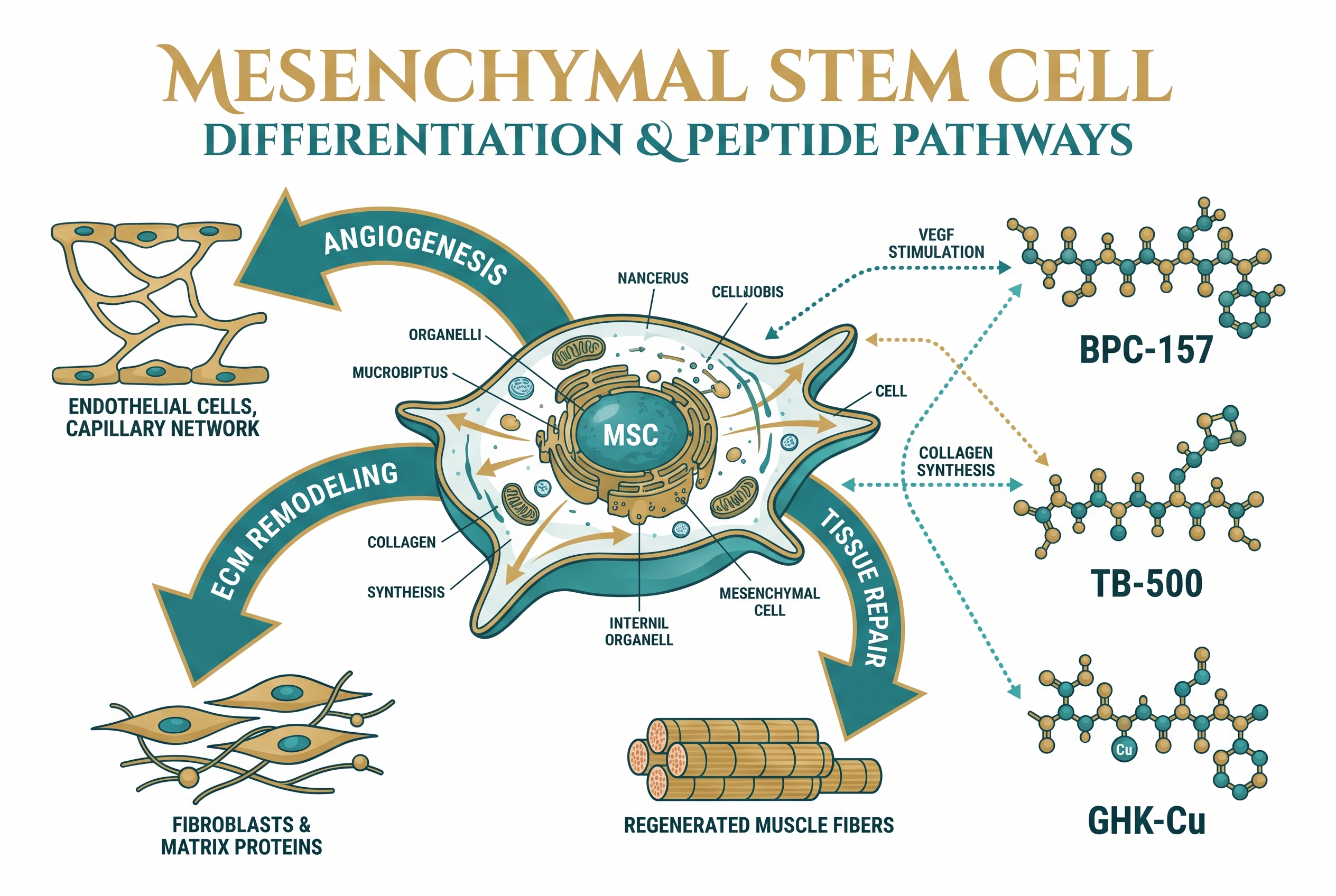
- GHK-Cu (glycyl-L-histidyl-L-lysine copper complex) is a well-characterized copper peptide that modulates fibroblast activity, collagen synthesis, and matrix metalloproteinase (MMP) regulation.
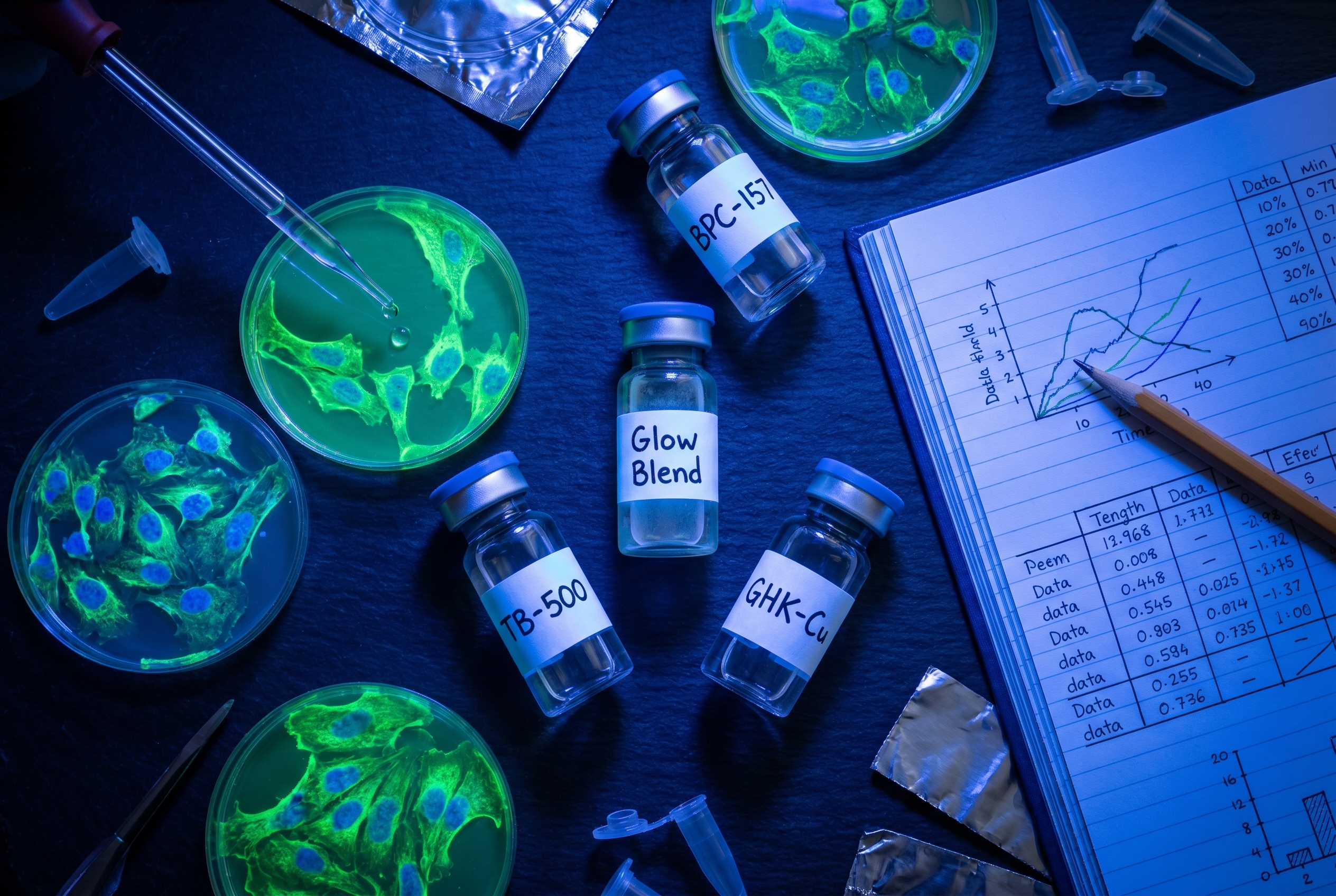
- Glow Blend and Klow Blend are proprietary multi-peptide formulations used in research to interrogate ECM remodeling through complementary signaling pathways.
- Preclinical data suggest these compounds influence wound-healing endpoints, antioxidant defense, and dermal matrix architecture.
- Researchers sourcing these compounds should prioritize purity verification and documented quality control.
The Extracellular Matrix: A Living Scaffold
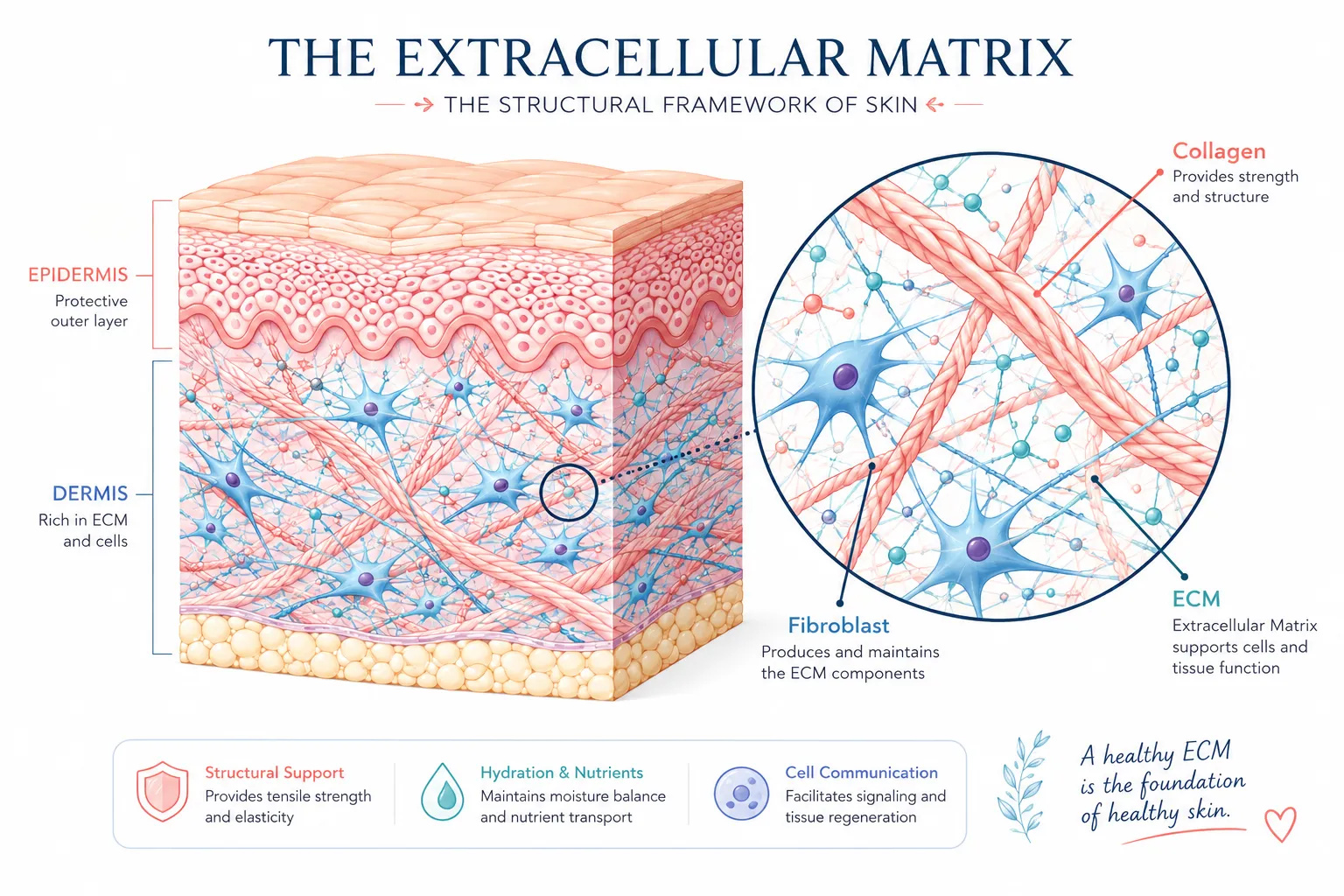
The ECM is far more than passive connective tissue. It is a dynamic, biochemically active scaffold that regulates cell adhesion, migration, proliferation, and differentiation. Its major structural components include:
| Component | Primary Role |
|---|---|
| Type I Collagen | Tensile strength; dominant in skin and bone |
| Type III Collagen | Early wound repair; vascular walls |
| Fibronectin | Cell attachment and migration guidance |
| Hyaluronic Acid | Hydration and viscoelastic buffering |
| Matrix Metalloproteinases (MMPs) | Controlled ECM degradation and remodeling |
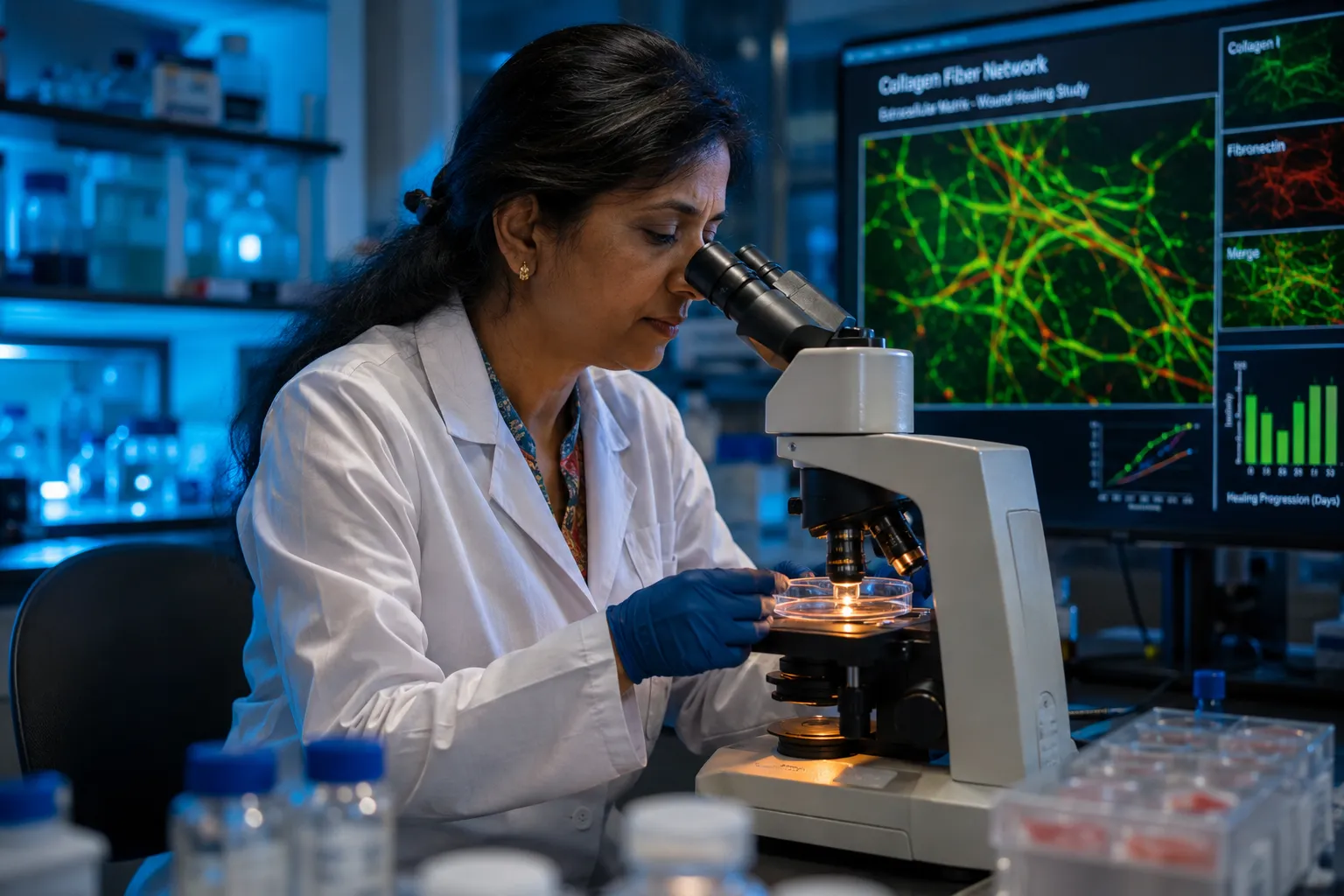
Fibroblasts are the principal ECM-producing cells. They synthesize procollagen, secrete fibronectin, and regulate MMP activity in response to growth factors, mechanical cues, and, critically for peptide researchers, bioactive signaling molecules.
Researchers interested in the broader structural biology of the skin matrix can explore the skin matrix biology resource for foundational context.
GHK-Cu: The Copper Peptide at the Center of ECM Research
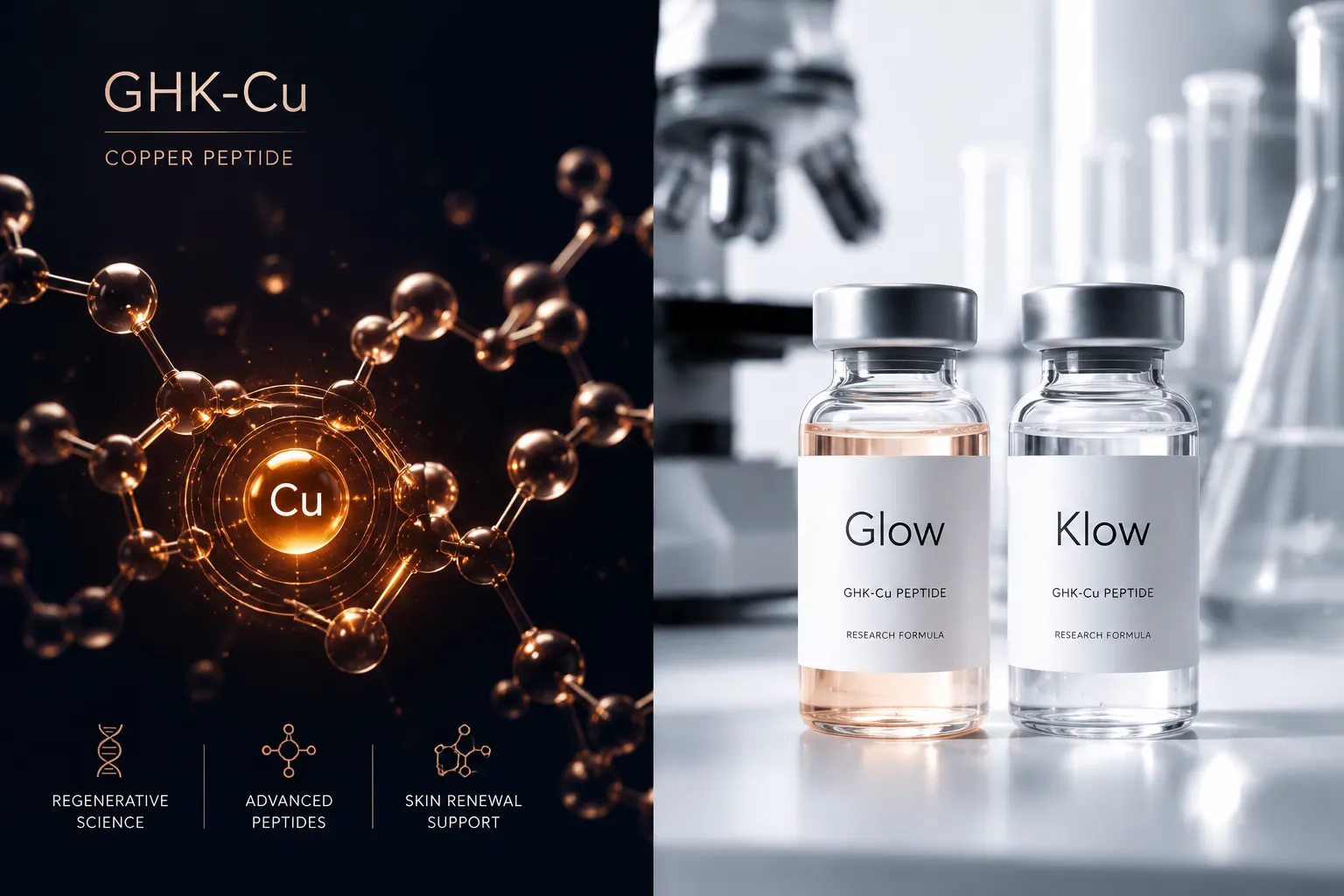
GHK-Cu (glycyl-L-histidyl-L-lysine complexed with copper) is a naturally occurring tripeptide first isolated from human plasma. It has since become one of the most studied bioactive peptides in regenerative science, and for good reason.
Mechanisms of Action in Fibroblast Biology
GHK-Cu exerts its effects through several intersecting pathways:
- Collagen and glycosaminoglycan synthesis: GHK-Cu stimulates fibroblasts to upregulate collagen I and III production, as well as elastin and decorin, restoring ECM density.
- MMP modulation: Rather than simply suppressing degradation, GHK-Cu appears to fine-tune the balance between MMPs and their inhibitors (TIMPs), supporting controlled matrix turnover.
- Antioxidant and anti-inflammatory signaling: Copper ions facilitate superoxide dismutase activity; GHK-Cu also downregulates pro-inflammatory cytokine expression in stressed tissue.
- Wound contraction and angiogenesis: Preclinical wound models show accelerated re-epithelialization and capillary formation in GHK-Cu-treated tissue.
"GHK-Cu is now framed as a central ECM-regulating copper peptide in regenerative medicine and aesthetics, one that operates upstream of multiple fibroblast signaling cascades."
Researchers can review sourcing and quality considerations in detail through the GHK-Cu copper peptide research sourcing guide, and explore longevity-oriented research angles at the GHK-Cu longevity research themes page.
Collagen Biology and Regenerative Peptides: How GHK-Cu, Glow Blend, and Klow Blend Affect Extracellular Matrix Research in Practice
Understanding how Glow Blend and Klow Blend fit into ECM research requires knowing what distinguishes multi-peptide formulations from single-compound models.
What Are Glow Blend and Klow Blend?
Glow Blend and Klow Blend are proprietary combinations designed to address ECM remodeling from multiple angles simultaneously. Rather than targeting a single receptor or enzyme, these blends pair peptides with complementary mechanisms, for example, combining a collagen-stimulating signal with an anti-inflammatory or antioxidant component.
Key research applications include:
- Fibroblast proliferation assays: Measuring how blend components alter cell division rates compared to single-peptide controls.
- Collagen deposition quantification: Using hydroxyproline assays or immunofluorescence to assess matrix density changes.
- Wound-healing endpoint models: Scratch assays and excisional wound models in preclinical settings.
- Oxidative stress panels: Evaluating how copper-peptide components modulate reactive oxygen species in dermal tissue.
A broader overview of both formulations and how they compare in research design is available at the Glow and Klow peptide blends overview, while specific benefit profiles are documented at the Glow peptide blend benefits page.
Designing ECM Research Protocols with These Blends
Rigorous experimental design matters. Researchers working with these compounds typically:
- Establish baseline fibroblast viability and collagen output under standard culture conditions.
- Apply dose-response curves across a defined concentration range.
- Compare single-peptide (e.g., GHK-Cu alone) versus blend conditions to isolate synergistic effects.
- Measure both anabolic markers (procollagen I C-peptide, elastin) and catabolic markers (MMP-1, MMP-3).
This approach aligns with the broader methodology discussed in innovative peptide delivery systems research, which addresses how formulation choices affect bioavailability and endpoint reproducibility.
Contextualizing ECM Peptides Within Longevity and Regenerative Research
The study of collagen biology and regenerative peptides sits at the intersection of dermatology, wound care, and longevity science. GHK-Cu does not operate in isolation, its activity intersects with broader tissue repair networks that include growth hormone secretagogues, mitochondrial peptides, and anti-inflammatory compounds.
Researchers mapping the full regenerative landscape may find it useful to cross-reference longevity peptide research themes to understand how ECM-targeted peptides complement systemic approaches to tissue maintenance.
Conclusion
The science of collagen biology and regenerative peptides, how GHK-Cu, Glow Blend, and Klow Blend affect extracellular matrix research, continues to yield actionable insights for investigators studying fibroblast dynamics, wound repair, and dermal aging. GHK-Cu remains the anchor compound in this space, with a well-documented ability to modulate collagen synthesis, MMP balance, and oxidative stress simultaneously. Proprietary blends like Glow and Klow extend that research toolkit by enabling multi-pathway interrogation in a single experimental condition.
Actionable next steps for researchers:
- Review published fibroblast assay methodologies before designing ECM endpoints.
- Source peptides with documented purity certificates and third-party testing to ensure data reproducibility.
- Use dose-response comparisons between single-peptide and blend conditions to isolate synergistic effects.
- Cross-reference ECM findings with systemic longevity markers for a more complete picture of regenerative potential.
Prioritizing quality-controlled compounds from verified suppliers is not optional, it is the foundation of reproducible science.