Call or Text 727-513-9780
  • Shopping Cart Shopping Cart
    0Shopping Cart
Pure Tested Peptides | America's most trusted Peptides for sale online
  • Peptides for sale
    • Oral Peptides for sale
      • Peptide Capsules for sale
      • BPC 157 Capsules 1000mcg
      • SLU-PP-332 Capsules | 1000 mcg
      • 5-Amino-1MQ 50mg Capsules
      • Tesofensine 500mcg
    • All Peptides for sale
    • Peptide Sprays
      • BPC 157 Nasal Spray Kit
      • BPC-157 TB500 Nasal Spray Kit
      • Semax Nasal Spray 10mg
      • Selank – Nasal Spray Kit – 10mg
      • Epithalon 50MG Nasal Spray Kit
      • Ipamorelin 10mg Nasal Spray
      • Klow Nasal Spray (BPC-157 + TB-500 + GHK-Cu + KPV) | 80mg
      • Hulk Nasal Spray Tesa / Ipa Blend 6/3 MG
      • Klow Nasal Spray
      • NAD + 500 mg Nasal Spray
      • PT-141 Nasal Spray Kit
    • GHRH Peptides
      • Ipa Peptides
      • CJC-1295 Peptides
        • CJC-1295 with DAC 5 mg
        • CJC-1295 without DAC 5 mg
        • CJC-1295 Ipa 10mg
      • Tesa Peptides
        • Tesa Peptide
        • Tesa 20 mg
    • GHK-Cu Peptides
      • All GHK-Cu Peptides
      • GHK-Cu 100mg
      • KLOW Peptide Blend – Buy KLOW blend online
    • BPC Peptides
      • All BPC Peptides
      • BPC-157
      • BPC-157 TB-500
      • BPC 157 capsules 1000mcg
    • SLU-PP-332 Peptides
      • All SLU-PP-332 Peptides
      • SLU-PP-332 5mg
    • GLP3 Peptides
      • GLP3-R
      • GLP3-R CAG 10mg
      • GLP3-R 20mg
    • PT-141 Peptides
      • PT-141 Peptides for sale
      • PT-141 10mg
      • PT-141 Nasal Spray
    • CAG Peptides
      • Lipo-C Peptide Blend
      • CAG 5mg
      • CAG 10mg
    • MOTS-C Peptides
      • MOTS-C Peptides for sale
      • MOTS-c peptide
      • MOTS-c 10mg *6 pack*
    • 5 Amino 1MQ Peptides
      • 5 Amino 1MQ Peptides for sale
      • 5-Amino-1MQ 50mg Capsules
      • 5-Amino-1MQ 5mg
    • Epithalon Peptides
      • Epithalon Peptides for sale
      • Epithalon 10mg
      • Epithalon 50mg
  • Shop
    • GLPs
      • 5-Amino-1MQ 50mg Capsules
      • 5-Amino-1MQ 5mg
      • GLP3-Reta
      • L-Carnitine 500mg/ml
      • Tesofensine 500mcg
      • SLU-PP-332 5mg
      • MOTS-c 10mg *6 pack*
    • Epithalon & BPC Peptides
      • Epithalon 10mg
      • Epithalon 50mg
      • BPC-157
      • BPC 157 capsules 1000mcg
      • BPC-157 TB-500
      • BPC-157 TB500 Nasal Spray Kit
      • BPC 157 Nasal Spray Kit
    • BPC TB-500 & NAD+ Peptides
      • NAD+ 500 mg
      • KLOW Peptide Blend – Buy KLOW blend online
      • GLOW Peptide Blend
      • TB 500 5mg
      • BPC 157 capsules 1000mcg – Supplement
      • BPC 157 Nasal Spray Kit
      • BPC-157
      • BPC-157 TB500 Nasal Spray Kit
      • BPC-157 TB-500
      • BPC 157 capsules 1000mcg
    • LL-37 Peptide
      • LL-37 10 mg
    • MOTS-C & Selank
      • MOTS-c peptide
      • Selank 10mg
    • GHK Peptides
      • GHK-Cu 100mg
      • GLOW Peptide Blend
      • KLOW Peptide Blend – Buy KLOW blend online
  • COAs
  • Wholesale
    • Wholesale Peptides for sale
  • PTP FAQ
  • Affiliates
    • Affiliate Program
    • Affiliate Signup
  • Contact
    • Contact Customer Service
    • Text Customer Support
  • About US
  • Shop all peptides
  • Login / Register Login / Register Page Link Login / Register Page Link
  • Click to open the search input field Click to open the search input field Search
  • Menu Menu

Tag Archive for: metabolic modulation

Retatrutide vs GLP-1 and GLP-2 Pathways: How Triple Agonism Changes the Research Conversation

Retatrutide vs GLP-1 and GLP-2 Pathways: How Triple Agonism Changes the Research Conversation

June 6, 2026/0 Comments/in Uncategorized/by

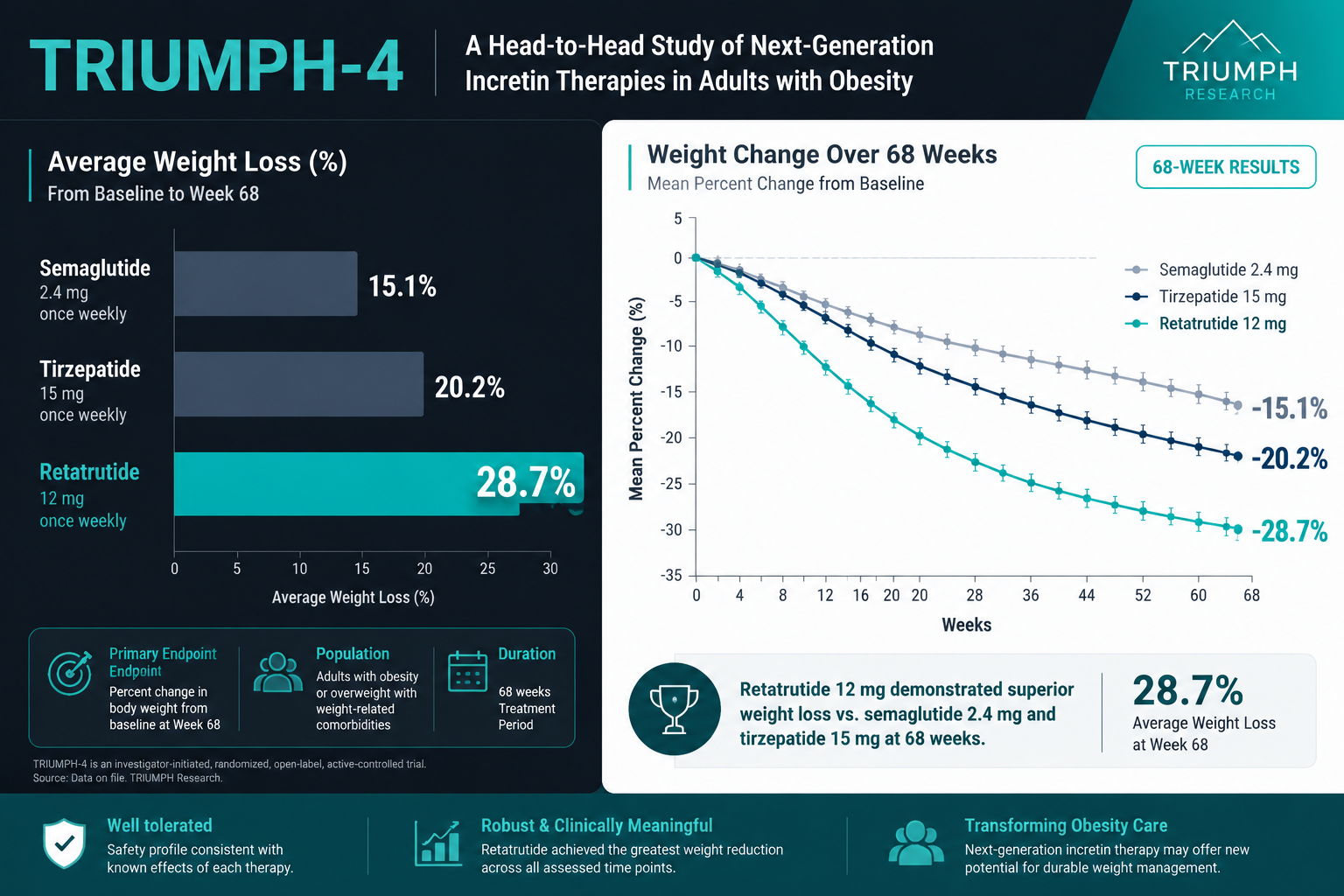
A single peptide producing nearly 29% body weight reduction in a Phase 3 trial is not an incremental advance — it is a structural shift in how researchers think about metabolic intervention. That result, recorded in the TRIUMPH-4 trial with retatrutide, has forced a direct comparison between the emerging triple agonist approach and the narrower incretin pathways that have defined obesity pharmacology for the past decade. The discussion around Retatrutide vs GLP-1 and GLP-2 Pathways: How Triple Agonism Changes the Research Conversation is no longer speculative; it is grounded in late-stage clinical data that demands a closer look at mechanism.

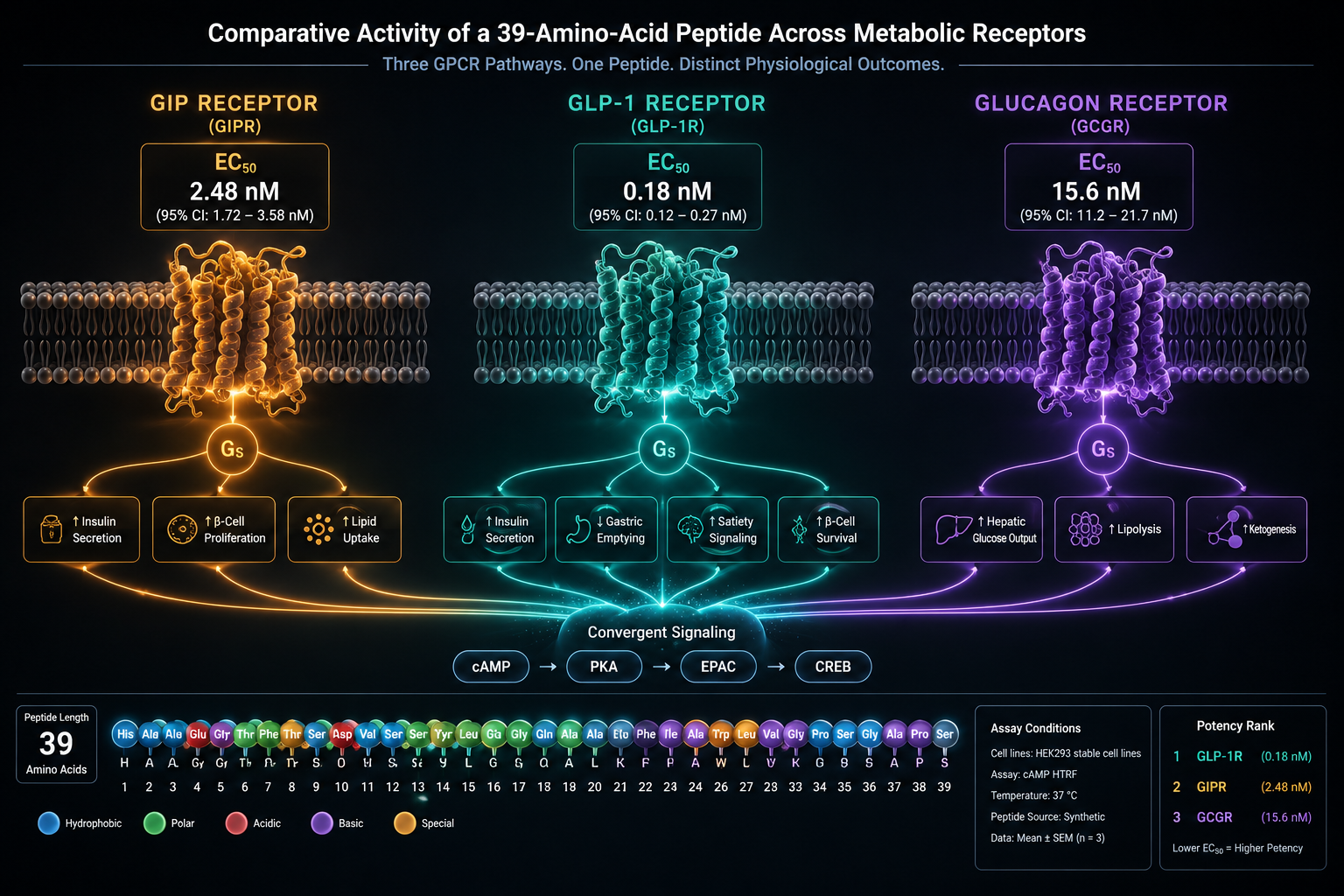
() scientific infographic showing a side-by-side molecular comparison of three peptide receptor pathways: GIP receptor node

Key Takeaways

  • Retatrutide activates three receptors — GIP, GLP-1, and glucagon — making it mechanistically distinct from both semaglutide (single agonist) and tirzepatide (dual agonist).
  • Its receptor potency is GIP-primary, with EC50 values of 0.0643 nM at GIP, 0.775 nM at GLP-1, and 5.79 nM at glucagon.
  • TRIUMPH-4 Phase 3 data showed an average weight loss of 28.7% over 68 weeks, roughly 71 pounds from a baseline of 249 pounds.
  • Glucagon receptor activity is considered a key driver of enhanced energy expenditure, separating retatrutide from pure incretin strategies.
  • As of 2026, retatrutide is not FDA-approved, with Eli Lilly targeting a regulatory submission by late 2026.

What Separates Triple Agonism from Incretin-Only Approaches

The GLP-1 receptor pathway has been the dominant target in metabolic research since the early success of semaglutide. GLP-1 agonism reduces appetite, slows gastric emptying, and improves insulin secretion. Adding GIP receptor activation — as tirzepatide does — brought a meaningful improvement in both glucose control and weight outcomes. However, both approaches remain within the incretin framework.

Retatrutide steps outside that framework. As a 39-amino acid peptide, it simultaneously activates the GIP, GLP-1, and glucagon receptors. The glucagon component is what most fundamentally changes the research conversation. Glucagon receptor activation increases energy expenditure and promotes fat breakdown in the liver, effects that incretin-only molecules cannot replicate. Researchers exploring GLP-3 and incretin research themes have noted that this third receptor engagement may explain why retatrutide's weight loss outcomes exceed what dual agonists have produced.

"The inclusion of glucagon receptor activity may represent the ceiling-raising mechanism that separates retatrutide from every prior pharmacological approach to obesity."

The potency hierarchy matters here. Retatrutide's EC50 values place GIP activation as the primary driver (0.0643 nM), followed by GLP-1 (0.775 nM), then glucagon (5.79 nM). This graduated profile is intentional — high glucagon activity without GLP-1 co-activation would raise blood sugar, so the balance is a deliberate design feature, not a side effect.

For researchers comparing generational differences in GLP-1 receptor approaches, this receptor hierarchy represents a fundamentally new design philosophy rather than a refinement of existing ones.


Retatrutide vs GLP-1 and GLP-2 Pathways: What the Phase 3 Data Reveals

Retatrutide vs GLP-1 and GLP-2 Pathways: What the Phase 3 Data Reveals

The TRIUMPH-4 trial enrolled participants with obesity and knee osteoarthritis. Over 68 weeks, the average participant lost 28.7% of body weight — approximately 71 pounds from a starting weight of 249 pounds. No approved pharmacological therapy has produced comparable results in a controlled Phase 3 setting.

Comparison of key obesity drug mechanisms:

Drug Receptors Targeted Avg. Weight Loss (Phase 3)
Semaglutide GLP-1 ~15%
Tirzepatide GIP + GLP-1 ~20-22%
Retatrutide GIP + GLP-1 + Glucagon ~28.7%

The TRIUMPH program spans multiple indications, including type 2 diabetes and metabolic liver disease, reflecting the breadth of conditions that researchers believe triple agonism may address. Eli Lilly is targeting an FDA submission by late 2026, though as of 2026 the compound remains investigational.

Side effects reported in trials include nausea, vomiting, constipation, and diarrhea — a profile consistent with other GLP-class peptides. Researchers sourcing compounds for preclinical models can review the retatrutide research compound page for current availability context.

Those tracking the broader landscape of what is new in peptide research will recognize that retatrutide's data has elevated expectations across the entire metabolic peptide category.


How Triple Agonism Reshapes Metabolic Research Models

The Retatrutide vs GLP-1 and GLP-2 Pathways conversation extends beyond weight loss percentages. It raises questions about how researchers should model metabolic intervention going forward. Single-pathway models are increasingly insufficient for studying complex conditions like obesity-related liver disease or insulin resistance, where energy expenditure, appetite, and hepatic fat metabolism must be addressed simultaneously.

How Triple Agonism Reshapes Metabolic Research Models

Researchers working with metabolic modulation research lines are already integrating multi-receptor thinking into their experimental designs. The question is no longer whether multi-agonism outperforms single-agonism — the data answers that — but which receptor combinations produce the most favorable benefit-to-risk profiles for specific conditions.

Complementary research areas are also gaining attention. Compounds like MOTS-c, studied for metabolic flexibility, and SLU-PP-332, explored for metabolic modulation, represent parallel lines of inquiry that may eventually intersect with incretin-based approaches in combination research models.

The GLP-1 receptor remains central, but retatrutide's data suggests that anchoring research exclusively to that pathway may limit what is discoverable. For researchers sourcing GLP-1 class compounds, the GLP-1 peptide research and sourcing notes page provides useful context on how this category has evolved.


Conclusion

The evidence from retatrutide's Phase 3 program makes the case clearly: triple agonism is not a variation on existing GLP-1 therapy — it is a different category of metabolic intervention. The glucagon receptor component adds an energy expenditure dimension that incretin-only approaches cannot replicate, and the clinical outcomes reflect that mechanistic difference.

For researchers, the actionable steps are straightforward. First, review the TRIUMPH trial data to understand how the three-receptor model performs across different patient populations. Second, evaluate whether current research models account for glucagon receptor activity alongside incretin pathways. Third, monitor the regulatory timeline, as Eli Lilly's planned FDA submission by late 2026 will bring additional data into the public domain. The research conversation has shifted — and the mechanism is the reason why.

https://www.puretestedpeptides.com/wp-content/uploads/2026/06/Retatrutide-vs-GLP-1-and-GLP-2-Pathways-How-Triple-Agonism-Changes-the-Research-Conversation.png 1024 1536 https://www.puretestedpeptides.com/wp-content/uploads/2026/01/buy-peptides-online.jpg 2026-06-06 13:04:302026-06-06 13:04:30Retatrutide vs GLP-1 and GLP-2 Pathways: How Triple Agonism Changes the Research Conversation
MOTS-C vs 5-Amino-1MQ: Mitochondrial Signaling vs NNMT Inhibition in Fat-Loss Research

MOTS-C vs 5-Amino-1MQ: Mitochondrial Signaling vs NNMT Inhibition in Fat-Loss Research

June 2, 2026/0 Comments/in Uncategorized/by

}

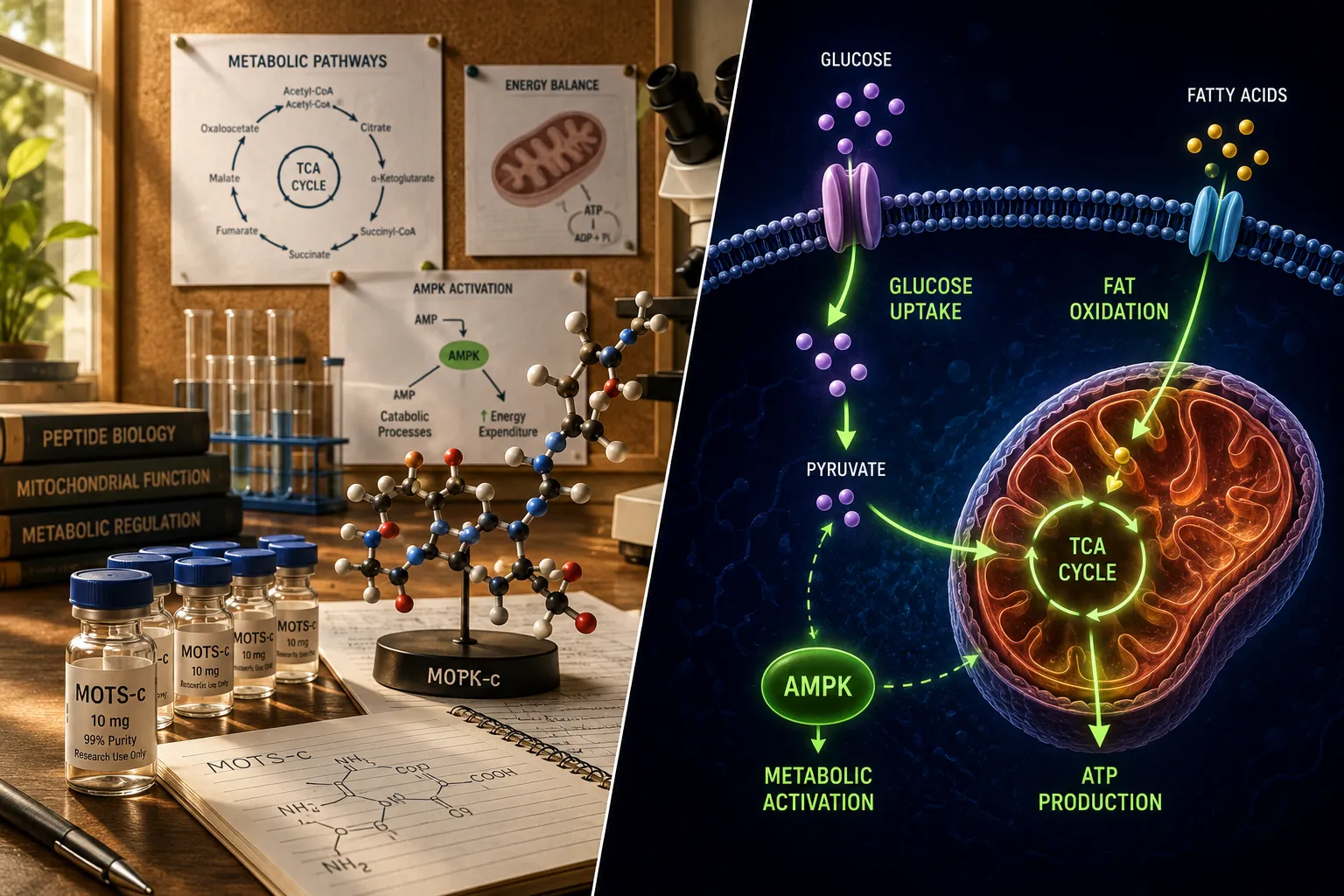
Professional () hero image depicting a split-screen scientific visualization: left side shows a glowing blue mitochondrion

Obesity-related metabolic dysfunction now affects more than one billion people globally, yet the biological levers researchers use to study fat loss are remarkably different from one compound to the next. Two molecules generating serious scientific interest in 2026 — MOTS-C and 5-Amino-1MQ — work through entirely separate mechanisms, making a direct comparison both useful and necessary for anyone designing a metabolic research protocol.

This article provides a clean side-by-side look at MOTS-C vs 5-Amino-1MQ: Mitochondrial Signaling vs NNMT Inhibition in Fat-Loss Research, covering how each compound works, what preclinical evidence shows, and how researchers approach their use.

Key Takeaways

  • MOTS-C is a mitochondrial-derived peptide that activates AMPK and improves insulin sensitivity; 5-Amino-1MQ is a small-molecule enzyme inhibitor that raises cellular NAD+ levels.
  • Both compounds remain research-only and are not FDA-approved for human therapeutic use.
  • MOTS-C has early-phase clinical trials underway; 5-Amino-1MQ is still in the preclinical stage.
  • Administration routes differ: MOTS-C is typically injected subcutaneously, while 5-Amino-1MQ is taken orally.
  • Choosing between them depends on the biological pathway a researcher wants to target — mitochondrial signaling or enzyme inhibition.

How Each Compound Works

How Each Compound Works

MOTS-C: A Signal From the Mitochondria

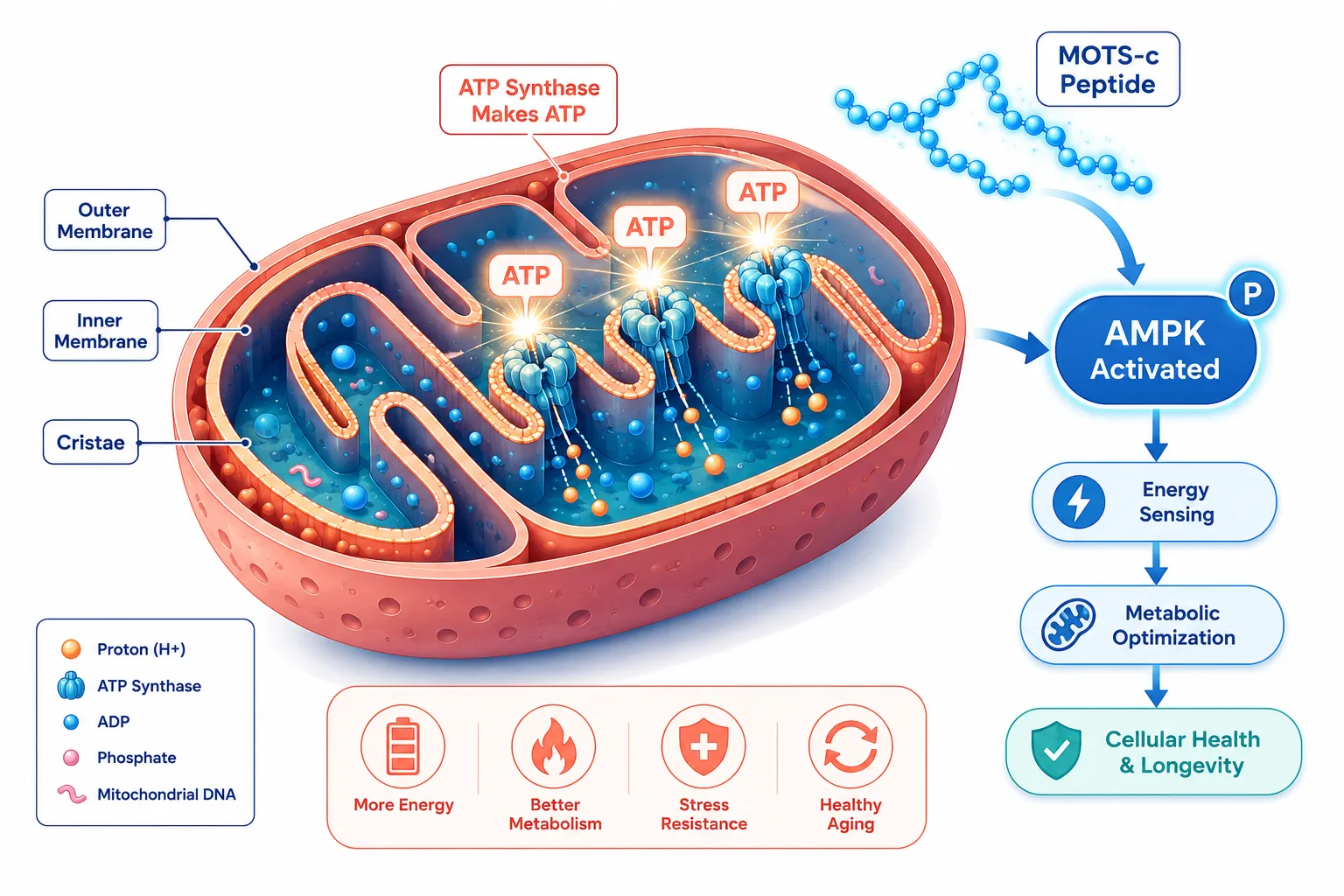
MOTS-C is a 16-amino-acid peptide encoded in the mitochondrial genome. Unlike most peptides, it originates inside the mitochondria and travels to the cell nucleus, where it regulates gene expression tied to metabolism and proteostasis. Its primary action involves activating AMP-activated protein kinase (AMPK), a central energy-sensing enzyme that promotes glucose uptake, fatty acid oxidation, and improved insulin sensitivity.

Because MOTS-C is mitochondria-derived, it functions as a genuine intracellular messenger — a type of "mitokine" — linking energy status directly to metabolic output. Researchers studying MOTS-C mitochondrial dynamics have noted its capacity to regulate skeletal muscle metabolism and support adaptation under metabolic stress conditions.

5-Amino-1MQ: Blocking the Fat-Storage Enzyme

5-Amino-1MQ takes a completely different approach. It is a small-molecule inhibitor of nicotinamide N-methyltransferase (NNMT), an enzyme that is overexpressed in the adipose tissue of obese individuals. NNMT consumes SAM (S-adenosylmethionine) and depletes cellular NAD+ precursors, effectively slowing metabolism and encouraging fat storage.

By blocking NNMT, 5-Amino-1MQ allows NAD+ levels to rise. Higher NAD+ activates sirtuins and other energy-expenditure pathways, shifting cellular behavior away from fat accumulation. This makes it a pharmacological tool for studying how enzyme inhibition can reprogram metabolic set points.


Preclinical Evidence and Research Findings

Preclinical Evidence and Research Findings

In the context of MOTS-C vs 5-Amino-1MQ: Mitochondrial Signaling vs NNMT Inhibition in Fat-Loss Research, the preclinical data for each compound tells a distinct story.

What Animal Studies Show

Feature MOTS-C 5-Amino-1MQ
Primary target AMPK / nuclear gene expression NNMT enzyme
Key metabolic effect Insulin sensitivity, muscle metabolism NAD+ elevation, fat reduction
Animal model outcomes Improved physical performance, metabolic regulation Fat loss, improved muscle stem-cell function
Human trials Early-phase clinical trials underway No RCTs conducted yet
Regulatory status Research compound Research compound

MOTS-C animal studies have shown improvements in physical performance across multiple age groups, with notable effects on skeletal muscle adaptation. Researchers exploring MOTS-C and SLU-PP332 combinations have examined whether stacking exercise-mimetic compounds amplifies these metabolic benefits.

5-Amino-1MQ demonstrated measurable fat loss and improved muscle stem-cell function in obese rodent models. However, no human randomized controlled trials have been completed, placing it firmly in the preclinical category.

For researchers interested in broader metabolic modulation research lines, both compounds represent distinct entry points into fat-loss biology.


Dosage, Administration, and Safety Considerations

Dosage, Administration, and Safety Considerations

Understanding the practical side of MOTS-C vs 5-Amino-1MQ: Mitochondrial Signaling vs NNMT Inhibition in Fat-Loss Research requires looking at how each compound is handled in research settings.

Research Dosing Protocols

MOTS-C is administered subcutaneously, typically at doses of 5–10 mg given two to three times per week. Its peptide structure requires injection to preserve bioavailability.

5-Amino-1MQ is taken orally at doses ranging from 50–150 mg daily in research contexts. Its small-molecule structure allows it to survive the digestive process, making oral delivery practical.

Neither compound has an established comprehensive safety profile due to the limited scope of human trials conducted to date.

Researchers comparing these agents alongside other metabolic peptides — such as those reviewed in longevity peptide research — should note that combining multiple metabolic modulators requires careful experimental design.

Those evaluating adjacent research tools, including Tesamorelin for fat-loss protocols or GLP-1 incretin research themes, will find that each compound targets a different node in the metabolic network.


Conclusion

The comparison of MOTS-C vs 5-Amino-1MQ: Mitochondrial Signaling vs NNMT Inhibition in Fat-Loss Research reveals two compounds that are complementary in concept but distinct in mechanism. MOTS-C targets mitochondrial-to-nuclear signaling through AMPK activation, while 5-Amino-1MQ removes an enzymatic brake on NAD+ metabolism.

Actionable next steps for researchers:

  • Define the biological pathway of interest before selecting a compound — mitochondrial signaling or enzyme inhibition.
  • Review current early-phase trial data for MOTS-C before designing human-adjacent protocols.
  • Treat 5-Amino-1MQ as a purely preclinical tool until RCT data becomes available.
  • Consider whether multi-pathway approaches, such as those explored in peptide blend research, could address multiple metabolic targets simultaneously.
  • Source research compounds only from suppliers providing verified purity documentation.

Both compounds are research tools, not therapeutic agents. Rigorous experimental design, appropriate controls, and attention to evolving regulatory guidance remain essential for any serious investigation into metabolic fat-loss biology.


https://www.puretestedpeptides.com/wp-content/uploads/2026/06/MOTS-C-vs-5-Amino-1MQ-Mitochondrial-Signaling-vs-NNMT-Inhibition-in-Fat-Loss-Research.png 1024 1536 https://www.puretestedpeptides.com/wp-content/uploads/2026/01/buy-peptides-online.jpg 2026-06-02 22:09:332026-06-02 22:09:33MOTS-C vs 5-Amino-1MQ: Mitochondrial Signaling vs NNMT Inhibition in Fat-Loss Research
×

Helpful Links

  • My account
  • Cart
  • Checkout
  • Refund and Returns Policy
  • Privacy Policy
  • SMS Privacy Policy
  • Login
  • My Account
  • Logout

USA Made Lab Tested Peptides

All products are sold for research, laboratory, or analytical purposes only, and are not for human consumption


Pure Tested Peptides is a chemical supplier. Pure Tested Peptides is not a compounding / chemical compounding facility as defined under 503A of the Federal Food, Drug, and Cosmetic act. Pure Tested Peptides is not an outsourcing facility as defined under 503B of the Federal Food, Drug, and Cosmetic act.

The statements made within this website have not been evaluated by the US Food and Drug Administration. The products we offer are not intended to diagnose, treat, cure or prevent any disease.

Human/Animal Consumption Prohibited. Laboratory/In-Vitro Experimental Use Only

Scroll to top Scroll to top Scroll to top