Call or Text 727-513-9780
  • Shopping Cart Shopping Cart
    0Shopping Cart
Pure Tested Peptides | America's most trusted Peptides for sale online
  • Peptides for sale
    • Oral Peptides for sale
      • Peptide Capsules for sale
      • BPC 157 Capsules 1000mcg
      • SLU-PP-332 Capsules | 1000 mcg
      • 5-Amino-1MQ 50mg Capsules
      • Tesofensine 500mcg
    • All Peptides for sale
    • Peptide Sprays
      • BPC 157 Nasal Spray Kit
      • BPC-157 TB500 Nasal Spray Kit
      • Semax Nasal Spray 10mg
      • Selank – Nasal Spray Kit – 10mg
      • Epithalon 50MG Nasal Spray Kit
      • Ipamorelin 10mg Nasal Spray
      • Klow Nasal Spray (BPC-157 + TB-500 + GHK-Cu + KPV) | 80mg
      • Hulk Nasal Spray Tesa / Ipa Blend 6/3 MG
      • Klow Nasal Spray
      • NAD + 500 mg Nasal Spray
      • PT-141 Nasal Spray Kit
    • GHRH Peptides
      • Ipa Peptides
      • CJC-1295 Peptides
        • CJC-1295 with DAC 5 mg
        • CJC-1295 without DAC 5 mg
        • CJC-1295 Ipa 10mg
      • Tesa Peptides
        • Tesa Peptide
        • Tesa 20 mg
    • GHK-Cu Peptides
      • All GHK-Cu Peptides
      • GHK-Cu 100mg
      • KLOW Peptide Blend – Buy KLOW blend online
    • BPC Peptides
      • All BPC Peptides
      • BPC-157
      • BPC-157 TB-500
      • BPC 157 capsules 1000mcg
    • SLU-PP-332 Peptides
      • All SLU-PP-332 Peptides
      • SLU-PP-332 5mg
    • GLP3 Peptides
      • GLP3-R
      • GLP3-R CAG 10mg
      • GLP3-R 20mg
    • PT-141 Peptides
      • PT-141 Peptides for sale
      • PT-141 10mg
      • PT-141 Nasal Spray
    • CAG Peptides
      • Lipo-C Peptide Blend
      • CAG 5mg
      • CAG 10mg
    • MOTS-C Peptides
      • MOTS-C Peptides for sale
      • MOTS-c peptide
      • MOTS-c 10mg *6 pack*
    • 5 Amino 1MQ Peptides
      • 5 Amino 1MQ Peptides for sale
      • 5-Amino-1MQ 50mg Capsules
      • 5-Amino-1MQ 5mg
    • Epithalon Peptides
      • Epithalon Peptides for sale
      • Epithalon 10mg
      • Epithalon 50mg
  • Shop
    • GLPs
      • 5-Amino-1MQ 50mg Capsules
      • 5-Amino-1MQ 5mg
      • GLP3-Reta
      • L-Carnitine 500mg/ml
      • Tesofensine 500mcg
      • SLU-PP-332 5mg
      • MOTS-c 10mg *6 pack*
    • Epithalon & BPC Peptides
      • Epithalon 10mg
      • Epithalon 50mg
      • BPC-157
      • BPC 157 capsules 1000mcg
      • BPC-157 TB-500
      • BPC-157 TB500 Nasal Spray Kit
      • BPC 157 Nasal Spray Kit
    • BPC TB-500 & NAD+ Peptides
      • NAD+ 500 mg
      • KLOW Peptide Blend – Buy KLOW blend online
      • GLOW Peptide Blend
      • TB 500 5mg
      • BPC 157 capsules 1000mcg – Supplement
      • BPC 157 Nasal Spray Kit
      • BPC-157
      • BPC-157 TB500 Nasal Spray Kit
      • BPC-157 TB-500
      • BPC 157 capsules 1000mcg
    • LL-37 Peptide
      • LL-37 10 mg
    • MOTS-C & Selank
      • MOTS-c peptide
      • Selank 10mg
    • GHK Peptides
      • GHK-Cu 100mg
      • GLOW Peptide Blend
      • KLOW Peptide Blend – Buy KLOW blend online
  • COAs
  • Wholesale
    • Wholesale Peptides for sale
  • PTP FAQ
  • Affiliates
    • Selank Peptide: Advanced Pharmacological Mechanisms Underlying Its Anxiolytic and Nootropic Effects in Research
      • 5-Amino-1MQ Peptide: Detailed Mechanisms of NNMT Inhibition and Its Impact on Cellular Metabolism Research
        • MOTS-C Peptide: Unraveling Its Role in Mitochondrial Dynamics and Energy Metabolism Research
          • Epithalon Peptide and Telomerase Regulation: Investigating Its Impact on Cellular Senescence and Lifespan Research Models
            • GLP2-T vs GLP2 Tirz Peptide: Understanding the Naming, Mechanistic Nuances, and Research Implications for Gut Health
      • Peptides and Polypeptides in Modern Pharmacology: What Research on Metoprolol, Prednisone, and Amlodipine Reveals
        • Polypeptide Peptides vs NSAIDs: What Naproxen and Diclofenac Teach Tissue-Repair Researchers About BPC‑157 and TB‑500
          • Peptides and Polypeptides in Endocrine Pharmacology: How GLP-1, GLP-2, and GLP-3 Retatrutide Differ From Classic Drugs Like Prednisone and Amlodipine
          • 5‑Amino‑1MQ Peptide and NNMT Inhibition: How It Compares With Statins Like Atorvastatin in Adipose and Lipid Metabolism Research
      • Enclomiphene, Estrogen Receptor Signaling, and Luteinizing Phase Biology: What Hormone Researchers Should Measure
        • Mesenchymal Stem Cells, BPC‑157, and GHK‑Cu: How Tissue Repair Peptides Compare With Classic NSAIDs Like Naproxen in Injury Models
          • Peptide Calculator Use Cases Beyond Growth Hormone: Working Through GLP‑3 Retatrutide, MOTS‑c, and BPC‑157 Research Dosing
        • Polypeptide Peptides in Endocrine and Metabolic Pharmacology: Lessons From Amlodipine, Prednisone, and Metoprolol
        • Peptides Calculator for Advanced Blends: Worked Examples for Tesamorelin, CJC‑1295, and Ipamorelin Stacks
          • Peptides and Polypeptides in Human Physiology: How Molecular Size Shapes Research Applications
            • Selank Peptide: Advanced Pharmacological Mechanisms Underlying Its Anxiolytic and Nootropic Effects in Research
          • 5-Amino-1MQ Peptide: Detailed Mechanisms of NNMT Inhibition and Its Impact on Cellular Metabolism Research
            • MOTS-C Peptide: Unraveling Its Role in Mitochondrial Dynamics and Energy Metabolism Research
              • Epithalon Peptide and Telomerase Regulation: Investigating Its Impact on Cellular Senescence and Lifespan Research Models
                • GLP2-T vs GLP2 Tirz Peptide: Understanding the Naming, Mechanistic Nuances, and Research Implications for Gut Health
                  • Peptides and Polypeptides in Endocrine Pharmacology: How GLP-1, GLP-2, and GLP-3 Retatrutide Differ From Classic Drugs Like Prednisone and Amlodipine
                    • Polypeptide Peptides vs NSAIDs: What Naproxen and Diclofenac Teach Tissue-Repair Researchers About BPC‑157 and TB‑500
                      • Peptides and Polypeptides in Modern Pharmacology: What Research on Metoprolol, Prednisone, and Amlodipine Reveals
                        • 5‑Amino‑1MQ Peptide and NNMT Inhibition: How It Compares With Statins Like Atorvastatin in Adipose and Lipid Metabolism Research
                        • Enclomiphene, Estrogen Receptor Signaling, and Luteinizing Phase Biology: What Hormone Researchers Should Measure
                        • Mesenchymal Stem Cells, BPC‑157, and GHK‑Cu: How Tissue Repair Peptides Compare With Classic NSAIDs Like Naproxen in Injury Models
                        • Peptide Calculator Use Cases Beyond Growth Hormone: Working Through GLP‑3 Retatrutide, MOTS‑c, and BPC‑157 Research Dosing
                        • Polypeptide Peptides in Endocrine and Metabolic Pharmacology: Lessons From Amlodipine, Prednisone, and Metoprolol
                        • Peptides Calculator for Advanced Blends: Worked Examples for Tesamorelin, CJC‑1295, and Ipamorelin Stacks
                        • Peptides and Polypeptides in Human Physiology: How Molecular Size Shapes Research Applications
                        • Selank Peptide: Advanced Pharmacological Mechanisms Underlying Its Anxiolytic and Nootropic Effects in Research
                        • MOTS-C Peptide: Unraveling Its Role in Mitochondrial Dynamics and Energy Metabolism Research
                        • Peptides and Polypeptides in Modern Pharmacology: What Research on Metoprolol, Prednisone, and Amlodipine Reveals
                        • Peptides and Polypeptides in Endocrine Pharmacology: How GLP-1, GLP-2, and GLP-3 Retatrutide Differ From Classic Drugs Like Prednisone and Amlodipine
                        • 5-Amino-1MQ Peptide: Detailed Mechanisms of NNMT Inhibition and Its Impact on Cellular Metabolism Research
                        • Mesenchymal Stem Cells, BPC‑157, and GHK‑Cu: How Tissue Repair Peptides Compare With Classic NSAIDs Like Naproxen in Injury Models
                        • Peptide Calculator Use Cases Beyond Growth Hormone: Working Through GLP‑3 Retatrutide, MOTS‑c, and BPC‑157 Research Dosing
                        • GLP2-T vs GLP2 Tirz Peptide: Understanding the Naming, Mechanistic Nuances, and Research Implications for Gut Health
                        • Polypeptide Peptides in Endocrine and Metabolic Pharmacology: Lessons From Amlodipine, Prednisone, and Metoprolol
                        • Polypeptide Peptides vs NSAIDs: What Naproxen and Diclofenac Teach Tissue-Repair Researchers About BPC‑157 and TB‑500
                        • Peptides and Polypeptides in Human Physiology: How Molecular Size Shapes Research Applications
                        • Peptides Calculator for Advanced Blends: Worked Examples for Tesamorelin, CJC‑1295, and Ipamorelin Stacks
                        • 5‑Amino‑1MQ Peptide and NNMT Inhibition: How It Compares With Statins Like Atorvastatin in Adipose and Lipid Metabolism Research
                        • Enclomiphene, Estrogen Receptor Signaling, and Luteinizing Phase Biology: What Hormone Researchers Should Measure
                        • Epithalon Peptide and Telomerase Regulation: Investigating Its Impact on Cellular Senescence and Lifespan Research Models
                        • Best research protocol Klow blend
                        • best time to take BPC-157
                        • best time to take DSIP (Delta Sleep Inducing Peptide)
                        • best time to take CJC-1295
                        • best time to take AOD-9604
                        • best time to take Follistatin 344
                        • best time to take Ipamorelin
                        • best time to take MK-677 (Ibutamoren)
                        • best time to take Ligandrol (LGD-4033) — research compound
                        • best time to take Ostarine (MK-2866) — research compound
                        • best time to take GHK-CU
                        • best time to take TB-500
                        • best time to take MOTS-c
                        • best time to take Semax
                        • best time to take RAD-140 (Testolone) — research compound
                        • best time to take Thymosin Alpha-1
                        • best time to take PEG-MGF
                        • Biolife Plasma, Octapharma Plasma, and Research Peptides: How Plasma Donation Labs Differ From Peptide Suppliers
                        • best time to take YK-11 — research compound
                        • best time to take PT-141 (Bremelanotide)
                        • Best research protocol Klow blend
  • Contact
    • Contact Customer Service
    • Text Customer Support
  • About US
  • Shop all peptides
  • Affiliate Program
    • Affiliate Signup
  • Login / Register Login / Register Page Link Login / Register Page Link
  • Click to open the search input field Click to open the search input field Search
  • Menu Menu

Tag Archive for: norepinephrine

Tesofensine Peptide Research: Mechanism, Appetite Suppression, and Neuropeptide Y Pathways

Tesofensine Peptide Research: Mechanism, Appetite Suppression, and Neuropeptide Y Pathways

July 24, 2026/0 Comments/in Uncategorized/by

Obesity affects more than one billion people worldwide, yet fewer than five approved pharmacological treatments exist that produce sustained, clinically meaningful weight loss. That gap has driven researchers toward compounds like tesofensine, a triple monoamine reuptake inhibitor that first appeared in neurodegenerative disease trials before its dramatic weight-loss effects redirected scientific attention entirely. Tesofensine peptide research, mechanism, appetite suppression, and neuropeptide Y pathways have since become central themes in metabolic science, making this compound one of the more closely watched molecules in preclinical and clinical obesity research.
Professional () hero image with (≤42 chars): 'Tesofensine Peptide Research' in crisp white centered on a deep navy

Key Takeaways

  • Tesofensine blocks the reuptake of dopamine, norepinephrine, and serotonin simultaneously, elevating extracellular levels of all three neurotransmitters.
  • Originally developed for Alzheimer's and Parkinson's diseases, its significant weight-loss side effects redirected research toward obesity treatment.
  • Phase 2 clinical trials demonstrated approximately 10% body weight reduction, though cardiovascular side effects remain a barrier to approval.
  • Appetite suppression appears to involve GABAergic neuron silencing in the lateral hypothalamus and indirect adrenoceptor and dopamine receptor stimulation.
  • As of 2026, tesofensine has not received regulatory approval for obesity treatment, and research continues to refine its safety profile.

Understanding the Mechanism Behind Tesofensine Peptide Research

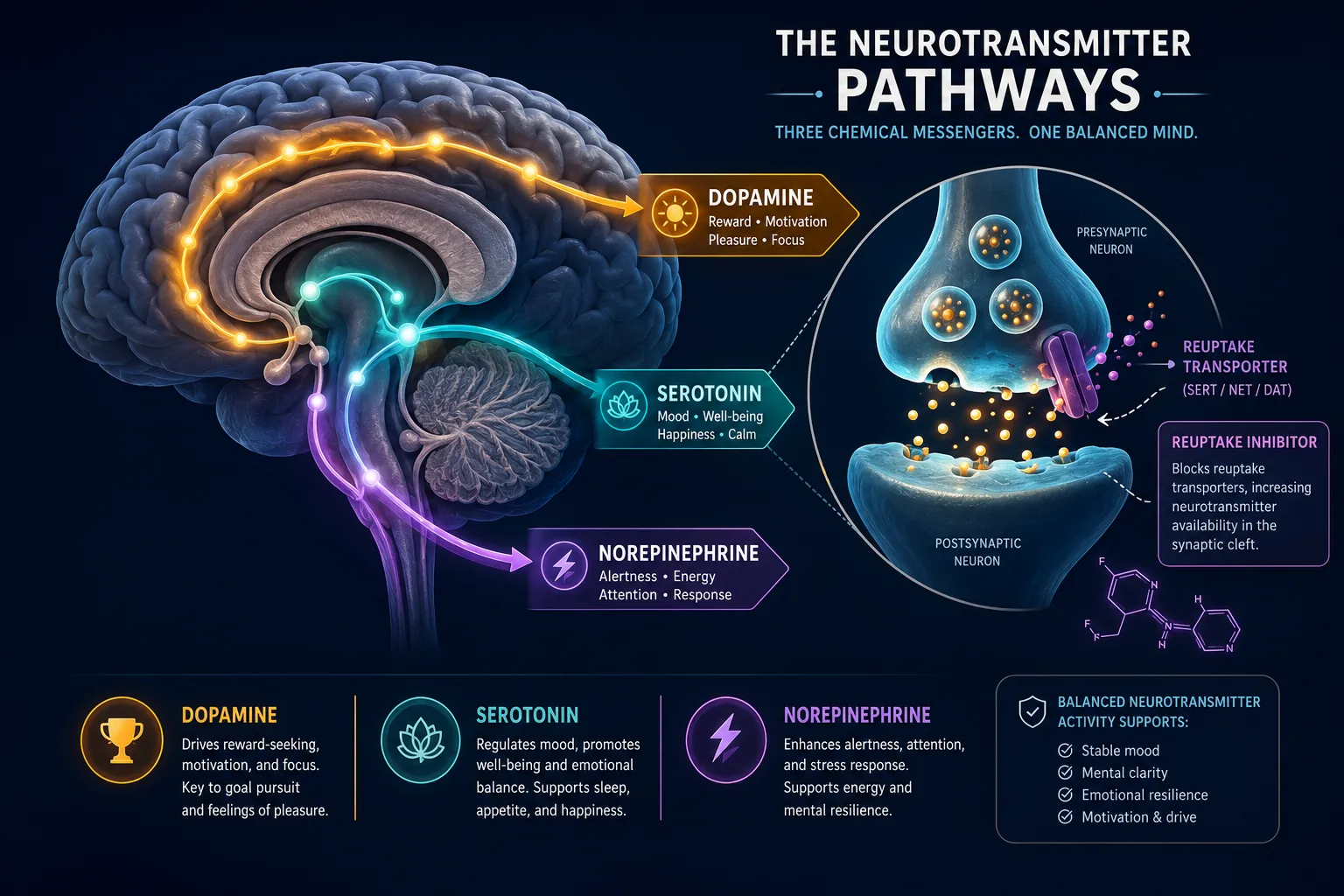
Tesofensine operates as a triple monoamine reuptake inhibitor (TMRI). Its primary action is blocking presynaptic transporters responsible for clearing dopamine, norepinephrine, and serotonin from the synaptic cleft. By preventing reuptake, tesofensine raises extracellular concentrations of all three neurotransmitters simultaneously, a broader mechanism than compounds that target only one or two pathways.

This multi-target approach distinguishes tesofensine from older single-mechanism agents. The elevated monoamine activity produces downstream effects across several brain regions involved in energy balance, reward processing, and satiety signaling.

Key neurotransmitter roles in tesofensine's mechanism:

Neurotransmitter Primary Role in Energy Balance
Dopamine Reward signaling, motivation to eat
Norepinephrine Sympathetic activation, thermogenesis
Serotonin Satiety, mood, food intake regulation

Research in diet-induced obese (DIO) rat models showed that tesofensine reverses abnormally low forebrain dopamine levels, a deficit commonly observed in obesity. Restoring dopamine tone appears to reduce the reward-driven motivation to overeat, contributing meaningfully to caloric restriction without direct appetite suppression alone.

For researchers exploring how metabolic peptides interact with neurotransmitter systems, understanding compounds like tesa and its metabolic effects offers useful comparative context for how different mechanisms produce body composition changes.

Appetite Suppression Pathways: What the Research Shows
Appetite Suppression Pathways: What the Research Shows

Tesofensine peptide research on mechanism, appetite suppression, and neuropeptide Y pathways reveals that hunger reduction is not a single-step process. Multiple neural circuits are engaged.

Lateral Hypothalamus and GABAergic Neurons

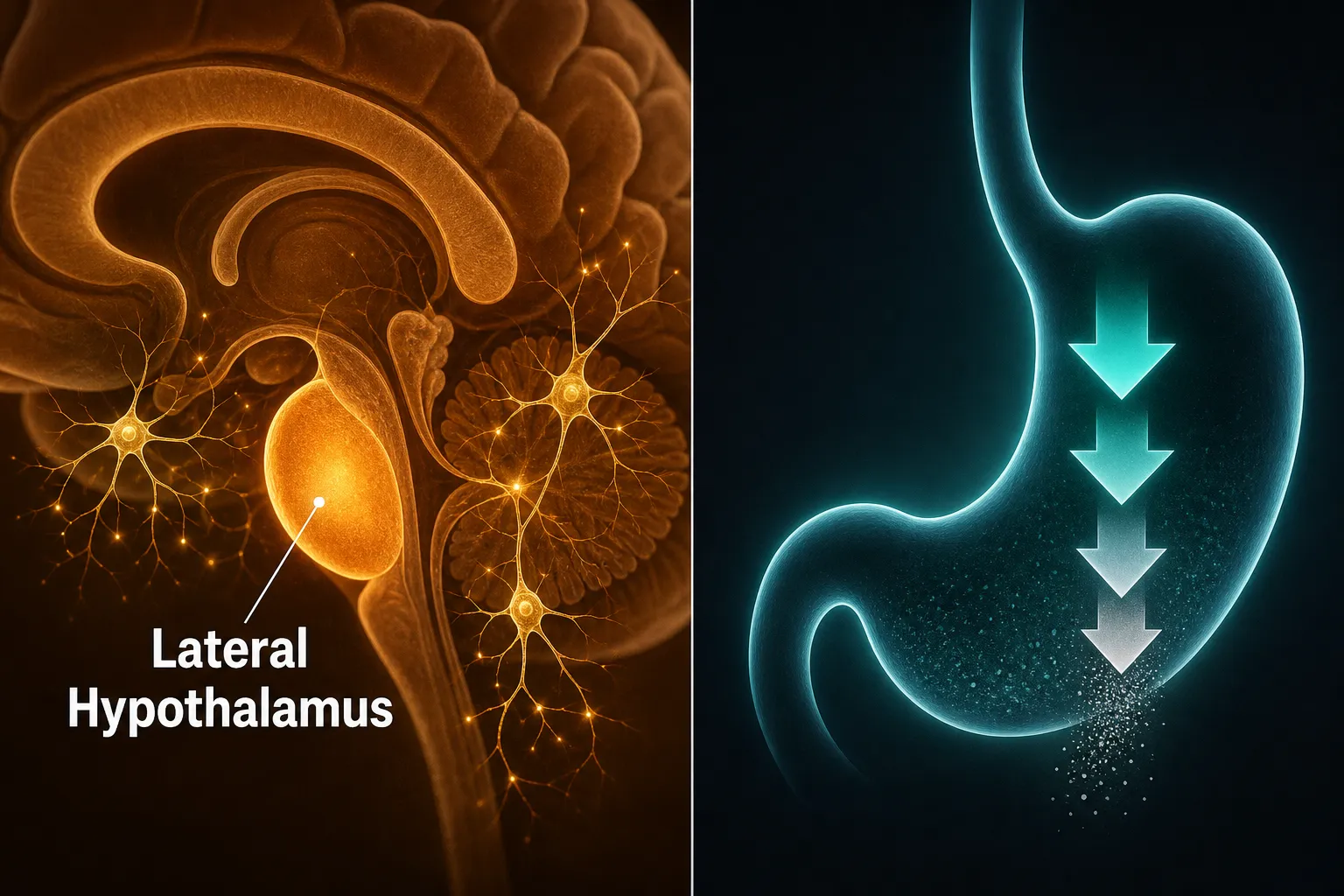
Recent research points to a compelling mechanism: tesofensine may silence GABAergic (inhibitory) neurons in the lateral hypothalamus (LH). The lateral hypothalamus is classically known as a hunger-promoting region. When GABAergic neurons in this area are suppressed, the net effect is reduced drive to seek and consume food.

"Silencing inhibitory neurons in a hunger-promoting brain region creates a functional brake on appetite, a mechanism distinct from simple satiety signaling."

This finding suggests tesofensine's appetite effects go beyond monoamine elevation and involve direct modulation of hypothalamic circuitry.

Adrenoceptor and Dopamine Receptor Involvement

Studies in DIO rats demonstrated that tesofensine suppresses appetite through indirect stimulation of alpha-1 adrenoceptors and dopamine D1 receptors. These receptor pathways are not directly activated by tesofensine itself, rather, elevated norepinephrine and dopamine levels produced by reuptake inhibition create the downstream receptor stimulation.

This indirect mechanism has important implications for researchers studying metabolic modulation compounds and how receptor selectivity shapes both efficacy and side effect profiles.

Phase 2 Clinical Trial Findings

In a Phase 2 clinical trial, tesofensine produced approximately 10% body weight reduction in participants, a result that significantly outperformed placebo and compared favorably to other approved anti-obesity agents at the time. However, dose-dependent increases in heart rate and blood pressure emerged as consistent findings, raising cardiovascular safety concerns that have since slowed regulatory progress.

Neuropeptide Y Pathways and Tesofensine: Current Research Landscape
Neuropeptide Y Pathways and Tesofensine: Current Research Landscape
Neuropeptide Y Pathways and Tesofensine: Current Research Landscape

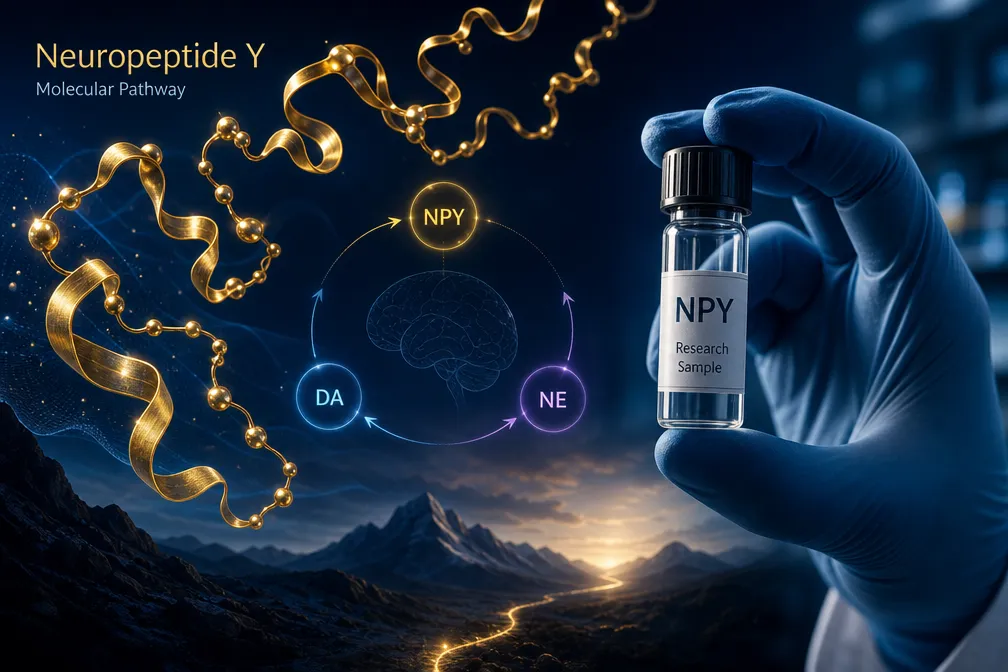
Neuropeptide Y (NPY) is one of the most potent appetite-stimulating peptides in the central nervous system. It is produced primarily in the arcuate nucleus of the hypothalamus and acts on multiple receptor subtypes (Y1 through Y5) to promote food intake, reduce energy expenditure, and regulate fat storage.

The intersection of tesofensine peptide research on mechanism, appetite suppression, and neuropeptide Y pathways is an area of active scientific interest, though not without important caveats.

What current research suggests:

  • Elevated dopamine and norepinephrine levels from tesofensine's reuptake inhibition may indirectly modulate NPY neuronal activity, since monoaminergic neurons interact with NPY-expressing cells in the hypothalamus.
  • Norepinephrine, in particular, has well-established inhibitory effects on NPY release via alpha-2 adrenoceptor signaling in the arcuate nucleus.
  • However, direct, conclusive evidence that tesofensine specifically targets NPY receptor subtypes has not been established in published literature as of 2026.

This distinction matters for researchers. Tesofensine likely influences NPY pathways as a secondary consequence of monoamine elevation rather than as a primary pharmacological target. Understanding this distinction helps frame tesofensine within the broader landscape of appetite-regulating compounds.

Researchers interested in complementary metabolic peptide mechanisms may also find value in reviewing MOTS-c mitochondrial research themes and SLU-PP-332 metabolic research for comparative mechanistic insights.

Regulatory and Safety Status in 2026

As of 2026, tesofensine has not received regulatory approval for obesity treatment from the FDA or EMA. The cardiovascular concerns, primarily elevated heart rate and blood pressure at therapeutic doses, remain the primary obstacle. Ongoing research is exploring whether lower doses combined with adjunct therapies might preserve efficacy while reducing cardiovascular burden.

For researchers building a broader understanding of peptide-based metabolic research, the ultimate guide to peptide therapy provides foundational context, while tesofensine product research information offers compound-specific details.

Conclusion

Tesofensine represents a scientifically compelling case study in how unexpected clinical findings, in this case, significant weight loss during neurodegenerative disease trials, can redirect an entire research program. Its triple monoamine reuptake inhibition mechanism, combined with evidence of lateral hypothalamic GABAergic neuron silencing and indirect NPY pathway modulation, makes it a multifaceted compound for researchers studying metabolic health.

Actionable next steps for researchers in 2026:

  • Review published Phase 2 trial data to understand the dose-response relationship between tesofensine and cardiovascular outcomes.
  • Examine preclinical DIO rat studies for detailed mechanistic data on adrenoceptor and dopamine D1 receptor involvement.
  • Explore how tesofensine's monoaminergic effects may interact with NPY-expressing arcuate nucleus neurons in future study designs.
  • Consider comparative analysis with GLP-1 pathway compounds to contextualize tesofensine's mechanism within the broader anti-obesity pharmacology landscape.
  • Monitor regulatory developments, as ongoing safety refinement research may shift tesofensine's clinical status.

The science surrounding tesofensine continues to evolve. For researchers committed to understanding novel compounds in metabolic health and weight management, it remains a high-value subject worthy of rigorous investigation.

https://www.puretestedpeptides.com/wp-content/uploads/2026/07/tesofensine-peptide-research-mechanism-appetite-suppression-and-neuropeptide-y-p.webp 672 1008 https://www.puretestedpeptides.com/wp-content/uploads/2026/01/buy-peptides-online.jpg 2026-07-24 13:04:522026-07-24 13:04:52Tesofensine Peptide Research: Mechanism, Appetite Suppression, and Neuropeptide Y Pathways
×

Helpful Links

  • My account
  • Cart
  • Checkout
  • Refund and Returns Policy
  • Privacy Policy
  • SMS Privacy Policy
  • Login
  • My Account
  • Logout

USA Made Lab Tested Peptides

All products are sold for research, laboratory, or analytical purposes only, and are not for human consumption


Pure Tested Peptides is a chemical supplier. Pure Tested Peptides is not a compounding / chemical compounding facility as defined under 503A of the Federal Food, Drug, and Cosmetic act. Pure Tested Peptides is not an outsourcing facility as defined under 503B of the Federal Food, Drug, and Cosmetic act.

The statements made within this website have not been evaluated by the US Food and Drug Administration. The products we offer are not intended to diagnose, treat, cure or prevent any disease.

Human/Animal Consumption Prohibited. Laboratory/In-Vitro Experimental Use Only

Scroll to top Scroll to top Scroll to top