

A single drug achieving nearly 29% body weight reduction in a Phase 3 trial — comparable to bariatric surgery outcomes — marks a turning point in metabolic science. That drug is retatrutide, widely referred to by researchers as "GLP-3," and in 2026 it is reshaping how scientists think about obesity, type 2 diabetes, and metabolic disease at the receptor level.
GLP-3 Retatrutide: The Future of Metabolic Research Beyond GLP-1 represents more than an incremental upgrade over existing therapies. It introduces a fundamentally different mechanism — one that activates three distinct hormone receptors simultaneously — and its early data is forcing a reassessment of what pharmacological intervention can achieve.
Key Takeaways
- Retatrutide is a triple agonist targeting GLP-1, GIP, and glucagon receptors, setting it apart from all prior GLP-1 therapies.
- Phase 3 TRIUMPH-4 data from April 2026 showed an average weight loss of 28.7% over 68 weeks — the highest ever recorded in a Phase 3 obesity trial.
- The informal nickname "GLP-3" reflects its triple-agonist activity, not a third glucagon-like peptide hormone.
- Eli Lilly plans to submit an NDA to the FDA in late 2026, with potential approval anticipated in 2027.
- Research interest extends beyond obesity to type 2 diabetes, liver disease (MASLD), and cardiovascular risk reduction.
Understanding the Triple-Agonist Mechanism
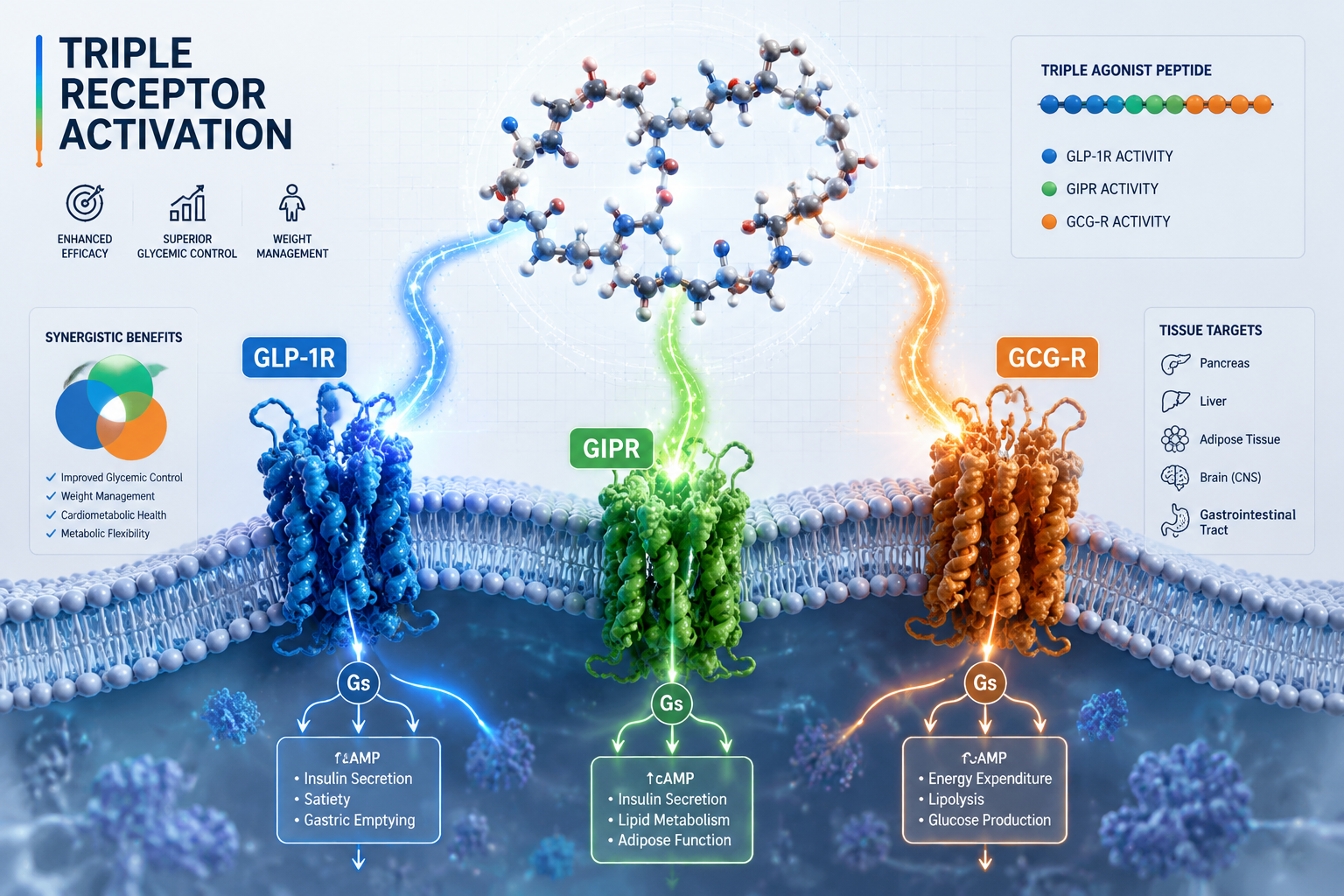
Most GLP-1 receptor agonists work through a single pathway: they mimic the glucagon-like peptide-1 hormone to suppress appetite and regulate blood sugar. Retatrutide goes further by simultaneously activating three receptors:
| Receptor | Primary Role |
|---|---|
| GLP-1R | Appetite suppression, insulin secretion |
| GIPR | Insulin potentiation, fat metabolism |
| GCG-R | Energy expenditure, hepatic glucose output |
This combination does something no single-pathway drug can: it both reduces caloric intake and increases energy expenditure. The glucagon receptor component, in particular, drives thermogenic activity that amplifies fat loss beyond what appetite suppression alone can produce.
It is worth clarifying the "GLP-3" label. There is no third glucagon-like peptide hormone in human biology. The nickname emerged informally to reflect the drug's third-generation, triple-receptor profile. Researchers exploring GLP-1 peptide research concepts and sourcing will find retatrutide represents a clear evolutionary step beyond that class.
For a deeper dive into retatrutide's research profile, the GLP-3 Retatrutide compound overview provides useful context on its structural and pharmacological properties.
Phase 3 Clinical Data: What the Trials Reveal
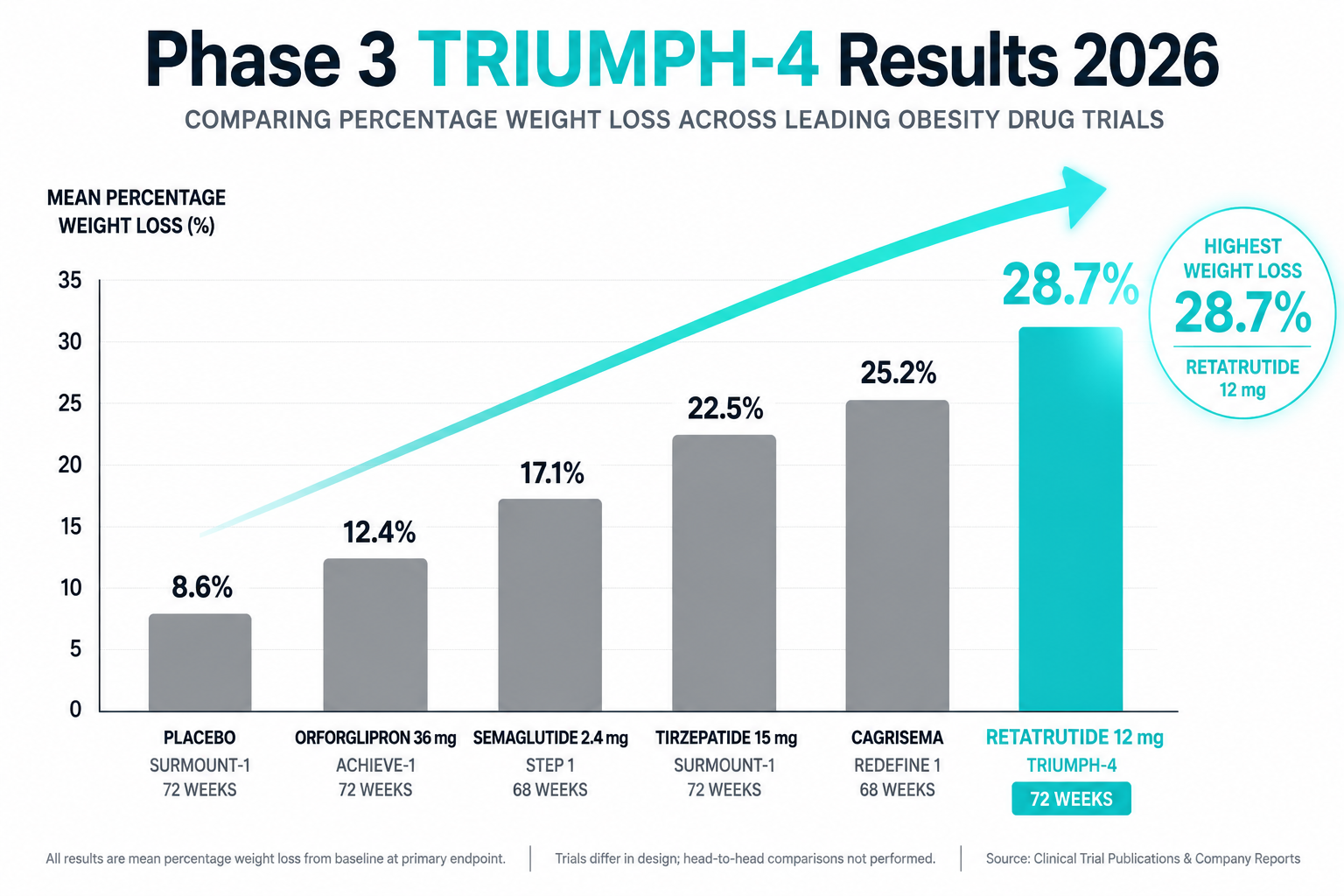
The 2026 trial readouts for retatrutide have been striking across multiple study populations.
TRIUMPH-4 (April 2026): Adults with obesity achieved a mean weight loss of 28.7% over 68 weeks. This figure places retatrutide in territory previously occupied only by surgical interventions.
TRIUMPH-3 (March 2026): Presented at the American College of Cardiology Annual Scientific Session, this trial enrolled participants with obesity and elevated cardiovascular risk. Mean weight loss reached 24.2% at 72 weeks, suggesting meaningful cardiometabolic benefit beyond weight alone.
TRANSCEND-T2D-1 (March 2026): In adults with type 2 diabetes, the 12 mg dose produced HbA1c reductions of 1.7% to 2.0% alongside 16.8% weight loss over 40 weeks — a dual benefit that positions retatrutide as a strong candidate for metabolic disease management.
"The weight loss achieved with retatrutide in recent trials is comparable to outcomes typically associated with bariatric surgery."
Retatrutide is administered as a once-weekly subcutaneous injection, with doses titrated from 2 mg up to 12 mg to manage tolerability. Common side effects include nausea, vomiting, and diarrhea — consistent with the GI profile seen across the incretin drug class, though the glucagon component may amplify these effects at higher doses.
Researchers comparing metabolic peptide approaches may also find value in reviewing AOD-9604 metabolic research and MOTS-C metabolic flexibility research as complementary areas of investigation.
Research Horizons: Beyond Obesity and GLP-1

The scope of GLP-3 Retatrutide: The Future of Metabolic Research Beyond GLP-1 extends well past weight management. Active investigation includes:
- Metabolic dysfunction-associated steatotic liver disease (MASLD): The glucagon receptor's role in hepatic lipid metabolism makes retatrutide a logical candidate for liver-focused research.
- Cardiovascular risk reduction: TRIUMPH-3 data hints at benefits independent of weight loss.
- Chronic low back pain: An emerging and less-expected indication under early investigation.
- Broader metabolic syndrome components: Insulin resistance, dyslipidemia, and visceral adiposity all represent potential targets.
Eli Lilly plans to file an NDA with the FDA in late 2026, with approval potentially following in 2027. The broader TRIUMPH program, including TRIUMPH-1 and TRIUMPH-2, continues enrolling participants with primary endpoint data expected between late 2026 and early 2027.
Researchers building multi-pathway metabolic protocols may also want to explore SLU-PP-332 metabolic research, 5-Amino-1MQ research and data, and the NAD research overview for complementary mechanistic angles. For those sourcing research-grade material, Reta 10mg product options are available for qualified research applications.
Conclusion
GLP-3 Retatrutide: The Future of Metabolic Research Beyond GLP-1 is not a theoretical advance — it is a clinically validated shift in what metabolic pharmacology can accomplish. Its triple-agonist mechanism addresses appetite, energy expenditure, and glycemic control through three simultaneous pathways, producing outcomes that single-receptor drugs cannot match.
For researchers in 2026, the actionable priorities are clear:
- Monitor TRIUMPH-1 and TRIUMPH-2 data as primary endpoints emerge in late 2026 and early 2027.
- Track the FDA NDA submission and anticipated 2027 approval timeline for clinical translation signals.
- Explore multi-pathway metabolic research stacks that complement the receptor targets retatrutide engages.
- Review the MASLD and cardiovascular trial arms for indications that extend well beyond obesity.
Retatrutide is redefining the ceiling for metabolic intervention. Researchers who engage with its mechanism and emerging data now will be best positioned when the full clinical picture becomes available.
Leave a Reply
Want to join the discussion?Feel free to contribute!