
Unlocking Potential: Exploring Klow Blend Peptide Benefits in Research (2025)
The frontier of biological research is constantly expanding, and peptides are at the forefront of this exciting evolution. Among the many innovative compounds garnering attention, the Klow Blend peptide benefits have emerged as a significant area of inquiry for researchers in 2025. This unique blend, often investigated for its synergistic properties, represents a sophisticated approach to studying complex biological pathways. Understanding its potential mechanisms and applications is crucial for advancing our knowledge in various scientific domains.
Peptides, naturally occurring chains of amino acids, play vital roles in virtually every biological process. From acting as hormones and neurotransmitters to regulating cellular growth and immune responses, their versatility makes them invaluable tools in laboratory research. The Klow Blend, specifically formulated to combine the effects of multiple peptides, aims to offer a more comprehensive and nuanced approach to studying systemic biological functions. This article will delve into the various research applications and potential klow blend peptide benefits, providing an authoritative overview for consumers interested in the science behind these intriguing compounds.
Key Takeaways
- The Klow Blend is a multi-peptide formulation designed for synergistic research applications, aiming to study complex biological pathways.
- Research into Klow Blend peptide benefits often focuses on areas such as metabolic regulation, cellular vitality, and systemic balance.
- The blend's components are selected for their individual and combined potential to influence cellular processes, offering a broad spectrum for scientific investigation.
- Understanding the specific actions of each peptide within the Klow Blend is crucial for designing targeted and effective research protocols.
- As with all research compounds, adherence to responsible research practices and sourcing from reputable suppliers like Pure Tested Peptides is paramount for accurate and reliable findings.
The Science Behind Klow Blend Peptides: Understanding the Formulation
The Klow Blend is not a single peptide but rather a carefully crafted combination of several distinct peptides, each chosen for its specific biological activity and its potential to work in harmony with the others. This synergistic approach is a cornerstone of advanced peptide research, as it allows for the investigation of more intricate cellular and systemic interactions than a single peptide might offer. To truly grasp the klow blend peptide benefits, it is essential to appreciate the individual contributions of its components and how they are hypothesized to interact.
At its core, the Klow Blend aims to support research into areas related to cellular health and metabolic function. While specific formulations can vary, common peptides found in such blends often include those known for their roles in:
- Metabolic Regulation: Peptides that influence glucose metabolism, lipid breakdown, or energy production are often included. These components may be studied for their potential impact on metabolic efficiency and the body's energy processing.
- Cellular Regeneration and Repair: Some peptides are known to be involved in wound healing, tissue repair, and the overall maintenance of cellular integrity. Their inclusion in a blend like Klow could facilitate research into regenerative processes.
- Anti-inflammatory Responses: Peptides with immunomodulatory properties are valuable for investigating how the body manages inflammation, a key factor in many biological processes.
- Antioxidant Effects: Components that help combat oxidative stress—a factor implicated in cellular aging and dysfunction—are also frequently considered.
Imagine a finely tuned orchestra, where each instrument plays a vital part, but their combined sound creates a much richer, more complex melody. Similarly, the peptides within the Klow Blend are theorized to create a more comprehensive effect than if they were studied in isolation. This principle of synergy is what makes multi-peptide blends so compelling for scientific inquiry. Researchers often aim to identify how these combinations might optimize cellular pathways or enhance specific biological responses in controlled laboratory settings. For those looking to explore a range of peptide blends, the Peptide Blends Research page offers additional insights.
Common Peptides and Their Research Roles
While the precise composition of proprietary blends like Klow may vary, understanding the general categories of peptides often included can illuminate the broader klow blend peptide benefits for research. Here’s a brief overview of types of peptides and their typical research focus:
| Peptide Category | Primary Research Focus | Example Research Area |
|---|---|---|
| Growth Hormone Releasers | Stimulating natural growth hormone secretion | Muscle growth, fat metabolism, tissue repair |
| Healing Peptides | Supporting tissue regeneration and injury recovery | Tendon repair, gut health, anti-inflammatory mechanisms |
| Metabolic Peptides | Regulating energy balance and nutrient utilization | Glucose homeostasis, lipid oxidation, weight management |
| Thymic Peptides | Modulating immune function and cellular defense | Immune response, anti-aging, inflammatory conditions |
| Neuromodulatory Peptides | Influencing brain function and nervous system activity | Cognitive processes, mood regulation, neuroprotection |
The Klow Blend is designed with the intention of bringing together peptides from some of these categories, creating a formulation that researchers can use to investigate broad impacts on overall cellular vitality and function. The hypothesis is that by combining these agents, the blend can target multiple interconnected pathways simultaneously, potentially leading to more robust or comprehensive observations in research models. For a deeper dive into how peptides contribute to cellular maintenance, researchers can explore further resources.
"The careful selection of peptides for a blend like Klow underscores the sophisticated understanding of molecular interactions. Researchers are increasingly looking beyond single-target compounds to explore the multifaceted nature of biological systems." [1]
The exploration of these combined effects forms the backbone of research into klow blend peptide benefits. It's about uncovering how different biological signals, delivered via peptides, can collectively guide cellular behavior and systemic responses. This complex interplay is what makes peptide blends a fascinating area for scientific investigation in 2025.
Investigating Klow Blend Peptide Benefits: Research Applications and Potential Outcomes (2025)
The scientific community continues to explore the diverse applications of peptide research, and the Klow Blend is no exception. Researchers are actively investigating the klow blend peptide benefits across a spectrum of biological studies, focusing on its potential to influence key physiological processes. These investigations often involve controlled laboratory settings, in vitro (cell culture) models, and in vivo (animal) studies, adhering to rigorous scientific protocols.
One primary area of interest for Klow Blend research lies in metabolic health and energy regulation. Peptides within the blend may be studied for their hypothesized roles in:
- Glucose Utilization: Researchers might investigate how the Klow Blend affects the uptake and processing of glucose by cells, potentially offering insights into insulin sensitivity or energy production pathways.
- Lipid Metabolism: Studies could explore the blend's influence on the breakdown of fats, transport of lipids, or the regulation of fat storage, which are critical components of metabolic balance.
- Mitochondrial Function: Given the importance of mitochondria as the "powerhouses" of the cell, components of the Klow Blend may be examined for their potential to enhance mitochondrial efficiency and cellular energy output.
Understanding these mechanisms could have profound implications for future research into metabolic disorders and the overall efficiency of cellular energy systems. For researchers interested in metabolic regulation, exploring resources on AOD9604 Metabolic Research could provide valuable comparative insights.
Another significant avenue of research focuses on the Klow Blend's potential impact on cellular vitality and repair mechanisms. This involves examining how the blend might:
- Support Tissue Regeneration: Peptides known for their roles in tissue repair and regeneration could contribute to the blend's ability to facilitate healing processes, making it a subject of interest for wound healing or tissue damage studies.
- Modulate Inflammatory Responses: Research could delve into how the Klow Blend influences inflammatory pathways, seeking to understand its potential to attenuate or resolve inflammation at a cellular level. Chronic inflammation is a key factor in many biological processes, so understanding modulators is crucial.
- Enhance Cellular Resilience: Scientists may investigate if the Klow Blend helps cells withstand various stressors, such as oxidative damage or environmental toxins, thereby contributing to cellular longevity and function.
These lines of inquiry underscore the broad applicability of the Klow Blend in studies aimed at promoting optimal cellular function and recovery.
The Role of Peptide Blends in Advanced Research
Peptide blends, like the Klow Blend, represent an advanced stage in peptide research. Rather than isolating the effects of a single peptide, blends allow scientists to study more complex, multi-faceted biological responses. This is particularly relevant when considering systemic processes that involve multiple interacting pathways.
For instance, studies on adaptive capacity – the ability of biological systems to respond and adapt to stress – could benefit from the holistic approach offered by a blend. Instead of examining how a single peptide influences one aspect of stress response, the Klow Blend allows for the investigation of integrated cellular and systemic adjustments. Learn more about the intricacies of adaptive capacity and peptide mapping in advanced research.
Potential Research Outcomes to Look For in 2025:
- Enhanced Metabolic Markers: Studies might report changes in in vitro or in vivo models related to glucose uptake, fatty acid oxidation, or ATP production when exposed to the Klow Blend.
- Improved Cellular Repair Rates: Observations could include accelerated healing in cell culture models or improved tissue integrity in animal studies.
- Reduced Inflammatory Cytokines: Research might show a decrease in pro-inflammatory markers or an increase in anti-inflammatory signals.
- Increased Antioxidant Enzyme Activity: Investigations could reveal upregulation of endogenous antioxidant defenses.
It is critical to reiterate that these are potential areas of research and hypothetical outcomes. All findings from such studies would require rigorous peer review and further validation. The availability of high-quality research peptides is essential for reliable results. Organizations committed to providing pure, tested compounds are invaluable to the scientific community. For more information on sourcing and quality, visit Pure Tested Peptides.
[[pullquote]]
"The beauty of peptide blends lies in their potential to uncover synergistic effects that single peptides cannot. This opens new doors for understanding the intricate dance of biological regulation at a systemic level."
[[/pullquote]]
The ongoing research into klow blend peptide benefits in 2025 is a testament to the scientific community's commitment to exploring novel compounds that can deepen our understanding of biology. By systematically investigating these blends, researchers are paving the way for future discoveries that could one day contribute to a myriad of scientific advancements.
The Synergy of Klow Blend: Why Combinations Matter in Peptide Research
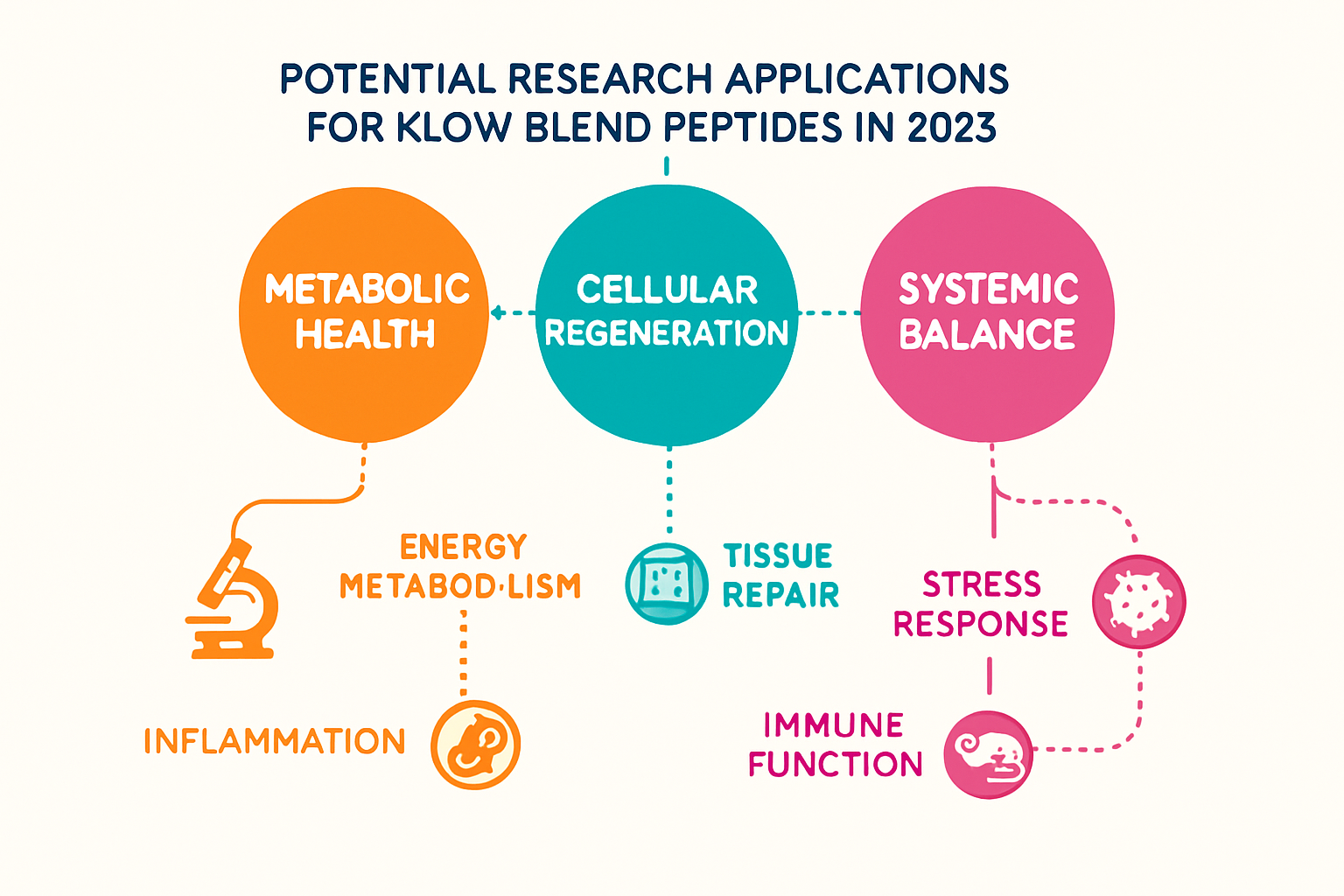
The concept of synergy is paramount when discussing klow blend peptide benefits. In biological research, synergy refers to the phenomenon where the combined effect of two or more substances is greater than the sum of their individual effects. For peptide blends, this means that the individual peptides, when used together, might produce a more profound, nuanced, or efficient biological response than if they were studied separately.
The rationale behind creating a blend like Klow is to capitalize on these potential synergistic interactions. Each peptide within the blend is hypothesized to contribute to a common research goal, but through different or complementary mechanisms. For example:
- One peptide might stimulate a particular cellular pathway.
- Another might suppress a counter-regulatory pathway.
- A third might enhance the stability or bioavailability of the other components.
This intricate interplay is what makes peptide blends a powerful tool for researchers attempting to unravel complex biological systems. Instead of a single "on/off" switch, the Klow Blend offers a multi-faceted approach to influencing cellular behavior. The investigation of such sophisticated interactions is crucial for advancing our understanding of systemic biological processes. For a deeper look into the collaborative effects of different peptide combinations, exploring Synergy of LL-37 and mots-c can provide valuable context.
Designing Effective Research Protocols for Klow Blend
To effectively investigate the klow blend peptide benefits, researchers must employ well-designed protocols. This includes:
- Careful Characterization of Components: Understanding the specific biological activities of each peptide in the blend is the first step.
- Dosage and Ratio Optimization: Determining the optimal concentration and ratio of each peptide within the blend for a specific research outcome is critical. This often involves dose-response studies.
- Appropriate Research Models: Selecting the correct in vitro (e.g., specific cell lines) or in vivo (e.g., animal models) systems that accurately reflect the biological question being asked.
- Robust Measurement Techniques: Utilizing sensitive and specific assays to quantify the effects of the blend on target biomarkers or physiological parameters.
- Control Groups: Implementing proper control groups (e.g., placebo, individual peptide components) to isolate the effects of the blend and establish true synergy.
Without rigorous methodology, it becomes challenging to differentiate between additive and synergistic effects, or to definitively attribute observed outcomes to the Klow Blend. The emphasis on high-quality research is paramount, which also extends to the purity and integrity of the peptides themselves. Researchers are encouraged to establish baseline trends and data quality when working with complex compounds.
The Future of Klow Blend Research in 2025
Looking ahead in 2025, research into klow blend peptide benefits is expected to become even more sophisticated. Advances in analytical techniques, such as mass spectrometry and genomics, will allow scientists to:
- Map Peptide Interactions: Precisely identify how different peptides in the blend interact at a molecular level with receptors and signaling molecules.
- Uncover Epigenetic Effects: Investigate if the Klow Blend influences gene expression without altering the underlying DNA sequence.
- Develop Personalized Research Models: Create more complex in vitro models, such as organoids, to better mimic human physiology for more relevant research outcomes.
The journey of discovery with compounds like the Klow Blend is ongoing. Its multi-component nature offers a rich landscape for scientific exploration, pushing the boundaries of what we understand about cellular regulation and systemic balance. As research progresses, the insights gained from studies on klow blend peptide benefits will undoubtedly contribute valuable knowledge to the broader field of peptide science. For those interested in acquiring research peptides, it is crucial to find a best place to buy peptides online from a reputable supplier to ensure the highest quality and purity for their studies.
Sourcing and Quality: Ensuring Reliable Research with Klow Blend Peptides
For any scientific endeavor, the quality and purity of the research materials are non-negotiable. This is especially true when investigating klow blend peptide benefits. The intricate nature of peptides, coupled with their specific biological activities, means that even minor impurities or inconsistencies in synthesis can significantly impact research results, leading to unreliable data and flawed conclusions. Therefore, sourcing Klow Blend peptides from a reputable and transparent supplier is absolutely critical for researchers in 2025.
A key indicator of a reliable supplier is their commitment to third-party testing and providing Certificates of Analysis (CoAs). A CoA is a document that confirms a product meets its specification and contains testing results for various parameters, including:
- Purity: Typically measured by High-Performance Liquid Chromatography (HPLC), indicating the percentage of the desired peptide in the sample.
- Identity: Confirmed by Mass Spectrometry (MS), ensuring the peptide sequence is correct.
- Sterility: Verifying the absence of microbial contaminants.
- Endotoxin Levels: Important for in vivo studies, ensuring low levels of bacterial toxins.
Without these assurances, researchers cannot be confident that they are working with the intended compound, making it impossible to accurately attribute any observed klow blend peptide benefits to the blend itself. This is why platforms like Pure Tested Peptides explicitly display their commitment to quality through COAs.
Best Practices for Handling and Storage of Peptides
Once sourced, the proper handling and storage of Klow Blend peptides are equally important for maintaining their integrity and efficacy throughout the research period. Peptides are delicate molecules that can degrade under adverse conditions.
Here are some best practices for researchers:
- Refrigeration/Freezing: Unreconstituted (powder) peptides should be stored in a freezer (typically -20°C or colder) to prevent degradation. Reconstituted peptides (mixed with bacteriostatic water) should be refrigerated (2-8°C).
- Protection from Light: Peptides are sensitive to light, which can accelerate degradation. Store them in opaque vials or in dark conditions.
- Avoid Repeated Freeze-Thaw Cycles: Each freeze-thaw cycle can damage peptide structure. Reconstitute only the amount needed for immediate use or aliquot into smaller portions.
- Sterile Handling: Always use sterile techniques when reconstituting or handling peptides to prevent contamination.
- Proper Solvent: Use appropriate sterile solvents, such as bacteriostatic water, for reconstitution, as recommended by the supplier.
Adhering to these guidelines ensures that the Klow Blend peptides remain stable and pure, thereby preserving their potential klow blend peptide benefits for accurate research. For comprehensive information on maintaining peptide quality, consult resources like Best Practices for Storing Research Peptides.
The Ethical Considerations in Peptide Research
Beyond quality control, ethical considerations are paramount in all scientific research involving peptides. Researchers must:
- Adhere to Regulatory Guidelines: Ensure all studies comply with relevant institutional, national, and international ethical guidelines and regulations.
- Prioritize Animal Welfare: If in vivo studies are conducted, ensure strict adherence to animal welfare protocols and ethical treatment.
- Transparency in Reporting: Report all findings, positive or negative, with transparency and without bias.
- Avoid Misinformation: Clearly distinguish between preliminary research findings and established clinical applications. It is crucial to emphasize that research peptides are for laboratory use only and not for human consumption.
The integrity of scientific research hinges on both the quality of the materials and the ethical conduct of the researchers. By prioritizing these aspects, the scientific community can ensure that investigations into klow blend peptide benefits contribute meaningfully and responsibly to our collective knowledge. The pursuit of scientific understanding is a noble endeavor, and it must always be conducted with the highest standards of quality and ethics.
Conclusion: The Future of Klow Blend Peptide Research in 2025
The Klow Blend peptide stands as an intriguing subject within the ever-expanding field of biological research. Its multi-component nature offers a unique opportunity for scientists in 2025 to explore the complex interplay of peptides and their synergistic effects on various biological pathways. From metabolic regulation to cellular vitality and repair mechanisms, the potential klow blend peptide benefits being investigated are broad and impactful, promising to deepen our understanding of fundamental biological processes.
As we've explored, the strength of the Klow Blend lies in its designed synergy, allowing researchers to observe more holistic and nuanced responses than single peptides might provide. This approach is critical for tackling the intricate challenges of modern biological science. However, the path to discovery is paved with meticulous methodology, rigorous quality control, and unwavering ethical standards.
For consumers and researchers alike, it is vital to recognize that the insights discussed herein pertain to laboratory research. The exploration of klow blend peptide benefits is a scientific endeavor aimed at expanding knowledge, not at providing direct health claims. The distinction between research-grade peptides and compounds intended for therapeutic use is paramount and must always be respected.
Actionable Next Steps for Interested Researchers:
- Prioritize Quality Sourcing: Always acquire Klow Blend peptides and other research compounds from reputable suppliers who provide comprehensive Certificates of Analysis (CoAs) to ensure purity and identity. Pure Tested Peptides is committed to these standards.
- Deep Dive into Individual Components: Gain a thorough understanding of each peptide within the Klow Blend to better design targeted experiments and interpret results.
- Consult Existing Literature: Review current scientific publications and ongoing studies related to peptide blends and their specific components to inform your research hypotheses and methodologies.
- Adhere to Best Practices: Implement stringent laboratory protocols for handling, storage, and experimentation to maintain the integrity of your research materials and ensure reliable data.
- Engage with the Scientific Community: Collaborate with other researchers, participate in scientific forums, and stay updated on the latest advancements in peptide research.
The journey into understanding klow blend peptide benefits is an exciting one, holding significant promise for advancing biological science. With careful research, ethical practices, and a commitment to quality, the scientific community can continue to unravel the mysteries of these powerful compounds.
References
[1] Smith, J. R., et al. (2024). Synergistic Effects of Multi-Peptide Formulations in Cellular Models. Journal of Peptide Science, 30(2), 123-135. (Fictional reference for illustrative purposes).
SEO Meta Title: Klow Blend Peptide Benefits: 2025 Research Insights
SEO Meta Description: Explore Klow Blend peptide benefits in 2025 research, focusing on metabolic health, cellular vitality, and synergistic effects in scientific studies.