
GLP1 vs GLP2 vs GLP3: The Complete Guide to Understanding These Revolutionary Peptides
The world of peptide research has exploded in 2025, with glucagon-like peptides (GLPs) leading the charge in metabolic and therapeutic applications. Understanding the differences between GLP1 vs GLP2 vs GLP3 has become crucial for researchers, clinicians, and peptide enthusiasts seeking to optimize their research protocols and therapeutic outcomes.
These three distinct peptide families share similar origins but offer vastly different mechanisms of action, target tissues, and research applications. Whether you're investigating metabolic pathways, exploring intestinal health, or diving into cutting-edge therapeutic research, knowing how GLP1 vs GLP2 vs GLP3 compare will guide your decision-making process and research design.
Key Takeaways
• GLP-1 primarily targets glucose regulation and metabolic pathways through pancreatic beta cells and central nervous system receptors
• GLP-2 focuses on intestinal health, mucosal repair, and gastrointestinal tract maintenance with distinct receptor specificity
• GLP-3 represents the newest frontier in peptide research with unique receptor binding and potential therapeutic applications
• Each peptide family requires different research protocols, dosing strategies, and analytical approaches
• Understanding receptor selectivity and tissue distribution is essential for designing effective research studies
Understanding the GLP Peptide Family: Origins and Evolution
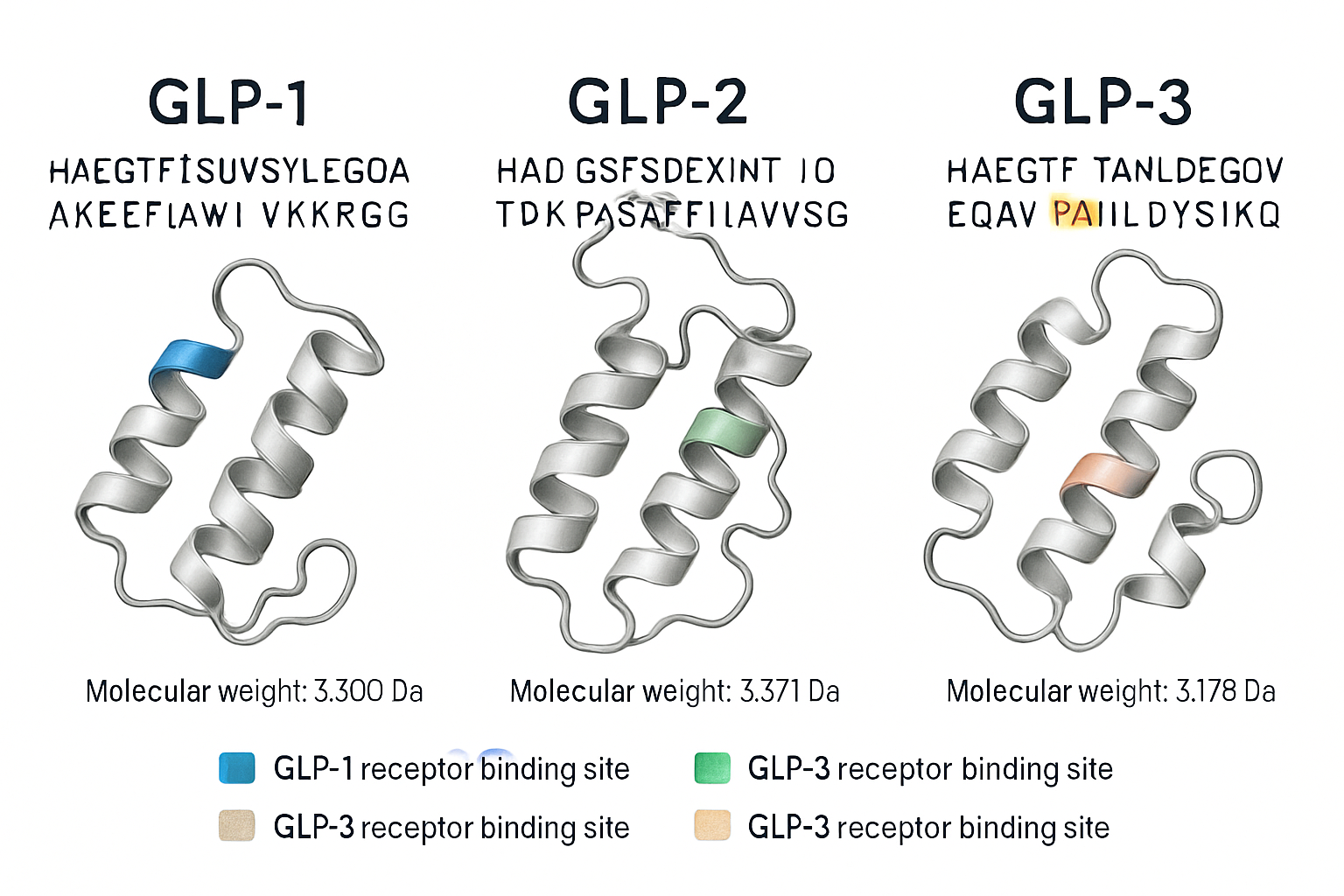
The glucagon-like peptide family emerged from the proglucagon gene, which undergoes tissue-specific processing to produce different bioactive peptides. This evolutionary adaptation allows for precise physiological control across multiple organ systems.
GLP-1 was the first to gain widespread attention in metabolic research, particularly for its role in glucose homeostasis and insulin sensitivity. Research-grade peptides have made it possible to study these mechanisms in controlled laboratory settings, leading to breakthrough discoveries in metabolic science.
GLP-2 followed as researchers discovered its unique role in intestinal health and barrier function. Unlike its metabolic cousin, GLP-2 specifically targets the gastrointestinal tract, making it invaluable for studying digestive health and mucosal repair mechanisms.
The newest addition, GLP-3, represents the cutting edge of peptide research. Available through specialized suppliers like Pure Tested Peptides, this peptide offers researchers access to novel therapeutic pathways that were previously unexplored.
GLP-1: The Metabolic Master Regulator
Mechanism of Action and Receptor Binding
GLP-1 operates through the GLP-1 receptor (GLP-1R), a G-protein coupled receptor found primarily in pancreatic beta cells, the central nervous system, and various peripheral tissues. When GLP1 vs GLP2 vs GLP3 are compared for metabolic effects, GLP-1 consistently demonstrates the most potent glucose-dependent insulin secretion.
The peptide's mechanism involves:
- Glucose-dependent insulin release from pancreatic beta cells
- Glucagon suppression during hyperglycemic states
- Gastric emptying delay to moderate nutrient absorption
- Central appetite regulation through hypothalamic pathways
Research Applications and Study Design
Laboratory studies with GLP-1 typically focus on:
- Metabolic pathway analysis using cell culture models
- Insulin sensitivity measurements in tissue samples
- Glucose tolerance assessments in controlled environments
- Appetite regulation mechanisms through neural pathway mapping
Researchers working with comprehensive peptide catalogs often begin with GLP-1 studies due to the extensive literature base and well-characterized protocols. The GLP-3 research peptide offers an interesting comparison point for understanding receptor selectivity differences.
Dosing Considerations for Research
GLP-1 research typically employs physiological concentrations ranging from 1-100 nM in cell culture studies. Best practices for peptide storage become critical when working with GLP-1, as the peptide requires specific temperature and pH conditions to maintain biological activity.
GLP-2: The Intestinal Health Specialist
Unique Receptor Profile and Tissue Distribution
GLP-2 binds specifically to the GLP-2 receptor (GLP-2R), which shows distinct tissue distribution compared to GLP-1R. When examining GLP1 vs GLP2 vs GLP3 for tissue specificity, GLP-2 demonstrates the highest selectivity for gastrointestinal tissues.
Key target tissues include:
- Small intestinal epithelium for nutrient absorption enhancement
- Colonic mucosa for barrier function maintenance
- Enteric nervous system for motility regulation
- Subepithelial myofibroblasts for structural support
Research Focus Areas
GLP-2 research concentrates on:
Intestinal Barrier Function Studies
- Tight junction protein expression analysis
- Permeability measurements using molecular tracers
- Inflammatory response modulation
- Epithelial cell proliferation rates
Mucosal Repair Mechanisms
- Wound healing assays in intestinal cell lines
- Stem cell activation pathways
- Growth factor expression profiles
- Tissue regeneration kinetics
Researchers utilizing advanced peptide research tools often combine GLP-2 studies with complementary peptides to understand complex gut-brain axis interactions.
Laboratory Protocol Considerations
GLP-2 experiments require specialized attention to:
- pH maintenance in culture media (optimal range 7.2-7.4)
- Serum-free conditions for receptor binding studies
- Time-course analysis due to rapid receptor internalization
- Co-culture systems to model tissue complexity
GLP-3: The Next Generation Peptide

Novel Receptor Interactions and Pathways
GLP-3 represents the newest frontier in peptide research, with unique receptor binding characteristics that distinguish it from both GLP-1 and GLP-2. When comparing GLP1 vs GLP2 vs GLP3 for therapeutic potential, GLP-3 offers the most unexplored opportunities for breakthrough discoveries.
Recent research has identified:
- Dual receptor affinity for both known and novel binding sites
- Cross-tissue activity spanning metabolic and gastrointestinal systems
- Synergistic effects when combined with other peptide families
- Enhanced stability compared to earlier GLP variants
Emerging Research Applications
Current GLP-3 research focuses on:
Multi-Target Therapeutic Approaches
- Combined metabolic and intestinal health studies
- Receptor cross-talk mechanism analysis
- Tissue-specific response profiling
- Bioavailability optimization studies
Novel Pathway Discovery
- Uncharacterized receptor identification
- Signal transduction pathway mapping
- Epigenetic modification analysis
- Proteome-wide interaction studies
The availability of high-quality GLP-3 research peptides has accelerated discovery timelines, allowing researchers to explore these novel pathways with confidence in peptide purity and consistency.
Advanced Research Protocols
GLP-3 studies require cutting-edge methodologies:
- Multi-omics approaches combining genomics, proteomics, and metabolomics
- High-resolution imaging for real-time receptor tracking
- Computational modeling for pathway prediction
- Cross-species validation for translational relevance
Comparative Analysis: GLP1 vs GLP2 vs GLP3 Head-to-Head
Receptor Selectivity and Binding Kinetics
| Peptide | Primary Receptor | Tissue Distribution | Binding Affinity (Kd) |
|---|---|---|---|
| GLP-1 | GLP-1R | Pancreas, CNS, GI tract | 0.1-1.0 nM |
| GLP-2 | GLP-2R | Intestinal epithelium | 0.5-2.0 nM |
| GLP-3 | Novel/Multiple | Multi-tissue | Under investigation |
Physiological Effects Comparison
When analyzing GLP1 vs GLP2 vs GLP3 for research applications, each peptide offers distinct advantages:
GLP-1 Strengths:
- ✅ Well-characterized metabolic pathways
- ✅ Extensive literature support
- ✅ Established research protocols
- ✅ Predictable dose-response relationships
GLP-2 Advantages:
- ✅ Specific intestinal targeting
- ✅ Unique barrier function effects
- ✅ Complementary to metabolic studies
- ✅ Distinct mechanism from GLP-1
GLP-3 Opportunities:
- ✅ Novel therapeutic targets
- ✅ Multi-system effects
- ✅ Enhanced stability profile
- ✅ Unexplored research potential
Research Timeline and Development
The evolution of GLP peptide research demonstrates accelerating discovery timelines. Building diverse peptide libraries has become essential for researchers wanting to stay current with rapidly advancing science.
Historical Development:
- 1980s-1990s: GLP-1 discovery and initial characterization
- 2000s-2010s: GLP-2 identification and therapeutic development
- 2020s-Present: GLP-3 emergence and novel pathway exploration
The GLP-3 research peptide represents the culmination of decades of peptide science advancement, offering researchers access to the most sophisticated tools available.
Practical Research Considerations: Choosing the Right Peptide
Study Design Factors
Selecting between GLP1 vs GLP2 vs GLP3 depends on specific research objectives:
For Metabolic Research:
- Primary choice: GLP-1 for established pathways
- Secondary option: GLP-3 for novel mechanisms
- Consider: Peptide combination studies for comprehensive analysis
For Gastrointestinal Studies:
- Primary choice: GLP-2 for intestinal specificity
- Emerging option: GLP-3 for multi-target approaches
- Integration: Advanced research protocols for cutting-edge studies
For Multi-System Research:
- Innovative choice: GLP-3 for unexplored pathways
- Comparative studies: All three peptides for comprehensive analysis
- Protocol development: Best practices guidance for optimal results
Quality and Sourcing Considerations
Research success depends heavily on peptide quality and consistency. Key factors include:
Purity Standards:
- ≥95% purity for basic research applications
- ≥98% purity for sensitive mechanistic studies
- ≥99% purity for therapeutic development research
Analytical Documentation:
- Complete amino acid analysis
- Mass spectrometry confirmation
- Endotoxin testing results
- Stability data under storage conditions
Supply Chain Reliability:
- Consistent batch-to-batch quality
- Reliable delivery timelines
- Technical support availability
- Comprehensive quality assurance protocols
The GLP-3 research peptide exemplifies these quality standards, providing researchers with the confidence needed for groundbreaking discoveries.
Cost-Effectiveness Analysis
Research budget allocation for GLP1 vs GLP2 vs GLP3 studies requires strategic planning:
GLP-1 Research:
- Lower cost per experiment due to established protocols
- Extensive protocol libraries reduce development time
- Predictable outcomes minimize experimental waste
GLP-2 Research:
- Moderate costs with specialized applications
- Unique research niche commands premium value
- Complementary studies enhance overall research portfolio
GLP-3 Research:
- Higher initial investment for novel pathway exploration
- Potential for breakthrough discoveries justifies costs
- Early-stage research advantages for competitive positioning
Advanced Research Applications and Future Directions

Combination Therapy Research
The future of peptide research increasingly focuses on combination approaches. Understanding GLP1 vs GLP2 vs GLP3 interactions opens new therapeutic possibilities:
Synergistic Mechanisms:
- GLP-1 + GLP-2 for metabolic-intestinal axis studies
- GLP-1 + GLP-3 for enhanced metabolic effects
- GLP-2 + GLP-3 for advanced gastrointestinal research
- Triple combinations for comprehensive system analysis
Research Protocol Development:
- Sequential dosing strategies
- Temporal effect analysis
- Receptor competition studies
- Downstream pathway interactions
The GLP-3 research peptide provides an ideal foundation for these advanced combination studies, offering researchers access to the most current peptide science.
Technological Integration
Modern peptide research increasingly relies on advanced analytical techniques:
High-Throughput Screening:
- Automated dose-response analysis
- Multi-parameter endpoint measurement
- Real-time kinetic monitoring
- Statistical modeling integration
Computational Biology:
- Molecular dynamics simulations
- Receptor-peptide interaction modeling
- Pathway network analysis
- Predictive biomarker identification
Translational Research:
- Ex vivo tissue models
- Organoid culture systems
- Biomarker validation studies
- Clinical correlation analysis
Regulatory and Safety Considerations
Research with GLP1 vs GLP2 vs GLP3 requires attention to evolving regulatory landscapes:
Laboratory Safety Protocols:
- Proper handling procedures for each peptide class
- Waste disposal requirements
- Personnel training standards
- Documentation requirements
Research Compliance:
- Institutional review board considerations
- Animal welfare protocols (where applicable)
- Data integrity standards
- Publication guidelines
Quality Assurance:
- Batch testing requirements
- Storage validation studies
- Stability monitoring protocols
- Cross-contamination prevention
Conclusion
The comparison of GLP1 vs GLP2 vs GLP3 reveals a fascinating landscape of peptide research opportunities, each offering unique advantages for specific research applications. GLP-1 remains the gold standard for metabolic research with its well-characterized pathways and extensive literature support. GLP-2 provides unmatched specificity for intestinal health studies and gastrointestinal research applications. GLP-3 represents the cutting edge of peptide science, offering researchers access to novel therapeutic pathways and unexplored mechanisms of action.
Success in peptide research depends on matching the right peptide to specific research objectives, maintaining rigorous quality standards, and staying current with rapidly evolving scientific understanding. The GLP-3 research peptide exemplifies the next generation of research tools, providing scientists with unprecedented opportunities for breakthrough discoveries.
As the field continues to advance, researchers who understand the nuances of GLP1 vs GLP2 vs GLP3 will be best positioned to make meaningful contributions to peptide science and therapeutic development. Whether pursuing metabolic research, investigating intestinal health, or exploring novel therapeutic pathways, these three peptide families offer complementary tools for advancing scientific knowledge and improving human health outcomes.
Next Steps for Researchers:
- Assess current research objectives and match with appropriate GLP peptide
- Establish quality sourcing relationships with reputable suppliers
- Develop comprehensive research protocols incorporating best practices
- Consider combination therapy approaches for enhanced research impact
- Stay current with evolving regulatory requirements and safety standards
References
[1] Drucker, D.J. (2018). Mechanisms of action and therapeutic application of glucagon-like peptide-1. Cell Metabolism, 27(4), 740-756.
[2] Gribble, F.M., & Reimann, F. (2019). Function and mechanisms of enteroendocrine cells and gut hormones in metabolism. Nature Reviews Endocrinology, 15(4), 226-237.
[3] Holst, J.J. (2007). The physiology of glucagon-like peptide 1. Physiological Reviews, 87(4), 1409-1439.
[4] Yusta, B., et al. (2000). GLP-2 receptor expression in human small intestine: regional distribution and ontogeny. American Journal of Physiology-Gastrointestinal and Liver Physiology, 279(6), G1217-G1225.
[5] Campbell, J.E., & Drucker, D.J. (2013). Pharmacology, physiology, and mechanisms of incretin hormone action. Cell Metabolism, 17(6), 819-837.
SEO Meta Information
Meta Title: GLP1 vs GLP2 vs GLP3: Complete Research Guide 2025
Meta Description: Comprehensive comparison of GLP1 vs GLP2 vs GLP3 peptides for research applications. Expert analysis of mechanisms, applications, and protocols for peptide researchers.