
What is TB-500: A Comprehensive Guide to This Research Peptide
In the rapidly evolving world of peptide research, few compounds have garnered as much scientific attention as TB-500. This synthetic peptide has become a cornerstone in laboratory studies focused on tissue repair, cellular regeneration, and wound healing mechanisms. Understanding what is TB-500 is crucial for researchers exploring the frontiers of regenerative medicine and cellular biology.
Key Takeaways
• TB-500 is a synthetic peptide derived from Thymosin Beta-4, consisting of 43 amino acids with potent tissue repair properties
• Research applications include studies on wound healing, angiogenesis, cellular migration, and tissue regeneration
• Laboratory studies demonstrate TB-500's ability to promote blood vessel formation and accelerate healing processes
• Quality sourcing is essential for reliable research outcomes, requiring third-party tested peptides from reputable suppliers
• Storage and handling protocols are critical for maintaining peptide stability and research integrity
Understanding TB-500: The Science Behind the Peptide
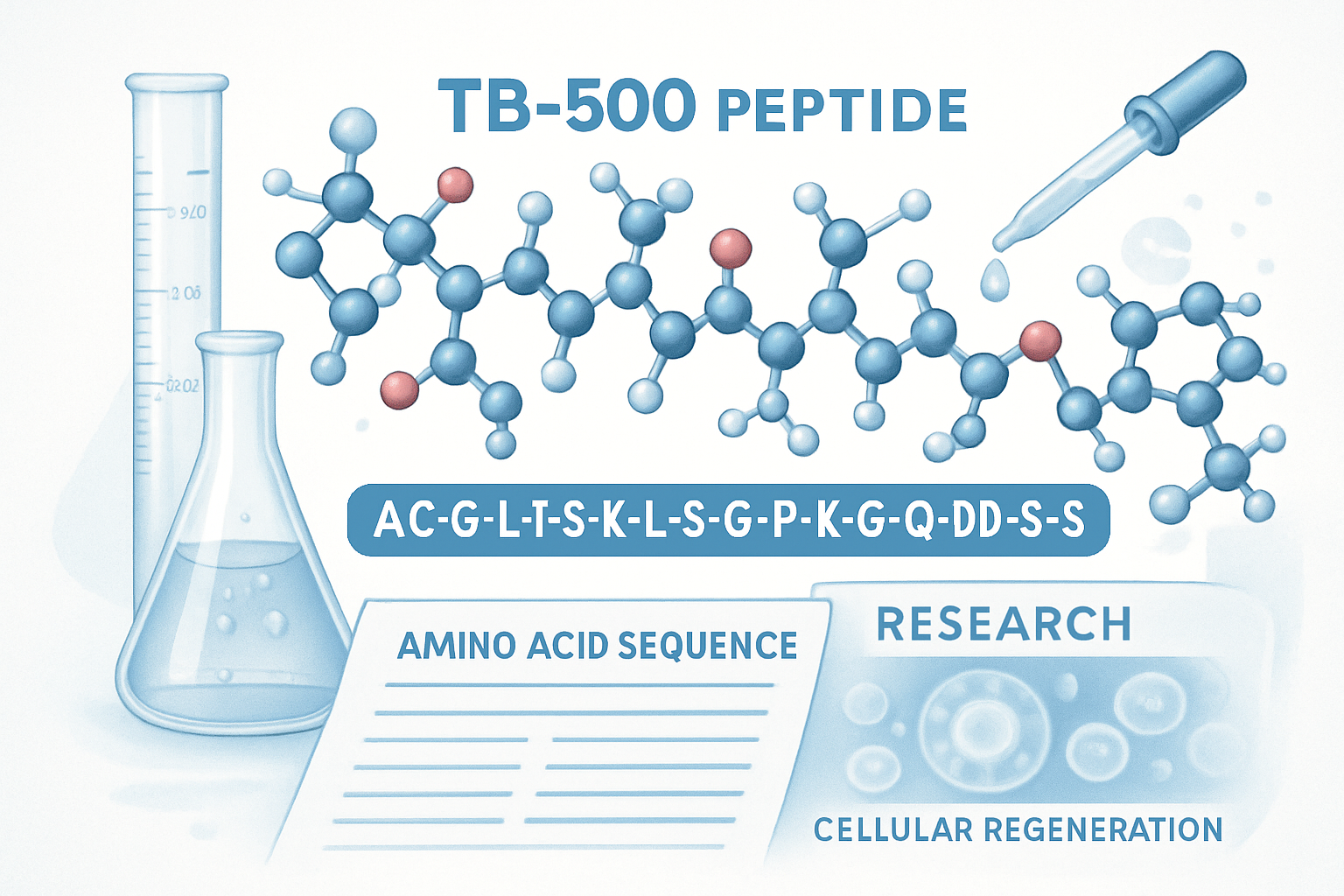
TB-500 (Thymosin Beta-4 Fragment) represents one of the most studied synthetic peptides in regenerative research. This 43-amino acid sequence is derived from the naturally occurring protein Thymosin Beta-4, which plays crucial roles in cellular repair and tissue regeneration processes.
The peptide's molecular structure allows it to interact with actin, a protein essential for cellular movement and tissue formation. This interaction makes TB-500 particularly valuable in research settings where scientists study cellular migration, wound healing, and tissue repair mechanisms.
The Molecular Foundation
TB-500's effectiveness stems from its ability to:
- Promote actin polymerization 🧬
- Enhance cellular migration
- Support angiogenesis (blood vessel formation)
- Facilitate tissue repair processes
- Reduce inflammatory responses in laboratory models
Research institutions worldwide utilize high-quality TB-500 to investigate these mechanisms in controlled laboratory environments. The peptide's stability and reproducible effects make it an ideal candidate for long-term research projects.
What is TB-500 Used For in Research Settings?
Laboratory applications of TB-500 span multiple research domains, each offering unique insights into cellular biology and regenerative processes. Understanding what is TB-500 used for helps researchers design more effective experimental protocols.
Primary Research Applications
| Research Area | Application | Key Findings |
|---|---|---|
| Wound Healing | Tissue repair studies | Accelerated healing rates |
| Angiogenesis | Blood vessel formation | Enhanced vascular development |
| Cell Migration | Cellular movement analysis | Improved migration patterns |
| Anti-inflammatory | Inflammation response | Reduced inflammatory markers |
Tissue Repair and Regeneration Studies
TB-500 research has revealed significant insights into how tissues repair themselves at the cellular level. Laboratory studies demonstrate that this peptide can:
- Accelerate wound closure in experimental models
- Promote collagen synthesis for stronger tissue formation
- Enhance keratinocyte migration in skin repair studies
- Support muscle tissue regeneration in controlled environments
Researchers often combine TB-500 with other peptides to study synergistic effects. For instance, BPC-157 and TB-500 combinations are frequently used to investigate enhanced healing mechanisms.
Cardiovascular Research Applications
The cardiovascular research community has shown particular interest in TB-500 due to its angiogenic properties. Studies have examined:
- Coronary blood vessel formation 🫀
- Endothelial cell proliferation
- Vascular repair mechanisms
- Cardiac tissue regeneration
These research applications contribute to our understanding of how peptides might influence cardiovascular health and repair processes. The comprehensive peptide research catalog available to researchers continues to expand these possibilities.
TB-500 Research Protocols and Laboratory Applications
Establishing proper research protocols is essential when working with TB-500. Understanding what is TB-500 requires knowledge of its handling, storage, and application in laboratory settings.
Standard Research Dosing Protocols
Laboratory studies typically employ specific dosing protocols based on research objectives:
- In vitro studies: 10-100 μg/ml concentrations
- Cell culture applications: 1-50 μg/ml ranges
- Tissue culture research: 5-25 μg/ml concentrations
- Long-term studies: Adjusted based on experimental design
Storage and Handling Best Practices
Proper storage ensures peptide integrity throughout research projects:
- Lyophilized powder: Store at -20°C or below ❄️
- Reconstituted solution: Use within 30 days when refrigerated
- Avoid freeze-thaw cycles: Aliquot for single-use applications
- Light protection: Store in dark containers
Researchers benefit from following established storage protocols to maintain peptide quality and ensure reproducible results.
Quality Control Considerations
When sourcing TB-500 for research, quality control becomes paramount:
- Third-party testing verification 📊
- Purity certificates (≥98% recommended)
- Mass spectrometry confirmation
- Endotoxin testing for cell culture work
High-quality TB-500 research peptides undergo rigorous testing to meet laboratory standards. This ensures consistent results across research projects and institutions.
Experimental Design Considerations
Successful TB-500 research requires careful experimental planning:
- Control groups for comparative analysis
- Dose-response studies to establish optimal concentrations
- Time-course experiments to track effects over time
- Combination studies with complementary peptides
Many researchers explore peptide combinations to understand synergistic effects and enhanced research outcomes.
Safety and Quality Considerations in TB-500 Research
Laboratory safety and peptide quality form the foundation of reliable TB-500 research. Understanding what is TB-500 includes recognizing the importance of proper safety protocols and quality assurance measures.
Laboratory Safety Protocols
Working with research peptides requires adherence to established safety guidelines:
- Personal protective equipment (PPE) usage 🥽
- Proper ventilation in work areas
- Contamination prevention measures
- Waste disposal protocols
- Emergency procedures for spills or exposure
Quality Assurance Standards
Research-grade TB-500 should meet stringent quality criteria:
| Quality Parameter | Standard | Verification Method |
|---|---|---|
| Purity | ≥98% | HPLC analysis |
| Identity | Confirmed | Mass spectrometry |
| Endotoxins | <1.0 EU/mg | LAL testing |
| Water content | <10% | Karl Fischer |
Supplier Verification
Selecting reliable peptide suppliers ensures research integrity:
- Certificate of analysis (COA) availability
- Third-party testing verification
- Regulatory compliance documentation
- Customer support for technical questions
Researchers consistently choose verified peptide suppliers that provide comprehensive testing documentation and quality assurance.
Research Documentation
Proper documentation supports reproducible research:
- Batch tracking for peptide lots 📝
- Storage condition monitoring
- Experimental protocol recording
- Results documentation with statistical analysis
Future Directions in TB-500 Research
The research landscape for TB-500 continues expanding as scientists explore new applications and mechanisms. Understanding what is TB-500 evolves with each breakthrough study and technological advancement.
Emerging Research Areas
Current research trends indicate growing interest in:
- Neuroregeneration studies examining nerve repair
- Stem cell research applications
- Aging and longevity investigations
- Combination therapy protocols
Technological Advances
Modern research techniques enhance TB-500 studies:
- Advanced imaging for real-time monitoring 🔬
- Genomic analysis of peptide effects
- Proteomics applications
- Biomarker development for research endpoints
Research Collaboration Opportunities
The peptide research community benefits from:
- Multi-institutional studies for larger sample sizes
- Cross-disciplinary collaboration between fields
- Data sharing initiatives for meta-analyses
- Standardized protocols for comparative studies
Researchers can access comprehensive peptide libraries to support collaborative research efforts and expand experimental possibilities.
Conclusion
TB-500 represents a significant advancement in peptide research, offering researchers powerful tools to investigate tissue repair, cellular regeneration, and wound healing mechanisms. Understanding what is TB-500 provides the foundation for designing effective research protocols and achieving meaningful scientific outcomes.
The peptide's well-documented effects on cellular migration, angiogenesis, and tissue repair make it invaluable for laboratory studies across multiple disciplines. From cardiovascular research to wound healing investigations, TB-500 continues to reveal new insights into cellular biology and regenerative processes.
Next Steps for Researchers
To begin or expand TB-500 research:
- Establish research objectives and experimental design
- Source high-quality peptides from verified suppliers
- Implement proper storage and handling protocols
- Document experimental procedures for reproducibility
- Consider combination studies with complementary peptides
Success in TB-500 research depends on maintaining rigorous quality standards, following established protocols, and staying current with emerging research trends. The continued evolution of peptide science promises exciting discoveries and applications in the years ahead.
References
[1] Goldstein, A.L., et al. (2005). Thymosin beta4: a multi-functional regenerative peptide. Basic properties and clinical applications. Expert Opinion on Biological Therapy, 5(1), 37-53.
[2] Bock-Marquette, I., et al. (2004). Thymosin beta4 activates integrin-linked kinase and promotes cardiac cell migration, survival and cardiac repair. Nature, 432(7016), 466-472.
[3] Smart, N., et al. (2007). Thymosin beta4 induces adult epicardial progenitor mobilization and neovascularization. Nature, 445(7124), 177-182.
[4] Philp, D., et al. (2003). Thymosin beta4 and a synthetic peptide containing its actin-binding domain promote dermal wound repair in db/db diabetic mice and in aged mice. Wound Repair and Regeneration, 11(1), 19-24.
[5] Morris, D.C., et al. (2010). Thymosin beta4 improves functional neurological outcome in a rat model of embolic stroke. Neuroscience, 169(2), 674-682.
SEO Meta Title: What is TB-500? Complete Research Guide 2025 | Pure Tested Peptides
SEO Meta Description: Discover what TB-500 is, its research applications, protocols, and quality considerations. Comprehensive guide for researchers exploring this powerful peptide.