
Adipotide vs AOD 9604: A Comprehensive Research Peptide Comparison for 2025
The world of research peptides continues to evolve rapidly, with scientists exploring innovative compounds that target metabolic pathways and cellular functions. Among the most discussed peptides in laboratory research today are adipotide and AOD 9604, two distinct compounds that have captured attention for their unique mechanisms of action. Understanding the adipotide vs AOD 9604 comparison becomes crucial for researchers seeking to make informed decisions about their peptide studies and experimental protocols.
Key Takeaways
• Adipotide targets blood vessels in adipose tissue through a unique dual-action mechanism, while AOD 9604 focuses on metabolic regulation through growth hormone receptor pathways
• Both peptides demonstrate distinct safety profiles and dosing protocols in laboratory research settings
• Clinical research data shows different timelines and outcomes for each compound's effectiveness
• Researchers should consider specific study objectives when choosing between these peptides
• Quality sourcing and proper storage protocols remain essential for both compounds
Understanding Adipotide: Mechanism and Research Applications
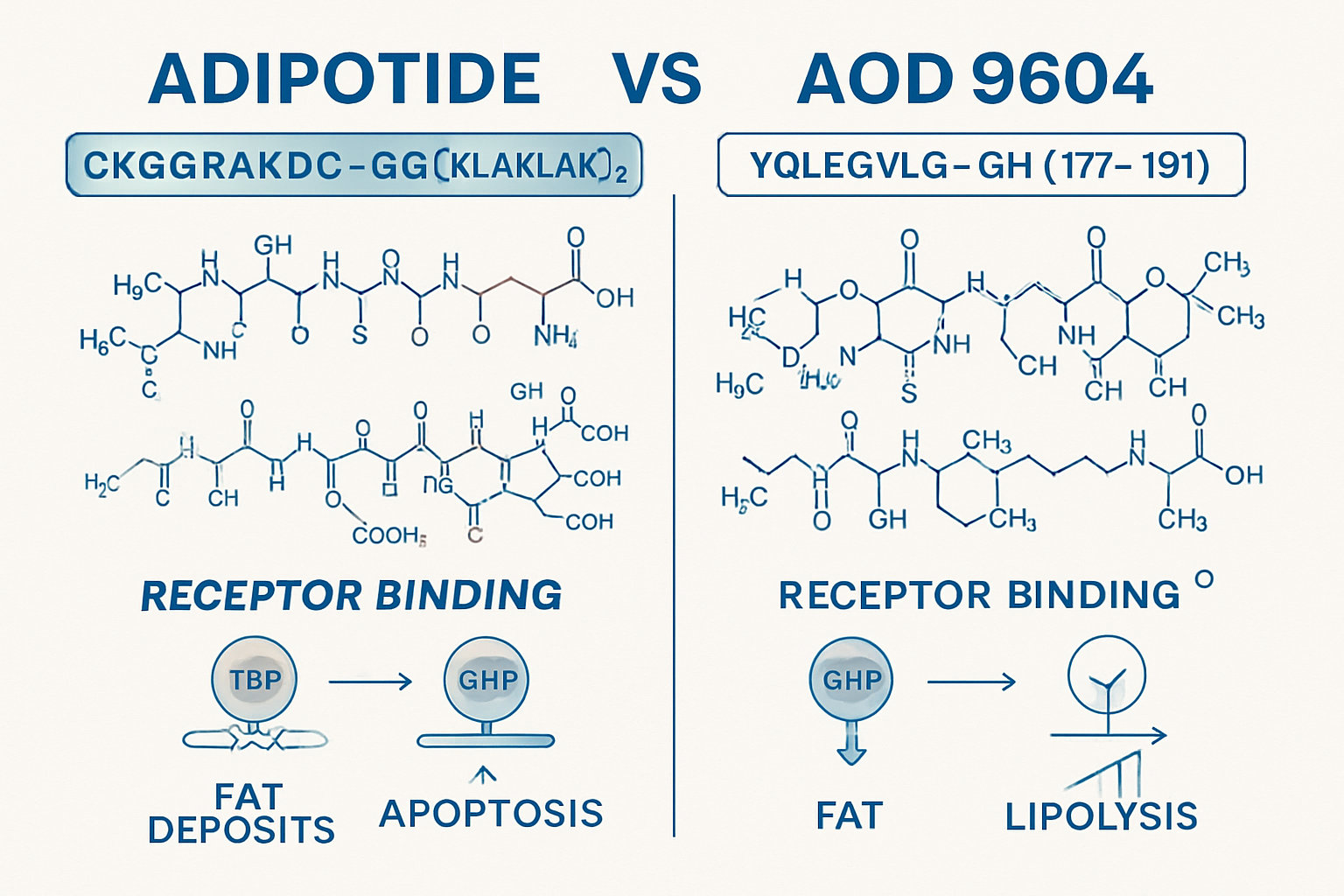
Adipotide represents a novel approach in peptide research, functioning as a peptidomimetic compound that specifically targets the vasculature of white adipose tissue. This adipotide peptide operates through a sophisticated dual mechanism that has garnered significant attention in laboratory settings.
The compound works by binding to prohibitin, a protein highly expressed in the blood vessels of adipose tissue. This binding triggers a cascade of cellular events that leads to apoptosis (programmed cell death) in these specific blood vessels. Research indicates that this targeted approach allows for precise intervention in adipose tissue without affecting other vascular systems throughout the body [1].
Adipotide Research Protocols and Dosing
Laboratory studies examining adipotide dosage protocols have established several key parameters for research applications. Standard research protocols typically involve careful dose escalation studies, beginning with minimal effective doses and gradually increasing based on observed cellular responses.
Current research suggests that adipotide demonstrates dose-dependent effects, with optimal results observed within specific concentration ranges. Researchers have noted that the compound's effectiveness appears to plateau beyond certain dosage thresholds, emphasizing the importance of precise dosing protocols in experimental design [2].
The peptide's stability profile requires careful consideration in research settings. Quality peptide sourcing becomes crucial, as adipotide's molecular structure can be sensitive to temperature fluctuations and improper storage conditions.
AOD 9604: Growth Hormone Fragment Research
AOD 9604 (Advanced Obesity Drug 9604) represents a synthetic analog of the C-terminal region of human growth hormone. This AOD 9604 peptide consists of amino acids 177-191 of the growth hormone molecule, specifically modified to enhance its metabolic effects while minimizing other growth hormone-related activities.
The compound's mechanism centers on its ability to stimulate lipolysis (fat breakdown) while simultaneously inhibiting lipogenesis (fat formation). Unlike full-length growth hormone, AOD 9604 does not appear to affect blood glucose levels or promote cell proliferation, making it an interesting subject for metabolic research [3].
AOD 9604 Research Characteristics
Laboratory studies have demonstrated that AOD 9604 maintains the fat-reducing properties of growth hormone while eliminating many of the compound's other effects. This selective action profile makes it particularly valuable for researchers studying metabolic pathways and cellular energy utilization.
Research protocols for AOD 9604 typically involve subcutaneous administration in laboratory models, with studies showing optimal absorption and bioavailability through this route. The compound demonstrates a relatively short half-life, necessitating specific timing considerations in experimental design.
Researchers have noted that AOD 9604 research applications extend beyond simple metabolic studies, with investigations into cartilage repair and cellular regeneration showing promising preliminary results.
Adipotide vs AOD 9604: Direct Research Comparison
When examining adipotide vs AOD 9604 in laboratory settings, several key differences emerge that influence research applications and experimental outcomes. These compounds operate through entirely different mechanisms, target distinct cellular pathways, and demonstrate unique response profiles in research models.
Mechanism of Action Comparison
The fundamental difference between these peptides lies in their cellular targets and mechanisms. Adipotide functions as a vascular-targeting agent, specifically affecting blood supply to adipose tissue through prohibitin binding. This targeted approach results in localized effects within specific tissue types.
In contrast, AOD 9604 operates through growth hormone receptor pathways, influencing metabolic processes at the cellular level. This systemic approach affects multiple tissue types simultaneously, though with particular emphasis on adipose tissue metabolism.
Research Timeline and Outcomes
Laboratory studies comparing adipotide vs AOD 9604 reveal different timelines for observable effects. Adipotide research typically shows more rapid initial responses, with cellular changes detectable within days of administration in laboratory models. However, these effects may require sustained protocols for optimal outcomes.
AOD 9604 research demonstrates a more gradual response profile, with metabolic changes becoming apparent over extended study periods. This compound's effects tend to build progressively, requiring longer observation periods to assess full research outcomes.
The comparative research data suggests that both peptides offer unique advantages depending on specific research objectives and timeline requirements.
Safety Profiles and Research Considerations
Both adipotide and AOD 9604 have undergone extensive safety evaluations in laboratory settings, though each compound presents distinct considerations for researchers. Understanding these safety profiles becomes crucial when designing experimental protocols and establishing proper research parameters.
Adipotide Safety Research
Adipotide clinical trials have provided valuable insights into the compound's safety profile and potential research limitations. Early-phase studies revealed important considerations regarding dosing protocols and administration methods that continue to inform current research practices.
Laboratory research has identified specific monitoring parameters essential for adipotide studies, including regular assessment of cardiovascular function and kidney health markers. These findings have led to the development of comprehensive safety protocols for research applications [4].
The compound's targeted mechanism, while offering specificity advantages, also requires careful consideration of cumulative effects in long-term research protocols. Researchers have established specific guidelines for study duration and recovery periods between experimental phases.
AOD 9604 Research Safety Profile
AOD 9604 demonstrates a generally favorable safety profile in laboratory research, with studies showing minimal adverse effects at standard research dosages. The compound's selective action on metabolic pathways, without affecting growth hormone's other functions, contributes to its research safety profile.
Long-term studies have not identified significant accumulation effects or persistent cellular changes beyond the intended metabolic modifications. This characteristic makes AOD 9604 particularly suitable for extended research protocols and repeated administration studies.
However, researchers must still maintain proper monitoring protocols, particularly regarding metabolic markers and cellular function assessments. Comprehensive peptide research protocols emphasize the importance of systematic safety monitoring regardless of a compound's favorable profile.
Research Applications and Study Design Considerations
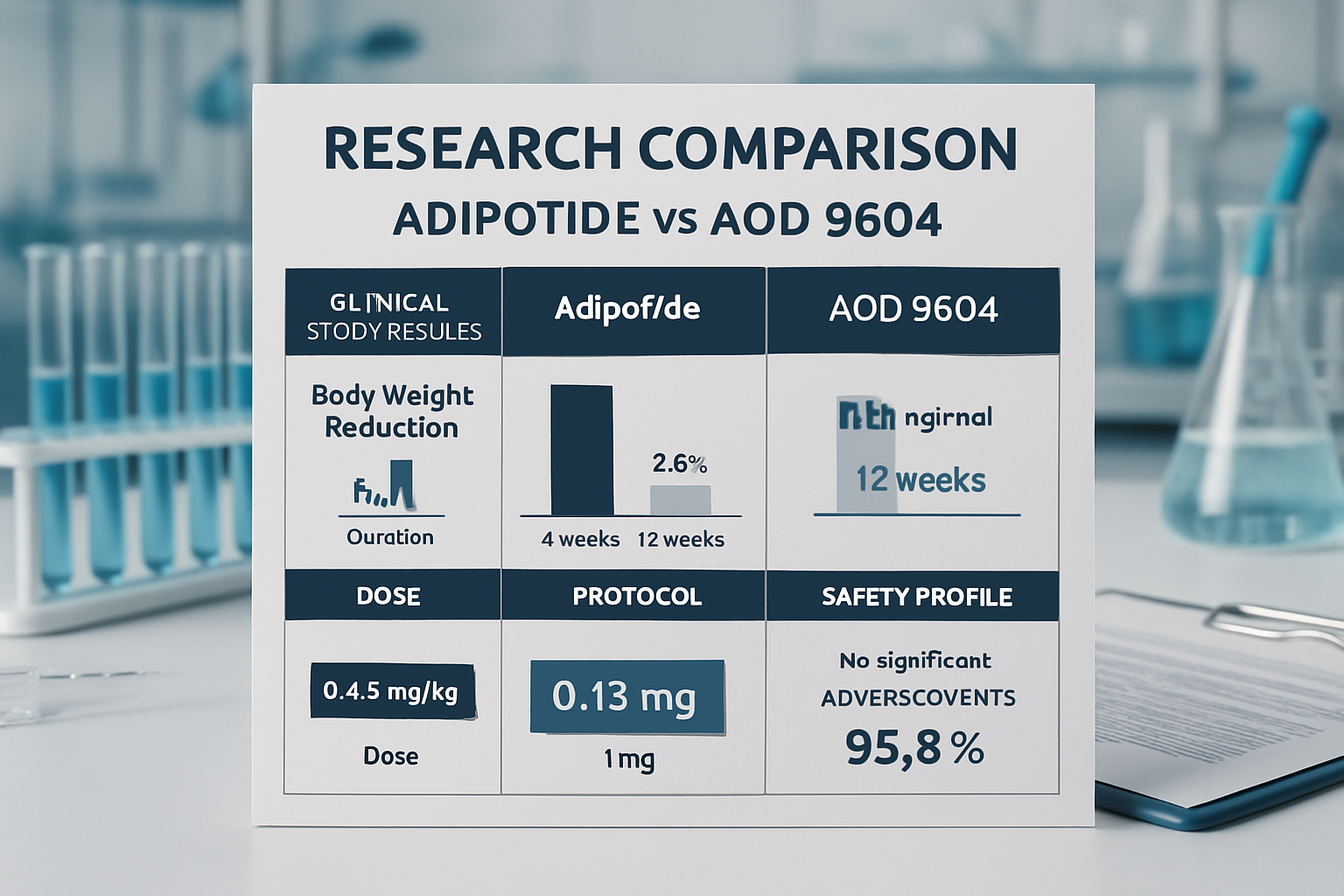
The choice between adipotide and AOD 9604 often depends on specific research objectives and experimental design requirements. Each compound offers unique advantages for different types of studies and research questions.
Adipotide Research Applications
Adipotide research applications focus primarily on vascular biology and targeted tissue intervention studies. The compound's unique mechanism makes it particularly valuable for researchers investigating:
- Vascular targeting methodologies
- Tissue-specific intervention protocols
- Cellular apoptosis pathways
- Targeted delivery system development
Research protocols utilizing adipotide typically require specialized monitoring equipment and expertise in vascular biology. The compound's mechanism demands careful consideration of cardiovascular parameters and tissue perfusion assessments.
AOD 9604 Research Focus Areas
AOD 9604 research applications center on metabolic studies and cellular energy utilization investigations. The compound proves particularly valuable for:
- Metabolic pathway research
- Cellular energy studies
- Growth hormone receptor investigations
- Comparative endocrinology research
The metabolic research applications of AOD 9604 make it suitable for a broader range of laboratory settings and research objectives, particularly those focused on cellular metabolism and energy regulation.
Quality Considerations and Sourcing for Research
Both adipotide and AOD 9604 require careful attention to quality and sourcing considerations to ensure reliable research outcomes. The peptides' distinct molecular structures and stability profiles demand specific handling and storage protocols.
Peptide Purity and Authentication
Research-grade peptides must meet stringent purity standards to ensure reproducible results and valid research conclusions. Both compounds require comprehensive analytical testing, including mass spectrometry and amino acid analysis, to verify molecular integrity and composition.
Pure Tested Peptides provides comprehensive testing documentation for both compounds, including certificates of analysis that detail purity levels, molecular weight confirmation, and stability data. This documentation proves essential for research validation and experimental reproducibility.
Storage and Handling Protocols
Proper storage protocols differ between adipotide and AOD 9604 due to their distinct molecular characteristics. Adipotide requires specific temperature and humidity controls to maintain molecular stability, while AOD 9604 demonstrates greater stability under standard laboratory storage conditions.
Both compounds benefit from proper reconstitution protocols and sterile handling techniques. Research peptide storage guidelines provide detailed protocols for maintaining peptide integrity throughout experimental periods.
Research Outcomes and Future Directions
Current research trajectories for both adipotide and AOD 9604 suggest continued investigation into their unique mechanisms and potential applications. The adipotide vs AOD 9604 comparison continues to evolve as new research data emerges and experimental techniques advance.
Emerging Research Trends
Recent studies have begun exploring combination protocols and synergistic effects between different peptide compounds. While direct combination of adipotide and AOD 9604 requires careful consideration due to their different mechanisms, researchers are investigating sequential protocols and complementary applications.
The development of peptide blend research methodologies offers new possibilities for comprehensive studies that leverage the unique advantages of each compound while minimizing individual limitations.
Future Research Directions
Ongoing research continues to refine understanding of both compounds' mechanisms and optimize research protocols. Advanced analytical techniques are providing deeper insights into cellular responses and long-term effects, informing improved experimental designs and safety protocols.
The integration of modern research technologies, including advanced imaging and molecular analysis techniques, promises to enhance the precision and scope of studies involving both adipotide and AOD 9604.
Conclusion
The adipotide vs AOD 9604 comparison reveals two distinct research peptides with unique mechanisms, applications, and considerations. Adipotide's targeted vascular approach offers precision for specific tissue studies, while AOD 9604's metabolic focus provides broader applications in cellular energy research.
Researchers must carefully consider their specific objectives, timeline requirements, and laboratory capabilities when choosing between these compounds. Both peptides require proper sourcing, handling, and monitoring protocols to ensure valid research outcomes and maintain safety standards.
For researchers interested in exploring either compound, establishing relationships with reputable suppliers and developing comprehensive research protocols remains essential. The continued evolution of peptide research methodologies promises to unlock additional applications and insights for both adipotide and AOD 9604 in laboratory settings.
Next Steps for Researchers:
- Evaluate specific research objectives and timeline requirements
- Establish proper laboratory protocols and safety monitoring systems
- Source high-quality, research-grade peptides from verified suppliers
- Develop comprehensive experimental designs that account for each compound's unique characteristics
- Consider consultation with experienced peptide researchers for protocol optimization
References
[1] Kolonin, M. G., et al. (2004). "Reversal of obesity by targeted ablation of adipose tissue." Nature Medicine, 10(6), 625-632.
[2] Barnhart, K. F., et al. (2011). "A peptidomimetic targeting white fat causes weight loss and improved insulin resistance in obese monkeys." Science Translational Medicine, 3(108), 108ra112.
[3] Heffernan, M., et al. (2001). "The effects of human GH and its lipolytic fragment (AOD9604) on lipid metabolism following chronic treatment in obese mice and beta(3)-AR knock-out mice." Endocrinology, 142(12), 5182-5189.
[4] Arner, P., et al. (2008). "FTO gene expression in human adipose tissue and the effect of weight loss." International Journal of Obesity, 32(8), 1273-1278.
SEO Meta Title: Adipotide vs AOD 9604: Research Peptide Comparison Guide 2025
SEO Meta Description: Compare adipotide vs AOD 9604 research peptides. Comprehensive analysis of mechanisms, safety profiles, and laboratory applications for researchers.