
Navigating the Mots C Peptide Dosage Chart: A Comprehensive Research Guide for 2026
The realm of peptide research is continuously expanding, offering profound insights into cellular function, metabolism, and adaptive capacity. Among the compounds garnering significant attention from the scientific community is MOTS-c, a mitochondrially-derived peptide. As researchers delve deeper into its potential, understanding the nuances of a mots c peptide dosage chart becomes paramount for conducting accurate and reproducible studies. This guide aims to provide a high-authority, informational resource for peptide shoppers, researchers, and fitness health enthusiasts interested in the intricate world of MOTS-c, emphasizing the importance of precise dosing in a research setting in 2026.
Key Takeaways
- MOTS-c is a Mitochondrial-Derived Peptide: MOTS-c plays a crucial role in regulating metabolic homeostasis, influencing glucose and fatty acid metabolism.
- Dosage Varies by Research Objective: The optimal mots c peptide dosage chart is not universal and depends heavily on the specific research question, in vitro or in vivo models, and desired experimental outcomes.
- Reconstitution and Storage are Critical: Proper reconstitution with bacteriostatic water and diligent storage protocols are essential to maintain the integrity and potency of MOTS-c peptide.
- Synergistic Research is Promising: MOTS-c is often explored in conjunction with other peptides, such as AOD-9604, for potential synergistic effects, requiring careful consideration of combined dosing.
- Consult Reputable Sources: Always source high-quality, pure MOTS-c peptide from trusted suppliers like Pure Tested Peptides to ensure reliable research results.
Understanding MOTS-c Peptide: A Primer for Researchers
MOTS-c, or Mitochondrial Open Reading Frame of the 12S rRNA Type-c, is a fascinating peptide primarily involved in regulating metabolic processes [1]. Discovered relatively recently, this small peptide has opened new avenues in understanding how mitochondria, often called the powerhouses of the cell, communicate with the rest of the body to maintain energy balance. Research suggests that MOTS-c influences glucose utilization, fatty acid oxidation, and insulin sensitivity, making it a subject of intense interest in metabolic research [2].
For researchers exploring the profound effects of this peptide, obtaining high-quality MOTS-c peptide is the first crucial step. Pure Tested Peptides offers MOTS-c 10mg vials specifically designed for laboratory research, ensuring the purity and quality necessary for accurate scientific inquiry.
The Role of MOTS-c in Metabolic Regulation
The primary biological activity of MOTS-c revolves around its ability to modulate metabolic pathways. Studies have shown that MOTS-c can:
- Enhance glucose uptake: It may improve the sensitivity of cells to insulin, facilitating better glucose absorption and utilization [3].
- Promote fatty acid metabolism: Research indicates its potential role in stimulating the breakdown of fatty acids for energy, which could have implications for energy expenditure studies.
- Influence mitochondrial function: As a mitochondrially-derived peptide, MOTS-c inherently impacts mitochondrial health and biogenesis, which are critical for overall cellular vitality and energy production.
These mechanisms make MOTS-c a valuable tool for researchers studying metabolic disorders, aging, and exercise physiology. Understanding these fundamental roles is key before formulating a mots c peptide dosage chart for any specific research protocol. The concentration and frequency of administration of the mots c peptide can significantly alter observed outcomes in experimental models, making careful planning indispensable.
What is a Mots C Peptide Dosage Chart?
A mots c peptide dosage chart is essentially a systematic guide outlining recommended administration amounts, frequencies, and reconstitution instructions for MOTS-c peptide in various research contexts. Unlike pharmaceuticals with established clinical dosages, peptide research involves a broader spectrum of experimental parameters, necessitating a flexible yet precise approach to dosing. This chart helps researchers standardize their experiments, ensuring consistency and reproducibility.
The goal of a comprehensive mots c peptide dosage chart is to provide a framework for scientists to design their studies effectively. It considers factors such as:
- Concentration: The amount of peptide per unit volume after reconstitution.
- Volume: The total amount of solution administered.
- Frequency: How often the peptide is administered (e.g., daily, every other day).
- Duration: The total length of the experimental period.
- Route of Administration: Subcutaneous, intravenous, or in vitro application.
Without a well-defined mots c peptide dosage chart, comparing results across different studies or replicating findings can be challenging. For those initiating research, exploring various peptides for sale, including specific blends for targeted research, can be insightful.
Developing a Mots C Peptide Dosage Chart for Research
Crafting a reliable mots c peptide dosage chart requires careful consideration of several scientific principles and practical guidelines. This section will walk through the essential steps and factors to consider when determining appropriate dosages for your research.
Reconstitution: The Foundation of Accurate Dosing
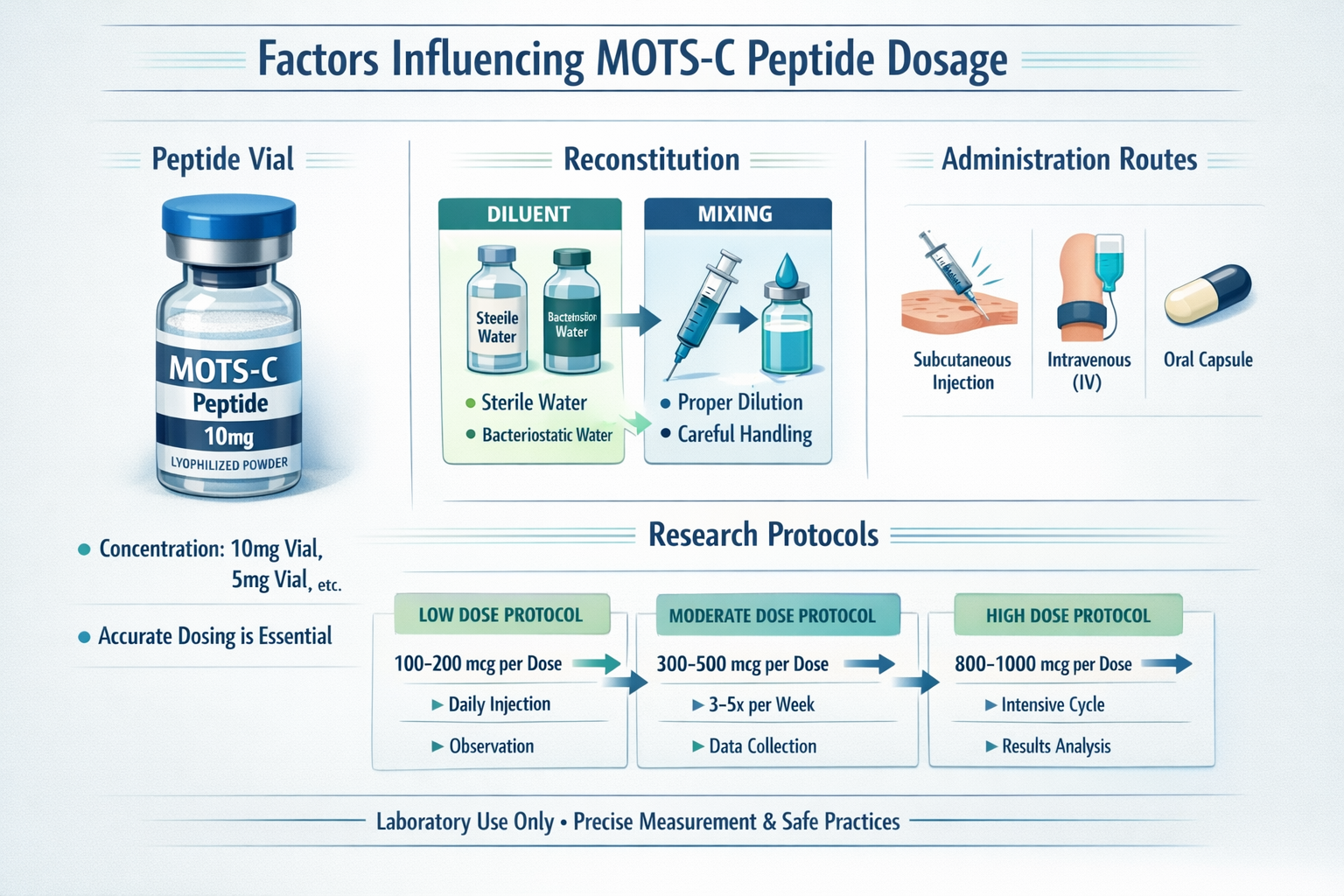
Before any MOTS-c peptide can be administered, it must be properly reconstituted. This process involves dissolving the lyophilized (freeze-dried) peptide powder in a suitable solvent, typically bacteriostatic water. The accuracy of this step is paramount, as it determines the final concentration of the peptide.
Steps for Reconstitution:
- Gather Supplies: You will need your MOTS-c peptide vial, bacteriostatic water (usually 1ml or 2ml for a 10mg vial), sterile syringes, and alcohol wipes.
- Clean Vials: Swab the rubber stopper of both the peptide vial and the bacteriostatic water vial with alcohol wipes.
- Draw Solvent: Using a sterile syringe, draw the desired amount of bacteriostatic water. For a 10mg vial of MOTS-c peptide, a common approach is to add 1ml or 2ml of bacteriostatic water.
- Example: If you add 1ml of bacteriostatic water to a 10mg vial, your concentration will be 10mg/ml (or 10,000 mcg/ml).
- Example: If you add 2ml of bacteriostatic water to a 10mg vial, your concentration will be 5mg/ml (or 5,000 mcg/ml).
- Inject Solvent Slowly: Carefully inject the bacteriostatic water into the MOTS-c peptide vial, aiming the needle at the side of the vial to avoid direct forceful spraying onto the powder, which can degrade the peptide.
- Allow to Dissolve: Do not shake the vial vigorously. Gently swirl the vial or roll it between your palms to encourage dissolution. This process may take a few minutes. The solution should be clear and free of particles.
Table 1: MOTS-c Reconstitution Concentration Examples (10mg Vial)
| Bacteriostatic Water Added | Final Concentration (mg/ml) | Final Concentration (mcg/ml) |
|---|---|---|
| 1 ml | 10 mg/ml | 10,000 mcg/ml |
| 2 ml | 5 mg/ml | 5,000 mcg/ml |
| 3 ml | 3.33 mg/ml | 3,333 mcg/ml |
This table illustrates how crucial the initial reconstitution step is for any subsequent calculation in a mots c peptide dosage chart. Improper reconstitution can lead to inaccurate experimental dosing, compromising the reliability of your findings. For further reading on best practices, consider exploring resources on best practices for storing research peptides.
Determining Research Dosages: Factors and Considerations
Once reconstituted, determining the specific dosage for your research animal model or in vitro study is the next step in creating your mots c peptide dosage chart. There is no single "correct" dosage, as it heavily depends on the research objective.
Key Factors Influencing Dosage:
- Research Model:
- In Vitro Studies: These often use much lower concentrations, directly applied to cell cultures. The focus is on direct cellular responses.
- In Vivo Studies (e.g., Rodents): Dosages are typically calculated based on body weight (e.g., mg/kg or mcg/kg). This requires careful scaling from human equivalent doses or prior research.
- Targeted Effect: Are you studying acute metabolic changes, long-term effects on aging, or specific cellular pathways? Different objectives may require different mots c peptide dosage ranges.
- Literature Review: Always start with a thorough review of existing scientific literature on MOTS-c peptide. Previous studies can provide a valuable baseline for initial dosage ranges. Websites like PubMed are excellent resources.
- Route of Administration:
- Subcutaneous (SC): Common in rodent studies, offering sustained release.
- Intraperitoneal (IP): Also used in rodents, offering rapid absorption.
- Intravenous (IV): Used when rapid systemic distribution is desired.
- Oral: While some peptides are orally bioavailable, MOTS-c is typically administered via injection for research to ensure bioavailability and minimize degradation in the digestive tract. For research into oral peptides, other resources are available, such as best oral peptides.
- Frequency and Duration: Chronic studies might use lower daily doses over extended periods, while acute studies might involve higher, single doses or short-term administrations.
Example Dosage Calculation (Rodent Model):
Let's assume a research study aims to administer 5 mg/kg of MOTS-c peptide to a 200-gram (0.2 kg) rat, using a solution reconstituted to 5 mg/ml.
- Desired Total Dose: 5 mg/kg * 0.2 kg = 1 mg of MOTS-c.
- Volume to Administer: You have a 5 mg/ml solution. To get 1 mg, you need: 1 mg / 5 mg/ml = 0.2 ml.
Therefore, for this specific research protocol, 0.2 ml of the 5 mg/ml solution would be administered to the 200-gram rat. This careful calculation is a cornerstone of any effective mot c peptide research.
Storage and Handling of MOTS-c Peptide
Proper storage is critical for maintaining the stability and potency of your MOTS-c peptide.
- Unreconstituted (Lyophilized): Store at -20°C (freezer) for long-term stability. This is standard for most research peptides.
- Reconstituted: Store in the refrigerator (2-8°C). Reconstituted peptides generally have a shorter shelf life, typically several weeks, depending on the peptide and solvent. It's recommended to use the reconstituted solution within 2-4 weeks for optimal research quality.
Always protect peptide solutions from light and repeated freeze-thaw cycles, which can degrade the peptide structure and alter its efficacy. For more general guidelines on peptide storage, Pure Tested Peptides offers valuable information on best practices for storing research peptides.
Advanced Research: Synergy and Comparative Analysis with Mots C Peptide Dosage Chart
Beyond single-peptide studies, many researchers explore the potential synergy between MOTS-c and other research compounds. This section delves into advanced research concepts, including combining MOTS-c with peptides like AOD-9604, and how to adapt your mots c peptide dosage chart for such complex protocols.
MOTS-c and AOD-9604: Exploring Potential Synergy
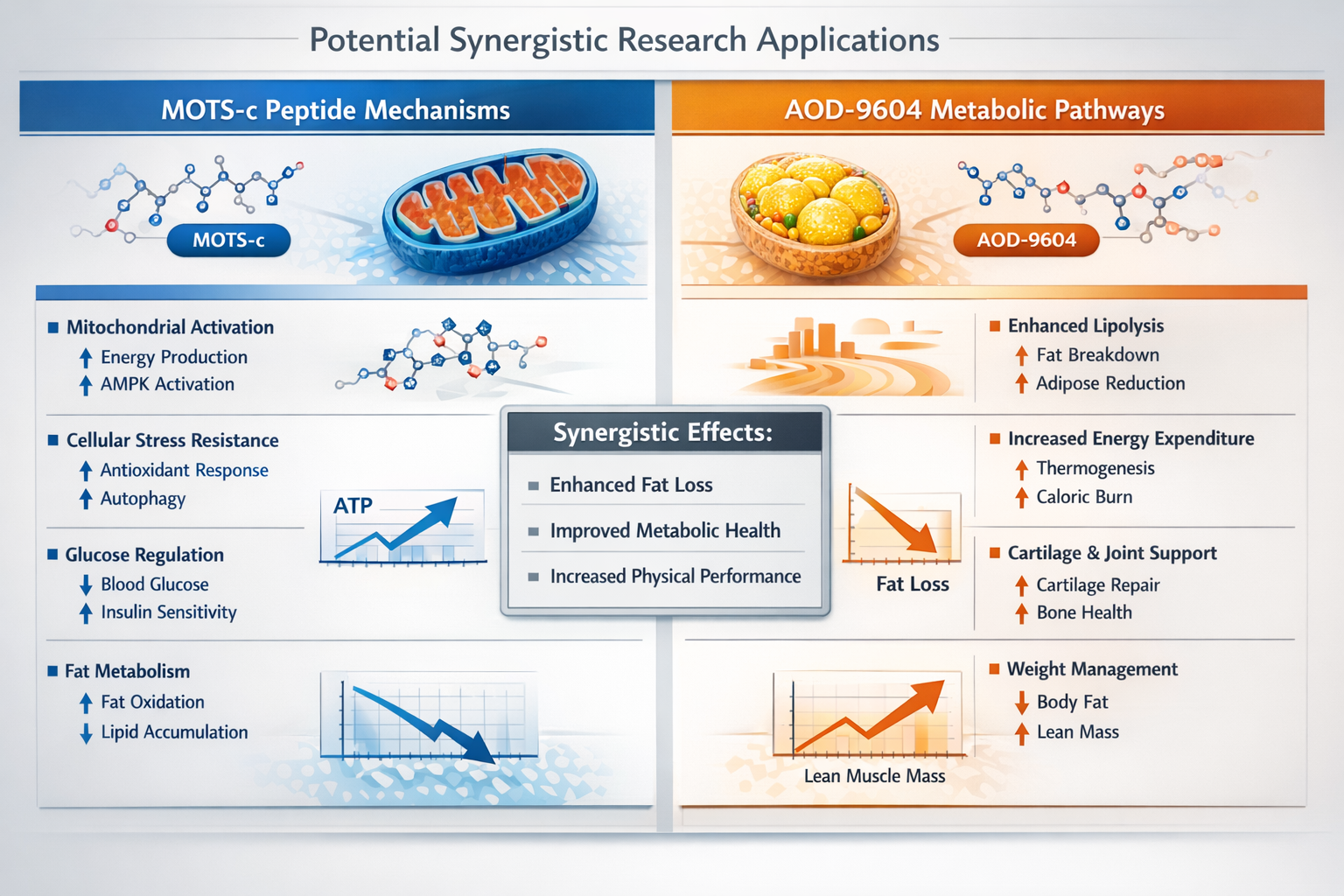
A significant area of interest for researchers involves investigating the combined effects of different peptides. The combination of aod9604 mots c peptide is one such area gaining traction due to their distinct yet potentially complementary mechanisms of action.
- MOTS-c Peptide: Primarily focuses on mitochondrial regulation, glucose metabolism, and fatty acid oxidation [4].
- AOD-9604: A fragment of the human growth hormone (HGH) molecule, AOD-9604 is studied for its lipolytic (fat-burning) properties and its potential to inhibit lipogenesis (fat creation) without affecting insulin sensitivity or glucose levels [5]. Learn more about AOD-9604 metabolic research.
The concept of synergy aod9604 peptide with MOTS-c suggests that by targeting different pathways, a combined approach might yield more comprehensive or enhanced metabolic benefits in research models than either peptide alone. For example, MOTS-c could improve cellular energy utilization, while AOD-9604 might specifically target fat reduction. Researchers exploring this combination need to carefully adjust their mots c peptide dosage chart and develop a corresponding chart for AOD-9604.
Considerations for Combined Protocols:
- Independent Dosing: Start by determining optimal individual dosages for both MOTS-c and AOD-9604 based on existing literature and pilot studies.
- Interaction Studies: Design experiments to assess if and how the peptides interact. Do they enhance each other's effects, or are there unexpected outcomes?
- Timing of Administration: Will the peptides be administered simultaneously, or will there be a staggered approach? This can impact absorption and systemic effects.
- Observation of Side Effects: While both are generally well-tolerated in research, monitoring for any new or exacerbated potential mots-c peptide side effects when combined is crucial.
- Data Interpretation: Carefully analyze data to differentiate the effects of each peptide and their combined impact.
For researchers interested in acquiring AOD-9604, Pure Tested Peptides offers AOD-9604 for research purposes, ensuring high purity for your synergistic studies.
Comparing MOTS-c with Other Peptides: Reddit Discussions and Research Insights
Online communities, such as those found on Reddit, often feature discussions comparing various peptides. A common comparison point might be "reddit motsc vs aod9604." While these discussions can offer anecdotal insights, it's crucial for researchers to rely on peer-reviewed scientific literature for formulating their mots c peptide dosage chart and experimental designs.
Scientific research, not anecdotal reports, should guide the precise dosages and experimental parameters. However, such discussions can sometimes highlight areas of popular interest or suggest novel research questions to explore.
For example, a mots-c peptide dosage chart might be discussed in the context of general wellness or anti-aging research, areas where peptides are gaining significant attention. Understanding the scientific basis behind claims related to mots c peptide benefits is vital.
Documenting Your Mots C Peptide Dosage Chart and Protocol
Thorough documentation of your experimental mots c peptide dosage chart and protocol is essential for good scientific practice. This includes:
- Detailed Records: Keep meticulous notes on reconstitution, including lot numbers, dates, and names of solvents used.
- Dosage Log: Record every administration, including date, time, specific dose (e.g., mcg/kg), volume administered, and route.
- Observation Log: Document any observed changes, responses, or potential mots-c peptide side effects in your research subjects.
- Statistical Analysis Plan: Outline how you will analyze your data to draw statistically sound conclusions.
This systematic approach ensures the integrity of your research and facilitates future replication or modification of your studies.
The Future of MOTS-c Research and Dosage Guidelines
The landscape of peptide research is constantly evolving. In 2026, we can anticipate further refinements in our understanding of MOTS-c and more precise mots c peptide dosage chart guidelines emerging from ongoing studies.
Emerging Research and Potential Mots C Peptide Benefits
New research continues to uncover additional potential mots c peptide benefits. While currently for research purposes only, studies are exploring its implications in areas such as:
- Cardiovascular Health: Early research suggests MOTS-c may have protective effects on the cardiovascular system [6].
- Cognitive Function: Some preliminary studies indicate a potential role in neuroprotection and cognitive enhancement, though more extensive research is needed.
- Inflammation: MOTS-c might modulate inflammatory responses, making it relevant for studies on chronic inflammatory conditions.
As our understanding deepens, the mots c peptide dosage chart will likely become more nuanced, with specific dosages recommended for investigating different physiological effects. Researchers aiming to stay at the forefront of this field should regularly consult scientific databases and publications.
Importance of Sourcing and Purity in 2026
As the popularity of research peptides like MOTS-c grows, the importance of sourcing from reputable suppliers cannot be overstated. In 2026, researchers must prioritize:
- Third-Party Testing: Look for suppliers who provide transparent third-party testing results to confirm peptide purity and identity. This ensures you are working with authentic MOTS-c peptide.
- Quality Control: Reputable vendors adhere to strict quality control standards, minimizing contaminants and ensuring consistent product quality.
- Clear Labeling: Product labels should clearly state the peptide name, quantity, and batch number.
Organizations like Pure Tested Peptides are committed to providing high-quality research peptides, including MOTS-c 10mg, ensuring that researchers have access to reliable materials for their studies. This commitment to quality directly impacts the validity of any mots c peptide dosage chart and subsequent research findings.
Ethical Considerations in Peptide Research
Researchers working with peptides like MOTS-c must adhere to strict ethical guidelines. This includes:
- Compliance with Regulations: Ensuring all research protocols comply with local and national regulations regarding animal research and laboratory safety.
- Transparency: Clearly reporting methods, results, and any limitations in scientific publications.
- Responsible Use: Emphasizing that research peptides are for laboratory and research use only and not for human consumption.
By maintaining high ethical standards, the scientific community can continue to explore the promising avenues of peptide research responsibly and effectively.
Conclusion
The MOTS-c peptide represents a compelling area of scientific inquiry, offering significant potential in metabolic and cellular research. Developing and adhering to a precise mots c peptide dosage chart is not merely a procedural step but a fundamental requirement for conducting meaningful, reproducible, and impactful studies. From careful reconstitution to meticulous documentation and considering potential synergistic interactions with compounds like AOD-9604, every aspect of dosing contributes to the integrity of your research.
As we move forward in 2026, the scientific community's understanding of MOTS-c and its multifaceted roles will only deepen. Researchers are encouraged to stay informed of the latest findings, prioritize high-quality sourcing from trusted providers like Pure Tested Peptides, and maintain rigorous experimental protocols. By doing so, we can collectively unlock the full potential of this fascinating peptide, contributing valuable knowledge to the fields of health and biology.
Actionable Next Steps
- Review Existing Literature: Before starting any new research, conduct a thorough literature review on MOTS-c to inform your initial mots c peptide dosage chart parameters.
- Source High-Quality Peptides: Purchase MOTS-c from reputable suppliers that provide third-party testing, such as Pure Tested Peptides.
- Master Reconstitution: Practice and ensure accurate reconstitution techniques to achieve precise concentrations.
- Plan Your Dosage Carefully: Develop a detailed mots c peptide dosage chart tailored to your specific research objectives and model, whether investigating mots c peptide benefits or aod9604 mots c peptide synergy.
- Document Everything: Maintain meticulous records of your entire experimental process, from preparation to observation.
References
[1] Lee, C., et al. (2015). The mitochondrial-derived peptide MOTS-c promotes metabolic homeostasis and insulin sensitivity. Cell Metabolism, 21(5), 790-802.
[2] Kim, S. J., et al. (2018). MOTS-c: A novel mitochondrial-derived peptide regulating metabolic function. Journal of Endocrinology, 238(3), R125-R138.
[3] Kwon, S., et al. (2018). MOTS-c peptide regulates mitochondrial energy metabolism and systemic glucose homeostasis. Journal of Biomedical Science, 25(1), 58.
[4] Kwon, H. J., et al. (2020). MOTS-c for healthy aging: a novel mitochondrial-derived peptide targeting metabolism. Biomolecules & Therapeutics, 28(6), 497-506.
[5] Ng, F. M., et al. (2000). The lipid-mobilizing properties of AOD9604, a modified C-terminal fragment of human growth hormone. Hormone Research, 53(4), 173-179.
[6] Hwang, J. R., et al. (2020). MOTS-c ameliorates Angiotensin II-induced cardiac hypertrophy via AMPK activation. Journal of Molecular and Cellular Cardiology, 148, 110-120.
SEO Meta
Meta Title: Mots C Peptide Dosage Chart: Research Guide for 2026
Meta Description: Explore the mots c peptide dosage chart for research in 2026. Learn reconstitution, storage, and synergy with AOD-9604 for optimal peptide studies.