
Unveiling the Science Behind 5 amino 1 mq: A Deep Dive into Metabolic Research
In the ever-evolving landscape of metabolic science, researchers are constantly seeking novel compounds that can unlock deeper insights into cellular function and energy regulation. Among these intriguing molecules, 5 amino 1 mq (5-amino-1-methylquinolinium) has emerged as a significant subject of study. This small molecule compound has garnered considerable attention for its role as a selective inhibitor of nicotinamide N-methyltransferase (NNMT), an enzyme intricately involved in the complex dance of cellular metabolism and energy production. Understanding the mechanisms of 5 amino 1 mq is crucial for advancing our knowledge in areas ranging from weight management to combating metabolic dysfunction, offering a glimpse into potential future avenues for therapeutic exploration.
Key Takeaways
- 5 amino 1 mq is a selective inhibitor of the enzyme nicotinamide N-methyltransferase (NNMT).
- NNMT plays a vital role in cellular metabolism, energy regulation, and NAD+ synthesis.
- Inhibiting NNMT with 5 amino 1 mq has shown promise in preclinical studies for reducing fat mass and improving insulin sensitivity.
- The compound enhances mitochondrial function and increases NAD+ availability, impacting metabolic processes.
- While promising, 5 amino 1 mq research is primarily in preclinical stages, and human data on safety and efficacy remain limited in 2026.
The Foundation: Understanding NNMT and Its Metabolic Role
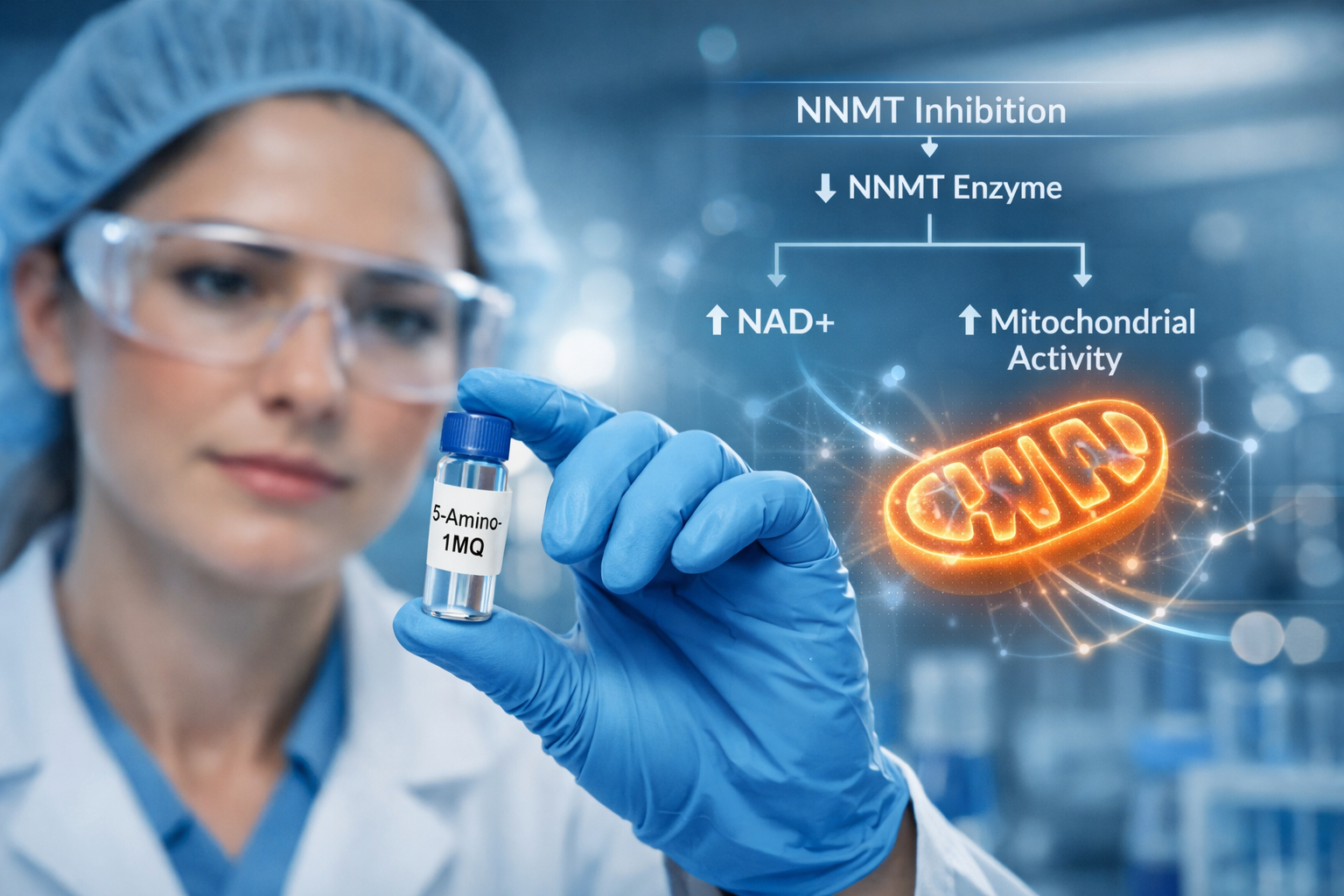
The enzyme nicotinamide N-methyltransferase (NNMT) stands at a crucial crossroads in cellular biochemistry, influencing pathways that dictate how our cells process energy and maintain metabolic balance. NNMT catalyzes a methylation reaction, specifically transferring a methyl group from S-adenosylmethionine (SAM) to nicotinamide (a form of vitamin B3). This process generates 1-methylnicotinamide (1-MNA) and S-adenosylhomocysteine (SAH), directly impacting both cellular methylation capacity and the critical NAD+ metabolism. The balance of these reactions is fundamental to overall cellular health, making NNMT an intriguing target for metabolic research.
NNMT's activity is not uniformly regulated; indeed, research indicates that this enzyme is often upregulated, meaning its activity is increased, in a variety of metabolic disorders. Conditions such as obesity, type 2 diabetes, and even certain types of cancer have shown elevated NNMT levels. This observation has led the scientific community to identify NNMT as a potential therapeutic target for addressing various forms of metabolic dysfunction. By exploring compounds that can modulate NNMT activity, scientists aim to gain a deeper understanding of these conditions and potentially develop novel interventions. For researchers interested in the detailed mechanisms of how specific compounds interact with cellular processes, exploring peptide mapping can provide valuable insights into molecular structures and interactions.
The Intricacies of NAD+ Metabolism
NAD+ (nicotinamide adenine dinucleotide) is a coenzyme essential for life, playing a central role in metabolic pathways. It acts as a crucial electron carrier in glycolysis, the citric acid cycle, and oxidative phosphorylation, processes that are fundamental to energy production within cells. Furthermore, NAD+ is a substrate for sirtuins, a family of proteins that regulate cellular health, aging, and metabolism. When NNMT activity is high, it consumes nicotinamide, potentially diverting it from the salvage pathway that synthesizes NAD+. This diversion can lead to reduced NAD+ levels, which in turn might impair mitochondrial function and cellular energy efficiency.
The critical link between NNMT and NAD+ metabolism makes 5 amino 1 mq a subject of intense scientific curiosity. By inhibiting NNMT, 5 amino 1 mq is hypothesized to free up more nicotinamide for NAD+ synthesis, thereby boosting cellular NAD+ levels. This increase in NAD+ could then lead to a cascade of beneficial metabolic effects, including enhanced sirtuin activity and improved mitochondrial performance. Researchers looking to purchase high-quality research peptides, including those that might interact with NAD+ pathways, often turn to reputable suppliers like Pure Tested Peptides.
NNMT and Epigenetic Regulation
Beyond its direct role in NAD+ metabolism, NNMT inhibition by 5 amino 1 mq may also influence epigenetic regulation. Epigenetics refers to changes in gene expression that do not involve alterations to the underlying DNA sequence. Cellular methylation patterns are a key aspect of epigenetics, where methyl groups are added to DNA or histone proteins, thereby controlling whether genes are turned on or off. Since NNMT utilizes S-adenosylmethionine (SAM), a universal methyl donor, its activity can impact the availability of SAM and the production of S-adenosylhomocysteine (SAH), which in turn affect global methylation status.
By altering these cellular methylation patterns, 5 amino 1 mq could potentially affect gene expression related to metabolism, inflammation, and other physiological processes. This complex interplay between NNMT, methylation, and gene regulation adds another layer of depth to the research surrounding 5 amino 1 mq, suggesting broader implications for its study in metabolic health. Understanding these profound cellular interactions is essential for anyone exploring the potential of compounds like 5 amino 1 mq in a research context. Those interested in detailed research findings and purchasing options for 5 amino 1 mq can find more information here.
[[TABLE_1]]
| Metabolic Parameter | Impact of NNMT Upregulation | Impact of NNMT Inhibition by 5 amino 1 mq (Preclinical) |
|---|---|---|
| Fat Mass | Increased | Reduced |
| Insulin Sensitivity | Decreased | Improved |
| Energy Expenditure | Decreased | Increased |
| NAD+ Levels | Potentially Decreased | Increased |
| Mitochondrial Function | Impaired | Enhanced |
| Sirtuin Activity | Reduced | Activated |
| Thermogenesis | Reduced | Enhanced |
| White Adipose Tissue | Accumulation | Reduced accumulation, potential browning |
Exploring the Research: 5 amino 1 mq and Metabolic Health
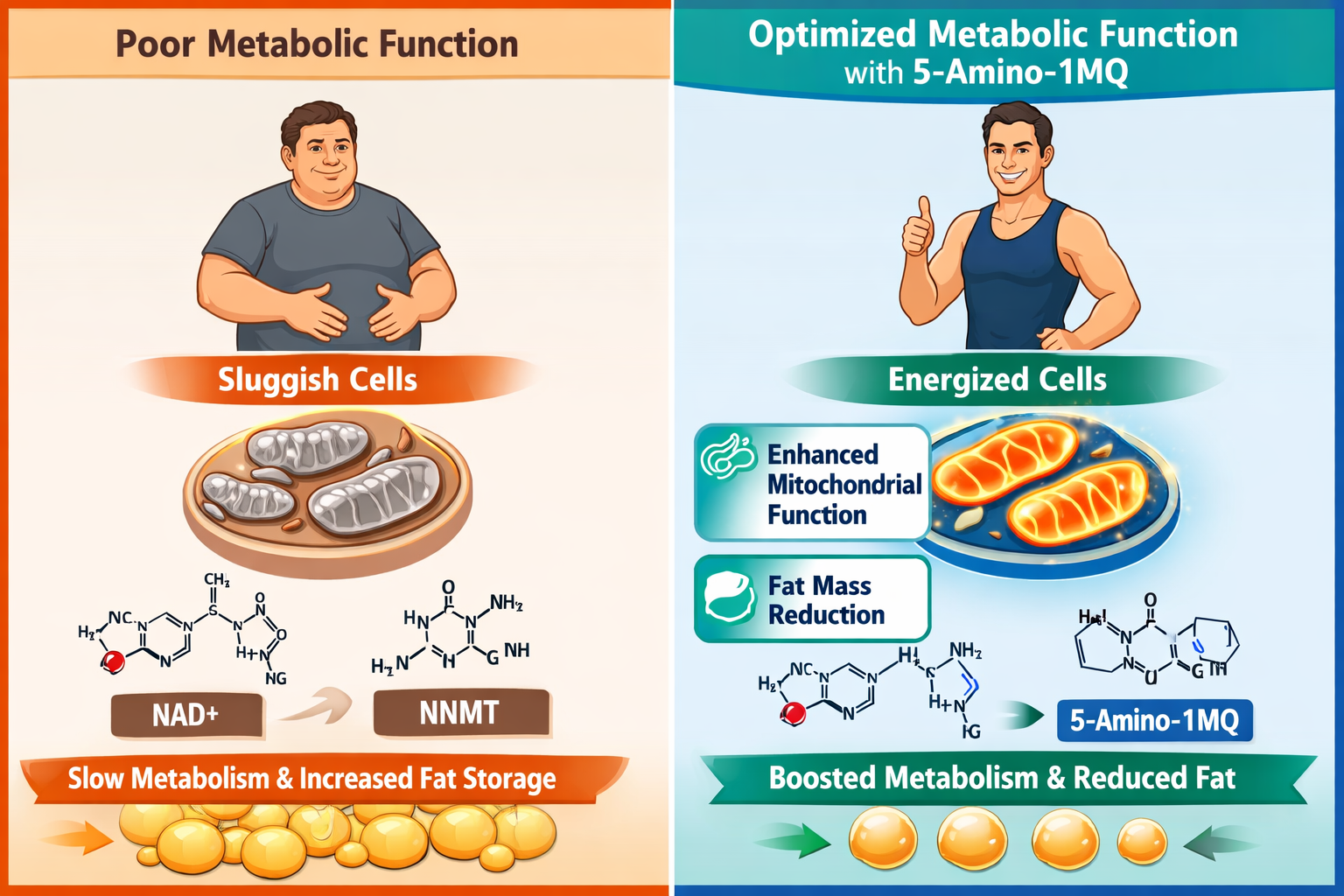
The primary appeal of 5 amino 1 mq in research settings stems from its potential to counteract metabolic imbalances. Preclinical studies, predominantly conducted in mice, have offered compelling insights into its metabolic effects. These studies have consistently demonstrated that treatment with 5 amino 1 mq can lead to a significant reduction in fat mass, enhance insulin sensitivity, and boost overall energy expenditure. Crucially, these observed benefits often occur without a notable impact on food intake, suggesting a direct metabolic alteration rather than appetite suppression. This distinction is vital for understanding its unique mechanism of action and for distinguishing it from other weight management compounds. For researchers interested in the specifics of 5 amino 1 mq as a peptide, further information and purchasing options are available at https://www.puretestedpeptides.com/product/5-amino-1mq-5mg/.
The proposed mechanism behind these effects involves the blocking of NNMT activity. By inhibiting this enzyme, 5 amino 1 mq is believed to increase the availability of NAD+, a critical coenzyme for numerous metabolic processes. Elevated NAD+ levels can lead to enhanced mitochondrial function, the powerhouse of the cell, and the activation of sirtuins. Sirtuins are a class of protein deacetylases known to play pivotal roles in regulating cellular metabolism, DNA repair, and inflammation. Their activation by increased NAD+ is thought to be a key driver of the metabolic improvements observed with 5 amino 1 mq. Researchers exploring advanced peptide formulations might also be interested in topics like peptide blends for research to see how different compounds can synergize.
Reversing Diet-Induced Obesity: A Preclinical Success Story
One of the most exciting avenues of research involving 5 amino 1 mq is its potential to reverse diet-induced obesity in animal models. Studies have shown significant reductions in white adipose tissue accumulation, which is the primary form of fat storage in the body. This reduction is not merely cosmetic; it reflects a fundamental shift in how the body processes and stores energy. The ability of 5 amino 1 mq to promote fat loss without changes in food intake underscores its potential as a research tool for understanding metabolic reprogramming.
Furthermore, research suggests that 5 amino 1 mq may enhance thermogenesis, the process of heat production in the body, and promote the browning of white adipose tissue. Browning is a fascinating phenomenon where white fat cells, which typically store energy, begin to take on characteristics of brown fat cells, which are specialized in burning energy to produce heat. This 'browning' contributes to increased caloric expenditure, making it a highly desirable outcome in the context of metabolic health research. The potential for 5 amino 1 mq to influence fat cell differentiation and energy burning capabilities highlights its complex and multifaceted impact on metabolism.
Beyond Obesity: Other Potential Research Applications
The implications of NNMT inhibition extend beyond simply addressing obesity. 5 amino 1 mq is currently being explored in research settings for its potential applications in a broader spectrum of metabolic conditions, including metabolic syndrome, non-alcoholic fatty liver disease (NAFLD), and age-related metabolic decline. These conditions are characterized by various degrees of metabolic dysfunction, and NNMT's central role in metabolism suggests that its inhibition could offer new avenues for investigation.
For instance, NAFLD, a condition where excessive fat accumulates in the liver, is closely linked to insulin resistance and obesity. By improving insulin sensitivity and promoting fat metabolism, 5 amino 1 mq could be a valuable compound for researchers studying treatments for NAFLD. Similarly, as metabolic function tends to decline with age, understanding how 5 amino 1 mq might counteract these age-related changes could pave the way for novel strategies to support healthy aging. The versatility of this compound positions it as a significant subject in ongoing metabolic research.
5 amino 1 mq Dosing and Administration in Research
In experimental protocols, 5 amino 1 mq is typically administered via subcutaneous injection. The dosing regimens can vary significantly depending on the specific research objectives, animal models used, and desired outcomes. Researchers carefully titrate dosages to observe dose-dependent effects and identify optimal concentrations for specific studies. While preclinical studies provide guidelines, these are not directly transferable to human applications, and further research is necessary to establish safe and effective human dosing.
For those conducting research with 5 amino 1 mq, proper handling and storage are paramount to ensure the integrity and efficacy of the compound. Researchers can find valuable information on best practices for storing research peptides to maintain the highest quality of their research materials. Furthermore, discussions and shared experiences within the scientific community, often found on platforms like "5 amino 1 mq reddit" forums, can sometimes offer anecdotal insights into experimental setup, though scientific rigor must always take precedence. It's important to remember that such discussions are not peer-reviewed scientific data.
Stacking and Synergy: Exploring Combinations
The field of peptide research often explores the concept of "stacking" – combining different compounds to potentially achieve synergistic effects. While research on specific combinations with 5 amino 1 mq is still nascent, the idea of enhancing its metabolic benefits with other well-researched peptides is an interesting area of inquiry. For example, some researchers might investigate how 5 amino 1 mq interacts with compounds known to influence mitochondrial biogenesis or energy expenditure.
One popular area of discussion revolves around the potential for a mots c stack. MOTS-c is a mitochondrial-derived peptide that has also shown promise in regulating metabolic homeostasis and improving insulin sensitivity. Hypothetically, combining MOTS-c with 5 amino 1 mq could offer a multi-pronged approach to metabolic optimization, targeting different pathways simultaneously. Similarly, the question of whether "can you stack mots c with retatrutide" or using a "mots c retatrutide stack" or a general "mots c peptide stack" or even "retatrutide mots c stack" is gaining traction, suggesting a broader interest in comprehensive metabolic research strategies. Researchers interested in sourcing various peptides for such combinatorial studies can explore options from providers like Pure Tested Peptides.
[[PULL_QUOTE]]
“The inhibition of NNMT by 5 amino 1 mq represents a fascinating frontier in metabolic research, offering a unique avenue to explore enhanced energy expenditure and improved insulin sensitivity through NAD+ pathway modulation.”
[[/PULL_QUOTE]]
Safety, Efficacy, and the Road Ahead for 5 amino 1 mq
While preclinical findings on 5 amino 1 mq are indeed compelling, it is crucial to emphasize the current limitations regarding human data. As of 2026, safety and efficacy data in humans remain limited. Most published research has focused on in vitro studies (experiments conducted in test tubes or cell cultures) and animal models, rather than completed clinical trials involving human subjects. This distinction is vital for understanding the current status of 5 amino 1 mq and its potential future trajectory. Researchers seeking high-purity 5 amino 1 mq for their studies can learn more about its properties and acquisition at https://www.puretestedpeptides.com/product/5-amino-1mq-5mg/.
The transition from promising animal research to approved human therapies is a rigorous and lengthy process, governed by strict regulatory bodies like the FDA. Until comprehensive clinical trials are conducted and their results thoroughly evaluated, 5 amino 1 mq is not FDA-approved for any medical indication, including weight management or metabolic disorder treatment. This means that any use outside of a strictly controlled research environment is considered experimental.
Navigating the Current Landscape in 2026
In the current landscape of 2026, some wellness clinics and peptide therapy providers have begun offering 5 amino 1 mq as an experimental treatment, particularly for weight management. It is paramount for individuals to understand that such offerings are not based on FDA-approved protocols. These applications fall into a gray area of experimental or off-label use, and individuals considering them should exercise extreme caution, consult with qualified medical professionals, and be fully aware of the lack of robust human safety and efficacy data.
The scientific community maintains a cautious but optimistic outlook on 5 amino 1 mq. The preclinical evidence strongly supports its potential as a powerful research tool for understanding and potentially addressing metabolic dysfunction. However, the journey from laboratory discovery to widespread clinical application is long, necessitating extensive human trials to confirm safety, optimal dosing, long-term effects, and efficacy across diverse populations. Researchers interested in the broader context of peptide research can explore various peptide options for sale to understand synergistic effects.
Future Directions for 5 amino 1 mq Research
The future of 5 amino 1 mq research is likely to focus on several key areas:
- Elucidating Full Mechanism: While NNMT inhibition is established, further research is needed to fully map out all downstream effects on gene expression, protein interactions, and overall cellular signaling.
- Human Studies: The most critical next step is the initiation and completion of well-designed human clinical trials. These studies will be essential for validating preclinical findings, establishing safety profiles, determining effective 5 amino 1 mq dosage, and assessing long-term outcomes.
- Combinatorial Therapies: Exploring how 5 amino 1 mq might synergize with other metabolic compounds or lifestyle interventions, possibly as part of a mots c stack or other peptide combinations, could lead to more comprehensive approaches.
- Specific Disease Applications: Investigating the specific benefits of 5 amino 1 mq in distinct metabolic disorders, such as Type 2 diabetes, NAFLD, and various forms of metabolic syndrome, will be crucial.
- Biomarker Identification: Researchers will likely seek to identify specific biomarkers that can predict responsiveness to 5 amino 1 mq treatment, allowing for more personalized and effective applications in the future.
The journey of 5 amino 1 mq from a biochemical curiosity to a potential metabolic intervention highlights the rigorous process of scientific discovery. As research continues to unfold, its true potential and limitations will become clearer, contributing valuable knowledge to the ongoing fight against metabolic diseases. Researchers looking to understand the latest in metabolic research often consult resources on applied wellness research with peptides.
[[TABLE_2]]
| Research Focus Area | Current Status (2026) | Future Research Needs |
|---|---|---|
| Fat Mass Reduction | Strong preclinical evidence in animal models | Human clinical trials needed to confirm efficacy and safety |
| Insulin Sensitivity | Preclinical studies show significant improvements | Dose-response studies in humans, long-term effects |
| Energy Expenditure | Increased in animal models; thermogenesis enhanced | Mechanisms in human physiology, impact on various metabolic rates |
| NAD+ Levels | Hypothesized increase due to NNMT inhibition | Direct measurement of NAD+ in human tissues post-treatment |
| Mitochondrial Function | Enhanced in preclinical models | In vivo human studies, impact on specific mitochondrial pathways |
| Epigenetic Regulation | Theoretical impact via methylation changes | Detailed epigenetic profiling in response to 5 amino 1 mq |
| Safety & Efficacy | Limited human data, mostly preclinical | Comprehensive Phase 1, 2, and 3 clinical trials |
| Regulatory Status | Not FDA-approved for any medical use | Requires successful clinical trials and regulatory approval |
Conclusion
The compound 5 amino 1 mq represents a fascinating and potentially impactful area within metabolic research. Its selective inhibition of the NNMT enzyme has demonstrated compelling effects in preclinical studies, including reductions in fat mass, improved insulin sensitivity, and enhanced energy expenditure, primarily by increasing NAD+ availability and bolstering mitochondrial function. The potential of 5 amino 1 mq to influence thermogenesis and promote the browning of white adipose tissue further underscores its significance in the ongoing scientific effort to understand and combat metabolic disorders.
While the promise shown in laboratory settings is substantial, it is imperative to reiterate that 5 amino 1 mq research is predominantly in its preclinical stages as of 2026. Comprehensive human clinical trials are essential to establish its safety, precise mechanisms of action in human physiology, effective dosing, and long-term efficacy. Until such data become available, 5 amino 1 mq remains a compound for dedicated scientific inquiry and is not approved for clinical use. Researchers and individuals interested in this promising molecule should prioritize rigorous, evidence-based understanding and adhere strictly to established research protocols. The journey to fully understand and potentially harness the metabolic benefits of 5 amino 1 mq is ongoing, paving the way for future breakthroughs in metabolic health. For researchers looking to maintain optimal quality in their experiments, understanding baseline trends and data quality is crucial.
SEO Meta Requirements
Meta Title: 5 Amino 1 MQ: Research into Metabolic Regulation & Fat Loss
Meta Description: Explore 5 amino 1 mq research on NNMT inhibition, fat loss, and metabolic health. Learn about dosing and its role in scientific studies in 2026.