
MT1 Peptide: The Complete Guide to Melanotan I for Research and Wellness in 2026
Imagine achieving a sun-kissed tan without spending hours under harmful UV rays—sounds too good to be true, right? Welcome to the fascinating world of mt1 peptide, a synthetic compound that has captured the attention of researchers, wellness enthusiasts, and bodybuilders alike. Originally developed in the 1980s at the University of Arizona with the noble goal of preventing skin cancer, this 13-amino-acid peptide has evolved into one of the most discussed compounds in the peptide research community. Whether you're exploring peptide stores for research purposes or simply curious about how mt1 peptide works, this comprehensive guide will walk you through everything you need to know about this intriguing compound in 2026.
Key Takeaways
- MT1 peptide is a synthetic analog of alpha-melanocyte-stimulating hormone (α-MSH) that stimulates melanin production without UV exposure
- The compound works by selectively binding to MC1R receptors, triggering natural tanning processes within 3-5 days of administration
- MT1 peptide is not FDA-approved for cosmetic use and remains in a regulatory grey area in many countries
- Proper dosing typically ranges from 0.25mg to 1mg per injection, with effects lasting several weeks after discontinuation
- Quality sourcing from reputable peptide research suppliers is critical due to purity concerns in the unregulated market
What Is MT1 Peptide and How Does It Work?
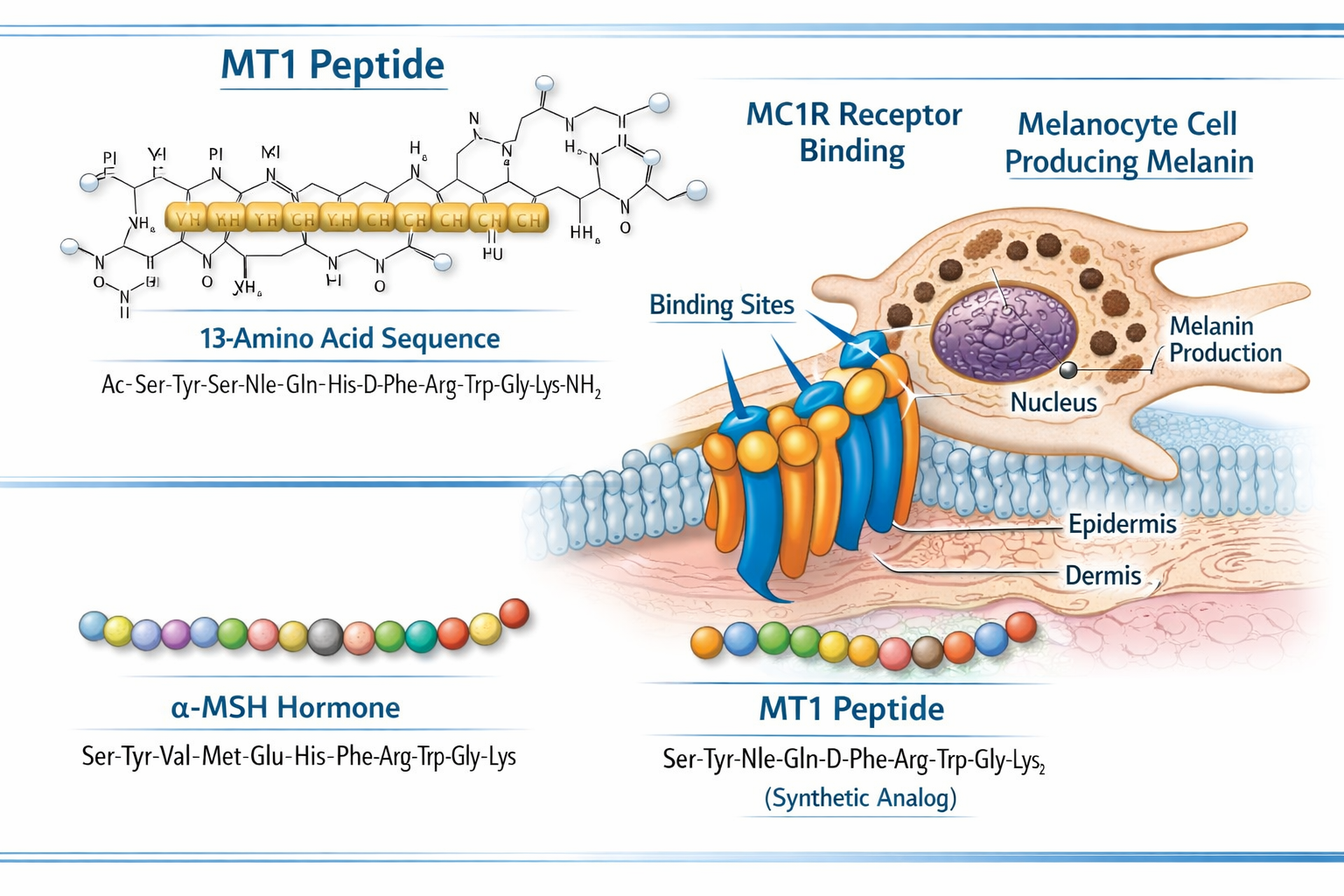
MT1 peptide, also known as Melanotan I or afamelanotide in clinical settings, represents a breakthrough in understanding how our bodies produce melanin—the pigment responsible for skin color. This synthetic peptide mimics the natural alpha-melanocyte-stimulating hormone (α-MSH) that your body already produces, but with enhanced stability and targeted action.
The Science Behind MT1 Peptide
The molecular structure of mt1 peptide consists of 13 carefully arranged amino acids that form a specific sequence designed to interact with melanocortin receptors in your skin. When you're looking to buy peptide online, understanding this mechanism helps you appreciate why quality matters so much.
Here's how the process works:
- Receptor Binding: MT1 selectively targets MC1R (melanocortin-1 receptor) on melanocyte cells
- Signal Activation: The peptide triggers a cascade of cellular signals
- Melanin Production: Melanocytes begin producing eumelanin, the brown-black pigment
- Visible Tanning: Skin darkens progressively over 3-5 days without UV exposure
Key Difference: Unlike natural sun tanning, which requires DNA-damaging UV radiation, mt1 peptide activates the same biological pathways through receptor stimulation alone.
MT1 Peptide vs. Natural Tanning
| Factor | Natural Sun Tanning | MT1 Peptide Tanning |
|---|---|---|
| UV Exposure Required | Yes, extensive | No |
| DNA Damage Risk | High | Minimal |
| Tanning Speed | Days to weeks | 3-5 days |
| Duration | Fades quickly | Lasts several weeks |
| Melanin Type | Mixed (eumelanin + pheomelanin) | Primarily eumelanin |
| Skin Cancer Risk | Increased | Potentially reduced |
The development of mt1 peptide emerged from research into erythropoietic protoporphyria (EPP), a rare genetic condition causing extreme photosensitivity. Scientists discovered that stimulating melanin production could provide natural photoprotection for these patients, leading to broader applications in cosmetic tanning and research.
Understanding MT1 Peptide Benefits and Applications
The versatility of mt1 peptide extends far beyond simple cosmetic tanning. Researchers and wellness professionals have identified multiple potential applications that make this compound particularly interesting for various communities, from bodybuilding peptides for sale enthusiasts to medical researchers.
Primary Benefits of MT1 Peptide
🌟 Photoprotection Without Sun Damage
The most significant advantage of mt1 peptide lies in its ability to create a protective tan without exposing your skin to harmful ultraviolet radiation. This eumelanin-rich tan acts as a natural sunscreen, absorbing and scattering UV rays before they can damage cellular DNA.
💪 Applications in Fitness and Bodybuilding
Many bodybuilders and fitness competitors use mt1 peptide to achieve an even, competition-ready tan. The compound offers several advantages:
- Consistent, predictable coloring without streaks or patches
- No orange tint commonly seen with spray tans
- Long-lasting results that don't wash off or fade unevenly
- Ability to maintain tan year-round regardless of sun exposure
When exploring tb-500 benefits bodybuilding or other peptide applications, many athletes discover mt1 peptide as a complementary tool for aesthetic enhancement.
🔬 Research Applications
Scientific interest in mt1 peptide continues to grow in 2026, with research exploring:
- Photoprotection for photosensitive conditions
- Potential reduction in melanoma risk
- Treatment for vitiligo and other pigmentation disorders
- Understanding melanocortin receptor biology
- Metabolic effects related to MC4R interaction
🎯 Aesthetic and Wellness Uses
Beyond competitive bodybuilding, mt1 peptide appeals to individuals seeking:
- Base tan before vacation to prevent burning
- Year-round healthy appearance
- Confidence boost from improved skin tone
- Alternative to tanning beds and sun exposure
Comparing MT1 to Other Peptides
When you buy melanotan 1 from reputable sources, you're choosing a peptide with specific characteristics that distinguish it from related compounds:
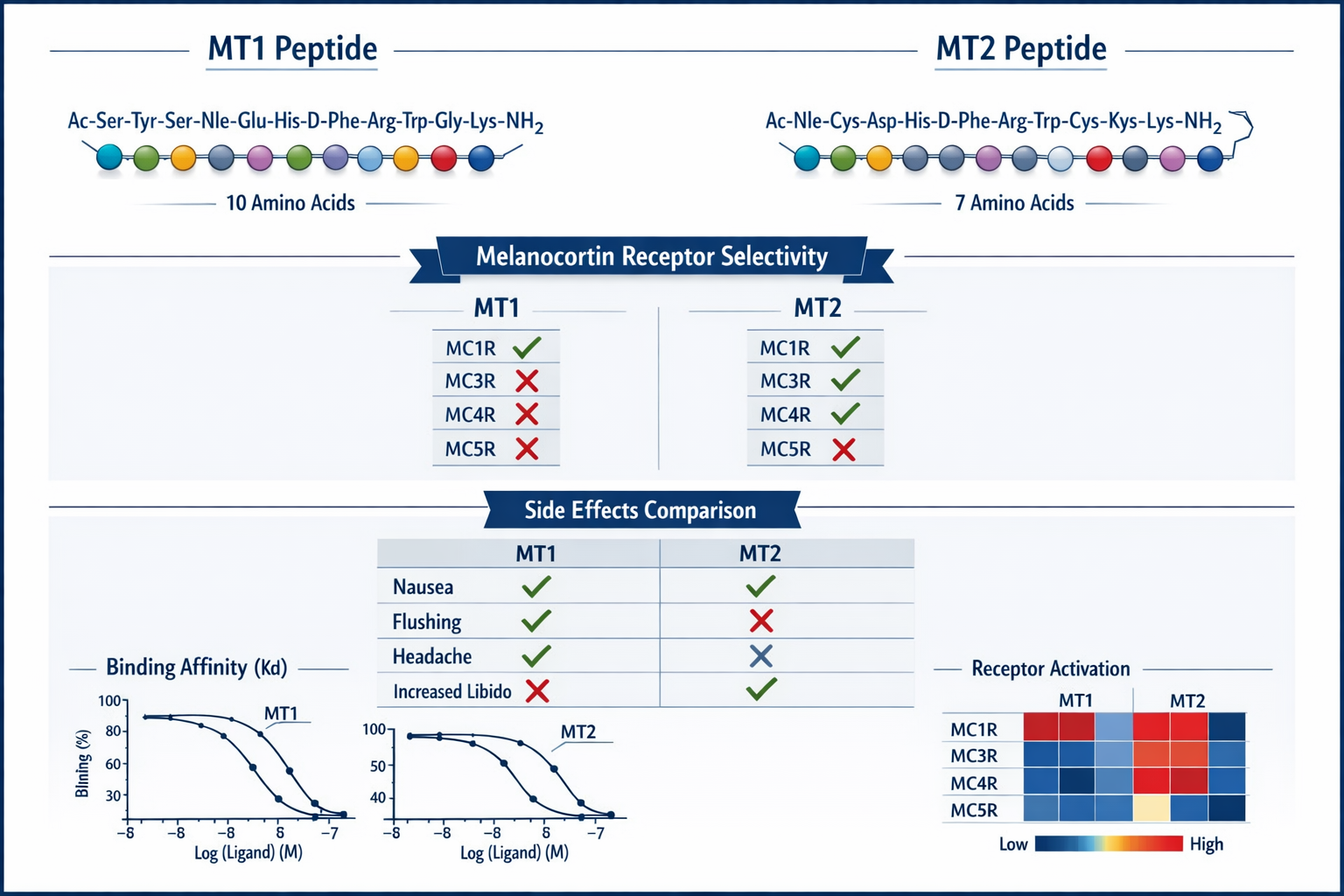
MT1 vs. MT2 (Melanotan II)
- MT1: 13 amino acids, highly selective for MC1R, fewer systemic effects
- MT2: 7 amino acids, broader receptor activity (MC1R, MC3R, MC4R, MC5R), more side effects
MT1 vs. Other Tanning Peptides
While simple peptides like MT1 focus primarily on melanogenesis, other compounds in the peptide family serve different purposes entirely—from metabolic enhancement with aod9604 5mg formulations to growth hormone modulation with modgrf variants.
MT1 Peptide Dosage, Administration, and Protocols
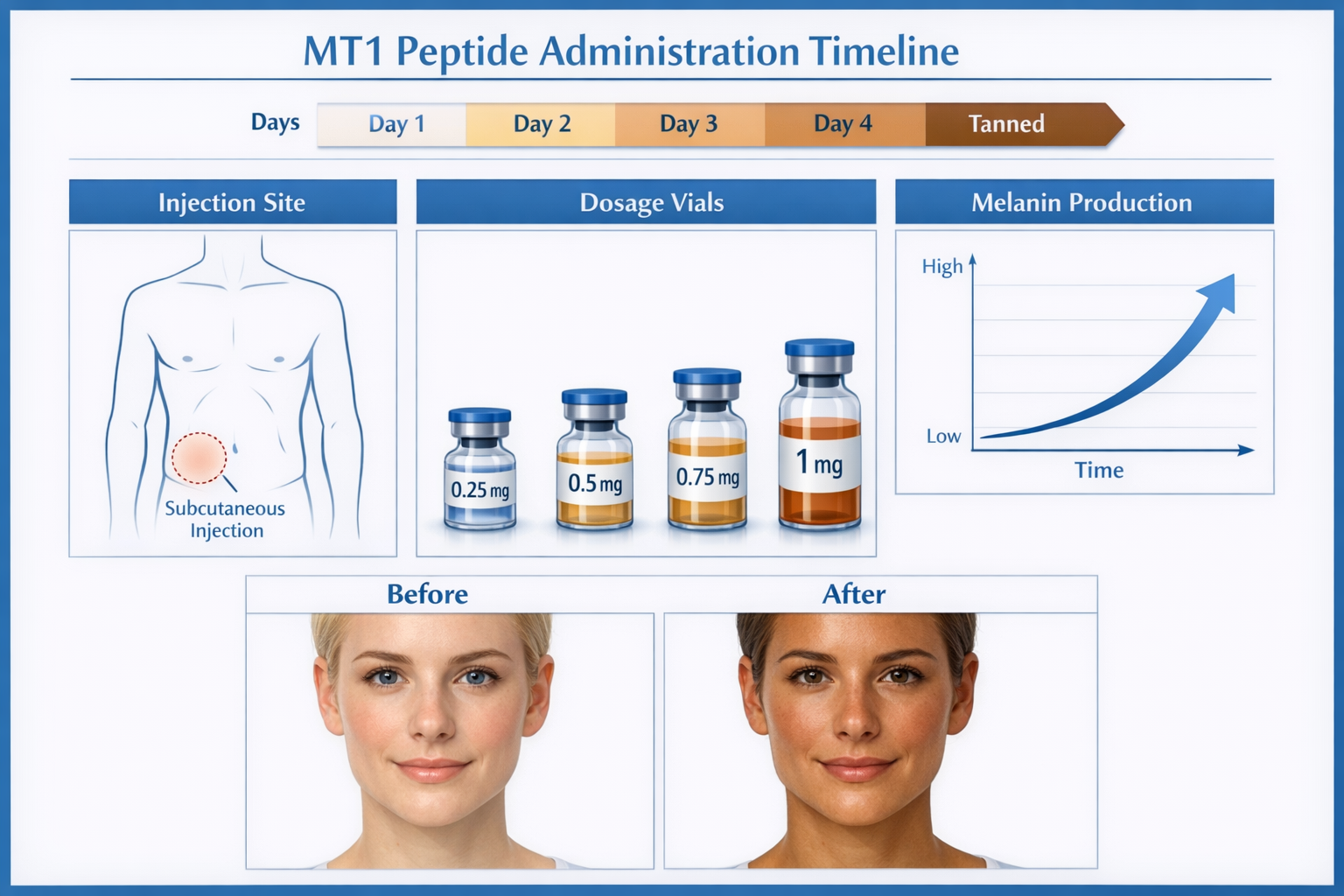
Understanding proper dosing protocols is absolutely critical when working with mt1 peptide. Whether you're conducting research or exploring personal wellness applications, following evidence-based guidelines ensures both safety and effectiveness.
Standard MT1 Peptide Dosing Guidelines
The typical dosing range for mt1 peptide varies based on several factors including body weight, skin type (Fitzpatrick scale), and desired outcome. Here's what current research and anecdotal evidence suggest:
Loading Phase (First 5-10 Days)
- Fair Skin (Type I-II): 0.25mg to 0.5mg per day
- Medium Skin (Type III-IV): 0.5mg to 0.75mg per day
- Darker Skin (Type V-VI): 0.75mg to 1mg per day
Maintenance Phase (After Initial Tanning)
- All Skin Types: 0.25mg to 0.5mg every 2-3 days
- Duration: As needed to maintain desired pigmentation
"The beauty of MT1 peptide lies in its predictability. Unlike sun tanning, which depends on weather, season, and exposure time, MT1 provides consistent results when dosed appropriately." — Research observation from peptide wellness studies
Administration Methods for MT1 Peptide
Subcutaneous Injection remains the gold standard for mt1 peptide administration due to superior bioavailability and predictable absorption.
Step-by-Step Administration:
- Reconstitution: Mix lyophilized powder with bacteriostatic water (typically 2ml per 10mg vial)
- Dosing: Draw appropriate dose using insulin syringe (0.25-1mg)
- Injection Site: Rotate between abdomen, thigh, or upper arm subcutaneous tissue
- Timing: Administer in evening to minimize nausea side effects
- Frequency: Daily during loading, then every 2-3 days for maintenance
Important Storage Considerations:
- Unreconstituted powder: Store at room temperature or refrigerate (2-8°C)
- Reconstituted solution: Always refrigerate at 2-8°C
- Shelf life: Use within 30 days of reconstitution for optimal potency
Optimizing Your MT1 Peptide Protocol
When you peptides buy from quality sources, you want to maximize your investment. Consider these protocol optimization strategies:
🎯 Timing Strategies
- Evening administration reduces daytime nausea
- Consistent daily timing improves results
- Taking with small meal may reduce gastrointestinal discomfort
📊 Monitoring Progress
- Document skin tone changes with photos in consistent lighting
- Track dosing, timing, and any side effects
- Adjust dose based on individual response
⚡ Combination Approaches
Some researchers explore mt1 peptide alongside other compounds. For instance, those interested in metabolic support might investigate buy aod 9604 online options, though these serve entirely different purposes and should never be mixed in the same injection.
Factors Affecting MT1 Peptide Response
Individual response to mt1 peptide varies significantly based on:
- Genetics: MC1R gene variants affect melanin production capacity
- Baseline Skin Type: Fair skin shows more dramatic changes
- Age: Younger individuals typically respond faster
- Hormonal Status: Thyroid and sex hormones influence melanogenesis
- Previous Sun Exposure: Existing melanocytes respond more readily
Understanding these variables helps set realistic expectations when starting an mt1 peptide protocol.
MT1 Peptide Side Effects, Safety, and Precautions
While mt1 peptide is generally considered to have a favorable safety profile compared to its derivatives, understanding potential side effects and taking appropriate precautions remains essential for anyone considering its use.
Common MT1 Peptide Side Effects
Research and user reports have identified several side effects associated with mt1 peptide use. Most are mild and transient, resolving within hours of administration:
Frequent Side Effects (>10% of users):
- 🤢 Nausea: Most common, typically occurs 30-60 minutes post-injection
- 🔥 Facial Flushing: Temporary redness lasting 15-30 minutes
- 😴 Fatigue: Mild tiredness, especially during loading phase
- 🍽️ Decreased Appetite: Temporary reduction in hunger
Occasional Side Effects (1-10% of users):
- Mild headaches
- Increased skin freckling or darkening of existing moles
- Slight increase in libido (less pronounced than MT2)
- Injection site reactions (redness, minor swelling)
Rare Side Effects (<1% of users):
- Significant changes in existing mole appearance
- Prolonged nausea requiring anti-nausea medication
- Allergic reactions to the peptide
Managing MT1 Peptide Side Effects
Practical Strategies:
For Nausea:
- Administer dose in evening before bed
- Take with small, bland snack
- Reduce dose by 25-50% if severe
- Consider ginger supplements or anti-nausea aids
For Flushing:
- Expect this response—it's temporary and harmless
- Stay hydrated
- Avoid hot showers immediately after injection
For Appetite Changes:
- Plan nutrient-dense meals if cutting calories
- Monitor for excessive weight loss
- Adjust dose if appetite suppression is problematic
Safety Considerations and Contraindications
When exploring where to buy glp 1 peptide or mt1 peptide options, safety should always be the top priority.
Absolute Contraindications:
- ❌ Pregnancy or breastfeeding
- ❌ History of melanoma or suspicious moles
- ❌ Known allergy to MT1 or related compounds
- ❌ Active skin cancer
Relative Contraindications (Use with Caution):
- ⚠️ Family history of melanoma
- ⚠️ Numerous atypical moles
- ⚠️ Cardiovascular conditions
- ⚠️ Liver or kidney disease
- ⚠️ Autoimmune conditions affecting skin
Monitoring and Medical Supervision
Recommended Monitoring:
- Dermatological Checks: Full-body mole mapping before starting MT1
- Regular Self-Examination: Monthly skin checks for changes
- Professional Follow-Up: Annual dermatology appointments minimum
- Documentation: Photo tracking of skin changes
When to Seek Medical Attention:
- Rapid changes in existing moles (size, color, shape)
- New, unusual skin lesions
- Severe or persistent side effects
- Signs of allergic reaction (difficulty breathing, severe swelling)
Quality and Purity Concerns
One of the most significant safety considerations when you peptide sale shop involves product quality. The unregulated nature of the mt1 peptide market creates serious risks:
Common Quality Issues:
- Incorrect peptide concentration (under or over-dosed)
- Contamination with bacterial endotoxins
- Presence of wrong peptide entirely
- Degraded product from improper storage
Protecting Yourself:
✅ Source from reputable suppliers with third-party testing
✅ Request Certificates of Analysis (COA)
✅ Verify proper packaging and storage
✅ Check for clear labeling and batch numbers
✅ Start with conservative doses to assess product strength
When seeking peptides doctor near me or researching buypeptides sources, prioritize vendors who demonstrate commitment to quality control and transparency.
Legal Status, Regulations, and Where to Source MT1 Peptide
The regulatory landscape surrounding mt1 peptide remains complex and varies significantly by jurisdiction. Understanding the legal framework in your location is crucial before considering any purchase or use.
Global Regulatory Status of MT1 Peptide
United States 🇺🇸
- FDA Status: Not approved for cosmetic tanning purposes
- Legal Classification: Considered an unapproved drug when marketed for human use
- Research Use: Legal for laboratory research purposes only
- Enforcement: FDA has issued warning letters to companies marketing melanotan products
European Union 🇪🇺
- EMA Status: Afamelanotide (pharmaceutical-grade MT1) approved only for EPP treatment under brand name Scenesse®
- Cosmetic Use: Prohibited for tanning purposes
- Member State Variations: Some countries have stricter enforcement than others
United Kingdom 🇬🇧
- MHRA Classification: Unlicensed medicine
- Legal Status: Illegal to sell for human use
- Possession: Not illegal to possess for personal use
- Import: Grey area with potential customs seizure
Australia 🇦🇺
- TGA Status: Prohibited import without prescription
- Enforcement: Active border control and domestic enforcement
- Penalties: Significant fines for illegal importation or sale
Canada 🇨🇦
- Health Canada: Not approved for therapeutic or cosmetic use
- Status: Considered an unauthorized health product
- Research: Permitted for legitimate scientific research
The Research Chemical Designation
Most mt1 peptide available online is sold under "research chemical" or "not for human consumption" labels. This designation creates a legal grey area:
What This Means:
- Products marketed strictly for laboratory research
- No claims made about human use or benefits
- Buyer assumes responsibility for compliance with local laws
- Quality standards may vary significantly
Important Consideration: Just because something is available for purchase doesn't make it legal or safe for personal use in your jurisdiction.
Where to Source MT1 Peptide Safely
If you're conducting legitimate research or operating in a jurisdiction where mt1 peptide is legal, sourcing quality product is paramount.
Reputable Source Characteristics:
🔬 Third-Party Testing
- Provides Certificates of Analysis (COA) for each batch
- Tests for purity, concentration, and contamination
- Uses accredited laboratories (HPLC, mass spectrometry)
📦 Proper Handling and Storage
- Ships with appropriate cooling if needed
- Uses sterile, pharmaceutical-grade packaging
- Provides clear storage instructions
📋 Transparency
- Clear labeling with batch numbers
- Detailed product information
- Responsive customer service
- Educational resources
💳 Professional Operations
- Secure payment processing
- Clear terms and conditions
- Privacy protection
- Proper business registration
When you buy peptide online from established vendors specializing in research compounds, you're more likely to receive authentic, properly stored product.
Red Flags to Avoid
Warning Signs of Unreliable Sources:
- ❌ Makes medical claims or guarantees results
- ❌ No testing documentation available
- ❌ Suspiciously low prices compared to market average
- ❌ Poor website security or unprofessional presentation
- ❌ No clear contact information or customer support
- ❌ Ships from unknown or suspicious locations
- ❌ Requires cryptocurrency only (may indicate illicit operation)
Cost Considerations for MT1 Peptide
Understanding typical pricing helps identify both overpriced products and suspiciously cheap offerings that may indicate quality issues:
Typical Market Pricing (2026):
- 10mg vial: $40-$80 from reputable sources
- Cost per dose: $2-$8 depending on dosage (0.25-1mg)
- Monthly maintenance: $20-$60 approximately
Factors Affecting Price:
- Purity level (95% vs. 98%+ purity)
- Batch size and testing costs
- Source country and shipping
- Vendor reputation and overhead
Budget Tip: Buying larger quantities typically reduces per-dose cost, but only purchase what you can use within the product's shelf life.
The Importance of Legal Compliance
Before seeking bodybuilding peptides for sale or mt1 peptide specifically, thoroughly research your local regulations. Consider:
- Consulting with a legal professional familiar with pharmaceutical regulations
- Understanding import laws if ordering internationally
- Recognizing that laws can change—what's permissible today may not be tomorrow
- Acknowledging that "research purposes" claims don't automatically provide legal protection
Remember: This guide provides information for educational purposes. Readers are responsible for understanding and complying with all applicable laws in their jurisdiction.
MT1 Peptide Research, Studies, and Future Directions
The scientific foundation supporting mt1 peptide continues to expand in 2026, with research exploring applications far beyond cosmetic tanning. Understanding the evidence base helps contextualize both the potential and limitations of this compound.
Historical Development and Clinical Research
Origins at University of Arizona (1980s)
The story of mt1 peptide begins with groundbreaking research into melanocortin biology. Scientists discovered that synthetic analogs of α-MSH could stimulate melanogenesis more effectively than the natural hormone, leading to the development of the 13-amino-acid sequence we know today.
Key Research Milestones:
📅 1980s: Initial synthesis and characterization of MT1 structure
📅 1990s: Early clinical trials for photoprotection in EPP patients
📅 2000s: Expansion of research into cosmetic applications
📅 2010s: FDA approval of pharmaceutical-grade afamelanotide (Scenesse®) for EPP
📅 2020s: Ongoing research into metabolic effects and receptor biology
Clinical Evidence for MT1 Peptide
Photoprotection Studies
The most robust clinical evidence for mt1 peptide comes from research on erythropoietic protoporphyria (EPP):
Key Findings:
- ✅ Significantly increased pain-free sun exposure time in EPP patients
- ✅ Reduced photosensitivity reactions by 50-75% in clinical trials
- ✅ Improved quality of life scores for photosensitive individuals
- ✅ Maintained efficacy over multiple treatment cycles
Tanning Efficacy Research
Multiple studies have examined mt1 peptide for cosmetic tanning:
| Study Parameter | Findings |
|---|---|
| Onset of Tanning | Visible darkening within 3-5 days |
| Maximum Effect | Achieved at 2-3 weeks |
| Duration | Persists 4-8 weeks post-treatment |
| Skin Type Response | Greatest effect in fair-skinned individuals (Type I-III) |
| UV Protection Factor | Estimated SPF increase of 2-4 |
Important Note: While mt1 peptide provides some UV protection through increased melanin, it does NOT replace sunscreen or eliminate skin cancer risk from UV exposure.
Comparing Research on Different Peptides
The peptide research landscape in 2026 is vast. While mt1 peptide focuses on melanogenesis, other compounds target different biological pathways:
Metabolic Peptides: Research on compounds like aod9604 5mg explores fat metabolism and body composition
Growth Factors: Peptides such as modgrf variants investigate growth hormone modulation
Recovery Peptides: Studies on tb-500 benefits bodybuilding examine tissue repair and recovery
This diversity demonstrates why sourcing from knowledgeable peptide stores that understand different compound applications is so valuable.
Melanocortin Receptor Biology
Understanding how mt1 peptide works requires appreciating the melanocortin receptor system:
The Five Melanocortin Receptors:
- MC1R: Primary target of MT1; controls pigmentation
- MC2R: Regulates cortisol production (not affected by MT1)
- MC3R: Involved in energy homeostasis (minimal MT1 activity)
- MC4R: Controls appetite and metabolism (minimal MT1 activity)
- MC5R: Regulates sebaceous gland function (minimal MT1 activity)
MT1's Selectivity: The 13-amino-acid structure of mt1 peptide provides high selectivity for MC1R, which explains its focused effects on pigmentation with fewer systemic side effects compared to shorter, less selective analogs.
Current Research Directions (2026)
Emerging Areas of Investigation:
🔬 Melanoma Prevention
- Hypothesis: Increased eumelanin may reduce UV-induced DNA damage
- Status: Preclinical and early clinical research ongoing
- Challenge: Long-term safety data needed
🔬 Vitiligo Treatment
- Potential to restore pigmentation in depigmented patches
- Combination approaches with phototherapy
- Limited but promising preliminary data
🔬 Metabolic Effects
- Exploring minimal MC4R activation effects
- Potential appetite modulation at higher doses
- Intersection with obesity research
🔬 Neuroprotection
- α-MSH analogs showing potential brain-protective effects
- Anti-inflammatory properties in neural tissue
- Very early-stage research
Limitations of Current Research
Critical Gaps in MT1 Peptide Evidence:
⚠️ Long-Term Safety: Most studies span months, not years or decades
⚠️ Cancer Risk: Theoretical concerns about stimulating melanocytes require more data
⚠️ Optimal Dosing: Individual variability not fully characterized
⚠️ Quality Control: Most research uses pharmaceutical-grade product, unlike widely available research chemicals
The Future of MT1 Peptide Research
Looking ahead, several trends are shaping mt1 peptide research:
Personalized Protocols: Genetic testing (MC1R variants) may enable customized dosing
Combination Therapies: Exploring synergies with other photoprotective compounds
Novel Delivery Methods: Investigating transdermal, oral, and nasal administration
Expanded Applications: Researching uses beyond tanning and photoprotection
As the peptide research field matures, those interested in simple peptides like MT1 will benefit from increasingly sophisticated understanding of optimal use, safety profiles, and potential applications.
Research Perspective: While mt1 peptide has demonstrated efficacy for specific applications, particularly EPP photoprotection, much of its use remains in research and experimental contexts. Anyone considering working with this compound should maintain realistic expectations based on current evidence rather than anecdotal claims.
Practical Considerations: Storage, Handling, and Best Practices
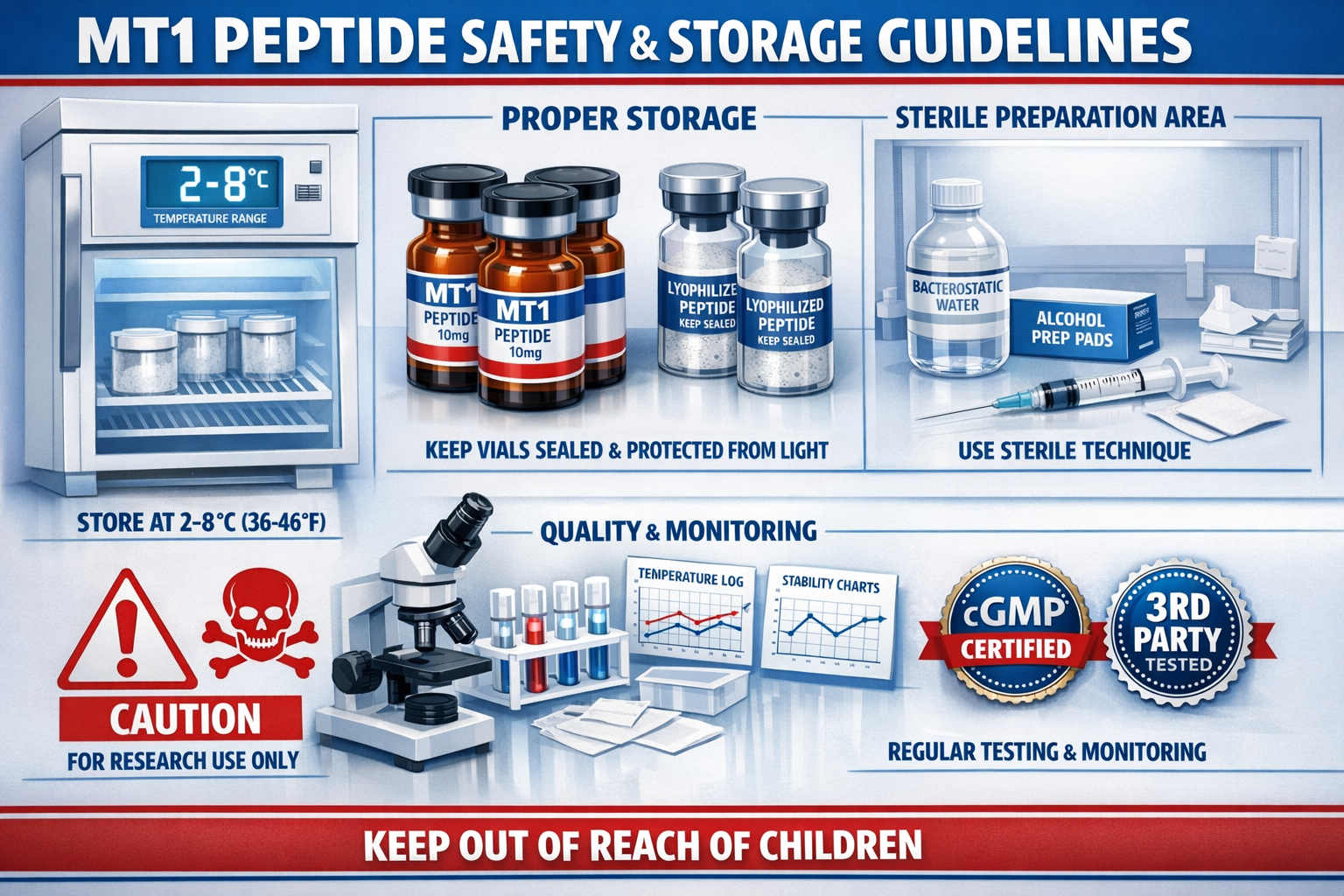
Successfully working with mt1 peptide requires attention to proper handling, storage, and preparation techniques. These practical considerations can mean the difference between effective results and degraded, ineffective product.
Proper Storage of MT1 Peptide
Lyophilized (Powder) Form:
The freeze-dried powder form of mt1 peptide offers the greatest stability and longest shelf life when stored correctly:
Optimal Storage Conditions:
- 🌡️ Temperature: 2-8°C (refrigerated) for long-term storage
- 🌡️ Short-Term: Room temperature (20-25°C) acceptable for up to 3 months
- 🌡️ Long-Term: Freezer storage (-20°C) can extend shelf life to 2+ years
- 💧 Humidity: Keep in sealed, desiccated environment
- ☀️ Light: Protect from direct sunlight and UV exposure
Reconstituted (Liquid) Form:
Once you mix mt1 peptide powder with bacteriostatic water, stability decreases significantly:
Critical Storage Requirements:
- ❄️ Always refrigerate at 2-8°C (never freeze reconstituted solution)
- ⏰ Use within 30 days for optimal potency
- 🧪 Sterile handling to prevent bacterial contamination
- 🔒 Sealed container to minimize air exposure and oxidation
Storage Tips:
- Mark reconstitution date on vial with permanent marker
- Store in back of refrigerator where temperature is most stable
- Avoid repeated temperature fluctuations
- Keep away from freezer compartment to prevent accidental freezing
Reconstitution Best Practices
Proper preparation of mt1 peptide ensures accurate dosing and maintains product integrity:
Step-by-Step Reconstitution Guide:
-
Gather Supplies
- MT1 peptide vial (typically 10mg)
- Bacteriostatic water (2ml recommended)
- Alcohol swabs
- Sterile syringes (3ml for reconstitution, insulin syringes for dosing)
-
Prepare Work Area
- Clean, flat surface
- Good lighting
- Wash hands thoroughly
- Wipe vial tops with alcohol swabs
-
Add Bacteriostatic Water
- Draw 2ml bacteriostatic water into syringe
- Inject slowly down the side of the vial (NOT directly onto powder)
- Allow liquid to gently dissolve powder
- Do NOT shake—swirl gently if needed
-
Calculate Concentration
- 10mg MT1 + 2ml water = 5mg/ml concentration
- Each 0.1ml contains 0.5mg MT1
- Use insulin syringe markings for accurate dosing
Concentration Chart:
| Vial Size | Water Added | Final Concentration | 0.25mg Dose | 0.5mg Dose | 1mg Dose |
|---|---|---|---|---|---|
| 10mg | 2ml | 5mg/ml | 0.05ml (5 units) | 0.1ml (10 units) | 0.2ml (20 units) |
| 10mg | 1ml | 10mg/ml | 0.025ml (2.5 units) | 0.05ml (5 units) | 0.1ml (10 units) |
Injection Technique and Site Rotation
When you buypeptides for research, proper administration technique matters:
Subcutaneous Injection Protocol:
Preparation:
- Clean injection site with alcohol swab
- Allow to air dry completely (reduces stinging)
- Draw appropriate dose into insulin syringe
- Remove air bubbles by tapping syringe
Injection:
- Pinch skin to create fold
- Insert needle at 45-90 degree angle
- Inject slowly and steadily
- Remove needle and apply gentle pressure (don't rub)
Recommended Injection Sites:
- Lower abdomen (2 inches from navel)
- Upper thigh (outer quadrant)
- Upper arm (if someone else administering)
Site Rotation Schedule:
- Never inject same spot twice in a row
- Rotate between 4-6 different sites
- Allow each site to rest at least 3-4 days
- Track rotation to prevent overuse
Troubleshooting Common Issues
Problem: Peptide Won't Dissolve
- ✅ Solution: Allow more time; gently swirl (never shake)
- ✅ Ensure water is at room temperature before reconstitution
- ✅ Check if peptide has degraded (unusual color or smell)
Problem: Cloudy Solution
- ⚠️ May indicate contamination or degradation
- ⚠️ Do not use if solution appears cloudy or has particles
- ⚠️ Contact supplier if this occurs with fresh product
Problem: Injection Site Reactions
- ✅ Ensure proper site rotation
- ✅ Inject more slowly
- ✅ Allow alcohol to dry completely before injection
- ✅ Consider if allergic reaction to peptide or bacteriostatic water
Problem: Inconsistent Results
- ✅ Verify product quality from peptide stores
- ✅ Check storage conditions
- ✅ Confirm accurate dosing calculations
- ✅ Consider individual response variability
Quality Assessment and Testing
When you peptides buy, assessing quality helps ensure you're getting what you paid for:
Visual Inspection:
- Lyophilized powder should be white to off-white
- Cake should be intact, not shattered or melted
- No discoloration or unusual odors
- Proper pharmaceutical packaging
Documentation Check:
- Certificate of Analysis (COA) available
- Batch number matches vial label
- Purity listed (should be ≥95%, ideally ≥98%)
- Testing date within reasonable timeframe
Functional Assessment:
- Expected effects occur within typical timeframe
- Side effect profile matches known patterns
- Consistent results across multiple doses
Travel and Transport Considerations
If you need to transport mt1 peptide:
Short Trips (Under 4 Hours):
- Insulated container acceptable
- Avoid extreme temperatures
- Reconstituted solution more temperature-sensitive
Long Trips or Shipping:
- Use cold packs or ice packs
- Insulated shipping containers
- Overnight shipping preferred
- Consider legal implications of crossing borders
TSA and Air Travel:
- Medications and research compounds may require documentation
- Keep in original packaging when possible
- Understand destination country's regulations
- Consider shipping ahead rather than carrying
Best Practices Summary
✅ DO:
- Store properly at all times
- Use sterile technique
- Calculate doses carefully
- Rotate injection sites
- Document everything
- Source from reputable peptide sale vendors
❌ DON'T:
- Shake reconstituted peptide
- Freeze liquid solution
- Reuse needles or syringes
- Share peptides with others
- Store in bathroom (humidity and temperature fluctuations)
- Use if appearance seems off
Following these practical guidelines maximizes the effectiveness and safety of working with mt1 peptide, whether for research purposes or other applications within legal frameworks.
Conclusion: Making Informed Decisions About MT1 Peptide in 2026
As we've explored throughout this comprehensive guide, mt1 peptide represents a fascinating intersection of peptide science, melanocortin biology, and practical applications ranging from photoprotection to aesthetic enhancement. Whether you're a researcher, fitness enthusiast, or wellness professional, understanding this compound's mechanisms, benefits, risks, and practical considerations is essential for informed decision-making.
Key Points to Remember
MT1 peptide offers unique advantages through its selective MC1R receptor activation, providing melanogenesis without UV exposure. Its 13-amino-acid structure delivers more targeted effects with potentially fewer systemic side effects compared to shorter analogs. However, this compound exists in a complex regulatory landscape, with approval limited to specific medical conditions (EPP) in pharmaceutical-grade formulations while remaining unapproved for cosmetic tanning purposes in most jurisdictions.
The research supporting mt1 peptide continues to evolve in 2026, with robust evidence for photoprotection in photosensitive conditions and promising but less definitive data for other applications. Long-term safety data remains limited, particularly for cosmetic use at varying doses and durations.
Actionable Next Steps
If you're considering working with mt1 peptide, follow these recommended steps:
1. Research Your Legal Status
- Thoroughly investigate regulations in your jurisdiction
- Understand the distinction between research chemicals and approved medications
- Consult legal or medical professionals if uncertain
2. Assess Your Suitability
- Consider your skin type and baseline risk factors
- Complete dermatological screening, especially for moles and family history
- Evaluate whether potential benefits outweigh risks for your situation
3. Source Quality Product
- Identify reputable suppliers with third-party testing
- Verify Certificates of Analysis (COA)
- Compare options among trusted peptide stores
- Avoid suspiciously cheap products that may indicate quality issues
4. Develop a Protocol
- Start with conservative doses (0.25mg) to assess tolerance
- Plan loading and maintenance phases
- Establish monitoring procedures for skin changes
- Document your protocol and responses
5. Prioritize Safety
- Use proper storage and handling techniques
- Maintain sterile injection practices
- Monitor for side effects and unusual changes
- Schedule regular dermatological check-ups
6. Stay Informed
- Keep current with emerging research
- Join communities discussing peptide research responsibly
- Update your knowledge as regulations and evidence evolve
The Broader Peptide Landscape
MT1 peptide represents just one compound in the expanding world of peptide research. As you explore this field, you may encounter various other peptides serving different purposes—from metabolic enhancement with compounds like aod9604 5mg to growth factor modulation with modgrf variants.
For those seeking comprehensive information and quality products, exploring most popular products for sale from established vendors provides a starting point for legitimate research applications.
Final Thoughts
The decision to work with mt1 peptide should never be taken lightly. This compound offers genuine potential benefits backed by scientific research, particularly for photoprotection in specific medical conditions. However, its use for cosmetic tanning exists in regulatory grey areas with inherent quality control challenges and limited long-term safety data.
Approach mt1 peptide with the same careful consideration you would any research chemical or unapproved compound. Prioritize education, quality sourcing, proper handling, and ongoing monitoring. Whether you're exploring where to buy glp 1 peptide options, researching buy melanotan 1 sources, or investigating other peptide applications, maintaining high standards for safety and legality protects both your health and legal standing.
The peptide research field continues advancing rapidly in 2026, offering exciting possibilities for those who approach it responsibly, ethically, and with thorough understanding. By following the guidance in this comprehensive guide, you're equipped to make informed decisions about mt1 peptide that align with your goals, risk tolerance, and legal obligations.
Remember: Knowledge is your most powerful tool. Continue learning, stay skeptical of exaggerated claims, verify information through multiple reputable sources, and never compromise on quality or safety when it comes to compounds you're considering for research or personal use.
For those ready to explore high-quality peptides for legitimate research purposes, visiting trusted suppliers like Pure Tested Peptides provides access to properly tested, documented products with the transparency and quality control that serious researchers demand.
The journey into peptide research is fascinating and potentially rewarding—approach it with wisdom, caution, and commitment to doing things the right way. 🔬✨
SEO Meta Information
Meta Title: MT1 Peptide Guide 2026: Benefits, Dosage & Safety Tips
Meta Description: Complete MT1 peptide guide covering benefits, proper dosage, side effects, and where to buy quality Melanotan I for research. Expert insights for 2026.