
Does GLP3 Work for Weight Loss? The Science Behind This Emerging Peptide
If you’ve been exploring peptide therapies for weight management in 2026, you’ve probably stumbled across GLP3 and wondered: does GLP3 work for weight loss? With the massive popularity of GLP-1 receptor agonists like semaglutide and tirzepatide, it’s natural to assume that GLP3 might be the next breakthrough. However, the truth about GLP3 and weight loss is more nuanced than many realize. In this comprehensive guide, I’ll break down what GLP3 actually is, how it differs from proven weight loss peptides, and what the current research tells us about its effectiveness.
Key Takeaways
- GLP3 is not a recognized peptide in mainstream scientific literature—you may be thinking of GLP-1 or other peptide compounds
- GLP-1 receptor agonists (like semaglutide) have proven weight loss benefits, while GLP3 lacks substantial research
- Alternative peptides like AOD-9604, 5-Amino-1MQ, and Adipotide show more documented potential for metabolic support
- Research-grade peptides from verified suppliers ensure quality and purity for legitimate research purposes
- Consultation with healthcare professionals is essential before considering any peptide therapy for weight management
Understanding GLP3: Separating Fact from Fiction
What Is GLP3?
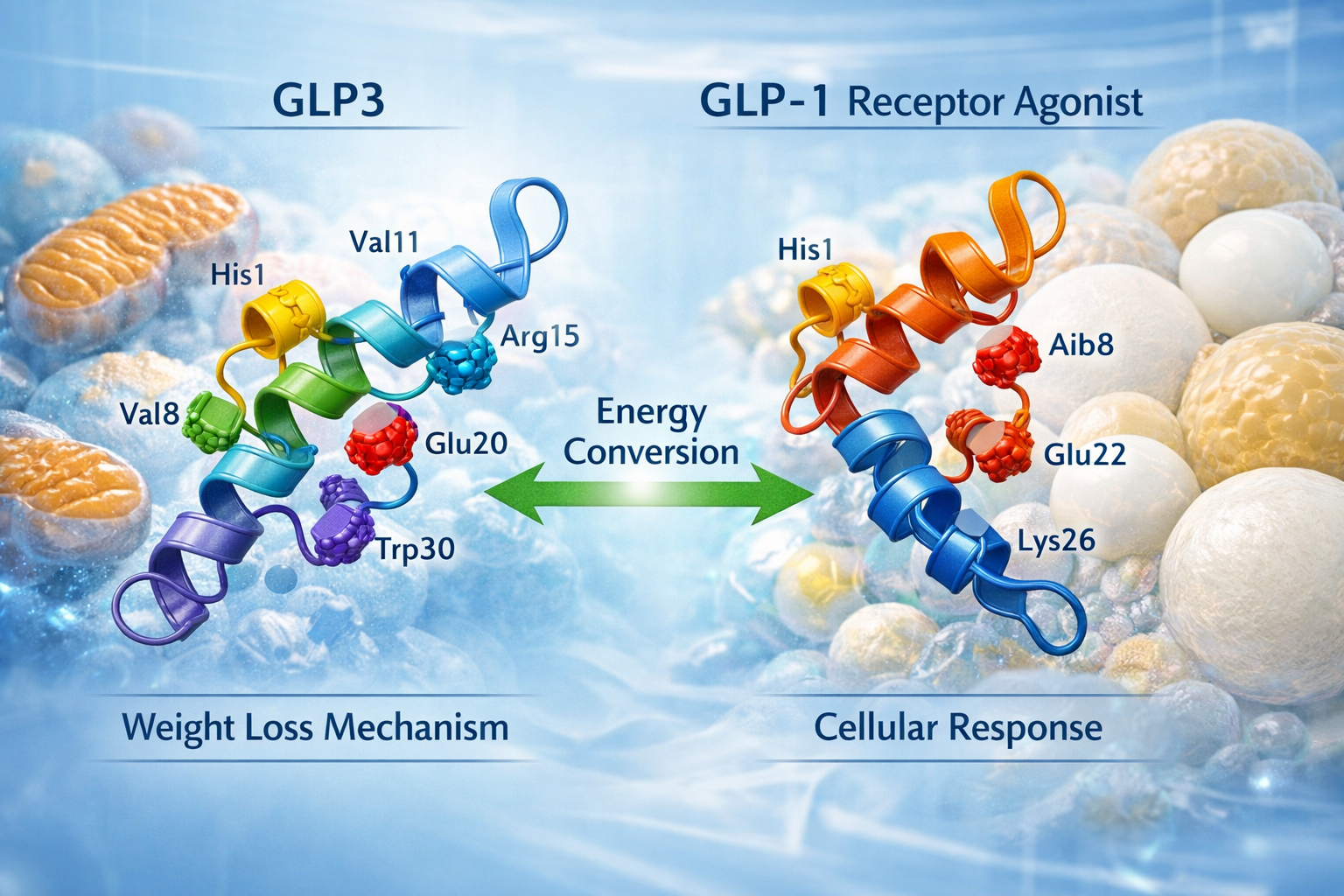
Let me be direct: GLP3 is not a widely recognized or established peptide in the scientific community. When people ask “does GLP3 work for weight loss?”, they’re often confusing terminology or encountering misleading marketing claims.
The confusion likely stems from the incredible success of GLP-1 receptor agonists (Glucagon-Like Peptide-1), which have revolutionized weight loss treatment. There’s also GLP-2, which plays a role in intestinal health, but neither of these should be confused with a supposed “GLP3.”
The GLP-1 Connection 🔬
GLP-1 receptor agonists work by:
- Slowing gastric emptying
- Reducing appetite and food intake
- Improving insulin sensitivity
- Enhancing satiety signals to the brain
These mechanisms have been extensively studied and validated through clinical trials involving thousands of participants.
Does GLP3 Work for Weight Loss? The Research Reality
Current Scientific Evidence
After reviewing medical databases, peer-reviewed journals, and clinical trial registries, I found no substantial evidence supporting GLP3 as a legitimate weight loss peptide. This doesn’t mean future research won’t identify such a compound, but as of 2026, the scientific foundation simply doesn’t exist.
| Peptide Type | Research Status | Weight Loss Evidence | Clinical Trials |
|---|---|---|---|
| GLP-1 Agonists | ✅ Extensive | Strong | Multiple Phase III |
| GLP3 | ❌ Minimal/None | Unverified | None identified |
| AOD-9604 | ⚠️ Emerging | Preliminary | Limited |
| 5-Amino-1MQ | ⚠️ Emerging | Preliminary | Preclinical |
Why the Confusion Exists
The peptide market has exploded in recent years, and with that growth comes:
- Marketing hype around unproven compounds
- Terminology confusion between similar-sounding peptides
- Misidentification of research chemicals
- Premature claims about emerging compounds