

Last updated: April 21, 2026
Quick Answer
Retatrutide is an investigational triple-agonist peptide targeting GLP-1, GIP, and glucagon receptors simultaneously. To buy retatrutide peptide for research purposes, look for suppliers that provide third-party certificates of analysis (COA), purity levels at or above 98%, and transparent manufacturing practices. This peptide is sold strictly for research use and is not approved for human consumption by the FDA as of 2026.
Key Takeaways
- Retatrutide is a triple-agonist peptide acting on three incretin-related receptors, distinguishing it from single- or dual-agonist compounds.
- Phase 2 clinical trial data published by Eli Lilly in 2023 showed significant body weight reduction in participants, fueling research interest.
- When looking to buy retatrutide peptide, always verify purity via independent HPLC and mass spectrometry testing.
- Reputable vendors provide batch-specific COAs and ship with proper cold-chain or desiccant packaging.
- Retatrutide is not FDA-approved and is available only for in-vitro and preclinical research.
- Pricing typically ranges from $40 to $120+ per vial depending on concentration (5 mg or 10 mg).
- Proper storage (lyophilized at -20°C; reconstituted at 2–8°C) is critical for peptide stability.
- Comparing vendors on purity, testing transparency, and shipping practices is the most reliable way to avoid low-quality product.
What Is Retatrutide and Why Are Researchers Interested?
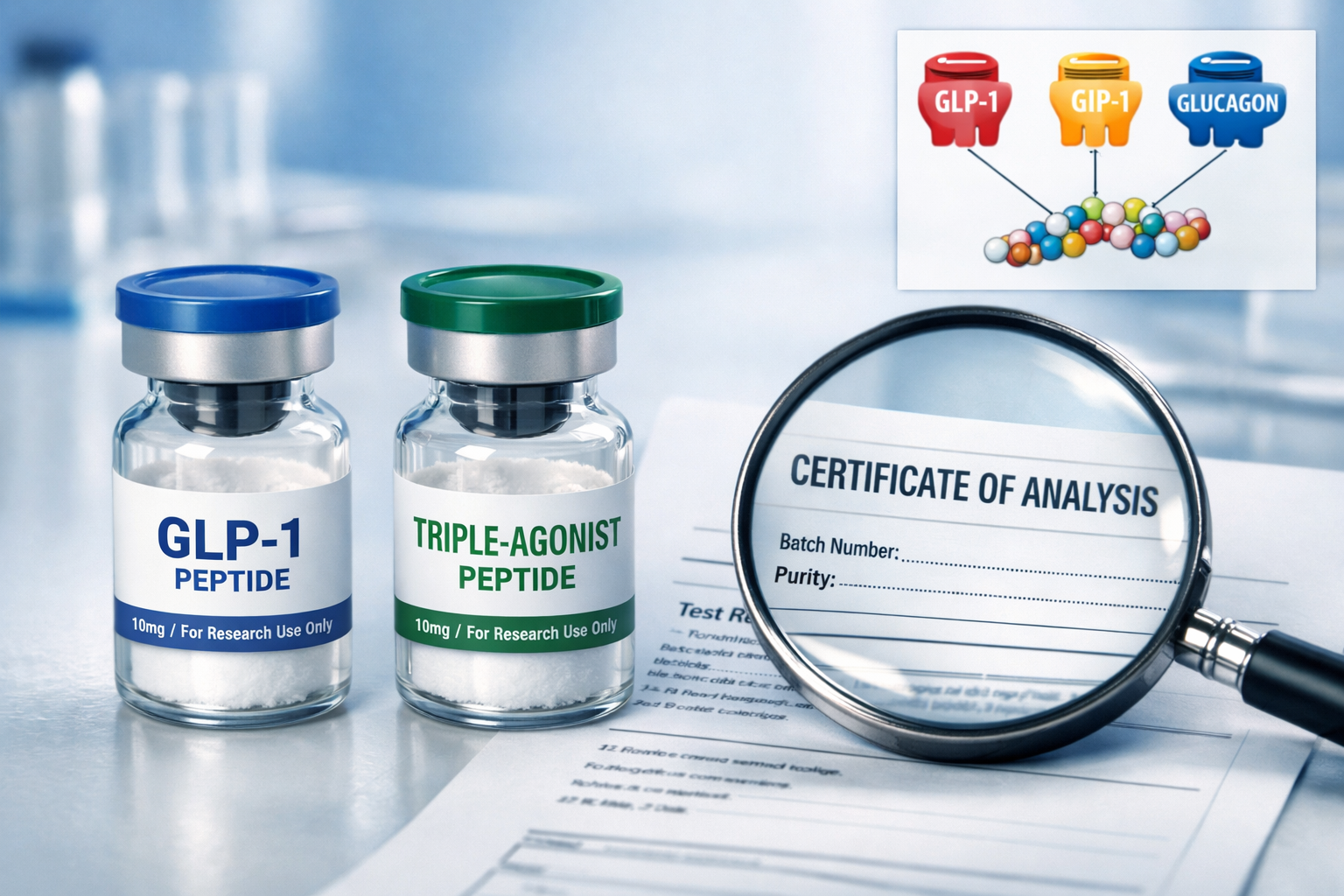
Retatrutide (also referred to as LY3437943 or GLP-3 agonist in some research contexts) is a synthetic peptide that activates three receptors: GLP-1 (glucagon-like peptide-1), GIP (glucose-dependent insulinotropic polypeptide), and the glucagon receptor. This triple-agonist mechanism is what sets it apart from compounds like semaglutide (GLP-1 only) or tirzepatide (GLP-1 + GIP).
Eli Lilly's phase 2 trial, published in the New England Journal of Medicine in 2023, reported that participants receiving the highest dose experienced a mean body weight reduction of approximately 24.2% over 48 weeks. That single data point has driven enormous interest among metabolic researchers, biohackers, and the broader peptide research community.
For those exploring incretin-based research themes, a deeper look at GLP-3 retatrutide incretin research provides additional scientific context on how triple agonism differs from earlier approaches.
Key distinction: Retatrutide's glucagon receptor activation may contribute to increased energy expenditure, a mechanism absent in dual-agonist peptides. This is why researchers studying metabolic pathways find the compound particularly compelling.
Where to Buy Retatrutide Peptide for Research
The most reliable way to buy retatrutide peptide is through specialized peptide suppliers that focus on research-grade compounds. Not all vendors are equal, and the differences matter.
What to look for in a vendor:
- Third-party COA with HPLC purity results (98%+ minimum)
- Mass spectrometry verification confirming correct molecular weight
- Transparent sourcing and manufacturing information
- Proper packaging (lyophilized powder, sealed under inert gas, with desiccant)
- Clear labeling stating "for research use only"
Common mistake: Buying from general supplement marketplaces or overseas vendors without COAs. These sources frequently sell underdosed or degraded product, which renders research results unreliable.
Vendors that also carry lab-tested peptides across their catalog tend to maintain higher quality standards overall, because testing infrastructure is already built into their operations.
Browse the full catalog of available compounds at most popular products for sale to compare retatrutide alongside other research peptides.
How Does Retatrutide Compare to Other Incretin Peptides?
This is one of the most common follow-up questions researchers ask before they buy retatrutide peptide. Here's a direct comparison:
| Feature | Semaglutide | Tirzepatide | Retatrutide |
|---|---|---|---|
| Receptor targets | GLP-1 | GLP-1 + GIP | GLP-1 + GIP + Glucagon |
| Agonist type | Single | Dual | Triple |
| Phase of development | FDA-approved | FDA-approved | Phase 2/3 (investigational) |
| Reported weight reduction (trials) | ~15% (STEP trials) | ~22.5% (SURMOUNT-1) | ~24.2% (Phase 2, highest dose) |
| Energy expenditure pathway | No | No | Yes (via glucagon receptor) |
| Research availability | Widely available | Available | Available from select suppliers |
Decision rule: Choose retatrutide for research if the study design requires triple-receptor activation or if the glucagon-mediated energy expenditure pathway is relevant to the hypothesis. For GLP-1-only studies, semaglutide remains the standard reference compound.
For broader context on GLP-1 peptide research concepts and sourcing, that resource covers how incretin peptides have evolved across research generations.
What Purity and Testing Standards Matter When You Buy Retatrutide Peptide?
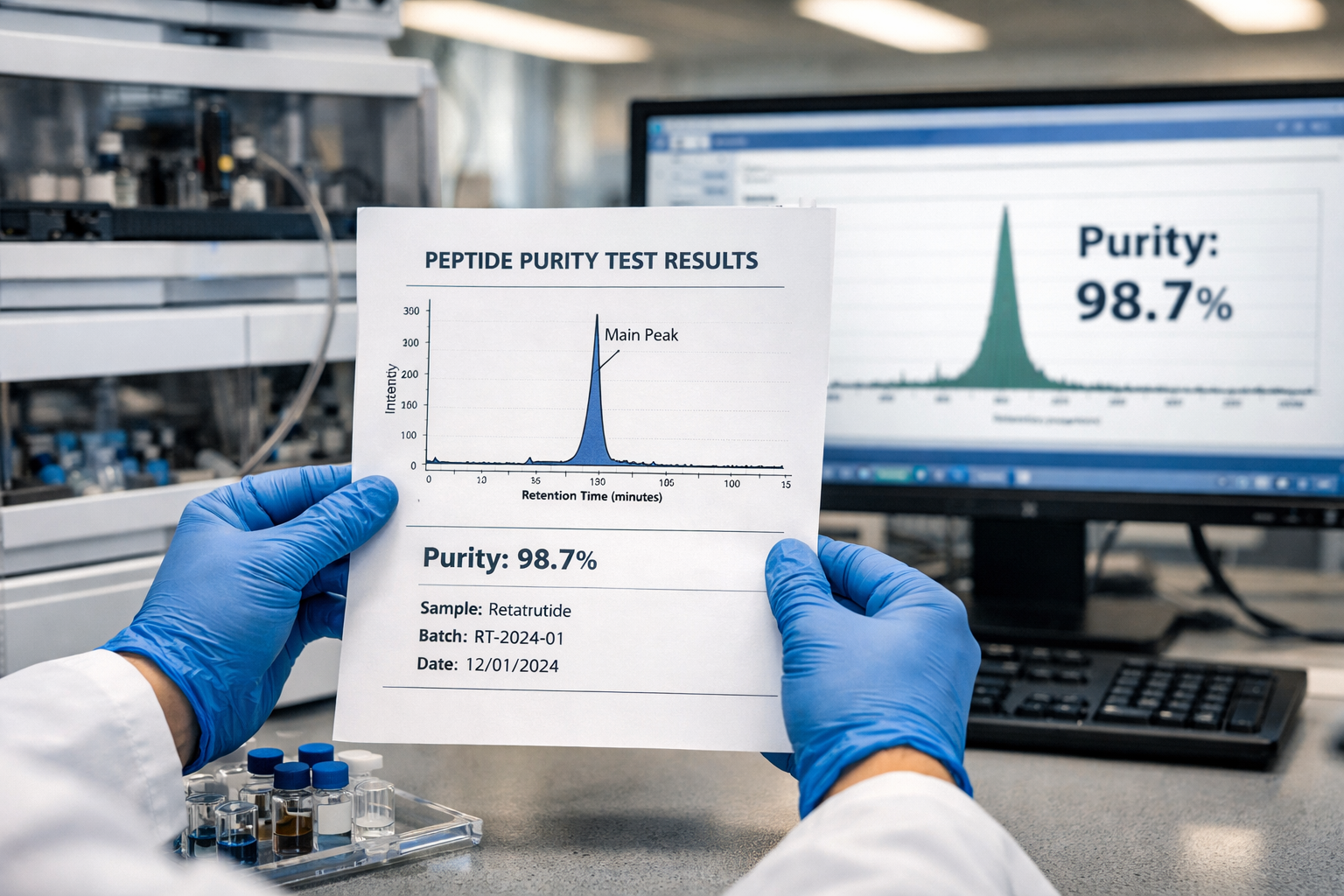
Purity is the single most important variable when purchasing any research peptide. For retatrutide specifically, look for HPLC purity of 98% or higher and mass spectrometry confirmation that the molecular weight matches the expected value for the full-length sequence.
Testing checklist:
- HPLC (High-Performance Liquid Chromatography): Separates the target peptide from impurities. The chromatogram should show a single dominant peak.
- Mass Spectrometry (MS): Confirms the peptide's molecular identity. The observed mass should match the theoretical mass within standard tolerance.
- Amino acid analysis (optional but valuable): Verifies the correct amino acid composition and ratios.
- Endotoxin testing: Important for any in-vivo research applications.
A detailed breakdown of how to read and interpret these results is available in this guide on peptide purity testing made simple.
Edge case: Some vendors report purity "as manufactured" rather than "as shipped." Peptide degradation can occur during shipping if cold-chain protocols aren't followed. Always request a COA that reflects the final shipped product when possible.
How to Store Retatrutide Peptide Properly
Even the highest-purity peptide will degrade if stored incorrectly. Proper storage directly affects research reproducibility.
Storage guidelines:
- Lyophilized (powder) form: Store at -20°C or colder. Stable for 12+ months when kept sealed with desiccant.
- Reconstituted form: Store at 2–8°C (standard refrigerator temperature). Use within 2–4 weeks for best results.
- Avoid repeated freeze-thaw cycles. Aliquot reconstituted peptide into single-use portions.
- Keep away from light. UV exposure accelerates degradation of most peptides.
Common mistake: Reconstituting an entire vial when only a small amount is needed per experiment. This leads to unnecessary freeze-thaw cycles and progressive loss of bioactivity.
For researchers working with multiple peptide types, the ultimate guide to peptide therapy benefits, uses, and what to expect covers general handling principles that apply across compound classes.
What Does Retatrutide Peptide Cost in 2026?
Pricing for retatrutide peptide varies by vendor, vial size, and purity grade. Here are typical ranges based on publicly listed prices from U.S.-based research peptide suppliers:
| Vial Size | Typical Price Range | Notes |
|---|---|---|
| 5 mg | $40–$70 | Standard research quantity |
| 10 mg | $70–$120 | Better per-mg value for larger studies |
| Bulk (50 mg+) | Custom pricing | Usually requires direct vendor inquiry |
Factors that affect price:
- Higher purity (99%+) commands a premium
- Vendors with more comprehensive testing (endotoxin, amino acid analysis) may charge more
- Shipping costs vary, especially for cold-chain delivery
Choose the 10 mg option if the research protocol requires multiple dosing points or extended study duration. The per-milligram cost is almost always lower.
Check current availability and pricing for GLP-3 retatrutide directly from verified suppliers.
Who Should and Shouldn't Buy Retatrutide Peptide?
This peptide is appropriate for:
- Academic and independent researchers studying metabolic pathways
- Labs investigating triple-agonist receptor mechanisms
- Biohackers conducting in-vitro assays on incretin signaling
- Longevity researchers exploring energy expenditure and metabolic flexibility
This peptide is NOT appropriate for:
- Anyone seeking a weight-loss supplement for personal use (it is not approved for human consumption)
- Researchers without proper handling equipment (micropipettes, sterile water, cold storage)
- Buyers looking for the cheapest possible option without regard to purity verification
Retatrutide remains an investigational compound. All purchases should be made with the understanding that it is intended strictly for laboratory research.
For those also exploring longevity peptide research, retatrutide fits within a broader category of metabolic peptides being studied for age-related metabolic decline.
What Are the Risks of Buying Low-Quality Retatrutide?
Low-quality peptide doesn't just waste money. It produces unreliable data, which is worse.
Specific risks include:
- Contaminated product introducing confounding variables into experiments
- Underdosed vials leading to sub-threshold concentrations and false-negative results
- Degraded peptide that has lost bioactivity during improper storage or shipping
- Misidentified compounds where the vial contains a different peptide entirely
The simplest safeguard is to only buy retatrutide peptide from vendors who publish batch-specific COAs and use best peptide manufacturer standards in their production process.
Visit the most popular products for sale page to see which peptides meet these quality benchmarks consistently.
Frequently Asked Questions
Is retatrutide FDA-approved?
No. As of 2026, retatrutide is an investigational compound in phase 3 clinical trials sponsored by Eli Lilly. It is not approved for any therapeutic use.
Can I buy retatrutide peptide legally in the United States?
Yes, for research purposes. Research peptides are legal to purchase in the U.S. when sold and labeled as "not for human consumption" and intended for in-vitro or preclinical study.
What is the difference between retatrutide and tirzepatide?
Tirzepatide targets two receptors (GLP-1 and GIP). Retatrutide targets three (GLP-1, GIP, and glucagon), adding an energy expenditure component via glucagon receptor activation.
How should I reconstitute retatrutide peptide?
Use bacteriostatic water or sterile water. Add the solvent slowly along the vial wall to avoid damaging the peptide. Gently swirl—never shake. Store reconstituted peptide at 2–8°C.
What purity should I look for?
A minimum of 98% HPLC purity is the standard for research-grade peptides. Higher purity (99%+) is preferred for sensitive assays.
How long does lyophilized retatrutide last?
When stored properly at -20°C in a sealed vial with desiccant, lyophilized retatrutide is generally stable for at least 12 months.
Where can I find the latest peptide research updates?
Stay current with what is new in peptide research for ongoing developments in incretin peptides and related compounds.
Is retatrutide the same as GLP-3?
Some vendors and researchers informally refer to retatrutide as "GLP-3" because it acts on three incretin-related pathways. This is a shorthand, not an official classification.
Can I use retatrutide for personal weight loss?
No. Retatrutide is sold exclusively for research. Using investigational peptides for self-administration is not recommended and may carry health risks.
What's the typical shipping method for peptide orders?
Reputable vendors ship lyophilized peptides with ice packs or dry ice, depending on ambient temperature and transit time, to maintain stability.
Conclusion
Retatrutide represents one of the most actively studied peptides in metabolic research as of 2026, and its triple-agonist mechanism makes it distinct from every approved incretin therapy on the market. For researchers ready to buy retatrutide peptide, the priority should be sourcing from vendors with verified purity, transparent testing, and proper shipping protocols.
Actionable next steps:
- Review the vendor's COA for HPLC purity and mass spectrometry data before purchasing.
- Start with a 10 mg vial if the research protocol requires multiple experiments.
- Store lyophilized peptide at -20°C and reconstituted peptide at 2–8°C.
- Aliquot reconstituted peptide to avoid repeated freeze-thaw cycles.
- Explore the full range of most popular products for sale to compare retatrutide with other research compounds.
References
- Jastreboff, A.M., et al. "Triple-Hormone-Receptor Agonist Retatrutide for Obesity — A Phase 2 Trial." New England Journal of Medicine, 2023.
- Eli Lilly and Company. "Lilly's retatrutide (LY3437943) achieved up to 24.2% body weight reduction at 48 weeks in adults with obesity." Press release, 2023.
SEO Meta Title: Buy Retatrutide Peptide: Research Sourcing Guide 2026
Tags: buy retatrutide peptide, retatrutide research, GLP-1 peptide, triple agonist peptide, peptide purity testing, incretin peptide research, research peptides for sale, retatrutide vs tirzepatide, metabolic peptide research, lab-tested peptides