

Over 80% of peptide researchers in 2026 cite bioavailability as their top formulation challenge — and nasal delivery is rapidly emerging as a compelling solution. Klow nasal spray sits at the intersection of that trend, combining a multi-peptide blend with a delivery route that bypasses first-pass metabolism entirely.
Key Takeaways 🔑
- Klow nasal spray is a multi-peptide blend featuring GHK-Cu, KPV, BPC-157, and TB500
- Nasal delivery may enhance peptide absorption compared to oral routes
- The blend targets inflammation control, tissue repair, and cellular recovery
- Research suggests potential benefits for mitochondrial efficiency and endurance
- Always source from verified, third-party tested suppliers for research integrity
What Is Klow Nasal Spray?
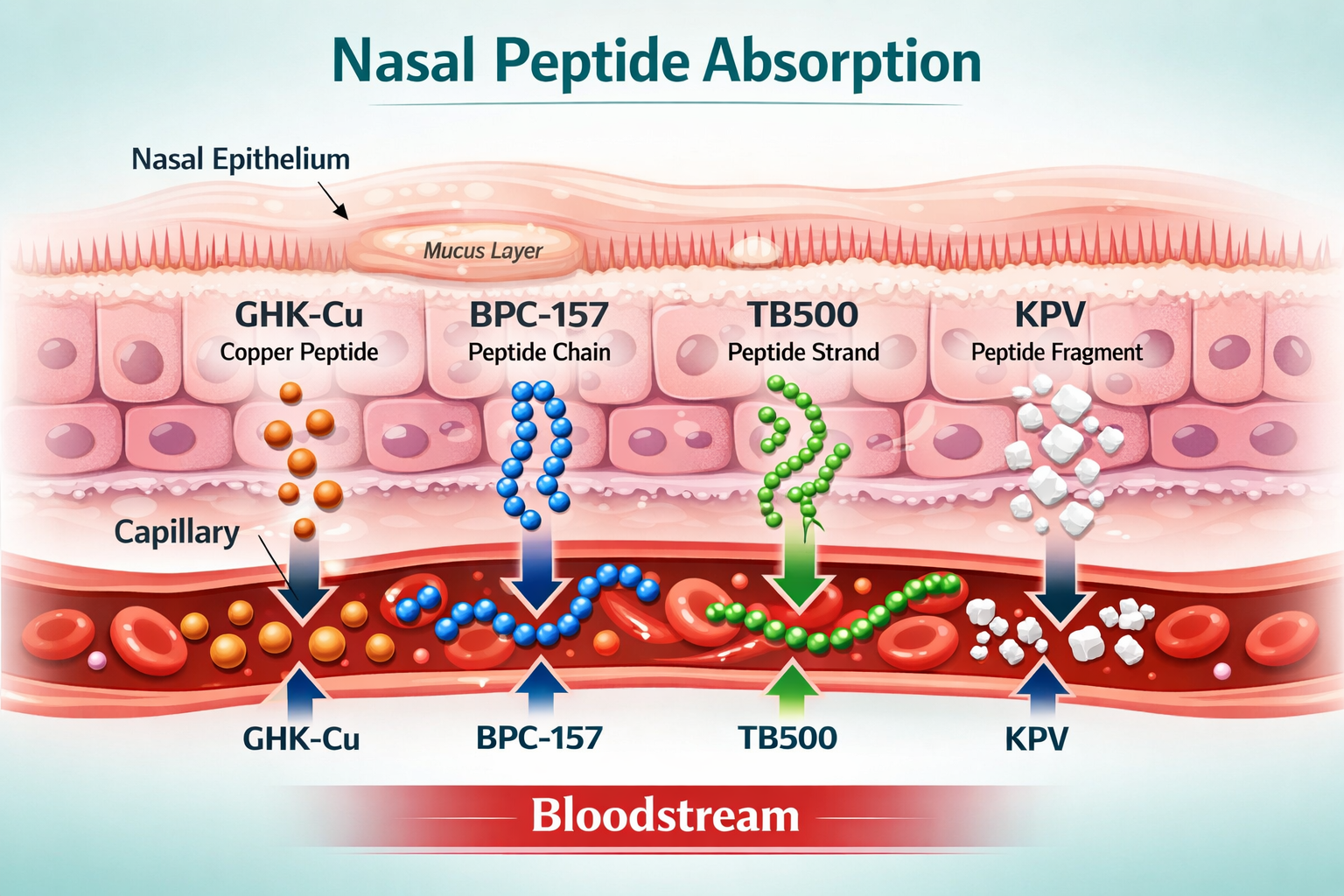
Klow nasal spray is a research-grade peptide formulation combining four active compounds:
| Peptide | Amount | Primary Research Focus |
|---|---|---|
| GHK-Cu | 50 mg | Tissue regeneration, anti-inflammatory signaling |
| KPV | 10 mg | Gut and skin inflammation modulation |
| BPC-157 | 10 mg | Musculoskeletal repair, gut healing |
| TB500 | 10 mg | Actin regulation, wound healing |
This Klow blend is designed to work through complementary pathways, targeting inflammation, cellular recovery, and tissue regeneration simultaneously.
💡 Pull Quote: "Multi-pathway peptide blends represent one of the most exciting frontiers in 2026 research peptide science."
[woocommerce_products limit="4" columns="4" tag="klow"]
How Klow Nasal Spray Works: The Delivery Advantage
Nasal delivery offers a distinct pharmacokinetic advantage. The nasal mucosa is richly vascularized, allowing peptides to enter systemic circulation rapidly without hepatic degradation. Explore the broader science behind nasal spray peptides to understand why this route is gaining traction in research settings.
For Klow nasal spray, this means each peptide component — particularly BPC-157, which has been studied extensively — may reach target tissues more efficiently. Learn more about BPC-157 nasal spray evidence to contextualize the delivery science.
Klow Nasal Spray: Multipathway Research Themes 🔬
The Klow blend multipathway research profile is what distinguishes it from single-peptide formulations:
- Anti-inflammatory signaling via KPV's interaction with melanocortin receptors
- Extracellular matrix support through GHK-Cu's collagen-stimulating properties
- Actin cytoskeletal remodeling attributed to TB500's thymosin beta-4 fraction
- Gut-brain axis research linked to BPC-157's studied neuroregulatory effects
Researchers interested in complementary longevity compounds may also find value in reviewing MOTS-c mitochondrial research alongside Klow nasal spray data.
Important Distinction: Klow vs. KLOXXADO®
⚠️ Do not confuse Klow nasal spray with KLOXXADO®, a naloxone-based nasal spray used for opioid overdose reversal. These are entirely different products with unrelated mechanisms and applications. Klow is a research peptide blend; KLOXXADO® is an FDA-approved emergency medication.
Sourcing and Quality Considerations
Research integrity depends on purity. When sourcing Klow nasal spray, prioritize suppliers with documented quality testing protocols and third-party verification. Contaminated or mislabeled peptides compromise data and safety.
Conclusion: Next Steps for Researchers
Klow nasal spray represents a well-constructed multi-peptide research tool combining GHK-Cu, KPV, BPC-157, and TB500 in a bioavailability-optimized nasal format. In 2026, its multipathway profile makes it a compelling subject for inflammation, repair, and recovery research.
Actionable next steps:
- ✅ Review the Klow blend multipathway research documentation
- ✅ Compare with complementary blends like the Glow peptide blend
- ✅ Source only from suppliers with verified quality testing protocols
- ✅ Consult current nasal spray peptide delivery research before designing protocols
Tags: Klow nasal spray, peptide nasal spray, BPC-157 nasal spray, GHK-Cu peptide, TB500 research, KPV peptide, multi-peptide blend, nasal peptide delivery, Klow blend, peptide bioavailability, research peptides, tissue repair peptides