

Only a handful of peptide compounds have generated as much research buzz in 2026 as the GLP-3 RT peptide — a triple-receptor agonist that targets metabolic pathways well beyond what single-agonist compounds can reach. For fitness peptide enthusiasts tracking the cutting edge of research-grade compounds, understanding what sets GLP-3 RT apart is essential.
⚠️ Disclaimer: All products discussed in this article are intended for research purposes only and are not approved for human therapeutic use.
Key Takeaways 🔑
- GLP-3 RT peptide is a triple agonist targeting GLP-1, GLP-2, and glucagon receptors simultaneously
- It represents a significant evolution beyond standard GLP-1 peptides in metabolic research
- Early preclinical data suggests broad metabolic signaling activity
- Purity and sourcing quality are critical factors for valid research outcomes
- All use is strictly for research purposes only
What Is the GLP-3 RT Peptide?
The GLP-3 RT peptide is a synthetic research compound designed to activate three distinct receptor classes: glucagon-like peptide-1 (GLP-1), glucagon-like peptide-2 (GLP-2), and glucagon receptors. This multi-receptor approach is what separates it from earlier generation metabolic peptides.
The "RT" designation refers to its retro-inverso or modified terminal structure, which is engineered to improve stability and receptor binding affinity compared to native peptide sequences.
Researchers exploring longevity and metabolic peptide research have increasingly turned attention to triple-agonist compounds like GLP-3 RT because they engage overlapping metabolic pathways simultaneously.
How GLP-3 RT Peptide Works: The Triple-Agonist Mechanism
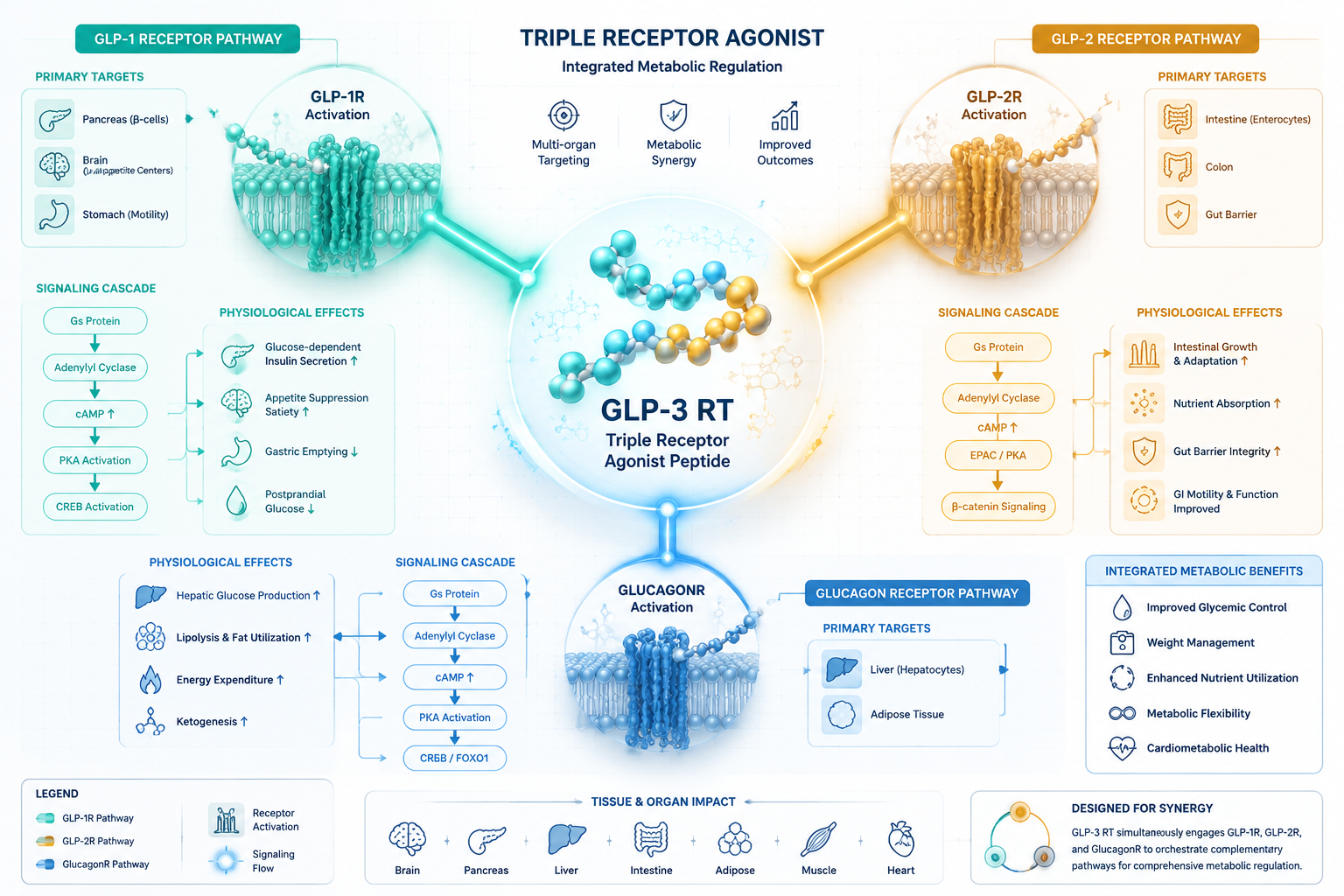
Receptor Targets at a Glance
| Receptor | Primary Research Interest |
|---|---|
| GLP-1 | Insulin signaling, appetite regulation |
| GLP-2 | Gut integrity, nutrient absorption |
| Glucagon | Hepatic glucose output, energy balance |
By engaging all three simultaneously, the GLP-3 RT peptide creates a layered metabolic signaling effect that single-target peptides simply cannot replicate.
This mechanism aligns with broader trends in peptide blend research, where multi-target approaches are increasingly favored in preclinical models.
Why Triple Agonism Matters for Research
- 🔬 Broader metabolic coverage in a single compound
- ⚡ Complementary receptor pathways reduce redundancy
- 📊 More complex data outputs for metabolic studies
- 🧬 Potential synergy between GLP and glucagon signaling
Researchers already familiar with compounds like Tesamorelin or MOTS-C will recognize the pattern: multi-pathway engagement is a defining feature of next-generation peptide research.
GLP-3 RT Peptide: Sourcing and Research Considerations
Purity Is Non-Negotiable
For any research involving the GLP-3 RT peptide, compound purity directly impacts data reliability. Impure peptides introduce confounding variables that invalidate experimental results.
Key sourcing criteria include:
- Third-party HPLC testing with published certificates
- Mass spectrometry verification of molecular weight
- Sterile lyophilized format for stability
- Transparent quality testing protocols
💡 "In peptide research, the quality of your compound is the quality of your data."
Researchers can also explore the NAD research overview and GLP-3 sourcing guide for additional context on procurement considerations.
Stacking Context in Research Models
Some preclinical research models pair GLP-3 RT with mitochondrial or neuroprotective peptides. For researchers exploring complementary compounds, reviewing innovative peptide delivery systems provides useful context on administration variables.
Browse the full GLP-3 for sale research catalog for verified options.
[view_all_peptides_for_sale]
[featured_peptide_slider category="glp-1-peptides"]
Conclusion: Is GLP-3 RT Peptide Worth Researching?
For fitness peptide enthusiasts and preclinical researchers in 2026, the GLP-3 RT peptide represents one of the most mechanistically sophisticated metabolic compounds currently available for study. Its triple-agonist design, improved structural stability, and multi-pathway signaling make it a compelling subject for metabolic research programs.
Actionable next steps:
- ✅ Review third-party purity certificates before sourcing
- ✅ Study the GLP-3 RETA research page for compound-specific data
- ✅ Compare with related metabolic peptides in your research design
- ✅ Ensure all use complies with institutional research guidelines
All compounds are for research use only.
References
- Finan, B., et al. (2015). "A rationally designed monomeric peptide triagonist corrects obesity and diabetes in rodents." Nature Medicine, 21(1), 27–36.
- Tschöp, M. H., et al. (2016). "Unimolecular polypharmacy for treatment of diabetes and obesity." Cell Metabolism, 24(1), 51–62.
- Baggio, L. L., & Drucker, D. J. (2007). "Biology of incretins: GLP-1 and GIP." Gastroenterology, 132(6), 2131–2157.
Tags: GLP-3 RT peptide, triple agonist peptide research, GLP-1 receptor agonist, metabolic peptide research 2026, glucagon receptor peptide, research peptides for sale, peptide purity testing, GLP-3 RETA compound, fitness peptide research, next-generation peptides, peptide sourcing guide