Call or Text 727-513-9780
  • Shopping Cart Shopping Cart
    0Shopping Cart
Pure Tested Peptides | America's most trusted Peptides for sale online
  • Peptides for sale
    • Oral Peptides for sale
      • Peptide Capsules for sale
      • BPC 157 Capsules 1000mcg
      • SLU-PP-332 Capsules | 1000 mcg
      • 5-Amino-1MQ 50mg Capsules
      • Tesofensine 500mcg
    • All Peptides for sale
    • Peptide Sprays
      • BPC 157 Nasal Spray Kit
      • BPC-157 TB500 Nasal Spray Kit
      • Semax Nasal Spray 10mg
      • Selank – Nasal Spray Kit – 10mg
      • Epithalon 50MG Nasal Spray Kit
      • Ipamorelin 10mg Nasal Spray
      • Klow Nasal Spray (BPC-157 + TB-500 + GHK-Cu + KPV) | 80mg
      • Hulk Nasal Spray Tesa / Ipa Blend 6/3 MG
      • Klow Nasal Spray
      • NAD + 500 mg Nasal Spray
      • PT-141 Nasal Spray Kit
    • GHRH Peptides
      • Ipa Peptides
      • CJC-1295 Peptides
        • CJC-1295 with DAC 5 mg
        • CJC-1295 without DAC 5 mg
        • CJC-1295 Ipa 10mg
      • Tesa Peptides
        • Tesa Peptide
        • Tesa 20 mg
    • GHK-Cu Peptides
      • All GHK-Cu Peptides
      • GHK-Cu 100mg
      • KLOW Peptide Blend – Buy KLOW blend online
    • BPC Peptides
      • All BPC Peptides
      • BPC-157
      • BPC-157 TB-500
      • BPC 157 capsules 1000mcg
    • SLU-PP-332 Peptides
      • All SLU-PP-332 Peptides
      • SLU-PP-332 5mg
    • GLP3 Peptides
      • GLP3-R
      • GLP3-R CAG 10mg
      • GLP3-R 20mg
    • PT-141 Peptides
      • PT-141 Peptides for sale
      • PT-141 10mg
      • PT-141 Nasal Spray
    • CAG Peptides
      • Lipo-C Peptide Blend
      • CAG 5mg
      • CAG 10mg
    • MOTS-C Peptides
      • MOTS-C Peptides for sale
      • MOTS-c peptide
      • MOTS-c 10mg *6 pack*
    • 5 Amino 1MQ Peptides
      • 5 Amino 1MQ Peptides for sale
      • 5-Amino-1MQ 50mg Capsules
      • 5-Amino-1MQ 5mg
    • Epithalon Peptides
      • Epithalon Peptides for sale
      • Epithalon 10mg
      • Epithalon 50mg
  • Shop
    • GLPs
      • 5-Amino-1MQ 50mg Capsules
      • 5-Amino-1MQ 5mg
      • GLP3-Reta
      • L-Carnitine 500mg/ml
      • Tesofensine 500mcg
      • SLU-PP-332 5mg
      • MOTS-c 10mg *6 pack*
    • Epithalon & BPC Peptides
      • Epithalon 10mg
      • Epithalon 50mg
      • BPC-157
      • BPC 157 capsules 1000mcg
      • BPC-157 TB-500
      • BPC-157 TB500 Nasal Spray Kit
      • BPC 157 Nasal Spray Kit
    • BPC TB-500 & NAD+ Peptides
      • NAD+ 500 mg
      • KLOW Peptide Blend – Buy KLOW blend online
      • GLOW Peptide Blend
      • TB 500 5mg
      • BPC 157 capsules 1000mcg – Supplement
      • BPC 157 Nasal Spray Kit
      • BPC-157
      • BPC-157 TB500 Nasal Spray Kit
      • BPC-157 TB-500
      • BPC 157 capsules 1000mcg
    • LL-37 Peptide
      • LL-37 10 mg
    • MOTS-C & Selank
      • MOTS-c peptide
      • Selank 10mg
    • GHK Peptides
      • GHK-Cu 100mg
      • GLOW Peptide Blend
      • KLOW Peptide Blend – Buy KLOW blend online
  • COAs
  • Wholesale
    • Wholesale Peptides for sale
  • PTP FAQ
  • Affiliates
    • Affiliate Program
    • Affiliate Signup
  • Contact
    • Contact Customer Service
    • Text Customer Support
  • About US
  • Shop all peptides
  • Login / Register Login / Register Page Link Login / Register Page Link
  • Click to open the search input field Click to open the search input field Search
  • Menu Menu
What Is the GLP3 Peptide? Research Distinctions, Naming Confusion, and How It Relates to Retatrutide

What Is the GLP3 Peptide? Research Distinctions, Naming Confusion, and How It Relates to Retatrutide

June 10, 2026/0 Comments/in Uncategorized/by

A single informal label is causing genuine confusion across research communities, patient forums, and peptide catalogs in 2026: "GLP-3." Researchers searching for this term are often looking for something very different from what the name implies. Understanding what the GLP-3 peptide actually refers to — and why that label is scientifically inaccurate — matters for anyone tracking the latest developments in metabolic research.

Key Takeaways

  • There is no hormone called "GLP-3." The term is an informal nickname, not a recognized scientific designation.
  • "GLP-3" almost always refers to retatrutide (LY3437943), a triple-agonist investigational compound developed by Eli Lilly.
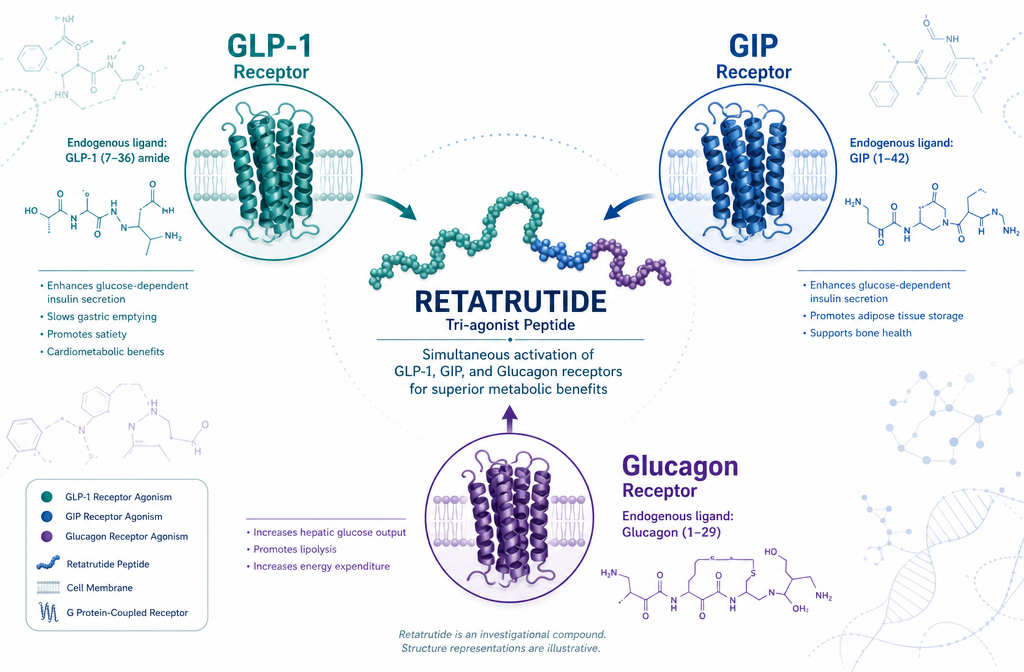
  • Retatrutide simultaneously targets three receptors: GLP-1, GIP, and glucagon.
  • Phase 3 trial data shows approximately 28% average weight loss over 18 months — results comparable to bariatric surgery.
  • As of 2026, retatrutide is not FDA-approved and remains under active clinical investigation.
Key Takeaways

Understanding the Naming Confusion Around "GLP-3"

The phrase "GLP-3 peptide" does not correspond to any recognized hormone in human physiology. The glucagon-like peptide family includes GLP-1 and GLP-2, both derived from the proglucagon gene. GLP-1 is well-established for its role in insulin secretion and appetite regulation. GLP-2 supports intestinal growth. No GLP-3 exists in the official scientific literature.

So where does the term come from? It appears to have emerged organically from online communities and informal research discussions as shorthand for retatrutide — a compound that acts on three separate receptor pathways. The logic is loose: "triple action" became "GLP-3" in casual usage. The label stuck, even though it misrepresents the compound's actual mechanism.

This kind of naming drift is not unusual in peptide research. For a broader look at how terminology evolves in this field, the ultimate guide to peptide therapy provides useful context on how compounds are classified and discussed.


What Is the GLP3 Peptide? Research Distinctions, Naming Confusion, and How It Relates to Retatrutide — The Core Answer

Retatrutide (development code LY3437943) is the compound most commonly referenced when someone asks about the "GLP-3 peptide." It is an investigational drug developed by Eli Lilly that activates three distinct hormone receptors simultaneously:

Receptor Primary Research Function
GLP-1 Reduces appetite, slows gastric emptying
GIP Improves insulin sensitivity, supports fat distribution
Glucagon Increases energy expenditure, promotes fat breakdown via thermogenesis

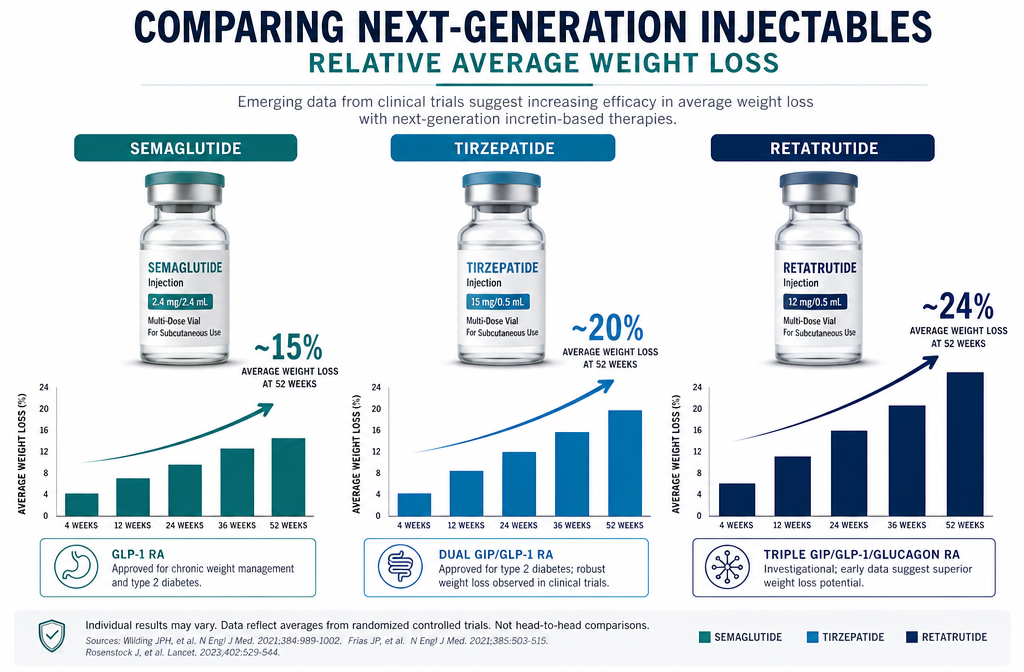
This triple-agonist profile is what separates retatrutide from earlier-generation compounds. Semaglutide targets GLP-1 alone. Tirzepatide targets GLP-1 and GIP. Retatrutide adds glucagon receptor activation on top of both, creating a broader metabolic effect.

For researchers already familiar with the GLP-1 peptide research landscape, retatrutide represents a meaningful step forward in receptor-targeting strategy. Those planning research with this compound should also review GLP-3 triple agonist research planning resources before sourcing.


What Is the GLP3 Peptide? Research Distinctions, Naming Confusion, and How It Relates to Retatrutide — The Core Answer

Phase 3 Data and Regulatory Status in 2026

The clinical results for retatrutide are among the most discussed in metabolic medicine this year. In Phase 3 trials, participants achieved an average weight loss of approximately 28% over 18 months — a figure that rivals outcomes typically seen with bariatric surgery. No other injectable medication has produced comparable numbers in trial data to date.

"Retatrutide's Phase 3 results represent the highest weight loss figures recorded for any injectable medication in clinical trials."

Despite these results, retatrutide is not FDA-approved as of 2026. Eli Lilly anticipates filing for FDA approval in 2026–2027, with potential commercial availability projected for late 2027 or 2028, contingent on successful trial completion and regulatory review.

Beyond weight loss, researchers are examining retatrutide's potential influence on type 2 diabetes, cardiovascular risk factors, and metabolic liver disease. The GIP receptor and its importance in metabolic signaling provides additional background on one of the three pathways retatrutide engages.


What Is the GLP3 Peptide? Research Distinctions, Naming Confusion, and How It Relates to Retatrutide — Practical Implications for Researchers

For researchers navigating this space, the terminology distinction has real consequences. Searching for "GLP-3 peptide" may return inconsistent results across databases, catalogs, and literature because the label is not standardized. Using the correct terminology — triple agonist, GLP-1/GIP/glucagon receptor agonist, or retatrutide/LY3437943 — will yield more reliable and reproducible search results.

Retatrutide is administered as a once-weekly subcutaneous injection, a delivery format consistent with other compounds in the GLP-1 class. Researchers interested in innovative peptide delivery systems will find the subcutaneous format familiar, though the triple-receptor profile introduces unique considerations for study design.

Those tracking the broader metabolic peptide landscape may also find value in reviewing AOD-9604 metabolic research and SLU-PP-332 metabolic research themes for comparative context on fat metabolism pathways.

What Is the GLP3 Peptide? Research Distinctions, Naming Confusion, and How It Relates to Retatrutide — Practical Implications

Conclusion

The "GLP-3 peptide" is not a real hormone — it is a widely circulated misnomer for retatrutide, a triple-agonist compound targeting GLP-1, GIP, and glucagon receptors. Clarifying this distinction is essential for accurate research planning, catalog navigation, and literature review.

Actionable next steps for researchers:

  • Use "retatrutide," "LY3437943," or "triple agonist" in database and catalog searches instead of "GLP-3."
  • Review the GIP receptor pathway alongside GLP-1 mechanisms before designing studies.
  • Monitor FDA filing updates from Eli Lilly, expected in the 2026–2027 window.
  • Consult what is new in peptide research for ongoing developments in this fast-moving field.

Precise terminology is not a minor detail in peptide research — it directly affects sourcing accuracy, study reproducibility, and regulatory compliance awareness.

Tags: eli lilly retatrutide, gip receptor, glp-1 receptor agonist, glp-3 peptide, glucagon receptor agonist, ly3437943, metabolic peptide research, peptide naming confusion, peptide research 2026, retatrutide, triple agonist peptide, weight loss peptides
https://www.puretestedpeptides.com/wp-content/uploads/2026/06/What-Is-the-GLP3-Peptide-Research-Distinctions-Naming-Confusion-and-How-It-Relates-to-Retatrutide.png 672 1024 https://www.puretestedpeptides.com/wp-content/uploads/2026/01/buy-peptides-online.jpg 2026-06-10 13:06:532026-06-10 13:06:53What Is the GLP3 Peptide? Research Distinctions, Naming Confusion, and How It Relates to Retatrutide
You might also like
Semax and Selank Peptide Nasal Sprays: Comparative Mechanisms in Neurotrophic and Anxiolytic Research Semax and Selank Peptide Nasal Sprays: Comparative Mechanisms in Neurotrophic and Anxiolytic Research
Cystathionine Beta Synthase, Homocysteine, and Peptides: Where Metabolism Pathways Meet Experimental MOTS‑c and 5‑Amino‑1MQ Research Cystathionine Beta Synthase, Homocysteine, and Peptides: Where Metabolism Pathways Meet Experimental MOTS‑c and 5‑Amino‑1MQ Research
Retatrutide Clinical Trial Timeline: What TRIUMPH-1 and Phase 3 Results Mean for Research Use Only Buyers Retatrutide Clinical Trial Timeline: What TRIUMPH-1 and Phase 3 Results Mean for Research Use Only Buyers
BPC-157 and TB-500 in Experimental Tissue-Repair Models: Synergy, Overlaps, and Key Differences BPC-157 and TB-500 in Experimental Tissue-Repair Models: Synergy, Overlaps, and Key Differences
Retatrutide and GLP-3 Biology: What Makes This Triple-Agonist Different From GLP-1 and GLP-2 Research Peptides Retatrutide and GLP-3 Biology: What Makes This Triple-Agonist Different From GLP-1 and GLP-2 Research Peptides
5-Amino-1MQ Peptide Research: NNMT Inhibition, Fat Metabolism, and Why It Is Often Paired With Mitochondrial Stacks 5-Amino-1MQ Peptide Research: NNMT Inhibition, Fat Metabolism, and Why It Is Often Paired With Mitochondrial Stacks
GLP-3 Retatrutide vs. GLP-1 and GLP-2: Understanding Receptor Specificity and Research Models GLP-3 Retatrutide vs. GLP-1 and GLP-2: Understanding Receptor Specificity and Research Models
GLP-3 Retatrutide vs Traditional GLP-1 Agonists: Mechanisms, Early Data, and Research-Only Use Cases GLP-3 Retatrutide vs Traditional GLP-1 Agonists: Mechanisms, Early Data, and Research-Only Use Cases
0 replies

Leave a Reply

Want to join the discussion?
Feel free to contribute!

Leave a Reply Cancel reply

Your email address will not be published. Required fields are marked *

×

Helpful Links

  • My account
  • Cart
  • Checkout
  • Refund and Returns Policy
  • Privacy Policy
  • SMS Privacy Policy
  • Login
  • My Account
  • Logout

USA Made Lab Tested Peptides

All products are sold for research, laboratory, or analytical purposes only, and are not for human consumption


Pure Tested Peptides is a chemical supplier. Pure Tested Peptides is not a compounding / chemical compounding facility as defined under 503A of the Federal Food, Drug, and Cosmetic act. Pure Tested Peptides is not an outsourcing facility as defined under 503B of the Federal Food, Drug, and Cosmetic act.

The statements made within this website have not been evaluated by the US Food and Drug Administration. The products we offer are not intended to diagnose, treat, cure or prevent any disease.

Human/Animal Consumption Prohibited. Laboratory/In-Vitro Experimental Use Only

Link to: GLP-2-T and GLP-2 Tirz Peptides: Gut Mucosal Integrity, Nutrient Absorption, and Experimental IBD Models Link to: GLP-2-T and GLP-2 Tirz Peptides: Gut Mucosal Integrity, Nutrient Absorption, and Experimental IBD Models GLP-2-T and GLP-2 Tirz Peptides: Gut Mucosal Integrity, Nutrient Absorption,...GLP-2-T and GLP-2 Tirz Peptides: Gut Mucosal Integrity, Nutrient Absorption, and Experimental IBD Models Link to: Epithalon Peptide Research: Telomere Biology, Aging Pathways, and What the Current Evidence Can Actually Support Link to: Epithalon Peptide Research: Telomere Biology, Aging Pathways, and What the Current Evidence Can Actually Support Epithalon Peptide Research: Telomere Biology, Aging Pathways, and What the Current Evidence Can Actually SupportEpithalon Peptide Research: Telomere Biology, Aging Pathways, and What the Current...
Scroll to top Scroll to top Scroll to top