

{"cover":"Professional landscape format (1536×1024) hero image with bold text overlay: 'MOTS-c Peptide & Mitochondrial Biogenesis: Unlocking Cellular Energy Pathways' in extra large 72pt white bold sans-serif font with dark semi-transparent overlay box, centered upper-third placement. Background shows a stunning macro scientific visualization of a glowing mitochondrion with ATP energy particles radiating outward, deep teal and electric blue color palette with gold energy accents, molecular structures floating in background, editorial magazine cover quality, high contrast, cinematic lighting","content":["Detailed landscape format (1536×1024) scientific diagram illustration showing a cross-section of a mitochondrion with labeled MOTS-c peptide molecular structure (16 amino acid chain) emerging from the 12S rRNA gene region, glowing AMPK pathway activation arrows, PGC-1alpha protein highlighted in gold, cellular energy flow visualization with ATP molecules, dark navy background with bioluminescent teal and white annotation lines, clean infographic style, research-grade editorial quality","Landscape format (1536×1024) split-panel research comparison graphic showing left panel with preclinical animal study icons (mouse silhouettes, metabolic charts, insulin sensitivity graphs trending upward) and right panel showing human clinical trial question marks and pending status indicators, MOTS-c peptide molecular formula overlaid, amber and blue color contrast, clean scientific poster aesthetic, bold typography annotations, laboratory research setting background with blurred microscopes","Landscape format (1536×1024) regulatory and research roadmap timeline visualization showing 2026 FDA PCAC review milestone on a horizontal timeline, MOTS-c peptide safety assessment checkpoints, immunogenicity concern icons, metabolic flexibility research branches extending upward like a decision tree, professional dark charcoal background with white and green pathway lines, government regulatory building silhouette in background, clean data visualization style, editorial quality"]
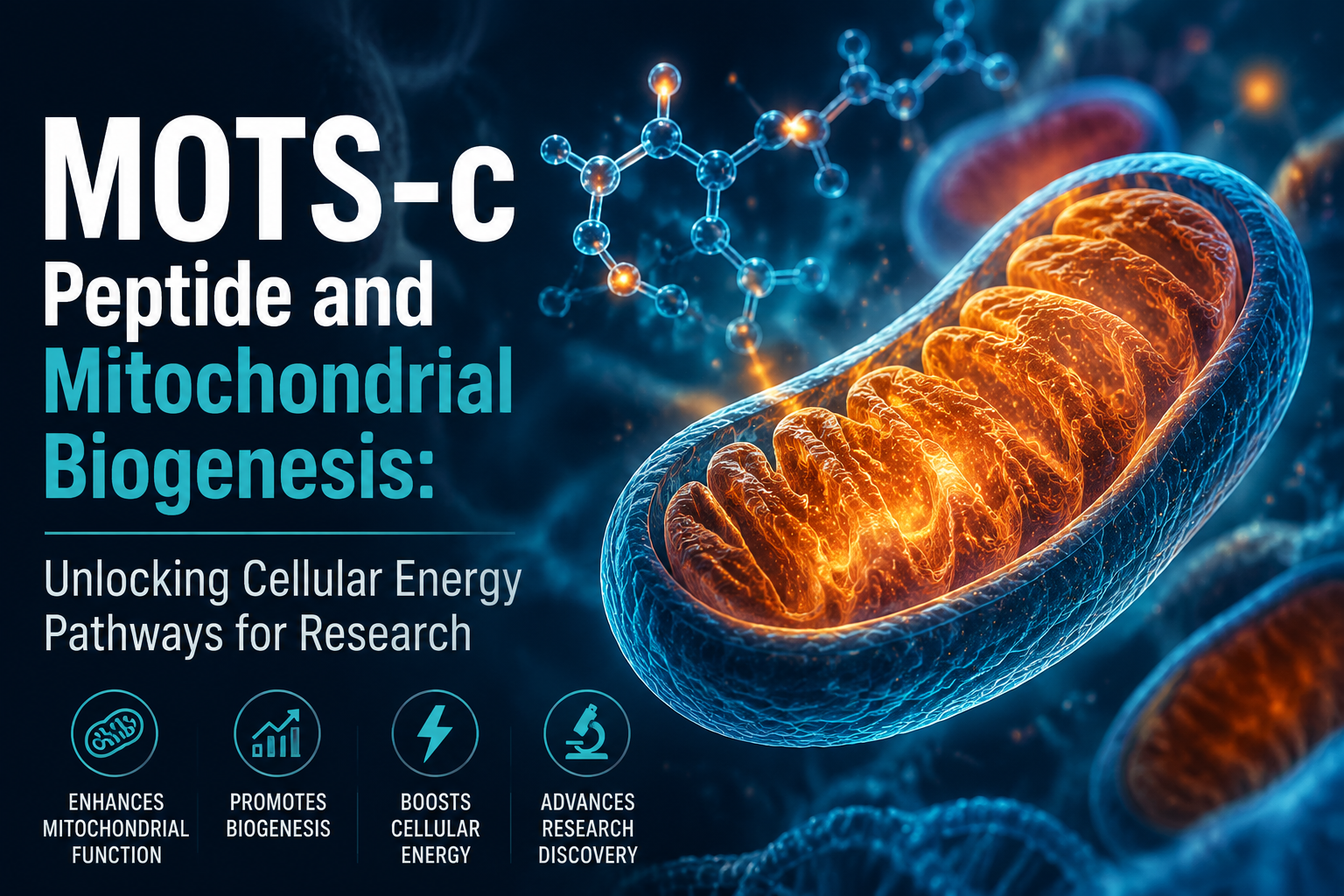
Exercise raises endogenous MOTS-c levels in skeletal muscle — a discovery that reframes how researchers think about metabolic signaling at the cellular level. This 16-amino-acid peptide, encoded within the mitochondrial genome itself, sits at the crossroads of energy regulation, aging biology, and metabolic health. Understanding MOTS-c peptide and mitochondrial biogenesis: unlocking cellular energy pathways for research begins with appreciating how a molecule this small can exert such wide-ranging influence on cellular function.
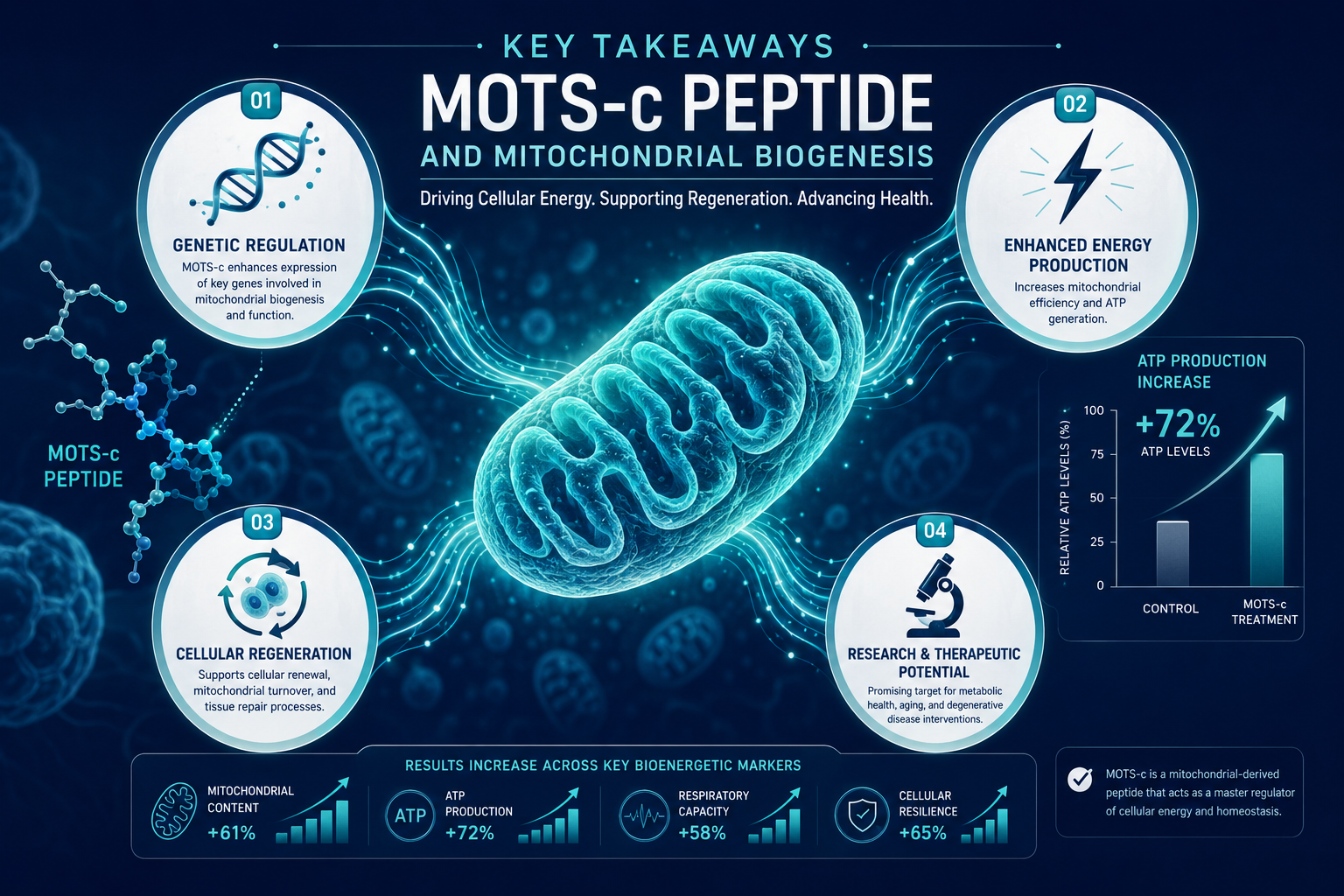
Key Takeaways
- MOTS-c is a mitochondria-derived peptide that activates the AMPK pathway to stimulate mitochondrial biogenesis and metabolic regulation.
- Preclinical studies show promising results for insulin sensitivity, weight management, and exercise capacity, but no completed human efficacy trials exist as of 2026.
- The FDA removed MOTS-c from the 503A Category 2 list in April 2026; a PCAC review is scheduled for July 2026.
- MOTS-c is often called an "exercise mimetic," though experts caution this label oversimplifies its effects.
- All current use of MOTS-c remains strictly within controlled research and investigational settings.
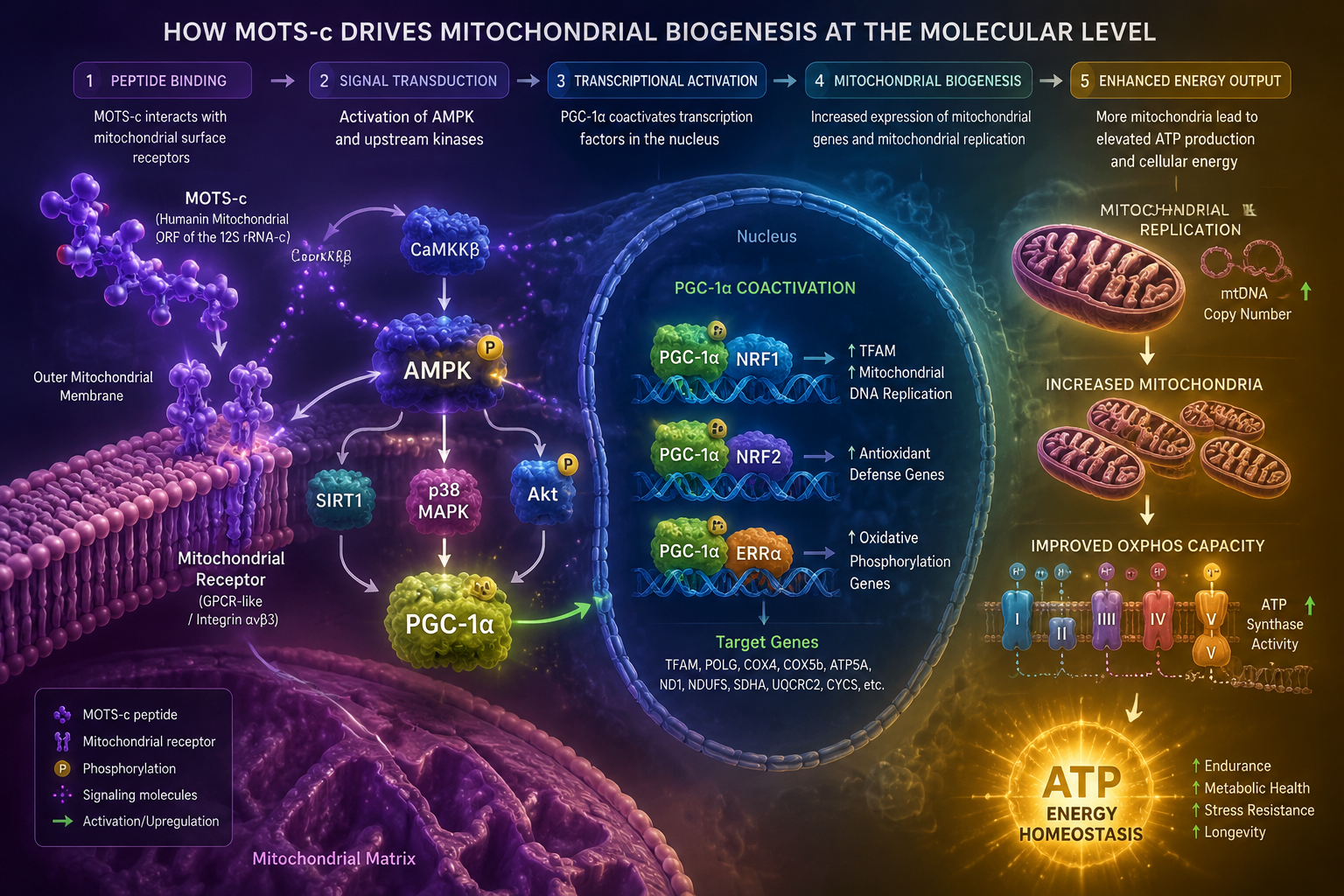
How MOTS-c Drives Mitochondrial Biogenesis at the Molecular Level
MOTS-c originates from the 12S rRNA gene within mitochondrial DNA — making it one of the few known peptides encoded outside the nuclear genome. Once translated, it translocates to the nucleus under conditions of metabolic stress, where it regulates gene expression tied to energy homeostasis.
The primary mechanism involves activation of AMP-activated protein kinase (AMPK), a master energy sensor in cells. When AMPK is activated by MOTS-c, a cascade of downstream effects follows:
| Effect | Biological Outcome |
|---|---|
| Increased glucose uptake | Improved cellular fuel availability |
| Enhanced fatty acid oxidation | Greater metabolic flexibility |
| PGC-1alpha activation | Stimulation of mitochondrial biogenesis |
| Reduced oxidative stress | Improved mitochondrial integrity |
PGC-1alpha is the key transcription coactivator here. Its activation by MOTS-c triggers the production of new mitochondria, expands the mitochondrial network, and improves overall oxidative capacity. This is why MOTS-c peptide and mitochondrial biogenesis: unlocking cellular energy pathways for research has become such a compelling area of study — the peptide essentially tells cells to build better energy infrastructure.
For researchers interested in complementary mitochondrial-targeted compounds, the SS-31 peptide research overview offers useful context on how other peptides interact with mitochondrial membranes.
Researchers studying broader metabolic signaling may also find value in exploring NAD+ energetics and longevity research themes, which intersect with MOTS-c's role in cellular energy regulation.
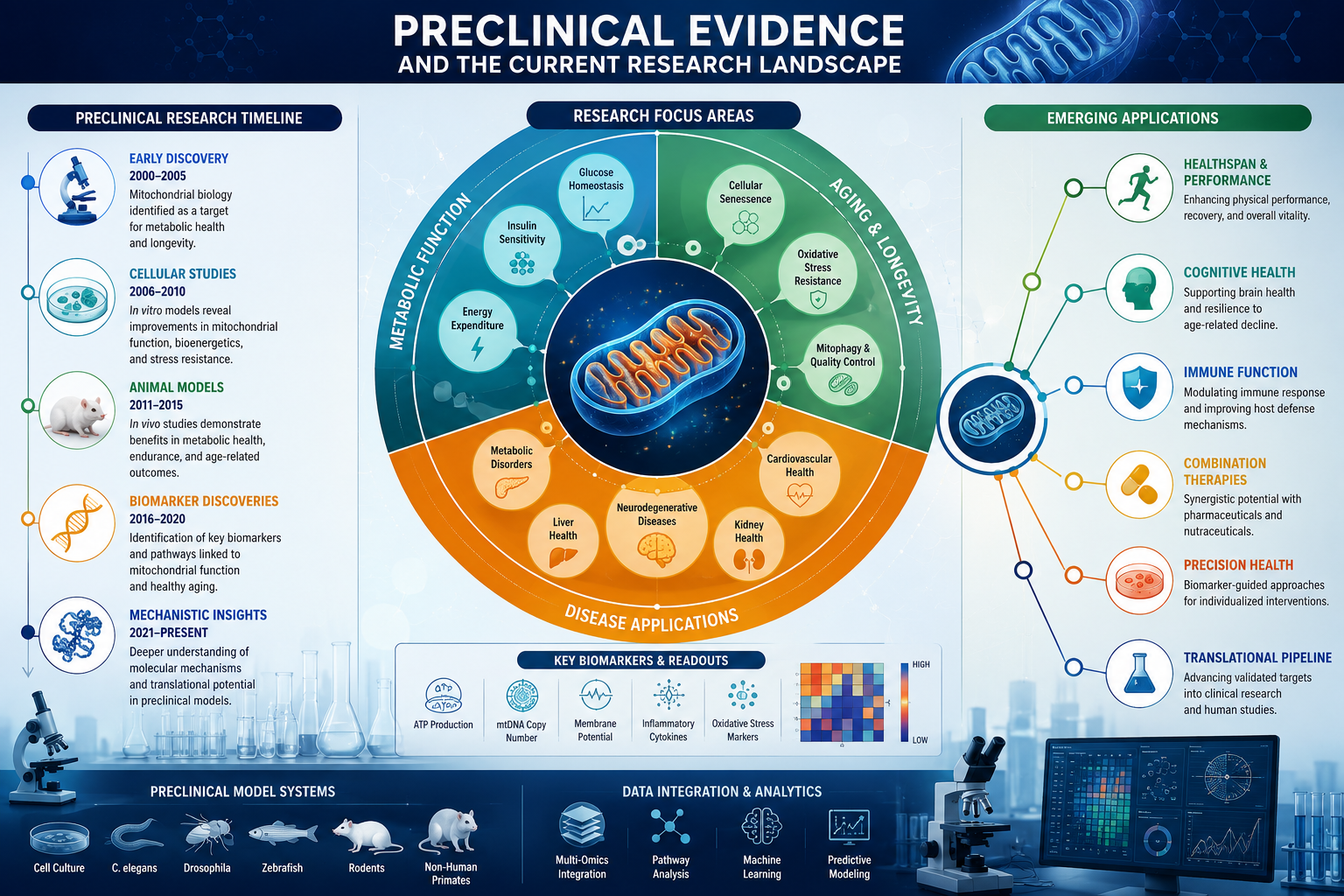
Preclinical Evidence and the Current Research Landscape
Animal model studies have produced notable findings. MOTS-c administration in rodent models has demonstrated:
- Improved insulin sensitivity in diet-induced obesity models
- Reduced body weight without significant changes to food intake
- Enhanced exercise capacity and skeletal muscle performance
- Attenuation of age-related metabolic decline
These results have fueled significant interest in MOTS-c as a potential tool for metabolic research. The peptide is frequently described as an "exercise mimetic" because it activates many of the same pathways engaged during physical activity. However, experts are careful to note that MOTS-c does not replicate the full systemic benefits of exercise, which involve cardiovascular, neurological, and musculoskeletal adaptations far beyond what a single peptide can address.
"Preclinical results are promising, but the absence of completed human trials means all conclusions remain provisional."
As of 2026, no completed human efficacy trials exist. The research community continues to investigate MOTS-c's role in metabolic flexibility, aging, and stress response. For a deeper look at related metabolic research themes, the MOTS-c metabolic flexibility research overview provides additional context.
Researchers exploring longevity-focused peptide research may also benefit from reviewing longevity peptide research themes to understand how MOTS-c fits within a broader aging-biology framework.
Regulatory Status and Safety Considerations in 2026
The regulatory picture for MOTS-c shifted notably in 2026. On April 22, 2026, the FDA removed MOTS-c from the 503A Category 2 list following the withdrawal of its nomination. A Pharmacy Compounding Advisory Committee (PCAC) review is scheduled for July 23, 2026, to evaluate its potential inclusion for research applications related to obesity and osteoporosis.
The FDA has flagged several safety concerns that researchers must account for:
- Immunogenicity risk — potential for immune responses to exogenous peptide administration
- Peptide-related impurities — quality and purity standards remain under scrutiny
- Lack of human exposure data — no established safety profile in human subjects
These concerns reinforce why MOTS-c remains strictly investigational. Sourcing quality-verified peptides for research is essential; researchers can explore MOTS-c: the mitochondrial peptide for detailed compound information.
For those examining synergistic mitochondrial research compounds, the synergy of LL-37 and SS-31 peptides article explores how multiple peptides may interact in cellular energy contexts.
Conclusion
MOTS-c peptide and mitochondrial biogenesis: unlocking cellular energy pathways for research represents one of the most mechanistically rich areas in current peptide science. The peptide's ability to activate AMPK, stimulate PGC-1alpha, and promote new mitochondrial formation positions it as a valuable investigational tool for understanding metabolic disease, aging, and cellular energy regulation.
Actionable next steps for researchers:
- Review the July 2026 PCAC findings as they become available to assess updated regulatory guidance.
- Prioritize sourcing rigorously tested, purity-verified MOTS-c for any preclinical work.
- Design studies that pair MOTS-c with validated metabolic biomarkers to build translatable data.
- Monitor emerging literature on AMPK pathway modulators and mitochondrial biogenesis to contextualize findings.
All research use of MOTS-c should occur within controlled, ethically approved settings until human safety and efficacy data are established.
Leave a Reply
Want to join the discussion?Feel free to contribute!