

A single decimal point error during peptide reconstitution can render an entire research protocol meaningless. As peptide research expands in 2026, digital calculator tools have moved from optional convenience to essential infrastructure. Understanding how peptide calculator tools aid in accurate research dosing and reconstitution is now a foundational skill for any serious researcher working with lyophilized compounds.
Key Takeaways
- Peptide calculator tools automate the three-variable reconstitution formula, eliminating common unit conversion errors.
- A standardized calculation approach converts vial size, reconstitution volume, and target dose into a precise draw volume in milliliters.
- Digital platforms now offer integrated research suites combining dosing calculators with protocol planners and stack compatibility tools.
- As of mid-2026, leading peptide calculator apps have logged over one million dose events, confirming widespread real-world adoption.
- Accurate reconstitution math is especially critical for multi-compound protocols and blended peptide formulations.
The Core Math Behind Peptide Reconstitution
Every reconstitution calculation relies on three variables:
- Vial size (total peptide content, expressed in mg)
- Reconstitution volume (amount of bacteriostatic water added, in mL)
- Target research dose (desired dose per administration, in mcg or mg)
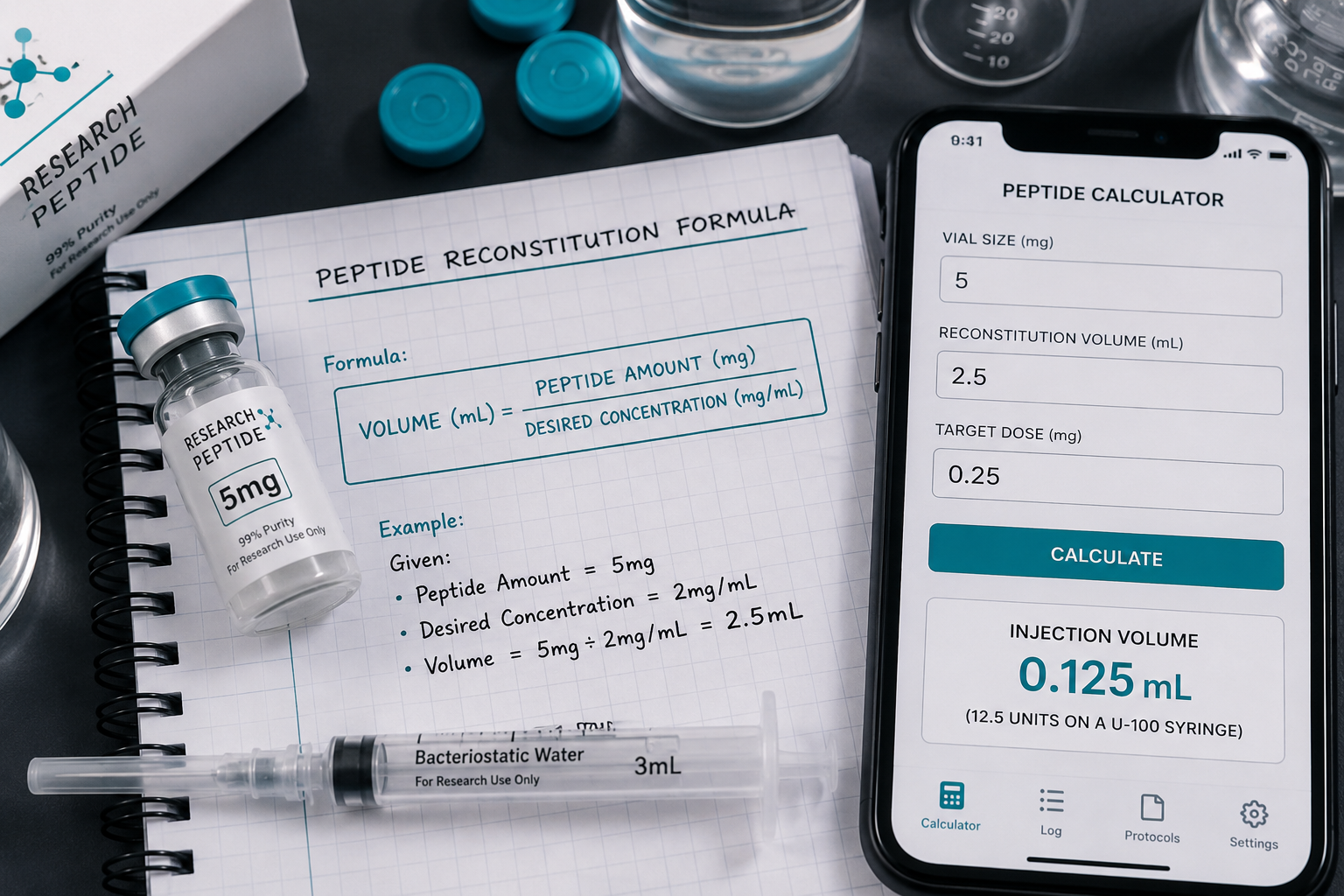
The formula is straightforward:
Draw volume (mL) = (Target dose / Total vial content) x Reconstitution volume
A practical example makes this concrete. A 5 mg vial reconstituted with 3 mL of bacteriostatic water, with a target dose of 250 mcg, produces a draw volume of 0.15 mL, which corresponds to 15 units on a standard insulin syringe.
Without a calculator, researchers must manually convert mg to mcg, divide, and then translate mL into syringe units. Each step introduces potential error. Calculator tools codify this formula, embed unit toggles between mcg and mg, and include vial-size presets, removing the most common failure points.
This matters enormously for complex compounds. Researchers working with a Tesamorelin/CJC-1295/Ipamorelin blend face a higher-mg vial requiring precise dilution math to avoid under- or over-dosing any single peptide component.
How Peptide Calculator Tools Aid in Accurate Research Dosing and Reconstitution Across Platforms
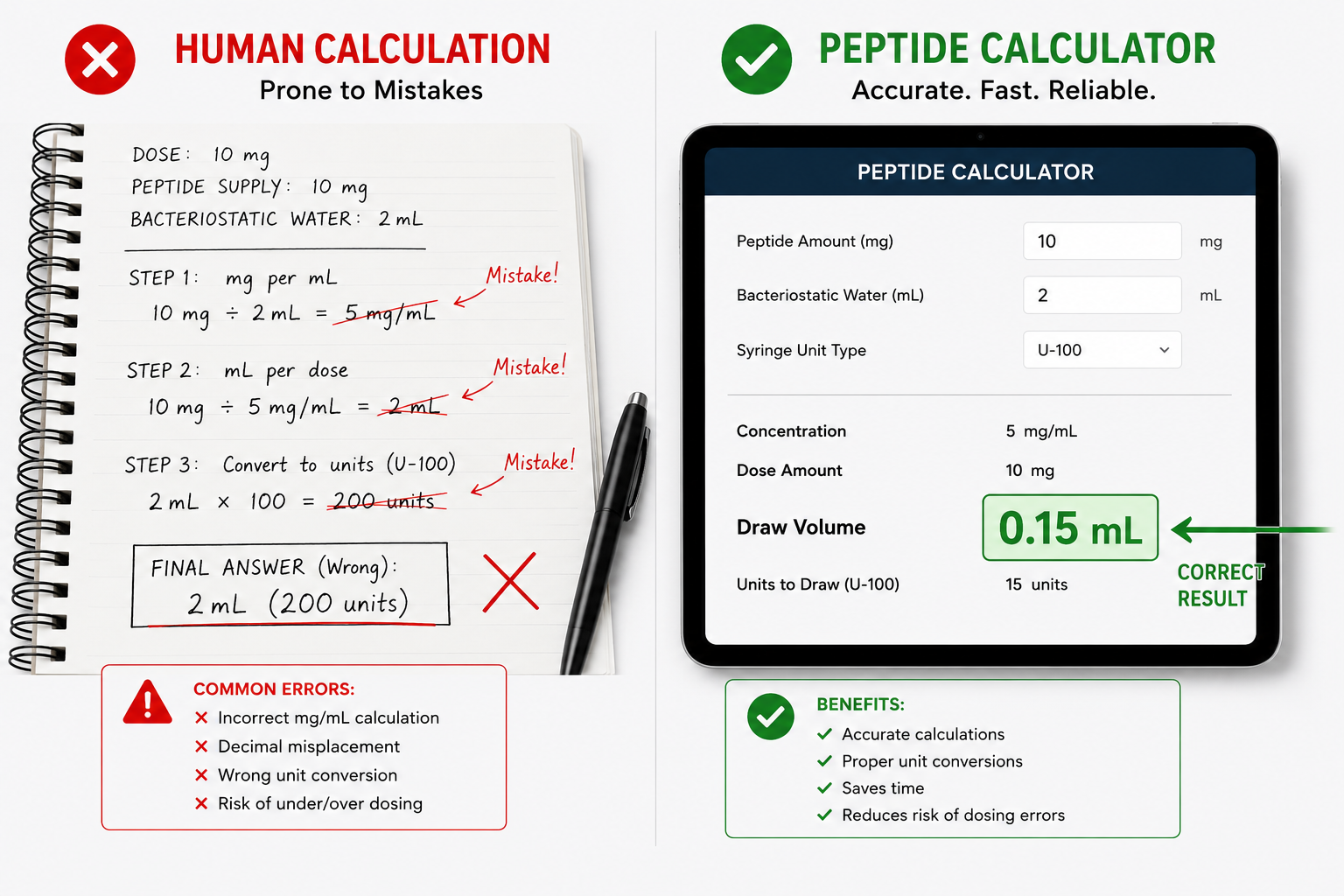
The landscape of available tools has expanded significantly. As of March 2026, platforms like Peptide Protocol Wiki launched 18 free interactive research tools, including dosing calculators, protocol planners, stack compatibility checkers, and evidence explorers. This shift reflects a broader trend: calculators are no longer standalone utilities but components of integrated research suites tied directly to published literature.
Key features researchers should look for in a quality peptide calculator:
| Feature | Why It Matters |
|---|---|
| Unit toggle (mcg/mg) | Prevents the most common conversion error |
| Vial size presets | Speeds input for standard commercial vials |
| Reconstitution volume input | Accounts for researcher-defined dilution ratios |
| Draw volume in syringe units | Translates mL into practical insulin syringe markings |
| Protocol logging | Tracks dose consistency over time |
For researchers using compounds like GHK-Cu or CJC-1295, where dosing windows are relatively narrow, these features directly support protocol integrity.
Longitudinal Tracking and the Future of Research Dosing Tools
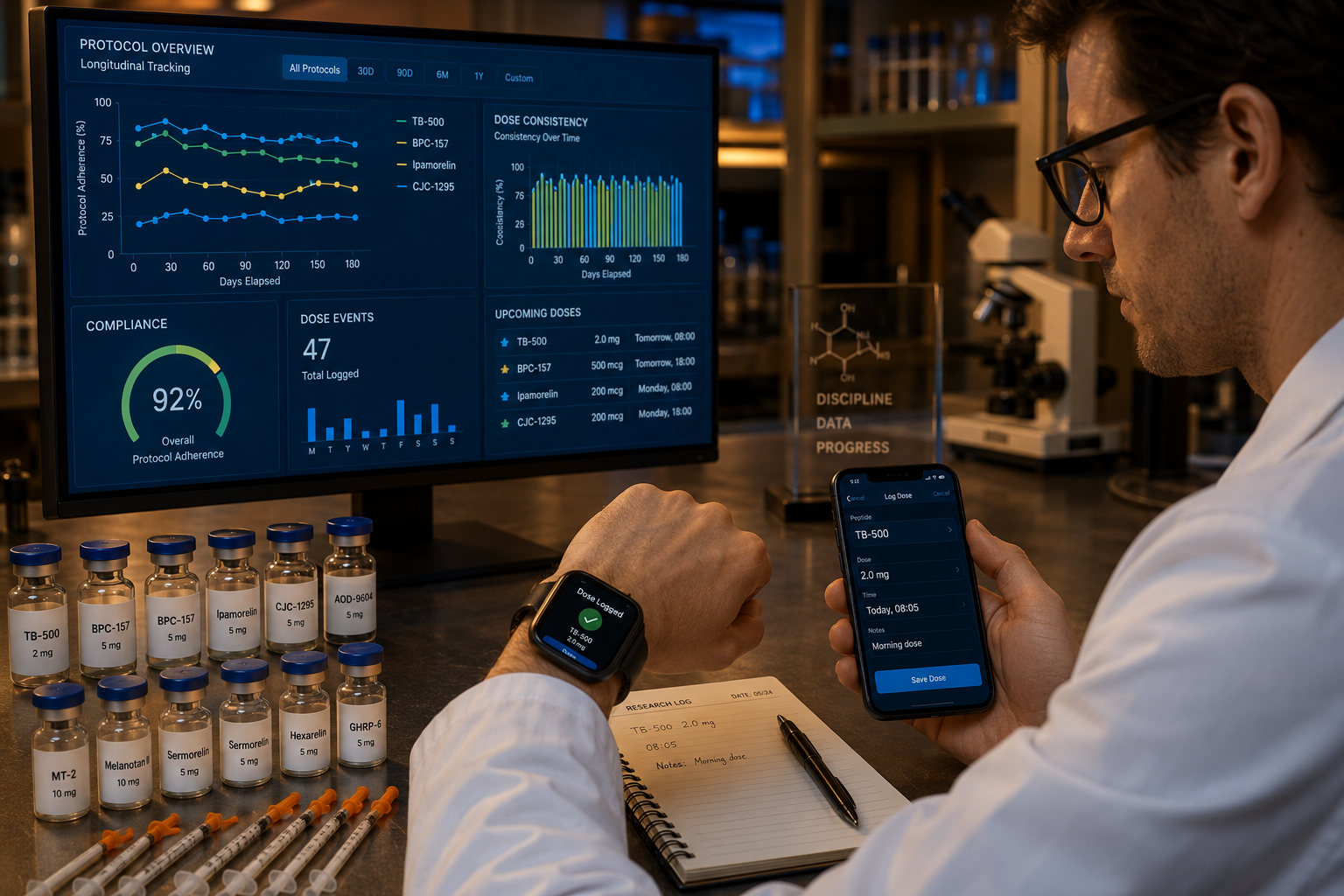
How peptide calculator tools aid in accurate research dosing and reconstitution extends beyond single-dose math. The Peptides Calculator iOS and Apple Watch app surpassed 50,000 users and logged over one million recorded dose events by June 2026. This scale of data demonstrates that researchers are using these tools for longitudinal protocol tracking, not just one-time calculations.
Consistent dose logging enables researchers to:
- Identify administration timing patterns across a protocol window
- Confirm dose-to-dose reproducibility
- Flag deviations that could confound results
This is particularly relevant for multi-peptide research programs. Protocols involving compounds like PT-141 or GLP-1 pathway agents often span weeks, making consistent dosing records a research quality control asset.
Researchers exploring blended formulations, such as the Klow Blend multi-pathway protocol, benefit especially from tools that handle multiple compounds simultaneously rather than requiring separate calculations for each.
Pairing a reliable calculator with a verified peptide supplier and a well-documented tesa dosage reference creates a complete accuracy framework from sourcing through administration.
Conclusion
Peptide calculator tools are not a luxury for researchers who value precision. They are a practical safeguard against the arithmetic errors that undermine reproducibility. The actionable steps are clear: adopt a calculator that handles unit conversion, vial presets, and draw volume output in syringe units; use longitudinal logging features to maintain dose consistency across a full protocol; and integrate dosing tools with evidence-based stack compatibility resources. As research compounds grow more complex and protocols longer, the role of these tools in maintaining data integrity will only grow.
Leave a Reply
Want to join the discussion?Feel free to contribute!