

Fewer than 30% of peptide compounds sold online meet the purity thresholds required for reliable preclinical research, a statistic that makes supplier selection one of the most consequential decisions a researcher can make. For scientists investigating intestinal adaptation, mucosal repair, and metabolic signaling, knowing where to buy research-grade GLP-2-T peptide and how to evaluate high-purity compounds is not a minor detail; it is foundational to data integrity.
This guide to sourcing high-purity GLP-2-T compounds walks through the key quality benchmarks, supplier evaluation criteria, and ordering best practices that serious researchers rely on in 2026.
Key Takeaways
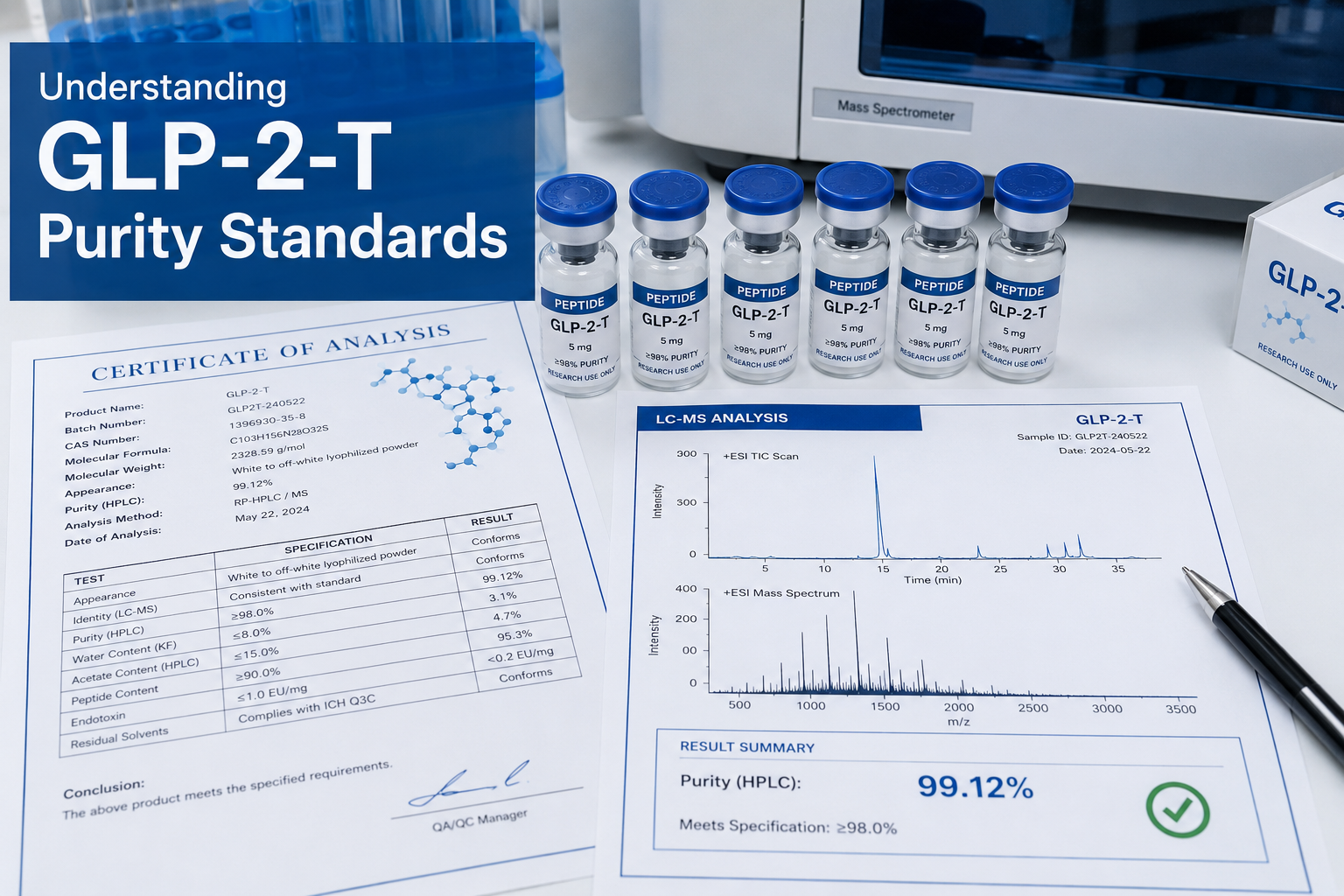
- Research-grade GLP-2-T peptide requires a minimum purity of 98%, verified by third-party HPLC and mass spectrometry analysis.
- Certificates of Analysis (CoA) from independent labs are non-negotiable when vetting any supplier.
- Reputable suppliers provide transparent documentation, cold-chain shipping, and clearly labeled research-only designations.
- Newer GLP-related analogs are expanding rapidly; understanding the GLP peptide landscape helps researchers select the right compound.
- Domestic suppliers with updated product listings, such as those refreshed in mid-2026, tend to offer more reliable stock and documentation consistency.
Understanding GLP-2-T: What Researchers Need to Know Before Sourcing
GLP-2-T (Glucagon-Like Peptide-2, Thr-substituted analog) is a modified variant of native GLP-2, designed to extend half-life and improve stability in research settings. Native GLP-2 is a 33-amino acid peptide secreted by intestinal L-cells, primarily studied for its role in gut epithelial proliferation, nutrient absorption, and mucosal barrier integrity.
The "T" designation refers to a threonine substitution that resists dipeptidyl peptidase-IV (DPP-IV) cleavage, a modification that makes the compound more tractable for in vitro and in vivo research models.
Why purity matters here: Even a 2-3% impurity load in a GLP-2-T sample can introduce confounding variables in receptor-binding assays or cell proliferation studies. Researchers exploring the broader incretin landscape, including those reviewing GLP-1 receptor agonist research themes, consistently cite purity as the single largest variable affecting reproducibility.
For context on how GLP-family analogs have evolved across research generations, the overview of GLP-1 generations and structural differences provides useful background.
Key Quality Standards: A Guide to Sourcing High-Purity Compounds
Before placing any order, researchers should evaluate suppliers against a defined set of quality benchmarks. The table below summarizes the minimum acceptable standards for research-grade GLP-2-T peptide.
| Quality Parameter | Minimum Standard | Verification Method |
|---|---|---|
| Peptide Purity | >98% | HPLC chromatography |
| Molecular Identity | Confirmed | Mass spectrometry (MS) |
| Endotoxin Level | <1 EU/mg | LAL assay |
| Certificate of Analysis | Third-party issued | Independent lab documentation |
| Sterility | Lyophilized, sealed | Visual + documentation |
Understanding peptide purity testing methods in detail helps researchers interpret CoA data accurately rather than accepting supplier claims at face value.
Key principle: A supplier unwilling to share third-party CoA documentation before purchase should be disqualified immediately, regardless of price.
Where to Buy Research-Grade GLP-2-T Peptide: Evaluating Suppliers in 2026
The research peptide market has grown significantly, and not all vendors maintain consistent standards. As of mid-2026, suppliers such as Nationwide Peptides and Cenexa Labs have updated their GLP-2 and GLP-2-T product pages with current batch documentation, a positive indicator of active inventory management and quality oversight.
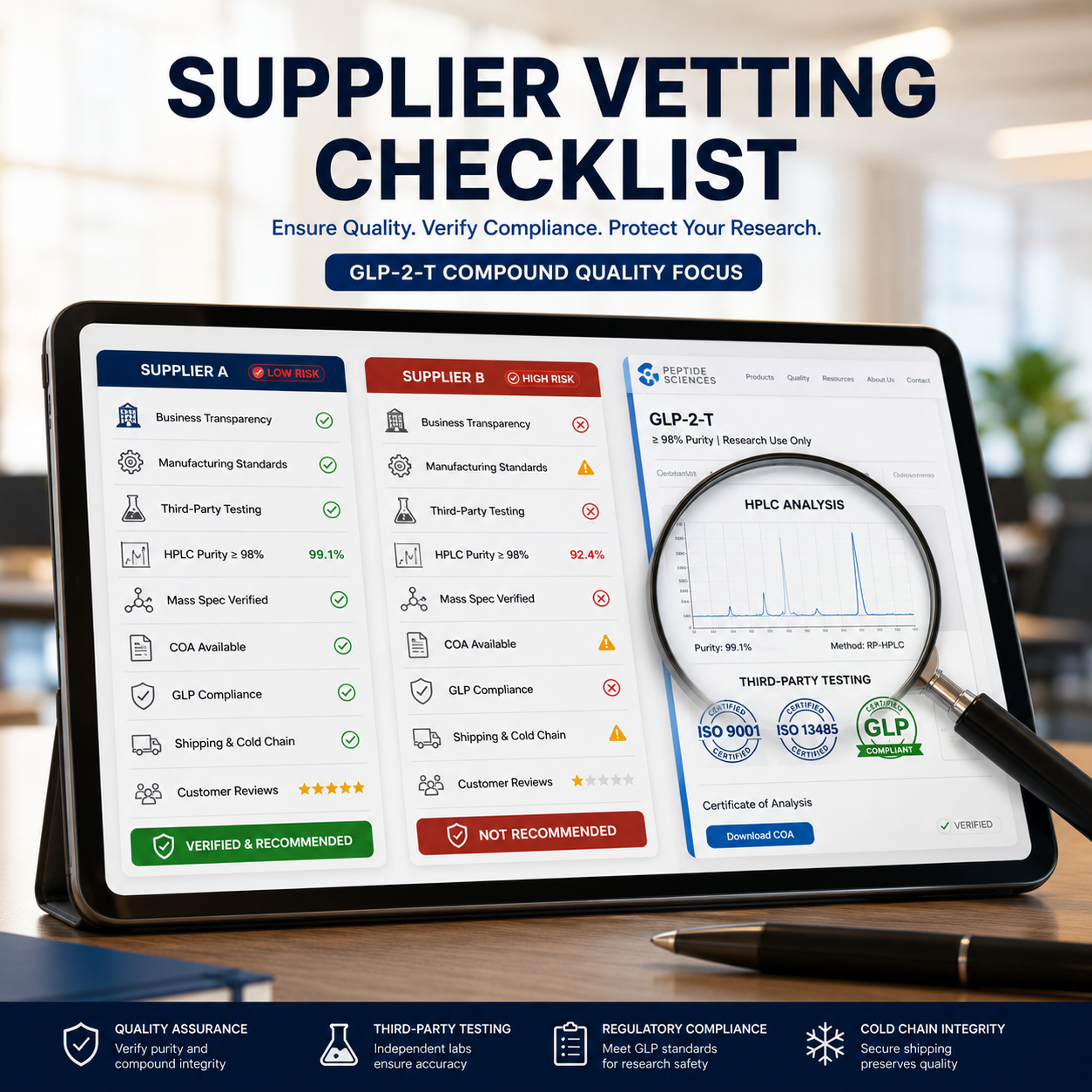
What to look for in a reputable supplier:
- Independent third-party testing, CoAs issued by labs with no commercial relationship to the vendor
- Transparent batch numbers, traceable to specific synthesis runs
- Research-only labeling, clearly states the compound is for laboratory use, not human consumption
- Cold-chain shipping options, lyophilized peptides remain stable at room temperature short-term, but cold-chain shipping reduces degradation risk during transit
- Responsive technical support, ability to answer questions about reconstitution, storage, and compound specifications
Researchers sourcing GLP-related compounds may also find value in reviewing the GLP-3 triple agonist research catalog to understand how adjacent compounds are documented and presented by quality-focused vendors.
For those comparing sourcing options across compound classes, the comprehensive peptide catalog overview offers a useful reference point for evaluating how vendors organize and disclose product information.
Storage, Handling, and Ordering Best Practices
Receiving high-purity GLP-2-T peptide is only half the equation. Improper storage or reconstitution can degrade even a 99%-pure compound within days.
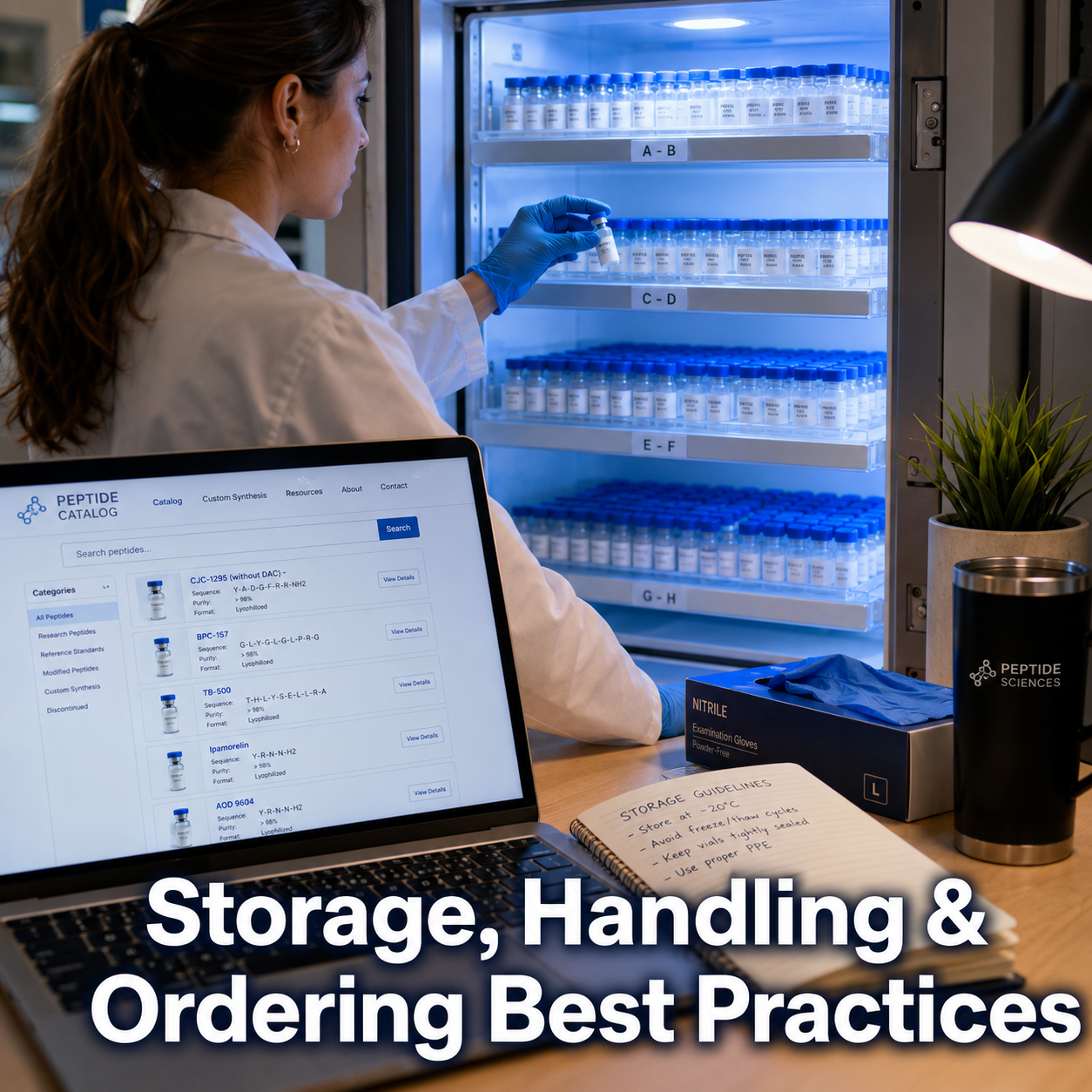
Storage guidelines:
- Store lyophilized powder at -20°C for long-term stability
- After reconstitution, store at 4°C and use within 48-72 hours
- Avoid repeated freeze-thaw cycles, aliquot before freezing
- Use sterile bacteriostatic water or acetic acid solution for reconstitution, depending on solubility specifications
Ordering checklist:
- Confirm current batch CoA is available before checkout
- Verify purity percentage matches the stated research-grade threshold
- Check that the supplier lists the compound under research-use-only terms
- Review shipping conditions, especially for warm-weather transit
- Confirm return or replacement policy for damaged shipments
Researchers working with peptide blends or multi-compound protocols should also review available peptide blend formulations to understand how combination products are documented versus single-compound vials.
For broader context on the evolving peptide research landscape in 2026, the latest peptide research updates provide relevant background on emerging analogs and regulatory considerations.
Conclusion
Knowing where to buy research-grade GLP-2-T peptide and applying a rigorous guide to sourcing high-purity compounds directly determines the quality of downstream research outcomes. The steps are straightforward: demand third-party CoAs, verify purity above 98% via HPLC and mass spectrometry, confirm research-only labeling, and choose suppliers with demonstrably current inventory documentation.
Actionable next steps for researchers:
- Build a supplier vetting checklist based on the quality parameters outlined above
- Request CoA documentation from any new vendor before committing to a purchase
- Cross-reference batch purity data against your assay sensitivity requirements
- Review updated GLP-2-T listings from vendors who refreshed their catalogs in 2026
- Bookmark resources on GLP-1 dual receptor agonism research to contextualize GLP-2-T findings within the broader incretin family
Sourcing decisions made with rigor at the outset protect the integrity of every experiment that follows.
Leave a Reply
Want to join the discussion?Feel free to contribute!