Call or Text 727-513-9780
  • Shopping Cart Shopping Cart
    0Shopping Cart
Pure Tested Peptides | America's most trusted Peptides for sale online
  • Peptides for sale
    • Oral Peptides for sale
      • Peptide Capsules for sale
      • BPC 157 Capsules 1000mcg
      • SLU-PP-332 Capsules | 1000 mcg
      • 5-Amino-1MQ 50mg Capsules
      • Tesofensine 500mcg
    • All Peptides for sale
    • Peptide Sprays
      • BPC 157 Nasal Spray Kit
      • BPC-157 TB500 Nasal Spray Kit
      • Semax Nasal Spray 10mg
      • Selank – Nasal Spray Kit – 10mg
      • Epithalon 50MG Nasal Spray Kit
      • Ipamorelin 10mg Nasal Spray
      • Klow Nasal Spray (BPC-157 + TB-500 + GHK-Cu + KPV) | 80mg
      • Hulk Nasal Spray Tesa / Ipa Blend 6/3 MG
      • Klow Nasal Spray
      • NAD + 500 mg Nasal Spray
      • PT-141 Nasal Spray Kit
    • GHRH Peptides
      • Ipa Peptides
      • CJC-1295 Peptides
        • CJC-1295 with DAC 5 mg
        • CJC-1295 without DAC 5 mg
        • CJC-1295 Ipa 10mg
      • Tesa Peptides
        • Tesa Peptide
        • Tesa 20 mg
    • GHK-Cu Peptides
      • All GHK-Cu Peptides
      • GHK-Cu 100mg
      • KLOW Peptide Blend – Buy KLOW blend online
    • BPC Peptides
      • All BPC Peptides
      • BPC-157
      • BPC-157 TB-500
      • BPC 157 capsules 1000mcg
    • SLU-PP-332 Peptides
      • All SLU-PP-332 Peptides
      • SLU-PP-332 5mg
    • GLP3 Peptides
      • GLP3-R
      • GLP3-R CAG 10mg
      • GLP3-R 20mg
    • PT-141 Peptides
      • PT-141 Peptides for sale
      • PT-141 10mg
      • PT-141 Nasal Spray
    • CAG Peptides
      • Lipo-C Peptide Blend
      • CAG 5mg
      • CAG 10mg
    • MOTS-C Peptides
      • MOTS-C Peptides for sale
      • MOTS-c peptide
      • MOTS-c 10mg *6 pack*
    • 5 Amino 1MQ Peptides
      • 5 Amino 1MQ Peptides for sale
      • 5-Amino-1MQ 50mg Capsules
      • 5-Amino-1MQ 5mg
    • Epithalon Peptides
      • Epithalon Peptides for sale
      • Epithalon 10mg
      • Epithalon 50mg
  • Shop
    • GLPs
      • 5-Amino-1MQ 50mg Capsules
      • 5-Amino-1MQ 5mg
      • GLP3-Reta
      • L-Carnitine 500mg/ml
      • Tesofensine 500mcg
      • SLU-PP-332 5mg
      • MOTS-c 10mg *6 pack*
    • Epithalon & BPC Peptides
      • Epithalon 10mg
      • Epithalon 50mg
      • BPC-157
      • BPC 157 capsules 1000mcg
      • BPC-157 TB-500
      • BPC-157 TB500 Nasal Spray Kit
      • BPC 157 Nasal Spray Kit
    • BPC TB-500 & NAD+ Peptides
      • NAD+ 500 mg
      • KLOW Peptide Blend – Buy KLOW blend online
      • GLOW Peptide Blend
      • TB 500 5mg
      • BPC 157 capsules 1000mcg – Supplement
      • BPC 157 Nasal Spray Kit
      • BPC-157
      • BPC-157 TB500 Nasal Spray Kit
      • BPC-157 TB-500
      • BPC 157 capsules 1000mcg
    • LL-37 Peptide
      • LL-37 10 mg
    • MOTS-C & Selank
      • MOTS-c peptide
      • Selank 10mg
    • GHK Peptides
      • GHK-Cu 100mg
      • GLOW Peptide Blend
      • KLOW Peptide Blend – Buy KLOW blend online
  • COAs
  • Wholesale
    • Wholesale Peptides for sale
  • PTP FAQ
  • Affiliates
    • Affiliate Program
    • Affiliate Signup
  • Contact
    • Contact Customer Service
    • Text Customer Support
  • About US
  • Shop all peptides
  • Login / Register Login / Register Page Link Login / Register Page Link
  • Click to open the search input field Click to open the search input field Search
  • Menu Menu
5-Amino-1MQ and SLUPP332 Research Stack: What Each Compound Contributes to Metabolic Signaling

5-Amino-1MQ and SLUPP332 Research Stack: What Each Compound Contributes to Metabolic Signaling

July 10, 2026/0 Comments/in Uncategorized/by

Mitochondrial dysfunction sits at the center of nearly every major metabolic disorder studied today, yet two compounds now drawing serious attention in preclinical research, 5-Amino-1MQ and SLUPP332, approach that dysfunction from entirely different molecular angles. Understanding the 5-Amino-1MQ and SLUPP332 research stack: what each compound contributes to metabolic signaling requires looking at those distinct roles separately before considering how they fit together in experimental models of adiposity and energy regulation.

Key Takeaways

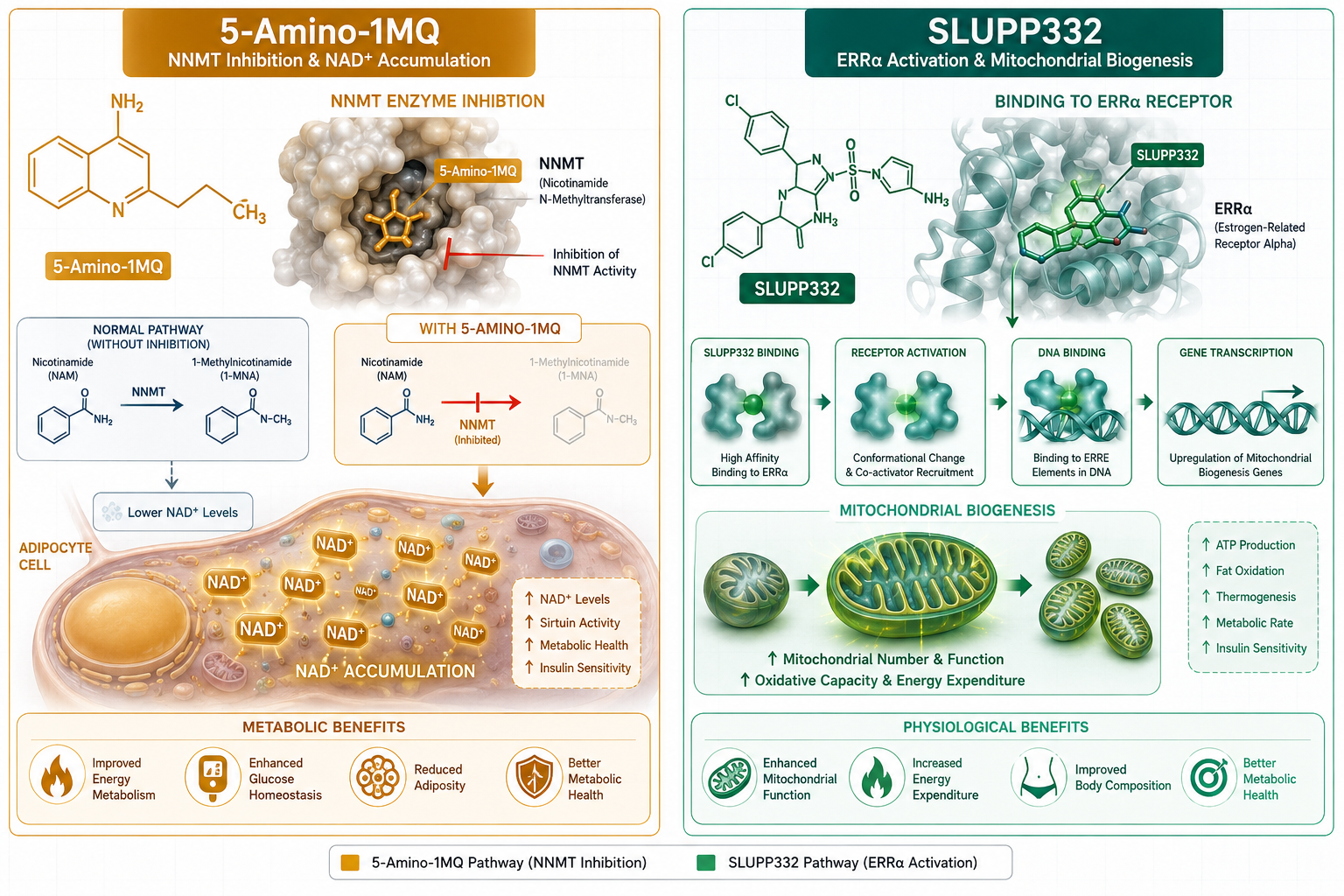
  • 5-Amino-1MQ selectively inhibits NNMT, an enzyme that depletes NAD+ in adipose tissue, thereby preserving mitochondrial energy currency.
  • SLUPP332 acts as an ERRα agonist, directly stimulating the gene programs responsible for mitochondrial biogenesis and oxidative metabolism.
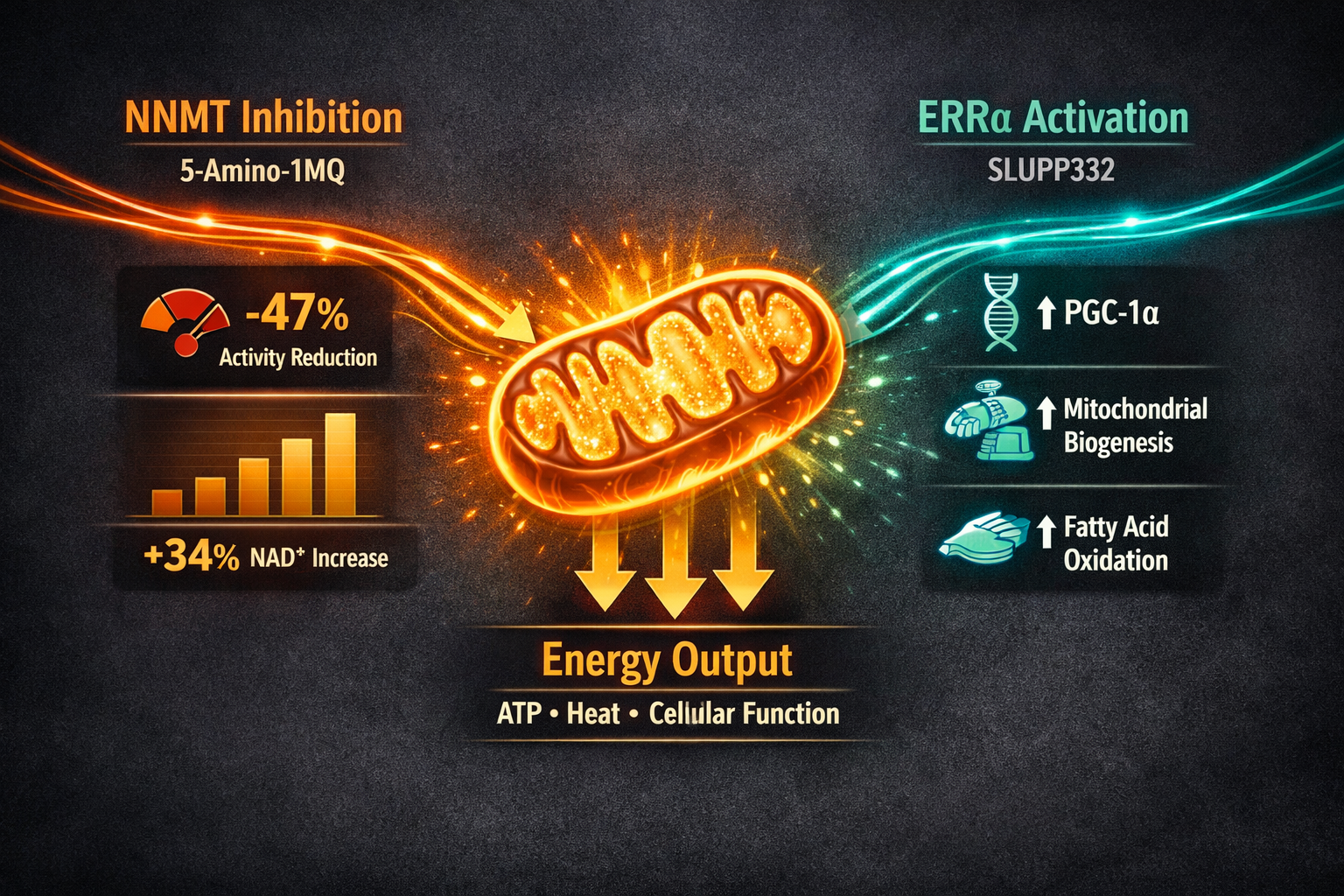
  • Preclinical data show a 47% reduction in NNMT activity and a 34% rise in cellular NAD+ within 48 hours for 5-Amino-1MQ.
  • Both compounds remain classified as research chemicals with no approved human therapeutic use as of 2026.
  • Their mechanistic differences make them useful tools for studying separate nodes of the same metabolic network.
Key Takeaways

How Each Compound Targets Metabolic Signaling

5-Amino-1MQ: Blocking the NAD+ Drain

Nicotinamide N-methyltransferase (NNMT) is an enzyme expressed heavily in adipose tissue. When NNMT activity is elevated, it consumes S-adenosylmethionine and accelerates NAD+ depletion, effectively starving mitochondria of the cofactor they need for energy metabolism.

5-Amino-1MQ functions as a selective, small-molecule NNMT inhibitor. By blocking this enzyme, the compound allows intracellular NAD+ concentrations to recover. In animal models, a single administration achieved a 47% reduction in NNMT activity within 30 minutes. Over 48 hours, cellular NAD+ concentrations rose by approximately 34%, accompanied by measurable increases in mitochondrial biogenesis markers.

This mechanism positions 5-Amino-1MQ as an upstream regulator, it removes a metabolic brake rather than pressing an accelerator. Researchers studying adiposity models find this distinction important because NNMT overexpression is commonly observed in obese adipose tissue, making the enzyme a relevant experimental target.

For context on how NAD+ pathways intersect with broader longevity and metabolic research, the NAD+ research overview provides useful background on cofactor-level signaling.

SLUPP332: Activating the Mitochondrial Build Program

Where 5-Amino-1MQ works by removing an inhibitor, SLUPP332 works by activating a promoter. It functions as an agonist of estrogen-related receptor alpha (ERRα), a nuclear receptor that governs the transcription of genes involved in mitochondrial biogenesis and oxidative phosphorylation.

ERRα is sometimes described as a master switch for oxidative metabolism. When SLUPP332 binds and activates it, the downstream effect is an upregulation of the gene networks that build new mitochondria and increase the capacity for fatty acid oxidation. Preclinical studies confirm increased mitochondrial biogenesis and improved oxidative metabolism gene expression following SLUPP332 administration.

Researchers interested in MOTS-c and metabolic stress models will recognize a conceptual parallel: both MOTS-c and SLUPP332 engage mitochondrial signaling, though through distinct receptor systems.

SLUPP332: Activating the Mitochondrial Build Program

Framing the Research Stack in Adiposity and Energy Models

Why Researchers Use These Compounds Together

The 5-Amino-1MQ and SLUPP332 research stack is particularly relevant in experimental designs that aim to interrogate multiple points in the same metabolic pathway simultaneously. The two compounds do not duplicate each other's function, they occupy different nodes.

Feature 5-Amino-1MQ SLUPP332
Primary target NNMT enzyme ERRα nuclear receptor
Mechanism class Enzyme inhibitor Receptor agonist
Primary effect Raises NAD+ availability Stimulates mitochondrial biogenesis
Tissue focus Adipose tissue Broad oxidative metabolism

This separation of function means a researcher can use 5-Amino-1MQ to address the supply side of mitochondrial energy (NAD+ availability) while using SLUPP332 to address the demand and capacity side (mitochondrial number and oxidative gene expression). Together, they offer a more complete picture of metabolic signaling than either compound alone.

"Distinct mechanisms at separate pathway nodes allow researchers to isolate variables that a single-compound design would conflate."

Researchers working on body composition models may also find value in reviewing IPA muscle and fat research themes and tesa and body composition research for comparative mechanistic context.

Current Limitations and Research Status

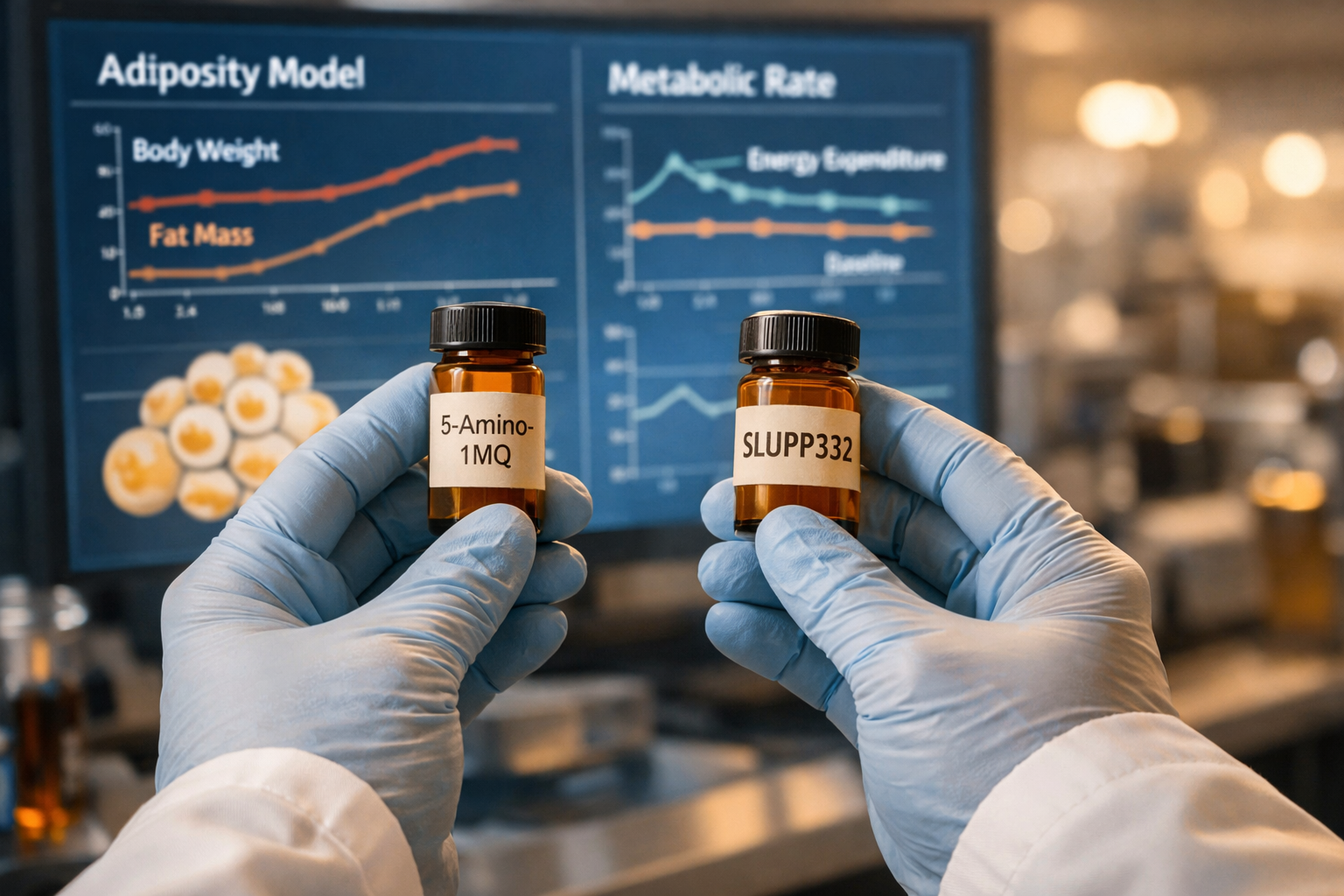
As of 2026, human clinical trial data for both compounds remain limited. Most available evidence comes from preclinical animal and cell-based models. Neither 5-Amino-1MQ nor SLUPP332 holds regulatory approval for human therapeutic use; both are classified strictly as research chemicals.

This limitation matters for experimental design. Researchers should treat findings from animal models as hypothesis-generating rather than conclusive. The SLUPP332 research overview outlines current preclinical data in greater detail.

For those building broader metabolic research frameworks, longevity peptide research and GLP-1 generational research concepts offer adjacent reference points on metabolic signaling compounds at various stages of study.

Current Limitations and Research Status

Conclusion

The 5-Amino-1MQ and SLUPP332 research stack: what each compound contributes to metabolic signaling is best understood through their mechanistic separation. 5-Amino-1MQ clears the path for NAD+ recovery by inhibiting NNMT, while SLUPP332 activates ERRα to build mitochondrial capacity. Neither role is redundant.

For researchers designing adiposity or energy-metabolism experiments in 2026, actionable next steps include:

  • Characterize baseline NNMT expression in the target tissue before introducing 5-Amino-1MQ to confirm the enzyme is a relevant variable.
  • Measure ERRα activity and mitochondrial density markers independently to establish whether SLUPP332 produces the expected transcriptional response in the chosen model.
  • Use each compound as a mechanistic probe rather than assuming additive effects without controlled comparison arms.
  • Monitor NAD+ and oxidative metabolism endpoints separately to attribute observed changes to the correct compound.

Both compounds represent promising tools for metabolic research, but rigorous experimental design and awareness of their preclinical-only status remain essential.

Tags: 5-amino-1mq, adipose tissue metabolism, energy metabolism research, errα agonist, metabolic signaling, mitochondrial biogenesis, nad+ research, nnmt inhibitor, oxidative metabolism, preclinical research compounds, research stack, slupp332
https://www.puretestedpeptides.com/wp-content/uploads/2026/07/5-Amino-1MQ-and-SLUPP332-Research-Stack-What-Each-Compound-Contributes-to-Metabolic-Signaling.webp 1024 1536 https://www.puretestedpeptides.com/wp-content/uploads/2026/01/buy-peptides-online.jpg 2026-07-10 13:37:462026-07-10 13:37:465-Amino-1MQ and SLUPP332 Research Stack: What Each Compound Contributes to Metabolic Signaling
You might also like
5-Amino-1MQ Peptide: Exploring its Metabolic Pathway and Emerging Research Applications 5-Amino-1MQ Peptide: Exploring its Metabolic Pathway and Emerging Research Applications
5-Amino-1MQ Peptide: Mechanisms of NNMT Inhibition and Research into Metabolic Disorders 5-Amino-1MQ Peptide: Mechanisms of NNMT Inhibition and Research into Metabolic Disorders
5-Amino-1MQ and SLUPP332 in Metabolic Research: How NNMT Targeting Is Framed in Experimental Design 5-Amino-1MQ and SLUPP332 in Metabolic Research: How NNMT Targeting Is Framed in Experimental Design
5-Amino-1MQ Peptide Research: NNMT Inhibition, Fat Metabolism, and Why It Is Often Paired With Mitochondrial Stacks 5-Amino-1MQ Peptide Research: NNMT Inhibition, Fat Metabolism, and Why It Is Often Paired With Mitochondrial Stacks
SLUPP332 With 5-Amino-1MQ: Designing Mitochondrial and NNMT-Targeted Peptide Stacks for Obesity Research SLUPP332 With 5-Amino-1MQ: Designing Mitochondrial and NNMT-Targeted Peptide Stacks for Obesity Research
Adenosine Triphosphate (ATP), Cell Energy, and Peptide Signaling: Where MOTS-c, 5-Amino-1MQ, and GLP-3 Retatrutide Fit Adenosine Triphosphate (ATP), Cell Energy, and Peptide Signaling: Where MOTS-c, 5-Amino-1MQ, and GLP-3 Retatrutide Fit
SLUPP332 and 5‑Amino‑1MQ in Obesity Research: Building Mitochondrial and NNMT‑Targeted Multi‑Peptide Protocols SLUPP332 and 5‑Amino‑1MQ in Obesity Research: Building Mitochondrial and NNMT‑Targeted Multi‑Peptide Protocols
SLUPP332 and 5‑Amino‑1MQ in Obesity Research: Building Mitochondrial and NNMT‑Targeted Multi‑Peptide Protocols Mitochondria, MOTS‑c, and 5‑Amino‑1MQ: How Polypeptide Peptides Rewire Cellular Energy Metabolism
0 replies

Leave a Reply

Want to join the discussion?
Feel free to contribute!

Leave a Reply Cancel reply

Your email address will not be published. Required fields are marked *

×

Helpful Links

  • My account
  • Cart
  • Checkout
  • Refund and Returns Policy
  • Privacy Policy
  • SMS Privacy Policy
  • Login
  • My Account
  • Logout

USA Made Lab Tested Peptides

All products are sold for research, laboratory, or analytical purposes only, and are not for human consumption


Pure Tested Peptides is a chemical supplier. Pure Tested Peptides is not a compounding / chemical compounding facility as defined under 503A of the Federal Food, Drug, and Cosmetic act. Pure Tested Peptides is not an outsourcing facility as defined under 503B of the Federal Food, Drug, and Cosmetic act.

The statements made within this website have not been evaluated by the US Food and Drug Administration. The products we offer are not intended to diagnose, treat, cure or prevent any disease.

Human/Animal Consumption Prohibited. Laboratory/In-Vitro Experimental Use Only

Link to: What Is Polypeptide Peptides? A Research-Friendly Guide to Terminology, Structure, and Function Link to: What Is Polypeptide Peptides? A Research-Friendly Guide to Terminology, Structure, and Function What Is Polypeptide Peptides? A Research-Friendly Guide to Terminology, Structure,...What Is Polypeptide Peptides? A Research-Friendly Guide to Terminology, Structure, and Function Link to: Enclomiphene Alternatives in Hormone Research: How It Compares With serms and Estrogen-Signaling Models Link to: Enclomiphene Alternatives in Hormone Research: How It Compares With serms and Estrogen-Signaling Models Enclomiphene Alternatives in Hormone Research: How It Compares With serms and Estrogen-Signaling ModelsEnclomiphene Alternatives in Hormone Research: How It Compares With serms and...
Scroll to top Scroll to top Scroll to top