

Participants in a landmark phase 2 trial lost up to 24% of their body weight in 48 weeks, a number that stopped the obesity research community in its tracks. That molecule was retatrutide, and understanding why it performs so differently from existing GLP-1 drugs starts with one critical distinction: it does not work on a single receptor. This Retatrutide (GLP-3) Research Guide: Mechanism, Phase 2 Data, and Why Triple Agonism Differs From GLP-1 Drugs breaks down the science, the published data, and what separates this compound from the current generation of weight-loss medications.
Key Takeaways
- Retatrutide is a true triple agonist, activating GLP-1, GIP, and glucagon receptors simultaneously, not just GLP-1.
- The informal label "GLP-3" is a popular shorthand, not an official pharmacological classification.
- Phase 2 data showed up to 24% mean weight loss at 48 weeks, exceeding results seen with single or dual agonists.
- Triple agonism targets fat metabolism through three distinct biological pathways at once.
- Retatrutide remains an investigational compound; it is not approved for clinical use as of 2026.
Understanding the Mechanism: Why "GLP-3" Is a Misnomer
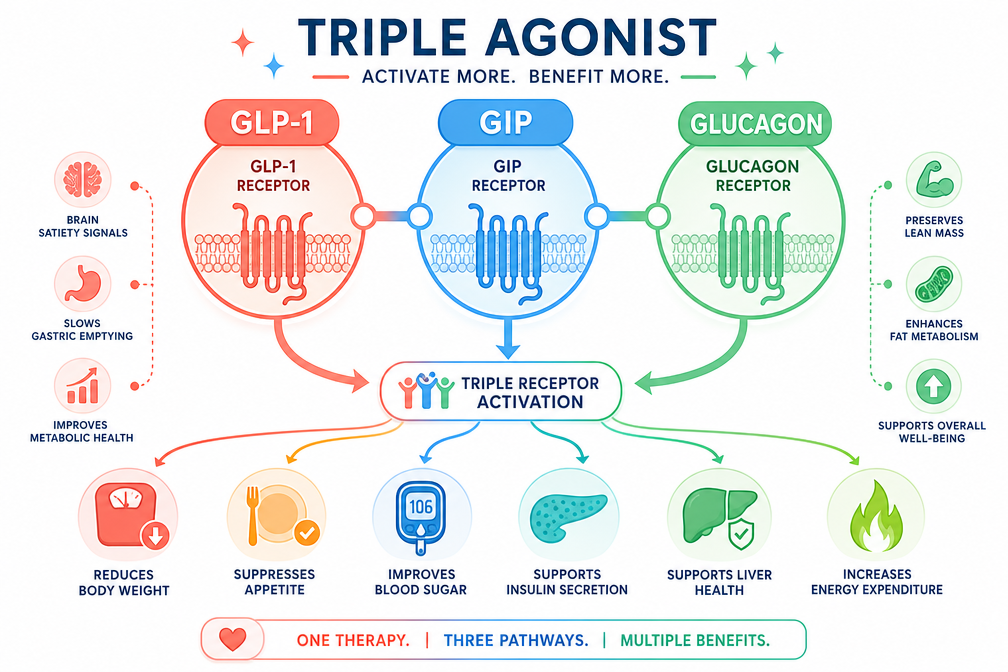
The term "GLP-3" has spread rapidly in research forums and peptide communities, but it is technically inaccurate. Retatrutide is not a third type of glucagon-like peptide. It is a single synthetic peptide molecule engineered to bind and activate three separate hormone receptors:
| Receptor | Primary Role |
|---|---|
| GLP-1 (glucagon-like peptide-1) | Appetite suppression, insulin release |
| GIP (glucose-dependent insulinotropic polypeptide) | Insulin amplification, fat storage regulation |
| Glucagon receptor | Energy expenditure, fat oxidation |
This simultaneous activation is what researchers mean by "triple agonism." Each receptor pathway contributes something different. GLP-1 receptor activation reduces appetite and slows gastric emptying. GIP receptor activation enhances the insulin response and may improve the tolerability of GLP-1 stimulation. Glucagon receptor activation increases energy expenditure by stimulating fat breakdown in the liver and peripheral tissues.
No currently approved GLP-1 drug activates all three pathways. Semaglutide is a GLP-1 mono-agonist. Tirzepatide is a dual GIP/GLP-1 agonist. Retatrutide adds the glucagon receptor layer on top of both, creating a fundamentally different metabolic profile.
Researchers exploring broader longevity peptide research will recognize that multi-receptor strategies are becoming a recurring theme across metabolic and regenerative science.

Phase 2 Data: What the Published Obesity Trial Actually Showed
The phase 2 randomized controlled trial published results that drew immediate attention. Key findings included:
- Up to 24% mean body weight reduction at 48 weeks in the highest-dose group
- Dose-dependent weight loss across multiple retatrutide arms
- Reductions in waist circumference, fasting glucose, and triglycerides
- Tolerability profile broadly consistent with GLP-1 class effects (nausea, vomiting at higher doses)
"The magnitude of weight loss observed with retatrutide at 48 weeks exceeded what had been reported in phase 2 trials for any prior single or dual incretin-based therapy."
These results placed retatrutide ahead of tirzepatide's phase 2 benchmarks and significantly above semaglutide's phase 2 data. The glucagon receptor component is widely credited for the additional fat-burning effect, since glucagon directly stimulates hepatic fat oxidation and thermogenesis, mechanisms that GLP-1 and GIP alone do not fully engage.
For researchers studying compounds with overlapping metabolic effects, the IPA muscle and fat research themes page offers relevant context on how secretagogue-class peptides interact with body composition.
Why Triple Agonism Differs From GLP-1 Drugs
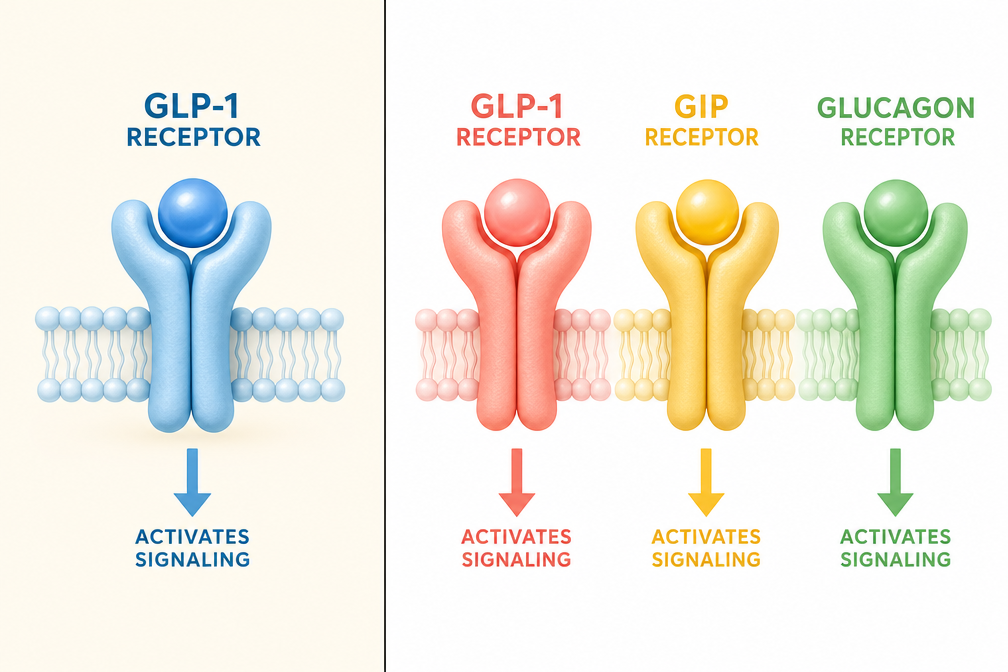
This section of the Retatrutide (GLP-3) Research Guide addresses the question researchers ask most: what does the extra glucagon receptor activity actually add?
Three key differences stand out:
- Energy expenditure: GLP-1 drugs primarily reduce caloric intake. Retatrutide also increases calories burned through glucagon-driven thermogenesis.
- Fat oxidation: Glucagon receptor activation directly promotes fat breakdown in liver tissue, a pathway absent in semaglutide and only partially engaged by tirzepatide.
- Potential lean mass preservation: Early data suggest the GIP component may help preserve lean body mass during rapid weight loss, though phase 3 trials will clarify this.
The practical implication is that retatrutide may produce greater total fat loss relative to lean mass loss compared with GLP-1 mono-agonists, a distinction that matters significantly in clinical and research contexts.
Researchers interested in related metabolic peptide science may find value in reviewing the AOD-9604 research overview and the 5-Amino-1MQ research page, both of which touch on fat metabolism pathways. Those exploring growth hormone secretagogue interactions can also consult the ipamorelin vs tesa comparison for context on how receptor selectivity shapes metabolic outcomes.
Conclusion
The Retatrutide (GLP-3) Research Guide: Mechanism, Phase 2 Data, and Why Triple Agonism Differs From GLP-1 Drugs points to one clear conclusion: retatrutide is not simply a stronger GLP-1 drug. It is a mechanistically distinct compound that engages three separate receptor systems to produce weight loss through appetite suppression, insulin regulation, and direct fat oxidation simultaneously.
Actionable next steps for researchers in 2026:
- Review the full published phase 2 trial data to understand dose-response relationships before drawing conclusions about efficacy.
- Track phase 3 trial enrollment and interim readouts, as these will determine whether the 24% weight loss benchmark holds at scale.
- Contextualize retatrutide within the broader landscape of metabolic peptides by exploring related longevity and metabolic research resources.
- Verify purity and sourcing standards for any research-grade peptide material, always request a certificate of analysis from suppliers.
Retatrutide represents a genuine step-change in incretin pharmacology. The science behind triple agonism is compelling, and the phase 2 data are among the strongest ever reported for an obesity intervention at this stage of development.
Leave a Reply
Want to join the discussion?Feel free to contribute!