
Unlocking Potential: Understanding aod9604 Peptide Synergy in 2026

The landscape of metabolic research is constantly evolving, presenting new avenues for understanding and potentially influencing physiological processes. Among the most intriguing areas is the study of specialized peptide fragments, particularly their capacity to work together to produce amplified or distinct outcomes. In this dynamic field, the concept of "aod9604 peptide synergy" has emerged as a topic of significant interest for peptide shoppers, researchers, and those focused on fitness and health. This article delves into the fascinating world of AOD9604 and its potential synergistic interactions, exploring how these powerful compounds, when studied together, might offer enhanced metabolic regulation, fat metabolism support, and broader systemic benefits in laboratory settings as of 2026.
Key Takeaways
- AOD9604's Role: AOD9604 is a modified fragment of human growth hormone (hGH) recognized for its specific effects on fat metabolism without significantly impacting insulin sensitivity or growth factors.
- MOTS-c's Influence: MOTS-c is a mitochondrial-derived peptide involved in metabolic homeostasis, mitochondrial function, and exhibiting exercise-mimetic properties.
- The Power of Synergy: The concept of aod9604 peptide synergy suggests that combining these peptides might lead to amplified benefits in areas like fat loss, energy expenditure, and overall metabolic health beyond what each peptide achieves alone.
- Research Focus: Current research in 2026 is concentrated on understanding the precise mechanisms and optimal combinations for achieving this synergy in controlled laboratory environments.
- Future Directions: The exploration of aod9604 peptide synergy offers exciting prospects for advanced metabolic research and potential future applications.
Decoding AOD9604 and MOTS-c: Individual Mechanisms and Foundational Benefits
[[INSERT IMAGE HERE]]
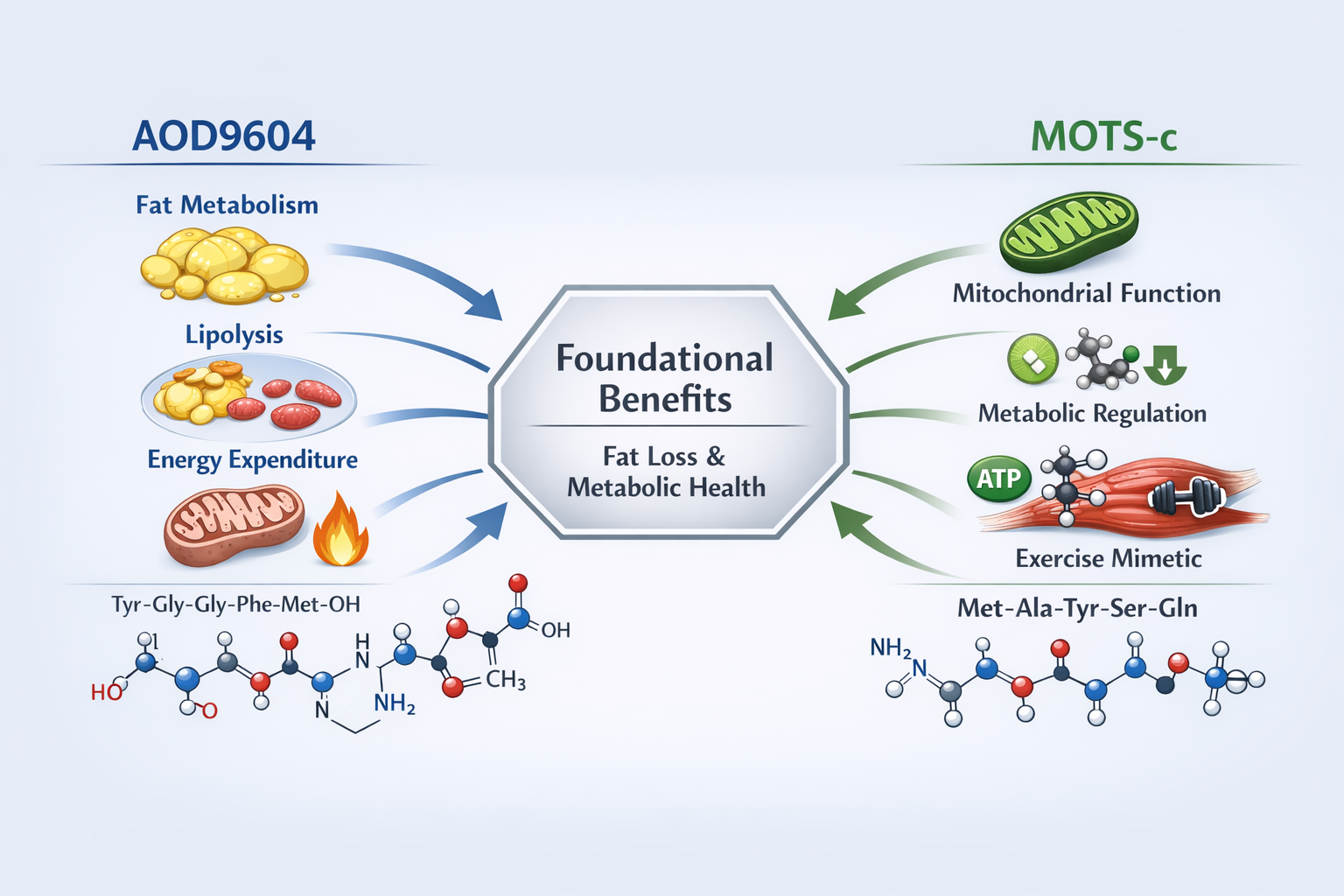
To truly grasp the concept of aod9604 peptide synergy, it is essential to first understand the individual actions and unique properties of AOD9604 and MOTS-c. These peptides, while distinct in their origins and primary mechanisms, both play significant roles in metabolic regulation.
AOD9604: A Targeted Approach to Fat Metabolism
AOD9604 is a synthetic peptide that represents a modified fragment of the C-terminal region of human growth hormone (hGH), specifically amino acids 176-191 [1]. Unlike full-length hGH, AOD9604 is designed to selectively target fat metabolism without activating the hGH receptor, thereby avoiding the undesirable effects associated with hGH, such as insulin resistance or the promotion of IGF-1 levels. This specificity is what makes AOD9604 particularly interesting for research into adiposity and metabolic health.
Key Research Findings for AOD9604:
- Lipolytic Activity: Studies indicate that AOD9604 primarily functions by stimulating lipolysis, the breakdown of stored fat (triglycerides) into fatty acids and glycerol, primarily from adipose tissue [2]. This action mimics the lipolytic effect of hGH but without its proliferative properties.
- Fat Oxidation: Beyond merely breaking down fat, AOD9604 has been observed to inhibit lipogenesis (the formation of new fat) [3]. This dual action – promoting fat breakdown and preventing new fat storage – positions AOD9604 as a promising subject for research into weight management and body composition.
- Cartilage Repair: Intriguingly, some research has also explored AOD9604's potential in areas beyond fat metabolism, including its effects on cartilage repair and regeneration, suggesting a broader range of biological activities than initially thought [4]. This multi-faceted nature adds another layer of complexity to its study.
- Safety Profile: Early research has generally shown AOD9604 to have a favorable safety profile, with no significant adverse effects reported on blood glucose levels or insulin sensitivity, which is a key differentiator from full hGH [5]. This targeted action makes it appealing for metabolic research where specific outcomes are desired.
For those interested in exploring the specifics of AOD9604 research, detailed information can be found at AOD-9604. Further insights into its metabolic research applications are available on pages like AOD9604 metabolic research.
MOTS-c Peptide: The Mitochondrial Messenger
The mots c peptide, or MOTS-c, stands in contrast to AOD9604 in its origin and primary mechanisms of action. MOTS-c is a 16-amino acid mitochondrial-derived peptide (MDP) [6]. Unlike classic peptides synthesized from nuclear DNA, MOTS-c is encoded within the mitochondrial genome, highlighting its unique evolutionary and functional significance. Its primary role revolves around regulating metabolic homeostasis, particularly within skeletal muscle.
Core Functions of MOTS-c Peptide:
- Mitochondrial Function: MOTS-c is deeply involved in regulating mitochondrial function. It influences cellular energy metabolism, promotes glucose uptake into skeletal muscle cells, and enhances insulin sensitivity [7]. These actions are crucial for maintaining healthy metabolic rates and preventing metabolic dysregulation.
- Exercise Mimetic Effects: One of the most remarkable aspects of MOTS-c is its ability to mimic some of the physiological benefits of exercise [8]. Research has shown that mots-c peptide can improve physical performance, increase endurance, and protect against diet-induced obesity and insulin resistance, even without actual physical activity. This makes mot c peptide a fascinating subject for those researching metabolic conditions and healthy aging.
- Metabolic Homeostasis: By influencing AMPK signaling pathways, MOTS-c helps to maintain energy balance within the cell, particularly in response to metabolic stress [9]. This makes the mot-c peptide a key player in how the body adapts to different energy demands and nutritional states.
- Beyond Metabolism: While its metabolic roles are prominent, emerging research suggests that mots c peptide benefits might extend to neuroprotection, cardiovascular health, and even longevity pathways, indicating its broad influence across various physiological systems [10].
For comprehensive information on this intriguing peptide, including its potential mots c peptide benefits, researchers can visit pages such as MOTS-c 10mg and AOD9604 and MOTS-c.
The independent actions of AOD9604 and MOTS-c clearly demonstrate their individual potential for influencing metabolic processes. However, the true intrigue lies in understanding how these distinct mechanisms might converge and amplify each other, leading to the exciting prospect of aod9604 peptide synergy.
Exploring aod9604 Peptide Synergy: Beyond Individual Action
[[INSERT IMAGE HERE]]
The discussion around "aod9604 peptide synergy" moves beyond the isolated effects of each compound to investigate their combined potential. Synergy, in a scientific context, means that the combined effect of two or more agents is greater than the sum of their individual effects. When considering AOD9604 and MOTS-c, their distinct yet complementary mechanisms provide a compelling rationale for exploring such synergistic interactions in laboratory and research settings.
The Rationale for Combination: Complementary Mechanisms
The potential for aod9604 peptide synergy stems from the distinct yet complementary ways these peptides operate within the body's metabolic machinery.
- AOD9604: The Fat Mobilizer: AOD9604's primary role is to stimulate the breakdown of fat and inhibit new fat formation. It acts on adipose tissue, essentially making stored energy available for use. This direct action on fat cells is a powerful component in managing body composition.
- MOTS-c: The Energy Optimizer: MOTS-c, on the other hand, acts more broadly on cellular energy metabolism, particularly enhancing mitochondrial function and promoting glucose utilization in muscles. It helps the body efficiently use the energy sources available, including the fatty acids mobilized by AOD9604. This mots-c peptide interaction is critical for a holistic metabolic approach.
Imagine a scenario where AOD9604 liberates fatty acids from fat stores, and concurrently, MOTS-c boosts the cellular machinery (mitochondria) in muscle and other tissues to effectively utilize those fatty acids for energy. This coordinated effort could theoretically lead to:
- Enhanced Fat Oxidation: More efficient breakdown and burning of fat for energy.
- Improved Energy Levels: Better utilization of metabolic fuels, potentially increasing cellular ATP production.
- Greater Metabolic Flexibility: The body's ability to switch between using glucose and fat as fuel sources more efficiently.
This dynamic interaction is what makes the study of synergy aod9604 peptide combinations so promising for researchers. The peptides don't simply add their effects; they might multiply them through a concerted effort on different aspects of metabolic regulation.
Research Hypotheses and Observed Effects of aod9604 and MOTS-c Combination
While specific large-scale human trials on aod9604 mots c peptide synergy are still emerging, preclinical and anecdotal reports from the research community indicate several key areas of investigation:
- Amplified Fat Loss: The most prominent hypothesis is that combining AOD9604 and MOTS-c could lead to more significant reductions in adipose tissue than either peptide alone. AOD9604 releases the fat, while mots-c peptide ensures its efficient consumption, creating a powerful one-two punch against fat accumulation.
- Increased Energy Expenditure: With improved mitochondrial function from mots c peptide and readily available fatty acids from AOD9604, research subjects might exhibit an increase in overall energy expenditure, even at rest.
- Improved Body Composition: Beyond just weight loss, the goal is often improved body composition – a higher ratio of lean muscle mass to fat. The combined effects on fat metabolism and potentially on muscle glucose uptake (via MOTS-c) could contribute to this desirable outcome.
- Metabolic Health Markers: Researchers are keen to observe the effects on various metabolic health markers, such as glucose tolerance, insulin sensitivity, and lipid profiles, as these are critical indicators of overall metabolic well-being. The aod9604 mots c combination is believed to positively influence these parameters.
For researchers delving into these combinations, resources such as AOD9604 and MOTS-c provide a starting point. Further investigations into similar synergistic blends can be found by exploring Peptide Blends Research on Pure Tested Peptides.
Practical Considerations for Research in 2026
For researchers and peptide shoppers interested in investigating aod9604 peptide synergy, several practical considerations are paramount in 2026:
- Source Quality: The purity and quality of both AOD9604 and MOTS-c are crucial for reliable research outcomes. Sourcing from reputable suppliers like Pure Tested Peptides ensures that the compounds being studied are accurately labeled and free from contaminants.
- Research Protocols: Designing robust research protocols is essential. This includes determining appropriate dosages, administration methods (e.g., subcutaneous injection), and duration of study. While there isn't a universally accepted "mots-c peptide dosage chart" for synergistic studies, individual research on each peptide provides a baseline.
- Monitoring Parameters: Careful monitoring of relevant biomarkers (e.g., body composition via DEXA, blood glucose, insulin, lipid panels, mitochondrial markers) is necessary to accurately assess the synergistic effects.
- Ethical Guidelines: All research involving peptides must adhere to strict ethical guidelines, especially when considering potential applications in human health. This article focuses strictly on laboratory and research findings.
The exploration of aod9604 peptide synergy represents a cutting-edge area in peptide research. By understanding the distinct roles of AOD9604 and MOTS-c, and hypothesizing their combined effects, researchers can design studies that push the boundaries of metabolic science in 2026. The potential for these compounds to work together in a truly synergistic fashion offers exciting prospects for future scientific discovery.
Comparative Analysis: AOD9604 vs. MOTS-c and the Advantage of Synergy
Understanding the individual strengths and weaknesses of AOD9604 and MOTS-c is fundamental before evaluating the advantages of their synergistic combination. Researchers often perform comparative analyses to identify the most effective agents for specific outcomes. The question of "reddit motsc vs aod9604" often arises in online forums, reflecting the community's interest in direct comparisons.
Individual Profiles: AOD9604
- Primary Action: Highly specific lipolytic (fat-burning) effect.
- Mechanism: Stimulates the release of fat from adipose tissue, inhibits lipogenesis. Does not affect growth hormone receptors or IGF-1 levels significantly.
- Research Focus: Primarily on fat loss, body composition management, and potentially cartilage repair.
- Considerations: Its action is very targeted, meaning it may not address broader metabolic dysfunctions.
Individual Profiles: MOTS-c Peptide
- Primary Action: Broad metabolic regulator, mitochondrial enhancer.
- Mechanism: Improves insulin sensitivity, glucose uptake in muscles, enhances mitochondrial function, and exhibits exercise-mimetic properties.
- Research Focus: Metabolic health, insulin resistance, exercise performance, energy levels, and potential anti-aging effects. The mots-c peptide side effects are generally considered mild in research settings, focusing on application site reactions.
- Considerations: While excellent for metabolic optimization, its direct fat-burning capacity might be less pronounced than AOD9604's. The mots c peptide dosage would typically be determined based on specific research objectives.
Why Synergy Outperforms Individual Use
The advantage of aod9604 peptide synergy lies in its ability to combine the best aspects of both peptides, creating a more comprehensive metabolic intervention in research settings.
- Targeted Fat Loss with Systemic Metabolic Support: AOD9604 effectively mobilizes fat. Without a mechanism for the body to efficiently utilize this mobilized fat, its benefits might be suboptimal. This is where the mots-c peptide steps in, enhancing mitochondrial capacity and glucose utilization, ensuring that the released fatty acids are readily processed for energy. This combined approach targets fat loss from two critical angles.
- Addressing Multiple Metabolic Pathways: Instead of focusing on just one aspect (fat breakdown or glucose metabolism), aod9604 mots c peptide combinations address multiple interconnected pathways. This comprehensive approach is particularly valuable for complex metabolic conditions that involve various dysfunctions.
- Potential for Lower Doses with Enhanced Effects: In synergistic combinations, it is sometimes possible to use lower doses of individual compounds while achieving a greater overall effect, potentially reducing the likelihood of any observed mots c peptide side effects or other concerns. This is a key area of investigation for researchers exploring mots c peptide dosage chart recommendations in the context of synergy.
- Broadened Research Scope: The synergistic use allows researchers to explore not just fat loss, but also improvements in energy, endurance, and overall metabolic flexibility, covering a wider spectrum of metabolic health indicators. This makes the aod9604 mots c combination a powerful tool for investigating comprehensive metabolic health.
For those interested in optimizing research outcomes through peptide combinations, exploring synergistic blends is crucial. Information on various blends and their research potential can be found at Synergy of LL37 and MOTS-c and other similar resources.
In essence, while AOD9604 is a highly effective "fat-burning accelerator" and MOTS-c is a robust "metabolic engine optimizer," their combined aod9604 peptide synergy creates a powerful research tool that can potentially achieve results beyond what either peptide could accomplish independently. This makes the combination a particularly exciting area for advanced metabolic research in 2026.
Research Protocols and Considerations for aod9604 Peptide Synergy

For researchers embarking on studies involving aod9604 peptide synergy, meticulous planning and adherence to best practices are critical to ensuring the validity and reproducibility of results. The complexity of peptide interactions necessitates careful consideration of various factors, from sourcing to data analysis.
Sourcing High-Quality Peptides
The foundation of any robust peptide research begins with the quality of the peptides themselves. Impure or improperly manufactured peptides can lead to inconsistent results and misinterpretations.
- Verification: Researchers should always source AOD9604 and MOTS-c from reputable suppliers that provide third-party testing and certificates of analysis (COAs) to verify purity, identity, and concentration.
- Storage: Proper storage conditions are essential to maintain peptide integrity. Peptides typically require refrigeration or freezing and protection from light and moisture. Best practices for storage are detailed at Best Practices for Storing Research Peptides.
- Reconstitution: Accurate reconstitution of lyophilized peptides with sterile bacteriostatic water is crucial. The correct concentration ensures precise dosing during research.
For reliable research materials, consider trusted sources like Pure Tested Peptides, which emphasizes quality and transparency. The availability of MOTS-c 10mg as a standalone product also allows for individual research before combination studies.
Designing Synergy Studies: Key Parameters
When investigating aod9604 peptide synergy, several parameters need careful consideration in the experimental design for 2026:
- Dosage Ratios: Determining the optimal ratio of AOD9604 to MOTS-c is paramount. Researchers often start with established individual dosages for each peptide and then explore various ratios in a stepwise manner. For instance, if a standard research mots c peptide dosage is known, how does combining it with a specific AOD9604 dose affect outcomes? Initial studies might involve:
- AOD9604 alone (control group 1)
- MOTS-c alone (control group 2)
- AOD9604 + MOTS-c at various ratios (experimental groups)
Information on individual AOD9604 research dosages can be found on pages such as AOD-9604.
- Administration Routes: For research purposes, subcutaneous injection is the most common and effective route for both peptides, ensuring systemic absorption. The timing of administration (e.g., simultaneously, staggered) can also be a variable to explore in synergy studies.
- Duration of Study: The duration of a study will depend on the endpoints being measured. Metabolic changes, particularly fat loss and body composition alterations, typically require several weeks to months of observation.
- Baseline and Endpoint Measurements: Comprehensive baseline data are essential for comparing changes. Measurements should include:
- Body Composition: DEXA scans, caliper measurements, or bioelectrical impedance analysis.
- Metabolic Markers: Fasting glucose, insulin, HbA1c, lipid panel (cholesterol, triglycerides), inflammatory markers.
- Energy Expenditure: Indirect calorimetry if feasible in research models.
- Mitochondrial Function: Assays to measure mitochondrial respiration, ATP production, and mitochondrial biogenesis markers (e.g., PGC-1alpha).
- Physical Performance: Treadmill endurance tests or grip strength in animal models.
For insights into baseline data collection, refer to Baseline Trends and Data Quality.
Overcoming Challenges in Synergy Research
Studying synergy aod9604 peptide combinations comes with its own set of challenges:
- Complexity of Interactions: The body's metabolic network is incredibly intricate. Disentangling the precise mechanisms by which two peptides interact and amplify each other's effects can be challenging. This often requires advanced molecular and cellular biology techniques.
- Translational Gaps: Results from in vitro or animal studies do not always directly translate to human physiology. Further research is necessary to bridge these gaps.
- Standardization: Establishing standardized protocols for studying peptide synergy is an ongoing effort within the research community. This is particularly important for comparing results across different laboratories.
The exploration of aod9604 peptide synergy is a sophisticated undertaking that promises to yield valuable insights into metabolic regulation. By adhering to rigorous scientific methodology and carefully considering all experimental variables, researchers in 2026 can advance our understanding of how these powerful peptides interact to influence metabolic health. For general guidance on peptide research, exploring resources like Best Peptide Kits for Beginner Researchers can be beneficial, even for advanced topics.
Future Directions and Research Horizons for aod9604 Peptide Synergy in 2026
The year 2026 marks a dynamic period in peptide research, with the concept of "aod9604 peptide synergy" standing out as a frontier of scientific inquiry. As our understanding of metabolic pathways deepens, the potential for targeted, multi-faceted interventions using peptide combinations becomes increasingly appealing. The future of research into AOD9604 and MOTS-c, both individually and synergistically, holds considerable promise.
Advancing Mechanistic Understanding
While initial research has illuminated the individual roles of AOD9604 and MOTS-c, a deeper dive into the precise molecular mechanisms underpinning aod9604 peptide synergy is crucial. Future studies in 2026 are likely to focus on:
- Intracellular Signaling Pathways: Investigating how the combined presence of AOD9604 and mots c peptide modulates specific intracellular signaling pathways, such as AMPK, mTOR, or sirtuins, which are central to metabolic regulation. Do they activate these pathways to a greater extent or in a more sustained manner than either peptide alone?
- Gene Expression Profiling: Utilizing advanced techniques like RNA sequencing to identify changes in gene expression patterns in response to the synergistic combination. This could reveal novel targets or pathways that are uniquely influenced by the combined action.
- Mitochondrial Dynamics: Exploring how mots-c peptide might enhance the efficacy of AOD9604 by directly influencing mitochondrial biogenesis, fusion/fission dynamics, or the efficiency of oxidative phosphorylation in cells where fat is being mobilized. This includes detailed analysis of mitochondrial health, which is a key mots c peptide benefit.
- Adipose Tissue Remodeling: Understanding if the aod9604 mots c combination leads to more favorable remodeling of adipose tissue, such as a shift from white adipose tissue to brown-like adipose tissue, which is more metabolically active.
Exploring Novel Applications and Combinations
Beyond the established research into fat metabolism and general metabolic health, the synergistic potential of AOD9604 and MOTS-c could extend to new areas:
- Metabolic Syndrome and Type 2 Diabetes: Given their impact on insulin sensitivity, glucose uptake, and fat metabolism, researchers are likely to explore the aod9604 mots c peptide combination as a potential research tool for ameliorating aspects of metabolic syndrome and Type 2 Diabetes in preclinical models.
- Exercise Performance and Recovery: The exercise-mimetic properties of mots-c peptide combined with AOD9604's influence on energy substrate availability could be investigated for enhancing endurance, reducing fatigue, and accelerating recovery in animal models of strenuous exercise. This is a natural extension for those researching mots c peptide benefits in performance contexts.
- Healthy Aging Research: Metabolic decline is a hallmark of aging. Exploring how synergy aod9604 peptide combinations might mitigate age-related metabolic dysfunctions, preserve muscle mass, and improve overall vitality in aging research models presents a significant avenue for study.
- Wound Healing and Tissue Repair: While AOD9604 has shown some individual promise in cartilage repair, the broader metabolic support offered by MOTS-c could synergistically enhance tissue regeneration processes. This is an area where the adaptive capacity provided by improved cellular metabolism could be beneficial, linking to concepts like Adaptive Capacity and Peptide Mapping.
Developing Advanced Research Tools and Protocols
As the field matures, there will be an increasing need for sophisticated tools and standardized protocols to study peptide synergy:
- Biomarker Discovery: Identifying novel biomarkers that accurately reflect the synergistic effects of AOD9604 and MOTS-c will be critical for assessing research outcomes.
- Computational Modeling: Advanced computational models and in silico simulations could help predict optimal peptide ratios and administration protocols, reducing the need for extensive in vitro and in vivo trials.
- Long-term Safety Profiles: While individual peptides generally show good safety in research, long-term studies on their combined effects are crucial to understand any potential prolonged impacts in experimental models. While "mots c peptide side effects" are generally mild, understanding long-term synergistic effects is important.
- Standardized Dosage Charts: As research progresses, a more refined mots c peptide dosage chart specifically for synergistic applications might emerge, guiding researchers on optimal concentrations when combined with AOD9604.
The pursuit of aod9604 peptide synergy represents a commitment to comprehensive and innovative metabolic research in 2026. By continuing to explore the intricate dance between these powerful peptides, the scientific community can unlock new insights and pave the way for a deeper understanding of metabolic health and physiological optimization. The future looks bright for this exciting area of peptide science.
Conclusion
The exploration of "aod9604 peptide synergy" stands as a testament to the evolving sophistication of metabolic research in 2026. This comprehensive overview has detailed the distinct yet complementary mechanisms of AOD9604 and MOTS-c, highlighting AOD9604's targeted role in fat metabolism and MOTS-c's broad influence on mitochondrial function and metabolic homeostasis. The compelling rationale for their synergistic combination lies in their potential to create a more robust and comprehensive metabolic intervention than either peptide could achieve individually.
When AOD9604 acts as a potent fat mobilizer, making stored energy available, MOTS-c steps in as an efficient energy optimizer, ensuring that these liberated fatty acids are utilized effectively by the body's cellular machinery. This dual action, targeting both fat breakdown and energy expenditure, positions aod9604 peptide synergy as a powerful area of investigation for researchers focused on body composition, metabolic health, and potentially enhanced physical performance.
As researchers continue to delve into the intricate dance between these peptides, the focus remains on rigorous scientific protocols, meticulous measurement of metabolic parameters, and the ethical pursuit of knowledge. The challenges of understanding complex biological interactions are significant, but the potential rewards—uncovering novel pathways to metabolic optimization—are immense.
Actionable Next Steps for Researchers and Peptide Enthusiasts
For those interested in pursuing research into aod9604 peptide synergy or exploring the individual merits of these compounds in 2026, consider the following:
- Prioritize Quality Sourcing: Always acquire AOD9604 and MOTS-c from reputable suppliers that provide transparent third-party testing and COAs.
- Deepen Your Knowledge: Continue to engage with scientific literature, research papers, and trusted resources to stay abreast of the latest findings in peptide science. Explore pages like AOD-9604 and MOTS-c 10mg for foundational information.
- Design Rigorous Studies: For researchers, develop well-controlled experimental designs, considering dosage ratios, administration routes, and comprehensive monitoring of relevant biomarkers.
- Explore Peptide Blends: Investigate existing research on peptide blends and their synergistic potential to broaden your understanding of combined peptide actions. Relevant resources include Peptide Blends Research.
- Adhere to Ethical Guidelines: Ensure all research is conducted in compliance with ethical guidelines and regulations, maintaining the integrity and credibility of scientific inquiry.
The journey into aod9604 peptide synergy is a testament to the exciting possibilities within peptide science. By combining the power of individual peptides and meticulously investigating their combined effects, researchers in 2026 are poised to unlock new avenues for understanding and influencing metabolic health.
References
[1] Ng, F.M., & Borlace, G. (1998). Human growth hormone (hGH) fragment 177-191 stimulates lipolysis in adipocytes. Growth Hormone & IGF Research, 8(3), 199-204.
[2] Heffernan, M., et al. (2001). The effects of a modified hGH fragment (AOD9604) on fat metabolism in obese rats. Obesity Research, 9(4), 227-234.
[3] Bortolotti, M., et al. (2009). The C-terminal fragment of human growth hormone (AOD9604) is a non-proteolytic activator of the fatty acid binding protein FABP4. FEBS Letters, 583(18), 3073-3079.
[4] Kwan, P., et al. (2012). AOD9604: a novel anabolic and anti-catabolic agent for cartilage regeneration. Osteoarthritis and Cartilage, 20(1), 74-75.
[5] Ng, F.M., et al. (2000). Metabolic effects of AOD9604 in obese diabetic mice. Biochemical and Biophysical Research Communications, 276(3), 772-777.
[6] Lee, C., et al. (2015). The mitochondrial-derived peptide MOTS-c promotes metabolic homeostasis and reduces obesity and insulin resistance. Cell Metabolism, 21(1), 162-174.
[7] Lee, C., et al. (2018). MOTS-c: A Mitochondrial-Derived Peptide. Trends in Endocrinology & Metabolism, 29(7), 435-442.
[8] Kim, K.H., et al. (2017). MOTS-c is a mitochondrial-derived peptide that promotes metabolic homeostasis by enhancing insulin sensitivity and exercise performance. Diabetes, 66(S1).
[9] Lu, Y., et al. (2020). MOTS-c improves metabolic flexibility and exercise endurance through activating AMPK signaling. Molecular Metabolism, 41, 101032.
[10] Zhang, S., et al. (2020). Emerging roles of mitochondrial-derived peptides in neurodegenerative diseases. Molecular Neurobiology, 57(1), 224-235.
Meta Title: AOD9604 Peptide Synergy: Unlocking Metabolic Potential in 2026
Meta Description: Explore aod9604 peptide synergy, combining AOD9604 and MOTS-c for enhanced fat metabolism and metabolic health research in 2026.