

Last updated: April 21, 2026
Quick Answer
When you buy bulk peptide quantities, you typically save 15–40% per unit compared to single-vial purchases. Bulk ordering makes sense for ongoing research protocols, established peptide users who already know which compounds work for their goals, and anyone looking to reduce per-milligram costs. The key trade-off: you need to verify purity, confirm proper storage conditions, and only purchase from vendors who provide third-party certificates of analysis (COAs).
Key Takeaways
- Bulk peptide orders reduce per-unit cost significantly, especially for popular research peptides like BPC-157, MOTS-C, and Tesamorelin.
- Always confirm purity of 98% or higher via third-party HPLC testing before committing to a large order.
- Proper storage (lyophilized peptides kept at -20°C or colder) is essential when buying in bulk to prevent degradation.
- Choose a vendor that provides a Certificate of Analysis with every batch, not just every product listing.
- Bulk purchasing is best suited for researchers and experienced users who have already tested a peptide at smaller quantities.
- Savings scale with order size, but buying more than you can use within a peptide's shelf life wastes money.
- Reputable suppliers offer wholesale peptide pricing tiers that start at as few as 5–10 units.
Why Would Someone Buy Bulk Peptide Quantities?
The primary reason is cost efficiency. Peptide synthesis has fixed overhead per batch, so larger orders spread that cost across more units, lowering the price per vial.
Beyond price, there are practical reasons:
- Research continuity. Running out of a peptide mid-protocol forces a pause and introduces variability. Bulk orders prevent gaps.
- Batch consistency. Ordering multiple vials from the same production batch means identical purity and composition across your entire supply.
- Reduced shipping costs. Peptides require cold-chain or expedited shipping. One bulk shipment costs less than five separate orders.
A common mistake is buying bulk before testing a single vial. If a peptide doesn't meet purity standards or doesn't align with your research goals, you're stuck with excess inventory. Start with a small order, verify quality, then scale up.
For a broad overview of available compounds, explore the full catalog of peptides for sale to identify which products fit your protocol before committing to volume.
How Much Can You Save When You Buy Bulk Peptide Orders?
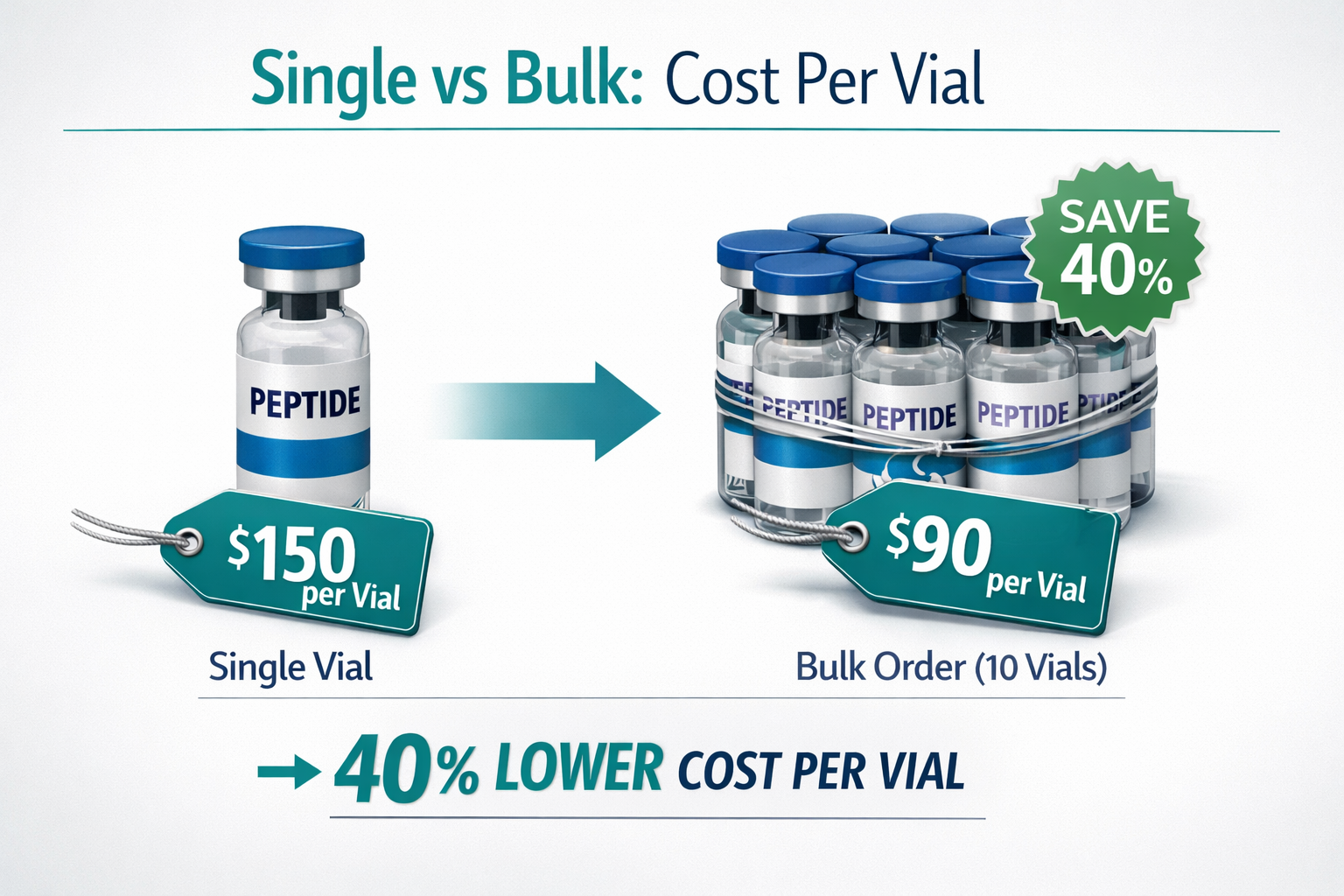
Savings depend on the vendor, the specific peptide, and order volume. As a general benchmark, most reputable suppliers offer tiered pricing that looks roughly like this:
| Order Size | Estimated Discount (vs. Single Unit) | Best For |
|---|---|---|
| 1–2 vials | 0% (standard pricing) | First-time testing |
| 3–5 vials | 5–15% | Short-term protocols |
| 6–10 vials | 15–25% | Multi-month research |
| 11–20+ vials | 25–40% | Lab-scale or long-term use |
These ranges are estimates based on publicly listed pricing from peptide vendors in 2026. Exact discounts vary by compound. High-demand peptides like BPC-157 and Tesamorelin often have the most competitive bulk pricing because production volumes are already high.
Decision rule: If you plan to use a peptide for 8 weeks or longer, buying bulk almost always makes financial sense. If you're experimenting with a new compound, buy a single vial first.
Which Peptides Are Most Commonly Purchased in Bulk?
The peptides people buy in bulk most often fall into a few research categories:
Recovery and tissue support:
- BPC-157 (Body Protection Compound) — one of the most studied peptides for gastric and connective tissue research
- TB-500 and BPC-157 combinations — frequently purchased together for synergistic protocols
Longevity and mitochondrial research:
- MOTS-C — a mitochondrial-derived peptide studied for metabolic function
- SS-31 (Elamipretide) — targets the inner mitochondrial membrane
- Epithalon — a telomerase-related peptide of interest in aging research
Body composition research:
- Tesamorelin — a growth hormone-releasing hormone analog
- CJC-1295 — often paired with Ipamorelin in GH-axis research
- AOD-9604 — a modified fragment of human growth hormone
Biohackers and longevity-focused buyers tend to buy bulk peptide supplies of MOTS-C and SS-31 specifically, since mitochondrial longevity research protocols often run for extended periods.
What Should You Look for in a Bulk Peptide Supplier?
A trustworthy supplier is the single most important factor when you buy bulk peptide products. Low prices mean nothing if purity is questionable.
Non-negotiable quality markers:
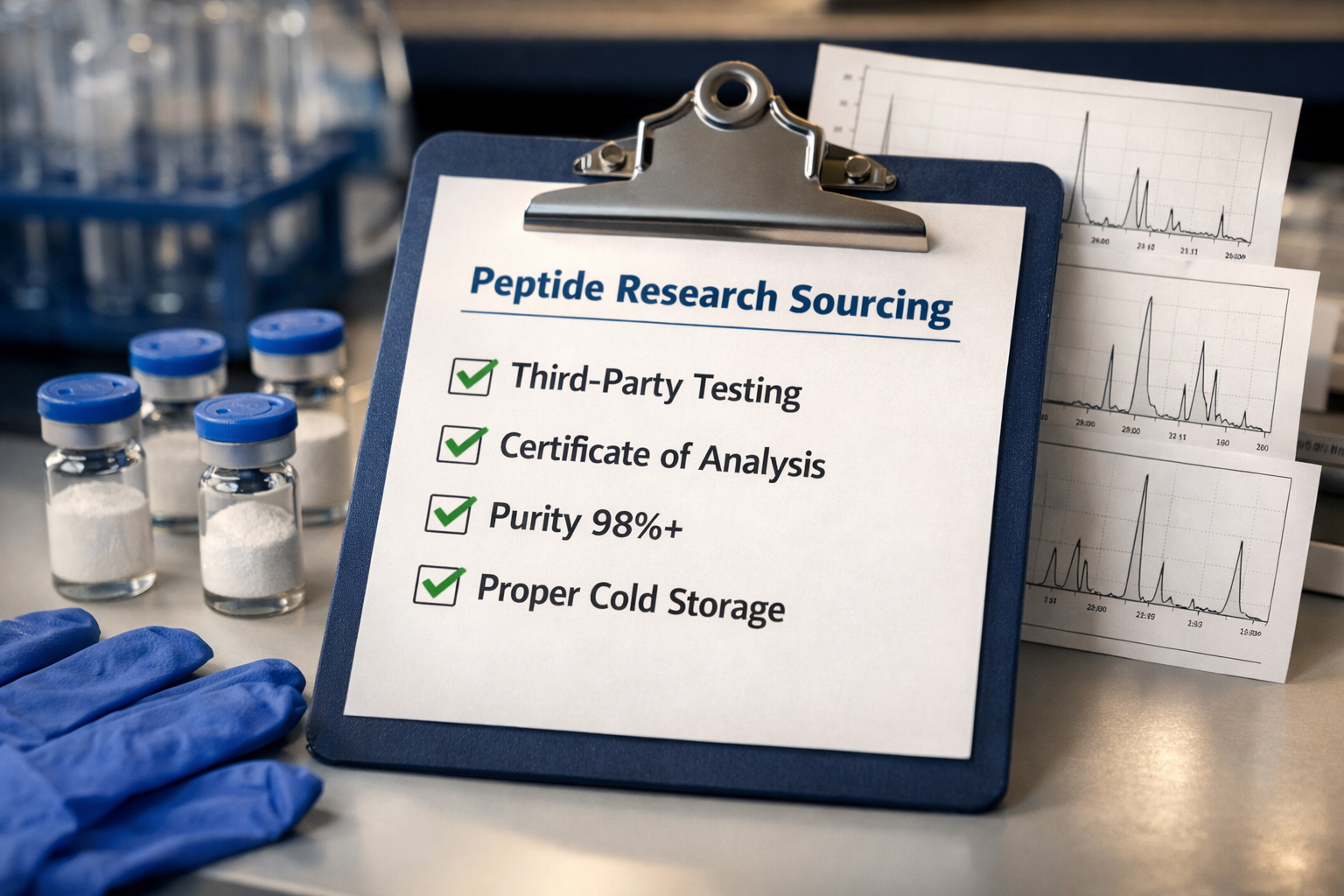
- Third-party HPLC and mass spectrometry testing. The vendor should provide a COA for every batch showing purity, molecular weight confirmation, and residual solvent levels.
- Purity threshold of 98% or above. Anything below 95% is a red flag for research-grade peptides.
- Proper lyophilization. Bulk peptides should arrive as a lyophilized (freeze-dried) powder, not pre-reconstituted.
- Cold-chain shipping options. Peptides degrade with heat exposure. Reputable vendors ship with ice packs or dry ice.
- Transparent sourcing. The supplier should clearly state whether synthesis occurs in-house or through a contracted GMP-compliant facility.
Vendors who offer lab-tested peptides with publicly accessible COAs are generally safer choices than those who only provide test results "upon request."
Common mistake: Choosing a supplier based solely on the lowest price. Peptide synthesis quality varies enormously. A vial that's 85% pure and 15% unknown impurities is not a bargain at any price.
Check the most popular products for sale page for examples of properly documented, third-party tested peptides.
How to Store Bulk Peptides Properly
Buying in bulk only saves money if the peptides remain stable throughout their shelf life. Storage mistakes are the fastest way to waste a bulk investment.
Storage guidelines for lyophilized peptides:
- Unopened vials: Store at -20°C (standard freezer) or colder. Properly lyophilized peptides can remain stable for 12–24 months at this temperature.
- Reconstituted peptides: Store at 2–8°C (refrigerator). Use within 3–4 weeks for most peptides, though some are stable longer.
- Avoid repeated freeze-thaw cycles. Each cycle can denature the peptide. If you buy bulk, keep most vials sealed and frozen. Only reconstitute what you need for the current week or protocol phase.
- Protect from light. UV exposure accelerates degradation. Amber vials or foil wrapping helps.
Edge case: Some peptides, like GHK-Cu, are more stable than others in solution. But as a general rule, treat all reconstituted peptides as perishable. If you're exploring copper peptide research, the GHK-Cu sourcing guide covers stability specifics.
Is It Legal to Buy Bulk Peptide Supplies?
In the United States, most research peptides can be legally purchased for in-vitro research, laboratory use, or educational purposes. They are generally sold labeled "not for human consumption" or "for research use only."
Key legal considerations:
- Peptides are not scheduled substances in most jurisdictions, but regulations vary by country.
- Some peptides have specific regulatory status. For example, Tesamorelin (Egrifta) is FDA-approved as a prescription drug for a specific indication, but the research-grade peptide itself can still be sold for non-clinical purposes.
- Import rules differ internationally. Buyers in Australia, Canada, and the EU should check local customs regulations before placing large international orders.
This is not legal advice. Always verify current regulations in your jurisdiction before you buy bulk peptide quantities, especially for cross-border shipments.
Buy Bulk Peptide: Step-by-Step Purchasing Checklist
Follow this process to make a smart bulk purchase:
- Identify your peptide and protocol length. Know exactly which compound you need and for how long.
- Test with a single vial first. Verify the vendor's quality before scaling up.
- Request the COA. Review purity, identity confirmation, and endotoxin levels.
- Calculate your total quantity. Factor in protocol duration plus a 10–15% buffer for reconstitution loss.
- Compare bulk pricing tiers. Check wholesale peptide pricing across 2–3 reputable vendors.
- Confirm storage capacity. Make sure you have adequate freezer space at -20°C or below.
- Place the order with cold-chain shipping. Pay the extra few dollars for temperature-controlled delivery.
- Inspect upon arrival. Check that vials are sealed, lyophilized powder is intact (not clumped or discolored), and the COA matches the batch number.
Bulk Peptides vs. Peptide Blends: Which Is Better?
Some vendors offer pre-formulated peptide blends that combine two or more peptides in a single vial. These can be convenient but come with trade-offs.
| Factor | Bulk Single Peptides | Peptide Blends |
|---|---|---|
| Dosing flexibility | Full control over each compound | Fixed ratio per vial |
| Cost per mg | Lower at bulk volumes | Moderate (convenience premium) |
| Protocol customization | High | Limited |
| Storage simplicity | More vials to manage | Fewer vials |
| Best for | Experienced users, specific protocols | Beginners, general wellness research |
Choose bulk single peptides if you need precise control over dosing or are running a protocol that requires adjusting one compound independently. Choose blends if you're following a well-established combination protocol and value convenience.
For those interested in the most popular products for sale, both options are typically available.
Frequently Asked Questions
What is the minimum order to buy bulk peptide quantities?
Most vendors define "bulk" as 5–10 or more units of the same peptide. Some offer tiered discounts starting at just 3 vials.
Do bulk peptides expire?
Yes. Lyophilized peptides stored at -20°C typically remain stable for 12–24 months. Always check the manufacture date and plan usage accordingly.
Can I mix different peptides in one bulk order to get a discount?
Some suppliers offer volume discounts across mixed products, but most bulk pricing applies per SKU. Check the vendor's specific policy.
Is peptide quality lower in bulk orders?
Not from reputable suppliers. Bulk orders should come from the same synthesis batch as single-unit orders. The COA should match.
How do I know if a peptide has degraded?
Signs include discoloration (yellow or brown tint), clumping of lyophilized powder, or unusual odor after reconstitution. When in doubt, discard.
Should I buy bulk peptide supplies from overseas manufacturers?
It depends on the manufacturer's quality controls. Domestic vendors who source from audited facilities and provide third-party U.S. lab testing are generally safer, even if slightly more expensive.
What's the best way to ship bulk peptides?
Cold-chain shipping with ice packs or dry ice, using expedited delivery (2-day or overnight). Avoid ground shipping in warm months.
Are there peptides I should NOT buy in bulk?
Avoid bulk purchasing any peptide you haven't tested individually first. Also avoid bulk orders of peptides with very short reconstituted shelf lives unless you can use them quickly.
Conclusion
When you buy bulk peptide supplies strategically, the savings are real and the convenience is significant. But bulk purchasing only makes sense after you've confirmed three things: the vendor's quality standards meet your requirements, you have proper storage infrastructure, and you've already tested the peptide at smaller quantities.
Your next steps:
- Browse the complete peptide catalog to identify which compounds align with your research goals.
- Order a single vial of your target peptide and review the COA.
- Once satisfied with quality, calculate your protocol needs and place a bulk order at the appropriate pricing tier.
- Store properly, track expiration dates, and reconstitute only what you need for each phase.
Smart bulk buying is about planning, not just price hunting. Get the quality right first, then scale.
References
- U.S. Food and Drug Administration. "Peptide Drug Products." FDA Guidance Documents, 2023. https://www.fda.gov
- Grand View Research. "Peptide Therapeutics Market Size Report." 2023. https://www.grandviewresearch.com
SEO Meta Title: Buy Bulk Peptide: 2026 Guide to Savings and Quality
SEO Meta Description: Learn how to buy bulk peptide supplies in 2026. Compare pricing tiers, verify quality with COAs, and store peptides properly. Save 15–40% per unit.
Tags: buy bulk peptide, wholesale peptides, bulk peptide order, peptide research, BPC-157, MOTS-C, peptide storage, peptide purity, research peptides, peptide savings, longevity peptides, biohacking