

Last updated: April 21, 2026
Quick Answer
GLP-3 is a triple-agonist research peptide that targets GLP-1, GIP, and glucagon receptors simultaneously. To buy GLP3 peptide for research purposes, look for suppliers that provide third-party certificates of analysis (COAs), verified purity above 98%, and transparent sourcing documentation. GLP-3 is sold strictly as a research compound and is not approved for human consumption.
Key Takeaways
- GLP-3 is a triple-receptor agonist targeting GLP-1, GIP, and glucagon pathways, distinguishing it from single- and dual-agonist peptides.
- Purity verification matters most when you buy GLP3 peptide — always demand a current COA from an independent lab.
- Research interest has surged since triple-agonist compounds entered preclinical and early clinical study pipelines.
- Price typically ranges from $60 to $150+ per vial depending on concentration, supplier reputation, and testing documentation.
- Storage requirements are strict: lyophilized GLP-3 should be kept at -20°C for long-term stability.
- Not all vendors are equal — peptide purity, synthesis method, and batch consistency vary widely across the market.
- GLP-3 is distinct from retatrutide but shares the triple-agonist concept; sourcing notes differ between the two.
- Legal status: GLP-3 peptides are available for research use in the United States; they are not FDA-approved drugs.
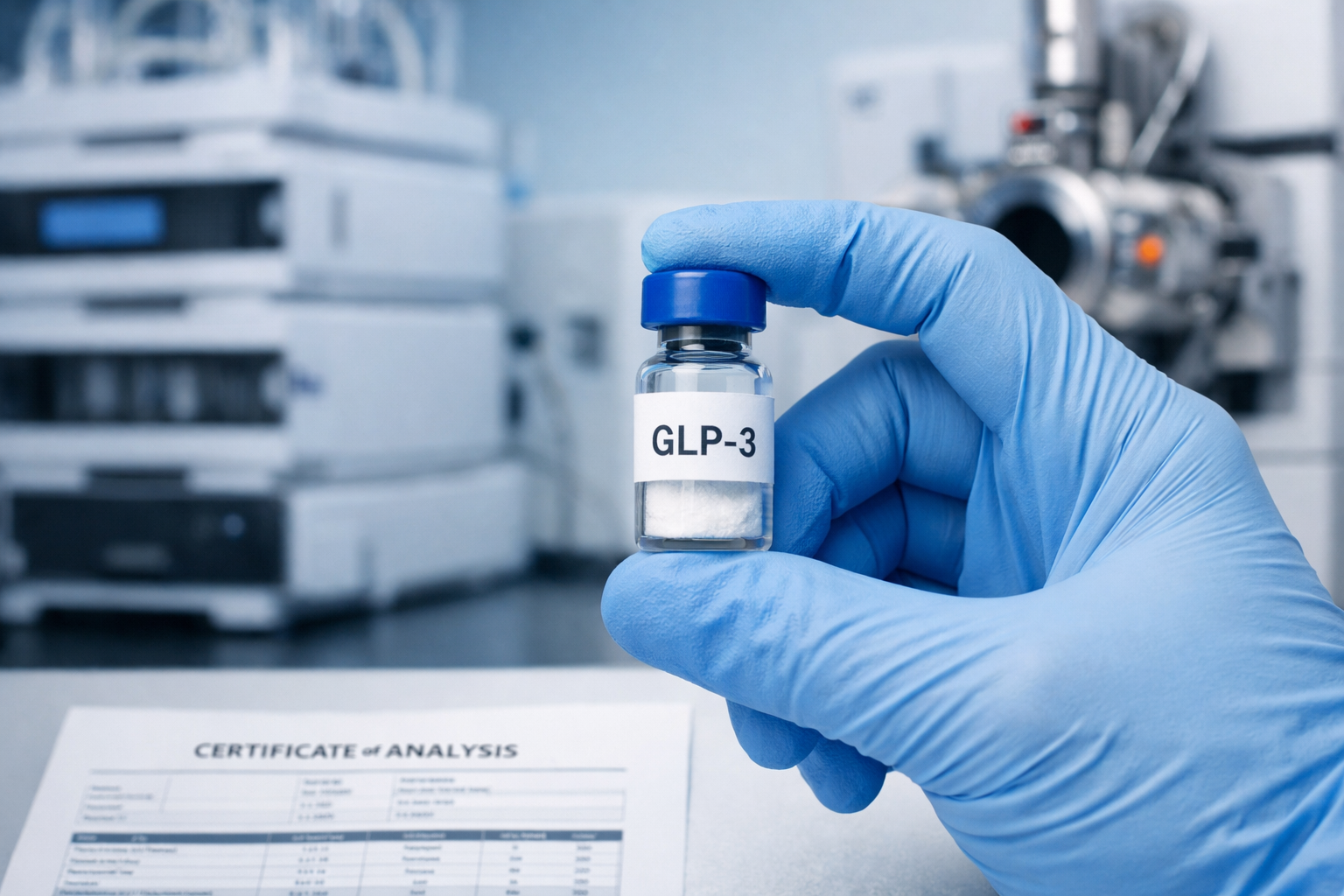
What Is GLP-3 and Why Are Researchers Interested?
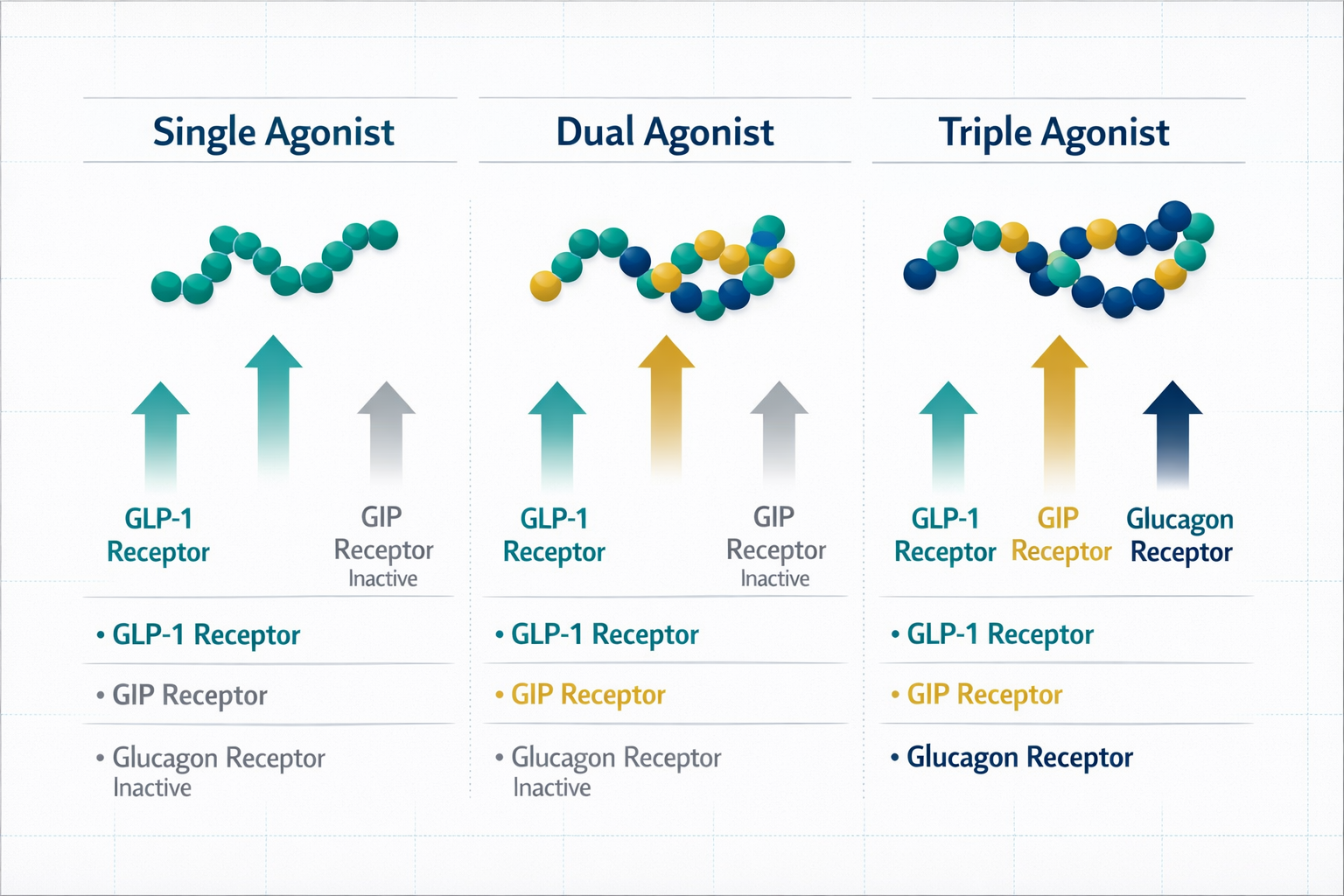
GLP-3 refers to a class of triple-agonist peptides designed to activate three incretin-related receptors: GLP-1 (glucagon-like peptide-1), GIP (glucose-dependent insulinotropic polypeptide), and the glucagon receptor. This multi-receptor approach is what separates GLP-3 from earlier single-agonist compounds like semaglutide or dual-agonist compounds like tirzepatide.
Research interest centers on the hypothesis that activating all three receptors may produce additive or synergistic effects on metabolic markers compared to targeting just one or two. Early preclinical data from Eli Lilly's retatrutide program (a triple-agonist in clinical trials) showed meaningful body-weight reduction in phase 2 trials published in the New England Journal of Medicine in 2023, which fueled broader interest in the triple-agonist category.
For those looking to buy GLP3 peptide for in-vitro or animal-model research, understanding the receptor pharmacology is essential for designing valid study protocols. You can explore more about GLP-3 and retatrutide research themes for deeper mechanistic context.
Common mistake: Confusing GLP-3 with GLP-1 or GLP-2. GLP-1 and GLP-2 are endogenous hormones. "GLP-3" is a research shorthand for triple-agonist peptides, not a naturally occurring hormone.
Where to Buy GLP3 Peptide for Research
The most reliable way to buy GLP3 peptide is through specialized research peptide suppliers that publish batch-specific COAs and use validated synthesis methods. Here's what to evaluate:
Supplier checklist:
- Third-party COA — The certificate should come from an independent analytical lab (not the manufacturer's own QC department). Look for HPLC purity data and mass spectrometry confirmation.
- Purity threshold — Research-grade peptides should test at 98% or higher.
- Batch traceability — Each vial should reference a specific lot number tied to its COA.
- Transparent business practices — U.S.-based shipping, clear return policies, and accessible customer support.
- Proper labeling — "For research use only" must appear on packaging.
Vendors like Pure Tested Peptides maintain these standards and offer GLP-3 peptides for sale alongside detailed documentation. You can also browse their full peptide catalog for related compounds.
Choose a U.S.-based supplier if your research requires consistent shipping timelines and you want to avoid customs delays that come with international peptide orders.
How Does GLP-3 Compare to Other GLP Peptides?
This is one of the most common follow-up questions from researchers. The key difference is receptor coverage.
| Feature | GLP-1 Agonist (e.g., semaglutide) | Dual Agonist (e.g., tirzepatide) | Triple Agonist (GLP-3 / retatrutide-type) |
|---|---|---|---|
| Receptors targeted | GLP-1 only | GLP-1 + GIP | GLP-1 + GIP + Glucagon |
| Research maturity | FDA-approved drugs exist | FDA-approved (tirzepatide) | Preclinical / early clinical |
| Availability as research peptide | Widely available | Available | Available from select vendors |
| Typical research focus | Metabolic, appetite signaling | Metabolic, insulin sensitivity | Metabolic, energy expenditure, body composition |
For a deeper dive into how GLP-1 peptide generations have evolved, including dual-receptor research, that resource covers sourcing notes and conceptual frameworks.
The glucagon receptor component is what makes GLP-3 particularly interesting. Preclinical models suggest glucagon receptor activation may increase energy expenditure, which could complement the appetite-related effects of GLP-1 receptor activation.
What Should You Look for in GLP3 Peptide Purity and Testing?
Always verify purity before committing to a purchase. A valid COA for GLP3 peptide should include:
- HPLC (High-Performance Liquid Chromatography) — confirms purity percentage, typically reported as area-under-curve percentage
- Mass spectrometry (MS) — confirms molecular weight matches the target sequence
- Amino acid analysis — verifies the peptide's composition matches the intended structure
- Endotoxin testing — important for any in-vivo research applications
Edge case: Some suppliers list purity as "≥95%" without specifying the analytical method. That's a red flag. Insist on method-specific data. For context on how reference standards and benchmarks work in peptide quality control, that guide explains what credible testing looks like.
Researchers working with GLP3 peptide should also confirm the supplier's storage and shipping protocols. Lyophilized peptides shipped at ambient temperature are generally stable for short transit periods, but reconstituted peptides require cold-chain handling.
How to Store GLP3 Peptide After Purchase
Proper storage directly affects peptide stability and research reproducibility. When you buy GLP3 peptide, follow these guidelines:
- Lyophilized (powder) form: Store at -20°C. Stable for 12+ months when kept sealed and dry.
- Reconstituted form: Store at 2–8°C (standard refrigerator). Use within 2–4 weeks for best results.
- Avoid repeated freeze-thaw cycles — aliquot reconstituted peptide into single-use portions.
- Keep away from light — UV exposure can degrade peptide bonds.
Decision rule: If your research protocol spans more than a month, buy lyophilized GLP3 peptide and reconstitute only what you need per experiment. This preserves the remaining stock.
Check out the most popular research peptides for storage-friendly options across multiple compound categories.
What Does GLP3 Peptide Cost in 2026?
Pricing for GLP3 peptide varies based on several factors:
- Concentration per vial — Common options include 5 mg and 10 mg vials
- Supplier reputation and testing rigor — Vendors with independent COAs and U.S.-based operations tend to price higher than unverified overseas sources
- Bulk vs. single-vial pricing — Research labs purchasing multiple vials often receive volume discounts
Estimated price range (2026):
| Vial Size | Typical Price Range |
|---|---|
| 5 mg | $60 – $90 |
| 10 mg | $90 – $150 |
These are estimates based on current market listings from U.S. research peptide suppliers. Prices shift with synthesis costs and demand.
Common mistake: Choosing the cheapest option without verifying purity. A $40 vial with 85% purity wastes money because impurities introduce confounding variables into research data. When you buy GLP3 peptide, the COA is worth more than the price tag.
Who Is GLP3 Peptide Research For (and Not For)?
GLP-3 research peptides are designed for:
- Academic and independent researchers studying incretin biology
- Biohackers and longevity-focused individuals tracking peptide science developments
- Research labs investigating metabolic pathway modulation in animal models
GLP-3 peptides are NOT for:
- Human therapeutic use (no FDA approval exists)
- Self-administration without medical supervision
- Anyone looking for a weight-loss supplement
For those exploring the broader peptide research space, related compounds like SS-31 for mitochondrial research and longevity peptide studies offer complementary areas of investigation.
What's New in GLP-3 and Triple-Agonist Research?
The triple-agonist space is evolving quickly. Eli Lilly's retatrutide remains the most advanced clinical-stage triple agonist, with phase 3 trials ongoing as of 2026. Meanwhile, research-grade GLP3 peptide analogs allow independent labs to study the triple-agonist mechanism outside of pharma-sponsored trials.
Key research themes in 2026 include:
- Energy expenditure modeling — how glucagon receptor co-activation affects metabolic rate in animal models
- Receptor selectivity profiling — comparing binding affinity ratios across the three targets
- Combination protocols — pairing triple agonists with mitochondrial peptides or other metabolic compounds
Stay current with what's new in peptide research and explore the GIP receptor's role in incretin signaling.
Browse the most popular products for sale to see which research peptides are trending alongside GLP-3.
Frequently Asked Questions
Is GLP-3 the same as retatrutide?
No. Retatrutide is a specific pharmaceutical compound developed by Eli Lilly. "GLP-3" is a broader category term for triple-agonist research peptides. The receptor targets overlap, but the exact sequences may differ.
Can I buy GLP3 peptide legally in the United States?
Yes. GLP3 peptide is available for purchase as a research chemical. It is not a controlled substance. It is sold strictly for research use, not human consumption.
What purity should I look for when I buy GLP3 peptide?
A minimum of 98% HPLC purity is the standard for research-grade peptides. Anything below 95% introduces significant impurity risk.
How is GLP3 peptide shipped?
Most suppliers ship lyophilized GLP3 peptide at ambient temperature with insulated packaging. Reconstituted forms require cold-chain shipping.
Does GLP-3 require a prescription?
No. Research peptides are not prescription medications. They are sold to qualified buyers for laboratory and research purposes only.
How long does GLP3 peptide last in storage?
Lyophilized and stored at -20°C, GLP3 peptide can remain stable for over 12 months. Reconstituted peptide should be used within 2–4 weeks at refrigerator temperatures.
What's the difference between GLP-1 and GLP-3 peptides?
GLP-1 agonists target a single receptor. GLP-3 peptides target three receptors (GLP-1, GIP, and glucagon), which is why they're called triple agonists.
Can GLP-3 be combined with other research peptides?
In research settings, some protocols pair triple agonists with mitochondrial or longevity peptides. Always design combination studies with proper controls.
Conclusion
The triple-agonist category represents one of the most active areas in metabolic peptide research heading into 2026. When you buy GLP3 peptide, the quality of your source directly determines the quality of your data.
Actionable next steps:
- Review supplier COAs before purchasing — verify HPLC purity and mass spec data.
- Start with the GLP-3 product page to compare available concentrations.
- Read up on GLP-1 generational research concepts to understand how triple agonists fit into the broader incretin landscape.
- Store peptides correctly from day one — lyophilized at -20°C, reconstituted at 2–8°C.
- Browse the most popular research peptides for complementary compounds that may support your study design.
References
- Jastreboff, A.M., et al. "Triple-Hormone-Receptor Agonist Retatrutide for Obesity — A Phase 2 Trial." New England Journal of Medicine, 2023.
- Eli Lilly and Company. Retatrutide clinical development program updates, 2023–2025.
Tags: buy GLP3 peptide, GLP-3 triple agonist, research peptides, GLP-1 peptide, incretin peptides, peptide sourcing, retatrutide research, metabolic peptides, peptide purity, longevity research, biohacking peptides, peptide COA