

Last updated: April 21, 2026
Quick Answer: MOTS-C is a mitochondrial-derived peptide encoded within the 12S rRNA gene, and it has attracted significant research attention for its role in metabolic regulation and exercise-mimicking effects. To buy MOTS-C peptide for research purposes, look for suppliers that provide third-party certificates of analysis (COA), purity above 98%, and proper lyophilized storage. Pricing in 2026 typically ranges from $40 to $90 per 5–10 mg vial depending on the vendor and quantity.
Key Takeaways
- MOTS-C is a 16-amino-acid peptide produced by mitochondrial DNA, first characterized by researchers at the University of Southern California in 2015.
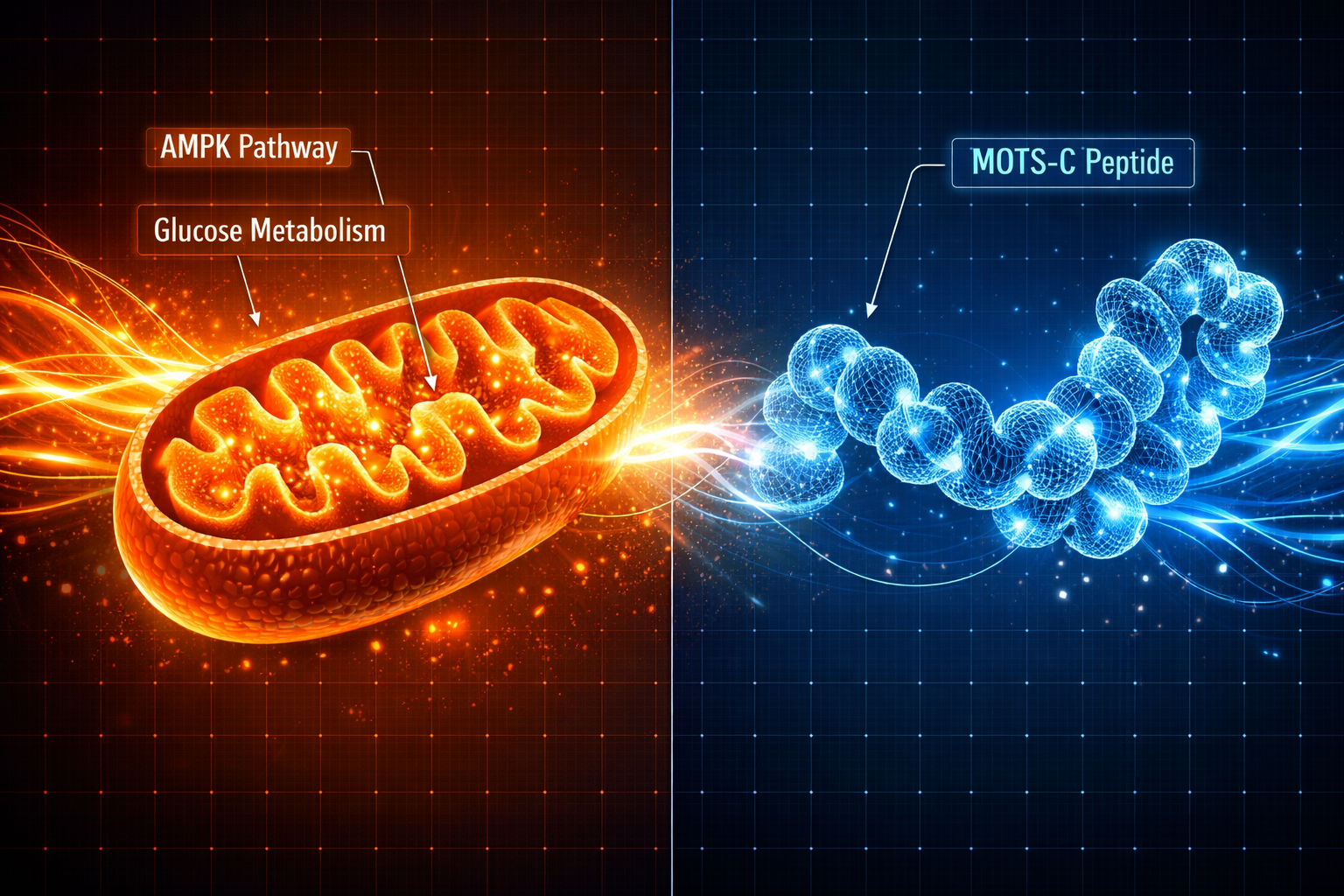
- Research suggests MOTS-C activates the AMPK pathway, which plays a central role in cellular energy balance and glucose metabolism.
- When you buy MOTS-C peptide, always verify third-party lab testing, purity levels, and proper cold-chain shipping.
- MOTS-C is sold strictly for research use; it is not approved by the FDA for human therapeutic use.
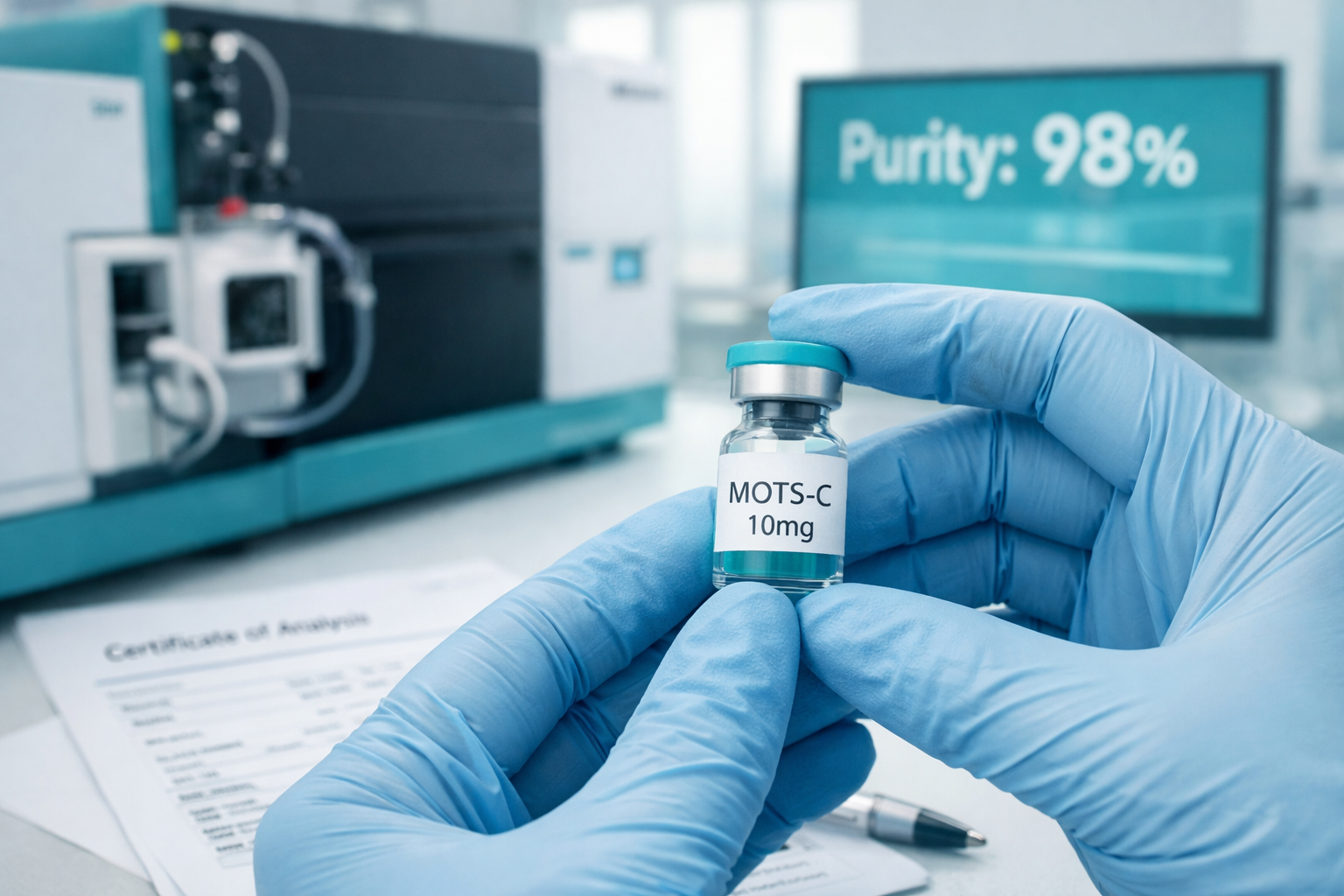
- Reputable vendors provide batch-specific COAs with HPLC and mass spectrometry data.
- Storage requirements: lyophilized MOTS-C should be kept at -20°C or below for long-term stability.
- Common research applications include metabolic studies, aging models, and exercise physiology investigations.

What Is MOTS-C and Why Are Researchers Interested?
MOTS-C (Mitochondrial Open Reading Frame of the 12S rRNA Type-C) is a small peptide consisting of 16 amino acids. It was identified by Dr. Changhan David Lee and colleagues at USC in a 2015 study published in Cell Metabolism. Unlike most peptides, MOTS-C is encoded by mitochondrial DNA rather than nuclear DNA, making it part of a rare class of mitochondrial-derived peptides (MDPs).
Researchers are interested in MOTS-C because preclinical studies have shown it may:
- Activate AMPK signaling, a key energy-sensing pathway in cells
- Influence glucose metabolism in mouse models of diet-induced obesity
- Mimic some effects of exercise at the cellular level, based on rodent studies
- Translocate to the nucleus under metabolic stress, potentially regulating gene expression
For a deeper look at the science, see our overview of MOTS-C as a mitochondrial peptide.
These findings have made MOTS-C one of the most discussed peptides in longevity and metabolic research circles. That said, all current evidence comes from cell culture and animal models. No completed human clinical trials have established therapeutic efficacy or safety profiles.
Where to Buy MOTS-C Peptide for Research
The most reliable way to buy MOTS-C peptide is through vendors that specialize in research-grade peptides and provide transparent quality documentation. Not all suppliers are equal, and the peptide market includes vendors with inconsistent purity and questionable testing practices.
What to look for in a supplier:
- Third-party COA with HPLC purity data (target: ≥98%)
- Mass spectrometry confirmation of molecular weight (MOTS-C: ~1,564 Da)
- Proper packaging: lyophilized powder in sealed, light-protected vials
- Cold-chain shipping options, especially during warmer months
- Transparent batch tracking so you can verify specific lot numbers
Browse the full selection of MOTS-C peptides for sale to compare available formats and quantities. For researchers purchasing multiple peptides, wholesale peptide options can reduce per-unit costs.
Common mistake: Buying from vendors that only provide in-house testing without independent third-party verification. In-house COAs can be fabricated or reflect ideal rather than actual batch results.
Check out our most popular products for sale to see how MOTS-C compares with other in-demand research peptides.
How Much Does It Cost to Buy MOTS-C Peptide in 2026?
Pricing for research-grade MOTS-C varies based on quantity, purity, and vendor reputation. Here is a general pricing overview for 2026:
| Quantity | Estimated Price Range | Notes |
|---|---|---|
| 5 mg | $40–$60 | Standard research vial |
| 10 mg | $60–$90 | Most common purchase size |
| 20 mg+ | $100–$160 | Bulk/multi-vial discounts often apply |
These are estimates based on publicly listed prices from multiple research peptide vendors as of early 2026. Prices can shift based on raw material costs and demand.
Decision rule: Choose 5 mg if running a single small-scale cell study. Choose 10 mg for multi-arm animal model experiments. For labs running ongoing protocols, bulk purchasing through a trusted peptide manufacturer typically offers better value.
How Does MOTS-C Work at the Cellular Level?
MOTS-C appears to function primarily through the AMPK (AMP-activated protein kinase) pathway. AMPK acts as a cellular fuel gauge. When energy levels drop, AMPK activation triggers a cascade that promotes glucose uptake, fatty acid oxidation, and mitochondrial biogenesis.
Key mechanisms identified in preclinical research:
- AMPK activation: MOTS-C has been shown to increase AMPK phosphorylation in skeletal muscle cells (Lee et al., Cell Metabolism, 2015).
- Folate cycle regulation: MOTS-C may inhibit the folate cycle, which leads to accumulation of AICAR, a known AMPK activator.
- Nuclear translocation: Under metabolic stress, MOTS-C can move from the cytoplasm to the nucleus, where it may interact with antioxidant response elements (Kim et al., Journal of the American Geriatrics Society, 2018).
For researchers exploring how MOTS-C interacts with other mitochondrial peptides, our article on MOTS-C mitochondrial research themes provides additional context.
These mechanisms are why some researchers describe MOTS-C as an "exercise mimetic" — though that label should be understood within the limits of animal data, not as a proven human outcome.
Who Is Researching MOTS-C and What Are the Use Cases?
MOTS-C research spans several disciplines. The primary groups investigating this peptide include:
- Aging and longevity researchers studying mitochondrial decline with age
- Metabolic disease labs exploring insulin sensitivity and glucose regulation
- Exercise physiology groups examining how endogenous MOTS-C levels change with physical activity
- Biohackers and self-experimenters (though this falls outside approved clinical use)
A 2019 study by Reynolds et al. found that circulating MOTS-C levels in humans were associated with physical activity levels and tended to decline with age. This observation has fueled interest in MOTS-C as a potential biomarker for metabolic health.
Edge case: Some researchers combine MOTS-C with SS-31, another mitochondrial-targeted peptide, to study synergistic effects on mitochondrial function. Similarly, the synergy of LL-37 and MOTS-C is an emerging area of investigation.
Explore our broader longevity peptide research section for related compounds and study designs.
How to Store and Handle MOTS-C Peptide After Purchase
Proper storage directly affects peptide stability and experimental reproducibility. When you buy MOTS-C peptide, follow these handling guidelines:
- Upon receipt: Inspect the vial for damage and confirm the seal is intact.
- Lyophilized storage: Keep at -20°C or colder. Lyophilized MOTS-C can remain stable for 12+ months under these conditions.
- Reconstitution: Use sterile bacteriostatic water or sterile saline. Add solvent slowly along the vial wall — do not vortex aggressively.
- Reconstituted storage: Store at 2–8°C and use within 2–4 weeks. Avoid repeated freeze-thaw cycles.
- Light protection: MOTS-C should be kept away from direct light, which can degrade peptide bonds over time.
Common mistake: Leaving reconstituted peptide at room temperature for extended periods. Even a few hours at 25°C can reduce potency.
For labs needing lab-tested peptides with verified stability data, always request the vendor's stability testing documentation alongside the COA.
How Does MOTS-C Compare to Other Mitochondrial Peptides?
Researchers often evaluate MOTS-C alongside other mitochondrial-targeted compounds. Here's a quick comparison:
| Feature | MOTS-C | SS-31 (Elamipretide) | Humanin |
|---|---|---|---|
| Origin | Mitochondrial DNA (12S rRNA) | Synthetic tetrapeptide | Mitochondrial DNA (16S rRNA) |
| Primary target | AMPK pathway | Cardiolipin in inner membrane | BAX, IGFBP-3 |
| Research focus | Metabolism, exercise mimicry | Mitochondrial membrane integrity | Neuroprotection, apoptosis |
| Amino acids | 16 | 4 | 24 |
| Typical research dose (rodent) | 5–15 mg/kg | 1–5 mg/kg | 1–10 mg/kg |
For researchers interested in SS-31, see the SS-31 peptide category and our article on MOTS-C and SLU-PP-332 for another exercise-mimetic comparison.
Choose MOTS-C if the research question centers on metabolic regulation and AMPK signaling. Choose SS-31 if the focus is on mitochondrial membrane stability and cardiolipin interactions.
Don't forget to check our most popular products for sale page for current availability across all mitochondrial peptide lines.
What Are the Limitations and Risks of MOTS-C Research?
Transparency about limitations is essential for any serious research program:
- No completed human clinical trials as of early 2026. All efficacy data comes from cell and animal models.
- Dosing protocols are not standardized. Published rodent studies use a range of 5–15 mg/kg, but translating this to other models requires careful pharmacokinetic analysis.
- Long-term safety data does not exist for any species.
- Regulatory status: MOTS-C is not FDA-approved for any therapeutic indication. It is sold for research purposes only.
- Peptide degradation: MOTS-C has a relatively short half-life in circulation, which presents delivery challenges for in vivo studies.
Researchers should design protocols with appropriate controls and not extrapolate animal findings to human outcomes without proper clinical validation.
Frequently Asked Questions
Is MOTS-C FDA-approved for human use?
No. As of 2026, MOTS-C is available only as a research peptide. It has no FDA approval for therapeutic use in humans.
What purity should I look for when I buy MOTS-C peptide?
A minimum of 98% purity by HPLC is the standard for research-grade MOTS-C peptide. Some vendors offer 99%+ for premium applications.
Can MOTS-C replace exercise?
No evidence supports this claim in humans. The "exercise mimetic" label comes from rodent studies showing AMPK activation and metabolic effects similar to some exercise responses.
How is MOTS-C typically administered in research?
Most published rodent studies use intraperitoneal (IP) injection. Subcutaneous injection has also been used. Oral bioavailability has not been well characterized.
What is the molecular weight of MOTS-C?
Approximately 1,564 Daltons for the 16-amino-acid sequence (MRWQEMGYIFYPRKLR).
Does MOTS-C need to be refrigerated?
Yes. Lyophilized MOTS-C should be stored at -20°C. Reconstituted solutions should be kept at 2–8°C and used within a few weeks.
Can I buy MOTS-C peptide in bulk?
Yes. Many research suppliers offer bulk pricing. Check wholesale peptide options for quantity discounts.
Is MOTS-C the same as humanin?
No. Both are mitochondrial-derived peptides, but they come from different genes (12S rRNA vs. 16S rRNA) and have different mechanisms of action.
What research areas use MOTS-C most?
Metabolic disease, aging biology, exercise physiology, and mitochondrial dysfunction studies are the primary fields.
How do I verify the quality of MOTS-C I purchased?
Request the batch-specific COA with HPLC chromatogram and mass spectrometry data. Independent testing through a third-party lab adds another layer of verification.
Conclusion
MOTS-C stands out as one of the most actively studied mitochondrial-derived peptides in metabolic and aging research. The preclinical data on AMPK activation and glucose metabolism is promising, but all findings remain in the animal and cell model stage. When you buy MOTS-C peptide for research, prioritize vendors with verified third-party testing, proper cold-chain logistics, and transparent batch documentation.
Actionable next steps:
- Review your research protocol to determine the appropriate quantity (5 mg, 10 mg, or bulk).
- Compare vendors using the quality criteria outlined above — COA, purity, and storage conditions.
- Browse available MOTS-C products and related mitochondrial peptide research resources.
- Visit our most popular products for sale to explore the full catalog of research peptides available in 2026.
References
- Lee C, Zeng J, Drew BG, et al. "The Mitochondrial-Derived Peptide MOTS-c Promotes Metabolic Homeostasis and Reduces Obesity and Insulin Resistance." Cell Metabolism. 2015;21(3):443-454.
- Kim SJ, Mehta HH, Wan J, et al. "Mitochondrial peptides modulate mitochondrial function during cellular senescence." Aging. 2018;10(6):1239-1256.
- Reynolds JC, Lai RW, Woodhead JST, et al. "MOTS-c is an exercise-induced mitochondrial-encoded regulator of age-dependent physical decline and muscle homeostasis." Nature Communications. 2021;12:470.
Tags: buy MOTS-C peptide, MOTS-C research peptide, mitochondrial peptide, AMPK activation, longevity peptides, peptide buying guide, research peptides 2026, MOTS-C purity, exercise mimetic peptide, metabolic research, mitochondrial-derived peptides, peptide storage