

Last updated: April 21, 2026

Quick Answer
Retatrutide (also called LY-3437943 or GLP-3) is a triple-agonist peptide targeting GLP-1, GIP, and glucagon receptors simultaneously. To buy retatrutide peptide for research purposes, look for suppliers that provide third-party certificates of analysis (COA), purity above 98%, and transparent sourcing. This peptide is currently in clinical trials and is not approved for human therapeutic use; it is available strictly for research applications.
Key Takeaways
- Retatrutide is a triple-agonist peptide that acts on three incretin-related receptors, distinguishing it from dual-agonist compounds like tirzepatide.
- Eli Lilly developed retatrutide (LY-3437943) and published Phase 2 trial results in the New England Journal of Medicine in 2023 showing significant body weight reduction in participants.
- When you buy retatrutide peptide, verify purity through independent COAs showing HPLC analysis and mass spectrometry confirmation.
- Research-grade retatrutide typically costs between $50 and $150 per 10mg vial depending on the supplier and quantity.
- This peptide is not FDA-approved for any therapeutic use as of 2026; all purchases should be for legitimate research only.
- Storage matters: lyophilized retatrutide should be kept at -20°C for long-term stability.
- Reputable vendors publish batch-specific testing and offer clear return policies for compromised products.
What Is Retatrutide and Why Are Researchers Interested?
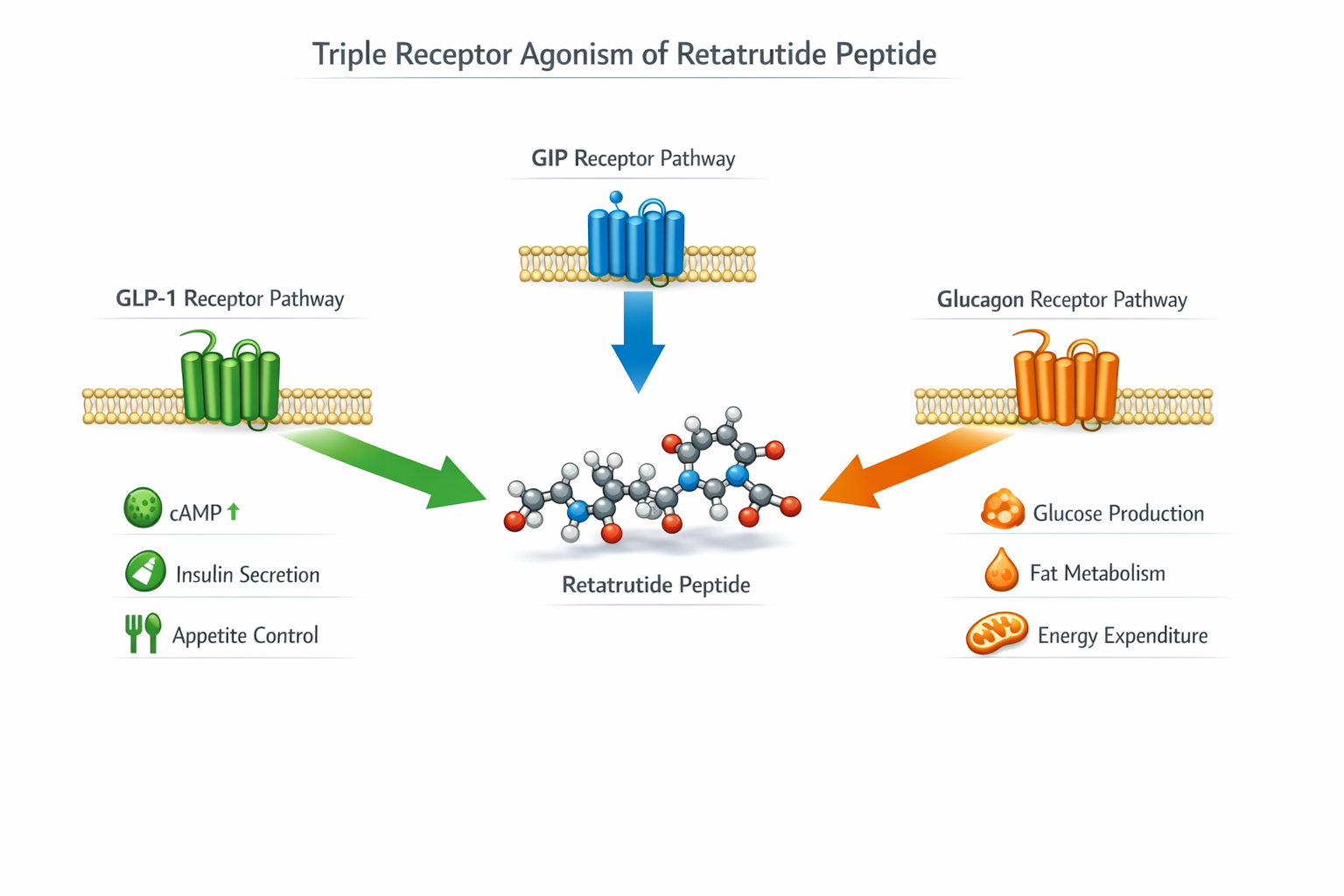
Retatrutide is a synthetic peptide that activates three receptors at once: GLP-1 (glucagon-like peptide-1), GIP (glucose-dependent insulinotropic polypeptide), and the glucagon receptor. This triple mechanism sets it apart from single-agonist GLP-1 peptides and even dual-agonist compounds.
Eli Lilly’s Phase 2 clinical trial, published in the New England Journal of Medicine in June 2023, reported that participants receiving the highest dose (12 mg weekly) experienced an average body weight reduction of approximately 24.2% over 48 weeks. These results generated significant attention across metabolic research, fitness science, and the broader peptide research community.
Key areas of ongoing research include:
- Metabolic function: How triple agonism affects glucose homeostasis differently from single or dual agonists
- Body composition: Effects on fat mass versus lean mass preservation
- Hepatic lipid metabolism: Early data suggesting potential effects on liver fat content
- Comparative studies: How retatrutide compares to other GLP-1 peptides in controlled settings
For researchers exploring incretin-related research themes, retatrutide represents one of the most studied multi-agonist peptides currently in the pipeline.
How Does Retatrutide Differ from Other Peptides?
Retatrutide’s defining feature is its simultaneous action on three receptor types. Most competing compounds target one or two. Here’s a quick comparison:
| Feature | Semaglutide | Tirzepatide | Retatrutide |
|---|---|---|---|
| Receptor targets | GLP-1 only | GLP-1 + GIP | GLP-1 + GIP + Glucagon |
| Developer | Novo Nordisk | Eli Lilly | Eli Lilly |
| FDA approved (2026) | Yes | Yes | No (Phase 3 trials) |
| Research availability | Limited | Limited | Available for research |
| Mechanism complexity | Single agonist | Dual agonist | Triple agonist |
The glucagon receptor component is what makes retatrutide especially interesting to metabolic researchers. Glucagon receptor activation may contribute to increased energy expenditure and hepatic fat oxidation, adding a thermogenic dimension that pure GLP-1 agonists lack.
For those interested in broader peptide therapy research and its applications, understanding these mechanistic differences is essential before deciding which compounds to study.
Check out our most popular peptide products to see what other researchers are sourcing alongside retatrutide.
Where Can You Buy Retatrutide Peptide for Research?
The most reliable way to buy retatrutide peptide is through established research peptide suppliers that specialize in high-purity compounds and provide full documentation.
What to look for in a supplier:
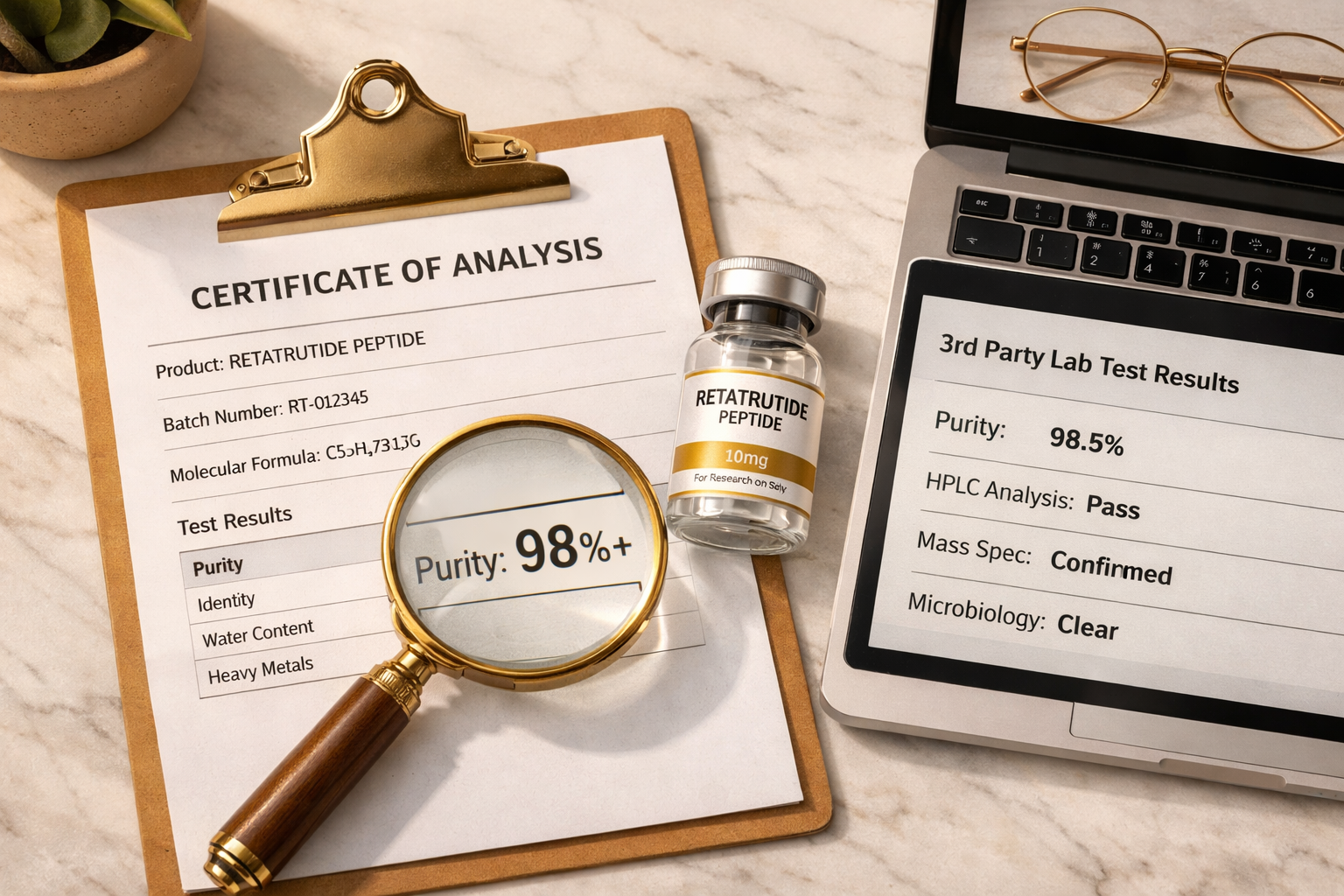
- Third-party COAs with HPLC purity data (target 98%+ purity)
- Mass spectrometry verification confirming correct molecular weight
- Batch-specific testing rather than generic certificates
- Clear labeling stating “for research use only”
- Proper packaging in sealed, light-protected vials with desiccant
- Transparent business practices including a physical address and responsive customer service
Common mistake: Buying from suppliers who only show a single generic COA for all batches. Each production batch can vary, and legitimate vendors test each one independently. If a supplier cannot provide a batch-specific COA, that’s a red flag.
Researchers in the United States can buy peptides online from domestic suppliers to reduce shipping times and avoid customs complications. Domestic sourcing also makes it easier to verify the supplier’s legitimacy.
What Should You Check Before You Buy Retatrutide Peptide?
Before placing an order, run through this verification checklist:
- Purity verification: Request the COA and confirm HPLC purity is 98% or higher
- Molecular identity: Mass spec data should match retatrutide’s known molecular weight
- Supplier reputation: Look for reviews on independent peptide research forums (not just the vendor’s own site)
- Storage instructions: The vendor should specify storage at -20°C for lyophilized powder
- Reconstitution guidance: Reputable suppliers provide handling instructions, typically recommending bacteriostatic water
- Return policy: Confirm the vendor accepts returns for products that arrive degraded or damaged
- Payment security: Avoid vendors that only accept cryptocurrency or wire transfers with no buyer protection
For more on how quality testing protocols work in the peptide industry, review the analytical standards that credible suppliers follow.
How Much Does Retatrutide Peptide Cost?
Research-grade retatrutide peptide typically falls in the following price ranges (estimates based on publicly listed research supplier pricing as of early 2026):
| Quantity | Estimated Price Range | Notes |
|---|---|---|
| 5 mg | $30–$75 | Small-scale pilot studies |
| 10 mg | $50–$150 | Most common research quantity |
| 20 mg+ | $90–$250 | Bulk research pricing often available |
Decision rule: Choose a 10 mg vial if running initial binding assays or small-scale in vitro work. For extended studies or dose-response curves, buying in larger quantities from wholesale peptide suppliers can reduce per-milligram cost significantly.
Prices vary based on purity level, supplier location, and whether the peptide includes additional modifications. Always compare cost per milligram rather than total vial price, since vial sizes differ between vendors.
Browse our most popular products for sale to compare retatrutide pricing with other research peptides.
How Should Retatrutide Be Stored and Handled?
Proper storage directly affects peptide stability and research reproducibility. Mishandled peptides degrade quickly, producing unreliable experimental results.
Storage guidelines:
- Lyophilized (powder) form: Store at -20°C. Stable for 12–24 months when kept sealed and dry.
- Reconstituted form: Store at 2–8°C (standard refrigerator). Use within 2–4 weeks for best results.
- Avoid repeated freeze-thaw cycles. Aliquot reconstituted peptide into single-use portions before freezing.
- Protect from light. UV exposure accelerates degradation of peptide bonds.
- Use sterile technique when reconstituting to prevent microbial contamination.
Edge case: If a vial arrives at room temperature during shipping (common in summer months), check whether the lyophilized cake appears intact and white. Discoloration or a collapsed cake may indicate thermal degradation. Contact the supplier for a replacement.
Who Is Buying Retatrutide Peptide and for What Research?
The primary buyers of retatrutide peptide fall into several categories:
- Academic researchers studying incretin biology and multi-receptor agonism
- Biotech companies conducting preclinical metabolic studies
- Independent researchers in the biohacking and longevity space exploring metabolic peptides
- Fitness science investigators studying body composition changes in animal models
Retatrutide research often overlaps with broader longevity peptide research, since metabolic health is a central pillar of healthspan extension. Researchers studying energy metabolism may also be interested in compounds like SLU-PP-332, which targets exercise-mimetic pathways, or MOTS-c, a mitochondrial-derived peptide involved in metabolic regulation.
Choose retatrutide if the research question involves multi-receptor metabolic signaling. Choose a single-agonist GLP-1 peptide if the study requires isolating GLP-1 pathway effects without GIP or glucagon receptor confounding.
What Are the Risks and Limitations of Retatrutide Research?
- Not FDA-approved: Retatrutide remains investigational. Research findings should not be extrapolated as clinical guidance.
- Limited long-term data: Phase 3 trials are ongoing, and long-term safety profiles in humans are not yet established.
- Peptide degradation: Poor handling can produce misleading results. Always verify peptide integrity before use.
- Regulatory variability: Laws governing research peptide purchases differ by country and sometimes by state. Verify local regulations before ordering.
- Supplier quality varies widely: The research peptide market includes both lab-tested, high-quality suppliers and low-quality operations. Due diligence is non-negotiable.
Visit our most popular products for sale page for a curated selection of verified research compounds.
Conclusion
Retatrutide stands out in the peptide research landscape because of its unique triple-agonist mechanism targeting GLP-1, GIP, and glucagon receptors simultaneously. For researchers ready to buy retatrutide peptide, the priority should be sourcing from suppliers with batch-specific COAs, verified purity above 98%, and proper cold-chain shipping.
Actionable next steps:
- Define the research question and confirm retatrutide is the appropriate compound (versus a single or dual agonist).
- Identify two or three reputable suppliers and request current COAs.
- Compare pricing on a per-milligram basis, factoring in shipping and storage requirements.
- Set up proper -20°C storage before the peptide arrives.
- Review the latest peptide research updates to stay current on retatrutide trial data and related findings.
FAQ
Is retatrutide FDA-approved?
No. As of 2026, retatrutide is in Phase 3 clinical trials conducted by Eli Lilly. It is available only as a research peptide, not for therapeutic use.
What purity should I look for when I buy retatrutide peptide?
Target 98% or higher purity as confirmed by HPLC analysis on a batch-specific certificate of analysis.
How is retatrutide different from tirzepatide?
Tirzepatide is a dual agonist (GLP-1 + GIP). Retatrutide is a triple agonist that also activates the glucagon receptor, adding a potential thermogenic component.
What is the typical research dose range studied in clinical trials?
Eli Lilly’s Phase 2 trial tested weekly subcutaneous doses ranging from 0.5 mg to 12 mg. These were clinical trial doses and should not be interpreted as research protocol recommendations.
How should I store retatrutide after reconstitution?
Keep reconstituted retatrutide at 2–8°C and use within 2–4 weeks. Aliquot into single-use portions to avoid freeze-thaw degradation.
Can I buy retatrutide peptide internationally?
Research peptide regulations vary by country. Many U.S.-based suppliers ship domestically with fewer restrictions. Always check local laws before ordering.
What solvent should I use to reconstitute retatrutide?
Bacteriostatic water is the most common reconstitution solvent for research peptides. Some protocols may call for sterile saline depending on the assay.
Is retatrutide the same as GLP-3?
GLP-3 is an informal shorthand some vendors use for retatrutide, referencing its triple-agonist profile. The official designation is LY-3437943 or retatrutide.
How long does lyophilized retatrutide last in storage?
When stored properly at -20°C in a sealed vial, lyophilized retatrutide remains stable for approximately 12–24 months.
Where can I find related research peptides?
Explore all peptides for sale for compounds related to metabolic research, longevity, and body composition studies.