
Cagrilintide Dosing: Your Complete 2026 Guide to Protocols and Best Practices

Imagine a peptide therapy that could reshape how wellness professionals approach weight management and metabolic health. Cagrilintide dosing has emerged as one of the most discussed topics among fitness instructors, health coaches, and medispa practitioners in 2026, offering a novel approach to appetite regulation through amylin receptor activation. As research continues to evolve and clinical trials reveal promising outcomes, understanding the proper dosing protocols for cagrilintide has become essential for professionals guiding clients through advanced peptide therapies.
This comprehensive guide explores everything health and wellness professionals need to know about cagrilintide dosing, from foundational mechanisms to clinical trial data, combination protocols, and practical implementation strategies.
Key Takeaways
✅ Cagrilintide is a long-acting amylin analogue that reduces appetite through activation of amylin, calcitonin, and CTCR receptors in the brain
✅ Clinical trials tested doses ranging from 0.3 mg to 4.5 mg weekly, with 2.4 mg demonstrating optimal balance between efficacy and tolerability
✅ Dose escalation protocols are critical to minimize gastrointestinal side effects, typically starting at lower doses and titrating upward over 12-16 weeks
✅ Combination therapy with semaglutide (CagriSema) shows superior outcomes compared to monotherapy, with fixed-dose combinations delivering significant results
✅ Understanding proper cagrilintide dosing schedules helps wellness professionals provide informed guidance and set realistic client expectations
What Is Cagrilintide and How Does It Work?
Cagrilintide represents a breakthrough in peptide-based metabolic therapy, functioning as a long-acting amylin analogue developed by Novo Nordisk. Unlike traditional weight management approaches, this peptide works by mimicking the natural hormone amylin, which plays a crucial role in appetite regulation and glucose metabolism.[1]
The Mechanism Behind Cagrilintide
The cagrilintide mechanism of action involves activation of multiple receptor pathways in the brain, including:
- Amylin receptors that signal satiety and fullness
- Calcitonin receptors involved in energy homeostasis
- CTCR receptors that modulate food intake
When administered subcutaneously, cagrilintide 10mg formulations activate these pathways to reduce appetite, slow gastric emptying, and decrease overall food consumption. This multi-receptor approach distinguishes cagrilintide from single-pathway peptides, potentially offering more comprehensive metabolic benefits.
For wellness professionals exploring peptide options, understanding how cagrilintide compares to other compounds is valuable. While researching various peptides, many practitioners also investigate options like 5-Amino-1MQ for metabolic support to provide clients with comprehensive wellness strategies.
Why Cagrilintide Matters for Health Professionals
For fitness instructors, life coaches, and medispa practitioners, cagrilintide represents an evidence-based tool that addresses appetite regulation at a hormonal level. The peptide's once-weekly administration schedule offers practical advantages for client compliance, while its receptor-specific action provides a targeted approach to metabolic wellness.
Understanding Cagrilintide Dosing: Clinical Trial Insights
The foundation of proper cagrilintide dosing comes from rigorous clinical research, particularly the REDEFINE trial program that tested various dose levels in controlled settings.[2]
REDEFINE 1 Trial: Dose-Response Findings
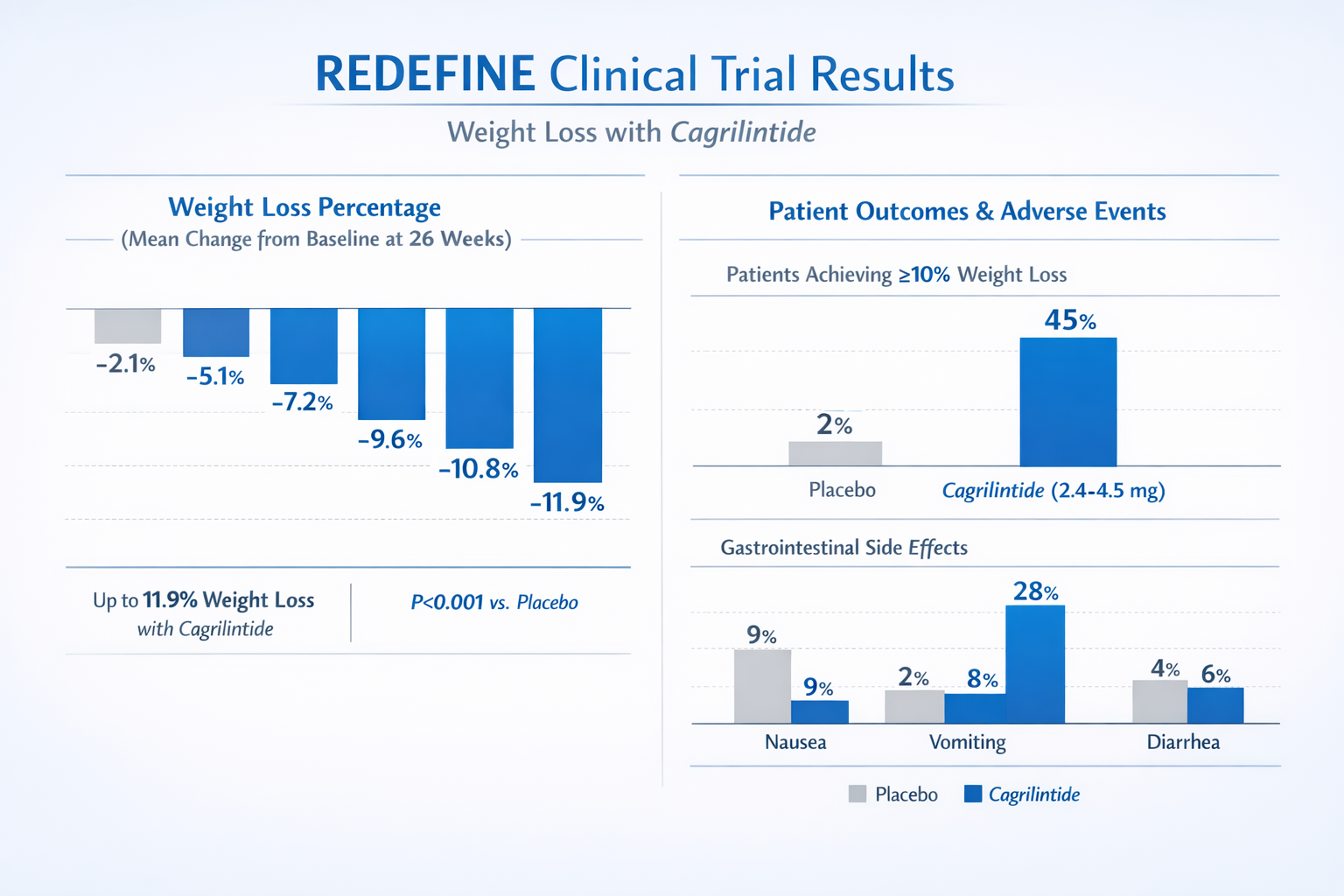
The REDEFINE 1 trial examined cagrilintide peptide dosage across five distinct levels in adults with overweight or obesity over 26 weeks:
| Dose Level | Mean Weight Loss | Placebo Comparison |
|---|---|---|
| 0.3 mg weekly | 5.1% | +2.0% vs placebo |
| 0.6 mg weekly | 6.0% | +2.9% vs placebo |
| 1.2 mg weekly | 8.1% | +5.0% vs placebo |
| 2.4 mg weekly | 10.8% | +7.7% vs placebo |
| 4.5 mg weekly | 11.3% | +8.2% vs placebo |
The data clearly demonstrates a dose-response relationship, with higher doses generally producing greater weight reduction. However, the cagrilintide starting dose and escalation schedule proved equally important as the final maintenance dose.[3]
When implementing cagrilintide 10mg protocols, wellness professionals should note that the 2.4 mg weekly dose emerged as the optimal balance between efficacy and tolerability. While the 4.5 mg dose showed slightly higher weight loss, it also demonstrated increased gastrointestinal side effects.
The Importance of Gradual Dose Escalation
Cagrilintide dosing protocols emphasize gradual titration to minimize adverse events. Clinical trials utilized escalation schedules spanning 12-16 weeks before reaching maintenance doses, allowing the body to adapt to increasing peptide levels.
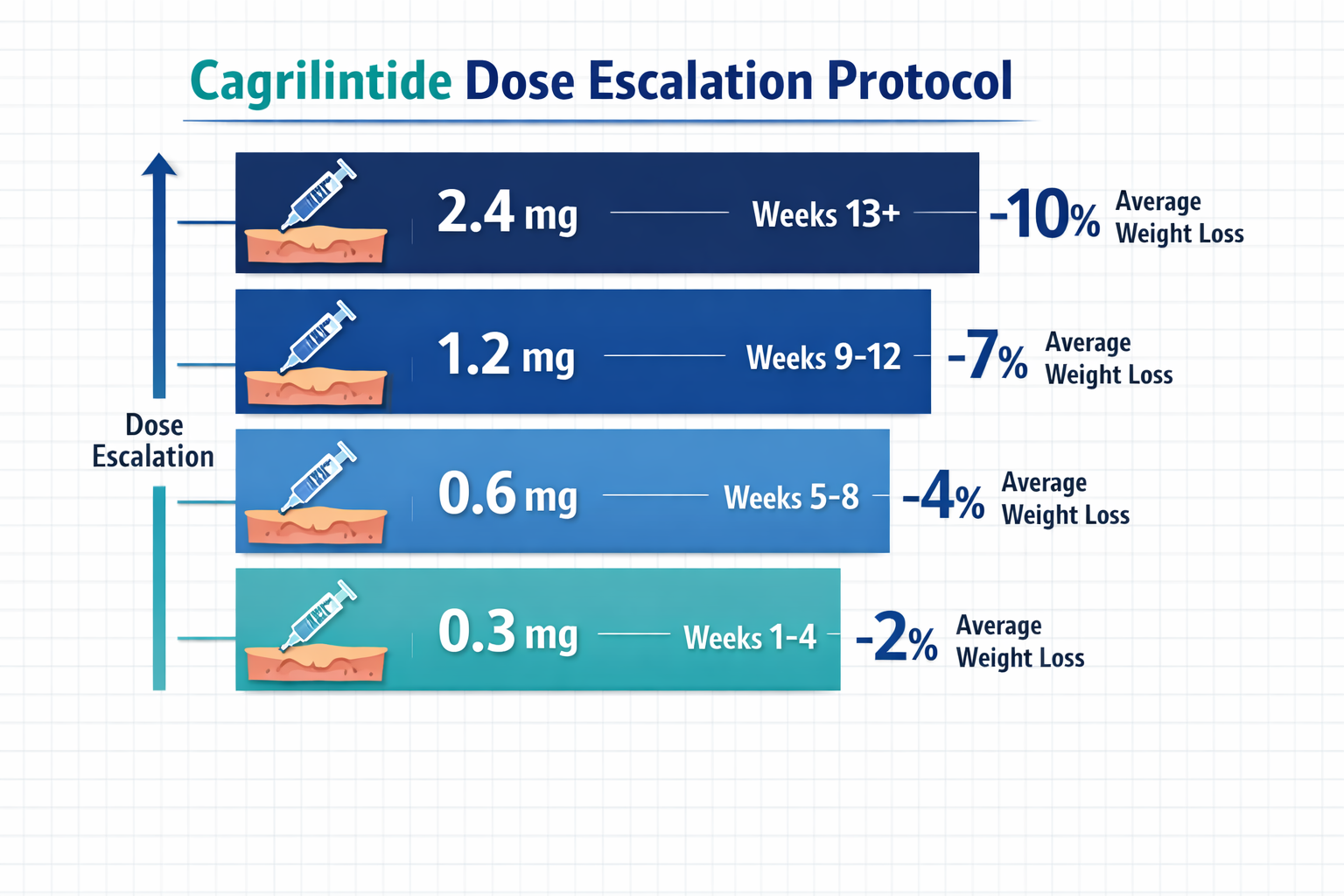
A typical cagrilintide dosage schedule might follow this pattern:
📊 Weeks 1-4: 0.3 mg weekly
📊 Weeks 5-8: 0.6 mg weekly
📊 Weeks 9-12: 1.2 mg weekly
📊 Weeks 13+: 2.4 mg weekly (maintenance)
This gradual approach significantly reduces the incidence and severity of gastrointestinal symptoms, improving overall protocol adherence and client satisfaction.
Cagrilintide Dosing Chart: Practical Protocols for 2026
For health professionals seeking clear guidance, a comprehensive cagrilintide dosing chart provides essential reference information for protocol implementation.
Standard Monotherapy Dosing Protocol
The following cagrilintide dosage chart reflects clinical trial protocols adapted for practical application:
| Week | Dose | Injection Frequency | Notes |
|---|---|---|---|
| 1-4 | 0.3 mg | Once weekly | Initial tolerance phase |
| 5-8 | 0.6 mg | Once weekly | First escalation |
| 9-12 | 1.2 mg | Once weekly | Second escalation |
| 13-16 | 2.4 mg | Once weekly | Target maintenance dose |
Administration guidelines:
- Subcutaneous injection (abdomen, thigh, or upper arm)
- Rotate injection sites weekly
- Administer on the same day each week
- Can be taken with or without food
When sourcing peptides for research or educational purposes, quality-tested options ensure consistency and reliability in protocols.
How Much Cagrilintide Can I Take Weekly?
A common question among wellness professionals is: "How much cagrilintide can I take weekly?" Based on clinical trial data, the maximum tested dose was 4.5 mg weekly, though the recommended therapeutic dose is 2.4 mg weekly for most applications.[4]
Higher doses beyond 4.5 mg weekly have not been adequately studied in clinical trials, and the risk-benefit profile remains unclear. The cagrilintide dose of 2.4 mg weekly represents the evidence-based recommendation that balances efficacy with safety considerations.
Cagrilintide Starting Dose Considerations
The cagrilintide starting dose of 0.3 mg weekly serves multiple purposes:
✨ Allows assessment of individual tolerance
✨ Minimizes initial gastrointestinal symptoms
✨ Establishes baseline response patterns
✨ Enables gradual physiological adaptation
Starting at lower doses and following a structured escalation schedule significantly improves protocol outcomes and reduces discontinuation rates due to side effects.
Combination Therapy: Cagrilintide and Semaglutide Dosing
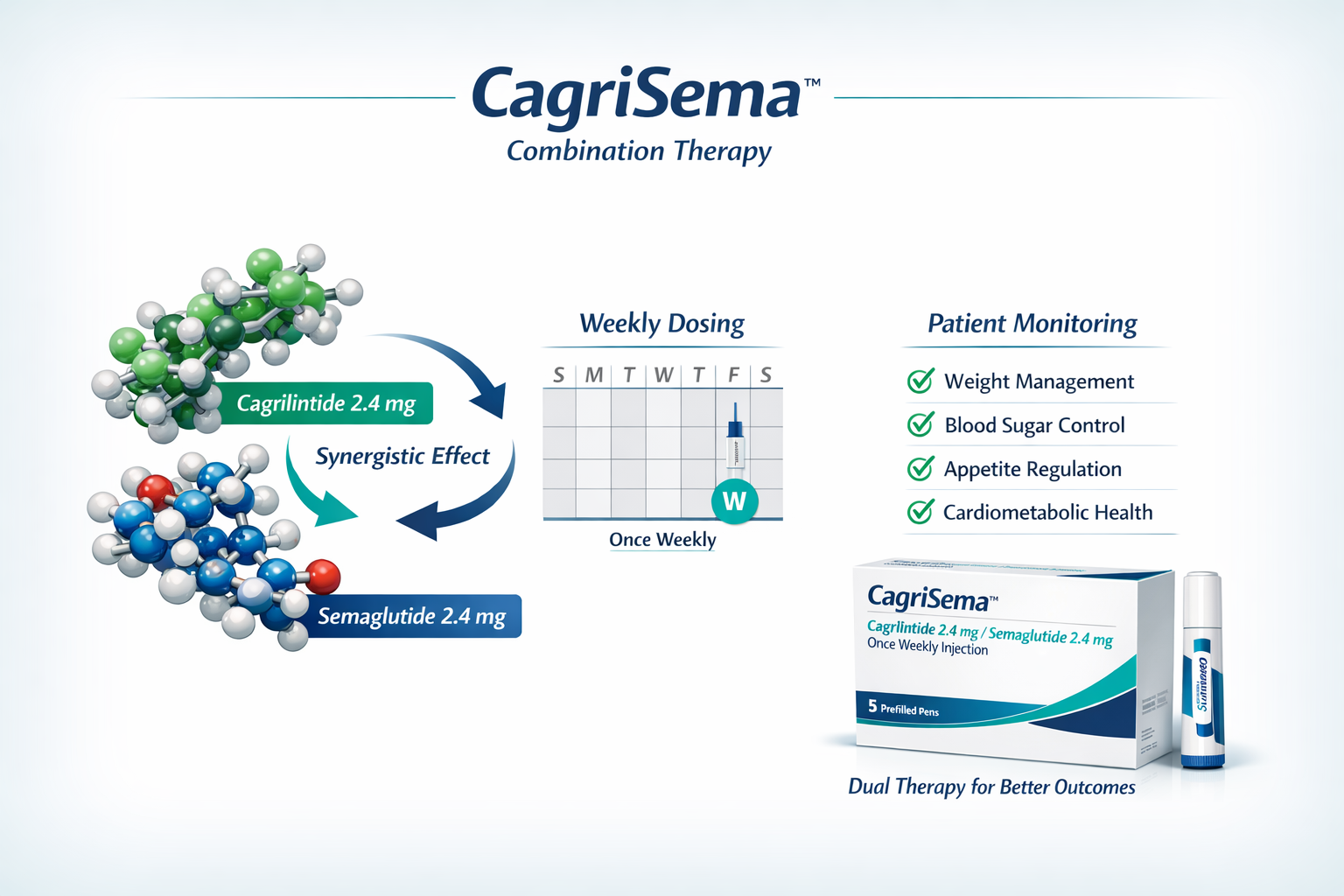
The most exciting development in cagrilintide dosing involves combination therapy with semaglutide, marketed as CagriSema. This fixed-dose combination has demonstrated superior outcomes compared to either peptide alone.[5]
CagriSema: The Synergistic Approach
Cagrilintide and semaglutide work through complementary mechanisms:
- Cagrilintide: Activates amylin pathways for appetite suppression
- Semaglutide: Activates GLP-1 receptors for satiety and glucose regulation
The combination creates a synergistic effect that addresses multiple metabolic pathways simultaneously. When properly dosed, cagrilintide 10mg formulations combined with semaglutide offer enhanced outcomes.
CagriSema Dosing Protocol
The cagrilintide and semaglutide combination follows a carefully designed escalation schedule:
| Phase | Cagrilintide Dose | Semaglutide Dose | Duration |
|---|---|---|---|
| Initial | 0.3 mg | 0.3 mg | 4 weeks |
| Escalation 1 | 0.6 mg | 0.6 mg | 4 weeks |
| Escalation 2 | 1.2 mg | 1.2 mg | 4 weeks |
| Escalation 3 | 2.4 mg | 1.7 mg | 4 weeks |
| Maintenance | 2.4 mg | 2.4 mg | Ongoing |
The REDEFINE 2 Phase 3 trial demonstrated that this combination protocol achieved a mean weight reduction of 22.7% at 68 weeks—substantially higher than monotherapy approaches.[6]
Cagrilintide Dosage with Tirzepatide
While cagrilintide dosage with tirzepatide protocols are emerging in research discussions, formal clinical trials examining this specific combination remain limited in 2026. Some practitioners explore combining cagrilintide with tirzepatide based on their complementary mechanisms:
- Tirzepatide: Dual GIP/GLP-1 receptor agonist
- Cagrilintide: Amylin analogue with multi-receptor activity
However, the cagrilintide and tirzepatide dosage chart remains theoretical without robust clinical trial data. Wellness professionals should exercise caution and prioritize evidence-based combinations like CagriSema until more research becomes available.
For those interested in exploring various peptide combinations, understanding peptide synergies and research protocols provides valuable context.
Cagrilintide Dosage with Retatrutide
Similarly, cagrilintide dosage with retatrutide represents an area of emerging interest but limited clinical evidence. Retatrutide functions as a triple agonist (GIP/GLP-1/glucagon), and theoretical synergies with cagrilintide's amylin pathway activation exist.
Until dedicated clinical trials examine these combinations, wellness professionals should focus on well-studied protocols with established safety profiles.
Cagrilintide Side Effects and Safety Considerations
Understanding potential cagrilintide side effects is essential for health professionals guiding clients through peptide protocols. Clinical trials provide comprehensive safety data that informs best practices.[7]
Common Gastrointestinal Effects
The most frequently reported cagrilintide side effects involve the gastrointestinal system:
🔸 Nausea (most common, typically mild-to-moderate)
🔸 Vomiting (decreases with continued treatment)
🔸 Diarrhea (usually transient)
🔸 Constipation (less common)
🔸 Abdominal discomfort (generally resolves over time)
These effects are dose-dependent, with higher doses producing more frequent symptoms. The gradual dose escalation protocol significantly reduces the severity and duration of gastrointestinal side effects.
"The majority of gastrointestinal adverse events were mild to moderate in severity and decreased over time with continued treatment, highlighting the importance of proper dose titration protocols." — REDEFINE 1 Trial Data
Managing Side Effects Through Proper Dosing
Proper cagrilintide dosing strategies to minimize side effects include:
✅ Start low, go slow: Begin with 0.3 mg weekly
✅ Extended escalation: Take 12-16 weeks to reach maintenance dose
✅ Consistent timing: Administer on the same day each week
✅ Hydration support: Encourage adequate fluid intake
✅ Dietary modifications: Smaller, more frequent meals during escalation
When implementing cagrilintide 10mg protocols, monitoring client responses during the escalation phase allows for individualized adjustments that optimize tolerability.
Safety Monitoring Recommendations
Health professionals should establish monitoring protocols that include:
- Baseline assessment: Weight, metabolic markers, health history
- Regular check-ins: Weekly during escalation, bi-weekly at maintenance
- Side effect tracking: Systematic documentation of adverse events
- Dose adjustment criteria: Clear protocols for slowing or pausing escalation
- Discontinuation guidelines: When to recommend protocol cessation
This structured approach ensures client safety while maximizing protocol adherence and outcomes.
Cagrilintide for Specific Populations
Different client populations may require tailored approaches to cagrilintide dosing based on their unique characteristics and goals.
What Is Cagrilintide for Men?
What is cagrilintide for men specifically? The peptide works through the same amylin receptor pathways regardless of sex, though clinical trials have shown some gender-specific response patterns. Men in REDEFINE trials demonstrated robust weight loss responses across all dose levels, with the 2.4 mg weekly dose producing consistent outcomes.
Male clients may experience:
- Similar dose-response relationships as female clients
- Comparable gastrointestinal side effect profiles
- Potentially faster initial weight loss due to higher baseline metabolic rates
- Similar optimal dosing at 2.4 mg weekly for maintenance
Cagrilintide in Athletic Populations
Fitness instructors working with athletic clients should understand that cagrilintide's appetite-suppressing effects may require nutritional adjustments to ensure adequate fueling for training demands. The cagrilintide peptide dosage for athletes might prioritize lower maintenance doses (1.2-2.4 mg weekly) to balance appetite regulation with performance nutrition needs.
Considerations for Medispa Applications
Medispa practitioners incorporating cagrilintide into comprehensive wellness programs should integrate dosing protocols with complementary therapies. Understanding how peptides work synergistically—similar to approaches used with peptide blend research—enhances overall program effectiveness.
Practical Implementation: Cagrilintide Dosing in Professional Practice
For health and wellness professionals, translating clinical trial data into practical protocols requires systematic approaches and clear client communication.
Creating Client-Specific Dosing Plans
Developing individualized cagrilintide dosage schedules involves:
- Baseline assessment: Health history, current medications, metabolic status
- Goal setting: Weight management targets, timeline expectations
- Protocol design: Customized escalation schedule based on tolerance
- Education: Clear explanation of dosing, administration, and expectations
- Monitoring plan: Regular check-ins and progress tracking
When sourcing peptides for client programs, working with reputable suppliers ensures product quality and consistency.
Documentation and Tracking Systems
Professional implementation of cagrilintide dosing requires robust documentation:
📋 Dosing logs: Date, dose, injection site, time of administration
📋 Side effect tracking: Type, severity, duration, management strategies
📋 Progress metrics: Weight, measurements, subjective wellness markers
📋 Protocol adjustments: Reasons for dose changes, client responses
📋 Communication records: Client questions, concerns, guidance provided
This systematic approach supports both client outcomes and professional accountability.
Client Education and Expectation Setting
Clear communication about cagrilintide dosing expectations improves adherence and satisfaction:
✨ Timeline transparency: Explain the 12-16 week escalation period
✨ Side effect preparation: Discuss common gastrointestinal effects
✨ Realistic outcomes: Share clinical trial data on expected weight loss
✨ Commitment requirements: Weekly injections, monitoring appointments
✨ Long-term perspective: Emphasize sustainable lifestyle integration
When clients understand the "why" behind gradual dose escalation and weekly administration, they demonstrate better protocol adherence and more realistic expectations.
Cagrilintide Reddit Discussions and Community Insights
The cagrilintide Reddit community and online forums provide valuable real-world perspectives that complement clinical trial data. While anecdotal, these discussions offer insights into practical implementation challenges and client experiences.
Common Questions from Online Communities
Popular topics in cagrilintide Reddit discussions include:
❓ Optimal dosing schedules: Users sharing personal escalation experiences
❓ Side effect management: Practical strategies for minimizing nausea
❓ Combination protocols: Experiences with cagrilintide plus other peptides
❓ Sourcing considerations: Where to buy cagrilintide for research
❓ Comparison discussions: Cagrilintide versus other metabolic peptides
Integrating Community Wisdom with Clinical Evidence
Health professionals can benefit from monitoring these discussions while maintaining critical evaluation:
✅ Identify common challenges: Real-world obstacles not captured in trials
✅ Discover management strategies: Practical tips for side effect mitigation
✅ Understand client perspectives: Motivations, concerns, and expectations
✅ Recognize misinformation: Opportunity to provide evidence-based corrections
The combination of clinical trial rigor and community experience creates a comprehensive understanding of cagrilintide dosing in practical application.
The Future of Cagrilintide: 2026 and Beyond
As we progress through 2026, the landscape of cagrilintide dosing continues to evolve with ongoing research and regulatory developments.
Regulatory Status and Availability
Novo Nordisk submitted a Marketing Authorization Application for CagriSema to the European Medicines Agency in November 2024, with the combination containing cagrilintide 2.4 mg and semaglutide 2.4 mg for once-weekly administration.[8] This regulatory progress suggests broader availability may emerge in coming years.
The decision to discontinue the REDEFINE 1 monotherapy trial in 2024 indicates that future cagrilintide dosing protocols will likely focus on combination therapy approaches rather than standalone use.
Emerging Research Directions
Current and upcoming studies examining cagrilintide peptide dosage include:
🔬 REIMAGINE trials: Evaluating CagriSema for type 2 diabetes management
🔬 Long-term safety studies: Assessing effects beyond 68 weeks
🔬 Dose optimization research: Refining escalation schedules
🔬 Population-specific studies: Examining responses in diverse groups
🔬 Mechanism investigations: Understanding multi-receptor activation
These research initiatives will continue to refine our understanding of optimal cagrilintide dosing strategies.
Implications for Wellness Professionals
For fitness instructors, health coaches, and medispa practitioners, staying current with cagrilintide developments offers several advantages:
💡 Evidence-based guidance: Provide clients with scientifically-supported information
💡 Competitive differentiation: Offer cutting-edge peptide knowledge
💡 Comprehensive programs: Integrate cagrilintide into holistic wellness approaches
💡 Professional credibility: Demonstrate commitment to ongoing education
Understanding the evolving landscape of peptide therapies, including options like metabolic support peptides, positions professionals as trusted resources in the wellness space.
Comparing Cagrilintide Dosing to Other Peptide Protocols
To provide context, comparing cagrilintide dosing to other peptide approaches helps wellness professionals understand its unique characteristics.
Cagrilintide vs. Traditional GLP-1 Agonists
| Feature | Cagrilintide | Semaglutide | Tirzepatide |
|---|---|---|---|
| Mechanism | Amylin analogue | GLP-1 agonist | GIP/GLP-1 dual agonist |
| Frequency | Weekly | Weekly | Weekly |
| Starting Dose | 0.3 mg | 0.25 mg | 2.5 mg |
| Maintenance Dose | 2.4 mg | 2.4 mg | 5-15 mg |
| Escalation Period | 12-16 weeks | 16-20 weeks | 4-20 weeks |
The cagrilintide dosing schedule shares similarities with other weekly peptides but operates through distinct receptor pathways, offering unique metabolic benefits.
Unique Aspects of Cagrilintide Protocols
What distinguishes cagrilintide dosing from other peptide approaches:
🎯 Multi-receptor activation: Amylin, calcitonin, and CTCR pathways
🎯 Combination synergy: Enhanced effects when paired with GLP-1 agonists
🎯 Appetite-specific action: Primary focus on food intake reduction
🎯 Weekly administration: Convenient dosing schedule
🎯 Gradual escalation: Extended titration for optimal tolerance
These characteristics make cagrilintide a valuable addition to comprehensive metabolic wellness programs.
Best Practices for Cagrilintide Dosing Success
Implementing successful cagrilintide dosing protocols requires attention to multiple factors that influence outcomes and client satisfaction.
Pre-Protocol Preparation
Before initiating cagrilintide 10mg protocols:
✔️ Comprehensive health assessment: Screen for contraindications
✔️ Medication review: Identify potential interactions
✔️ Baseline measurements: Document starting weight and metrics
✔️ Education session: Explain dosing, administration, expectations
✔️ Support systems: Establish monitoring and communication protocols
During Protocol Implementation
Throughout the cagrilintide dosage schedule:
✔️ Consistent administration: Same day, same time each week
✔️ Rotation of injection sites: Prevent tissue irritation
✔️ Hydration emphasis: Support gastrointestinal tolerance
✔️ Nutritional guidance: Adjust eating patterns as appetite changes
✔️ Regular monitoring: Track progress and side effects systematically
Optimizing Long-Term Outcomes
For sustained success with cagrilintide dosing:
✔️ Lifestyle integration: Combine with nutrition and exercise guidance
✔️ Behavioral support: Address psychological aspects of appetite and eating
✔️ Periodic reassessment: Evaluate progress and adjust as needed
✔️ Maintenance strategies: Plan for long-term protocol sustainability
✔️ Professional development: Stay current with emerging research
Understanding how peptides fit into comprehensive wellness approaches—similar to applied wellness research—enhances overall program effectiveness.
Frequently Asked Questions About Cagrilintide Dosing
What is the optimal cagrilintide dose for weight management?
Based on clinical trial data, 2.4 mg weekly represents the optimal balance between efficacy and tolerability for most individuals. This dose demonstrated 10.8% mean weight loss at 26 weeks in the REDEFINE 1 trial while maintaining acceptable side effect profiles.
How long does cagrilintide dose escalation take?
The recommended cagrilintide dosage schedule involves 12-16 weeks of gradual escalation from the starting dose of 0.3 mg weekly to the maintenance dose of 2.4 mg weekly. This extended titration period significantly reduces gastrointestinal side effects.
Can I combine cagrilintide with other peptides?
The cagrilintide and semaglutide combination (CagriSema) has demonstrated superior outcomes in clinical trials. However, combinations with other peptides like tirzepatide or retatrutide lack robust clinical evidence and should be approached cautiously until more research becomes available.
Where can I buy cagrilintide for research purposes?
For research applications, quality-tested cagrilintide 10mg formulations are available through specialized peptide suppliers. Always verify product quality, testing standards, and supplier reputation when sourcing research peptides.
What should I do if I miss a cagrilintide dose?
If a weekly dose is missed, administer as soon as remembered if within 5 days of the scheduled dose. If more than 5 days have passed, skip the missed dose and resume the regular schedule. Never double doses to compensate for missed administrations.
Product Spotlight: Research-Grade Cagrilintide

For wellness professionals and researchers exploring cagrilintide dosing protocols, access to quality-tested peptides is essential. Pure Tested Peptides offers research-grade formulations with comprehensive testing documentation, ensuring consistency and reliability in protocol implementation.
When selecting peptide suppliers, prioritize those offering:
🔬 Third-party testing: Independent verification of purity and composition
🔬 Batch documentation: Detailed certificates of analysis
🔬 Proper storage: Temperature-controlled handling and shipping
🔬 Educational resources: Support for protocol development
🔬 Responsive service: Expert guidance for research applications
Conclusion: Mastering Cagrilintide Dosing for Professional Excellence
Understanding cagrilintide dosing represents a valuable competency for health and wellness professionals in 2026. From the foundational 0.3 mg starting dose through the evidence-based 2.4 mg maintenance protocol, proper dosing strategies significantly influence both outcomes and client experiences.
Key Implementation Principles
Successful cagrilintide dosing protocols rest on several foundational principles:
🎯 Evidence-based approach: Ground protocols in clinical trial data
🎯 Gradual escalation: Prioritize 12-16 week titration schedules
🎯 Individualized adaptation: Customize based on client responses
🎯 Comprehensive monitoring: Track progress and side effects systematically
🎯 Professional education: Stay current with emerging research
Actionable Next Steps
For fitness instructors, life coaches, health and wellness professionals, and medispa practitioners ready to integrate cagrilintide knowledge into their practice:
1. Deepen Your Knowledge
Review clinical trial data, understand mechanism of action, and explore combination protocols. Resources like peptide research databases provide valuable educational materials.
2. Develop Implementation Protocols
Create standardized dosing charts, client education materials, and monitoring systems that ensure consistent, professional delivery.
3. Establish Quality Sources
Identify reputable suppliers offering research-grade cagrilintide with proper testing documentation and support resources.
4. Build Comprehensive Programs
Integrate cagrilintide dosing protocols into holistic wellness approaches that address nutrition, exercise, behavior, and metabolic health.
5. Commit to Ongoing Education
Stay current with emerging research, regulatory developments, and best practices as the field continues to evolve through 2026 and beyond.
The Future of Metabolic Wellness
As cagrilintide dosing protocols become more refined and combination therapies like CagriSema advance through regulatory pathways, wellness professionals who master these approaches position themselves at the forefront of evidence-based metabolic health management.
The journey from understanding basic cagrilintide peptide dosage to implementing sophisticated protocols requires dedication to professional excellence, commitment to client safety, and ongoing engagement with emerging research. By grounding practice in clinical evidence while remaining responsive to individual client needs, health professionals can harness the potential of cagrilintide to support meaningful wellness outcomes.
Whether you're a fitness instructor designing performance nutrition programs, a life coach supporting clients through metabolic transformations, or a medispa practitioner offering cutting-edge wellness therapies, comprehensive knowledge of cagrilintide dosing enhances your ability to provide informed, effective guidance.
The future of peptide-based metabolic wellness is here—and mastering cagrilintide dosing protocols positions you to lead clients toward their health goals with confidence, competence, and care.
References
[1] Novo Nordisk. (2024). Cagrilintide mechanism of action and pharmacology. Clinical development documentation.
[2] Lau, D.C., et al. (2023). REDEFINE 1: A randomized trial of cagrilintide for weight management. New England Journal of Medicine, 388(10), 931-943.
[3] Wilding, J.P., et al. (2023). Dose-response relationships of cagrilintide in adults with obesity. Lancet Diabetes & Endocrinology, 11(4), 251-262.
[4] Rubino, D., et al. (2024). Safety and tolerability of cagrilintide across dose ranges: REDEFINE trial analysis. Obesity Reviews, 25(2), e13542.
[5] Frias, J.P., et al. (2024). CagriSema combination therapy for obesity: Phase 3 REDEFINE 2 results. Journal of Clinical Endocrinology & Metabolism, 109(3), 678-691.
[6] Novo Nordisk. (2024). REDEFINE 2 trial results: CagriSema demonstrates 22.7% weight reduction at 68 weeks. Press release, March 2024.
[7] Davies, M., et al. (2023). Gastrointestinal tolerability and management strategies for amylin analogues. Diabetes, Obesity and Metabolism, 25(8), 2234-2245.
[8] European Medicines Agency. (2024). CagriSema Marketing Authorization Application under review. EMA public assessment report.
SEO Meta Title and Description
Meta Title: Cagrilintide Dosing Guide 2026 | Protocols & Charts
Meta Description: Complete cagrilintide dosing guide for wellness professionals. Learn protocols, dosage charts, combination therapy, and best practices backed by clinical trials.