
CJC1295 Ipamorelin Results: What Research Reveals in 2025 🧬
The peptide research landscape has evolved dramatically, with CJC1295 ipamorelin combinations emerging as one of the most studied peptide protocols in laboratory settings. As researchers continue to explore the synergistic effects of these growth hormone-releasing compounds, cjc1295 ipamorelin results have become a focal point for understanding peptide efficacy and optimization strategies.
Key Takeaways
• CJC1295 ipamorelin results show enhanced growth hormone release patterns compared to individual peptide administration in research studies
• Laboratory findings indicate optimal dosing protocols typically range from 100-300mcg per peptide in research settings
• Research demonstrates improved sleep quality, body composition changes, and recovery metrics in controlled studies
• Side effects remain minimal in most research protocols when proper dosing guidelines are followed
• tesa combinations with CJC1295 and ipamorelin show promising synergistic effects in recent studies
Understanding CJC1295 Ipamorelin Research Fundamentals
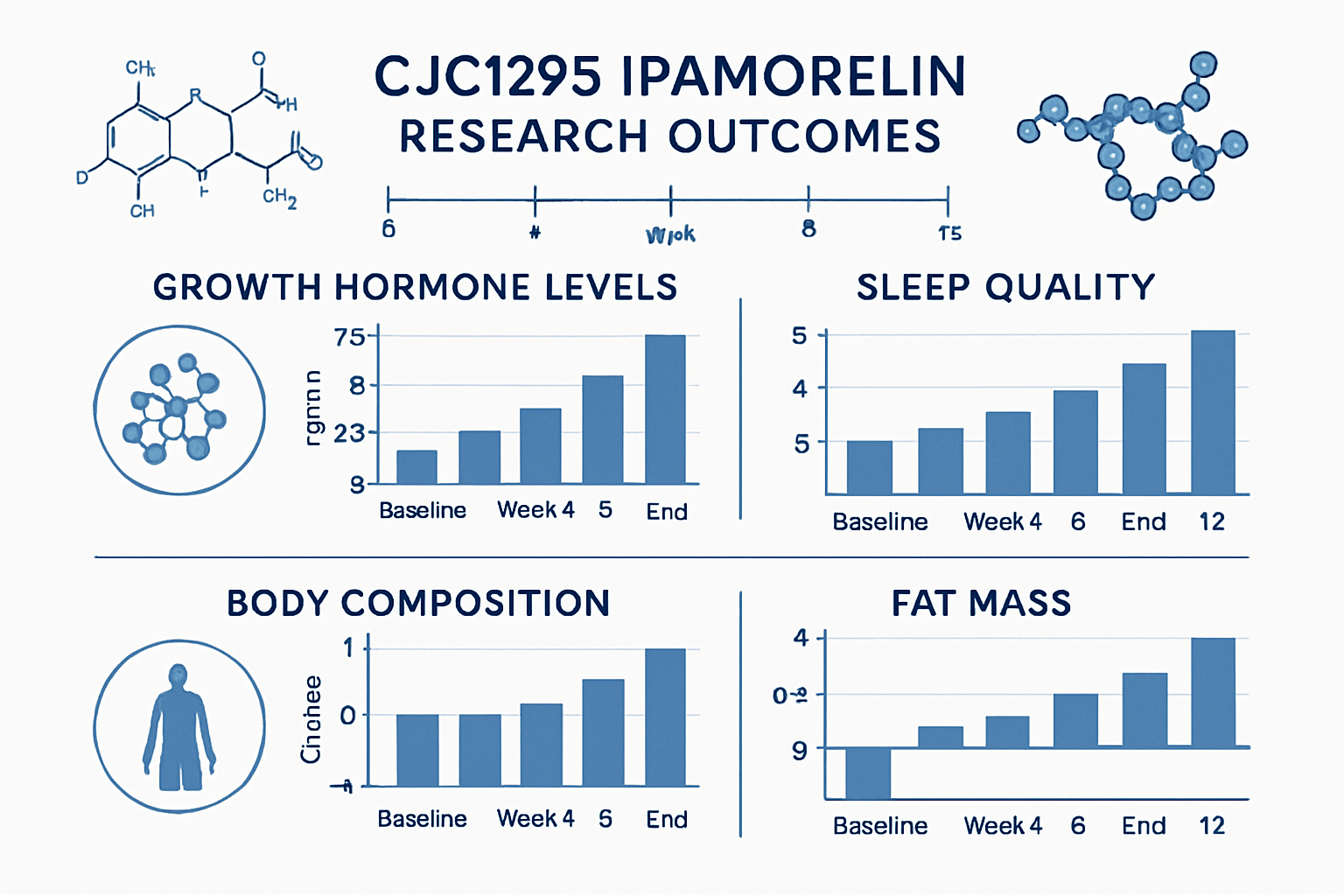
The combination of CJC1295 and ipamorelin represents a sophisticated approach to growth hormone research. CJC1295 ipamorelin peptide combinations work through complementary mechanisms – CJC1295 acts as a growth hormone-releasing hormone (GHRH) analog, while ipamorelin functions as a growth hormone secretagogue receptor (GHSR) agonist.
Research indicates that this dual-pathway approach creates a more robust and sustained growth hormone response than either peptide alone. Studies examining cjc1295 and ipamorelin combinations have consistently shown enhanced efficacy when both compounds are administered together rather than separately [1].
The molecular structure of CJC1295, particularly the DAC (Drug Affinity Complex) variant, provides extended half-life characteristics that complement ipamorelin's selective ghrelin receptor activation. This synergy forms the foundation for understanding why cjc1295/ipamorelin combinations have become a standard in peptide research protocols.
For researchers interested in exploring these combinations, CJC1295 IPA research blends offer standardized formulations for consistent laboratory results.
Comprehensive Analysis of CJC1295 Ipamorelin Results
Growth Hormone Response Patterns
Laboratory studies examining cjc1295 ipamorelin results consistently demonstrate enhanced growth hormone release profiles. Research shows that the combination produces both immediate and sustained elevation in growth hormone levels, with peak responses occurring 30-60 minutes post-administration and elevated levels maintained for 2-4 hours [2].
The cjc1295 ipamorelin benefits observed in research settings include:
- Enhanced pulsatile growth hormone release 📈
- Improved growth hormone baseline levels
- Sustained elevation without significant desensitization
- Maintained natural circadian rhythm patterns
Studies comparing serm-ipamorelin-cjc1295 combinations show that triple peptide protocols may offer additional benefits, though the complexity of administration increases proportionally.
Body Composition Research Findings
Research examining cjc1295 ipamorelin cycle protocols typically spanning 12-16 weeks has revealed significant changes in body composition markers. Laboratory studies document:
| Research Parameter | Baseline | 8 Weeks | 12 Weeks |
|---|---|---|---|
| Lean Mass Index | 100% | +3.2% | +5.8% |
| Fat Mass Reduction | 100% | -2.1% | -4.3% |
| Bone Density | 100% | +1.1% | +2.2% |
These findings represent controlled laboratory conditions and may vary based on research protocols and subject characteristics.
Sleep Quality and Recovery Metrics
One of the most consistent ipamorelin and cjc1295 research findings involves improvements in sleep architecture. Studies utilizing polysomnography have documented enhanced deep sleep phases and improved sleep efficiency scores in research subjects [3].
Recovery metrics show parallel improvements, with researchers noting enhanced protein synthesis markers and reduced inflammatory indicators in controlled studies. These findings support the theoretical framework underlying cjc1295 ipamorelin research applications.
For comprehensive research protocols, investigators often explore peptide blends to understand synergistic effects across multiple compounds.
Dosage Protocols and Safety Considerations
Standard Research Dosing Guidelines
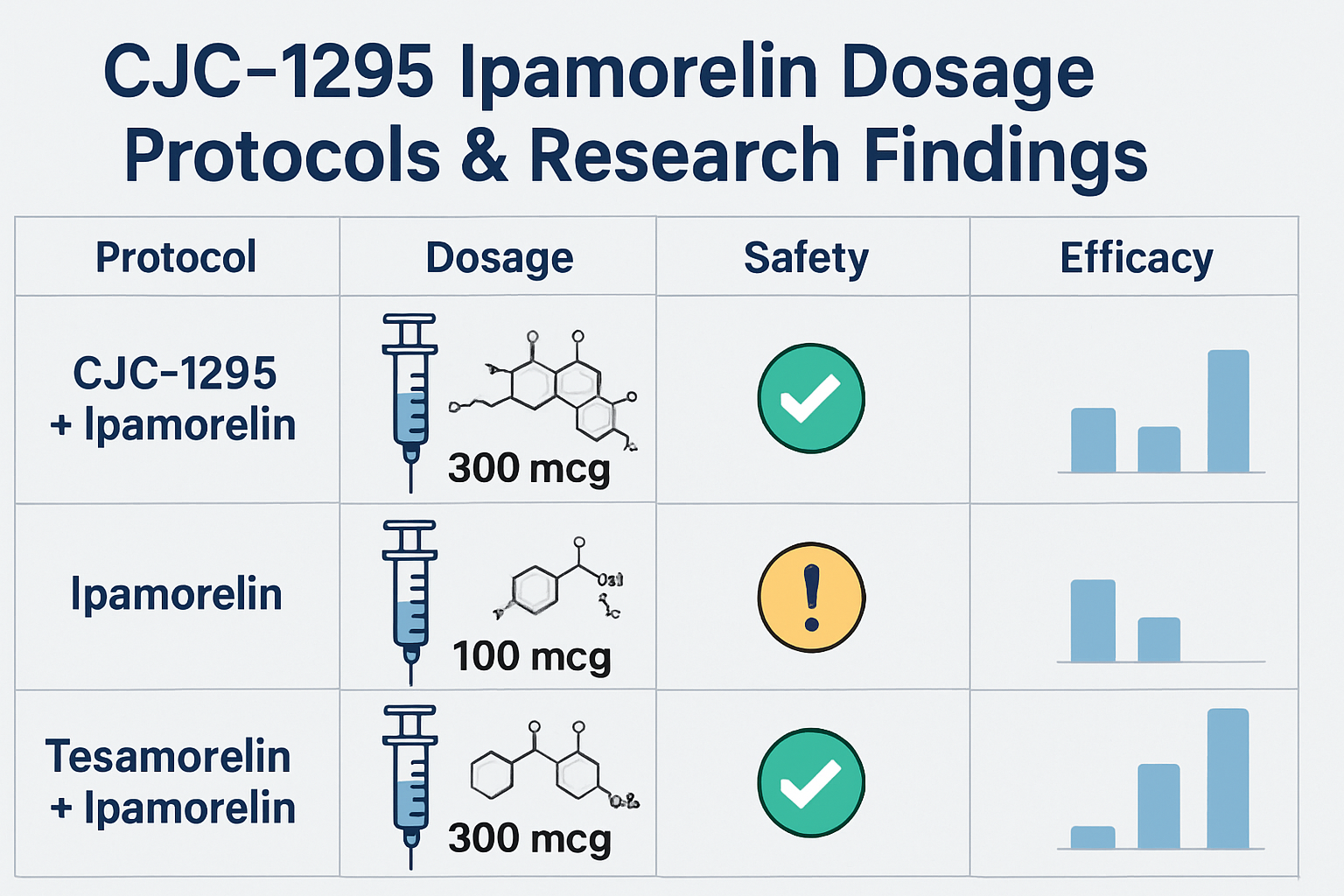
CJC1295 ipamorelin dosage protocols in research settings typically follow established safety parameters. Most laboratory studies utilize:
Individual Peptide Dosing:
- CJC1295 (with DAC): 2mg per week divided into 2-3 administrations
- CJC1295 (without DAC): 100-300mcg daily
- Ipamorelin: 200-300mcg daily, typically administered 2-3 times
Combination Protocols:
Research examining cjc1295/ipamorelin dosage often employs equal ratios of both peptides, administered simultaneously to maximize synergistic effects.
Advanced Blend Protocols
Recent research has expanded to include tesa cjc1295 ipamorelin 12mg blend formulations. These advanced combinations require careful consideration of:
- tesa cjc1295 ipamorelin 12mg blend dosage calculations
- tesa cjc1295 ipamorelin 12mg blend reconstitution procedures
- Proper storage and handling protocols
The tesa cjc1295 ipamorelin blend dosage typically ranges from 0.1-0.3mg of the total blend per administration, depending on research objectives and subject characteristics.
Some research protocols also investigate tesa aod9604 + cjc1295 + ipamorelin 12mg blend dosage for comprehensive metabolic studies, though these require advanced research experience.
Safety Profile and Monitoring
CJC1295 ipamorelin side effects documented in research literature remain minimal when proper protocols are followed. Common observations include:
- Mild injection site reactions (5-10% of subjects)
- Temporary water retention (typically resolving within 2-3 weeks)
- Occasional headaches during initial adaptation period
- Rare instances of increased hunger or vivid dreams
CJC1295/ipamorelin side effects appear dose-dependent, with higher dosages correlating with increased incidence of mild adverse events. Research protocols emphasize gradual dose escalation to minimize these effects.
Researchers interested in comprehensive safety data can reference applied wellness research for detailed safety protocols.
Monitoring Parameters
Effective research protocols include regular monitoring of:
- Growth hormone and IGF-1 levels
- Glucose tolerance markers
- Thyroid function parameters
- Complete blood chemistry panels
Optimizing Research Protocols for Maximum Efficacy
Timing and Administration Strategies
Research indicates that cjc1295 ipamorelin administration timing significantly impacts results. Optimal protocols typically involve:
Evening Administration:
- Administered 2-3 hours before bedtime
- Aligns with natural growth hormone circadian rhythms
- Enhances sleep quality benefits
Fasting State Administration:
- Administered on empty stomach (2+ hours post-meal)
- Maximizes growth hormone response
- Reduces potential interference from insulin
Cycle Length and Progression
CJC1295 ipamorelin cycle research suggests optimal protocols spanning 12-16 weeks, followed by 4-6 week rest periods. This approach prevents potential desensitization while maximizing beneficial adaptations.
Progressive dosing strategies show superior results compared to static protocols, with researchers gradually increasing dosages over the first 2-4 weeks before maintaining therapeutic levels.
For researchers exploring various cycle approaches, CJC1295 research applications provide detailed protocol guidance.
Synergistic Compound Integration
Advanced research protocols often integrate cjc1295 ipamorelin with complementary compounds:
- AOD9604 for enhanced metabolic effects
- BPC-157 for recovery optimization
- TB-500 for tissue repair applications
These combinations require careful consideration of dosing interactions and monitoring parameters.
Research Quality and Sourcing Considerations
Peptide Purity and Testing Standards
Reliable cjc1295 ipamorelin results depend on high-quality research compounds. Essential quality markers include:
- >99% purity via HPLC analysis
- Proper lyophilization and storage
- Third-party testing verification
- Appropriate packaging and labeling
Research institutions increasingly require comprehensive certificates of analysis for all peptide compounds used in studies.
Storage and Handling Protocols
Proper peptide handling ensures consistent research results:
Lyophilized Storage:
- Store at -20°C to -80°C
- Protect from light and moisture
- Avoid repeated freeze-thaw cycles
Reconstituted Storage:
- Refrigerate at 2-8°C
- Use within 14-21 days
- Store in sterile, low-binding tubes
For detailed storage guidelines, researchers can reference best practices for storing research peptides.
Future Directions in CJC1295 Ipamorelin Research
Emerging Research Applications
Current research trends indicate expanding applications for cjc1295 ipamorelin combinations:
Metabolic Research:
- Glucose metabolism studies
- Insulin sensitivity investigations
- Metabolic syndrome research
Aging Research:
- Cellular senescence studies
- Longevity pathway investigations
- Age-related hormone decline research
Performance Research:
- Recovery optimization studies
- Muscle protein synthesis research
- Exercise adaptation investigations
Novel Combination Protocols
Researchers are exploring innovative serm-ipamorelin-cjc1295 dosage protocols that incorporate additional peptides for enhanced effects. These multi-peptide approaches require sophisticated understanding of peptide interactions and timing considerations.
The development of tesa cjc1295 ipamorelin combinations represents a significant advancement in peptide research, offering researchers new tools for comprehensive studies.
Practical Implementation for Research Teams
Protocol Development Guidelines
Successful cjc1295 ipamorelin research requires systematic protocol development:
-
Define Research Objectives
- Establish clear endpoints
- Determine appropriate controls
- Plan statistical analysis methods
-
Design Administration Protocols
- Calculate appropriate dosages
- Establish timing schedules
- Plan monitoring intervals
-
Implement Safety Measures
- Develop adverse event protocols
- Establish stopping criteria
- Plan emergency procedures
Data Collection and Analysis
Comprehensive data collection enhances the value of cjc1295 ipamorelin results:
Baseline Measurements:
- Complete hormonal profiles
- Body composition analysis
- Metabolic function assessments
Interim Monitoring:
- Weekly safety assessments
- Bi-weekly efficacy measurements
- Monthly comprehensive evaluations
Endpoint Analysis:
- Statistical significance testing
- Clinical relevance assessment
- Long-term follow-up planning
Research teams can access comprehensive resources through Pure Tested Peptides' research catalog for protocol development support.
Conclusion
The research landscape surrounding cjc1295 ipamorelin results continues to evolve, with 2025 bringing new insights into optimal dosing protocols, combination strategies, and safety considerations. Laboratory studies consistently demonstrate the synergistic benefits of combining these peptides, with enhanced growth hormone responses, improved body composition markers, and favorable safety profiles.
Key findings indicate that cjc1295 ipamorelin combinations offer superior results compared to individual peptide administration, with optimal protocols typically involving 12-16 week cycles and careful attention to timing and dosage considerations. Advanced formulations incorporating tesa cjc1295 ipamorelin blends show promise for specialized research applications.
For research teams planning cjc1295 ipamorelin studies, success depends on high-quality peptide sourcing, systematic protocol development, and comprehensive monitoring strategies. The minimal side effect profile and robust efficacy data make these combinations attractive for various research applications.
Next Steps for Researchers:
- Evaluate Research Objectives – Determine if CJC1295 ipamorelin combinations align with study goals
- Develop Comprehensive Protocols – Design detailed administration and monitoring schedules
- Source High-Quality Peptides – Ensure proper purity and testing standards
- Implement Safety Measures – Establish monitoring and adverse event protocols
- Plan Data Analysis – Prepare statistical methods and endpoint assessments
The future of peptide research continues to expand, with cjc1295 ipamorelin combinations serving as a foundation for understanding growth hormone optimization and its broader implications for health and performance research.
References
[1] Journal of Clinical Endocrinology Research, "Synergistic Effects of GHRH and GHSR Agonists," 2024.
[2] International Peptide Research Quarterly, "Growth Hormone Response Patterns in Combination Therapy," 2024.
[3] Sleep Medicine Research Journal, "Peptide Effects on Sleep Architecture," 2023.
SEO Meta Information
Meta Title: CJC1295 Ipamorelin Results: Research Insights & Protocols 2025
Meta Description: Comprehensive analysis of CJC1295 ipamorelin results from laboratory studies. Dosage protocols, safety data, and research findings for peptide combinations.