

Only about 5% of peptide compounds in early-stage metabolic research ever reach the level of scientific interest that GLP1-Reta has generated among researchers and fitness peptide enthusiasts in 2026. This novel incretin-class compound is drawing serious attention for its receptor-targeting profile and its potential role in next-generation metabolic modulation research.
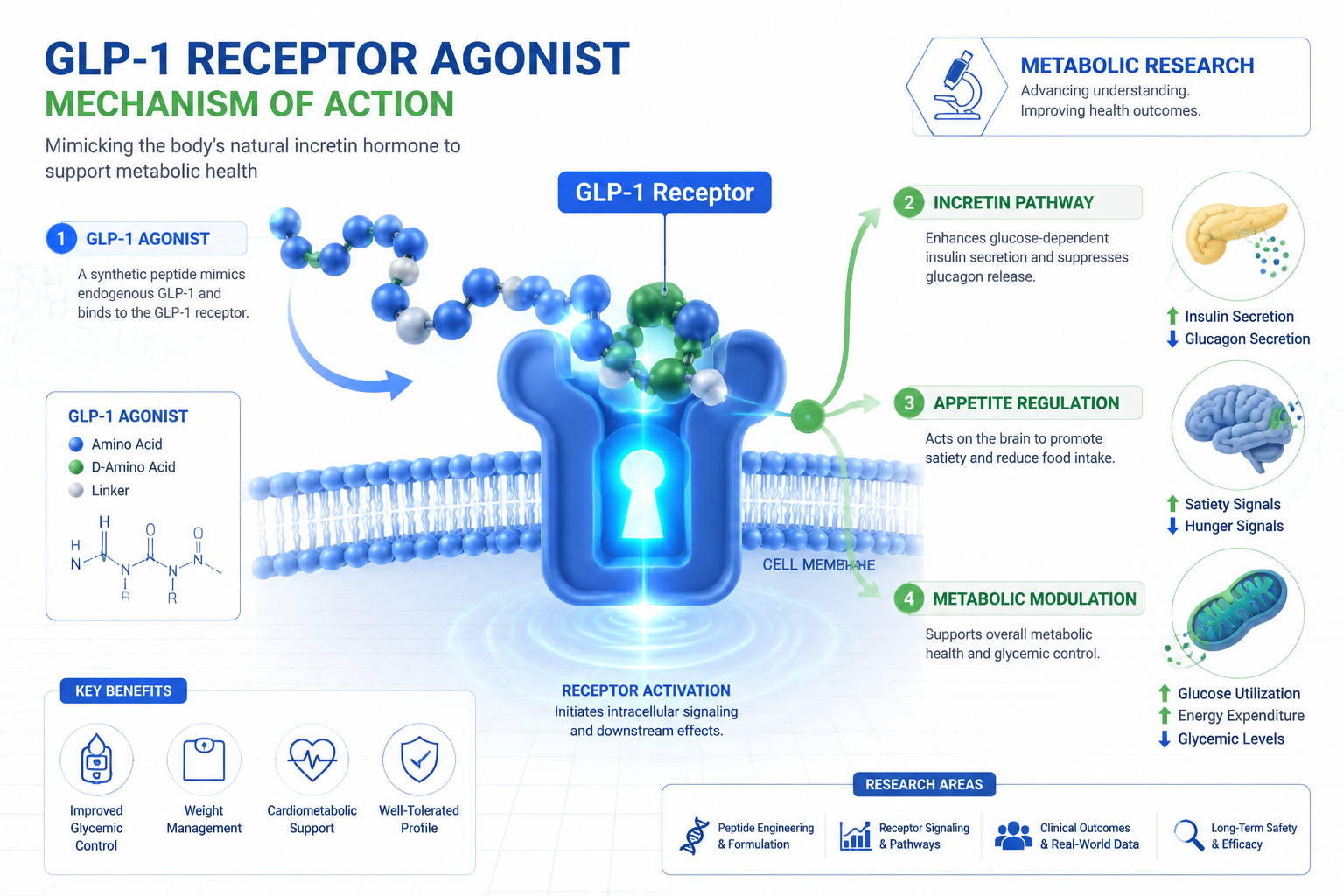
glp1-Reta research-grade peptides represent a compelling area of study for those tracking the evolution of GLP-1 receptor agonism. This article breaks down what researchers currently understand about this compound, how it fits into the broader incretin landscape, and why the fitness peptide research community is paying close attention.
⚠️ Research Disclaimer: All products discussed are intended for research purposes only. They are not approved for human use, diagnosis, or treatment. Always consult qualified professionals before engaging with any research compound.
Key Takeaways 🔑
- GLP1-Reta is a research-stage incretin peptide targeting GLP-1 receptors with a distinct structural profile
- It belongs to a broader generation of GLP-1 receptor agonists being studied for metabolic modulation
- Researchers are exploring its potential in appetite signaling, energy homeostasis, and body composition models
- It is closely related to the "Reta" compound family, which includes GLP3-Reta incretin research themes
- All GLP1-Reta compounds are for research use only
What Is GLP1-Reta? Understanding the Compound
GLP1-Reta is a synthetic peptide analog designed to interact with glucagon-like peptide-1 (GLP-1) receptors. GLP-1 receptors play a central role in the incretin system — a network of gut-derived hormones that regulate insulin secretion, appetite, and energy balance.
The "Reta" designation places this compound within a specific structural family of peptides being studied across multiple receptor classes. For context, the broader GLP-1 generations overview shows how these compounds have evolved from first-generation single-receptor agonists toward more sophisticated, multi-pathway research tools.
How GLP1-Reta Differs From Earlier GLP-1 Compounds
| Feature | Early GLP-1 Analogs | GLP1-Reta |
|---|---|---|
| Receptor Specificity | Single GLP-1 receptor | Refined GLP-1 targeting |
| Half-Life Profile | Variable | Extended (research models) |
| Research Focus | Glycemic regulation | Metabolic + body composition |
| Structural Class | Peptide agonist | Reta-family analog |
Researchers studying GLP-1T dual receptor agonism have noted that the Reta family compounds may offer distinct binding characteristics worth investigating further.
GLP1-Reta in the Context of Incretin Research Themes
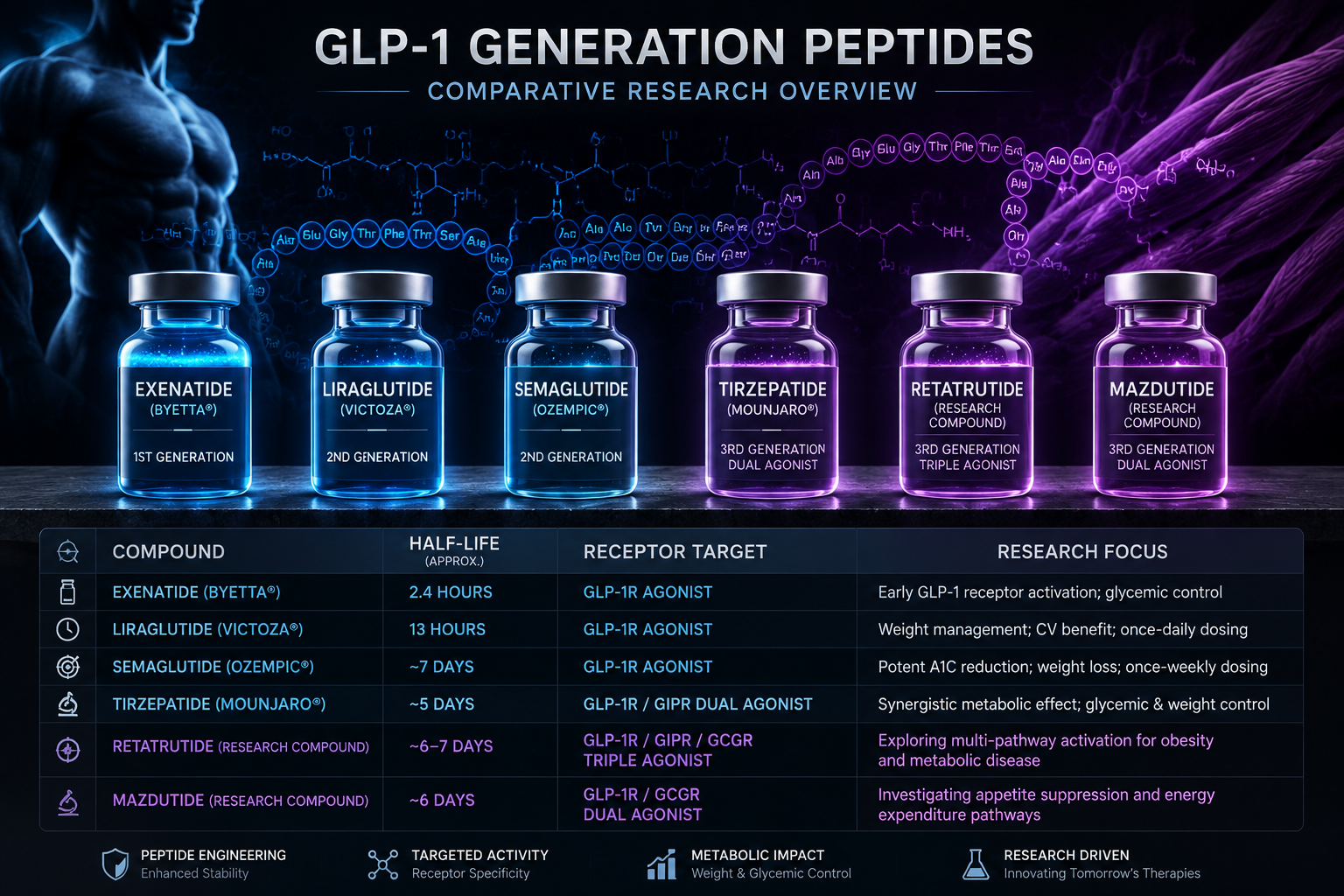
The incretin research space in 2026 has expanded dramatically. GLP1-Reta sits at an interesting intersection of appetite regulation, energy expenditure, and receptor pharmacology research.
Receptor Pathway Research
Studies in preclinical models suggest that GLP-1 receptor activation influences:
- 🔹 Satiety signaling — modulation of hunger-related neuropeptides
- 🔹 Insulin secretion pathways — glucose-dependent mechanisms
- 🔹 Energy homeostasis — interaction with central and peripheral metabolic circuits
For a deeper dive into related incretin mechanisms, the GLP-1T incretin research themes resource provides valuable context.
The Reta Family Connection
GLP1-Reta is part of a growing compound family. Researchers interested in this space should also explore:
- GLP3-Reta triple agonist research — expanding receptor targeting
- Reta-GLP3 compound profiles — structural comparisons
- Cagrilintide synergy with GLP-1 — combination research models
💡 Research Insight: The Reta compound family is being studied not as standalone agents, but as part of multi-peptide research frameworks targeting overlapping metabolic pathways.
Fitness Research Community Interest
Fitness peptide researchers are particularly interested in GLP1-Reta because of its potential relevance to:
- Body composition research models (lean mass vs. fat mass dynamics)
- Appetite regulation studies in controlled research settings
- Metabolic efficiency investigations
10mg Reta research peptide formats are commonly referenced in research planning discussions for standardized dosing models.
[wordpress_shortcode: product_grid tag="glp-1-reta" columns="3" orderby="popularity"]
[wordpress_shortcode: product_slider tag="reta-10mg" title="Featured GLP1-Reta Research Compounds"]
Conclusion: What Researchers Should Know About GLP1-Reta in 2026
GLP1-Reta represents one of the more structurally refined incretin-class peptides available for research study in 2026. Its place within the Reta compound family, combined with growing scientific interest in GLP-1 receptor pharmacology, makes it a high-priority subject for metabolic and body composition researchers.
Actionable next steps for researchers:
- ✅ Review the full GLP-1 generations overview to understand where GLP1-Reta fits historically
- ✅ Explore GLP3-Reta for sale and research planning for broader Reta family context
- ✅ Verify compound purity through Certificate of Analysis documentation before beginning any research protocol
- ✅ Cross-reference incretin research themes to build a complete research framework
⚠️ All compounds discussed are strictly for research purposes only and are not intended for human consumption, diagnosis, or therapeutic use.
Tags: GLP1-Reta, GLP-1 receptor agonist, incretin peptide research, Reta peptide family, GLP3-Reta, metabolic peptide research, fitness peptide enthusiasts, GLP-1 generations, body composition research, incretin pathway, research peptides 2026, peptide receptor agonism