

Last updated: April 21, 2026
Quick Answer: MOTS-c is a mitochondrial-derived peptide encoded within the 12S rRNA gene. It has been studied for its role in metabolic regulation, exercise mimicry, and cellular energy balance. When searching for MOTS-c peptide for sale, buyers should prioritize vendors that provide third-party certificates of analysis, verified purity above 98%, and proper cold-chain shipping. This peptide is sold for research purposes only.
Key Takeaways
- MOTS-c is a 16-amino-acid peptide produced by mitochondrial DNA, first identified by researchers at the University of Southern California in 2015.
- Research in animal models suggests MOTS-c may influence glucose metabolism, fat oxidation, and cellular stress responses.
- When looking for MOTS-c peptide for sale, always verify purity through independent lab testing (HPLC and mass spectrometry).
- MOTS-c is classified as a research peptide and is not approved by the FDA for human therapeutic use.
- Proper storage (typically frozen at -20°C) is critical for maintaining peptide integrity.
- Pricing generally ranges from $40 to $120 per 5–10 mg vial depending on the vendor and quantity.
- Combining MOTS-c research with related mitochondrial peptides like SS-31 (Elamipretide) is a growing area of investigation.
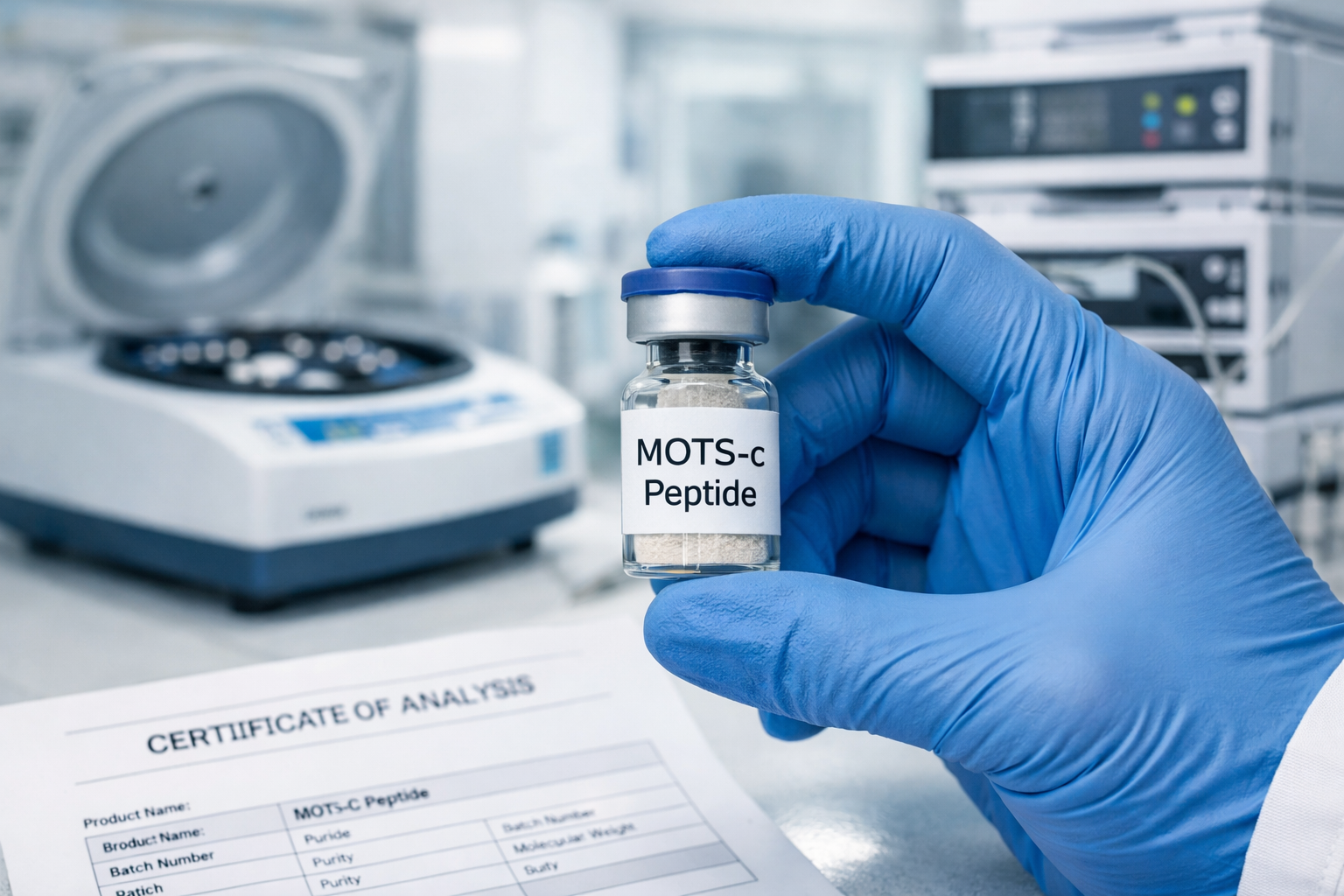
What Is MOTS-c and Why Are Researchers Interested?
MOTS-c (Mitochondrial Open Reading Frame of the 12S rRNA Type-c) is a small peptide consisting of 16 amino acids. It was first characterized by Dr. Changhan David Lee and colleagues at USC's Leonard Davis School of Gerontology in a 2015 study published in Cell Metabolism. Unlike most peptides, MOTS-c is encoded by mitochondrial DNA rather than nuclear DNA, which makes it part of a relatively new class of signaling molecules called mitochondrial-derived peptides (MDPs).
Research interest centers on several findings from preclinical studies:
- Metabolic regulation: In mouse models, MOTS-c administration improved insulin sensitivity and reduced fat accumulation on a high-fat diet (Lee et al., Cell Metabolism, 2015).
- Exercise mimicry: A 2020 study in Nature Communications found that MOTS-c levels increased in human skeletal muscle following exercise, and that the peptide activated AMPK pathways associated with energy sensing.
- Aging research: Circulating MOTS-c levels appear to decline with age in both human and animal studies, prompting investigation into whether supplementation could influence age-related metabolic decline.
For those exploring MOTS-c peptide for sale options, understanding this scientific background helps frame realistic expectations. The research is promising but still largely preclinical. For a deeper look at the molecular mechanisms, see our overview of MOTS-c as a mitochondrial peptide.
Browse our most popular products for sale to see where MOTS-c ranks among current research peptides.
Where to Find MOTS-c Peptide for Sale With Verified Quality
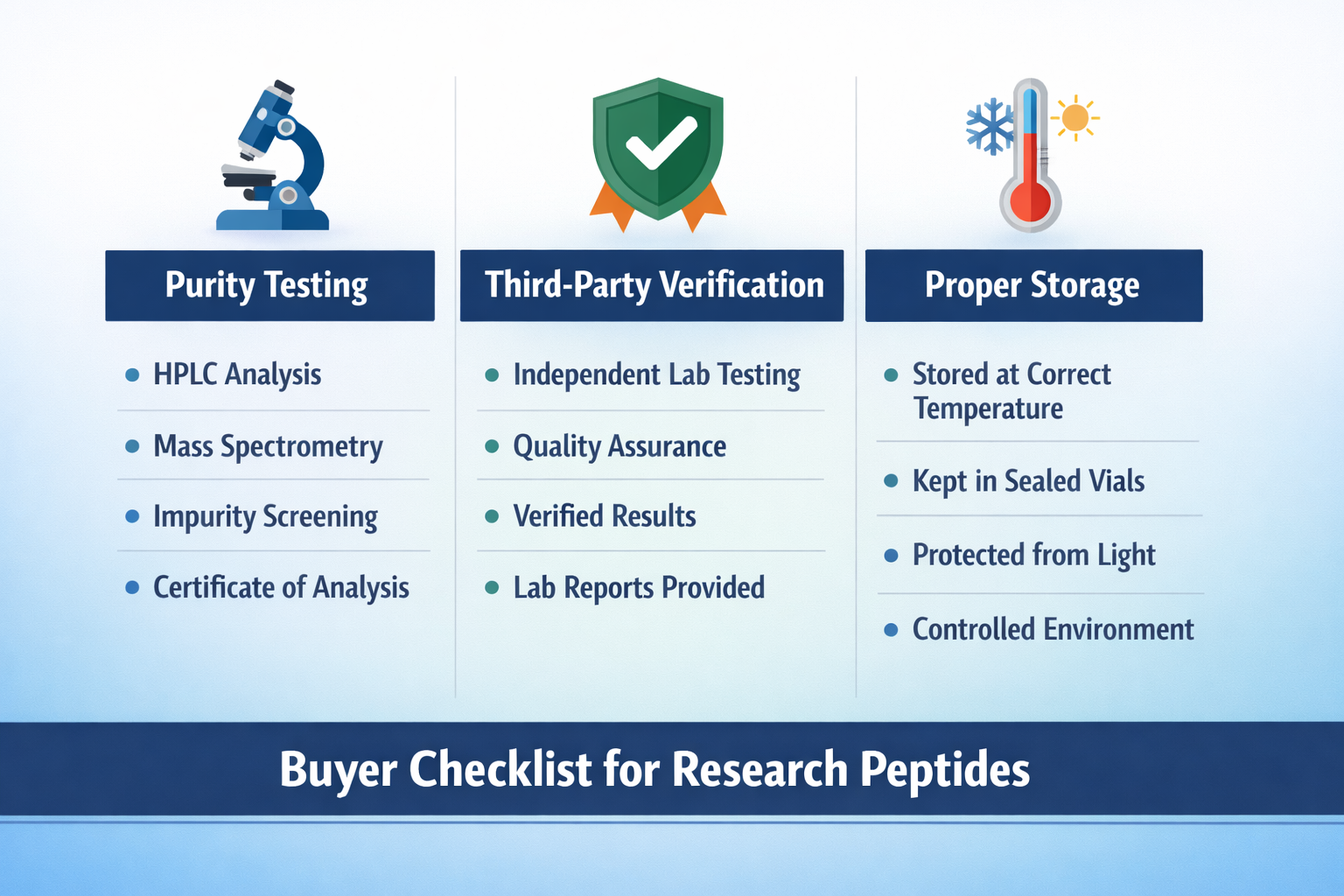
The single most important factor when sourcing MOTS-c peptide for sale is verified purity. Research-grade peptides should meet specific quality benchmarks, and not every vendor provides adequate documentation.
What to look for in a vendor:
| Quality Factor | What It Means | Red Flag If Missing |
|---|---|---|
| HPLC purity ≥98% | High-performance liquid chromatography confirms peptide purity | Vague "high purity" claims with no data |
| Mass spectrometry (MS) | Confirms correct molecular weight and amino acid sequence | No COA or only partial documentation |
| Third-party testing | Independent lab verification beyond in-house testing | Only self-reported results |
| Proper lyophilization | Freeze-dried powder for stability | Liquid form without cold-chain |
| Cold-chain shipping | Maintains peptide integrity during transit | Room-temperature shipping in warm months |
Vendors like Pure Tested Peptides publish certificates of analysis for each batch. When evaluating any source of MOTS-c peptide for sale, request the COA before purchasing. If a vendor can't or won't provide one, move on.
Common mistake: Buying based on price alone. A $25 vial with no COA is not a bargain; it's a risk to your research data.
How Does MOTS-c Compare to Other Mitochondrial Peptides?
MOTS-c is one of several mitochondrial-derived peptides under active investigation. Researchers often compare it to SS-31 (Elamipretide) and Humanin, another MDP. Here's how they differ:
| Peptide | Origin | Primary Research Focus | Amino Acids |
|---|---|---|---|
| MOTS-c | Mitochondrial 12S rRNA | Metabolic regulation, AMPK activation | 16 |
| SS-31 (Elamipretide) | Synthetic, targets cardiolipin | Mitochondrial membrane protection, cardiac function | 4 |
| Humanin | Mitochondrial 16S rRNA | Neuroprotection, anti-apoptotic signaling | 24 |
Choose MOTS-c if your research focuses on metabolic pathways, glucose homeostasis, or exercise-related signaling. Choose SS-31 if the focus is on mitochondrial membrane integrity or cardiac tissue models. For more on SS-31, see our SS-31 Elamipretide research page.
Some researchers are also exploring synergy between MOTS-c and SS-31 in combined protocols, though published data on combination effects remains limited.
What Does MOTS-c Peptide for Sale Typically Cost?
Pricing for MOTS-c peptide for sale varies based on quantity, purity, and vendor reputation. Based on a survey of major research peptide suppliers in 2026, here are approximate ranges:
- 5 mg vial: $40–$70
- 10 mg vial: $65–$120
- Wholesale (bulk orders): Discounts of 15–30% are common for orders above 10 vials
Vendors offering wholesale peptides often provide better per-unit pricing for institutional or high-volume research buyers.
Edge case: Some vendors sell MOTS-c in pre-mixed blends with other peptides. While blends can be useful for specific research designs, they make it harder to attribute observed effects to a single compound. If your protocol requires isolated variables, purchase MOTS-c peptide for sale as a standalone product.
Check our most popular products for sale for current pricing and availability.
How Should MOTS-c Be Stored and Handled?
Proper storage directly affects whether your MOTS-c peptide for sale purchase remains viable for research use.
Storage guidelines:
- Lyophilized (unreconstituted): Store at -20°C or colder. Stable for 12–24 months when kept sealed and dry.
- Reconstituted: Use bacteriostatic water or sterile saline. Store at 2–8°C and use within 2–4 weeks.
- Avoid repeated freeze-thaw cycles. Aliquot reconstituted peptide into single-use portions before freezing.
- Protect from light. UV exposure can degrade peptide bonds.
Common mistake: Leaving reconstituted MOTS-c at room temperature for extended periods. Even a few hours can reduce bioactivity significantly.
For researchers working with multiple compounds, our guide to MOTS-c mitochondrial research themes covers protocol design considerations.
Who Is Buying MOTS-c and What Are the Use Cases?
The buyer profile for MOTS-c peptide for sale spans several communities:
- Academic researchers studying mitochondrial biology, aging, and metabolic disease
- Biohackers and longevity enthusiasts tracking preclinical data on MDPs
- Fitness-oriented researchers interested in AMPK activation and exercise-mimetic compounds
- Anti-aging clinics conducting IRB-approved studies or literature reviews
Who this is NOT for: Anyone expecting an FDA-approved therapeutic product. MOTS-c is sold strictly for research purposes. No vendor should market it for human consumption or make therapeutic claims.
Researchers interested in complementary compounds often also explore Epithalon peptides for telomere-related research or MOTS-c and Epithalon sourcing as a combined investigation into aging pathways.
What Are the Risks and Limitations of MOTS-c Research?
Being transparent about limitations is just as important as understanding potential benefits.
Current limitations:
- No completed human clinical trials as of early 2026. Most data comes from mouse models and in vitro studies.
- Bioavailability questions: Oral delivery of MOTS-c has not been well-characterized. Most preclinical studies use injection.
- Batch variability: Without rigorous COA verification, peptide quality can vary between vendors and even between batches from the same vendor.
- Regulatory status: MOTS-c is not scheduled or banned, but it is also not approved for any therapeutic indication. Regulatory frameworks could change.
Decision rule: If your research requires human-applicable data, wait for clinical trial results before drawing conclusions. If your work is in cell culture or animal models, MOTS-c is a well-characterized tool compound with a growing body of published literature.
Visit our most popular products for sale page for research peptides that meet strict quality standards.
Frequently Asked Questions
Is MOTS-c peptide for sale legal to purchase?
Yes. MOTS-c is legal to buy for research purposes in the United States and most other countries. It is not a controlled substance. However, it is not approved for human therapeutic use.
What purity should I look for when buying MOTS-c?
A minimum of 98% purity verified by HPLC is the standard for research-grade MOTS-c peptide for sale. Mass spectrometry confirmation of molecular weight adds another layer of verification.
Can MOTS-c be taken orally?
Oral bioavailability of MOTS-c has not been established in published research. Most preclinical studies administer the peptide via subcutaneous or intraperitoneal injection in animal models.
How does MOTS-c relate to exercise?
A 2020 study in Nature Communications (Reynolds et al.) found that MOTS-c levels increase in human skeletal muscle during exercise and that the peptide activates AMPK, a key energy-sensing enzyme. This has led to its description as an "exercise mimetic" in some research contexts.
What is the typical research dosage in animal studies?
Published mouse studies have used doses ranging from 5 mg/kg to 15 mg/kg administered intraperitoneally. These doses are specific to animal models and should not be extrapolated to humans without clinical data.
Does MOTS-c need to be refrigerated?
Yes. Lyophilized MOTS-c peptide for sale should be stored at -20°C. Reconstituted peptide should be kept at 2–8°C and used within a few weeks.
Can I combine MOTS-c with other peptides in research?
Some researchers investigate MOTS-c alongside SS-31 or Epithalon. However, combination protocols require careful experimental design to isolate individual effects. See our page on peptide blends for research for more context.
How long does shipping take for research peptides?
Most domestic U.S. orders ship within 1–3 business days. Cold-chain or expedited shipping may be available for temperature-sensitive orders.
Conclusion
MOTS-c sits at the intersection of mitochondrial biology, metabolic research, and the growing longevity science field. The preclinical evidence is compelling enough to drive significant demand for MOTS-c peptide for sale among researchers and biohackers alike, but the absence of completed human trials means caution is warranted.
Actionable next steps:
- Verify your vendor. Request a COA with HPLC and MS data before purchasing any MOTS-c peptide for sale.
- Plan your storage. Have -20°C freezer space ready before your order arrives.
- Read the primary literature. Start with Lee et al. (2015) in Cell Metabolism and Reynolds et al. (2020) in Nature Communications.
- Consider complementary compounds. Explore MOTS-c mitochondrial dynamics research and related mitochondrial peptides for a broader experimental framework.
- Stay current. Regulatory and scientific landscapes evolve. Bookmark reliable sources and revisit them quarterly.
References
- Lee, C., Zeng, J., Drew, B.G., et al. "The Mitochondrial-Derived Peptide MOTS-c Promotes Metabolic Homeostasis and Reduces Obesity and Insulin Resistance." Cell Metabolism, 2015.
- Reynolds, J.C., Lai, R.W., Woodhead, J.S.T., et al. "MOTS-c is an Exercise-Induced Mitochondrial-Encoded Regulator of Age-Dependent Physical Decline and Muscle Homeostasis." Nature Communications, 2020.
Tags: MOTS-c peptide for sale, MOTS-c research peptide, mitochondrial peptides, buy MOTS-c, peptide purity testing, longevity peptides, AMPK activation, exercise mimetic peptide, research peptides, biohacking peptides, SS-31 comparison