Call or Text 727-513-9780
  • Shopping Cart Shopping Cart
    0Shopping Cart
Pure Tested Peptides | America's most trusted Peptides for sale online
  • Peptides for sale
    • Oral Peptides for sale
      • Peptide Capsules for sale
      • BPC 157 Capsules 1000mcg
      • SLU-PP-332 Capsules | 1000 mcg
      • 5-Amino-1MQ 50mg Capsules
      • Tesofensine 500mcg
    • All Peptides for sale
    • Peptide Sprays
      • BPC 157 Nasal Spray Kit
      • BPC-157 TB500 Nasal Spray Kit
      • Semax Nasal Spray 10mg
      • Selank – Nasal Spray Kit – 10mg
      • Epithalon 50MG Nasal Spray Kit
      • Ipamorelin 10mg Nasal Spray
      • Klow Nasal Spray (BPC-157 + TB-500 + GHK-Cu + KPV) | 80mg
      • Hulk Nasal Spray Tesa / Ipa Blend 6/3 MG
      • Klow Nasal Spray
      • NAD + 500 mg Nasal Spray
      • PT-141 Nasal Spray Kit
    • GHRH Peptides
      • Ipa Peptides
      • CJC-1295 Peptides
        • CJC-1295 with DAC 5 mg
        • CJC-1295 without DAC 5 mg
        • CJC-1295 Ipa 10mg
      • Tesa Peptides
        • Tesa Peptide
        • Tesa 20 mg
    • GHK-Cu Peptides
      • All GHK-Cu Peptides
      • GHK-Cu 100mg
      • KLOW Peptide Blend – Buy KLOW blend online
    • BPC Peptides
      • All BPC Peptides
      • BPC-157
      • BPC-157 TB-500
      • BPC 157 capsules 1000mcg
    • SLU-PP-332 Peptides
      • All SLU-PP-332 Peptides
      • SLU-PP-332 5mg
    • GLP3 Peptides
    • PT-141 Peptides
      • PT-141 Peptides for sale
      • PT-141 10mg
      • PT-141 Nasal Spray
    • CAG Peptides
      • Lipo-C Peptide Blend
      • CAG 5mg
      • CAG 10mg
    • MOTS-C Peptides
      • MOTS-C Peptides for sale
      • MOTS-c peptide
      • MOTS-c 10mg *6 pack*
    • 5 Amino 1MQ Peptides
      • 5 Amino 1MQ Peptides for sale
      • 5-Amino-1MQ 50mg Capsules
      • 5-Amino-1MQ 5mg
    • Epithalon Peptides
      • Epithalon Peptides for sale
      • Epithalon 10mg
      • Epithalon 50mg
  • Shop
    • GLPs
      • 5-Amino-1MQ 50mg Capsules
      • 5-Amino-1MQ 5mg
      • L-Carnitine 500mg/ml
      • Tesofensine 500mcg
      • SLU-PP-332 5mg
      • MOTS-c 10mg *6 pack*
    • Epithalon & BPC Peptides
      • Epithalon 10mg
      • Epithalon 50mg
      • BPC-157
      • BPC 157 capsules 1000mcg
      • BPC-157 TB-500
      • BPC-157 TB500 Nasal Spray Kit
      • BPC 157 Nasal Spray Kit
    • BPC TB-500 & NAD+ Peptides
      • NAD+ 500 mg
      • KLOW Peptide Blend – Buy KLOW blend online
      • GLOW Peptide Blend
      • TB 500 5mg
      • BPC 157 capsules 1000mcg – Supplement
      • BPC 157 Nasal Spray Kit
      • BPC-157
      • BPC-157 TB500 Nasal Spray Kit
      • BPC-157 TB-500
      • BPC 157 capsules 1000mcg
    • LL-37 Peptide
      • LL-37 10 mg
    • MOTS-C & Selank
      • MOTS-c peptide
      • Selank 10mg
    • GHK Peptides
      • GHK-Cu 100mg
      • GLOW Peptide Blend
      • KLOW Peptide Blend – Buy KLOW blend online
  • COAs
  • Wholesale
    • Wholesale Peptides for sale
  • PTP FAQ
  • Affiliates
    • Selank Peptide: Advanced Pharmacological Mechanisms Underlying Its Anxiolytic and Nootropic Effects in Research
      • 5-Amino-1MQ Peptide: Detailed Mechanisms of NNMT Inhibition and Its Impact on Cellular Metabolism Research
        • MOTS-C Peptide: Unraveling Its Role in Mitochondrial Dynamics and Energy Metabolism Research
          • Epithalon Peptide and Telomerase Regulation: Investigating Its Impact on Cellular Senescence and Lifespan Research Models
            • GLP2-T vs GLP2 Tirz Peptide: Understanding the Naming, Mechanistic Nuances, and Research Implications for Gut Health
      • Peptides and Polypeptides in Modern Pharmacology: What Research on Metoprolol, Prednisone, and Amlodipine Reveals
        • Polypeptide Peptides vs NSAIDs: What Naproxen and Diclofenac Teach Tissue-Repair Researchers About BPC‑157 and TB‑500
          • Peptides and Polypeptides in Endocrine Pharmacology: How GLP-1, GLP-2, and GLP-3 Retatrutide Differ From Classic Drugs Like Prednisone and Amlodipine
          • 5‑Amino‑1MQ Peptide and NNMT Inhibition: How It Compares With Statins Like Atorvastatin in Adipose and Lipid Metabolism Research
      • Enclomiphene, Estrogen Receptor Signaling, and Luteinizing Phase Biology: What Hormone Researchers Should Measure
        • Mesenchymal Stem Cells, BPC‑157, and GHK‑Cu: How Tissue Repair Peptides Compare With Classic NSAIDs Like Naproxen in Injury Models
          • Peptide Calculator Use Cases Beyond Growth Hormone: Working Through GLP‑3 Retatrutide, MOTS‑c, and BPC‑157 Research Dosing
        • Polypeptide Peptides in Endocrine and Metabolic Pharmacology: Lessons From Amlodipine, Prednisone, and Metoprolol
        • Peptides Calculator for Advanced Blends: Worked Examples for Tesamorelin, CJC‑1295, and Ipamorelin Stacks
          • Peptides and Polypeptides in Human Physiology: How Molecular Size Shapes Research Applications
            • Selank Peptide: Advanced Pharmacological Mechanisms Underlying Its Anxiolytic and Nootropic Effects in Research
          • 5-Amino-1MQ Peptide: Detailed Mechanisms of NNMT Inhibition and Its Impact on Cellular Metabolism Research
            • MOTS-C Peptide: Unraveling Its Role in Mitochondrial Dynamics and Energy Metabolism Research
              • Epithalon Peptide and Telomerase Regulation: Investigating Its Impact on Cellular Senescence and Lifespan Research Models
                • GLP2-T vs GLP2 Tirz Peptide: Understanding the Naming, Mechanistic Nuances, and Research Implications for Gut Health
                  • Peptides and Polypeptides in Endocrine Pharmacology: How GLP-1, GLP-2, and GLP-3 Retatrutide Differ From Classic Drugs Like Prednisone and Amlodipine
                    • Polypeptide Peptides vs NSAIDs: What Naproxen and Diclofenac Teach Tissue-Repair Researchers About BPC‑157 and TB‑500
                      • Peptides and Polypeptides in Modern Pharmacology: What Research on Metoprolol, Prednisone, and Amlodipine Reveals
                        • 5‑Amino‑1MQ Peptide and NNMT Inhibition: How It Compares With Statins Like Atorvastatin in Adipose and Lipid Metabolism Research
                        • Enclomiphene, Estrogen Receptor Signaling, and Luteinizing Phase Biology: What Hormone Researchers Should Measure
                        • Mesenchymal Stem Cells, BPC‑157, and GHK‑Cu: How Tissue Repair Peptides Compare With Classic NSAIDs Like Naproxen in Injury Models
                        • Peptide Calculator Use Cases Beyond Growth Hormone: Working Through GLP‑3 Retatrutide, MOTS‑c, and BPC‑157 Research Dosing
                        • Polypeptide Peptides in Endocrine and Metabolic Pharmacology: Lessons From Amlodipine, Prednisone, and Metoprolol
                        • Peptides Calculator for Advanced Blends: Worked Examples for Tesamorelin, CJC‑1295, and Ipamorelin Stacks
                        • Peptides and Polypeptides in Human Physiology: How Molecular Size Shapes Research Applications
                        • Selank Peptide: Advanced Pharmacological Mechanisms Underlying Its Anxiolytic and Nootropic Effects in Research
                        • MOTS-C Peptide: Unraveling Its Role in Mitochondrial Dynamics and Energy Metabolism Research
                        • Peptides and Polypeptides in Modern Pharmacology: What Research on Metoprolol, Prednisone, and Amlodipine Reveals
                        • Peptides and Polypeptides in Endocrine Pharmacology: How GLP-1, GLP-2, and GLP-3 Retatrutide Differ From Classic Drugs Like Prednisone and Amlodipine
                        • 5-Amino-1MQ Peptide: Detailed Mechanisms of NNMT Inhibition and Its Impact on Cellular Metabolism Research
                        • Mesenchymal Stem Cells, BPC‑157, and GHK‑Cu: How Tissue Repair Peptides Compare With Classic NSAIDs Like Naproxen in Injury Models
                        • Peptide Calculator Use Cases Beyond Growth Hormone: Working Through GLP‑3 Retatrutide, MOTS‑c, and BPC‑157 Research Dosing
                        • GLP2-T vs GLP2 Tirz Peptide: Understanding the Naming, Mechanistic Nuances, and Research Implications for Gut Health
                        • Polypeptide Peptides in Endocrine and Metabolic Pharmacology: Lessons From Amlodipine, Prednisone, and Metoprolol
                        • Polypeptide Peptides vs NSAIDs: What Naproxen and Diclofenac Teach Tissue-Repair Researchers About BPC‑157 and TB‑500
                        • Peptides and Polypeptides in Human Physiology: How Molecular Size Shapes Research Applications
                        • Peptides Calculator for Advanced Blends: Worked Examples for Tesamorelin, CJC‑1295, and Ipamorelin Stacks
                        • 5‑Amino‑1MQ Peptide and NNMT Inhibition: How It Compares With Statins Like Atorvastatin in Adipose and Lipid Metabolism Research
                        • Enclomiphene, Estrogen Receptor Signaling, and Luteinizing Phase Biology: What Hormone Researchers Should Measure
                        • Epithalon Peptide and Telomerase Regulation: Investigating Its Impact on Cellular Senescence and Lifespan Research Models
                        • Best research protocol Klow blend
                        • best time to take BPC-157
                        • best time to take DSIP (Delta Sleep Inducing Peptide)
                        • best time to take CJC-1295
                        • best time to take AOD-9604
                        • best time to take Follistatin 344
                        • best time to take Ipamorelin
                        • best time to take MK-677 (Ibutamoren)
                        • best time to take Ligandrol (LGD-4033) — research compound
                        • best time to take Ostarine (MK-2866) — research compound
                        • best time to take GHK-CU
                        • best time to take TB-500
                        • best time to take MOTS-c
                        • best time to take Semax
                        • best time to take RAD-140 (Testolone) — research compound
                        • best time to take Thymosin Alpha-1
                        • best time to take PEG-MGF
                        • Biolife Plasma, Octapharma Plasma, and Research Peptides: How Plasma Donation Labs Differ From Peptide Suppliers
                        • best time to take YK-11 — research compound
                        • best time to take PT-141 (Bremelanotide)
                        • Best research protocol Klow blend
                        • 5-Amino-1MQ and MOTS-C Synergy: Metabolic Signaling, Mitochondria, and Research Design
                        • BPC-157 and TB-500: Investigating Their Combined Effects on Angiogenesis and Cellular Migration in Tissue Repair Models
                        • BPC-157 Peptide: Gut Barrier Function, Inflammation, and Tissue-Recovery Research
                        • 5‑Amino‑1MQ and MOTS‑c Synergy in Metabolic Research: Designing NNMT and Mitochondrial Biogenesis Stacks
                        • CJC-1295 with DAC vs. Without DAC: Half-Life, Release Kinetics, and Research Implications
                        • CJC‑1295 with DAC vs. Without DAC: Expanding on Half‑Life Differences Using Tesamorelin and Ipamorelin Blend Case Studies
                        • Collagen Biology and Copper‑Binding Peptides: How GHK‑Cu, Glow Blend, and Klow Blend Interact with Skin and Connective Tissue
                        • Collagen Biology and Regenerative Peptides: How GHK‑Cu, Glow Blend, and Klow Blend Affect Extracellular Matrix Research
                    • DNA, Telomeres, and Longevity Peptides: Positioning Epithalon and MOTS‑c in Genetic Aging Research
                      • Enclomiphene Citrate: serm Mechanism, Testosterone Research, and Stack Compatibility
                        • Enclomiphene vs Enclomiphene Citrate: Formulation, Bioavailability, and Research Distinctions
                        • Epithalon Peptide Research: Telomerase Activation, Aging, and Pineal Gland Function
                        • Estrogen Receptor Signaling and Enclomiphene: How Selective Modulators Compare with Classic Polypeptide Hormones
                        • GHK-Cu Peptide: Advanced Mechanisms in Extracellular Matrix Remodeling and Wound Healing Research
                        • GHK-Cu Peptide: Collagen Synthesis, Wound Repair, and Skin-Barrier Research Models
                        • GLP-1 vs GLP-3 vs GLP-2: Peptide Classification and Research Applications
                        • GLP-2 Peptide Research Guide: Gut Barrier Function, Nutrient Absorption, and Intestinal Recovery Models
                        • GLP-3 Retatrutide vs. GLP-1 Drugs: What Triple-Agonist Biology Changes in Research Models
                        • Ipamorelin and Tesamorelin Combination: Synergistic GH Secretagogue Research and Dosing Protocols
                        • GLP2 Tirz Peptide: What It Is, Why the Name Exists, and How Researchers Should Interpret It
                        • Klow Blend Peptide Nasal Spray: What the Formulation Is Trying to Do in Cognitive Research
                        • Mitochondria, NNMT Inhibition, and Peptide Modulators: Where MOTS‑c and 5‑Amino‑1MQ Fit in Cellular Energy Research
                        • MOTS-c Peptide: Mitochondrial Function, Energy Metabolism, and What Researchers Measure
                        • MOTS-c vs. 5-Amino-1MQ: Which Metabolic Research Questions Each Compound Actually Answers
                        • Nasal Spray Peptides: Bioavailability, Administration, and Semax/Selank Research Applications
                        • PT-141 Peptide Research: Mechanism of Action and Melanocortin Receptor Signaling
                        • Retatrutide for Research: Mechanism, Structure, and GLP-1/GLP-3 Dual Action
                        • Retatrutide for Obesity and Type 2 Diabetes: What the Latest Trial Data Suggest
                        • Tesofensine Peptide Research: Mechanism, Appetite Suppression, and Neuropeptide Y Pathways
  • Contact
    • Contact Customer Service
    • Text Customer Support
  • About US
  • Shop all peptides
  • Affiliate Program
    • Affiliate Signup
  • Login / Register Login / Register Page Link Login / Register Page Link
  • Click to open the search input field Click to open the search input field Search
  • Menu Menu

Tag Archive for: actin polymerization

BPC-157 and TB-500: Investigating Their Combined Effects on Angiogenesis and Cellular Migration in Tissue Repair Models

BPC-157 and TB-500: Investigating Their Combined Effects on Angiogenesis and Cellular Migration in Tissue Repair Models

July 21, 2026/0 Comments/by Pure Tested

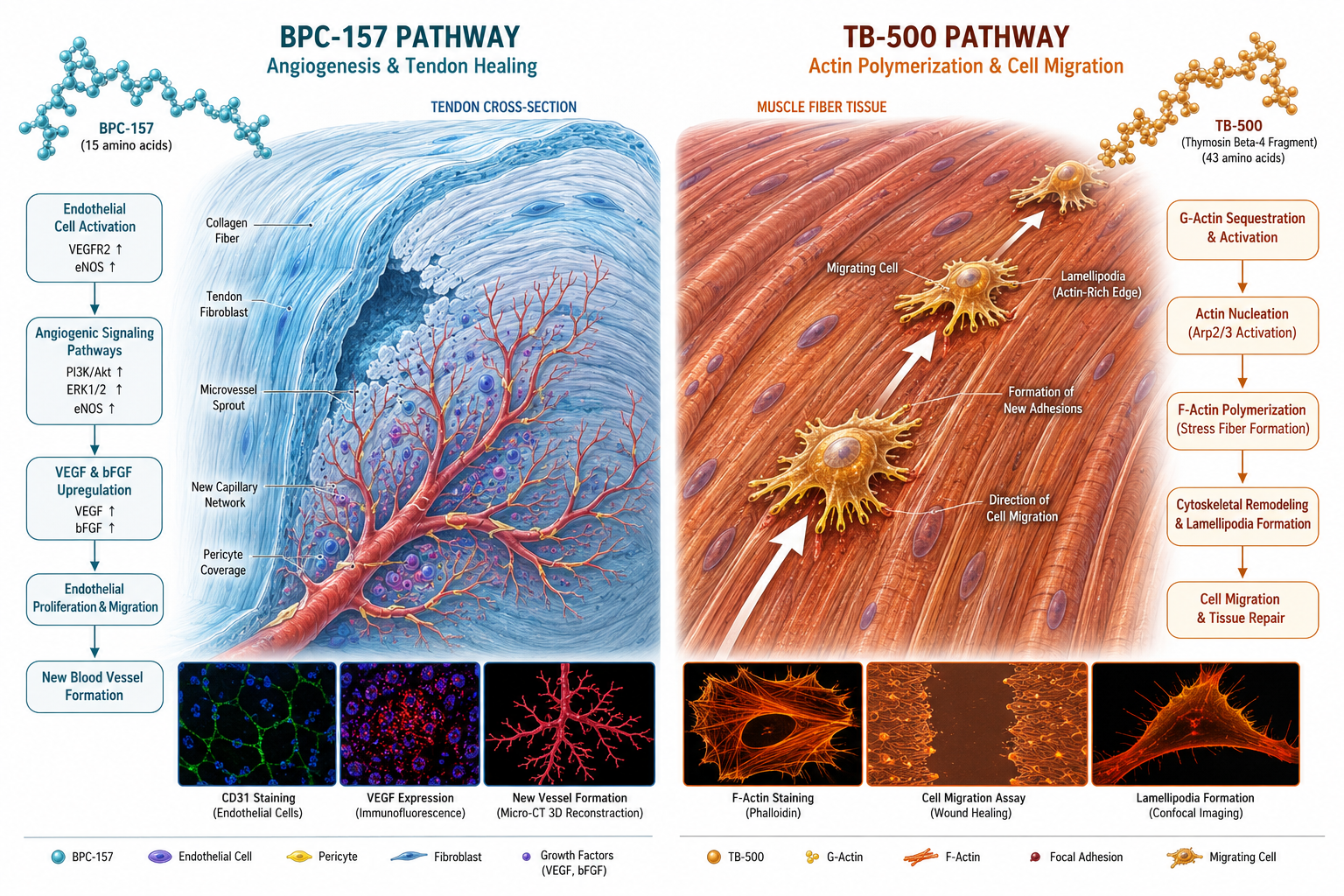
New blood vessels do not grow on demand, yet in damaged tissue, that is precisely what recovery requires. Research into BPC-157 and TB-500: Investigating Their Combined Effects on Angiogenesis and Cellular Migration in Tissue Repair Models has become one of the more compelling areas of preclinical peptide science, precisely because these two compounds appear to address two of the most fundamental bottlenecks in wound healing: vascular regrowth and directed cell movement.

Key Takeaways

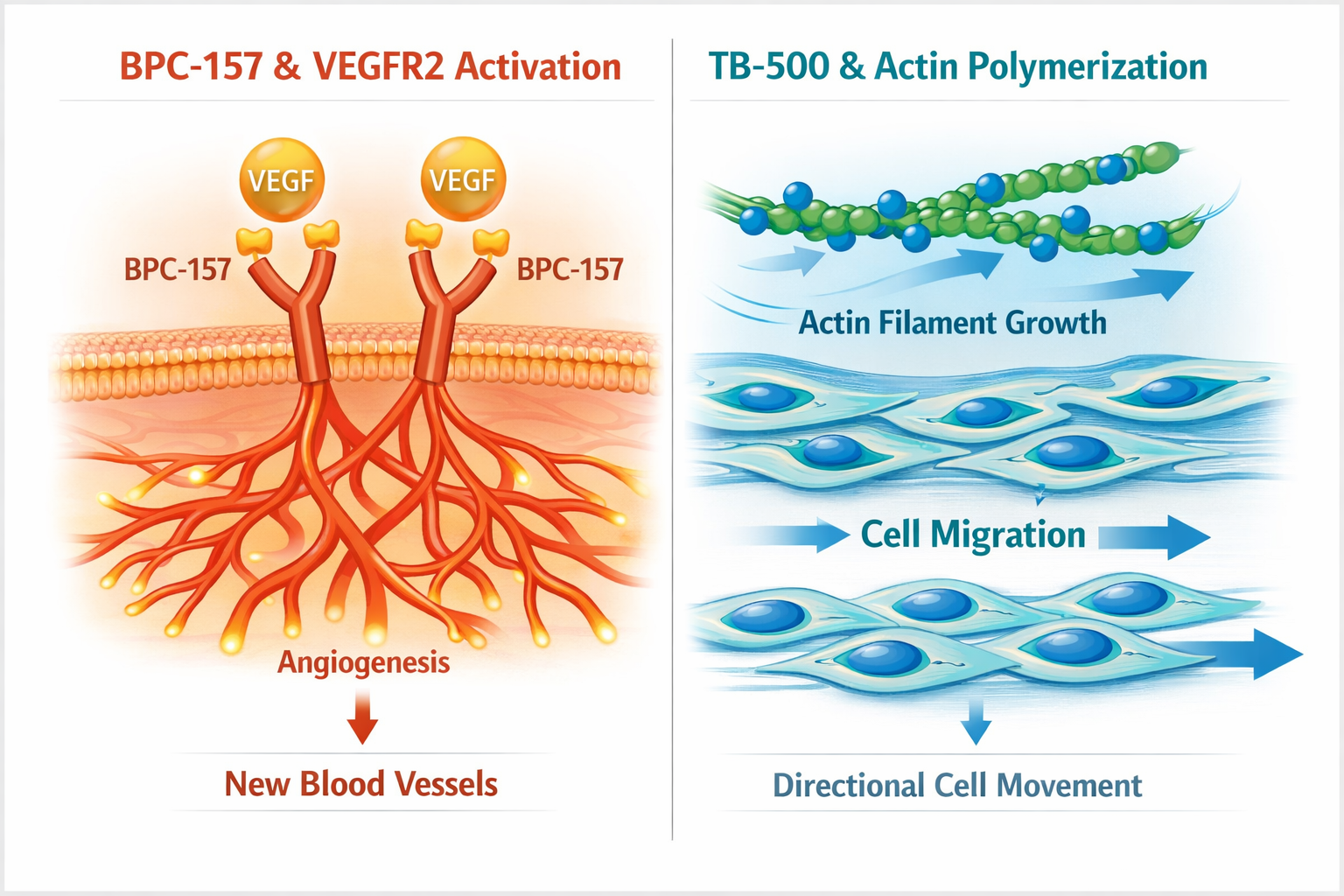
  • BPC-157 drives angiogenesis primarily through VEGFR2 activation and nitric oxide modulation, while TB-500 promotes cellular migration by regulating actin polymerization.
  • Their mechanisms are complementary rather than redundant, making combined use a logical focus for tissue repair research protocols.
  • As of 2026, both peptides remain classified under FDA Interim Category 2 and are not approved for human therapeutic use.
  • Human clinical data is limited; a Phase 2 trial for BPC-157 in hamstring injury is currently recruiting, with results expected in 2027-2028.
  • Both compounds appear on WADA's S0 Non-Approved Substances list, which has direct implications for athletic research contexts.
Key Takeaways

Distinct Mechanisms That Work Together

Understanding why researchers pair these peptides begins with their individual mechanisms of action.

BPC-157 is a synthetic pentadecapeptide derived from a protective gastric protein. Its primary contribution to tissue repair involves:

  • Activating VEGFR2 (vascular endothelial growth factor receptor 2), which triggers the formation of new capillaries
  • Modulating the nitric oxide system to support vascular tone and blood flow
  • Upregulating growth hormone receptors at injury sites
  • Engaging ERK1/2 signaling pathways to stimulate cell proliferation

TB-500, a synthetic analog of thymosin beta-4, operates through a different but equally important set of actions:

  • Sequestering G-actin to regulate actin polymerization, the structural process that drives cell movement
  • Enabling lamellipodia and filopodia formation, the cellular "arms" that propel migrating cells toward wounds
  • Activating integrin-linked kinase (ILK) to support cell survival and differentiation
  • Modulating the NF-kB pathway to influence inflammatory gene expression

"BPC-157 builds the road; TB-500 moves the traffic."

This distinction is critical. Angiogenesis without sufficient cellular migration leaves new vessels poorly populated. Cellular migration without adequate vascular support leaves migrating cells oxygen-deprived. The combined use of BPC-157 and TB-500 in tissue repair models attempts to address both deficits simultaneously.

For researchers exploring how peptide combinations can be designed for complementary effect, the synergy of LL-37 and SS-31 offers a useful parallel case study in mechanistic pairing.

Preclinical Evidence and Research Applications

The bulk of available data on BPC-157 and TB-500: Investigating Their Combined Effects on Angiogenesis and Cellular Migration in Tissue Repair Models comes from animal and in vitro studies. That context matters when interpreting the findings.

BPC-157 preclinical highlights:

Tissue Type Observed Effect
Tendon Accelerated collagen organization
Ligament Improved tensile strength recovery
Gastrointestinal Enhanced mucosal healing
Muscle Reduced ischemia-related damage

TB-500 preclinical highlights:

  • Demonstrated connective tissue migration in wound models
  • Showed promise in generalized soft-tissue recovery protocols
  • Exhibited anti-inflammatory effects via NF-kB modulation

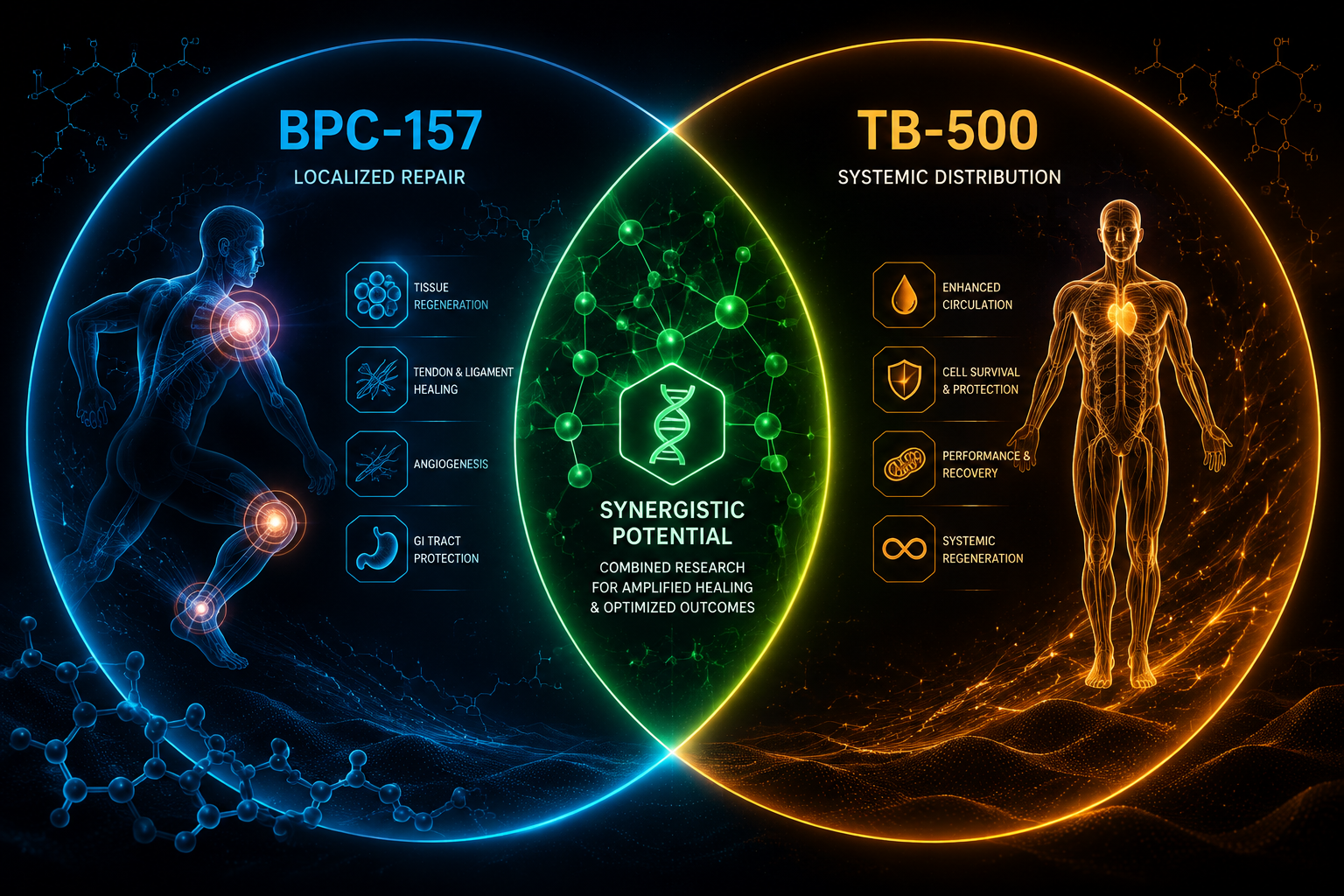
When used together in research protocols, the pairing has shown additive effects in models of tendon and musculoskeletal injury. BPC-157's localized vascular action complements TB-500's systemic reach, experts note that BPC-157 tends to suit localized repair targets (tendons, ligaments, gut lining), while TB-500 is better suited to broader, systemic tissue support.

For context on how regenerative peptide research is structured, the dedicated TB-500 and BPC-157 regeneration research overview provides additional background. Researchers interested in delivery method considerations may also find the BPC-157 nasal spray and capsules evidence review useful for understanding administration variables.

Preclinical Evidence and Research Applications

Regulatory Status, Human Data, and Research Limitations

Any serious investigation of BPC-157 and TB-500: Investigating Their Combined Effects on Angiogenesis and Cellular Migration in Tissue Repair Models must address the regulatory and evidentiary gaps that remain as of 2026.

Current regulatory status:

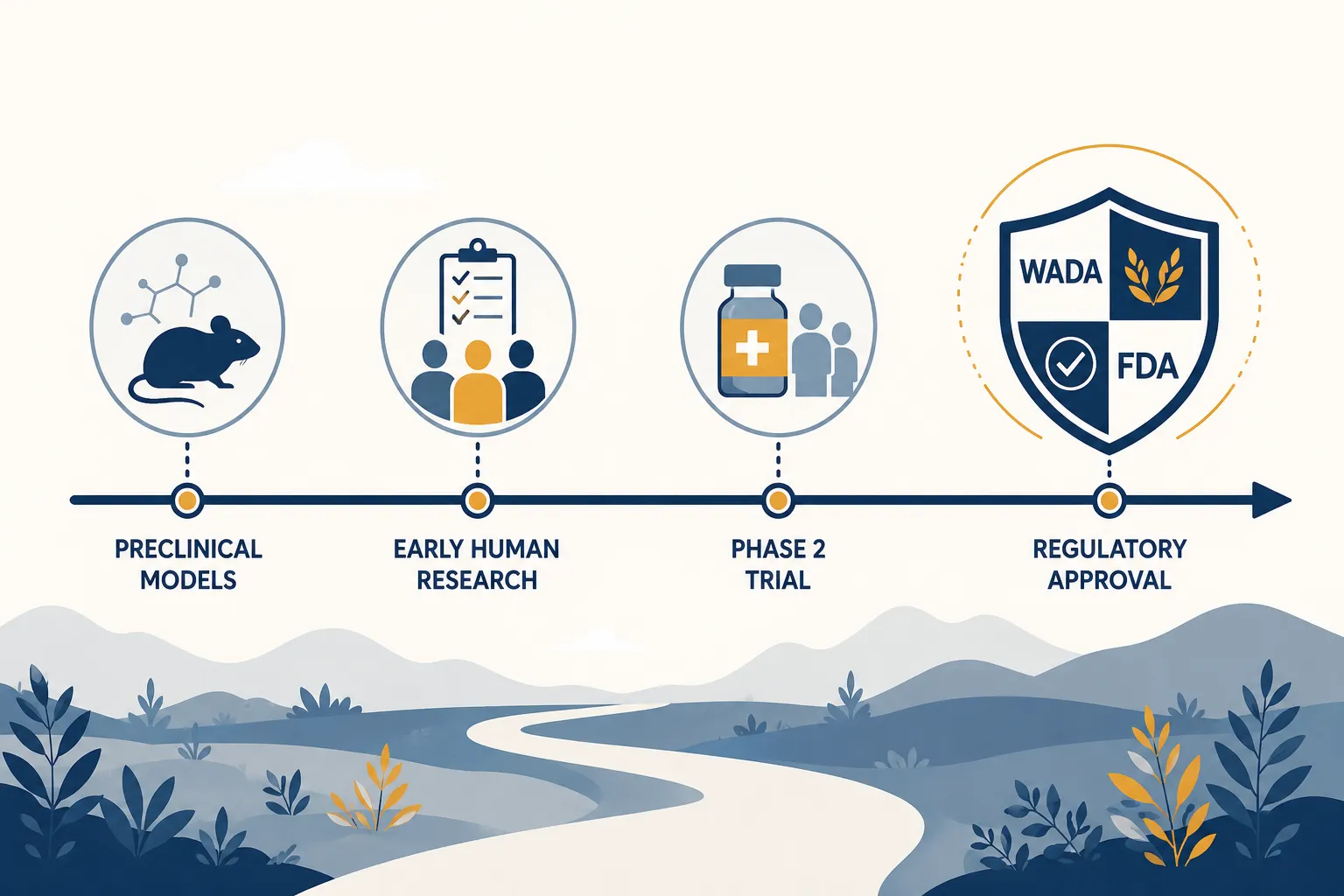
  • Both peptides are classified under FDA Interim Category 2, meaning they are not approved for human therapeutic use.
  • Both appear on the World Anti-Doping Agency (WADA) S0 Non-Approved Substances list, with direct implications for sports science research.

Human clinical data remains sparse:

  • BPC-157 has one safety pilot study completed (2025, intravenous administration).
  • TB-500 has one cardiac trial involving STEMI patients (2025).
  • A Phase 2 randomized controlled trial (NCT07437547) is currently recruiting 120 participants to evaluate BPC-157 for acute hamstring injury. This is the first registered controlled human study of BPC-157, with results expected between 2027 and 2028.

These limitations do not invalidate preclinical findings, but they do require that researchers interpret results with appropriate caution. The gap between animal models and human physiology remains the central challenge for this class of compounds.

Researchers sourcing peptides for controlled study protocols should prioritize verified supply chains. Resources such as the peptide purity testing guide and the peptide supplier comparison analysis offer practical guidance on quality assurance. For those exploring the broader landscape of repair-focused compounds, the longevity peptide research overview and innovative peptide delivery systems provide relevant context.
Regulatory Status, Human Data, and Research Limitations

Conclusion

The scientific rationale for studying BPC-157 and TB-500 together in tissue repair models is well-grounded. Their mechanisms, angiogenesis promotion via VEGFR2 activation and cellular migration via actin regulation, address complementary phases of the healing process rather than duplicating each other's function. Preclinical data across tendon, ligament, and soft-tissue models supports continued investigation.

Actionable next steps for researchers in 2026:

  1. Monitor the Phase 2 BPC-157 hamstring trial (NCT07437547) for the first controlled human efficacy data, expected 2027-2028.
  2. Design combination protocols that account for the localized action of BPC-157 versus the systemic reach of TB-500.
  3. Source only from suppliers with documented purity testing and verifiable certificates of analysis.
  4. Track WADA and FDA regulatory updates, as the classification of both peptides remains subject to change.
  5. Treat all current findings as hypothesis-generating rather than clinically conclusive until robust human trial data is available.

The field is moving. The evidence base, while still preclinical in large part, is building toward the kind of controlled human data that could meaningfully reframe how tissue repair research is conducted.

https://www.puretestedpeptides.com/wp-content/uploads/2026/07/bpc-157-and-tb-500-investigating-their-combined-effects-on-angiogenesis-and-cell.webp 1024 1536 Pure Tested https://www.puretestedpeptides.com/wp-content/uploads/2026/01/buy-peptides-online.jpg Pure Tested2026-07-21 13:40:122026-07-27 13:32:22BPC-157 and TB-500: Investigating Their Combined Effects on Angiogenesis and Cellular Migration in Tissue Repair Models
BPC-157 vs TB-500: What Each Peptide Does in Tissue-Repair Research and When Comparison Makes Sense

BPC-157 vs TB-500: What Each Peptide Does in Tissue-Repair Research and When Comparison Makes Sense

June 16, 2026/0 Comments/by Pure Tested

Over 100 preclinical studies have examined BPC-157 alone — yet researchers still routinely pair it with TB-500 in comparative models. Understanding why requires looking at what each peptide actually does at the biological level. This article examines the BPC-157 vs TB-500 question from an experimental logic standpoint: what each compound is believed to do, where their mechanisms overlap, and when a side-by-side comparison genuinely adds scientific value in tissue-repair research.

Key Takeaways

  • BPC-157 is a 15-amino-acid synthetic peptide that primarily drives localized repair through angiogenesis and nitric oxide signaling.
  • TB-500 is a synthetic fragment of Thymosin Beta-4 that promotes systemic healing by regulating actin polymerization and cell migration.
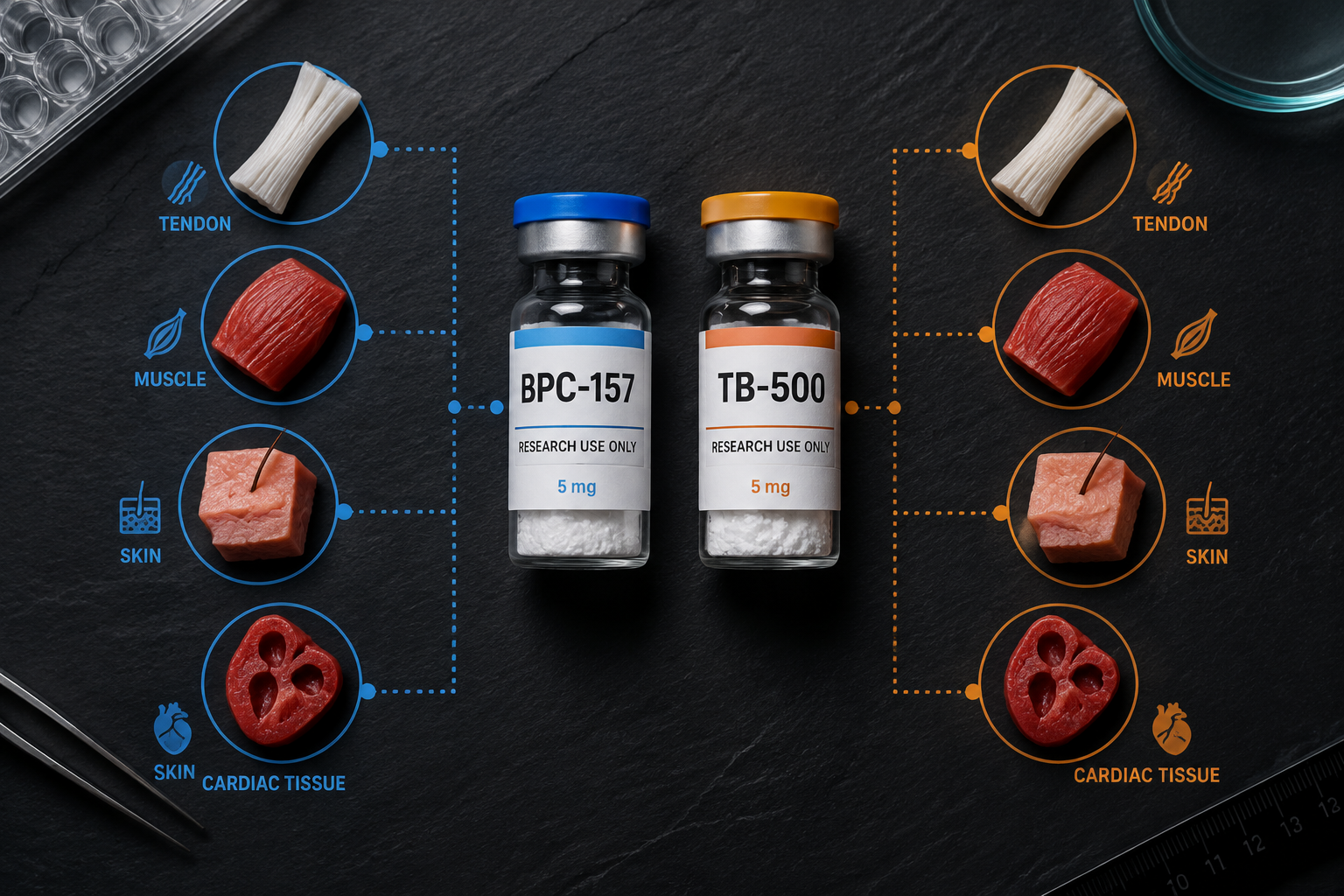
  • Their tissue targets differ: BPC-157 favors tendons, ligaments, and gut tissue; TB-500 shows stronger signals in muscle, skin, and cardiac tissue.
  • Neither peptide is FDA-approved; both are prohibited by WADA under the S0 category for non-approved substances.
  • Combination research suggests complementary, potentially synergistic effects — making the comparison scientifically meaningful rather than arbitrary.

Key Takeaways

Distinct Mechanisms: Where the Biology Diverges

The BPC-157 vs TB-500 comparison starts with fundamentally different molecular strategies. BPC-157 is a synthetic 15-amino-acid sequence derived from human gastric juice protein. Its primary repair actions are believed to operate through angiogenesis — the formation of new blood vessels — and upregulation of nitric oxide pathways. This makes its effects highly localized. When administered near an injury site, it appears to accelerate the vascular supply that damaged tissue needs to regenerate.

TB-500, by contrast, is a synthetic fragment of Thymosin Beta-4, a naturally occurring protein found throughout the body. Its core mechanism involves regulating actin polymerization — the process by which cells build their internal scaffolding. By influencing actin dynamics, TB-500 enhances cell migration, which is essential for systemic wound repair. Because it distributes broadly after administration, its effects are not limited to the injection site.

Key mechanistic differences at a glance:

Feature BPC-157 TB-500
Origin Gastric juice protein fragment Thymosin Beta-4 fragment
Primary mechanism Angiogenesis, nitric oxide signaling Actin polymerization, cell migration
Distribution Localized Systemic
Half-life (IV, animal models) Under 30 minutes Not precisely established

For researchers exploring BPC-157 angiogenesis and tendon repair mechanisms, this localized vascular focus is the defining biological signature.


Tissue Targets and Preclinical Evidence

Tissue specificity is where the BPC-157 vs TB-500 comparison becomes most practically useful for research design. BPC-157 has shown the strongest preclinical signals in tendon, ligament, and gastrointestinal tissue. Its gastric origin may partly explain its documented activity in gut-lining repair models. TB-500, on the other hand, demonstrates more consistent effects in muscle, skin, and cardiac tissue — areas where widespread cell migration drives recovery.

This tissue-level divergence is important because it shapes which model a researcher would choose when designing an experiment. A tendon repair study and a cardiac wound model are asking very different biological questions, and selecting the wrong peptide as a comparator can produce misleading null results.

Both peptides have been studied in the context of inflammation reduction, which creates a genuine area of mechanistic overlap. This overlap is part of why top healing peptides in research contexts are often discussed together. Researchers interested in broader repair biology may also find value in examining GHK-Cu longevity and tissue research themes as a complementary reference point.

Tissue Targets and Preclinical Evidence


When the BPC-157 vs TB-500 Comparison Makes Sense in Research

Not every study benefits from comparing these two peptides directly. The comparison makes the most experimental sense under three conditions:

  1. Overlapping injury context — When the target tissue receives input from both vascular supply (BPC-157's domain) and cell migration (TB-500's domain), a head-to-head model can isolate which mechanism contributes more.
  2. Combination hypothesis testing — Preclinical data suggest that using both peptides together may produce synergistic repair outcomes. Testing this requires understanding each compound's independent effect first.
  3. Systemic vs. localized repair questions — When a study needs to distinguish between localized and body-wide healing responses, these two peptides serve as useful biological contrasts.

Regulatory context matters here. Neither BPC-157 nor TB-500 is FDA-approved. BPC-157 holds a Category 2 bulk drug substance classification, and both are prohibited under WADA's S0 category. Any research use must account for these regulatory boundaries.

For context on how other repair-relevant peptides are positioned in research, the oral BPC-157 research overview and longevity peptide research themes offer useful framing. Researchers sourcing verified compounds may also want to review lab-tested peptides to ensure research-grade purity standards.

When the BPC-157 vs TB-500 Comparison Makes Sense in Research


Conclusion

The BPC-157 vs TB-500 comparison is not a matter of which peptide is "better." It is a question of biological fit. BPC-157 operates locally through vascular and nitric oxide pathways; TB-500 acts systemically through actin dynamics and cell migration. Their tissue targets differ, their pharmacokinetics differ, and their research applications reflect those differences.

Actionable next steps for researchers:

  • Define the target tissue and injury type before selecting a comparator model.
  • Review the preclinical literature for each peptide's specific tissue signals before designing combination studies.
  • Confirm regulatory classification in the relevant jurisdiction before initiating any research protocol.
  • Prioritize verified, purity-tested compounds to ensure data integrity across experimental runs.

The comparison makes scientific sense when the research question genuinely spans both localized and systemic repair biology. In those contexts, studying these two peptides together is not redundant — it is the most informative approach available.

https://www.puretestedpeptides.com/wp-content/uploads/2026/06/BPC-157-vs-TB-500-What-Each-Peptide-Does-in-Tissue-Repair-Research-and-When-Comparison-Makes-Sense.png 1024 1536 Pure Tested https://www.puretestedpeptides.com/wp-content/uploads/2026/01/buy-peptides-online.jpg Pure Tested2026-06-16 13:05:062026-07-20 15:02:59BPC-157 vs TB-500: What Each Peptide Does in Tissue-Repair Research and When Comparison Makes Sense
×

Helpful Links

  • My account
  • Cart
  • Checkout
  • Refund and Returns Policy
  • Privacy Policy
  • SMS Privacy Policy
  • Login
  • My Account
  • Logout

USA Made Lab Tested Peptides

All products are sold for research, laboratory, or analytical purposes only, and are not for human consumption


Pure Tested Peptides is a chemical supplier. Pure Tested Peptides is not a compounding / chemical compounding facility as defined under 503A of the Federal Food, Drug, and Cosmetic act. Pure Tested Peptides is not an outsourcing facility as defined under 503B of the Federal Food, Drug, and Cosmetic act.

The statements made within this website have not been evaluated by the US Food and Drug Administration. The products we offer are not intended to diagnose, treat, cure or prevent any disease.

Human/Animal Consumption Prohibited. Laboratory/In-Vitro Experimental Use Only

Scroll to top Scroll to top Scroll to top