

GLP-3 Retatrutide and Cardiometabolic Markers: What Phase 2 Data Suggests for Research
Retatrutide produced body weight reductions of up to 24% in a 48-week Phase 2 trial — a figure that surpassed every previously published result for a single injectable compound in its class. That number alone has made GLP-3 Retatrutide and cardiometabolic markers a focal point of metabolic research in 2026, drawing attention from endocrinologists, cardiologists, and peptide scientists alike.
This article reviews what Phase 2 data reveals about retatrutide's effects on key cardiometabolic markers — including blood glucose, blood pressure, lipid panels, and body composition — strictly within a research context.
Key Takeaways
- Retatrutide is a triple receptor agonist targeting GLP-1, GIP, and glucagon receptors simultaneously.
- Phase 2 data shows meaningful reductions in fasting glucose, blood pressure, and triglycerides alongside significant fat mass loss.
- The compound's multi-receptor mechanism may explain its outsized effect on cardiometabolic markers compared to single or dual agonists.
- Research interest in 2026 is focused on how these markers interact and whether benefits are additive or synergistic.
- All findings discussed here are from preclinical and Phase 2 clinical research; retatrutide is not approved for human therapeutic use.
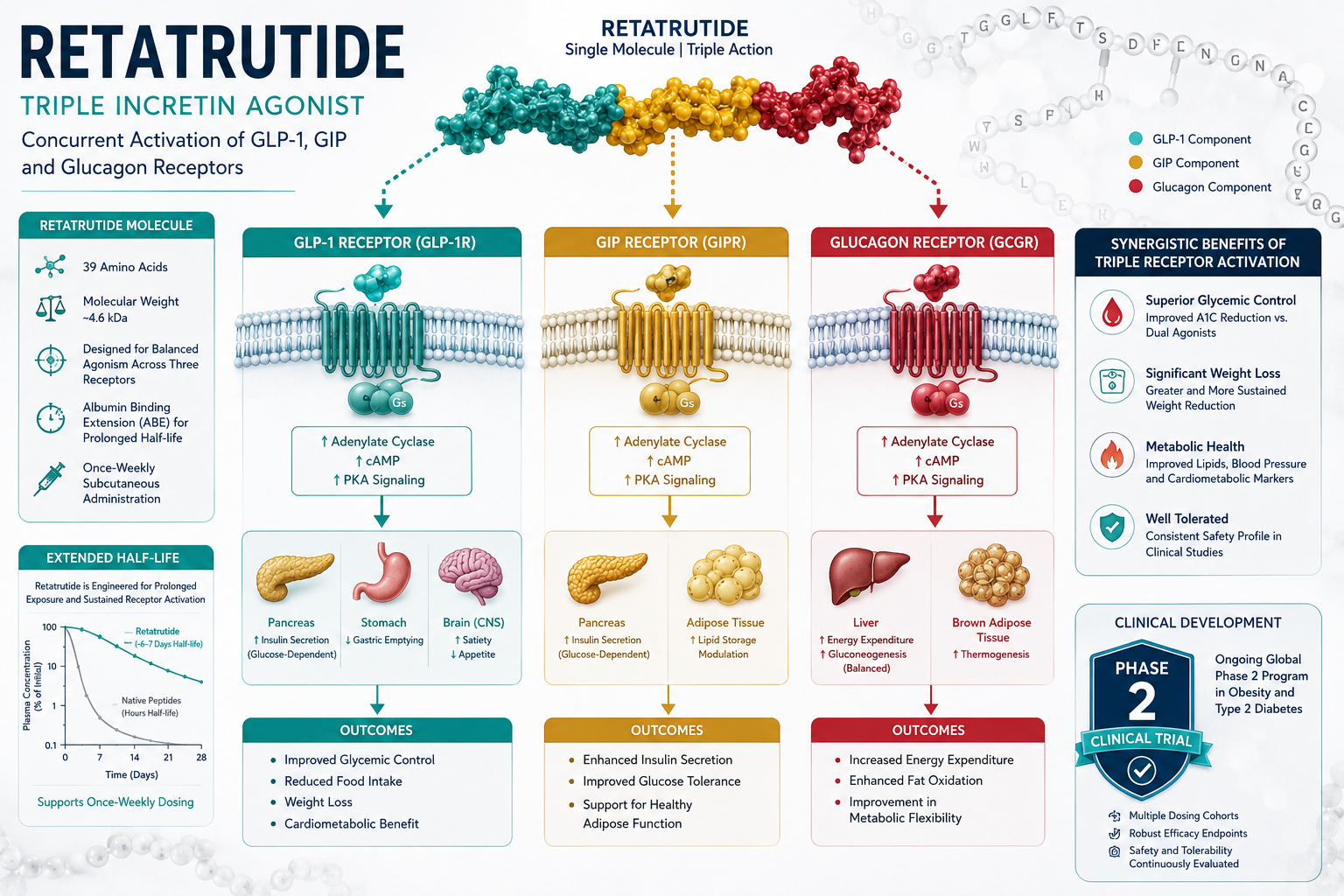
Understanding Retatrutide's Triple Receptor Mechanism
Unlike semaglutide or tirzepatide, retatrutide activates three distinct receptors: GLP-1 (glucagon-like peptide-1), GIP (glucose-dependent insulinotropic polypeptide), and the glucagon receptor. This triple agonism creates a broader metabolic footprint than dual or single receptor agents.
The glucagon receptor component is particularly notable. While glucagon is typically associated with raising blood sugar, its activation in this context appears to increase energy expenditure and promote hepatic fat clearance — effects that complement the glucose-lowering action of GLP-1 and GIP. Researchers studying GLP-3 incretin research themes have noted this as a key differentiator in the compound's mechanism.
For context on how different generations of GLP-1 compounds compare, the differences across GLP-1 generations offer useful background for understanding where retatrutide fits in the broader incretin landscape.
"Triple receptor agonism may represent a step-change in how researchers model integrated cardiometabolic outcomes — not just weight or glucose in isolation."
What Phase 2 Data Suggests About Cardiometabolic Markers
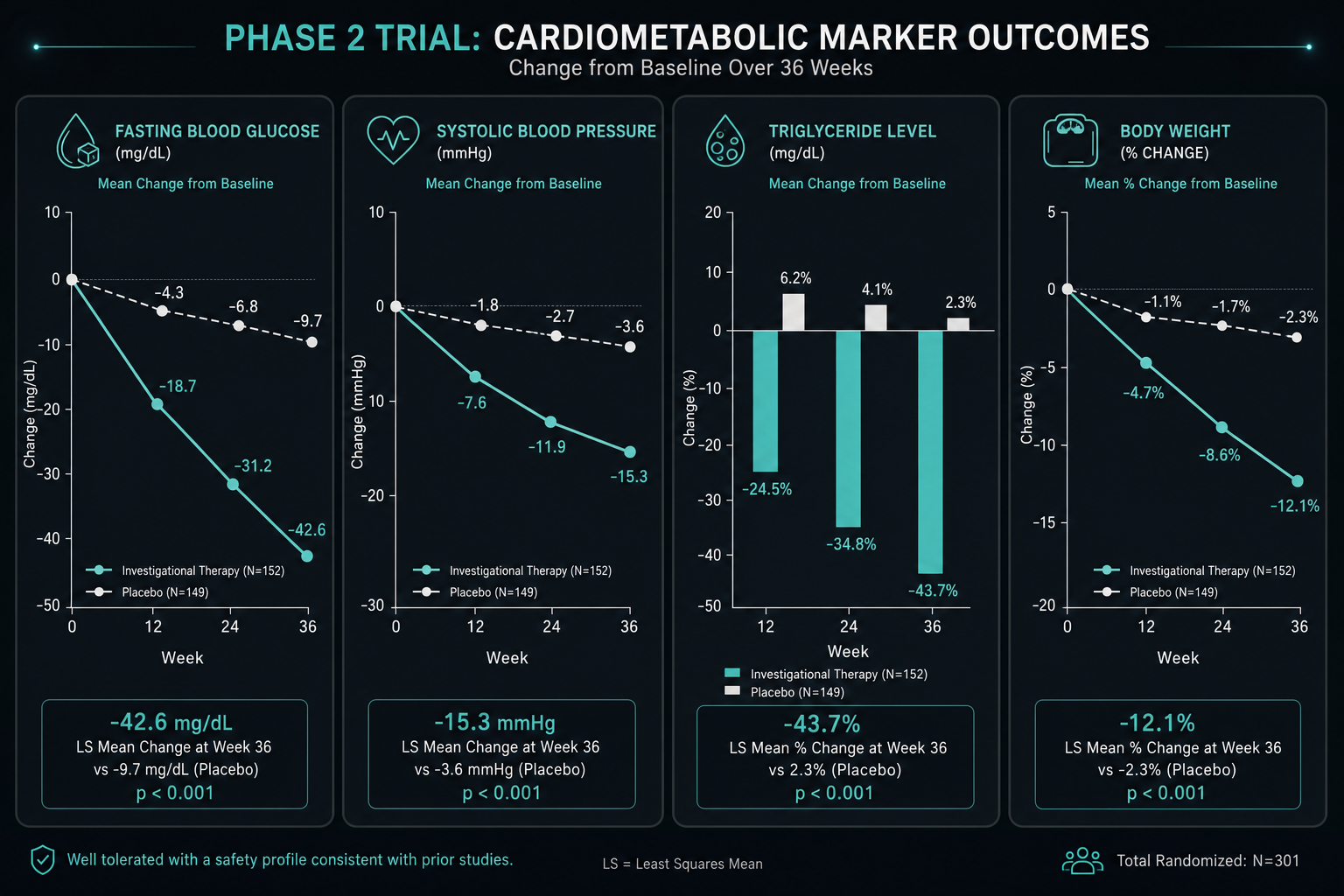
GLP-3 Retatrutide and cardiometabolic markers were assessed across multiple endpoints in the published Phase 2 trial. The results across each domain are outlined below.
Blood Glucose and Insulin Sensitivity
Participants showed significant reductions in fasting plasma glucose and HbA1c levels. The GLP-1 component drives insulin secretion in a glucose-dependent manner, reducing hypoglycemia risk. GIP co-activation appears to enhance beta-cell responsiveness, which may explain why glucose control was more pronounced than with GLP-1 monotherapy.
Blood Pressure
Systolic blood pressure declined meaningfully across dose groups, with higher doses showing greater reductions. This effect may be partly secondary to weight loss, but researchers have also proposed direct vascular mechanisms linked to GLP-1 receptor activation in endothelial tissue.
Lipid Panels and Triglycerides
| Marker | Observed Trend |
|---|---|
| Triglycerides | Significant reduction |
| LDL Cholesterol | Modest reduction |
| HDL Cholesterol | Slight increase |
| Total Cholesterol | Moderate reduction |
Triglyceride reductions were among the most consistent findings, likely tied to glucagon receptor-mediated hepatic fat oxidation.
Body Composition
Fat mass loss was substantial, with lean mass largely preserved at moderate doses. This ratio is a critical research variable, since preserving muscle during aggressive fat loss has direct implications for long-term metabolic health. Researchers exploring IPA and muscle-fat research themes have identified similar preservation patterns in related peptide compounds.
For researchers interested in complementary metabolic pathways, MOTS-c and metabolic flexibility and SLU-PP-332 metabolic modulation represent adjacent areas of inquiry.
Research Implications and Open Questions in 2026
The 2026 ADA Scientific Sessions highlighted integrated cardiometabolic outcomes as a primary research priority — and retatrutide sits at the center of that conversation. Several questions remain open for Phase 3 investigation.
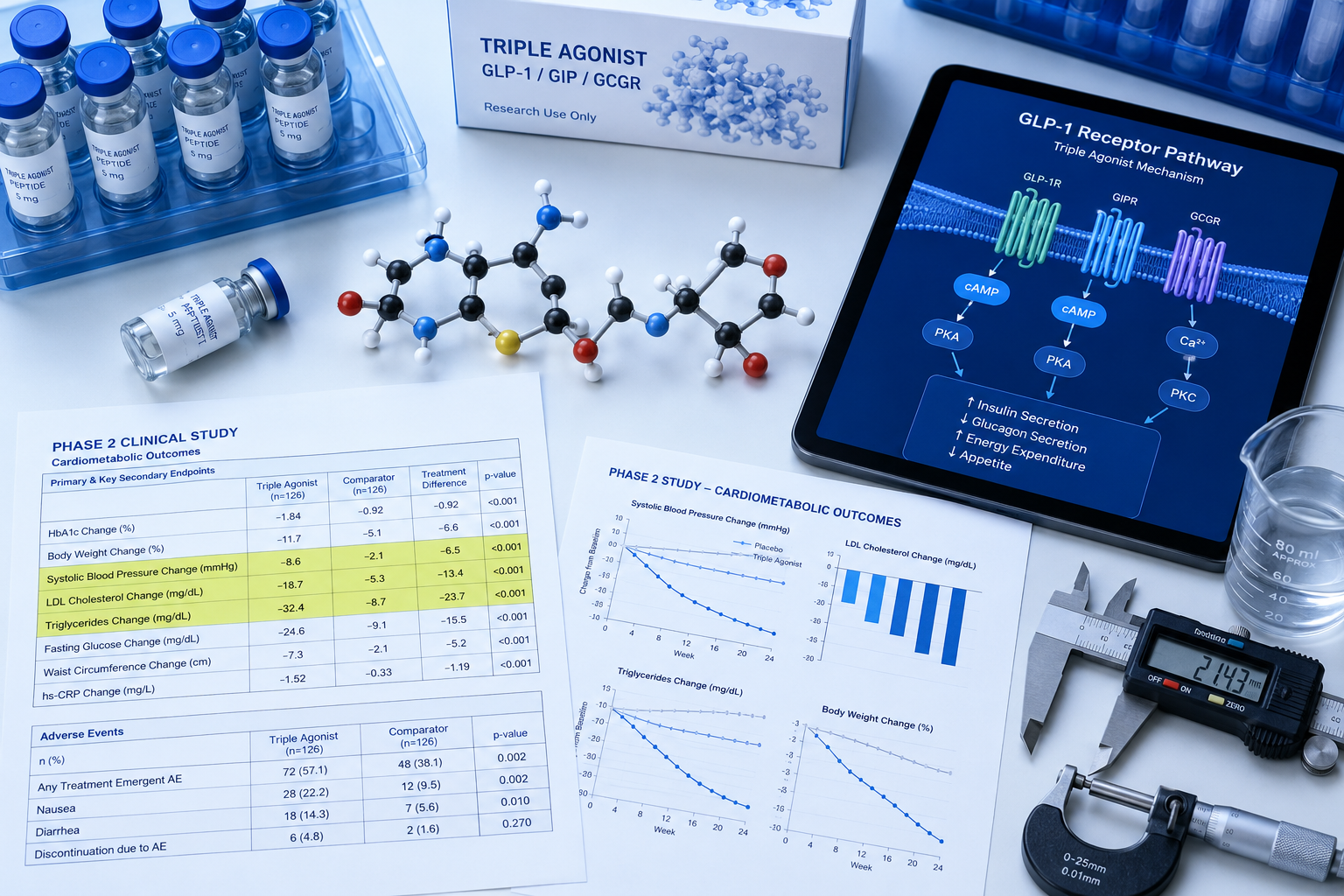
Key open research questions include:
- Are the cardiometabolic benefits additive across all three receptor pathways, or do they interact in non-linear ways?
- What is the optimal dose for balancing fat loss with lean mass preservation?
- How do effects on blood pressure compare across populations with and without existing hypertension?
- Do lipid improvements persist independently of weight loss?
Researchers examining dual receptor agonism in GLP-1 compounds have begun using retatrutide Phase 2 data as a benchmark for modeling triple agonist outcomes. Additionally, the role of cagrilintide synergy with GLP-1 adds another dimension to how researchers are thinking about combination metabolic approaches.
For those sourcing research-grade compounds, reviewing quality testing protocols is an essential step before any laboratory work begins.
Conclusion
Phase 2 data on retatrutide presents a compelling picture for cardiometabolic research. Across blood glucose, blood pressure, lipid markers, and body composition, the compound's triple receptor mechanism appears to produce broader and more consistent effects than prior incretin-based agents.
Actionable next steps for researchers:
- Review the full published Phase 2 dataset, focusing on dose-response relationships across each cardiometabolic marker.
- Cross-reference findings with adjacent research on dual agonists and metabolic peptides to build a comparative framework.
- Ensure all research-grade materials are sourced from verified, tested suppliers with documented purity standards.
- Monitor Phase 3 trial designs emerging through late 2026 for updates on long-term cardiovascular endpoints.
GLP-3 Retatrutide and cardiometabolic markers will remain a defining research theme as the field moves toward integrated, multi-pathway approaches to metabolic science.